


Traffic signsIndia
 Traffic rules
 Argentina
 Australia
 Austria
 Bangladesh
 Belgium
 Bosnia and Herzegovina
 Brazil
 Canada
 Chile
 China
 Colombia
 Czechia
 Denmark
 Finland
 France
 Germany
 Greece
 Hungary
 Iceland
 India
 Indonesia
 Ireland
 Italy
 Japan
 Malaysia
 Mexico
 Nepal
 Netherlands
 New Zealand
 Norway
 Panama
 Peru
 Philippines
 Poland
 Portugal
 Romania
 Russia
 Serbia
 Slovakia
 Slovenia
 South Africa
 Spain
 Sweden
 Switzerland
 Thailand
 Turkey
 Ukraine
 United Kingdom
 United States
 Uruguay
 Worldwide
Traffic signs
A traffic sign is a standardised visual symbol placed along roads to guide, warn, or regulate drivers, cyclists, and pedestrians. These signs provide essential information about road conditions, rules, directions, and potential hazards, helping to ensure safety and smooth traffic flow. They come in various shapes and colours—such as triangular warning signs, circular prohibitory or mandatory signs, and rectangular information signs—each designed for quick recognition and clear understanding.
How are traffic signs grouped in India?
Official training material groups signs into mandatory/regulatory, cautionary/warning and informatory/guide signs. Regulatory does not mean prohibition only.
🔗 morth.gov.in • MoRTH — GSR 38(E), 15 January 2024, clause 12: indirect-vision devices
🔗 pib.gov.in • PIB/MoRTH — official confirmation of the 2020 driving-regulation amendment
🔗 transport.jharkhand.gov.in • Jharkhand Transport — cautionary signs, actual hazard guidance
🔗 transport.jharkhand.gov.in • Jharkhand Transport — direction and facility information
Is a temporary speed limit at roadworks binding in India?
Yes. Obey authorised temporary speed restrictions. Regulation 16(5) also sets a maximum of 25 km/h, or a lower signed limit, when passing a construction site indicated by signage. Reduce speed further when road, traffic or visibility conditions require it.
🔗 morth.gov.in • MoRTH — GSR 38(E), 15 January 2024, clause 12: indirect-vision devices
🔗 pib.gov.in • PIB/MoRTH — official confirmation of the 2020 driving-regulation amendment
🔗 transport.jharkhand.gov.in • Jharkhand Transport — cautionary signs, actual hazard guidance
🔗 transport.jharkhand.gov.in • Jharkhand Transport — direction and facility information

1. Stop and give way
This traffic sign means stop and give way. You must come to a complete stop before entering the intersection and give way to traffic that has priority. Proceed only when it is safe.
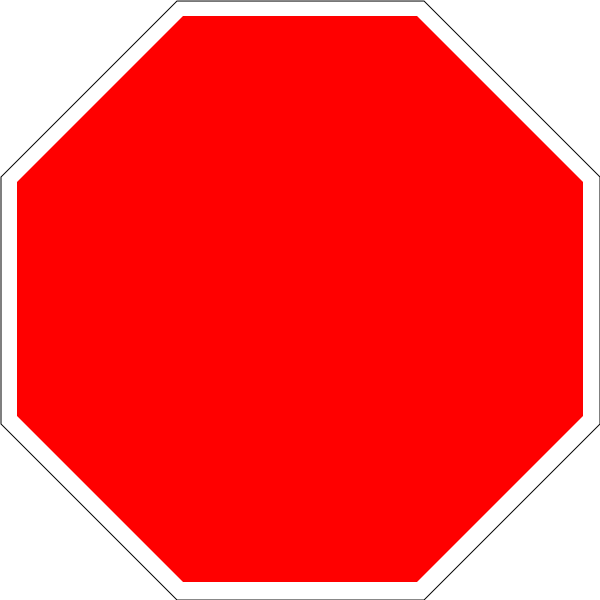
English • IRC:67-2022 • Fig. 14.01 • Stop. Stop before proceeding, and give way to traffic with priority. This illustration lacks the STOP lettering required by the prescribed design. Meaning identified at sign-family or illustration level; this complete drawing is not confirmed as an exact current standard design.
Sources
🔗 Commons.wikimedia.org
🔗 My.folderit.com • IRC:67-2022 • primary-text mirror • PDF page88
Image via Commons.wikimedia.org
ESanchez013 • Public domain • Source revision 2024-07-13. Wikimedia original unmodified.
2. Give way
This traffic sign means give way. Slow down and give way to traffic that has priority. Stop if necessary and proceed only when it is safe.
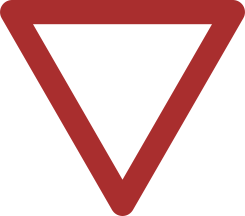
English • IRC:67-2022 • Fig. 14.02 • Give way. Let traffic with priority pass; slow down and stop if necessary. The illustration omits the GIVE WAY lettering shown in the standard plate. Meaning identified at sign-family or illustration level; this complete drawing is not confirmed as an exact current standard design.
Sources
🔗 Commons.wikimedia.org
🔗 My.folderit.com • IRC:67-2022 • primary-text mirror • PDF page88
Image via Commons.wikimedia.org
Design: India Road Congresses Vectorization: Big guy 637 • Public domain • Source revision 2026-01-17. Wikimedia original unmodified.
3. Warning for a roundabout
This traffic sign indicates a warning for a roundabout. A roundabout lies ahead. Reduce speed and follow the applicable priority signs, traffic signals and local roundabout rules when approaching and entering it.
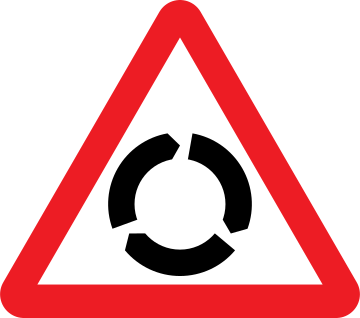
English • IRC:67-2022 • Fig. 15.15 • Roundabout ahead. A roundabout is ahead.
Sources
🔗 Commons.wikimedia.org
🔗 My.folderit.com • IRC:67-2022 • primary-text mirror • PDF page103
SVG source: Indian Roads Congress • Public domain • Original revision 2023-07-03. Wikimedia original unmodified.
4. Warning for a curve to the left
This traffic sign indicates a warning for a curve to the left. A left-hand bend lies ahead. Reduce speed before entering the curve, maintain your lane position and use smooth steering.
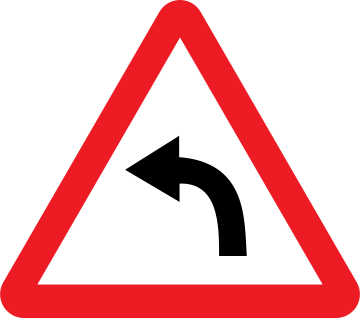
English • IRC:67-2022 • Fig. 15.01 • Left-hand curve. The road bends to the left ahead.
Sources
🔗 Commons.wikimedia.org
🔗 My.folderit.com • IRC:67-2022 • primary-text mirror • PDF page100
SVG source: Alokprasad84 • Public domain • Original revision 2023-07-03. Wikimedia original unmodified.
5. Warning for a curve to the right
This traffic sign indicates a warning for a curve to the right. A right-hand bend lies ahead. Reduce speed before entering the curve, maintain your lane position and use smooth steering.
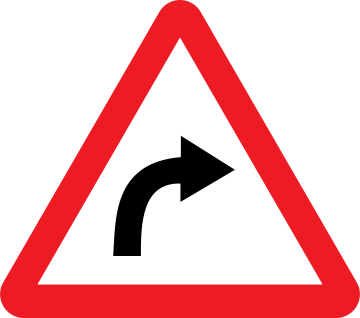
English • IRC:67-2022 • Fig. 15.02 • Right-hand curve. The road bends to the right ahead.
Sources
🔗 Commons.wikimedia.org
🔗 My.folderit.com • IRC:67-2022 • primary-text mirror • PDF page100
SVG source: Alokprasad84 • Public domain • Original revision 2023-07-03. Wikimedia original unmodified.
6. Warning for a road narrowing
This traffic sign indicates a warning for a road narrowing. The available width of the road or carriageway decreases ahead. Reduce speed, maintain sufficient lateral clearance and watch carefully for approaching or adjacent traffic.
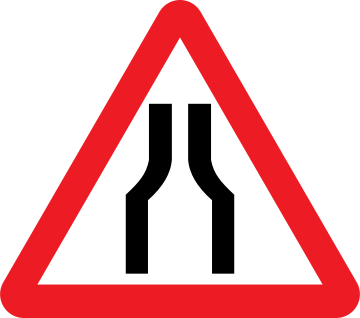
English • IRC:67-2022 • Fig. 15.23 • Narrow road ahead. The road narrows ahead on both sides.
Sources
🔗 Commons.wikimedia.org
🔗 My.folderit.com • IRC:67-2022 • primary-text mirror • PDF page105
SVG source: Commons.wikimedia.org
Sn1per • Public domain. Original SVG unmodified.
7. Warning for a bad road surface
This traffic sign indicates a warning for a bad or uneven road surface. Potholes, bumps, depressions or other surface irregularities may affect vehicle stability and braking. Reduce speed and avoid sudden manoeuvres.
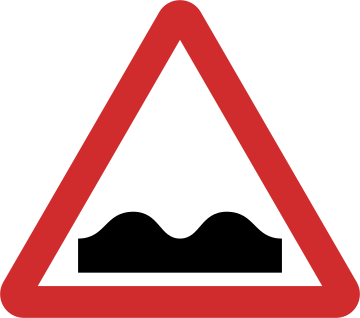
English • IRC:67-2022 • Fig. 15.51 • Rough road. The road surface ahead is uneven; reduce speed.
Sources
🔗 Commons.wikimedia.org
🔗 My.folderit.com • IRC:67-2022 • primary-text mirror • PDF page109
SVG source: Nepali Department of Roads • Public domain • Original revision 2014-08-14. Wikimedia original unmodified.
8. Warning for traffic lights ahead
This traffic sign indicates a warning for traffic lights ahead. Traffic signals are located ahead and may not be visible early enough without advance warning. Reduce speed and be prepared to stop if the signal requires it.
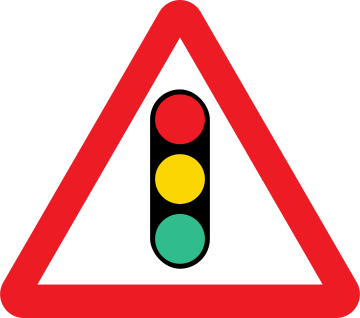
English • IRC:67-2022 • Fig. 15.16 • Traffic signals ahead. Traffic lights control the road ahead.
Sources
🔗 Commons.wikimedia.org
🔗 My.folderit.com • IRC:67-2022 • primary-text mirror • PDF page103
SVG source: Indian Roads Congress • Public domain • Original revision 2023-07-03. Wikimedia original unmodified.
9. Warning for a narrowing
This traffic sign indicates a warning for a narrowing ahead. The available road width decreases ahead. Reduce speed when necessary and be prepared for less lateral space between vehicles, obstacles or the road edge.
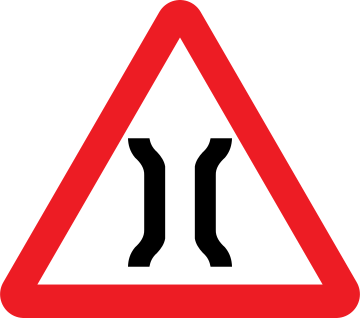
English • IRC:67-2022 • Fig. 15.25 • Narrow bridge ahead. A bridge narrower than the approaching road is ahead.
Sources
🔗 Commons.wikimedia.org
🔗 My.folderit.com • IRC:67-2022 • primary-text mirror • PDF page105
SVG source: Sn1per • Public domain • Original revision 2023-07-03. Wikimedia original unmodified.
Artwork verified against My.folderit.com • official published diagram 15.25.
10. Warning for a railway crossing without barriers
This traffic sign indicates a warning for a railway crossing without barriers. It alerts drivers to an upcoming level crossing where railway tracks cross the road and no barriers or gates are present to stop traffic. Drivers should slow down and look both ways for trains.
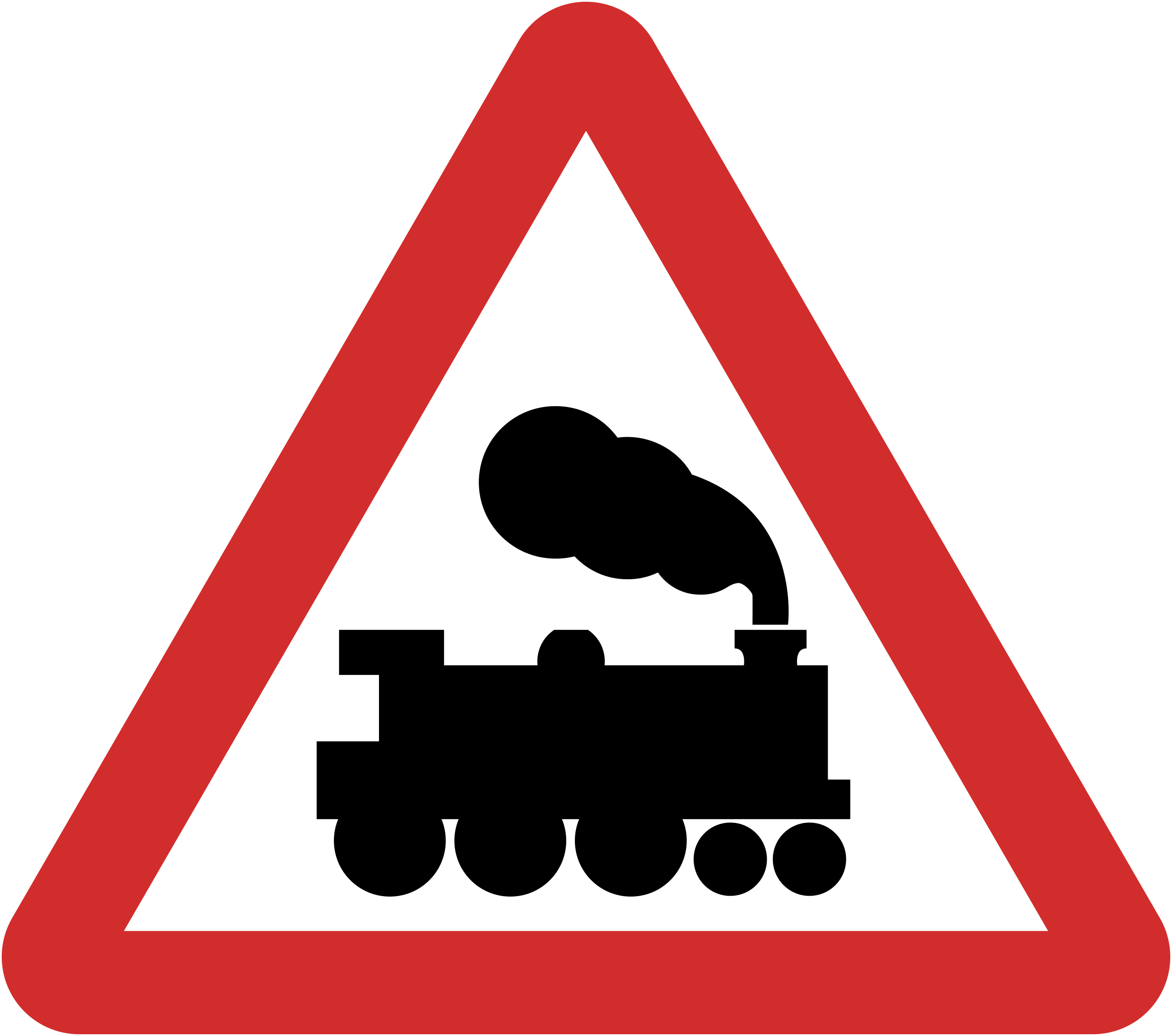
English • IRC:67-2022 • Fig. 15.70 — family • Unguarded railway crossing. A railway level crossing without gates is ahead. This older steam-engine illustration differs from the current train drawing and omits the current advance-distance panel. Meaning identified at sign-family or illustration level; this complete drawing is not confirmed as an exact current standard design.
Sources
🔗 Commons.wikimedia.org
🔗 My.folderit.com • IRC:67-2022 • primary-text mirror • PDF page113
Image via Commons.wikimedia.org
Nepali Department of Roads • Public domain • Source revision 2020-03-09. Wikimedia original unmodified.
11. Warning for a railway crossing with barriers
This traffic sign indicates a warning for a railway crossing with barriers. It alerts drivers to an upcoming level crossing with gates or barriers that close when a train approaches. Drivers should be ready to stop when the barriers are down or flashing lights activate. Never attempt to cross when gates are closing or closed.
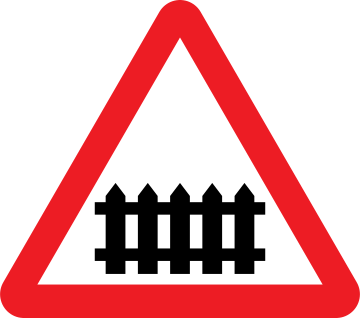
English • IRC:67-2022 • Fig. 15.71 — family • Guarded railway crossing. A railway level crossing with gates is ahead. The website drawing omits the advance-distance panel shown with the current sign. Meaning identified at sign-family or illustration level; this complete drawing is not confirmed as an exact current standard design.
Sources
🔗 Commons.wikimedia.org
🔗 My.folderit.com • IRC:67-2022 • primary-text mirror • PDF page113
SVG source: Indian Roads Congress • Public domain • Original revision 2023-07-05. Wikimedia original unmodified.
12. Warning for a railway crossing with one track
This traffic sign indicates a warning for a railway crossing with one track. It alerts drivers to a level crossing where a single railway track crosses the road. Drivers should approach with caution and be prepared to stop, even if no barriers or warning lights are active.

13. Warning for a railway crossing with two or more tracks
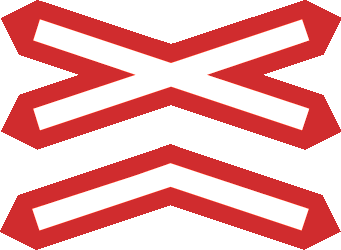
This traffic sign indicates a warning for a railway crossing with two or more tracks. It alerts drivers to a level crossing where more than one railway track crosses the road. More than one train may pass in succession or from different directions, so drivers should check carefully before crossing and never proceed until all tracks are clear.
14. No entry
This traffic sign means no entry. Drivers may not enter from the direction in which the sign is placed.
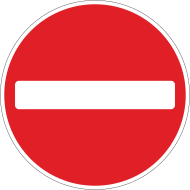
English • IRC:67-2022 • Fig. 14.20 • No entry. Vehicles must not enter from this direction.
Sources
🔗 Commons.wikimedia.org
🔗 My.folderit.com • IRC:67-2022 • primary-text mirror • PDF page91
SVG source: Indian Road Congress • Public domain • Original revision 2025-04-02. Wikimedia original unmodified.
Artwork verified against My.folderit.com • official published diagram 14.20.
15. Access prohibited in both directions
This traffic sign indicates that drivers may not enter the road from either direction.
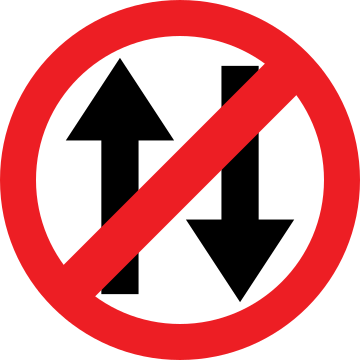
English • Delhi Police — unnumbered • Vehicles prohibited in both directions. Vehicles may not use this road in either direction. Delhi Police guidance identifies this older design; no exact counterpart was confirmed in the IRC:67-2022 catalogue. Meaning identified at sign-family or illustration level; this complete drawing is not confirmed as an exact current standard design.
Sources
🔗 Commons.wikimedia.org
🔗 Traffic.delhipolice.gov.in • Delhi Police • Road Signs • PDF page1(older IRC67-1977 chart)
SVG source: Commons.wikimedia.org
Saurmandal • Public domain. Original SVG unmodified.
16. Pedestrians prohibited
This traffic sign indicates that pedestrians are prohibited. Pedestrians may not enter or continue beyond the sign. Other road users may still be permitted unless another restriction applies.
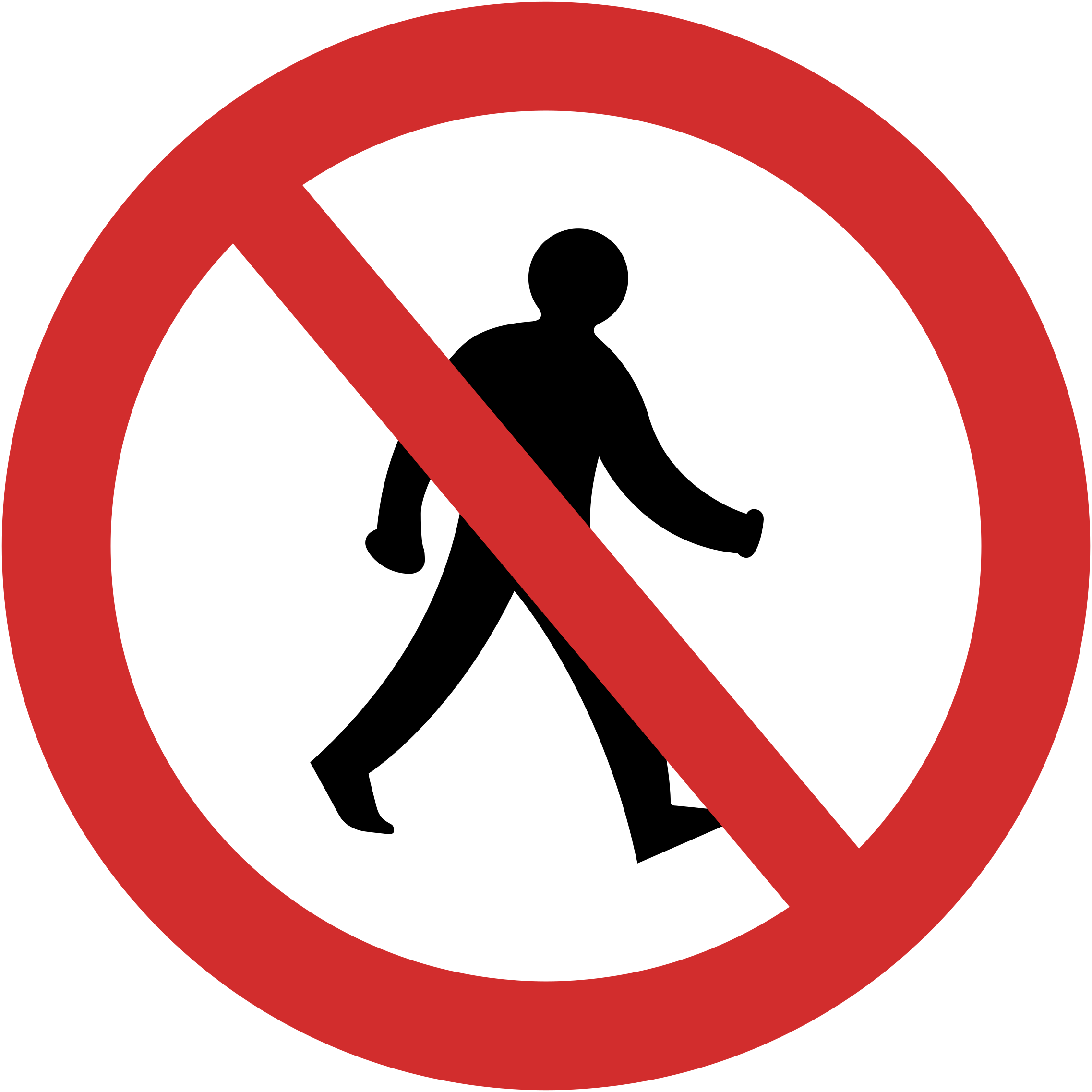
English • IRC:67-2022 • Fig. 14.18 • Pedestrians prohibited. Pedestrians may not enter.
Sources
🔗 Commons.wikimedia.org
🔗 My.folderit.com • IRC:67-2022 • primary-text mirror • PDF page91
Image via Commons.wikimedia.org
Nepali Department of Roads • Public domain • Source revision 2021-11-27. Wikimedia original unmodified.
17. Cyclists prohibited
This traffic sign indicates that cyclists are prohibited. Cyclists may not enter or continue beyond the sign. Other road users may still be permitted unless another restriction applies.
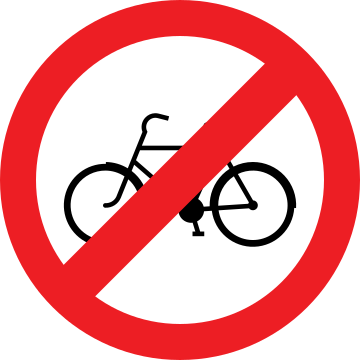
English • IRC:67-2022 • Fig. 14.17 • Cycles prohibited. Bicycles may not enter.
Sources
🔗 My.folderit.com • IRC:67-2022 • primary-text mirror • PDF page91
SVG source: Commons.wikimedia.org
Ministry of Road Transport & Highways, Govt. of India • GODL-India. Source publication: Book on Road Safety Signage & Signs. Original SVG unmodified.
18. Motorcycles prohibited
This traffic sign indicates that motorcycles are prohibited. Motorcyclists may not enter or continue beyond the sign. Other road users may still be permitted unless another restriction applies.
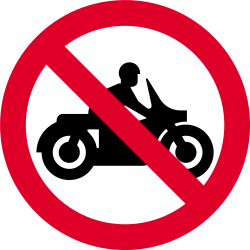
English • IRC:67-2022 • Fig. 14.16 • Two-wheelers prohibited. Motorised two-wheelers may not enter.
19. Trucks prohibited
This traffic sign indicates that trucks are prohibited. Trucks covered by the sign may not enter or continue beyond it. Any applicable weight threshold or vehicle-category limitation is determined by the sign, supplementary information and local rules.
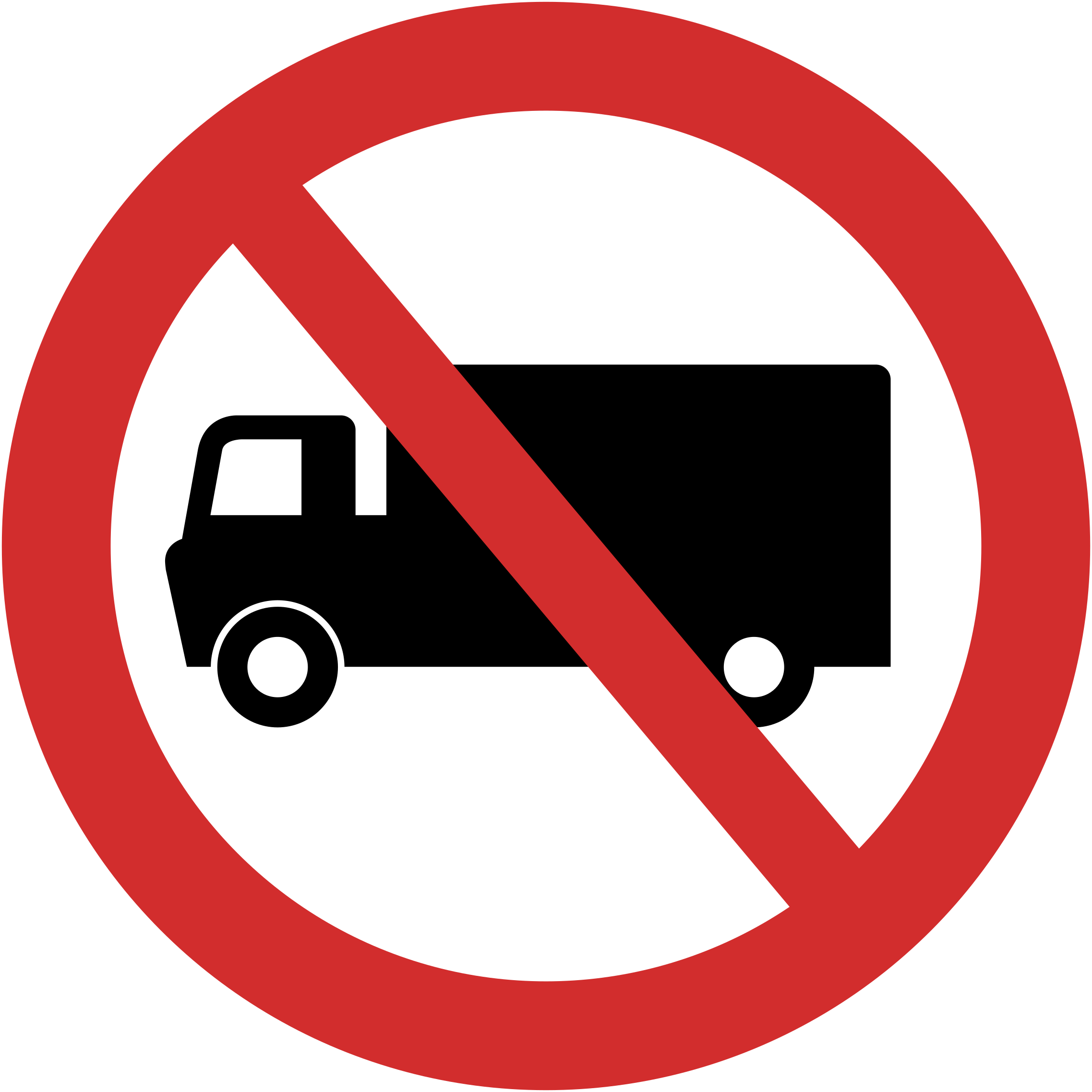
English • IRC:67-2022 • Fig. 14.12 • Trucks prohibited. Lorries may not enter.
Sources
🔗 Commons.wikimedia.org
🔗 My.folderit.com • IRC:67-2022 • primary-text mirror • PDF page90
Image via Commons.wikimedia.org
Nepali Department of Roads • Public domain • Source revision 2020-02-13. Wikimedia original unmodified.
20. Horsecarts prohibited
This traffic sign indicates that horsecarts are prohibited. Horse-drawn vehicles may not enter or continue beyond the sign. Other road users may still be permitted unless another restriction applies.
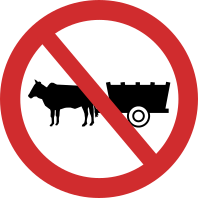
English • IRC:67-2022 • Fig. 14.04 • Bullock carts prohibited. Bullock carts may not enter.
Sources
🔗 Commons.wikimedia.org
🔗 My.folderit.com • IRC:67-2022 • primary-text mirror • PDF page89
Image via Commons.wikimedia.org
Nepali Department of Roads • Public domain • Source revision 2025-06-27. Wikimedia original unmodified.
21. Motorcycles and cars prohibited
This traffic sign indicates that motorcycles and cars are prohibited. Motorcycles and cars may not enter or continue beyond the sign. Other road users may still be permitted unless another restriction applies.
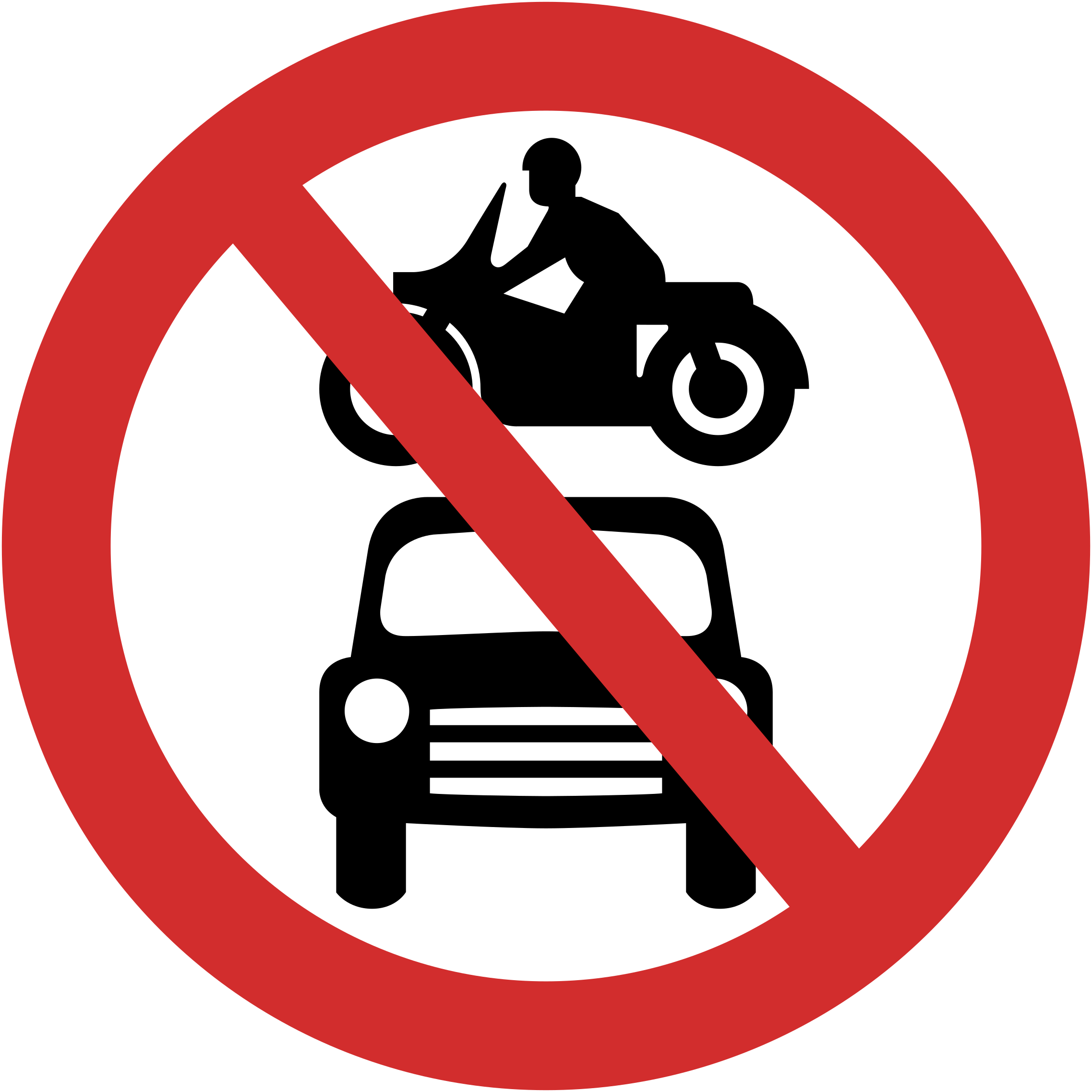
English • Delhi Police — unnumbered • All motor vehicles prohibited. Motor vehicles may not enter. Delhi Police guidance identifies this older combined motorcycle-and-car design; no exact counterpart was confirmed in the IRC:67-2022 catalogue. Meaning identified at sign-family or illustration level; this complete drawing is not confirmed as an exact current standard design.
Sources
🔗 Commons.wikimedia.org
🔗 Traffic.delhipolice.gov.in • Delhi Police • Road Signs • PDF page1(older IRC67-1977 chart)
Image via Commons.wikimedia.org
Nepali Department of Roads • Public domain • Source revision 2020-02-17. Wikimedia original unmodified.
22. Vehicles higher than indicated prohibited
This traffic sign indicates that vehicles higher than indicated are prohibited. A vehicle or vehicle combination whose overall height, including its load, exceeds the displayed limit may not continue beyond the sign.
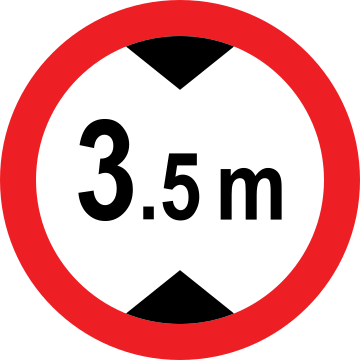
English • IRC:67-2022 • Fig. 14.35 • Height limit 3.5 m. Vehicles taller than 3.5 m may not enter.
Sources
🔗 Commons.wikimedia.org
🔗 My.folderit.com • IRC:67-2022 • primary-text mirror • PDF page95
SVG source: Commons.wikimedia.org
Ministry of Road Transport & Highways, Govt. of India • GODL-India. Source publication: Book on Road Safety Signage & Signs. Original SVG unmodified.
23. Vehicles longer than indicated prohibited
This traffic sign indicates that vehicles longer than indicated are prohibited. A vehicle or vehicle combination whose overall length, including its load, exceeds the displayed limit may not continue beyond the sign.
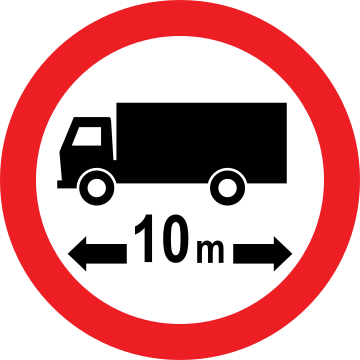
English • IRC:67-2022 • Fig. 14.36 • Length limit 10 m. Vehicles longer than 10 m may not enter.
Sources
🔗 Commons.wikimedia.org (Ministry of Road Transport & Highways, Govt. of India
🔗 Morth.nic.in • Source • GODL-India)
🔗 My.folderit.com • IRC:67-2022 • primary-text mirror • PDF page95
Image via Commons.wikimedia.org
Ministry of Road Transport & Highways, Govt. of India • GODL-India • Source revision 2023-07-03. Wikimedia original unmodified.
24. Vehicles heavier than indicated prohibited
This traffic sign indicates that vehicles heavier than indicated are prohibited. Vehicles or vehicle combinations exceeding the displayed mass limit may not continue beyond the sign. The legally relevant mass is determined by the applicable local rules.
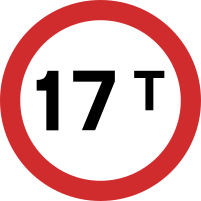
English • IRC:67-2022 • Fig. 14.37 • Laden weight limit 17 tonnes. Vehicles whose total weight, including their load, exceeds 17 tonnes may not enter.
Sources
🔗 Commons.wikimedia.org
🔗 My.folderit.com • IRC:67-2022 • primary-text mirror • PDF page95
SVG source: Nepali Department of Roads • Public domain • Original revision 2025-06-27. Wikimedia original unmodified.
Artwork verified against My.folderit.com • official published diagram 14.37.
25. Vehicles exceeding the axle-load limit prohibited
This traffic sign indicates that vehicles exceeding the indicated axle-load limit are prohibited. A vehicle whose load on an axle exceeds the displayed limit may not continue beyond the sign.
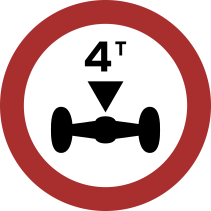
English • IRC:67-2022 • Fig. 14.34 • Axle load limit 4 tonnes. Vehicles with an axle load above 4 tonnes may not enter.
Sources
🔗 Commons.wikimedia.org
🔗 My.folderit.com • IRC:67-2022 • primary-text mirror • PDF page95
Image via Commons.wikimedia.org
Design: India Road Congresses Vectorization: Big guy 637 • Public domain • Source revision 2026-01-17. Wikimedia original unmodified.
26. Turning left prohibited
This traffic sign indicates that turning left is prohibited. A left turn may not be made where the sign applies. Other movements may still be permitted unless another restriction applies.
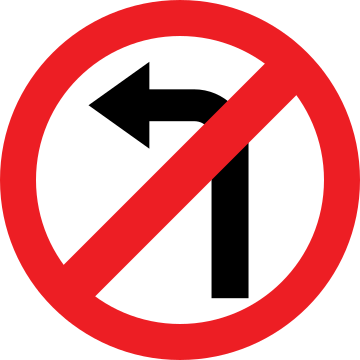
English • IRC:67-2022 • Fig. 14.22 • Left turn prohibited. Do not turn left.
Sources
🔗 Commons.wikimedia.org
🔗 My.folderit.com • IRC:67-2022 • primary-text mirror • PDF page92
SVG source: Commons.wikimedia.org
Ministry of Road Transport & Highways, Govt. of India • GODL-India. Source publication: Book on Road Safety Signage & Signs. Original SVG unmodified.
27. Turning right prohibited
This traffic sign indicates that turning right is prohibited. A right turn may not be made where the sign applies. Other movements may still be permitted unless another restriction applies.
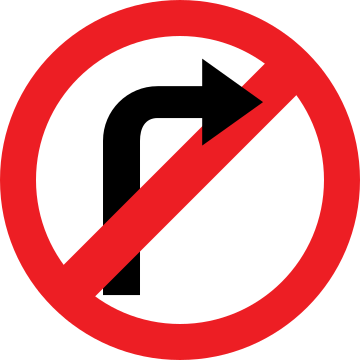
English • IRC:67-2022 • Fig. 14.23 • Right turn prohibited. Do not turn right.
Sources
🔗 Commons.wikimedia.org
🔗 My.folderit.com • IRC:67-2022 • primary-text mirror • PDF page92
SVG source: Commons.wikimedia.org
Ministry of Road Transport & Highways, Govt. of India • GODL-India. Source publication: Book on Road Safety Signage & Signs. Original SVG unmodified.
28. Turning around prohibited (U-turn)
This traffic sign indicates that turning around (making a U-turn) is prohibited. A U-turn may not be made where the prohibition applies. Other movements may still be permitted unless another restriction applies.
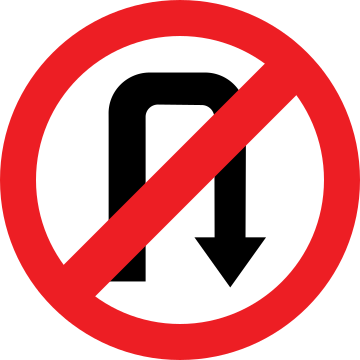
English • IRC:67-2022 • Fig. 14.25 • U-turn prohibited. Do not make a U-turn.
Sources
🔗 Commons.wikimedia.org (Ministry of Road Transport & Highways, Govt. of India
🔗 Morth.nic.in • Source • GODL-India)
🔗 My.folderit.com • IRC:67-2022 • primary-text mirror • PDF page92
Image via Commons.wikimedia.org
Ministry of Road Transport & Highways, Govt. of India • GODL-India • Source revision 2023-07-02. Wikimedia original unmodified.
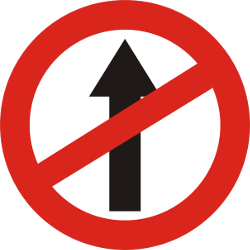
29. Driving straight ahead prohibited
This traffic sign indicates that driving straight ahead is prohibited. Traffic may not continue straight ahead where the sign applies. Other movements may still be permitted unless another restriction applies.
30. Overtaking prohibited
This traffic sign indicates that overtaking is prohibited. The vehicles covered by the prohibition and any categories that may still be overtaken depend on the applicable local rules.
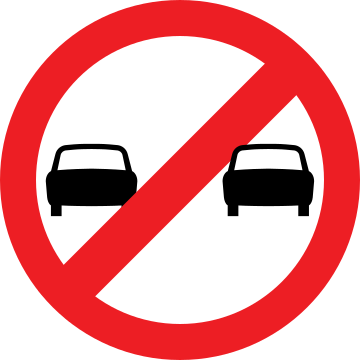
English • IRC:67-2022 • Fig. 14.24 • Overtaking prohibited. Do not overtake other vehicles on the controlled section.
Sources
🔗 Commons.wikimedia.org
🔗 My.folderit.com • IRC:67-2022 • primary-text mirror • PDF page92
SVG source: Commons.wikimedia.org
Ministry of Road Transport & Highways, Govt. of India • GODL-India. Source publication: Book on Road Safety Signage & Signs. Original SVG unmodified. Previous PNG showed a turn-prohibition symbol; SVG shows the overtaking prohibition matching the existing topic and description.
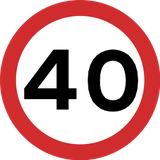
31. Start of a speed limit
This traffic sign indicates the start of a speed limit. The displayed value is the maximum permitted speed from this point. The limit remains in force until it ends or is replaced according to the applicable traffic signs and local rules.
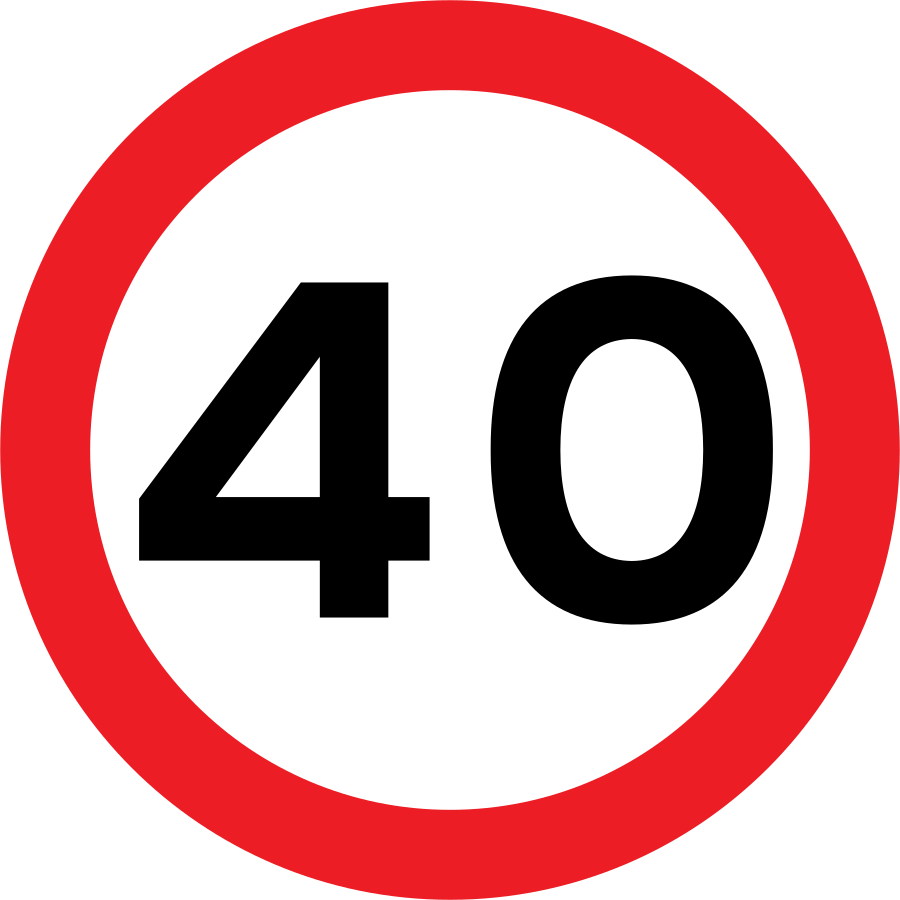
English • IRC:67-2022 • Fig. 14.39 • Maximum speed 40 km/h. Do not exceed 40 km/h.
Sources
🔗 Commons.wikimedia.org
🔗 My.folderit.com • IRC:67-2022 • primary-text mirror • PDF page95
SVG source: UK Government • Public domain • Original revision 2014-09-27. Wikimedia original unmodified.
Artwork verified against My.folderit.com • official published diagram 14.39.
32. End of the speed limit
This traffic sign indicates the end of the previously indicated speed limit. From this point, follow any newly posted limit or the applicable default speed rules for the road and vehicle category.
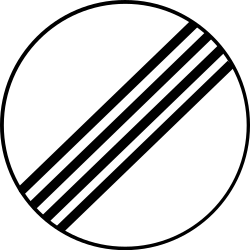
English • IRC:67-2022 • Fig. 14.42 — family • Restrictions end. Ends prohibitions previously indicated for moving vehicles. Observe any applicable speed limit. The website uses several diagonal lines; the current plate shows one diagonal black band. Meaning identified at sign-family or illustration level; this complete drawing is not confirmed as an exact current standard design.
33. Using the horn prohibited
This traffic sign indicates that using the horn is prohibited. The horn or other audible warning device may not be used where the prohibition applies, except where an applicable local rule permits or requires it.
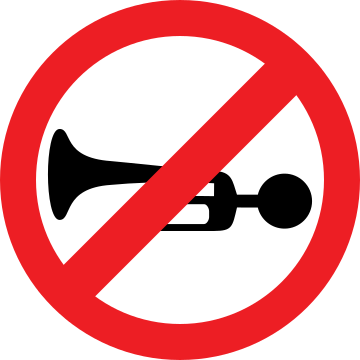
English • IRC:67-2022 • Fig. 14.19 • Horn prohibited. Do not sound the horn on the controlled section.
Sources
🔗 Commons.wikimedia.org
🔗 My.folderit.com • IRC:67-2022 • primary-text mirror • PDF page91
SVG source: Commons.wikimedia.org
en:User:Sn1per • Public domain. Original SVG unmodified.
34. Parking prohibited
This traffic sign indicates that parking is prohibited. Vehicles may not be parked in the area covered by the sign unless an exception applies. Brief stopping to pick up or drop off passengers or to load or unload goods may still be permitted where local rules allow it.
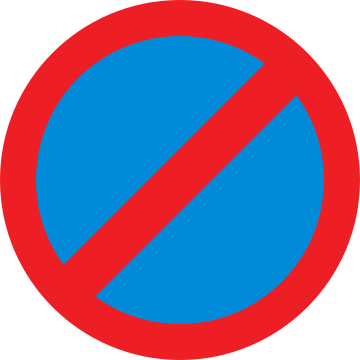
English • IRC:67-2022 • Fig. 14.31 • No parking. Do not park on the controlled section.
Sources
🔗 Commons.wikimedia.org
🔗 My.folderit.com • IRC:67-2022 • primary-text mirror • PDF page94
SVG source: Commons.wikimedia.org
Indian Roads Congress • Public domain. Original SVG unmodified. Replaces the legacy P/slash illustration with the source no-parking symbol; the existing restriction and description are unchanged.
35. Parking and stopping prohibited
This traffic sign indicates that parking and stopping are prohibited. Vehicles may not stop or park voluntarily where the restriction applies, except where an applicable rule provides an exemption or stopping is required by traffic conditions.

English • IRC:67-2022 • Fig. 14.30 • No stopping. Do not stop, even briefly, on the controlled section.
Sources
🔗 Commons.wikimedia.org
🔗 My.folderit.com • IRC:67-2022 • primary-text mirror • PDF page94
SVG source: Indian Roads Congress • Public domain • Original revision 2026-02-14. Wikimedia original unmodified.
36. Mandatory roundabout direction
This traffic sign indicates the mandatory direction around a roundabout. Traffic must circulate in the direction shown by the arrows. The sign does not itself determine priority; follow the applicable priority signs, traffic signals and local rules.
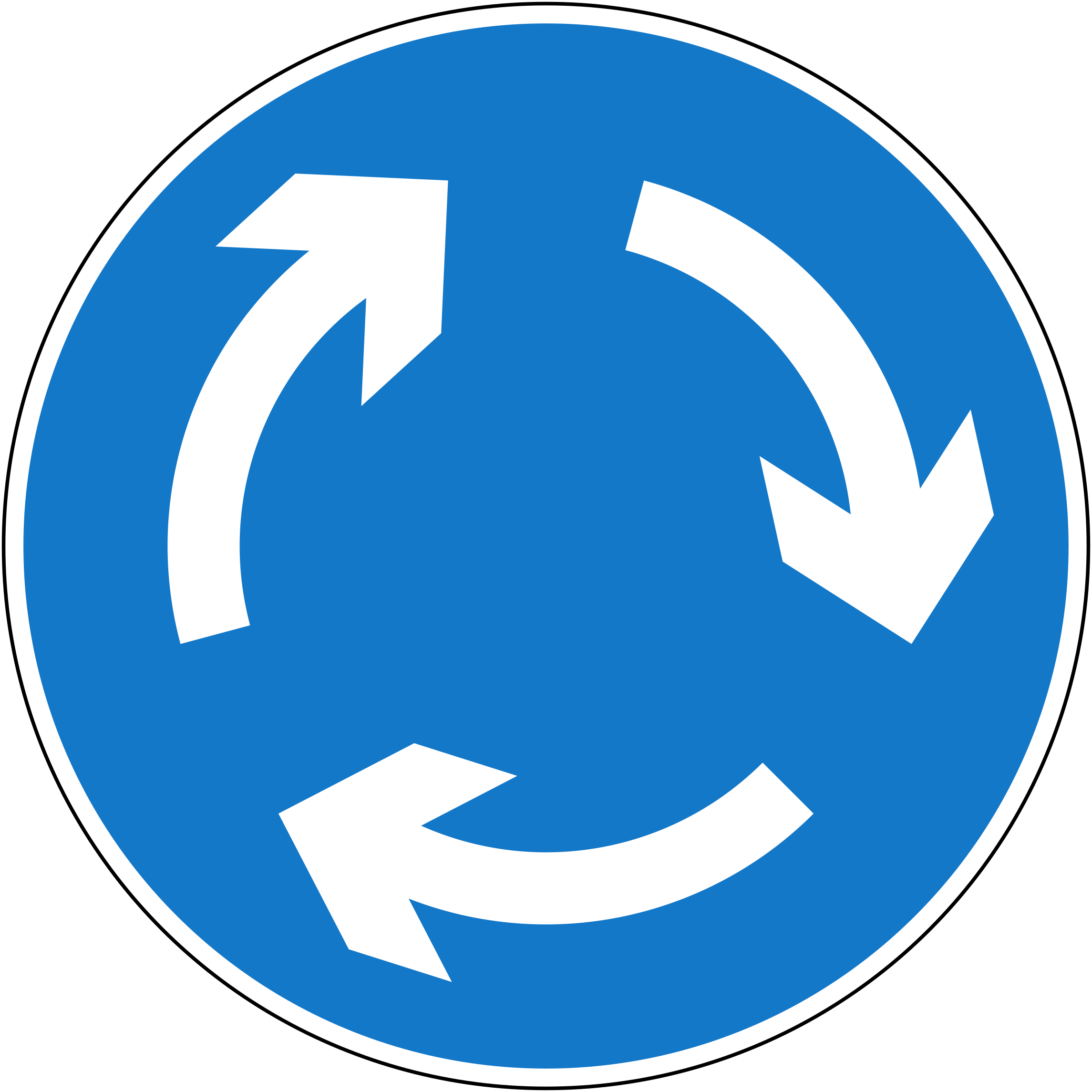
English • IRC:67-2022 • Fig. 14.47a — family • Mini-roundabout. Follow the clockwise arrows and give priority to vehicles approaching from the right. The current mini-roundabout example includes a supplementary MINI ROUNDABOUT plate absent from this drawing. Meaning identified at sign-family or illustration level; this complete drawing is not confirmed as an exact current standard design.
Sources
🔗 Commons.wikimedia.org
🔗 My.folderit.com • IRC:67-2022 • primary-text mirror • PDF page97
Image via Commons.wikimedia.org
Nepali Department of Roads • Public domain • Source revision 2021-12-21. Wikimedia original unmodified.
37. Turning left mandatory
This traffic sign indicates that turning left is mandatory at the junction ahead. Traffic must turn left and may not continue straight ahead or turn right.
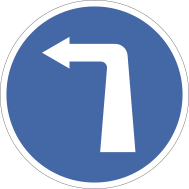
English • IRC:67-2022 • Fig. 14.49 • Turn left ahead. You must turn left at the junction ahead.
Sources
🔗 Commons.wikimedia.org
🔗 My.folderit.com • IRC:67-2022 • primary-text mirror • PDF page98
SVG source: Indian Roads Congress • Public domain • Original revision 2025-03-22. Wikimedia original unmodified.
38. Turning right mandatory
This traffic sign indicates that turning right is mandatory at the junction ahead. Traffic must turn right and may not continue straight ahead or turn left.
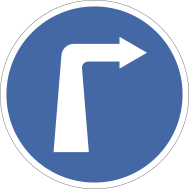
English • IRC:67-2022 • Fig. 14.48 • Turn right ahead. You must turn right at the junction ahead.
Sources
🔗 Commons.wikimedia.org
🔗 My.folderit.com • IRC:67-2022 • primary-text mirror • PDF page98
SVG source: Indian Roads Congress • Public domain • Original revision 2025-03-22. Wikimedia original unmodified.
39. Pass obstacle on the left
This traffic sign indicates that traffic must pass an obstacle on the left. Keep to the left of the obstacle and follow any accompanying signs or road markings.

English • IRC:67-2022 • Fig. 14.50 • Keep left. Pass to the left of the island or obstruction indicated.
Sources
🔗 Commons.wikimedia.org
🔗 My.folderit.com • IRC:67-2022 • primary-text mirror • PDF page98
SVG source: Indian Roads Congress • Public domain • Original revision 2025-03-22. Wikimedia original unmodified.
40. Pass obstacle on either side
This traffic sign indicates that traffic must pass an obstacle on either the left or the right. Use either permitted side while following the road layout and any accompanying signs or markings.
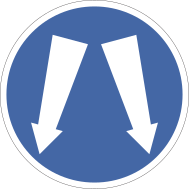
English • IRC:67-2022 • Fig. 14.52 • Pass either side. You may pass to either side of the indicated island or obstruction.
Sources
🔗 Commons.wikimedia.org
🔗 My.folderit.com • IRC:67-2022 • primary-text mirror • PDF page98
SVG source: Indian Roads Congress • Public domain • Original revision 2025-03-22. Wikimedia original unmodified.
41. Pass obstacle on the right
This traffic sign indicates that traffic must pass an obstacle on the right. Keep to the right of the obstacle and follow any accompanying signs or road markings.
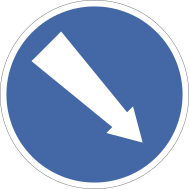
English • IRC:67-2022 • Fig. 14.51 • Keep right. Pass to the right of the island or obstruction indicated.
Sources
🔗 Commons.wikimedia.org
🔗 My.folderit.com • IRC:67-2022 • primary-text mirror • PDF page98
SVG source: Indian Roads Congress • Public domain • Original revision 2025-03-22. Wikimedia original unmodified.
42. Mandatory left
This traffic sign indicates a mandatory direction to the left. Traffic must proceed to the left at the sign and may not continue straight ahead or to the right.
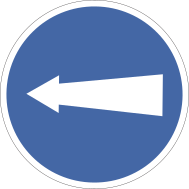
English • IRC:67-2022 • Fig. 14.47 • Compulsory turn left. Follow the leftward direction indicated.
Sources
🔗 Commons.wikimedia.org
🔗 My.folderit.com • IRC:67-2022 • primary-text mirror • PDF page97
SVG source: Indian Roads Congress • Public domain • Original revision 2025-03-22. Wikimedia original unmodified.
Artwork verified against My.folderit.com • official published diagram 14.47.
43. Mandatory right
This traffic sign indicates a mandatory direction to the right. Traffic must proceed to the right at the sign and may not continue straight ahead or to the left.
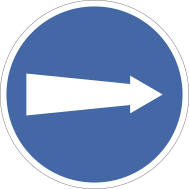
English • IRC:67-2022 • Fig. 14.46 • Compulsory turn right. Follow the rightward direction indicated.
Sources
🔗 Commons.wikimedia.org
🔗 My.folderit.com • IRC:67-2022 • primary-text mirror • PDF page97
SVG source: Indian Roads Congress • Public domain • Original revision 2025-03-22. Wikimedia original unmodified.
Artwork verified against My.folderit.com • official published diagram 14.46.
44. Driving straight ahead mandatory
This traffic sign indicates that driving straight ahead is mandatory. Traffic must continue straight ahead and may not turn left or right at the location to which the sign applies.
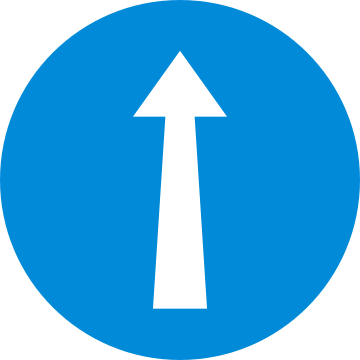
English • IRC:67-2022 • Fig. 14.43 • Ahead only. Continue straight ahead.
Sources
🔗 Commons.wikimedia.org (Ministry of Road Transport & Highways, Govt. of India
🔗 Morth.nic.in • Source • GODL-India)
🔗 My.folderit.com • IRC:67-2022 • primary-text mirror • PDF page97
SVG source: Ministry of Road Transport & Highways, Govt. of India • GODL-India • Original revision 2023-06-29. Wikimedia original unmodified. Government data; Government Open Data License - India. Ministry of Road Transport & Highways, Govt. of India, 2023, Compulsory ahead (ahead only), Wikimedia Commons, original SVG revision 2023-06-29, https://commons.wikimedia.org/wiki/File:Indian_Road_Sign_I-VI-1.svg. Source: Book on Road Safety Signage & Signs, https://morth.nic.in/sites/default/files/road_safety_books.pdf. Published under Government Open Data License - India: https://data.gov.in/sites/default/files/Gazette_Notification_OGDL.pdf. No government endorsement is implied.
Artwork verified against My.folderit.com • official published diagram 14.43.
45. Mandatory path for cyclists
This traffic sign indicates a mandatory path for cyclists. Cyclists must use the designated path where the sign applies. Other road users may use the path only where the applicable signs or local rules permit them to do so.
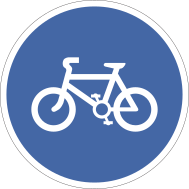
English • IRC:67-2022 • Fig. 14.54 • Compulsory cycle track. Cyclists must use the indicated cycle track; other vehicles may not use it.
Sources
🔗 Commons.wikimedia.org
🔗 My.folderit.com • IRC:67-2022 • primary-text mirror • PDF page99
SVG source: Indian Roads Congress • Public domain • Original revision 2025-03-23. Wikimedia original unmodified.
46. Parking allowed
This traffic sign indicates that parking is allowed. Vehicles may be parked in the area covered by the sign subject to any indicated conditions, restrictions or local parking rules.
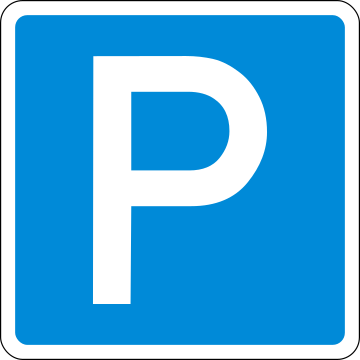
English • IRC:67-2022 • Fig. 18.01 • Parking. Indicates a parking place. Follow any accompanying restrictions.
Sources
🔗 Commons.wikimedia.org
🔗 My.folderit.com • IRC:67-2022 • primary-text mirror • PDF page138
SVG source: Indian Roads Congress • Public domain • Original revision 2023-07-02. Wikimedia original unmodified.
