


CurveIceland
 Traffic rules
 Iceland
9. Curve
A curve is a section of road that changes direction to the left or right. A sharp, unexpected or poorly visible curve can reduce a driver’s view of approaching traffic, stopped vehicles, pedestrians and other hazards.
Drivers should reduce speed before entering the curve, remain within their lane and use smooth steering, braking and acceleration. Warning signs may indicate the direction of the first curve or a series of successive curves.
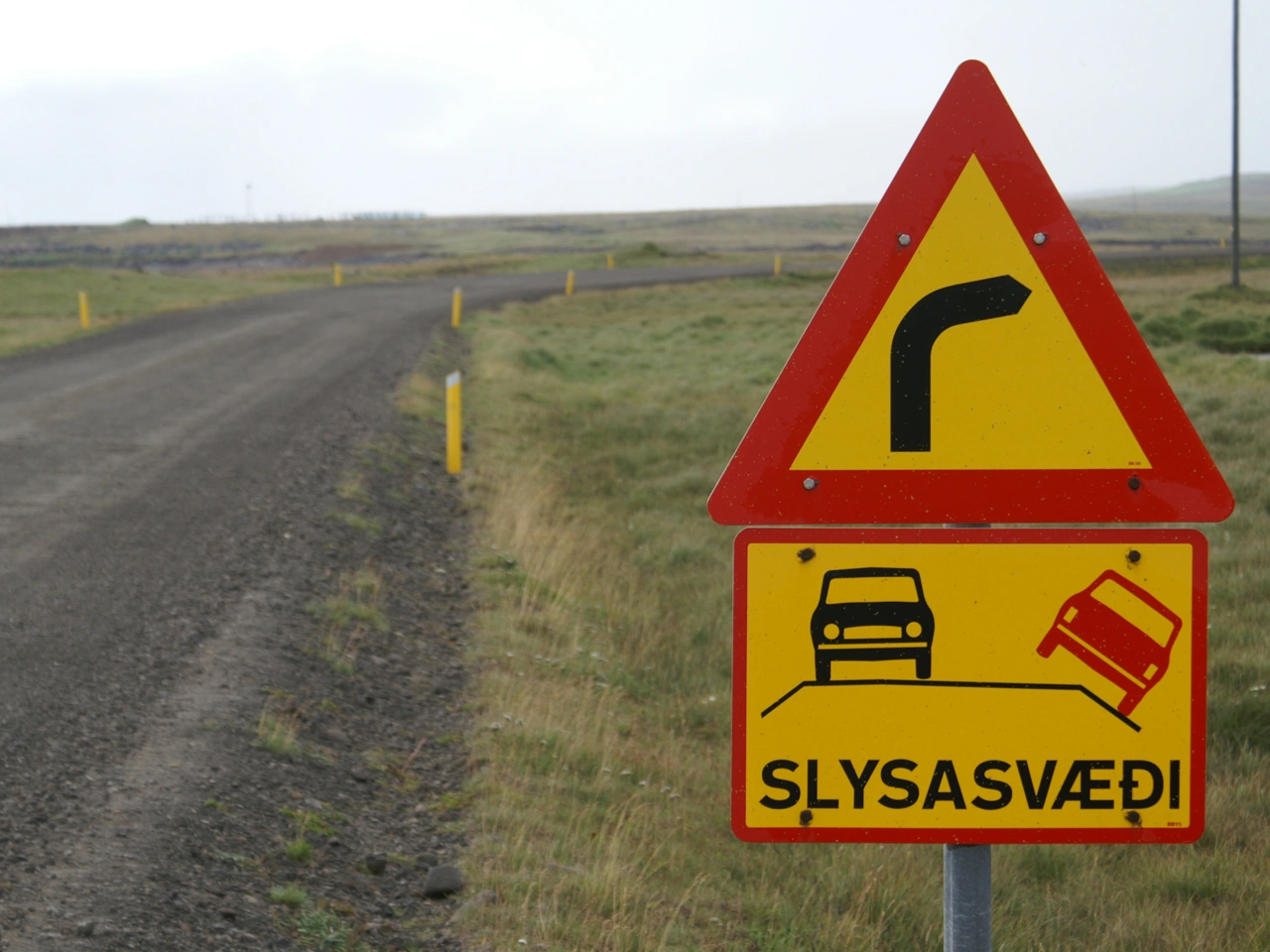
Wikimedia.org • Dickelbers • CC BY-SA
What makes a bend dangerous in Iceland?
A bend can hide traffic and shorten your stopping view. Watch for a tightening curve, changing grip and road users hidden beyond it. Slow before entering and choose a speed that lets you stop within the visible distance.
🔗 reglugerd.is • Iceland: Regulation signs 100,102; Act sections 25,36
🔗 althingi.is • Iceland: Road Traffic Act 77/2019, edition 1 October 2026
How should you approach a sharp curve in Iceland?
Slow down before the bend, select the correct lane position, look through the curve and steer smoothly. Keep enough grip and visible stopping distance for the road and weather conditions.
🔗 reglugerd.is • Iceland: Regulation signs 100,102; Act sections 25,36
🔗 althingi.is • Iceland: Road Traffic Act 77/2019, edition 1 October 2026
Is overtaking safe on a blind bend in Iceland?
Do not overtake when a bend, crest or other obstruction restricts the view, unless you can use a lane in which opposing traffic is prohibited. The Act excludes bicycles and light mopeds travelling at the road edge from this specific prohibition, but the general safety conditions for overtaking still apply.
🔗 reglugerd.is • Iceland: Regulation signs 100,102; Act sections 25,36
🔗 althingi.is • Iceland: Road Traffic Act 77/2019, edition 1 October 2026


