


Traffic lightsIceland
 Traffic rules
 Iceland
10. Traffic lights
Traffic lights use coloured lights, arrows or symbols to regulate when road users may proceed, must prepare to stop or must remain stopped. Separate signals may apply to particular directions, lanes, pedestrians, cyclists or public-transport vehicles.
A green light permits movement only when the route is clear and the movement is otherwise legal. Road users must still follow priority rules, turning restrictions, lane markings and instructions from authorised traffic controllers.
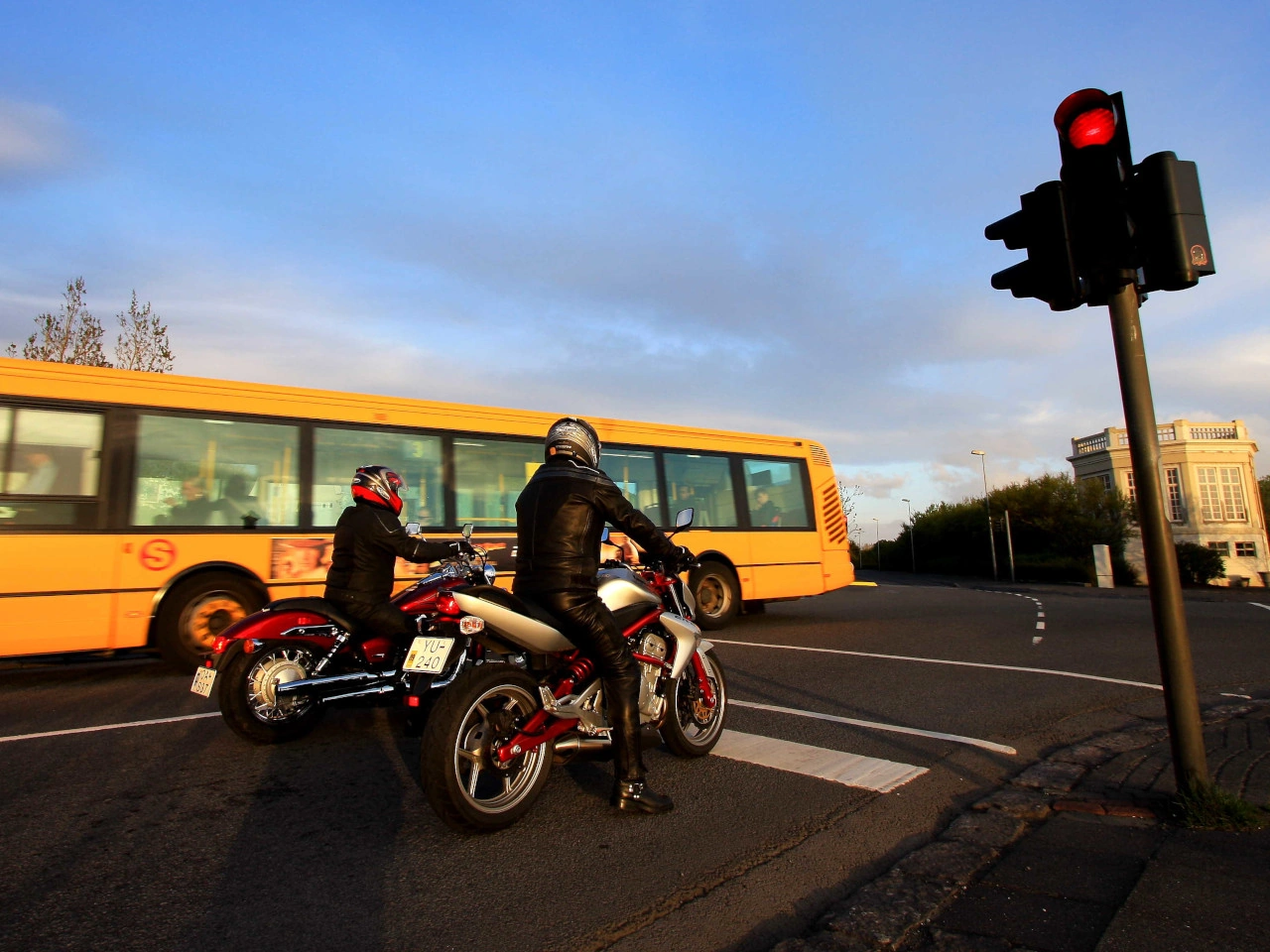
Wikimedia.org • Helgi Halldórsson • CC BY-SA
What must a driver do at red, amber and green signals in Iceland?
Red means stop. Red-and-amber still means stop. Steady amber also requires stopping unless you are too close to stop safely. Green permits movement only in a lawful direction, with due care for other road users. Follow the applicable stop line, directional signals and junction-clearance rules.
🔗 althingi.is • Iceland, Act 77/2019 sections 7, 19, 27; Regulation 250/2024 sections 41-42
May you turn at a red traffic light in Iceland?
A plain red signal does not permit a turn. An applicable separate green arrow controls only the direction it indicates. Do not treat a clear road or another country’s practice as permission to turn on red.
🔗 althingi.is • Iceland, Act 77/2019 sections 7, 19, 27; Regulation 250/2024 sections 41-42
Can a green light remove the need to give way to pedestrians in Iceland?
No. Drivers must allow pedestrians already on a controlled crossing to pass even when the vehicle signal permits movement. Turning drivers must proceed slowly and wait for pedestrians lawfully on, or about to enter, that crossing.
🔗 althingi.is • Iceland, Act 77/2019 sections 7, 19, 27; Regulation 250/2024 sections 41-42


