


Mandatory signsJapan
 Traffic rules
 Japan
 Priority signs
 Warning signs
 Prohibitory signs
 Mandatory signs
 Information signs
 Additional signs
Mandatory signs
A mandatory sign is a traffic sign that tells drivers what they must do. Instead of prohibiting actions, these signs impose obligations such as following a specific direction, using a particular lane, or keeping a minimum speed. Their purpose is to guide traffic safely and efficiently by ensuring that all road users follow the same required behaviour in places where it is necessary for order and safety.


How are compulsory instructions shown in Japan?
Regulatory signs also designate required traffic methods or permitted routes. Do not assume they only prohibit actions.
🔗 laws.e-gov.go.jp • e-Gov — current enforced Road Traffic Act, revision metadata and full text
🔗 npa.go.jp • NPA — Traffic Lights and Road Signs, official English definitions
🔗 npa.go.jp • NPA — traffic instruction handbook, sign groups and road use; read with current Act
What does a mandatory-direction sign require in Japan?
Where a compulsory-direction sign is installed in Japan, follow only the arrow direction or permitted combination of directions. The restriction applies at the location or movement it regulates; it is not an instruction to ignore other traffic controls.
🔗 laws.e-gov.go.jp • e-Gov — current enforced Road Traffic Act, revision metadata and full text
🔗 npa.go.jp • NPA — Traffic Lights and Road Signs, official English definitions
🔗 npa.go.jp • NPA — traffic instruction handbook, sign groups and road use; read with current Act
Does a mandatory-direction sign give me priority over pedestrians in Japan?
No. It tells you which way to move, not who goes first. Check traffic lights, other priority signs, pedestrians and cyclists, and give way when required before completing the manoeuvre.
🔗 laws.e-gov.go.jp • e-Gov — current enforced Road Traffic Act, revision metadata and full text
🔗 npa.go.jp • NPA — Traffic Lights and Road Signs, official English definitions
🔗 npa.go.jp • NPA — traffic instruction handbook, sign groups and road use; read with current Act

1. Mandatory roundabout direction
This traffic sign indicates the mandatory direction around a roundabout. Traffic must circulate in the direction shown by the arrows. The sign does not itself determine priority; follow the applicable priority signs, traffic signals and local rules.
English • Traffic sign 327の10 • Clockwise roundabout circulation. Travel clockwise around the circular junction.
日本語 • 327の10 • 環状の交差点における右回り通行。 環状交差点では右回り、つまり時計回りに通行してください。
Sources
🔗 Commons.wikimedia.org
🔗 Laws.e-gov.go.jp • 道路標識、区画線及び道路標示に関する命令、別表第一・第二
🔗 Mlit.go.jp • 国土交通省、道路標識一覧
🔗 Npa.go.jp • 警察庁、交通規制基準(令和8年3月16日改正)、PDF 148ページ
SVG source: Monaneko • Public domain • Original revision 2017-10-15. Wikimedia original unmodified.
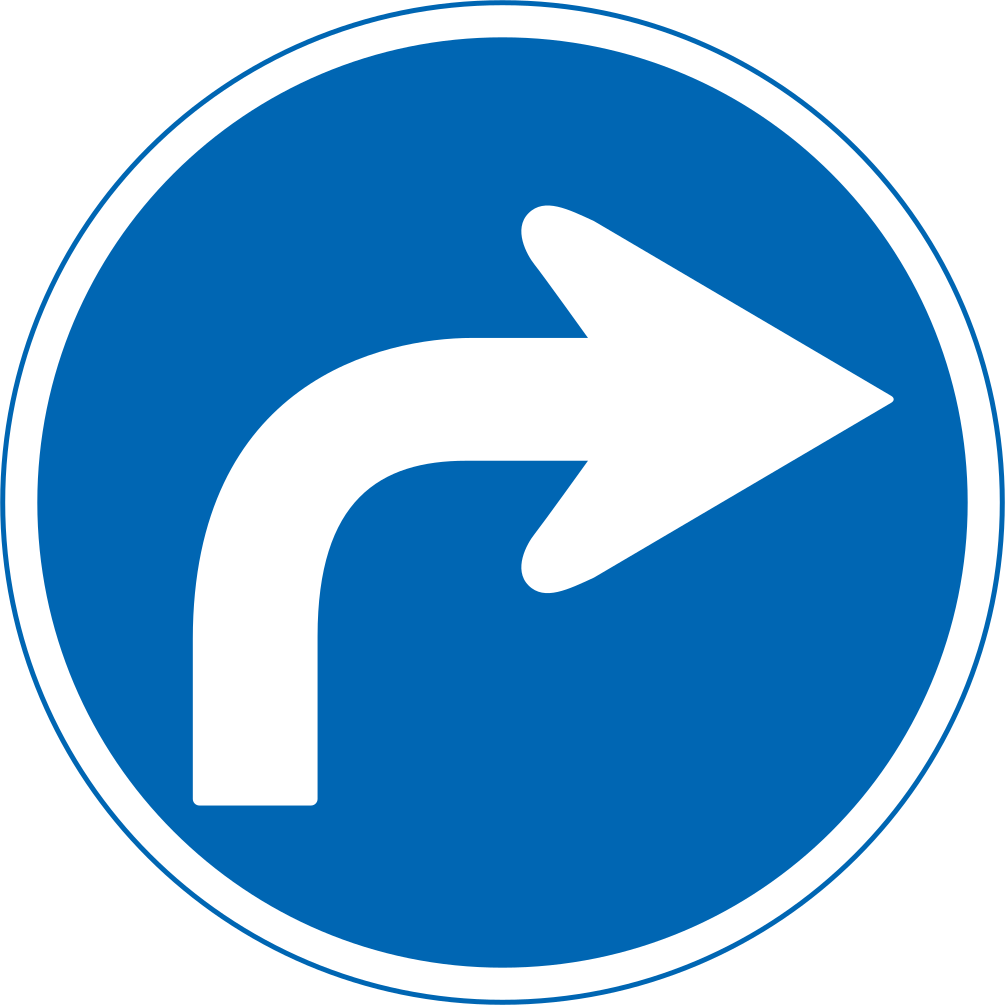
2. Turning right mandatory
This traffic sign indicates that turning right is mandatory at the junction ahead. Traffic must turn right and may not continue straight ahead or turn left.
English • Traffic sign 311-B • Right turn only. Directions other than the rightward arrow are prohibited. Turn right here.
日本語 • 311-B • 指定方向外進行禁止:右折。 矢印の示す右方向以外への進行を禁止しています。この場所では右折してください。
Sources
🔗 Commons.wikimedia.org
🔗 Laws.e-gov.go.jp • 道路標識、区画線及び道路標示に関する命令、別表第一・第二
🔗 Mlit.go.jp • 国土交通省、道路標識一覧
SVG source: Fry1989 • Public domain • Original revision 2013-06-20. Wikimedia original unmodified.
3. Pass obstacle on the left
This traffic sign indicates that traffic must pass an obstacle on the left. Keep to the left of the obstacle and follow any accompanying signs or road markings.
English • Traffic sign 311-F • Pass on the left only. Follow the arrow; do not pass on the obstacle's right.
日本語 • 311-F • 指定方向外進行禁止:左側を通行。 矢印が示す左側を通行してください。障害物などの右側には進めません。
Sources
🔗 Commons.wikimedia.org
🔗 Laws.e-gov.go.jp • 道路標識、区画線及び道路標示に関する命令、別表第一・第二
🔗 Mlit.go.jp • 国土交通省、道路標識一覧
SVG source: Monaneko • Public domain • Original revision 2013-06-20. Wikimedia original unmodified.
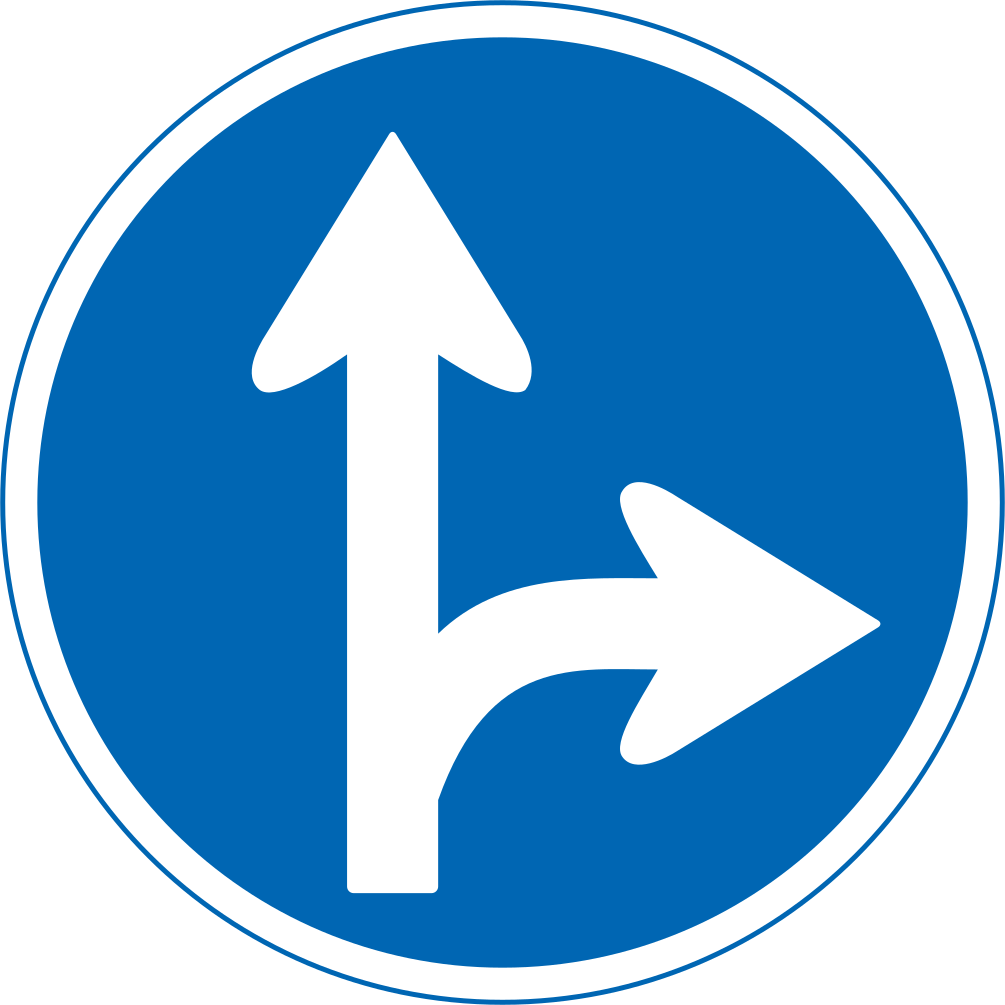
4. Driving straight ahead or turning right mandatory
This traffic sign indicates that traffic must continue straight ahead or turn right. One of the indicated directions must be followed; turning left is prohibited.
English • Traffic sign 311-A • Straight ahead or right only. Directions not indicated by the arrows are prohibited.
日本語 • 311-A • 指定方向外進行禁止:直進・右折。 直進または右折の方向に進めます。矢印で示されていない方向には進めません。
Sources
🔗 Commons.wikimedia.org
🔗 Laws.e-gov.go.jp • 道路標識、区画線及び道路標示に関する命令、別表第一・第二
🔗 Mlit.go.jp • 国土交通省、道路標識一覧
SVG source: Fry1989 • Public domain • Original revision 2013-06-20. Wikimedia original unmodified.
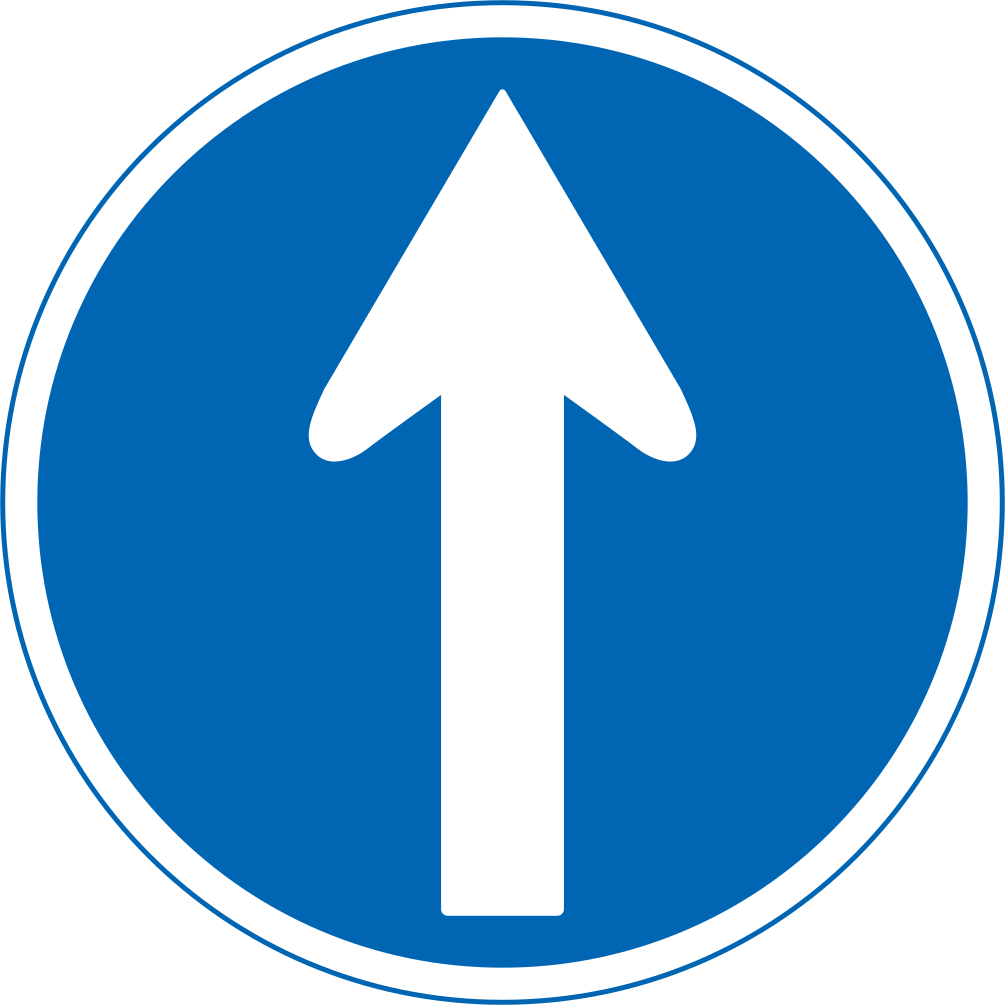
5. Driving straight ahead mandatory
This traffic sign indicates that driving straight ahead is mandatory. Traffic must continue straight ahead and may not turn left or right at the location to which the sign applies.
English • Traffic sign 311-C • Straight ahead only. Travel in directions other than the forward arrow is prohibited.
日本語 • 311-C • 指定方向外進行禁止:直進。 矢印の示す直進方向以外への進行を禁止しています。
Sources
🔗 Commons.wikimedia.org
🔗 Laws.e-gov.go.jp • 道路標識、区画線及び道路標示に関する命令、別表第一・第二
🔗 Mlit.go.jp • 国土交通省、道路標識一覧
SVG source: Monaneko • Public domain • Original revision 2013-06-20. Wikimedia original unmodified.
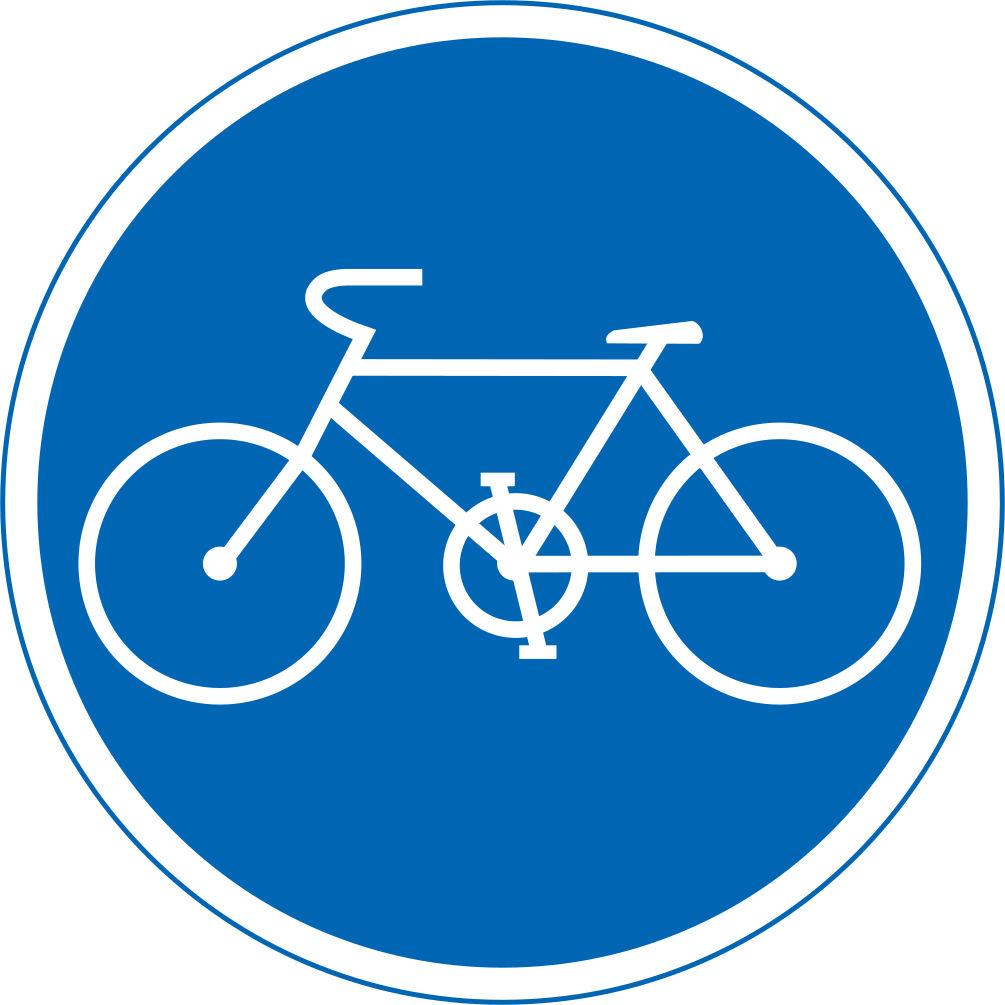
6. Mandatory path for cyclists
This traffic sign indicates a mandatory path for cyclists. Cyclists must use the designated path where the sign applies. Other road users may use the path only where the applicable signs or local rules permit them to do so.
English • Traffic sign 325の2 • Specified small motorised bicycles and bicycles only. Indicates a cycle path, bicycle-only road or road for these categories. Do not rely on the older bicycle-only name; check supplementary signs locally.
日本語 • 325の2 • 特定小型原動機付自転車・自転車専用。 自転車道、自転車専用道路、または特定小型原動機付自転車と自転車のための道路であることを示します。自転車だけを対象とする旧来の名称で判断せず、現地の補助標識も確認してください。
Sources
🔗 Commons.wikimedia.org
🔗 Laws.e-gov.go.jp • 道路標識、区画線及び道路標示に関する命令、別表第一・第二
🔗 Mlit.go.jp • 国土交通省、道路標識一覧
🔗 Npa.go.jp • 警察庁、交通規制基準(令和8年3月16日改正)、PDF 66ページ
SVG source: Monaneko • Public domain • Original revision 2021-10-06. Wikimedia original unmodified.
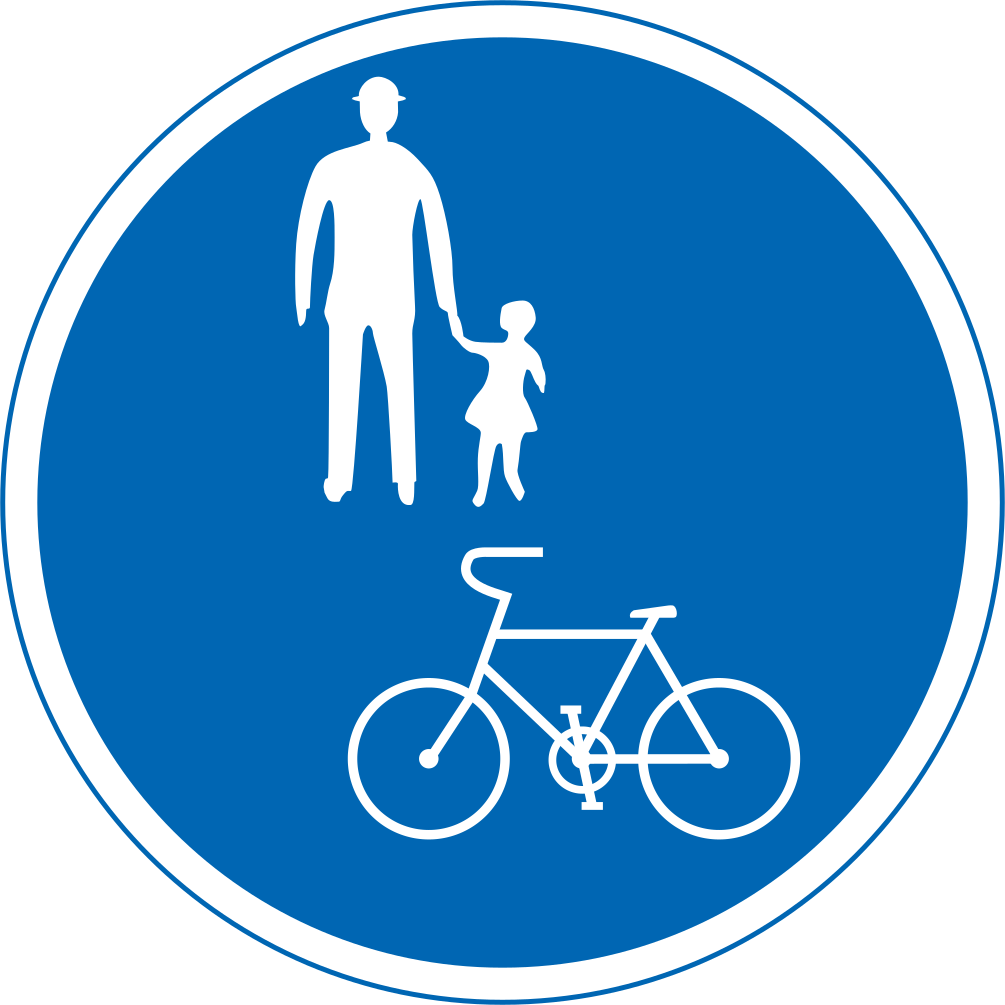
7. Mandatory shared pedestrian and cycle path
This traffic sign indicates a mandatory shared path for pedestrians and cyclists. Pedestrians and cyclists must use the same designated path rather than separate sections. They must share the space safely and follow the applicable local rules.
English • Traffic sign 325の3 • Ordinary bicycles and similar users, and pedestrians only. Indicates a road for bicycles and pedestrians, or a pavement usable by ordinary bicycles and related categories. Also concerns eligible specified small motorised bicycles; check the road type and supplementary signs. Give pedestrians priority on pavements.
日本語 • 325の3 • 普通自転車等及び歩行者等専用。 自転車と歩行者のための道路、または普通自転車等が通行できる歩道を示します。対象となる特定小型原動機付自転車の通行にも関係するため、道路の種類と補助標識を確認してください。歩道では歩行者を優先してください。
Sources
🔗 Commons.wikimedia.org
🔗 Laws.e-gov.go.jp • 道路標識、区画線及び道路標示に関する命令、別表第一・第二
🔗 Mlit.go.jp • 国土交通省、道路標識一覧
🔗 Npa.go.jp • 警察庁、交通規制基準、PDF 175ページ(歩道通行の用法)
🔗 Npa.go.jp • 警察庁、交通規制基準(令和8年3月16日改正)、PDF 67ページ
SVG source: Monaneko • Public domain • Original revision 2021-10-06. Wikimedia original unmodified.
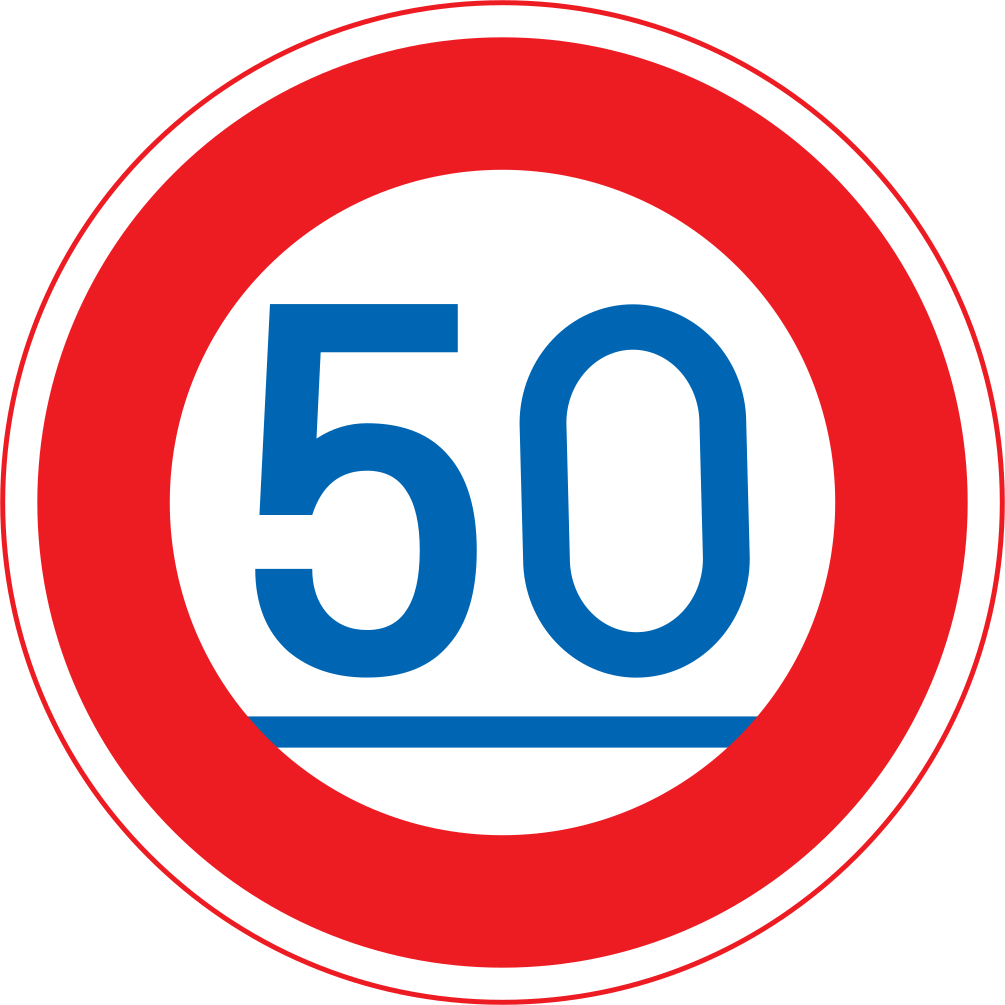
8. Start of a minimum speed
This traffic sign indicates the start of a minimum speed. Road users covered by the sign must travel at or above the indicated speed when conditions allow. Driving more slowly may still be necessary because of traffic, weather, road conditions or another safety-related reason.
English • Traffic sign 324 • Minimum speed: 50 km/h. Sets the minimum for motor vehicles. It does not require maintaining that speed when safety demands otherwise.
日本語 • 324 • 最低速度:50 km/h。 自動車の最低速度を時速50キロメートルに指定しています。安全上必要な場合にも無理に速度を維持するという意味ではありません。
Sources
🔗 Commons.wikimedia.org
🔗 Laws.e-gov.go.jp • 道路標識、区画線及び道路標示に関する命令、別表第一・第二
🔗 Mlit.go.jp • 国土交通省、道路標識一覧
🔗 Npa.go.jp • 警察庁、交通規制基準(令和8年3月16日改正)、PDF 137ページ
SVG source: Monaneko • Public domain • Original revision 2013-08-19. Wikimedia original unmodified.
