AmbulancePhilippines

An introduction to the traffic rules and road signs of Philippines. Learn about driving, road safety and much more in our illustrated book, with answers to frequently asked questions.

For informational purposes only. Always follow official regulations. Some content and images were created with AI assistance.


30. Ambulance

An ambulance is a vehicle equipped and used to provide emergency medical assistance or transport patients to or between healthcare facilities. Ambulances may carry medical equipment and trained personnel who can provide treatment during transport.

During an emergency response, an ambulance may use warning lights and a siren and may receive special priority or exemptions from certain traffic rules. Other road users must follow the local rules for emergency vehicles, make sufficient space and avoid obstructing their passage.
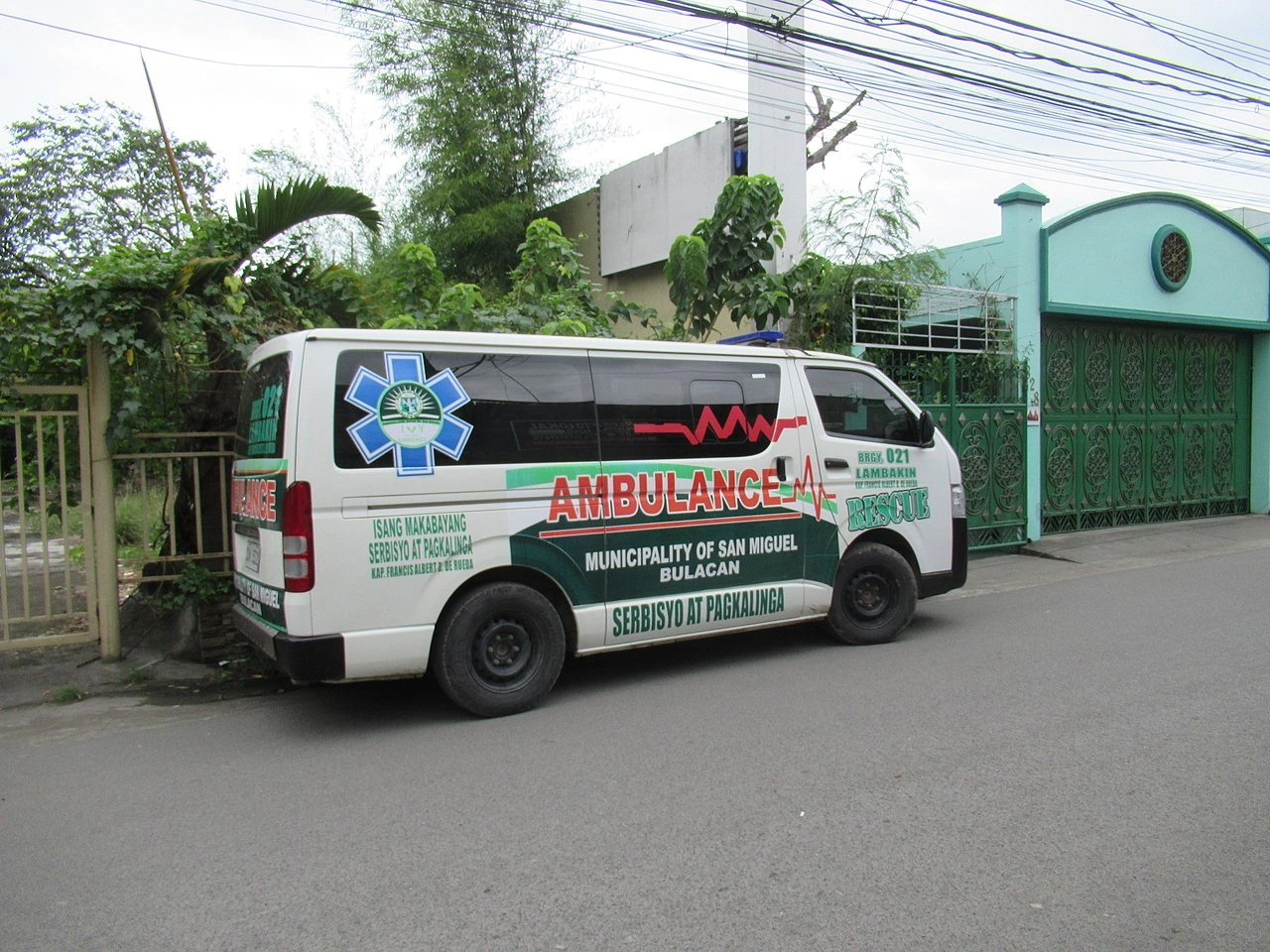
Ambulance
Ambulance in the Philippines.
Wikimedia.org • SwarmCheng • CC BY-SA
What is an ambulance?

An ambulance is a specially equipped vehicle used to provide emergency medical assistance and transport sick or injured people.

🔗 wetten.overheid.nl • Vienna Convention on Road Traffic, Article 34, priority vehicles and national exemptions; international framework subject to national law

🔗 gov.uk • Great Britain Highway Code, Rule 219, emergency vehicles; national guidance example

What should you do when an ambulance approaches?

Make space safely for an ambulance on an emergency response, following the local rules and any lawful directions. Slow down or stop where necessary without sudden or dangerous movements. Do not assume that its emergency status allows you to pass a red light or disregard another traffic control.

🔗 wetten.overheid.nl • Vienna Convention on Road Traffic, Article 34, priority vehicles and national exemptions; international framework subject to national law

🔗 gov.uk • Great Britain Highway Code, Rule 219, emergency vehicles; national guidance example

Can an ambulance exceed the speed limit?

Many countries permit emergency vehicles to depart from certain normal speed rules during an urgent mission, subject to safety requirements and national legislation.

🔗 wetten.overheid.nl • Vienna Convention on Road Traffic, Article 34, priority vehicles and national exemptions; international framework subject to national law

🔗 gov.uk • Great Britain Highway Code, Rule 219, emergency vehicles; national guidance example

1 Philippines 2 Speed limit 3 Bike path 4 Bridge 5 Toll road 6 One-way traffic 7 Stop sign 8 Give way 9 Pedestrian crossing 10 Railway crossing 11 Turn prohibition 12 School area 13 Overtaking 14 Curve 15 Chevron 16 Roadworks 17 Weight limit 18 Traffic lights 19 Pedestrian lights 20 Driving licence 21 Parking 22 No parking 23 Reversing 24 Uncontrolled crossroad 25 Provisional licence 26 Licence plate 27 Charging station 28 Bus 29 Police 30 Ambulance 31 Pothole 32 Path 33 Particulates 34 Air pollution 35 Rush hour 36 Road code 37 Street gutter 38 Cargo bike 39 Forestry vehicle 40 Construction vehicle 41 Semi-trailer truck 42 Trolleybus 43 Speed pedelec 44 Delivery vehicle 45 Idling 46 Tow truck 47 Four-wheel drive 48 Bicycle 49 Motorcycle equipment 50 Rail track 51 Caravan 52 Trailer 53 Tow hitch 54 Fire truck 55 Siren 56 Convoy 57 Emergency vehicle lighting 58 Agricultural machinery 59 Electric bicycle 60 Electric vehicle 61 Pedelec 62 Quadricycle 63 Microcar 64 All-terrain vehicle 65 Van 66 Recreational vehicle 67 Scooter 68 Trikke 69 Personal mobility device 70 Skateboard 71 Segway 72 Kick scooter 73 Roller skates 74 Mailman 75 Hitchhiker 76 Toddler 77 Child 78 Disability 79 Motorail 80 km/h 81 mph 82 Speedometer 83 Ride height 84 Dirt road 85 Driving 86 Start-stop system 87 Manual transmission 88 Automatic transmission 89 Throttle 90 Tachometer 91 Steering wheel 92 Power steering 93 Visual scanning 94 Mirror 95 Fuel 96 Fuel gauge 97 Petrol 98 Diesel 99 Diesel exhaust fluid 100 Car insurance ...