
Slippery roadRomania

Learn traffic rules with clear explanations and visual examples in our illustrated book, designed to make studying simple and engaging.


9. Slippery road

A slippery road has reduced tyre grip and can make steering, braking and acceleration less effective. Roads may become slippery because of rain, ice, snow, mud, oil, loose material or other substances on the surface. Drivers should reduce speed, increase their following distance and avoid sudden steering, braking or acceleration. Extra caution is needed in bends, on bridges and wherever the road surface changes unexpectedly.
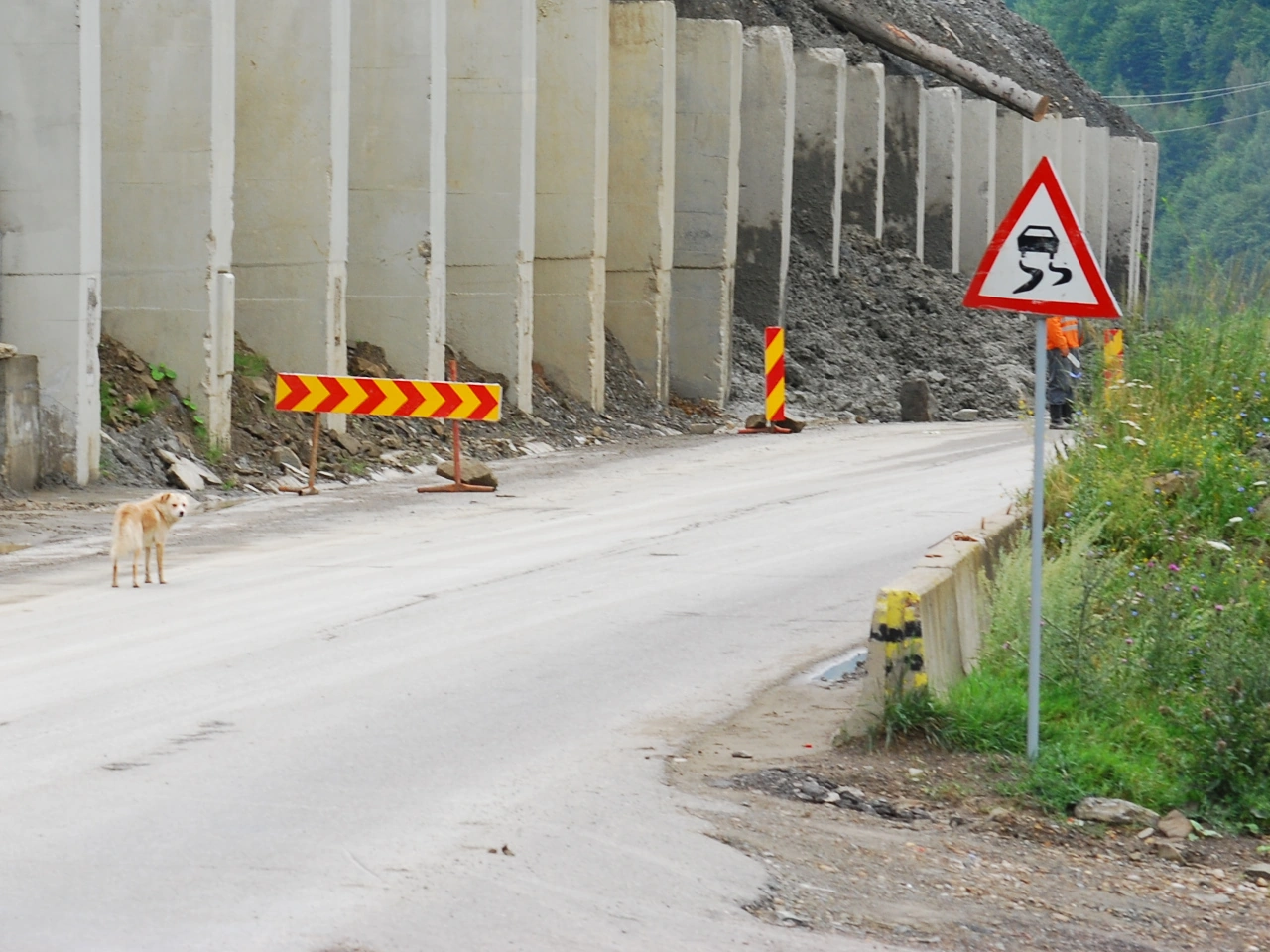
Slippery road
Rockfall on national road DN10 near Siriu Lake. (Romania)
Wikimedia.org • Andrei_Stroe • CC BY-SA
What makes a road slippery?

A road can become slippery because of rain, ice, snow, mud, oil, loose material or other substances that reduce tyre grip.

How should you drive on a slippery road?

Reduce speed, increase your following distance and use smooth steering, braking and acceleration. Sudden movements can cause the tyres to lose grip.

Why does braking distance increase on a slippery road?

Reduced tyre grip means the tyres cannot generate as much braking force, so the vehicle may need a longer distance to slow down or stop.

Can a road be slippery even when it looks dry?

Yes. Oil, dust, loose material or a thin layer of ice can reduce grip even when the road does not appear obviously wet or slippery.

Are bends more dangerous on slippery roads?

Yes. Turning requires tyre grip, so a slippery surface can make it easier for the vehicle to skid or leave its intended path, especially at higher speeds.

What should you do if your vehicle starts to skid?

Stay calm and avoid sudden braking or steering. Make smooth corrections and allow the tyres to regain grip. The correct response can depend on the vehicle and its safety systems.

1 Romania 2 Motorway 3 Built-up area 4 Speed limit 5 Stop sign 6 Priority road 7 Railway crossing 8 School area 9 Slippery road 10 Roadworks 11 Radar speed sign 12 Traffic lights 13 Driving licence 14 International border 15 No stopping 16 Traffic management 17 Reversing 18 Road surface 19 Licence plate 20 Bus 21 Police 22 Ambulance 23 European emission standard 24 Pothole 25 Path 26 Particulates 27 Air pollution 28 Rush hour 29 Road code 30 Street gutter 31 Cargo bike 32 Forestry vehicle 33 Construction vehicle 34 Semi-trailer truck 35 Trolleybus 36 Speed pedelec 37 Delivery vehicle 38 Idling 39 Tow truck 40 Four-wheel drive 41 Bicycle 42 Motorcycle equipment 43 Rail track 44 Caravan 45 Trailer 46 Tow hitch 47 Fire truck 48 Siren 49 Convoy 50 Emergency vehicle lighting 51 Agricultural machinery 52 Electric bicycle 53 Electric vehicle 54 Pedelec 55 Quadricycle 56 Microcar 57 All-terrain vehicle 58 Van 59 Recreational vehicle 60 Scooter 61 Trikke 62 Personal mobility device 63 Skateboard 64 Segway 65 Kick scooter 66 Roller skates 67 Mailman 68 Hitchhiker 69 Toddler 70 Child 71 Disability 72 Motorail 73 km/h 74 mph 75 Speedometer 76 Ride height 77 Dirt road 78 Driving 79 Start-stop system 80 Manual transmission 81 Automatic transmission 82 Throttle 83 Tachometer 84 Steering wheel 85 Power steering 86 Visual scanning 87 Mirror 88 Fuel 89 Fuel gauge 90 Petrol 91 Diesel 92 Diesel exhaust fluid 93 Car insurance 94 First aid kit 95 Fire extinguisher 96 High-visibility clothing 97 First aid 98 Concrete step barrier 99 Barriers 100 Vehicle lights ...