


Double curveTurkey
 Traffic rules
 Turkey
206. Double curve
A double curve is a road section containing two successive curves in opposite directions. The first curve may turn left and then right, or right and then left.
The same warning sign may also indicate a longer succession of curves. Drivers should reduce speed before the first curve, remain within their lane and be prepared for the following curves to differ in direction, sharpness and length.
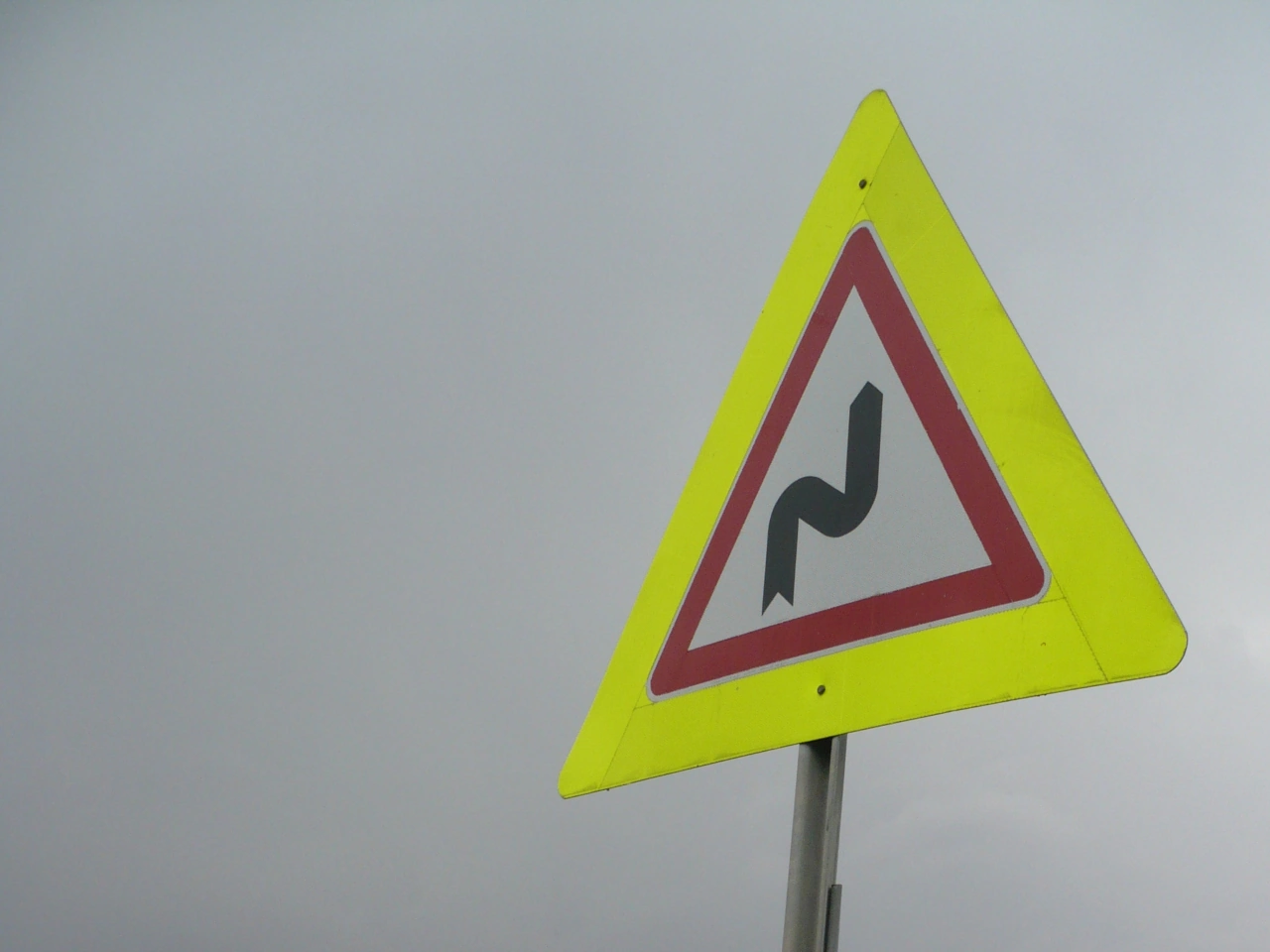
Wikimedia.org • Vikiçizer • CC BY-SA
What is a double curve?
A double curve consists of two successive curves in opposite directions.
How can you recognise a double-curve warning sign?
It normally shows an S-shaped road symbol. The symbol indicates whether the first curve turns left or right.
What does first curve to the left mean?
It means that the road first bends left and is then followed by a curve in the opposite direction.
What does first curve to the right mean?
It means that the road first bends right and is then followed by a curve in the opposite direction.
Can the sign warn of more than two curves?
Yes. In many countries, the same sign may warn of a longer succession of curves. A supplementary panel may indicate the length of the winding section.
Does the sign show the exact shape of every curve?
No. It normally shows only the general direction of the first curves. Their radius, length and spacing may be different from the symbol.
Does a double-curve sign impose a speed limit?
No. It normally warns of danger rather than establishing a numerical limit. Drivers must reduce speed whenever the legal maximum would be unsafe.
When should you reduce speed?
Reduce speed before entering the first curve, while the vehicle is still travelling straight and has maximum stability.
Should you accelerate between the two curves?
Do not accelerate strongly merely because there is a short straight section between them. Maintain a controlled speed until the direction and exit of the following curve are clear.
Should you brake while changing direction?
Avoid harsh braking while steering from one curve into the next. Complete most braking beforehand and use smooth control inputs.
Where should you look?
Look towards the visible road ahead and through each curve while continuing to monitor your lane position, road surface and nearby traffic.
Must you remain within your lane?
Yes. Do not cut across the centre line or another traffic lane to straighten the sequence of curves.
Why can a double curve be more difficult than one curve?
The vehicle’s weight shifts from one side to the other, visibility may change rapidly and the second curve may be sharper or closer than expected.
Why should you leave more following distance?
The vehicle ahead may brake unexpectedly for the second curve, an obstruction or changing road conditions that are not yet visible to you.
May you overtake in a double curve?
Do not overtake when you cannot see far enough ahead to complete the manoeuvre safely. Signs, continuous lines and local law may also prohibit overtaking.
May you stop or park in a double curve?
Only where it is permitted and your vehicle remains clearly visible. Stopping or parking where visibility is limited may create a serious hazard.
How do rain, snow or ice affect double curves?
They reduce tyre grip and increase the risk of skidding during the rapid change of direction. Reduce speed earlier and steer, brake and accelerate smoothly.
Why should motorcyclists take extra care?
Motorcyclists must change lean direction between the curves and depend heavily on tyre grip. Loose material, markings or wet surfaces can make the transition hazardous.
How can a double curve affect a trailer or caravan?
A trailer may sway or follow a tighter path through the curves. Excessive speed or abrupt steering can reduce stability.
Why do trucks and buses need additional space?
Long vehicles may track towards the inside of each curve or approach lane boundaries. Other drivers should avoid travelling beside them through a tight sequence.
What should you do if the second curve is sharper than expected?
Look towards the intended path, reduce acceleration and steer smoothly. Avoid sudden braking or crossing into another lane.
Does the absence of a warning sign mean the curves are safe at the speed limit?
No. Drivers must assess every road section and choose a safe speed even when no warning sign is displayed.


