

Priority signsUnited States
 Traffic rules
 United States
 Priority signs
 Warning signs
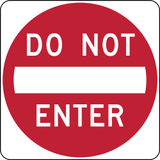 Prohibitory signs
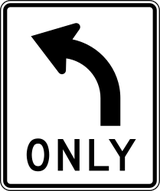 Mandatory signs
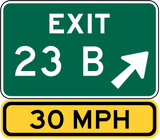 Information signs
Priority signs
A priority sign is a traffic sign that indicates the order in which vehicles shall pass intersection points. Vehicles often come into conflict with other vehicles and pedestrians because their intended courses of travel intersect, and thus interfere with each other's routes. The general principle that establishes who has the right to go first is called 'right of way' or 'priority'. It establishes who has the right to use the conflicting part of the road and who has to wait until the other does so. The vehicle that does not need to wait is said to 'have the right of way' or to 'have priority.'


What should I know about priority signs in the United States?
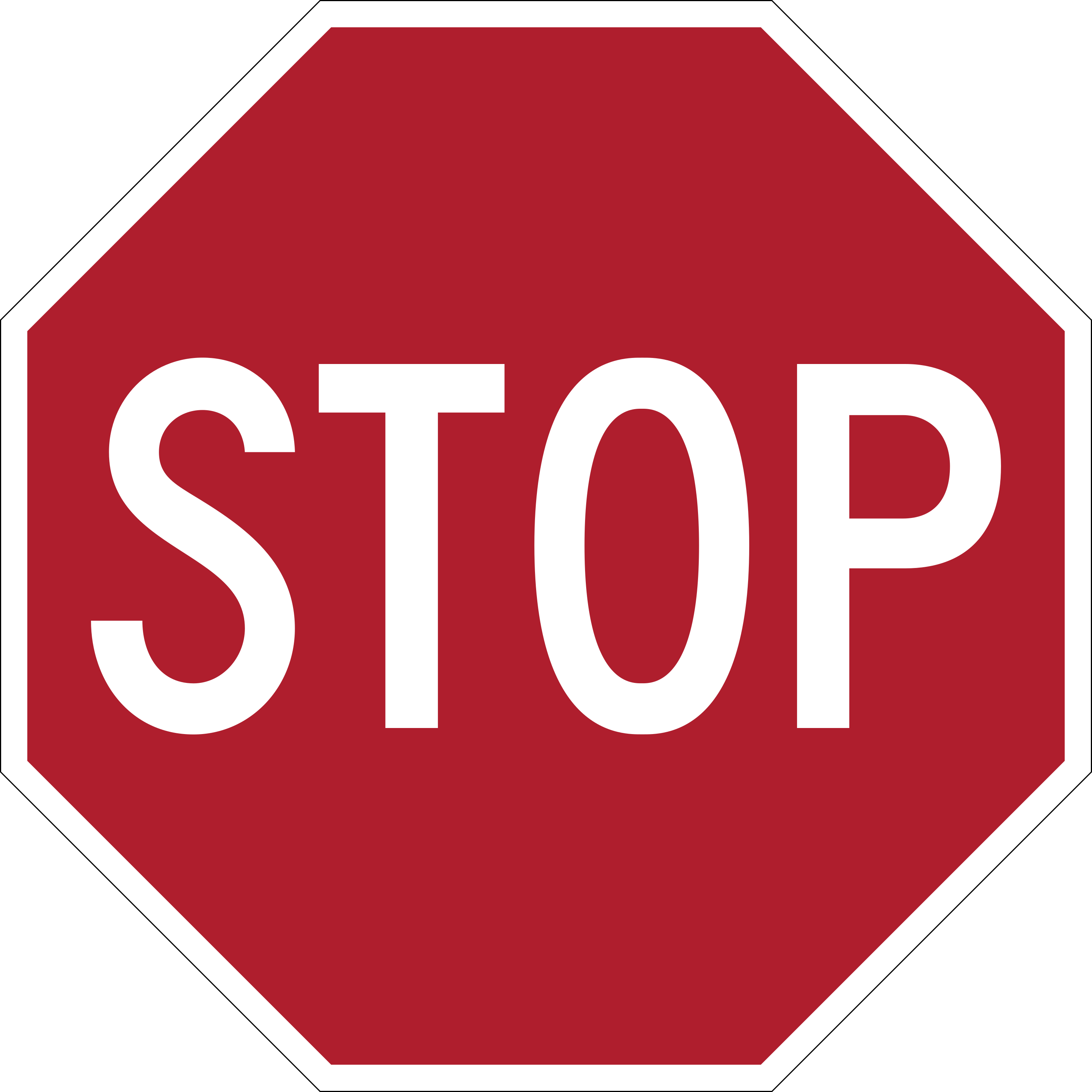
STOP and YIELD are regulatory signs, not a separate federal priority-sign category. STOP adds a compulsory stop.
🔗 dmv.ca.gov • California DMV — signs, junction priority, crosswalks and steep narrow roads
Must you always stop when giving way in the United States?
In California, slow and be ready to stop at Yield. Stop when needed to let the priority road users proceed. A Stop sign requires a complete stop; other states have their own traffic laws.
🔗 dmv.ca.gov • California DMV — signs, junction priority, crosswalks and steep narrow roads

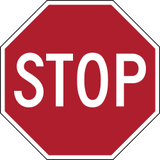
1. Stop and give way
This traffic sign means stop and give way. You must come to a complete stop before entering the intersection and give way to traffic that has priority. Proceed only when it is safe.
English • R1-1 • Stop. Stop completely before entering the junction and proceed only when it is safe.
Sources
🔗 Commons.wikimedia.org
🔗 Mutcd.fhwa.dot.gov • FHWA: MUTCD, 11th Edition with Revision1, PDF page115
SVG source: Federal Highway Administration – United States Department of Transportation • Public domain • Original revision 2024-07-01. Wikimedia original unmodified.
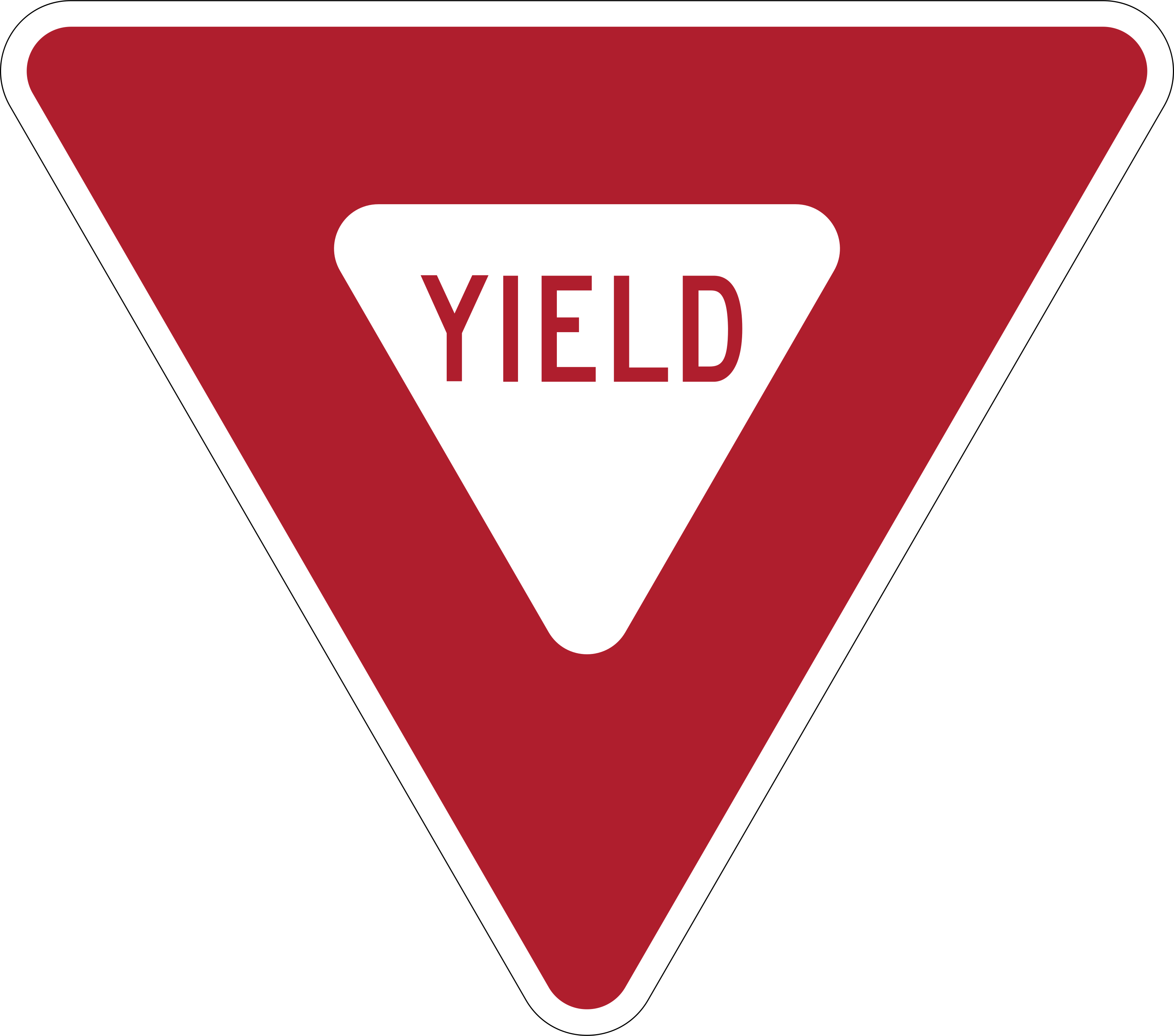
2. Give way
This traffic sign means give way. Slow down and give way to traffic that has priority. Stop if necessary and proceed only when it is safe.
English • R1-2 • Yield. Give way to conflicting traffic. Slow down or stop as necessary before proceeding.
Sources
🔗 Commons.wikimedia.org
🔗 Mutcd.fhwa.dot.gov • FHWA: MUTCD, 11th Edition with Revision1, PDF page115
SVG source: Federal Highway Administration – United States Department of Transportation • Public domain • Original revision 2024-07-03. Wikimedia original unmodified.
3. Give way ahead
This traffic sign indicates give way ahead. A give-way requirement applies at the location ahead. Reduce speed in good time and be prepared to stop if necessary.
English • W3-2 • Yield ahead. Warns of a yield sign ahead. Prepare to slow down and give way.
Sources
🔗 Commons.wikimedia.org
🔗 Mutcd.fhwa.dot.gov • FHWA: MUTCD, 11th Edition with Revision1, PDF page218
SVG source: Federal Highway Administration – United States Department of Transportation • Public domain • Original revision 2024-05-23. Wikimedia original unmodified.
4. Stop and give way ahead
This traffic sign indicates stop and give way ahead. A stop sign applies at the location ahead. Reduce speed in good time and be prepared to come to a complete stop.
English • W3-1 • Stop ahead. Warns of a stop sign ahead. Prepare to stop completely.
Sources
🔗 Commons.wikimedia.org
🔗 Mutcd.fhwa.dot.gov • FHWA: MUTCD, 11th Edition with Revision1, PDF page218
SVG source: Federal Highway Administration – United States Department of Transportation • Public domain • Original revision 2024-05-23. Wikimedia original unmodified.
5. Warning for an uncontrolled crossroad
This traffic sign indicates a warning for an uncontrolled crossroad. An intersection without traffic signals or signs assigning priority lies ahead. Reduce speed, watch for traffic approaching from other directions and follow the applicable local priority rules.
English • W2-1 • Cross road. Warns of a crossroads ahead where traffic may enter or cross your path.
Sources
🔗 Commons.wikimedia.org
🔗 Mutcd.fhwa.dot.gov • FHWA: MUTCD, 11th Edition with Revision1, PDF page220
SVG source: Federal Highway Administration - MUTCD • Public domain • Original revision 2024-05-23. Wikimedia original unmodified.
6. Warning for a side road from the right
This traffic sign indicates a warning for a side road from the right. A side road joins the road ahead from the right at an uncontrolled junction. Reduce speed, watch for traffic entering from the side road and follow the applicable default priority rules.
English • W2-2 • Side road on the right. Warns of a side road joining from the right.
Sources
🔗 Commons.wikimedia.org
🔗 Mutcd.fhwa.dot.gov • FHWA: MUTCD, 11th Edition with Revision1, PDF page220
SVG source: Author not stated on source page • Public domain • Original revision 2024-05-23. Wikimedia original unmodified.
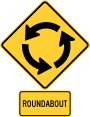
7. Warning for a roundabout
This traffic sign indicates a warning for a roundabout. A roundabout lies ahead. Reduce speed and follow the applicable priority signs, traffic signals and local roundabout rules when approaching and entering it.
English • W2-6 + W16-12aP • Roundabout ahead. Warns of a roundabout ahead. Slow down and follow the signs controlling the approach.
Sources
🔗 Commons.wikimedia.org
🔗 Mutcd.fhwa.dot.gov • FHWA: MUTCD, 11th Edition with Revision1, PDF page220
Image via Commons.wikimedia.org
Federal Highway Administration - MUTCD • Public domain • Source revision 2013-05-10. Wikimedia original unmodified.
