
PoliceUruguay

An introduction to the traffic rules and road signs of Uruguay. Learn about driving, road safety and much more in our illustrated book, with answers to frequently asked questions.

For informational purposes only. Always follow official regulations. Some content and images were created with AI assistance.


14. Police

Police are public authorities responsible for enforcing laws, maintaining public safety and managing situations that may affect road traffic. In traffic, police officers may control vehicles, enforce traffic rules, investigate collisions, direct traffic and respond to emergencies.

Road users must follow lawful instructions given by police officers or other authorised traffic-control personnel. Police directions may temporarily override traffic lights, road signs or normal traffic arrangements, depending on local law.
Police
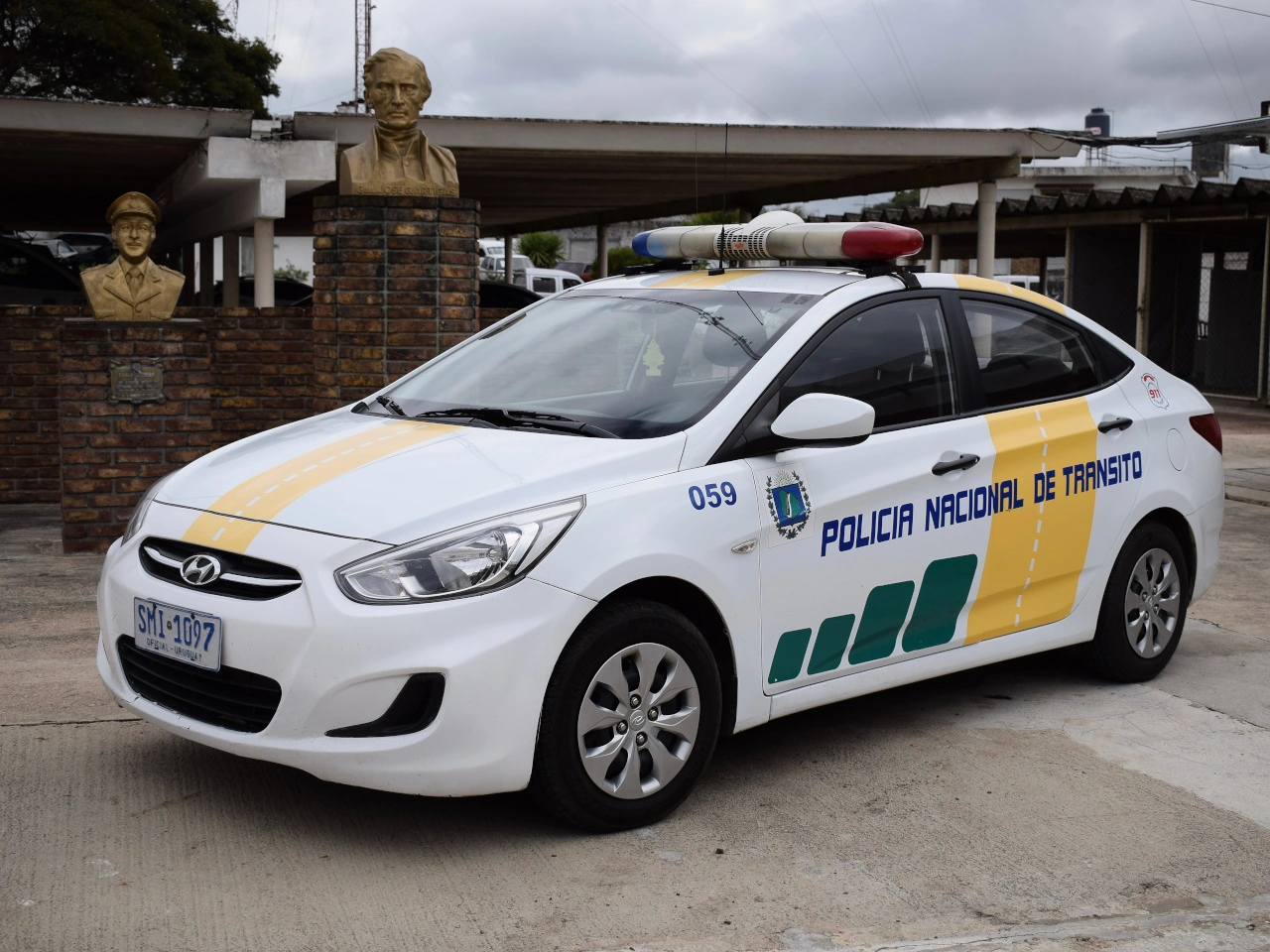
Policía Caminera Hyundai Accent patrol car. (Uruguay)
Wikimedia.org • Daniel Segovia Kravies • CC BY-SA
What is the role of police in road traffic?

Police help enforce traffic law, investigate collisions and respond to risks on the road. For example, Greater Manchester Police describe targeted road enforcement, a round-the-clock roads-policing response and specialist serious-collision investigation. Exact responsibilities and powers vary by jurisdiction.

🔗 gmp.police.uk • Greater Manchester Police, Roads Policing Strategy2024–2026

Must you obey a police officer directing traffic?

Yes. Lawful directions given by an authorised police officer must be followed. In many countries, those directions take precedence over traffic lights, road signs and normal priority rules.

🔗 wetten.overheid.nl • Vienna Convention on Road Traffic, Articles 5–6, authorised officials and directions; international framework subject to national law

What should you do if police signal you to stop?

Slow down, follow the officer's directions and stop at a safe location as instructed. Do not make sudden movements or continue driving unless directed to do so.

🔗 wetten.overheid.nl • Vienna Convention on Road Traffic, Articles 5–6, authorised officials and directions; international framework subject to national law

1 Uruguay 2 Pedestrian warning 3 Speed bump 4 Stop sign 5 Roundabout 6 Railway crossing 7 Curve 8 Wrong-way driving 9 Traffic lights 10 Location marker 11 No parking 12 Reversing 13 Bus 14 Police 15 Ambulance 16 Pothole 17 Path 18 Particulates 19 Air pollution 20 Rush hour 21 Road code 22 Street gutter 23 Cargo bike 24 Forestry vehicle 25 Construction vehicle 26 Semi-trailer truck 27 Trolleybus 28 Speed pedelec 29 Delivery vehicle 30 Idling 31 Tow truck 32 Four-wheel drive 33 Bicycle 34 Motorcycle equipment 35 Rail track 36 Caravan 37 Trailer 38 Tow hitch 39 Siren 40 Convoy 41 Emergency vehicle lighting 42 Agricultural machinery 43 Electric bicycle 44 Electric vehicle 45 Pedelec 46 Quadricycle 47 Microcar 48 All-terrain vehicle 49 Van 50 Recreational vehicle 51 Scooter 52 Trikke 53 Personal mobility device 54 Skateboard 55 Segway 56 Kick scooter 57 Roller skates 58 Mailman 59 Hitchhiker 60 Toddler 61 Child 62 Disability 63 Motorail 64 km/h 65 mph 66 Speedometer 67 Ride height 68 Dirt road 69 Driving 70 Start-stop system 71 Manual transmission 72 Automatic transmission 73 Throttle 74 Tachometer 75 Steering wheel 76 Power steering 77 Visual scanning 78 Mirror 79 Fuel 80 Fuel gauge 81 Petrol 82 Diesel 83 Diesel exhaust fluid 84 Car insurance 85 First aid kit 86 Fire extinguisher 87 High-visibility clothing 88 First aid 89 Concrete step barrier 90 Barriers 91 Vehicle lights 92 Street lights 93 Dipped beam 94 High beam 95 Fog lights 96 Front fog lights 97 Rear fog lights 98 Side lights 99 Turn signals 100 Hazard lights ...