


UruguayUruguay
 Traffic rules
 Uruguay
1. Uruguay
Uruguay lies in the Southern Cone of South America between Argentina and Brazil, with the Río de la Plata and Atlantic Ocean along its southern and eastern coasts. Traffic drives on the right, and much of the country is crossed by long national routes through open, gently rolling agricultural land. Unlike some neighbouring countries, Uruguay has relatively little mountainous terrain, but drivers should still allow for changing weather, rural traffic and livestock on country roads. Low-beam headlights or factory-fitted daytime running lights must be used permanently while driving.
Uruguay uses route-specific tolls rather than a vignette. Telepeaje provides electronic toll payment, while vehicles without a tag can also be identified by their registration plate; special options are available for foreign vehicles, including the Pase Turista and Abono Extranjero. Road signs and written instructions are principally in Spanish. Uruguay also has a particularly strict road-safety rule: drivers must have zero alcohol in their system.
AI-generated by Rijbewijs-online.be • WCIT • CC BY-SA
What is the alcohol limit for driving in Uruguay?
Uruguay has a zero-alcohol rule. A driver is prohibited from driving when the blood-alcohol concentration or equivalent breath-test result is above 0.0 g/L.
What speed limits apply to passenger cars in Uruguay?
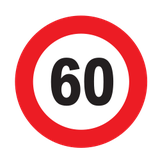
Built-up areas: The national general maximum in urban and suburban areas is 45 km/h. Departmental authorities may establish and sign limits of up to 60 km/h, and exceptionally up to 75 km/h on qualifying roads. Always follow the posted limit.
Outside built-up areas: On roads and highways outside urban and suburban areas, the general maximum in optimal conditions is 90 km/h for light vehicles without a trailer and specifically authorised buses, and 80 km/h for other vehicles.
Higher signed limits: The Ministry of Transport may authorise a higher limit for light vehicles without trailers on suitable road sections, but the authorised maximum cannot exceed 110 km/h. Such sections must be specifically signed, so 110 km/h is not a universal national highway limit.
Are seat belts compulsory in Uruguay?
Yes. In cars and light passenger vehicles, seat belts are compulsory for the driver and passengers in both front and rear seats. Additional requirements apply to passenger-transport and school-transport vehicles.
Can you use a mobile phone while driving in Uruguay?
Using a mobile phone or other communication device while driving is prohibited when the communication requires the use of either hand. Hands-free communication is permitted under this specific rule.
🔗 impo.com.uy • Uruguay IMPO, updated Law19061, article13 mobile communication
Do headlights have to be used during the day in Uruguay?
Yes. Motor vehicles must use low-beam headlights permanently. Vehicles originally equipped with daytime running lights, or DRL, may use those instead of low beams for this purpose.
Where must children sit in a car in Uruguay?
Act 19,061 requires children aged zero to 12 to travel in the rear seats using the prescribed restraint systems. The same rear-seat and restraint obligations apply to adolescents up to 18 who are shorter than 150 cm. Choose equipment appropriate for the child’s category and size.
🔗 impo.com.uy • Uruguayan Government, Act 19,061, Article 1, children in vehicles
Are motorcycle helmets compulsory in Uruguay?
Yes. Motorcycle users must wear a certified protective helmet, correctly fastened. The requirement applies to both the rider and passenger.
🔗 impo.com.uy • Uruguayan Government, Road Traffic and Safety Act 18,191, consolidated text

