


Mandatory signsSouth Africa
 Traffic rules
 South Africa
 Priority signs
 Warning signs
 Prohibitory signs
 Mandatory signs
 Information signs
 Additional signs
Mandatory signs
A mandatory sign is a traffic sign that tells drivers what they must do. Instead of prohibiting actions, these signs impose obligations such as following a specific direction, using a particular lane, or keeping a minimum speed. Their purpose is to guide traffic safely and efficiently by ensuring that all road users follow the same required behaviour in places where it is necessary for order and safety.


How are compulsory instructions shown in South Africa?
Command signs impose positive requirements. For example, R101 indicates a minimum speed and R110 a pedestrians-only facility.
🔗 transport.gov.za • South Africa, Department of Transport, SARTSM — mandatory-signs
What does a mandatory-direction sign require in South Africa?
Where a compulsory-direction sign is installed in South Africa, follow only the arrow direction or permitted combination of directions. The restriction applies at the location or movement it regulates; it is not an instruction to ignore other traffic controls.
🔗 transport.gov.za • South Africa, Department of Transport, SARTSM — mandatory-signs
Does a mandatory-direction sign give me priority over pedestrians in South Africa?
No. It tells you which way to move, not who goes first. Check traffic lights, other priority signs, pedestrians and cyclists, and give way when required before completing the manoeuvre.
🔗 transport.gov.za • South Africa, Department of Transport, SARTSM — mandatory-signs

1. Mandatory roundabout direction
This traffic sign indicates the mandatory direction around a roundabout. Traffic must circulate in the direction shown by the arrows. The sign does not itself determine priority; follow the applicable priority signs, traffic signals and local rules.
English • R137 • Roundabout. Turn left into the roundabout and circulate clockwise. Yield to traffic approaching from the right within the roundabout when it is close enough to present a danger.
Sources
🔗 Commons.wikimedia.org
🔗 Transport.gov.za • Department of Transport · SADC RTSM Vol. 1, chapter 2, PDF p. 62 (May 2012)
SVG source: Southern African Development Community • Public domain • Original revision 2017-06-04. Wikimedia original unmodified.
2. Turning left mandatory
This traffic sign indicates that turning left is mandatory at the junction ahead. Traffic must turn left and may not continue straight ahead or turn right.
English • R108 • Turn left. Turn left at the next junction or entrance.
Sources
🔗 Commons.wikimedia.org
🔗 Transport.gov.za • Department of Transport · SADC RTSM Vol. 1, chapter 2, PDF p. 50 (May 2012)
SVG source: Southern African Development Community • Public domain • Original revision 2017-05-23. Wikimedia original unmodified.
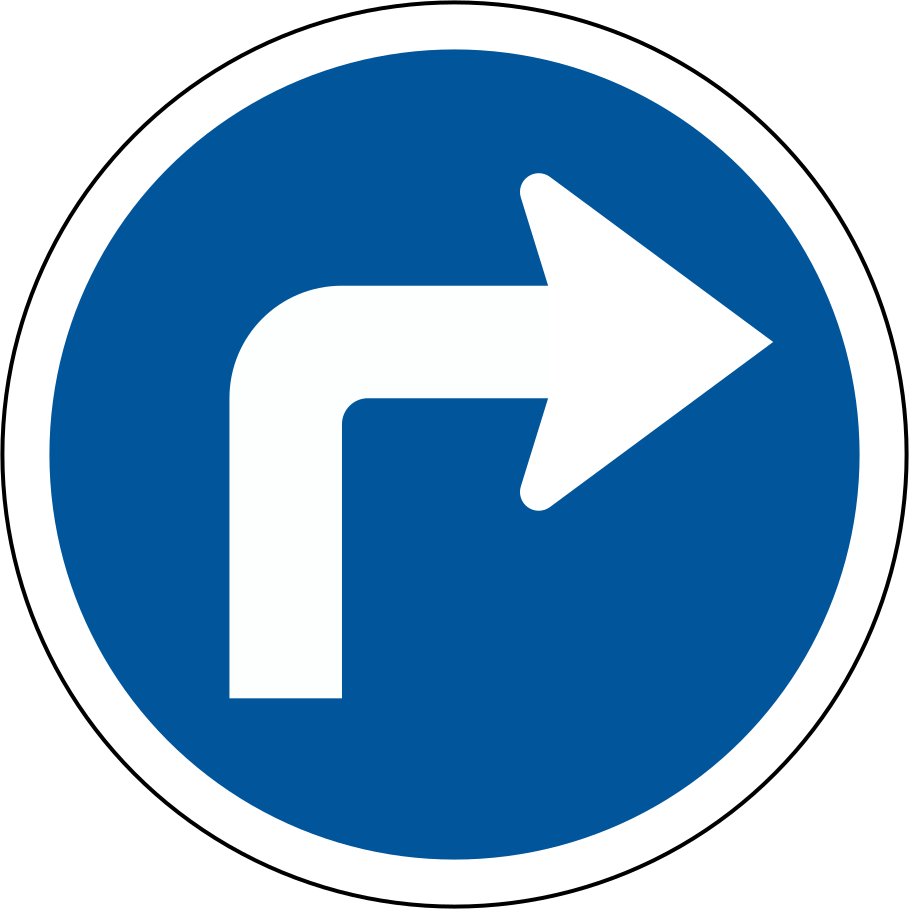
3. Turning right mandatory
This traffic sign indicates that turning right is mandatory at the junction ahead. Traffic must turn right and may not continue straight ahead or turn left.
English • R109 • Turn right. Turn right at the next junction or entrance.
Sources
🔗 Commons.wikimedia.org
🔗 Transport.gov.za • Department of Transport · SADC RTSM Vol. 1, chapter 2, PDF p. 50 (May 2012)
SVG source: Southern African Development Community • Public domain • Original revision 2017-05-23. Wikimedia original unmodified.
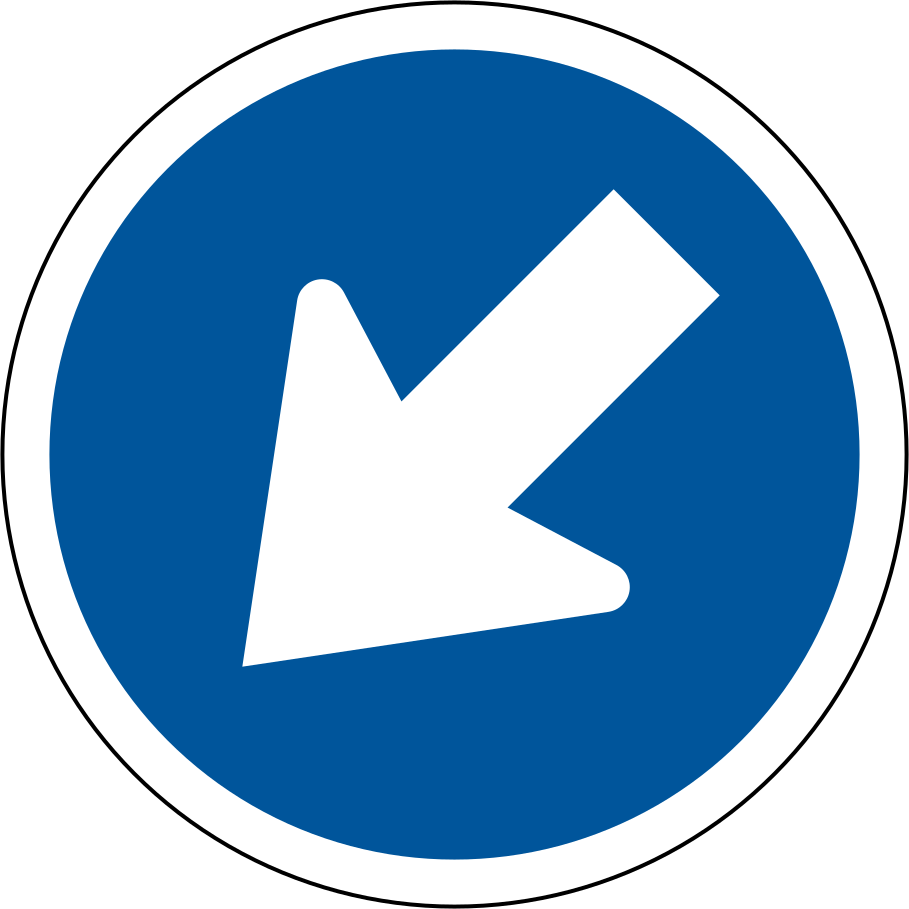
4. Pass obstacle on the left
This traffic sign indicates that traffic must pass an obstacle on the left. Keep to the left of the obstacle and follow any accompanying signs or road markings.
English • R103 • Keep left. Pass to the left of the obstruction or sign.
Sources
🔗 Commons.wikimedia.org
🔗 Transport.gov.za • Department of Transport · SADC RTSM Vol. 1, chapter 2, PDF p. 48 (May 2012)
SVG source: Southern African Development Community • Public domain • Original revision 2017-05-22. Wikimedia original unmodified.
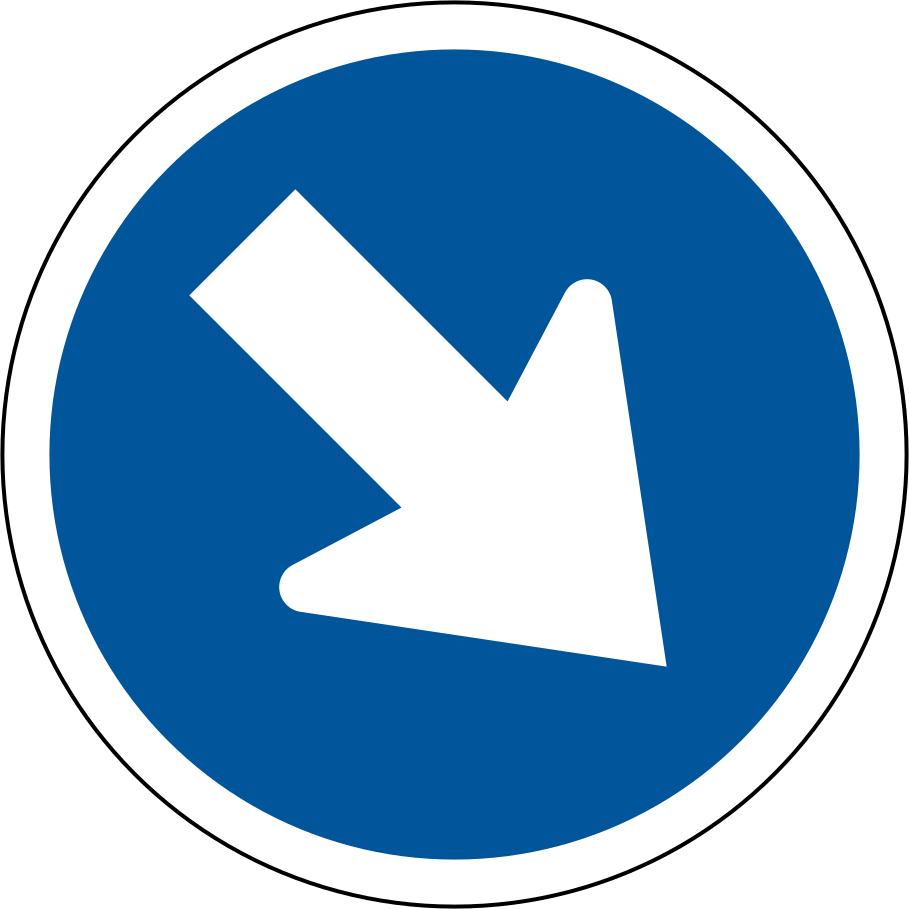
5. Pass obstacle on the right
This traffic sign indicates that traffic must pass an obstacle on the right. Keep to the right of the obstacle and follow any accompanying signs or road markings.
English • R104 • Keep right. Pass to the right of the obstruction or sign.
Sources
🔗 Commons.wikimedia.org
🔗 Transport.gov.za • Department of Transport · SADC RTSM Vol. 1, chapter 2, PDF p. 48 (May 2012)
SVG source: Southern African Development Community • Public domain • Original revision 2017-05-22. Wikimedia original unmodified.
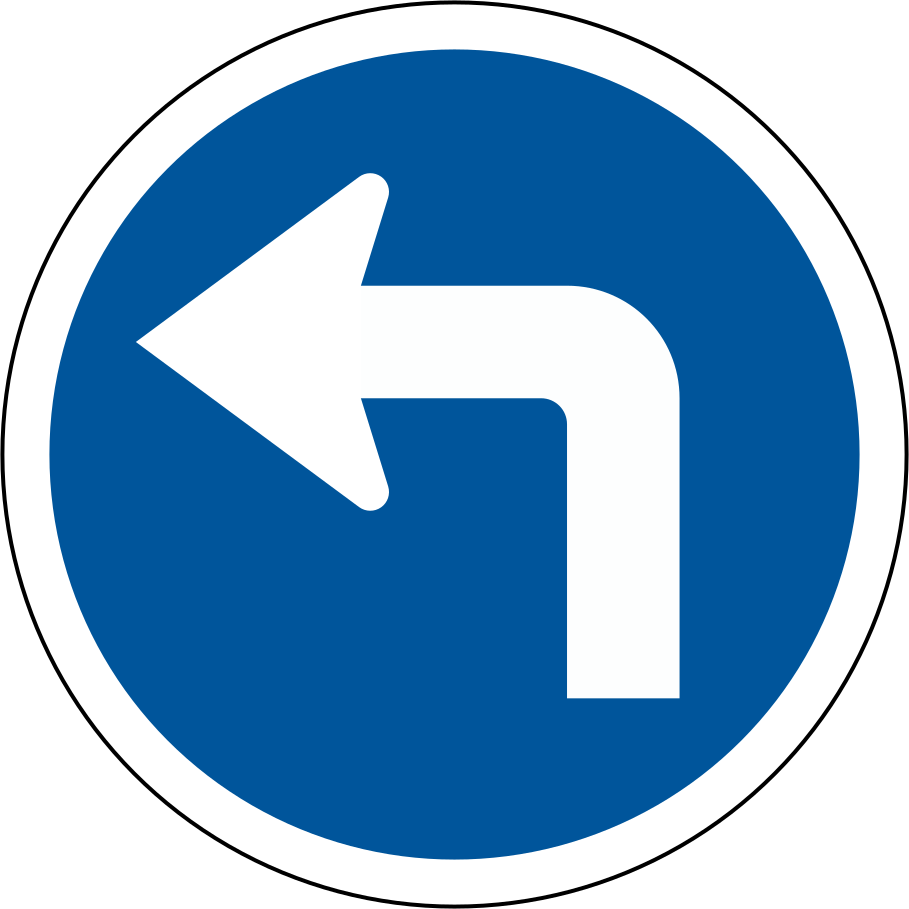
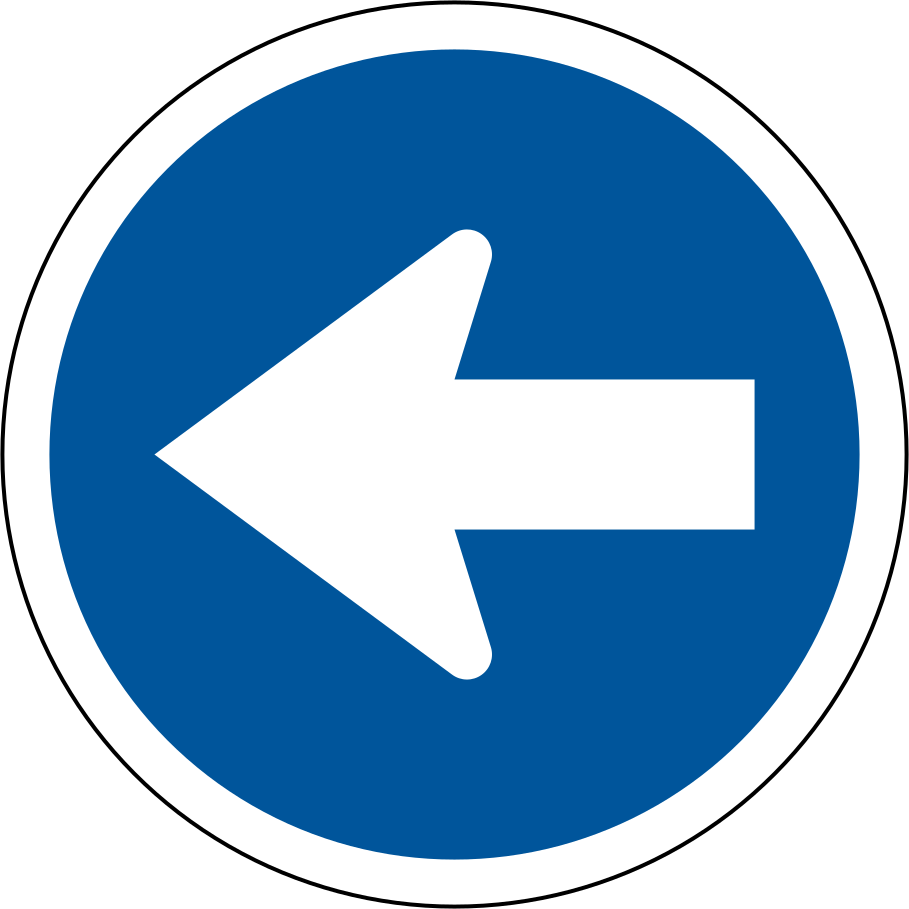
6. Mandatory left
This traffic sign indicates a mandatory direction to the left. Traffic must proceed to the left at the sign and may not continue straight ahead or to the right.
English • R105 • Proceed left only. Proceed to the left at the sign.
Sources
🔗 Commons.wikimedia.org
🔗 Transport.gov.za • Department of Transport · SADC RTSM Vol. 1, chapter 2, PDF p. 49 (May 2012)
SVG source: Southern African Development Community • Public domain • Original revision 2017-05-22. Wikimedia original unmodified.
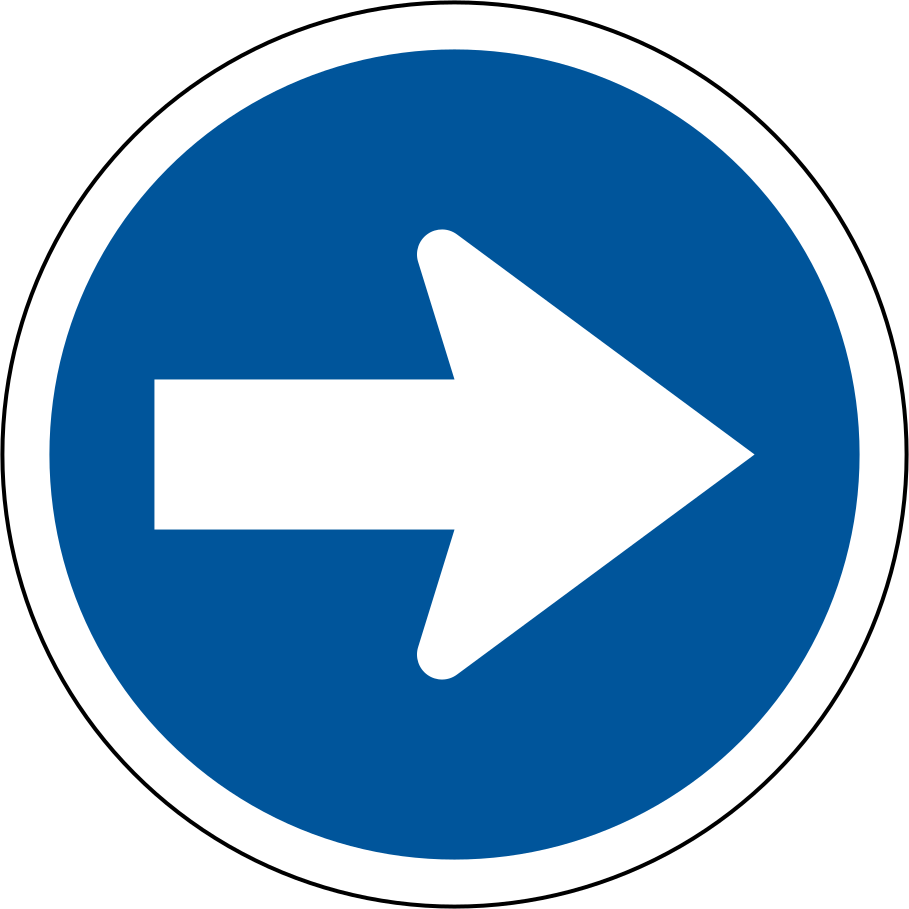
7. Mandatory right
This traffic sign indicates a mandatory direction to the right. Traffic must proceed to the right at the sign and may not continue straight ahead or to the left.
English • R106 • Proceed right only. Proceed to the right at the sign.
Sources
🔗 Commons.wikimedia.org
🔗 Transport.gov.za • Department of Transport · SADC RTSM Vol. 1, chapter 2, PDF p. 49 (May 2012)
SVG source: Southern African Development Community • Public domain • Original revision 2017-05-22. Wikimedia original unmodified.
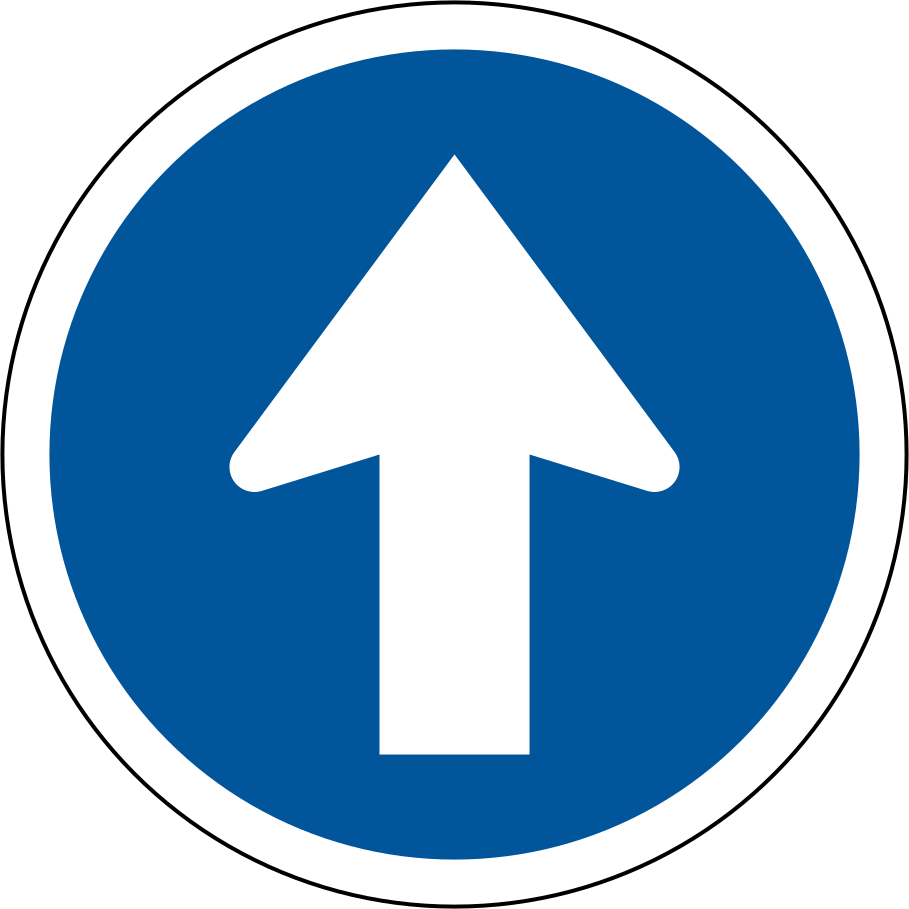
8. Driving straight ahead mandatory
This traffic sign indicates that driving straight ahead is mandatory. Traffic must continue straight ahead and may not turn left or right at the location to which the sign applies.
English • R107 • Proceed straight only. Proceed straight ahead at the sign.
Sources
🔗 Commons.wikimedia.org
🔗 Transport.gov.za • Department of Transport · SADC RTSM Vol. 1, chapter 2, PDF p. 49 (May 2012)
SVG source: Southern African Development Community • Public domain • Original revision 2017-05-22. Wikimedia original unmodified.
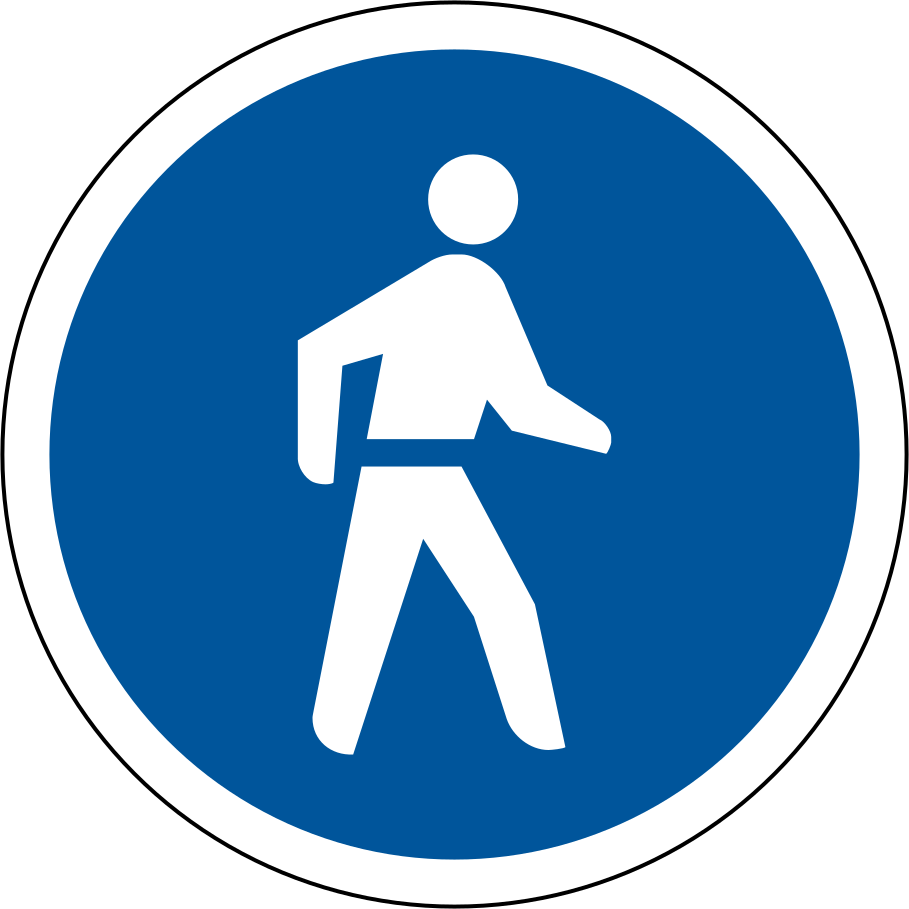
9. Mandatory path for pedestrians
This traffic sign indicates the start of a mandatory path for pedestrians. Pedestrians must use the designated path, while other road users may use it only where the applicable signs or local rules permit them to do so.
English • R110 • Pedestrians only. This road or portion of the road is set aside for pedestrians only; the indicated class must use it rather than another road or portion of road.
Sources
🔗 Commons.wikimedia.org
🔗 Transport.gov.za • Department of Transport · SADC RTSM Vol. 1, chapter 2, PDF p. 51 (May 2012)
SVG source: Southern African Development Community • Public domain • Original revision 2017-05-24. Wikimedia original unmodified.
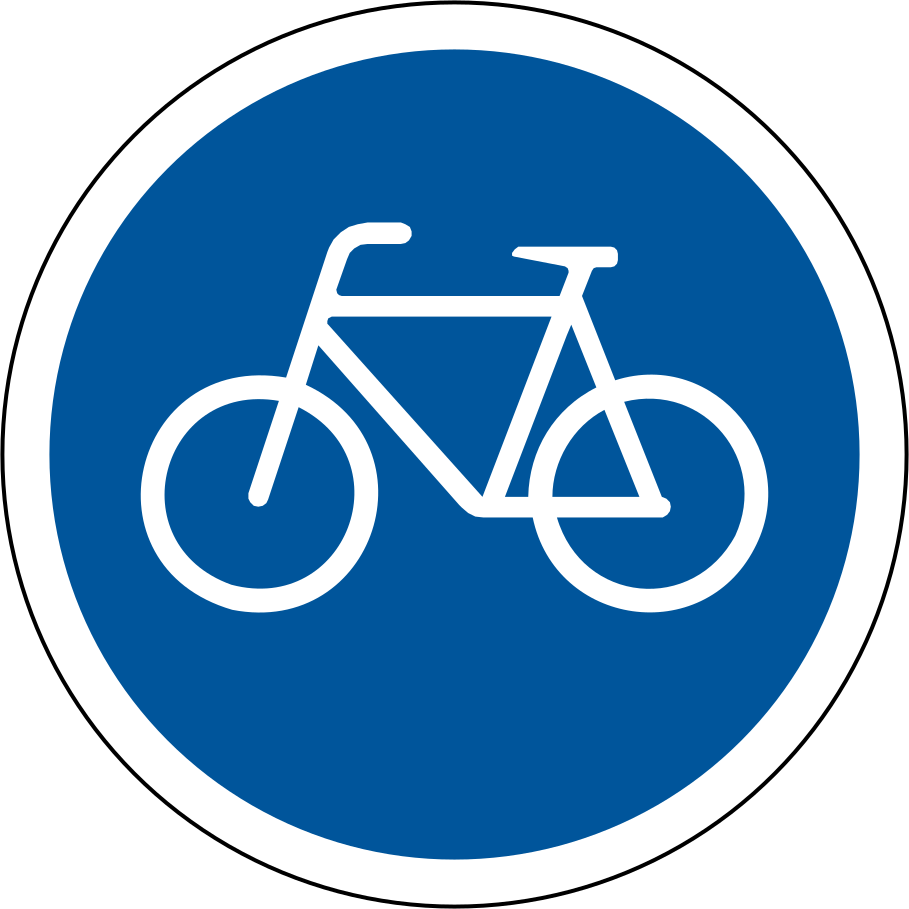
10. Mandatory path for cyclists
This traffic sign indicates a mandatory path for cyclists. Cyclists must use the designated path where the sign applies. Other road users may use the path only where the applicable signs or local rules permit them to do so.
English • R111 • Cyclists only. This road or portion of the road is set aside for cyclists only; the indicated class must use it rather than another road or portion of road.
Sources
🔗 Commons.wikimedia.org
🔗 Transport.gov.za • Department of Transport · SADC RTSM Vol. 1, chapter 2, PDF p. 52 (May 2012)
SVG source: Southern African Development Community • Public domain • Original revision 2017-05-25. Wikimedia original unmodified.
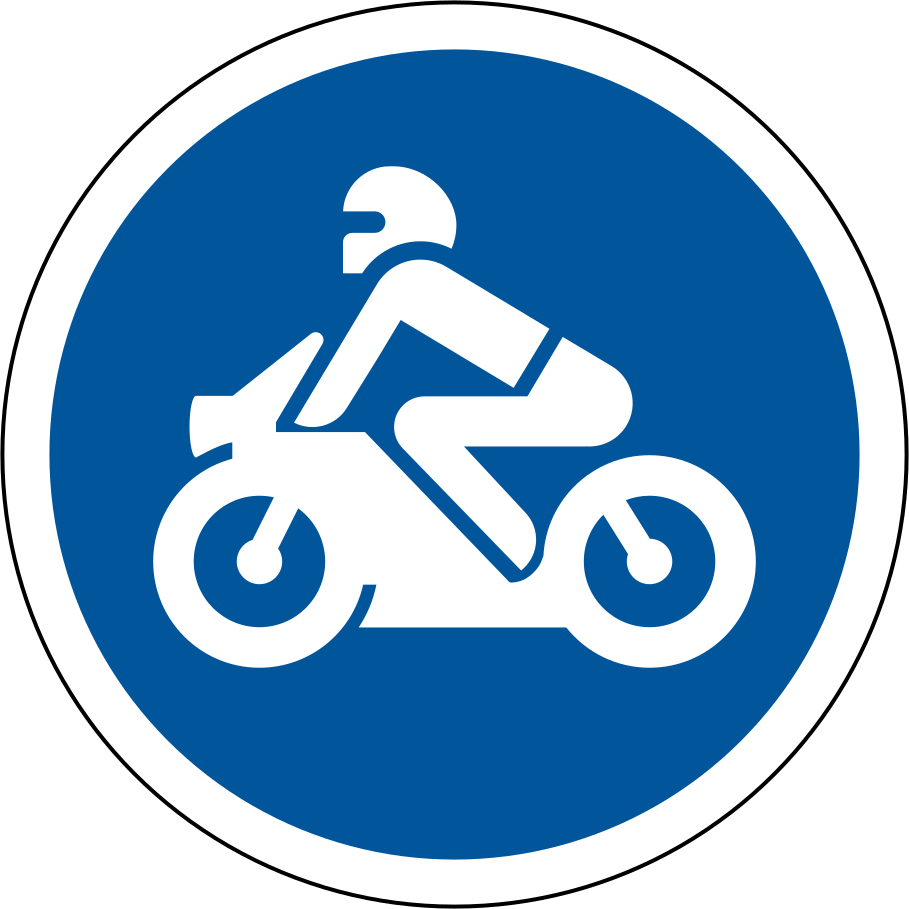
11. Mandatory path for motorcycles
This traffic sign indicates a mandatory path for motorcycles. Motorcyclists must use the designated path or route where the sign applies. Other road users may use it only where the applicable signs or local rules permit them to do so.
English • R116 • Motor cycles only. This road or portion of the road is set aside for motor cycles only; the indicated class must use it rather than another road or portion of road.
Sources
🔗 Commons.wikimedia.org
🔗 Transport.gov.za • Department of Transport · SADC RTSM Vol. 1, chapter 2, PDF p. 55 (May 2012)
SVG source: Southern African Development Community • Public domain • Original revision 2025-12-15. Wikimedia original unmodified.
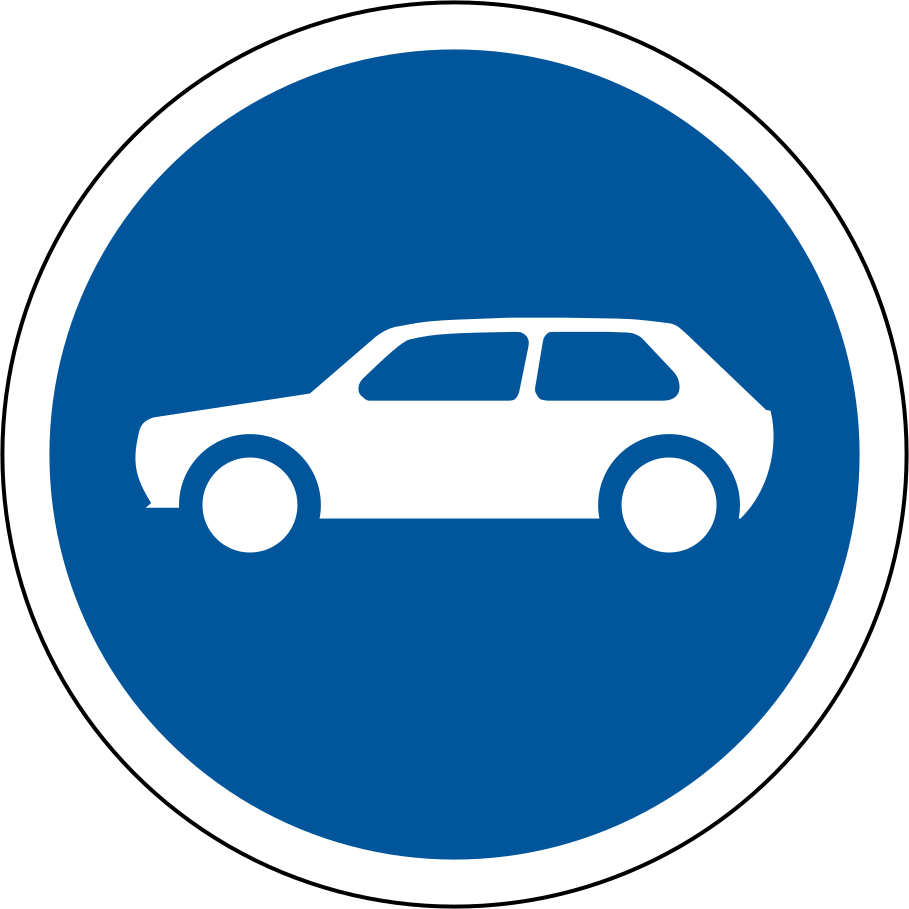
12. Mandatory lane for cars
This traffic sign indicates a mandatory lane for cars. Cars must use the designated lane or route where the sign applies. Other road users may use it only where the applicable signs or local rules permit them to do so.
English • R117 • Motor cars only. This road or portion of the road is set aside for motor cars only; the indicated class must use it rather than another road or portion of road.
Sources
🔗 Commons.wikimedia.org
🔗 Transport.gov.za • Department of Transport · SADC RTSM Vol. 1, chapter 2, PDF p. 55 (May 2012)
SVG source: Southern African Development Community • Public domain • Original revision 2017-06-05. Wikimedia original unmodified.
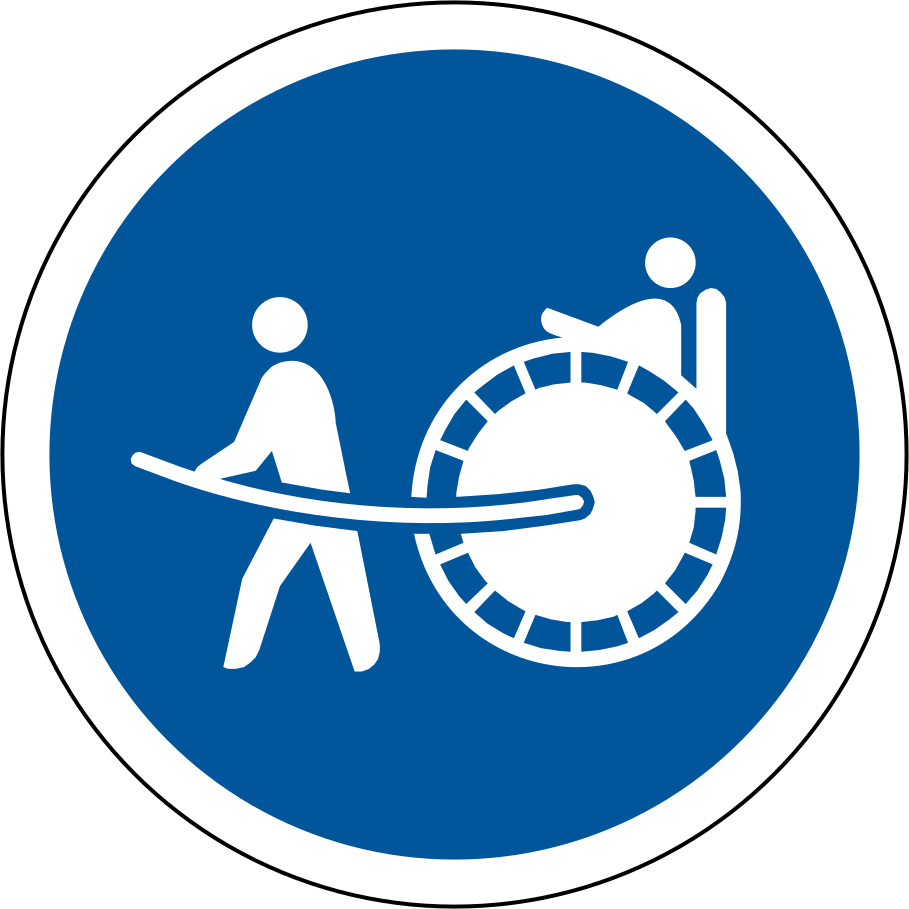
13. Mandatory path for rickshaws
This traffic sign indicates a mandatory path for rickshaws. Rickshaws must use the designated path where required by the applicable traffic rules. Other road users may use the path only where specifically permitted.
English • R128 • Rickshaws only. This road or portion of the road is set aside for rickshaws only. Rickshaws must use the designated road or portion of the road; other classes of road user must not use it.
Sources
🔗 Commons.wikimedia.org • Current SVG source • Southern African Development Community • Public domain • Original revision 2017-06-17. Wikimedia original unmodified.
🔗 Transport.gov.za • Department of Transport · SADC RTSM Vol. 1, chapter 2 · R128 · PDF p. 58 (May 2012).
Image via Commons.wikimedia.org
Southern African Development Community • Public domain • Source revision 2017-06-17. Wikimedia original unmodified.
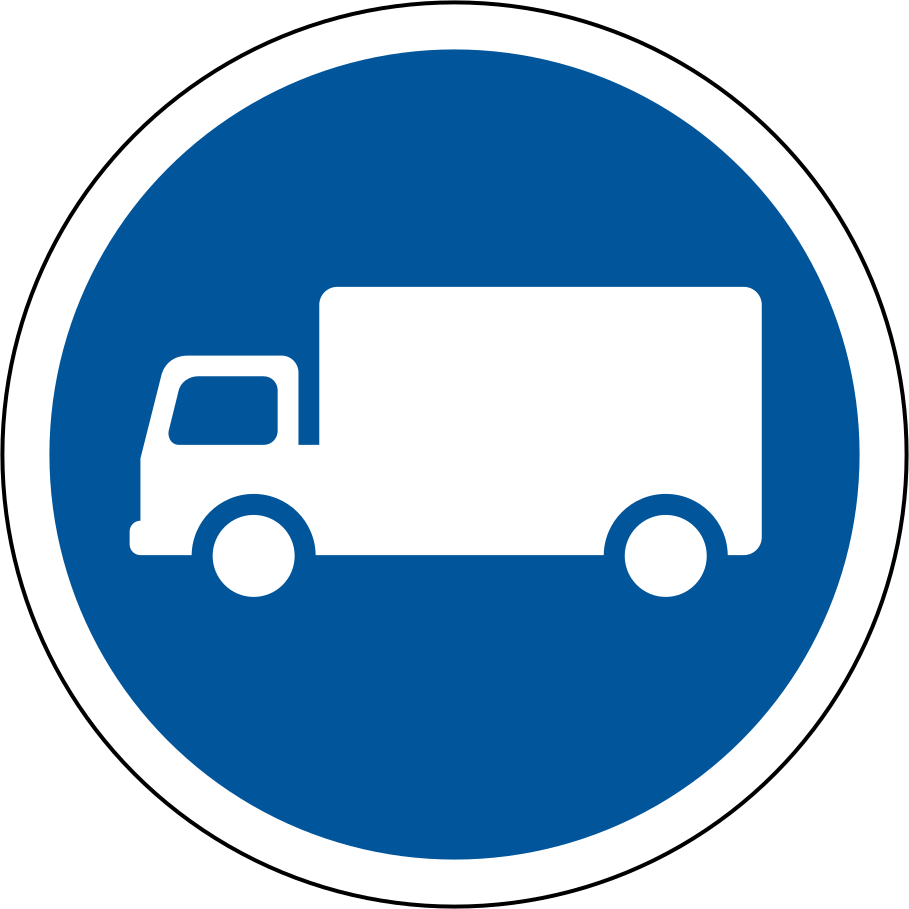
14. Mandatory lane for trucks
This traffic sign indicates a mandatory lane for trucks. Trucks must use the designated lane where the sign applies. Other road users may use the lane only where the applicable signs or local rules permit them to do so.
English • R123 • Goods vehicles only. This road or portion of road is set aside for goods vehicles over 3,500 kg GVM/GCM only; that class must use it rather than another road or portion of road.
Sources
🔗 Commons.wikimedia.org
🔗 Transport.gov.za • Department of Transport · SADC RTSM Vol. 1, chapter 2, PDF p. 56 (May 2012)
SVG source: Southern African Development Community • Public domain • Original revision 2017-06-12. Wikimedia original unmodified.
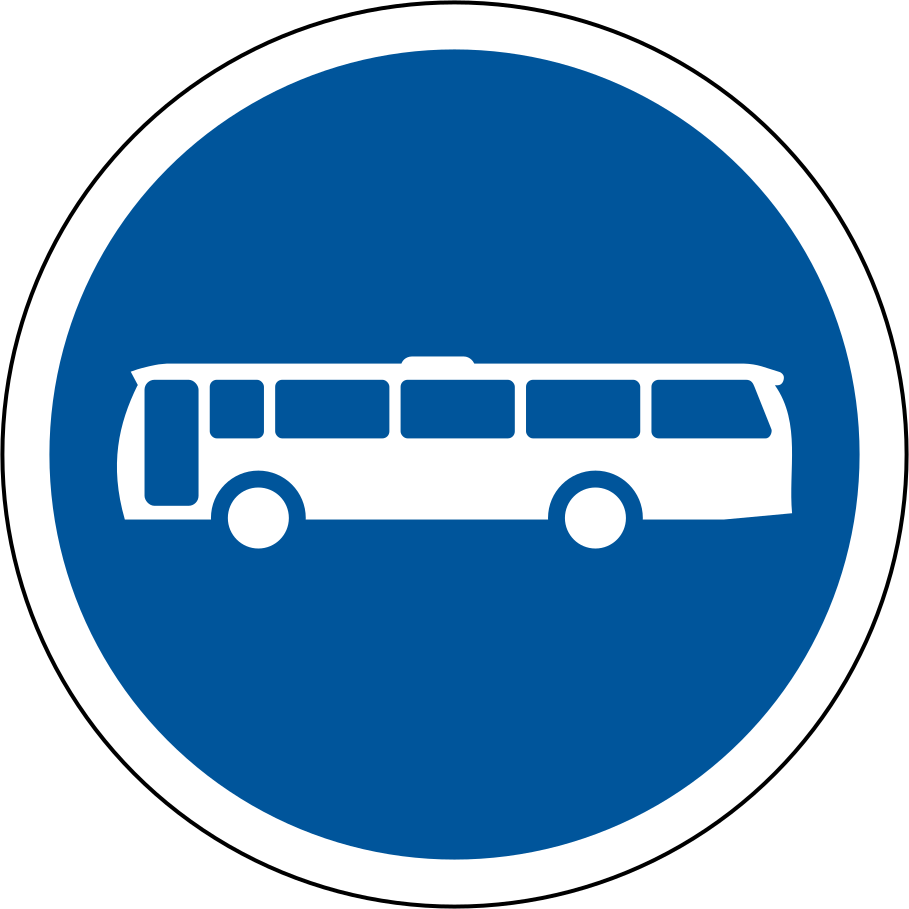
15. Mandatory lane for buses
This traffic sign indicates a mandatory lane for buses. Buses must use the designated lane where the sign applies. Other road users may use the lane only where the applicable signs or local rules permit them to do so.
English • R121 • Buses only. This road or portion of the road is set aside for buses only; the indicated class must use it rather than another road or portion of road.
Sources
🔗 Commons.wikimedia.org
🔗 Transport.gov.za • Department of Transport · SADC RTSM Vol. 1, chapter 2, PDF p. 56 (May 2012) Artwork correction: the earlier R120 source above documents the previous image. The displayed SVG now follows R121 and the captioned meaning.
🔗 Commons.wikimedia.org • Current SVG source • Southern African Development Community • Public domain • Original revision 2017-06-11. Wikimedia original unmodified.
🔗 Transport.gov.za • Department of Transport · SADC RTSM Vol. 1, chapter 2 · R121 · PDF p. 56 (May 2012).
Image via Commons.wikimedia.org
Southern African Development Community • Public domain • Source revision 2017-06-11. Wikimedia original unmodified.
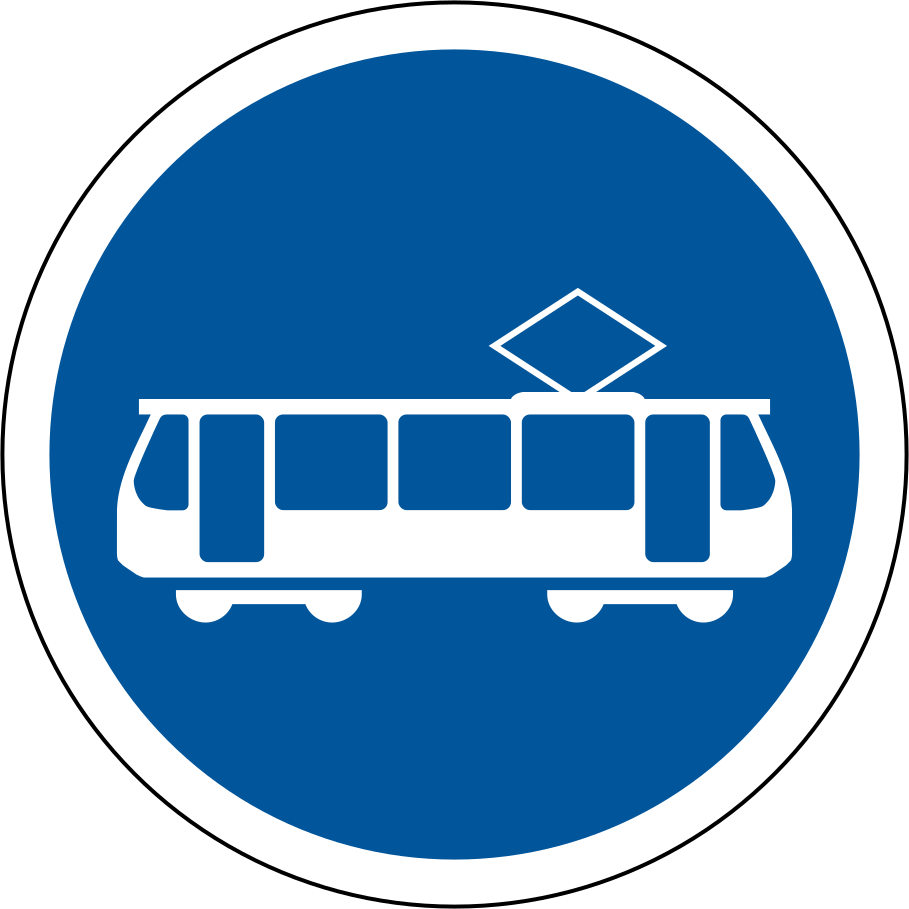
16. Mandatory lane for trams
This traffic sign indicates a mandatory lane for trams. The lane or track is reserved for trams and may be used by other road users only where the applicable signs or local rules allow it.
English • R138 • Trams only. This road or portion of the road is set aside for trams only; the indicated class must use it rather than another road or portion of road.
Sources
🔗 Commons.wikimedia.org
🔗 Transport.gov.za • Department of Transport · SADC RTSM Vol. 1, chapter 2, PDF p. 63 (May 2012)
SVG source: Southern African Development Community • Public domain • Original revision 2017-06-21. Wikimedia original unmodified.
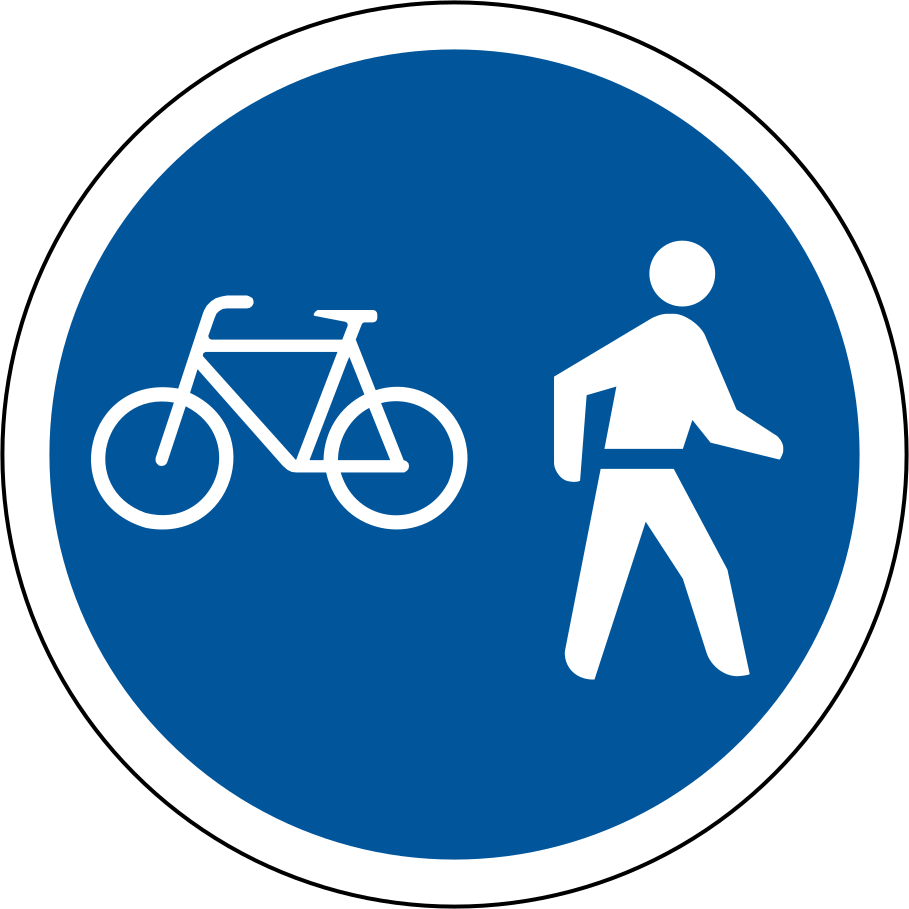
17. Mandatory shared pedestrian and cycle path
This traffic sign indicates a mandatory shared path for pedestrians and cyclists. Pedestrians and cyclists must use the same designated path rather than separate sections. They must share the space safely and follow the applicable local rules.
English • R112 • Cyclists and pedestrians only. This road or path is set aside for cyclists and pedestrians only, sharing the space without a dividing barrier.
Sources
🔗 Commons.wikimedia.org
🔗 Transport.gov.za • Department of Transport · SADC RTSM Vol. 1, chapter 2, PDF p. 53 (May 2012)
SVG source: Southern African Development Community • Public domain • Original revision 2017-05-28. Wikimedia original unmodified.
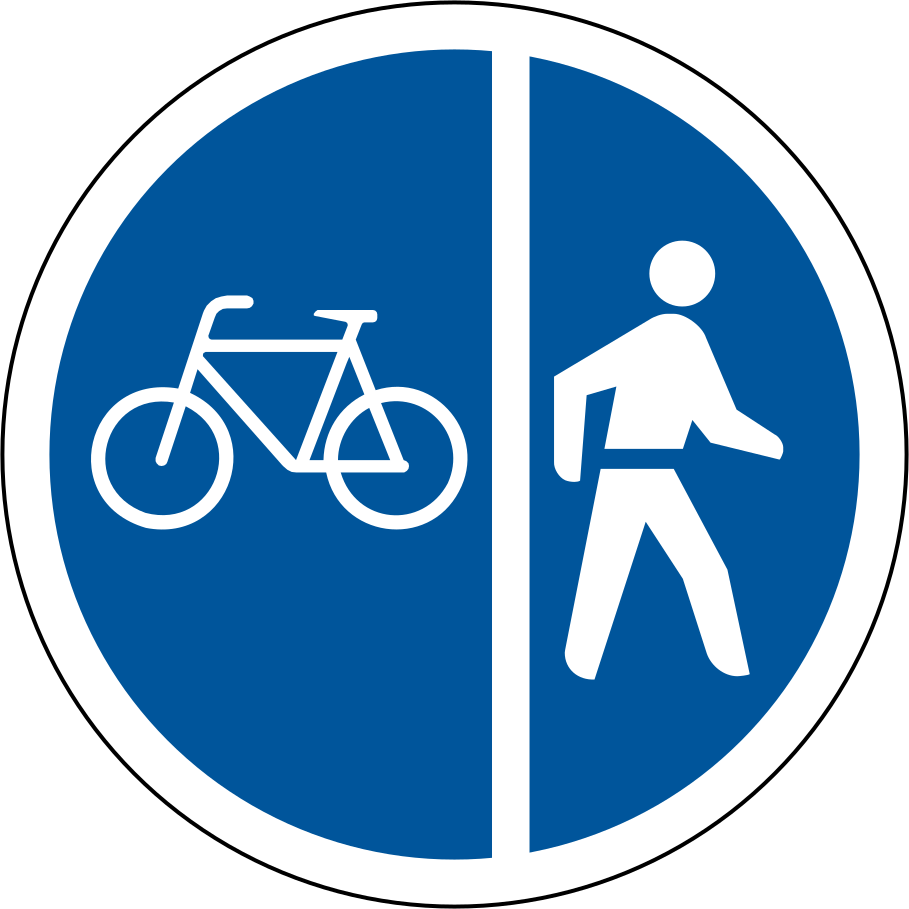
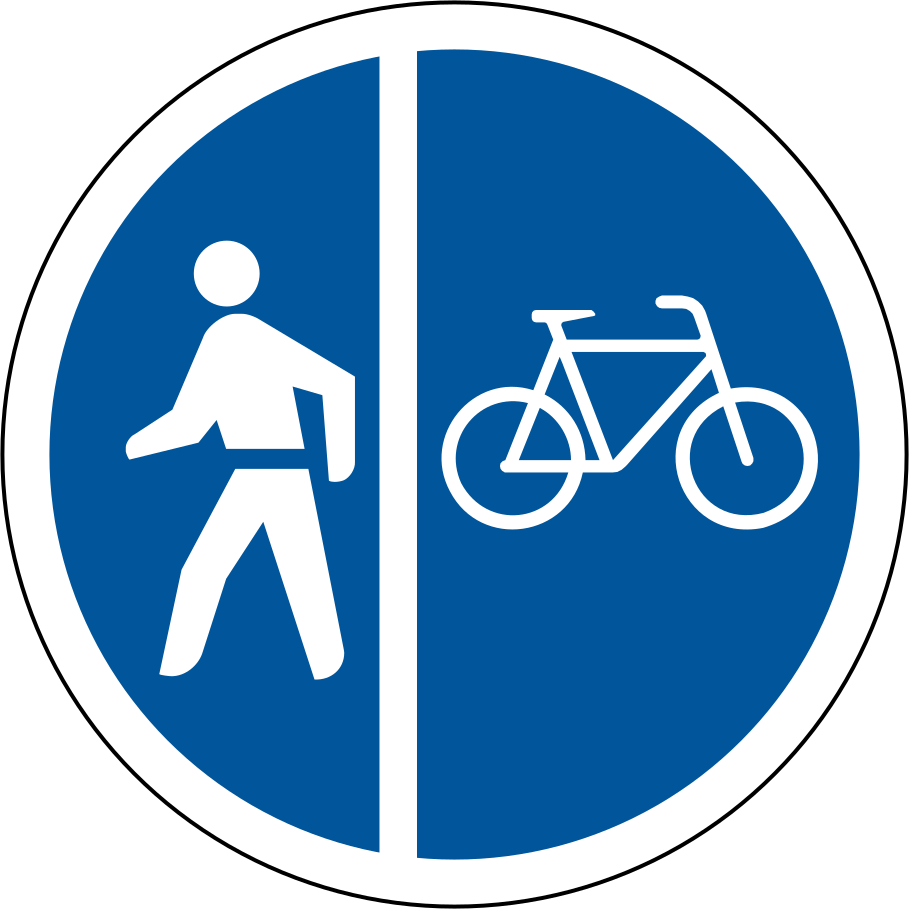
18. Mandatory divided pedestrian and cycle path
This traffic sign indicates a mandatory divided path for pedestrians and cyclists. Pedestrians and cyclists must use the section designated for them. Other road users may use the path only where the applicable signs or local rules permit them to do so.
English • R113 • Cyclists and pedestrians only, with barrier. Only cyclists and pedestrians may use this path. Cyclists use the left portion and pedestrians the right portion, as indicated by the symbols and dividing barrier.
Sources
🔗 Commons.wikimedia.org
🔗 Transport.gov.za • Department of Transport · SADC RTSM Vol. 1, chapter 2, PDF p. 53 (May 2012)
SVG source: Southern African Development Community • Public domain • Original revision 2017-05-28. Wikimedia original unmodified.
19. Mandatory divided pedestrian and cycle path
This traffic sign indicates a mandatory divided path for pedestrians and cyclists. Pedestrians and cyclists must use the section designated for them. Other road users may use the path only where the applicable signs or local rules permit them to do so.
English • R115 • Pedestrians and cyclists only, with barrier. Only pedestrians and cyclists may use this path. Pedestrians use the left portion and cyclists the right portion, as indicated by the symbols and dividing barrier.
Sources
🔗 Commons.wikimedia.org
🔗 Transport.gov.za • Department of Transport · SADC RTSM Vol. 1, chapter 2, PDF p. 53 (May 2012)
SVG source: Southern African Development Community • Public domain • Original revision 2017-05-28. Wikimedia original unmodified.
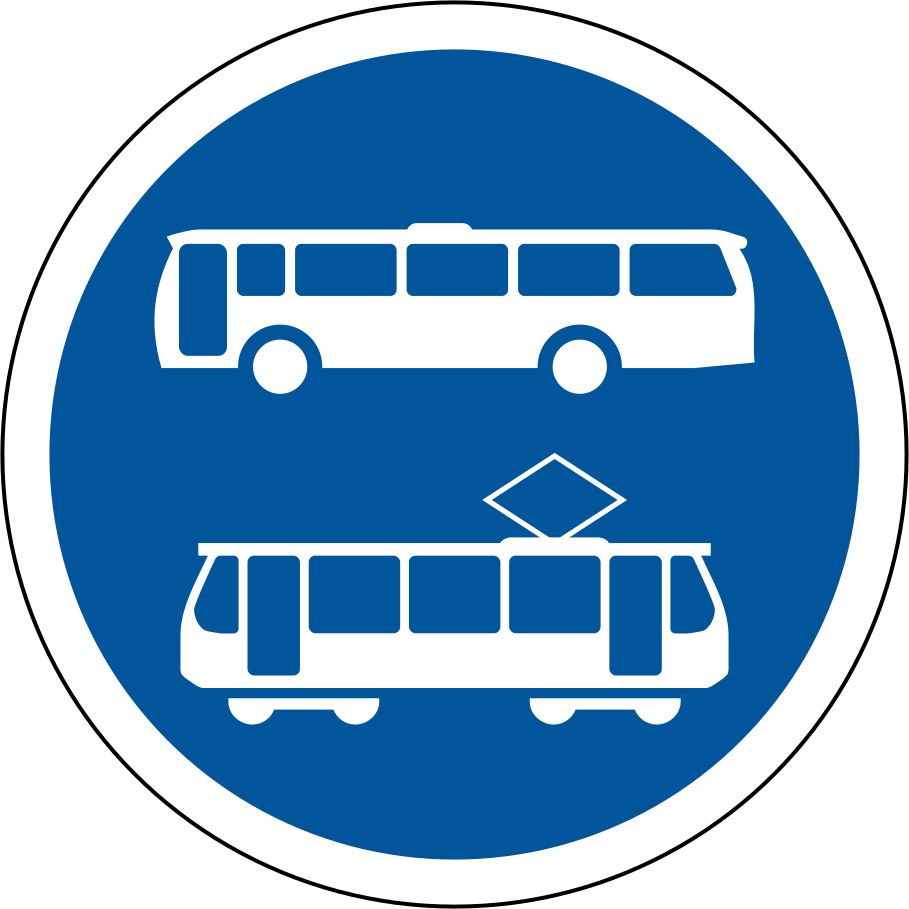
20. Mandatory lane for buses and trams
This traffic sign indicates a mandatory lane for buses and trams. Buses and trams must use the designated lane or track where the sign applies. Other road users may use it only where the applicable signs or local rules permit them to do so.
English • R139 • Buses and trams only. This road or portion of the road is set aside for buses and trams only; the indicated class must use it rather than another road or portion of road.
Sources
🔗 Commons.wikimedia.org
🔗 Transport.gov.za • Department of Transport · SADC RTSM Vol. 1, chapter 2, PDF p. 63 (May 2012)
SVG source: Southern African Development Community • Public domain • Original revision 2017-06-21. Wikimedia original unmodified.
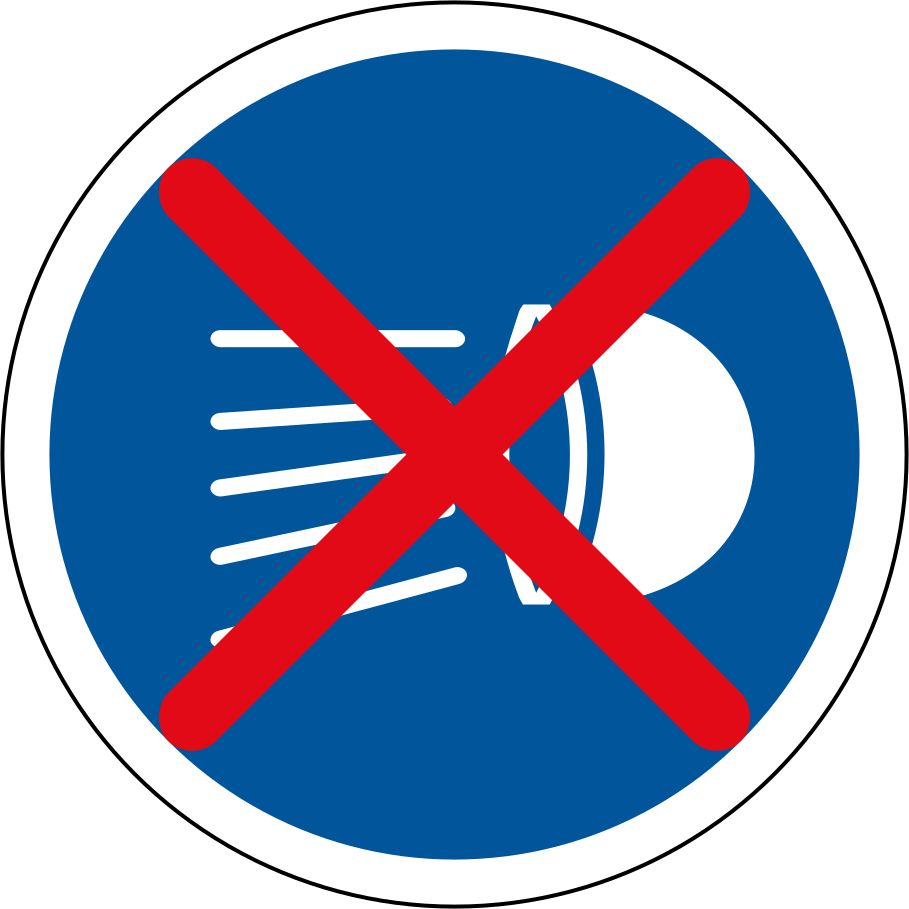
21. Dipped headlights mandatory
This traffic sign indicates that the use of dipped headlights is mandatory. Drivers must use dipped headlights from this point until the requirement ends or is replaced, while continuing to follow the general lighting rules.
English • R133 • Switch head lamps on. Switch on the vehicle head lamps beyond the sign.
Sources
🔗 Commons.wikimedia.org
🔗 Transport.gov.za • Department of Transport · SADC RTSM Vol. 1, chapter 2, PDF p. 60 (May 2012)
SVG source: Southern African Development Community • Public domain • Original revision 2017-06-19. Wikimedia original unmodified.
22. End of mandatory use of dipped headlights
This traffic sign indicates the end of the requirement to use dipped headlights. Dipped headlights are no longer mandatory because of this sign, but they must still be used whenever required by the general traffic rules or driving conditions.
English • R133-600 • End of head lamps on. The specific requirement to keep head lamps on imposed by R133 ends here. Other lighting requirements still apply.
Sources
🔗 Commons.wikimedia.org
🔗 Transport.gov.za • Department of Transport · SADC RTSM Vol. 1, chapter 2, PDF p. 134 (May 2012)
SVG source: Southern African Development Community • Public domain • Original revision 2017-07-18. Wikimedia original unmodified.
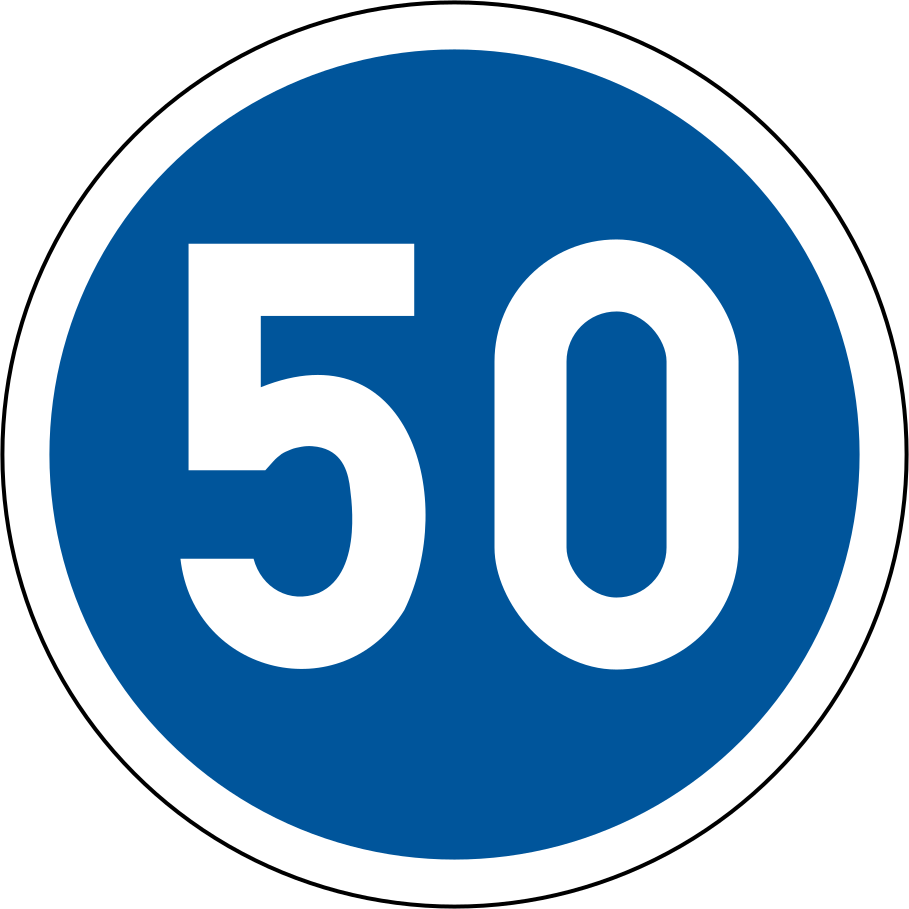
23. Start of a minimum speed
This traffic sign indicates the start of a minimum speed. Road users covered by the sign must travel at or above the indicated speed when conditions allow. Driving more slowly may still be necessary because of traffic, weather, road conditions or another safety-related reason.
English • R101 • Minimum speed: 50 km/h. Vehicles must travel at least 50 kilometres per hour on the indicated road or portion of road, subject to safety and prevailing traffic conditions.
Sources
🔗 Commons.wikimedia.org
🔗 Transport.gov.za • Department of Transport · SADC RTSM Vol. 1, chapter 2, PDF p. 46 (May 2012)
SVG source: Southern African Development Community • Public domain • Original revision 2017-06-24. Wikimedia original unmodified.
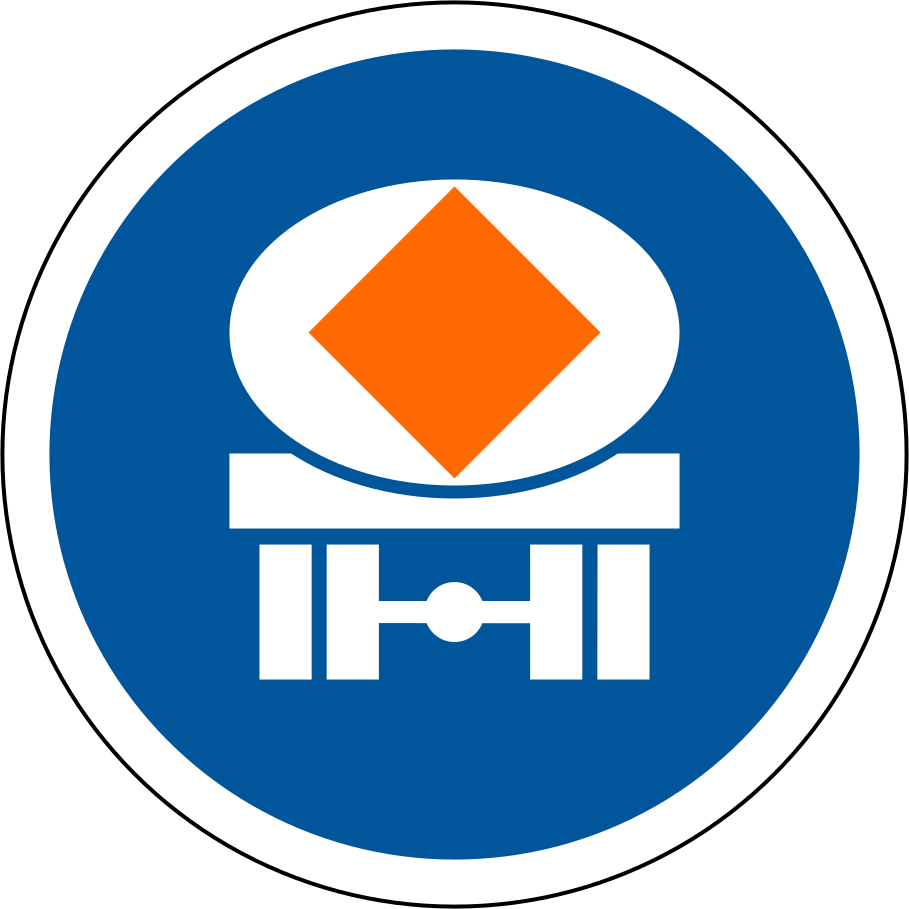
24. Mandatory route for dangerous goods
This traffic sign indicates a mandatory route for vehicles carrying dangerous goods. Vehicles carrying dangerous goods must use the route indicated by the sign.
English • R126 • Vehicles conveying dangerous goods only. This road or portion of the road is set aside for vehicles carrying dangerous goods only. Those vehicles must use the designated road or portion of the road; other classes of road user must not use it.
Sources
🔗 Commons.wikimedia.org • Current SVG source • Southern African Development Community • Public domain • Original revision 2017-06-08. Wikimedia original unmodified.
🔗 Transport.gov.za • Department of Transport · SADC RTSM Vol. 1, chapter 2 · R126 · PDF p. 57 (May 2012).
Image via Commons.wikimedia.org
Southern African Development Community • Public domain • Source revision 2017-06-08. Wikimedia original unmodified.
