


Prohibitory signsSouth Africa
 Traffic rules
 South Africa
 Priority signs
 Warning signs
 Prohibitory signs
 Mandatory signs
 Information signs
 Additional signs
Prohibitory signs
A prohibitory sign is a traffic sign that tells drivers what is not allowed on that specific road or in that situation. These signs impose restrictions such as no entry, no overtaking, no parking, speed limits, or bans on certain types of vehicles. Their purpose is to clearly indicate actions that are forbidden to ensure safety, maintain traffic flow, and protect vulnerable road users.
How are prohibitory signs classified in South Africa?
Prohibition signs are regulatory signs restricting an action, road user or facility use.
🔗 transport.gov.za • South Africa, Department of Transport, SARTSM — prohibitory-signs
What does a no-turn sign prohibit in South Africa?
It prohibits the left, right or other turn shown at the junction or position controlled by the sign in South Africa. Follow any supplementary panel or authorised direction and choose another legal route.
🔗 transport.gov.za • South Africa, Department of Transport, SARTSM — prohibitory-signs
Can a no-turn restriction apply only to certain vehicles or hours in South Africa?
Yes, where the local sign system provides a supplementary condition or exemption, such as a vehicle class, time or authorised access. Without a valid exception, comply with the prohibited movement shown.
🔗 transport.gov.za • South Africa, Department of Transport, SARTSM — prohibitory-signs

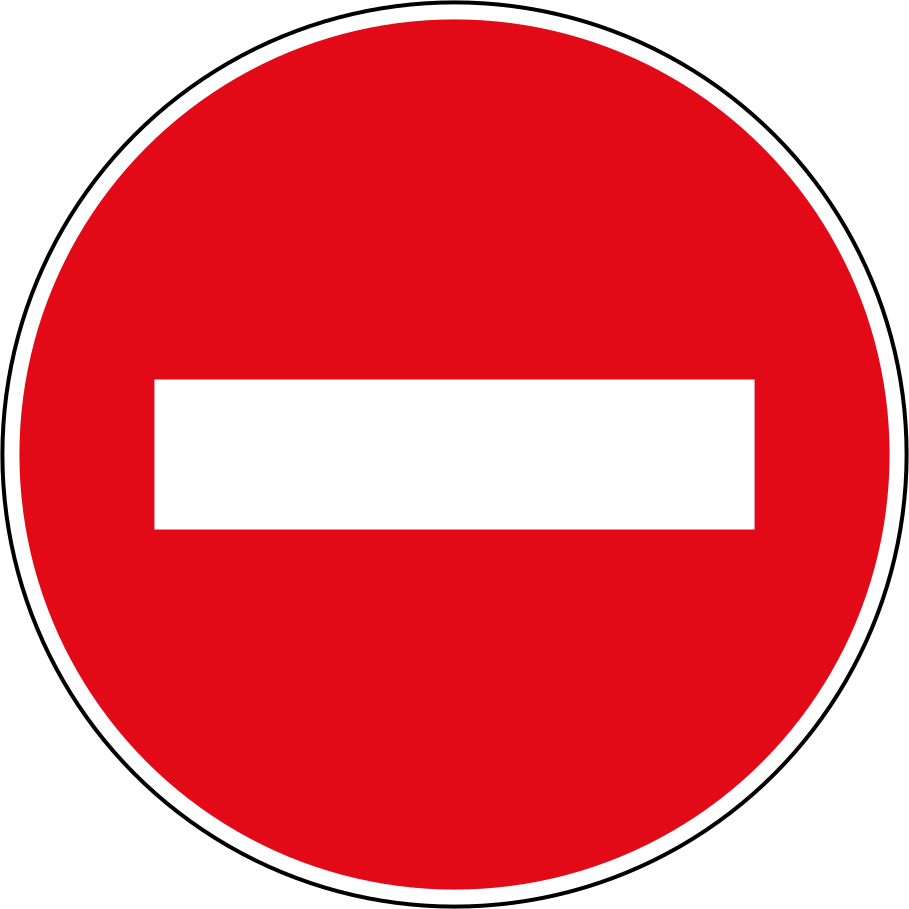
1. No entry
This traffic sign means no entry. Drivers may not enter from the direction in which the sign is placed.
English • R3 • No entry. Do not enter the road from this direction.
Sources
🔗 Commons.wikimedia.org
🔗 Transport.gov.za • Department of Transport · SADC RTSM Vol. 1, chapter 2, PDF p. 40 (May 2012)
SVG source: Southern African Development Community • Public domain • Original revision 2017-04-23. Wikimedia original unmodified.
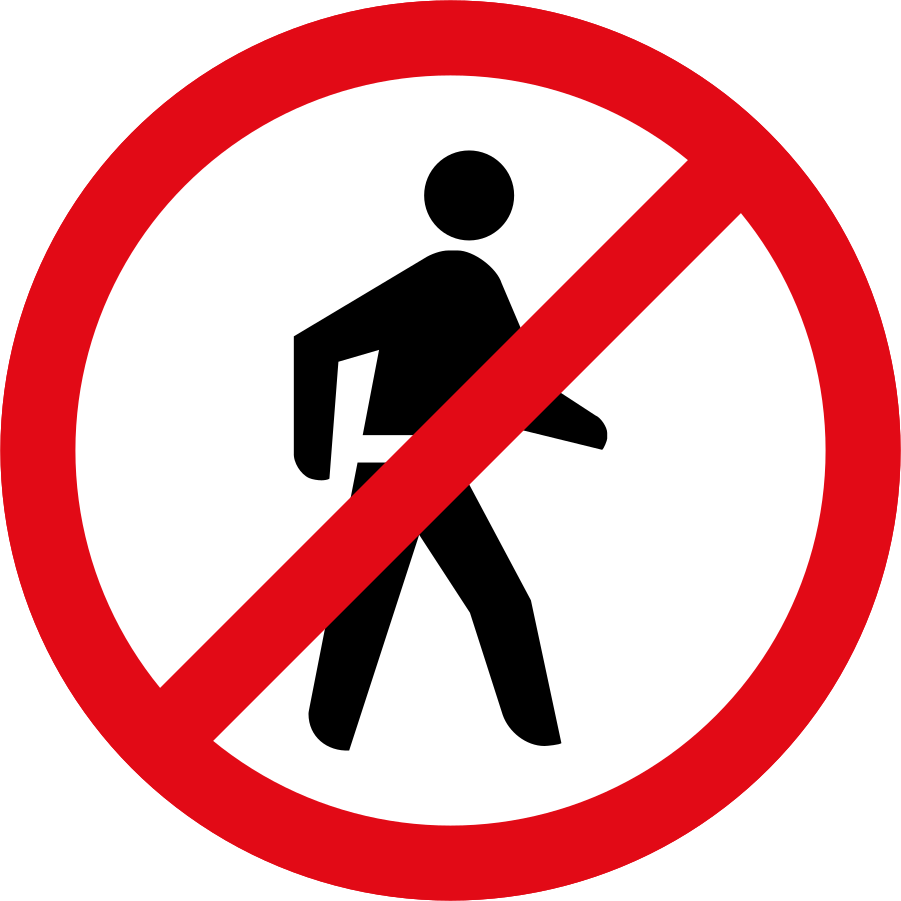
2. Pedestrians prohibited
This traffic sign indicates that pedestrians are prohibited. Pedestrians may not enter or continue beyond the sign. Other road users may still be permitted unless another restriction applies.
English • R218 • No pedestrians. The indicated class of road user must not proceed beyond this sign: pedestrians.
Sources
🔗 Commons.wikimedia.org
🔗 Transport.gov.za • Department of Transport · SADC RTSM Vol. 1, chapter 2, PDF p. 76 (May 2012)
SVG source: Southern African Development Community • Public domain • Original revision 2017-05-25. Wikimedia original unmodified.
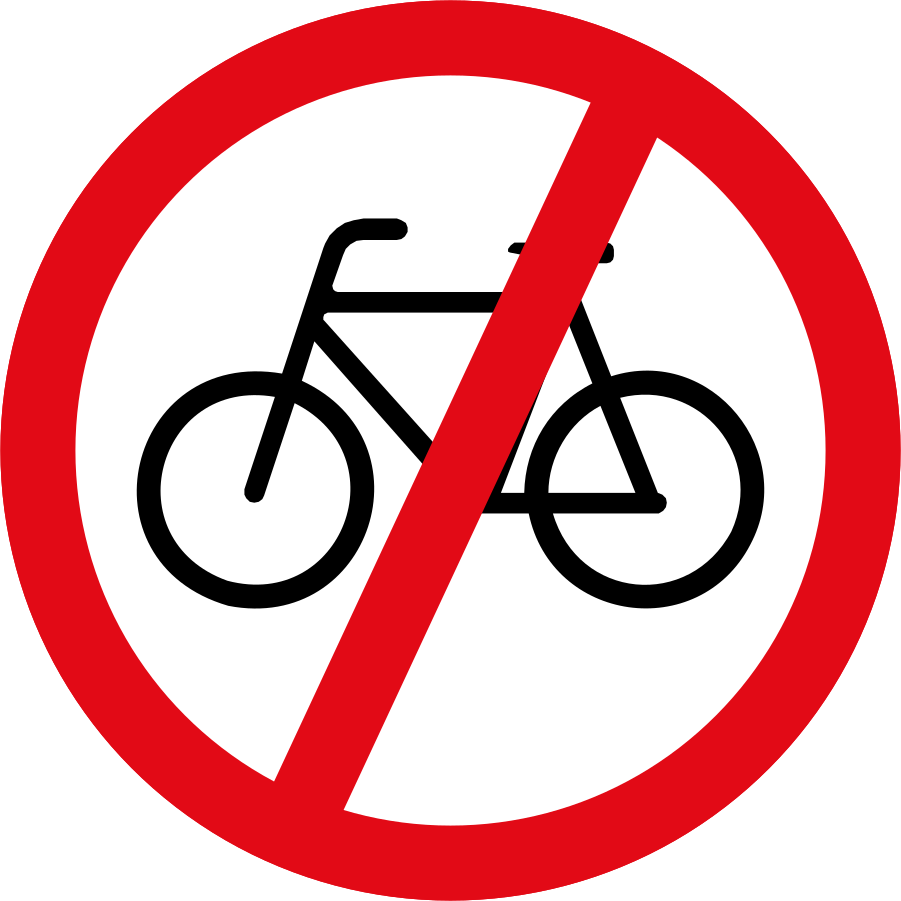
3. Cyclists prohibited
This traffic sign indicates that cyclists are prohibited. Cyclists may not enter or continue beyond the sign. Other road users may still be permitted unless another restriction applies.
English • R219 • No cyclists. The indicated class of road user must not proceed beyond this sign: cyclists.
Sources
🔗 Commons.wikimedia.org
🔗 Transport.gov.za • Department of Transport · SADC RTSM Vol. 1, chapter 2, PDF p. 77 (May 2012)
SVG source: Southern African Development Community • Public domain • Original revision 2017-05-25. Wikimedia original unmodified.
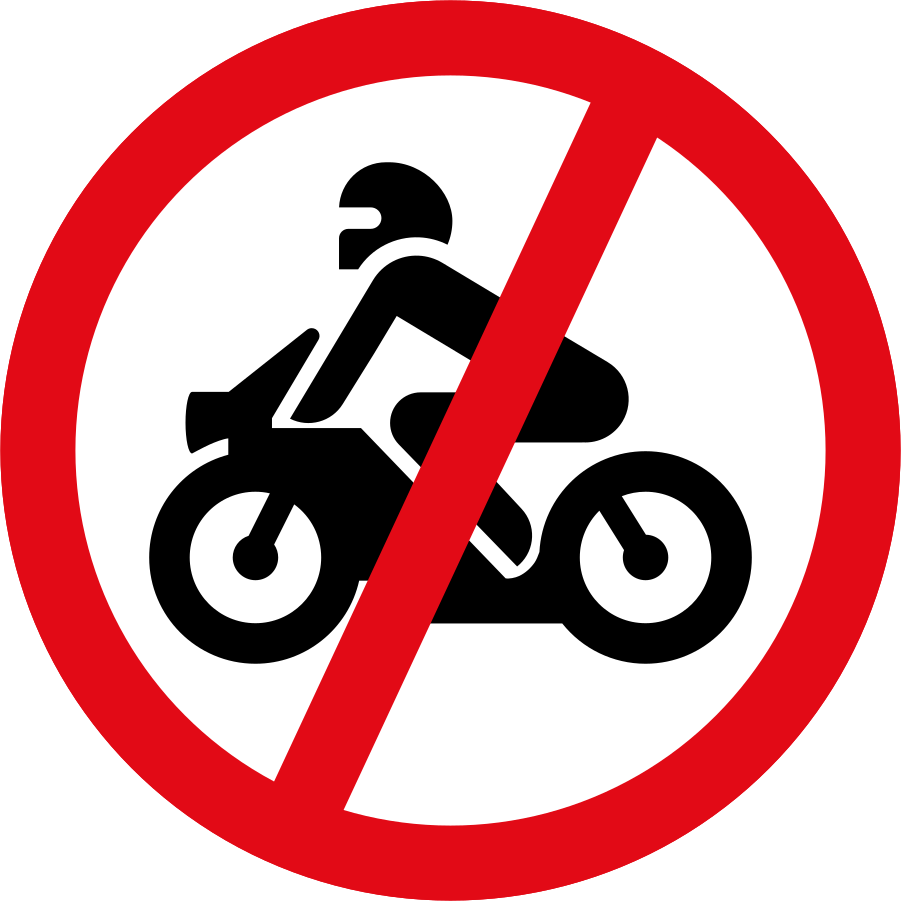
4. Motorcycles prohibited
This traffic sign indicates that motorcycles are prohibited. Motorcyclists may not enter or continue beyond the sign. Other road users may still be permitted unless another restriction applies.
English • R222 • No motor cycles. The indicated class of road user must not proceed beyond this sign: motor cycles.
Sources
🔗 Commons.wikimedia.org
🔗 Transport.gov.za • Department of Transport · SADC RTSM Vol. 1, chapter 2, PDF p. 80 (May 2012)
SVG source: Southern African Development Community • Public domain • Original revision 2025-12-15. Wikimedia original unmodified.
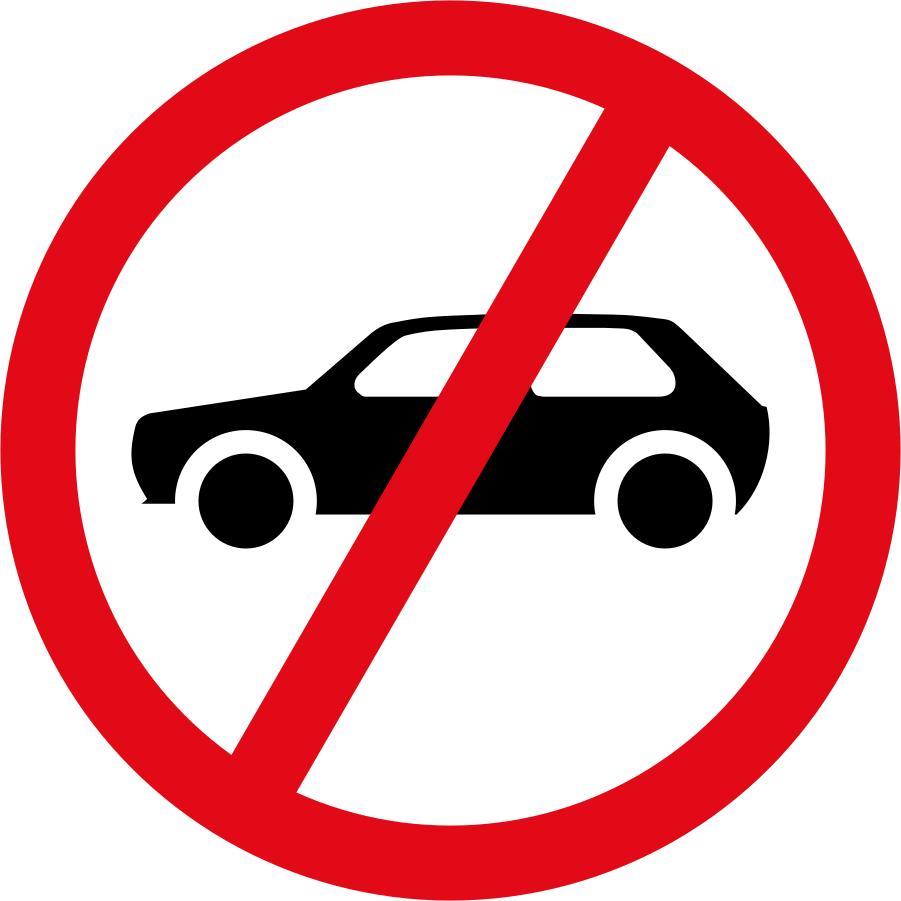
5. Cars prohibited
This traffic sign indicates that cars are prohibited. Cars may not enter or continue beyond the sign. Other road users may still be permitted unless another restriction applies.
English • R223 • No motor cars. The indicated class of road user must not proceed beyond this sign: motor cars.
Sources
🔗 Commons.wikimedia.org
🔗 Transport.gov.za • Department of Transport · SADC RTSM Vol. 1, chapter 2, PDF p. 80 (May 2012)
SVG source: Southern African Development Community • Public domain • Original revision 2017-06-05. Wikimedia original unmodified.
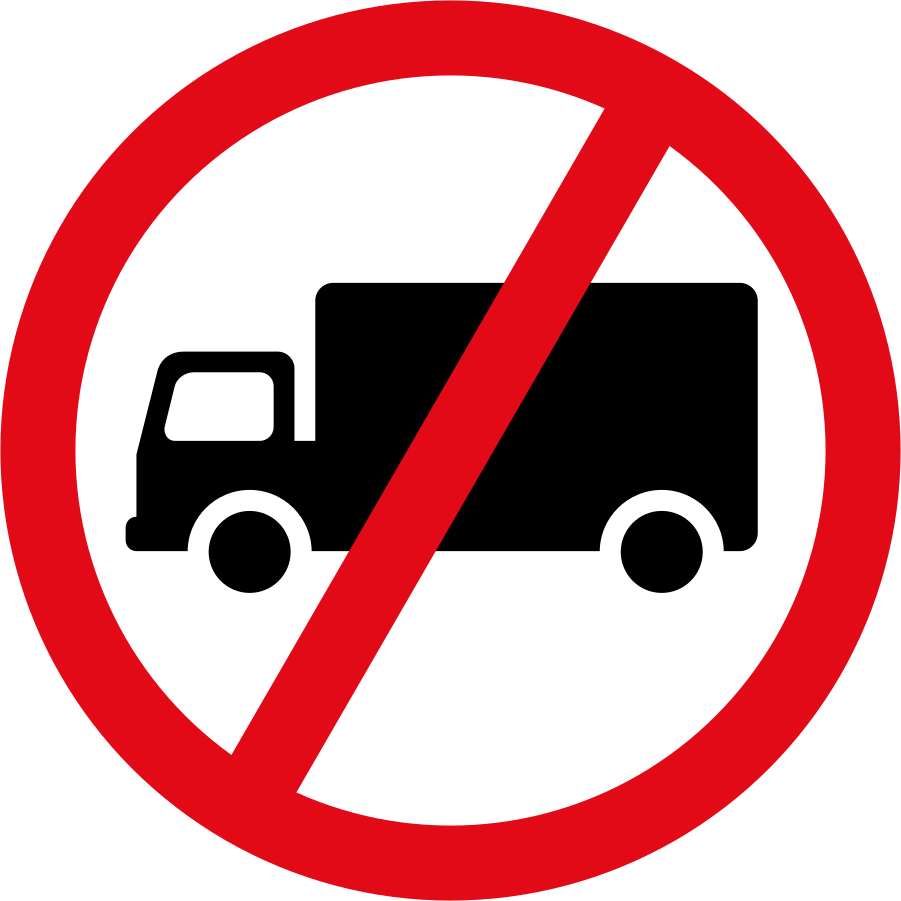
6. Trucks prohibited
This traffic sign indicates that trucks are prohibited. Trucks covered by the sign may not enter or continue beyond it. Any applicable weight threshold or vehicle-category limitation is determined by the sign, supplementary information and local rules.
English • R229 • No goods vehicles. Goods vehicles over 3,500 kg GVM/GCM must not proceed beyond the sign.
Sources
🔗 Commons.wikimedia.org
🔗 Transport.gov.za • Department of Transport · SADC RTSM Vol. 1, chapter 2, PDF p. 81 (May 2012)
SVG source: Southern African Development Community • Public domain • Original revision 2017-06-12. Wikimedia original unmodified.
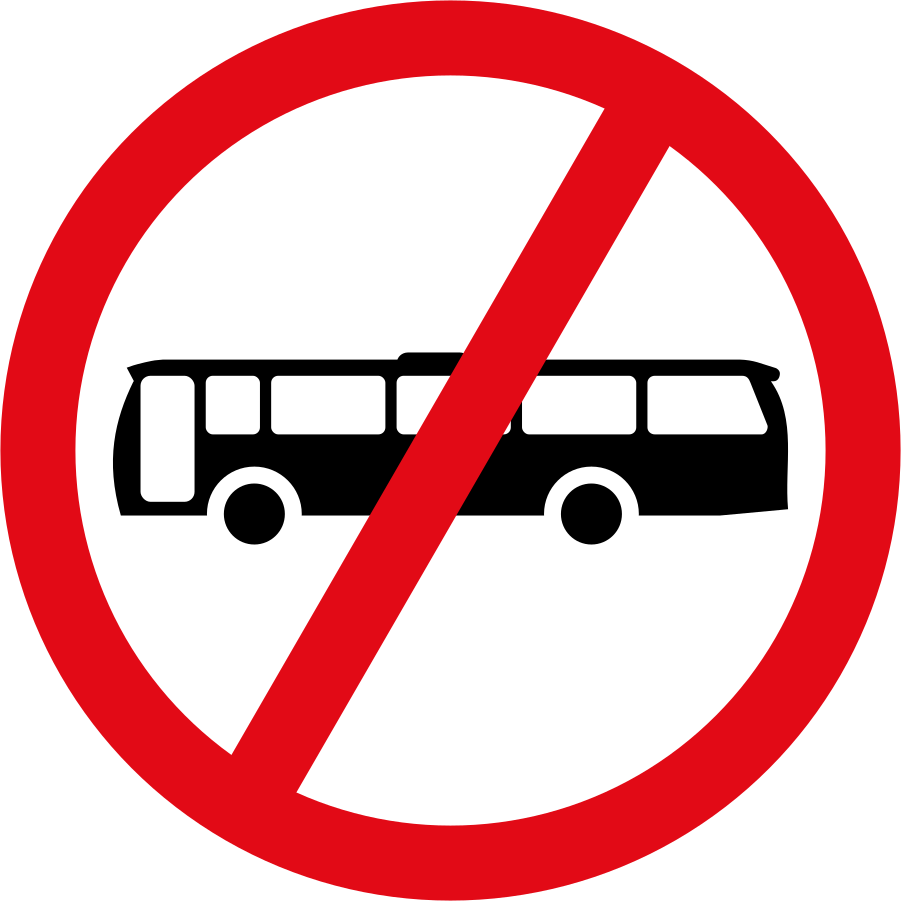
7. Buses prohibited
This traffic sign indicates that buses are prohibited. Buses covered by the sign may not enter or continue beyond it. Other road users may still be permitted unless another restriction applies.
English • R227 • No buses. The indicated class of road user must not proceed beyond this sign: buses.
Sources
🔗 Commons.wikimedia.org
🔗 Transport.gov.za • Department of Transport · SADC RTSM Vol. 1, chapter 2, PDF p. 81 (May 2012) Artwork correction: the earlier R226 source above documents the previous image. The displayed SVG now follows R227 and the captioned meaning.
🔗 Commons.wikimedia.org • Current SVG source • Southern African Development Community • Public domain • Original revision 2017-06-11. Wikimedia original unmodified.
🔗 Transport.gov.za • Department of Transport · SADC RTSM Vol. 1, chapter 2 · R227 · PDF p. 81 (May 2012).
Image via Commons.wikimedia.org
Southern African Development Community • Public domain • Source revision 2017-06-11. Wikimedia original unmodified.
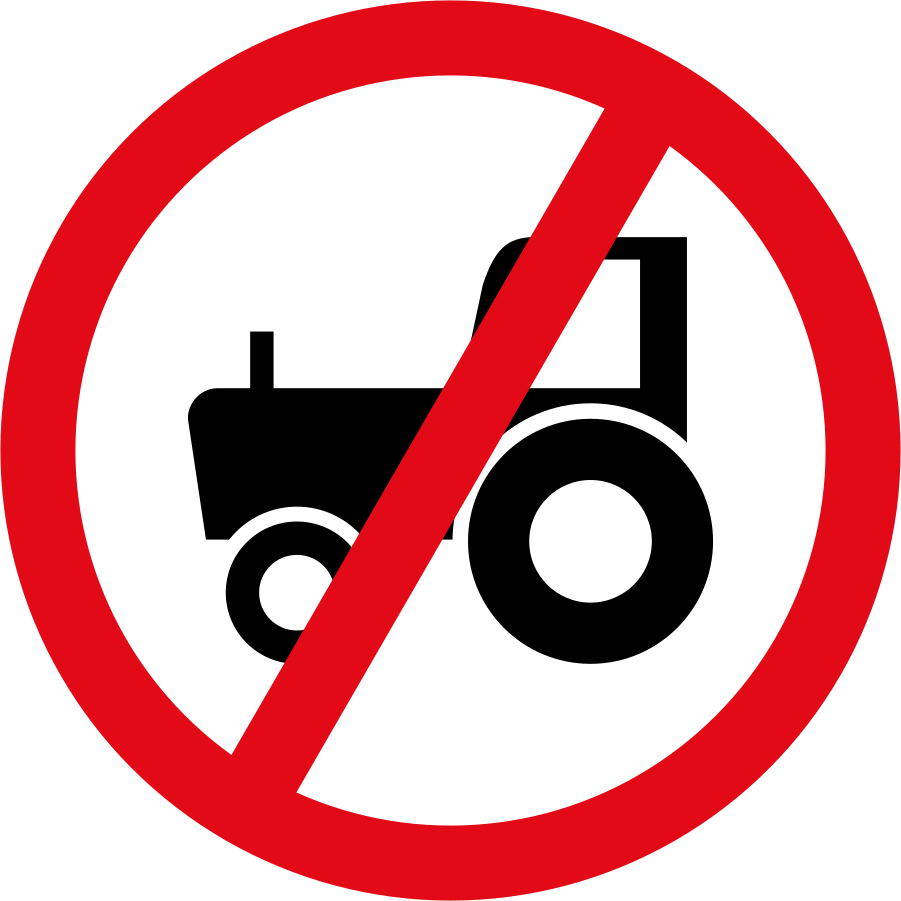
8. Tractors prohibited
This traffic sign indicates that tractors are prohibited. Tractors covered by the sign may not enter or continue beyond it. Other road users may still be permitted unless another restriction applies.
English • R236 • No agricultural vehicles. The indicated class of road user must not proceed beyond this sign: agricultural vehicles.
Sources
🔗 Commons.wikimedia.org
🔗 Transport.gov.za • Department of Transport · SADC RTSM Vol. 1, chapter 2, PDF p. 83 (May 2012)
SVG source: Southern African Development Community • Public domain • Original revision 2017-06-19. Wikimedia original unmodified.
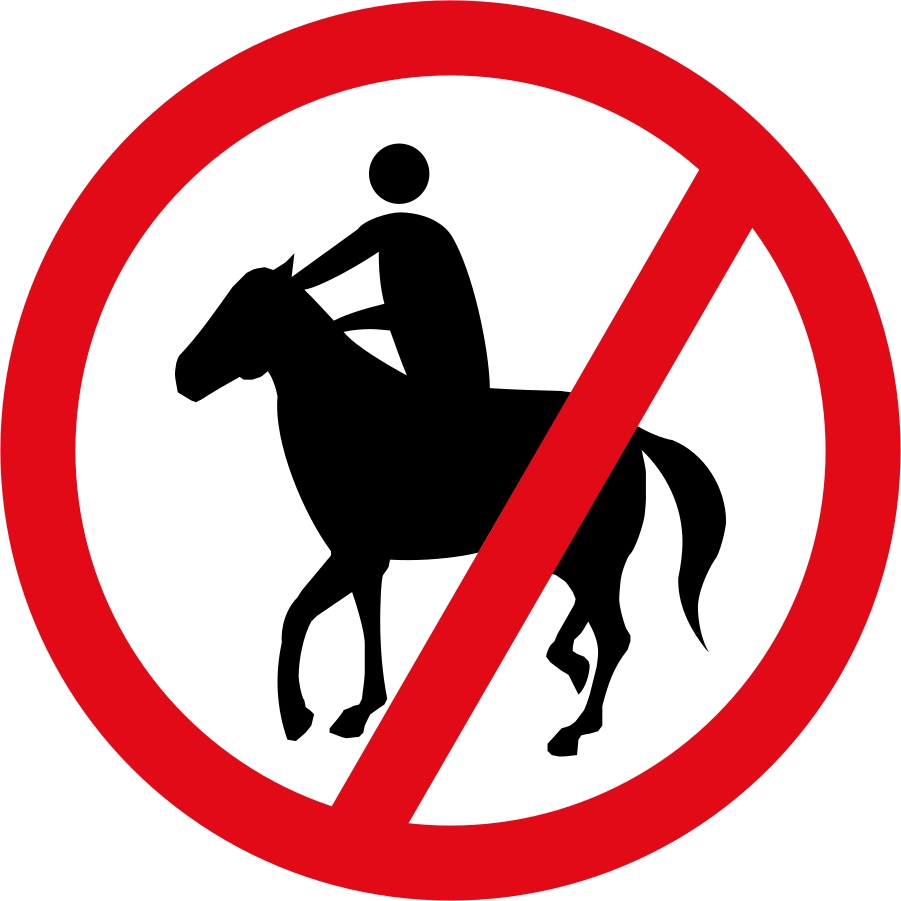
9. Equestrians prohibited
This traffic sign indicates that equestrians are prohibited. Equestrians may not enter or continue beyond the sign. Other road users may still be permitted unless another restriction applies.
English • R238 • No horses and riders. The indicated class of road user must not proceed beyond this sign: horses and riders.
Sources
🔗 Commons.wikimedia.org
🔗 Transport.gov.za • Department of Transport · SADC RTSM Vol. 1, chapter 2, PDF p. 84 (May 2012)
SVG source: Southern African Development Community • Public domain • Original revision 2017-06-19. Wikimedia original unmodified.
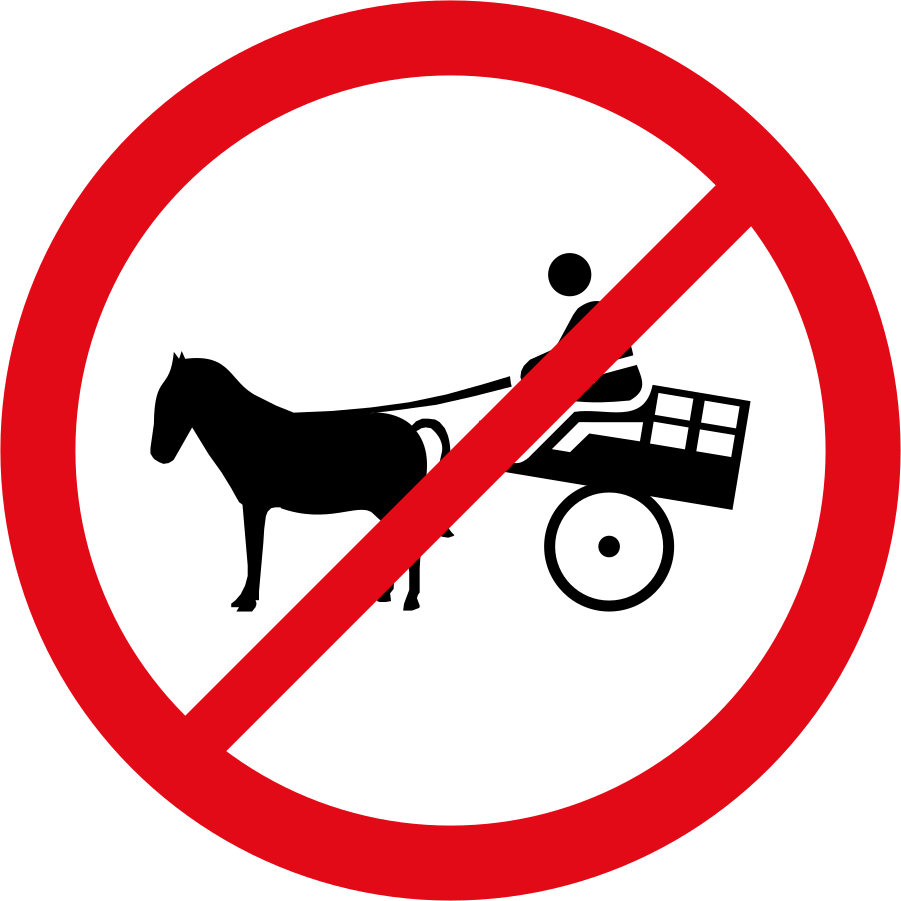
10. Horsecarts prohibited
This traffic sign indicates that horsecarts are prohibited. Horse-drawn vehicles may not enter or continue beyond the sign. Other road users may still be permitted unless another restriction applies.
English • R237 • No animal-drawn vehicles. The indicated class of road user must not proceed beyond this sign: animal-drawn vehicles.
Sources
🔗 Commons.wikimedia.org
🔗 Transport.gov.za • Department of Transport · SADC RTSM Vol. 1, chapter 2, PDF p. 83 (May 2012)
SVG source: Southern African Development Community • Public domain • Original revision 2017-06-15. Wikimedia original unmodified.
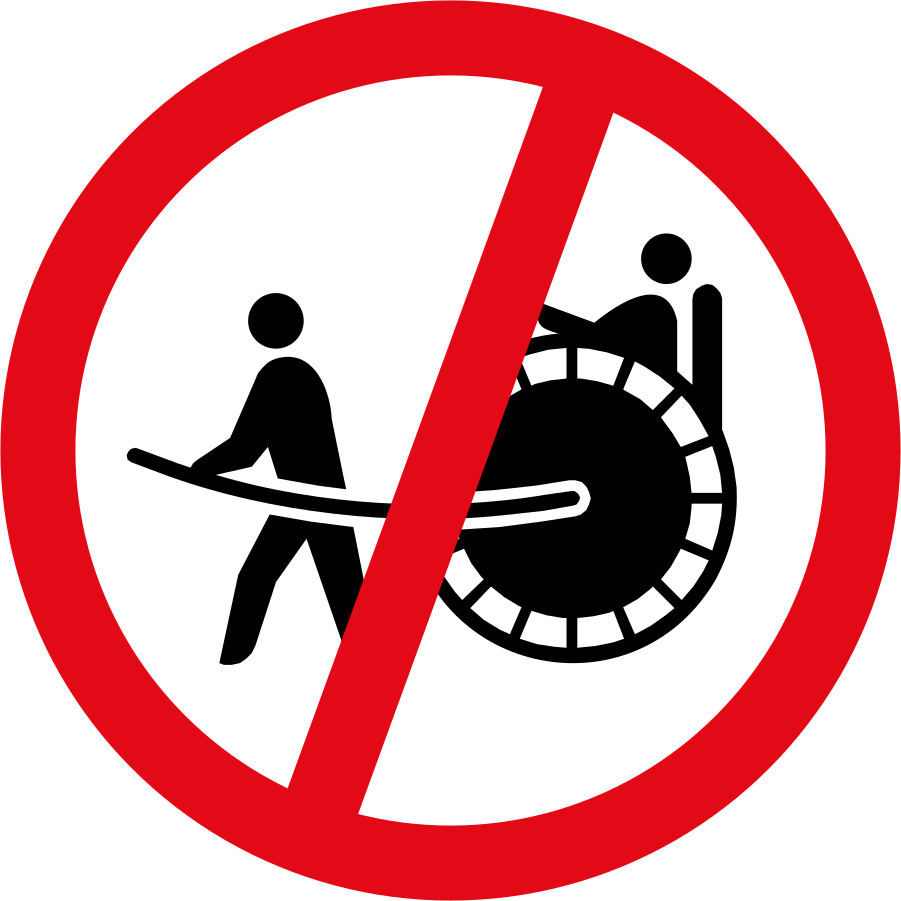
11. Rickshaws prohibited
This traffic sign indicates that rickshaws are prohibited. Rickshaws may not enter or continue beyond the sign.
English • R234 • No rickshaws. The indicated class of road user must not proceed beyond this sign: rickshaws.
Sources
🔗 Commons.wikimedia.org
🔗 Transport.gov.za • Department of Transport · SADC RTSM Vol. 1, chapter 2, PDF p. 83 (May 2012)
SVG source: Southern African Development Community • Public domain • Original revision 2017-06-17. Wikimedia original unmodified.
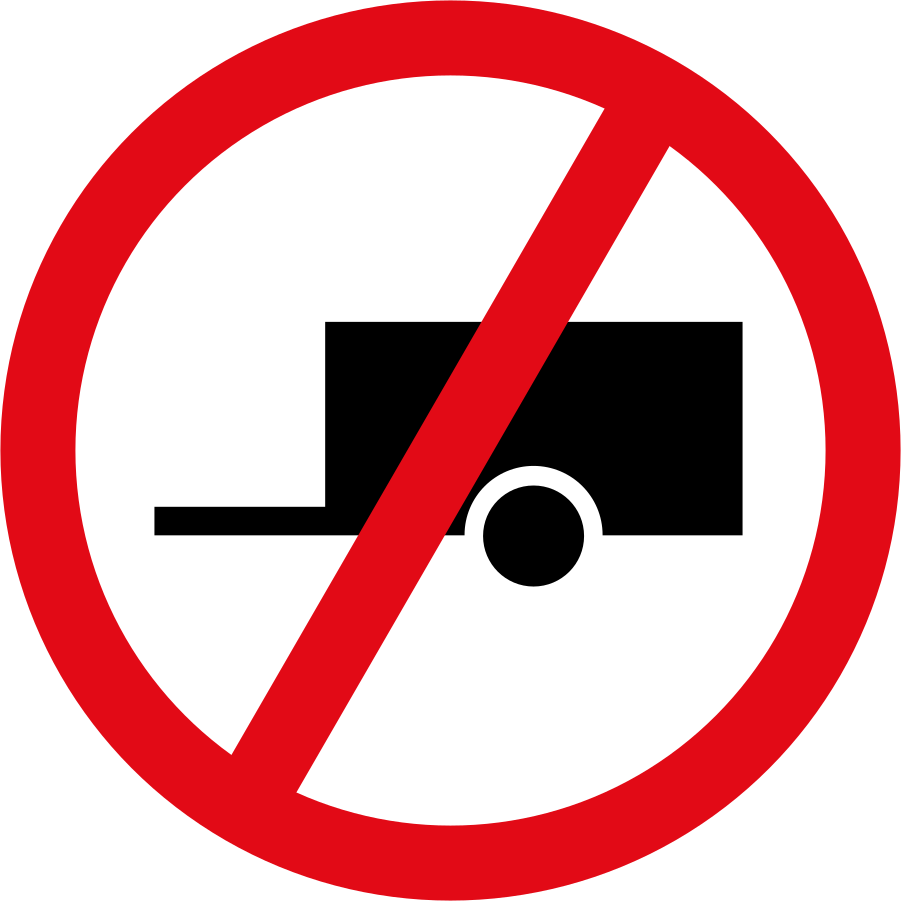
12. Trailers prohibited
This traffic sign indicates that trailers are prohibited. Vehicles towing trailers covered by the sign may not enter or continue beyond it. Vehicles without a trailer may still be permitted unless another restriction applies.
English • R240 • No towed vehicles. The indicated class of road user must not proceed beyond this sign: towed vehicles.
Sources
🔗 Commons.wikimedia.org
🔗 Transport.gov.za • Department of Transport · SADC RTSM Vol. 1, chapter 2, PDF p. 84 (May 2012)
SVG source: Southern African Development Community • Public domain • Original revision 2017-06-22. Wikimedia original unmodified.
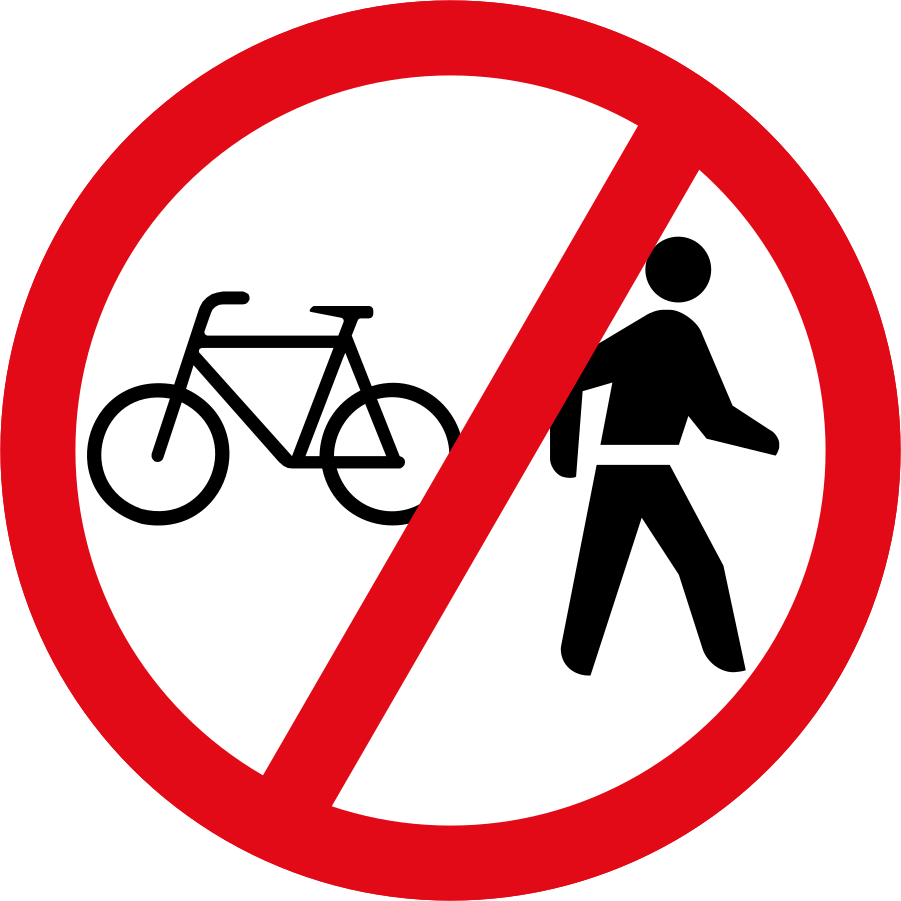
13. Pedestrians and cyclists prohibited
This traffic sign indicates that pedestrians and cyclists are prohibited. Pedestrians and cyclists may not enter or continue beyond the sign. Other road users may still be permitted unless another restriction applies.
English • R220 • No cyclists and pedestrians. The indicated class of road user must not proceed beyond this sign: cyclists and pedestrians.
Sources
🔗 Commons.wikimedia.org
🔗 Transport.gov.za • Department of Transport · SADC RTSM Vol. 1, chapter 2, PDF p. 78 (May 2012)
SVG source: Southern African Development Community • Public domain • Original revision 2017-05-28. Wikimedia original unmodified.
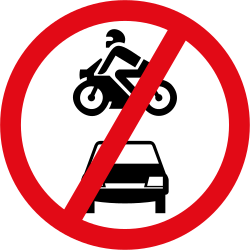
14. Motorcycles and cars prohibited
This traffic sign indicates that motorcycles and cars are prohibited. Motorcycles and cars may not enter or continue beyond the sign. Other road users may still be permitted unless another restriction applies.
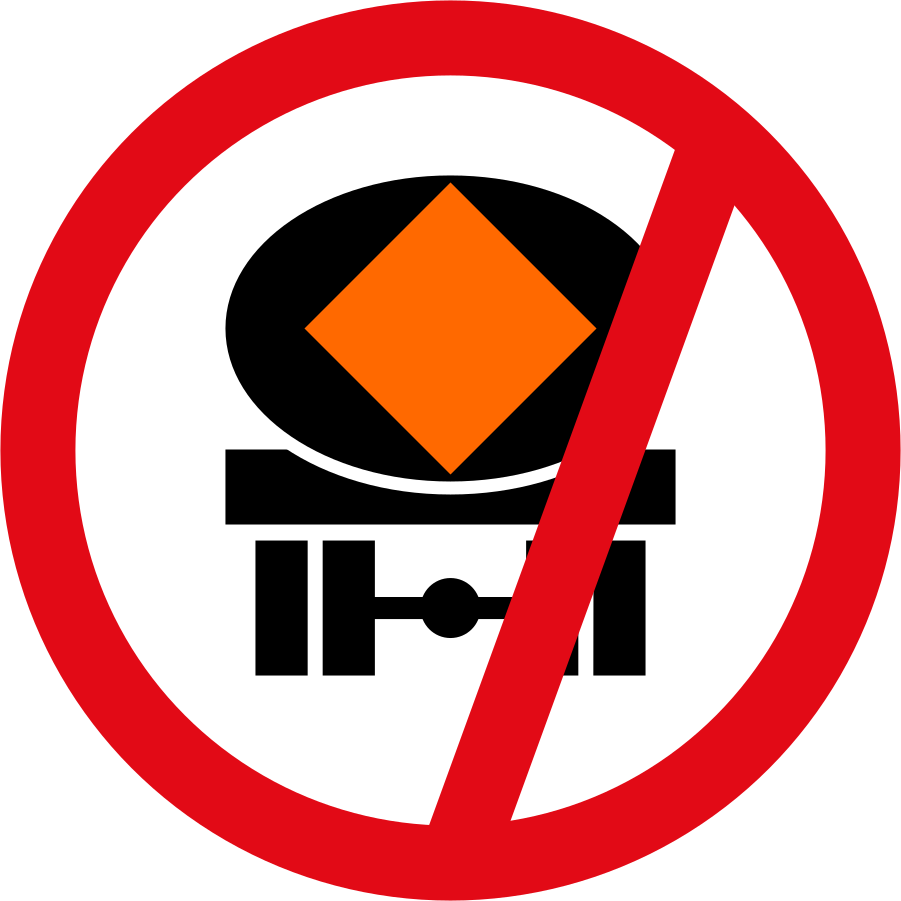
15. Vehicles carrying water-polluting substances prohibited
This traffic sign indicates that vehicles carrying water-polluting substances are prohibited. Vehicles carrying the substances covered by the sign may not enter or continue beyond it.
English • R232 • No vehicles conveying dangerous goods. The indicated class of road user must not proceed beyond this sign: vehicles conveying dangerous goods.
Sources
🔗 Commons.wikimedia.org
🔗 Transport.gov.za • Department of Transport · SADC RTSM Vol. 1, chapter 2, PDF p. 82 (May 2012)
SVG source: Southern African Development Community • Public domain • Original revision 2017-07-14. Wikimedia original unmodified.
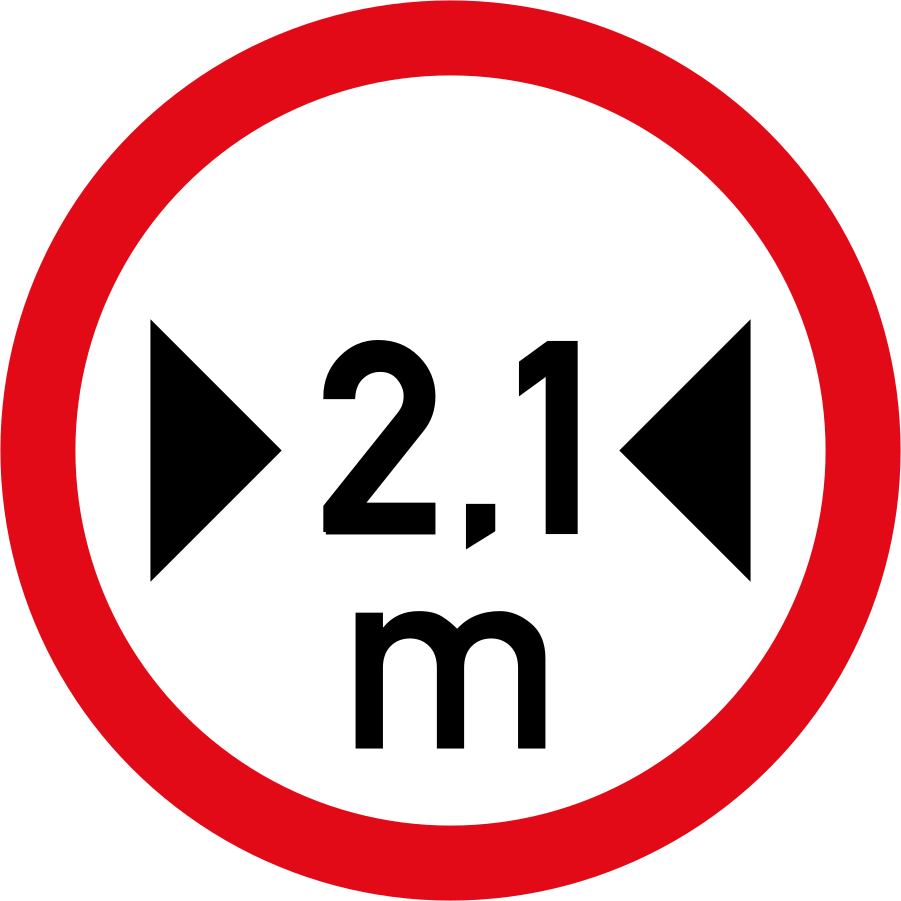
16. Vehicles wider than indicated prohibited
This traffic sign indicates that vehicles wider than indicated are prohibited. A vehicle or vehicle combination whose overall width, including its load, exceeds the displayed limit may not continue beyond the sign.
English • R239 • Width limit: 2.1 m. Vehicles 2.1 metres wide or wider, including their load, must not proceed beyond the sign.
Sources
🔗 Commons.wikimedia.org
🔗 Transport.gov.za • Department of Transport · SADC RTSM Vol. 1, chapter 2, PDF p. 84 (May 2012)
SVG source: Southern African Development Community • Public domain • Original revision 2017-06-22. Wikimedia original unmodified.
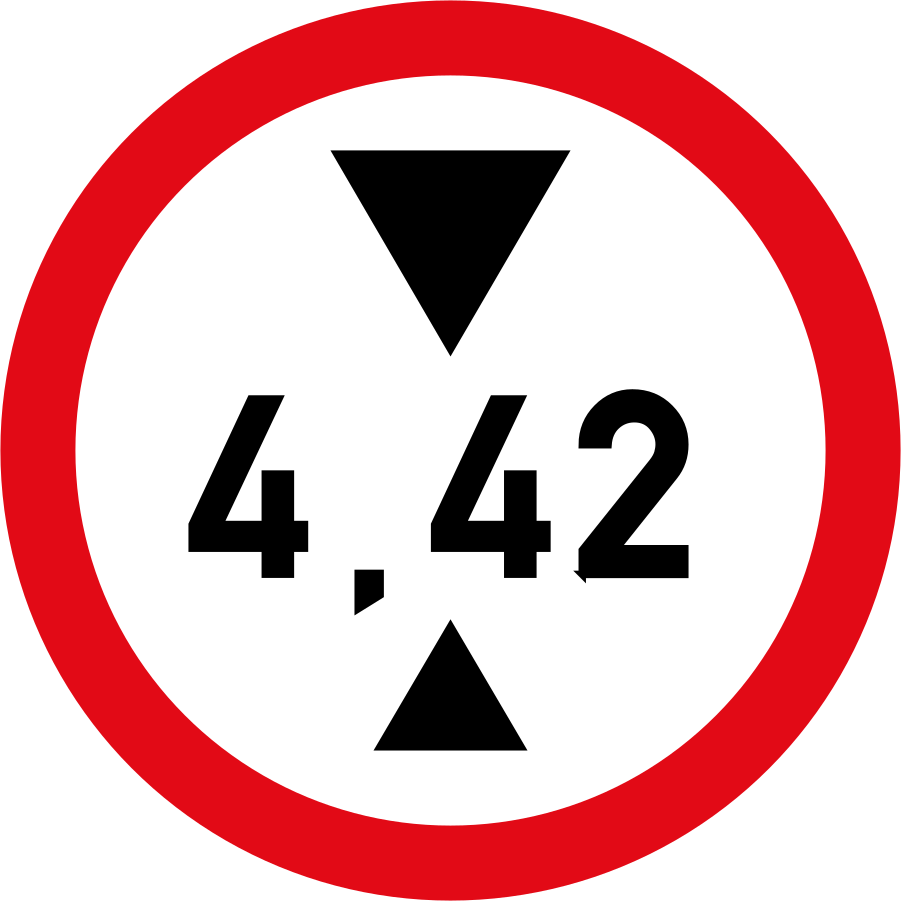
17. Vehicles higher than indicated prohibited
This traffic sign indicates that vehicles higher than indicated are prohibited. A vehicle or vehicle combination whose overall height, including its load, exceeds the displayed limit may not continue beyond the sign.
English • R204 • Height limit: 4.42 m. Do not proceed unless the vehicle and load are lower than the indicated clearance of 4.42 metres. Include an antenna where a height gauge applies.
Sources
🔗 Commons.wikimedia.org
🔗 Transport.gov.za • Department of Transport · SADC RTSM Vol. 1, chapter 2, PDF p. 67 (May 2012)
SVG source: Southern African Development Community • Public domain • Original revision 2017-06-22. Wikimedia original unmodified.
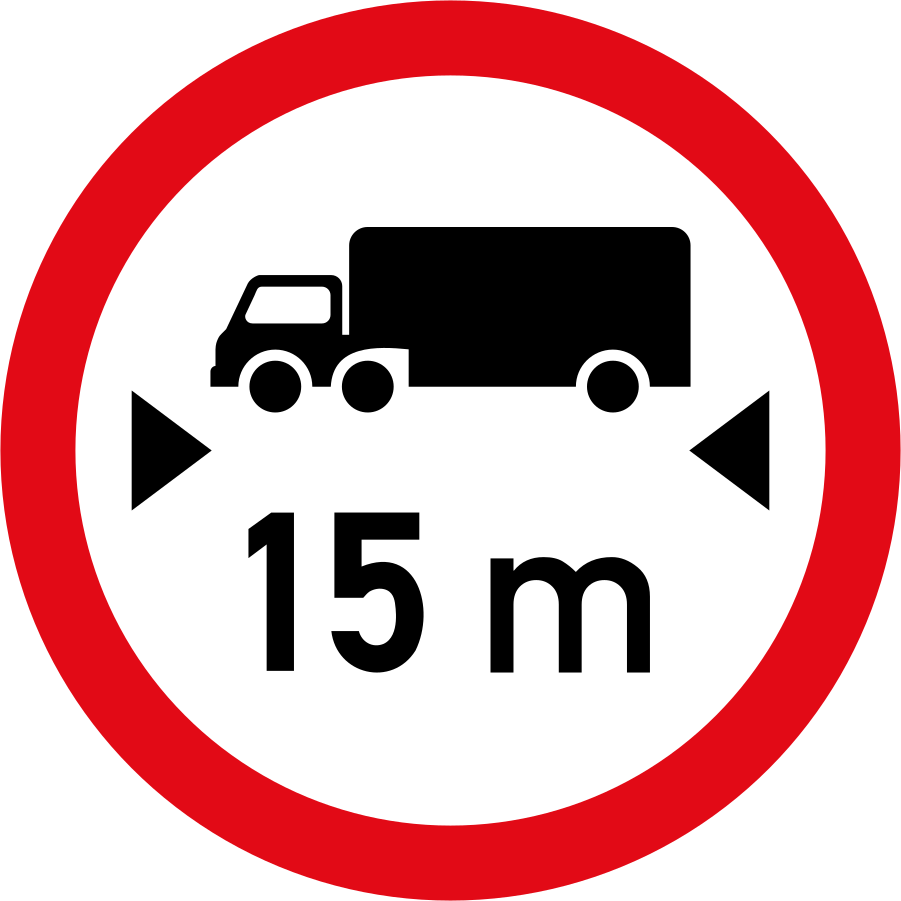
18. Vehicles longer than indicated prohibited
This traffic sign indicates that vehicles longer than indicated are prohibited. A vehicle or vehicle combination whose overall length, including its load, exceeds the displayed limit may not continue beyond the sign.
English • R205 • Length limit: 15 m. Vehicles or combinations longer than 15 metres, including projections, must not proceed beyond the sign.
Sources
🔗 Commons.wikimedia.org
🔗 Transport.gov.za • Department of Transport · SADC RTSM Vol. 1, chapter 2, PDF p. 68 (May 2012)
SVG source: Southern African Development Community • Public domain • Original revision 2017-06-24. Wikimedia original unmodified.
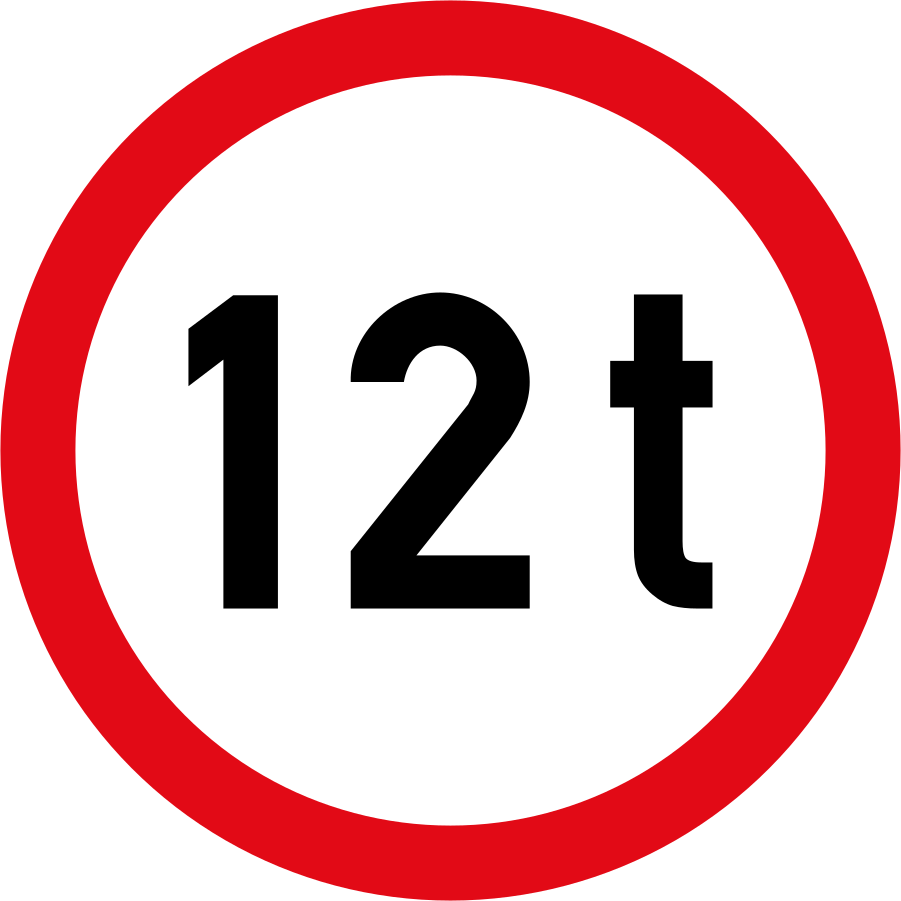
19. Vehicles heavier than indicated prohibited
This traffic sign indicates that vehicles heavier than indicated are prohibited. Vehicles or vehicle combinations exceeding the displayed mass limit may not continue beyond the sign. The legally relevant mass is determined by the applicable local rules.
English • R202 • Mass limit: 12 t. Vehicles with a gross vehicle mass or gross combination mass exceeding 12 tonnes must not proceed beyond the sign.
Sources
🔗 Commons.wikimedia.org
🔗 Transport.gov.za • Department of Transport · SADC RTSM Vol. 1, chapter 2, PDF p. 65 (May 2012)
SVG source: Southern African Development Community • Public domain • Original revision 2017-06-23. Wikimedia original unmodified.
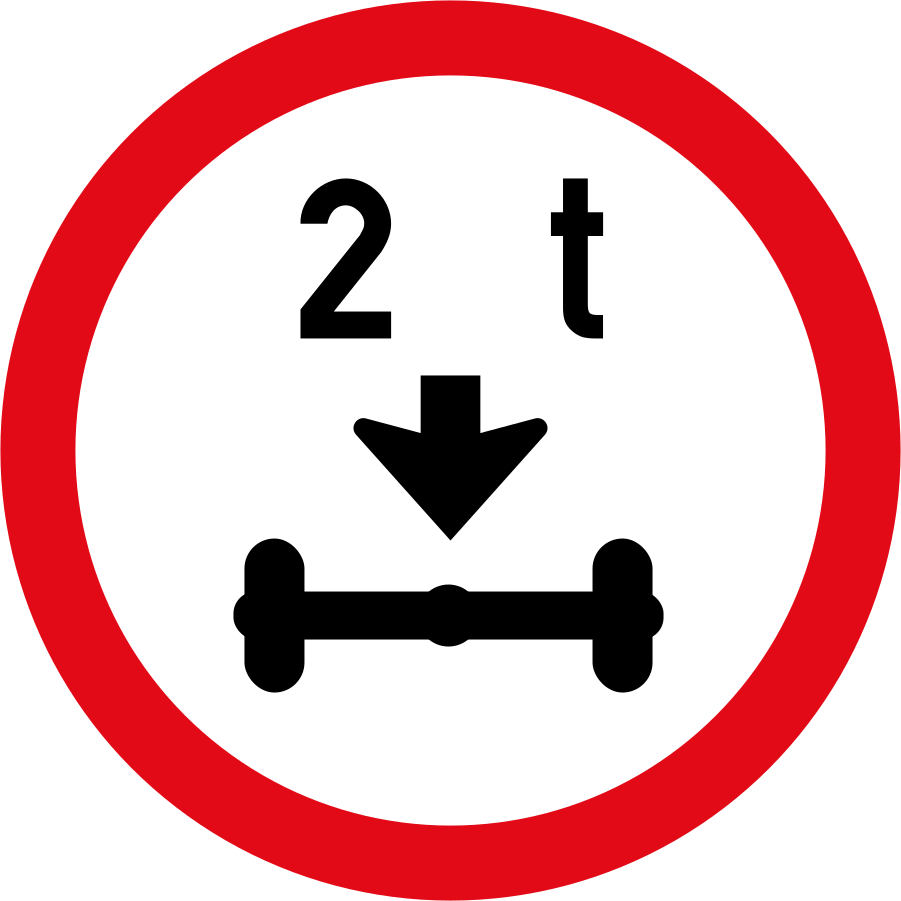
20. Vehicles exceeding the axle-load limit prohibited
This traffic sign indicates that vehicles exceeding the indicated axle-load limit are prohibited. A vehicle whose load on an axle exceeds the displayed limit may not continue beyond the sign.
English • R203 • Axle massload limit: 2 t. Vehicles with a gross axle massload or gross axle unit massload exceeding 2 tonnes must not proceed beyond the sign.
Sources
🔗 Commons.wikimedia.org
🔗 Transport.gov.za • Department of Transport · SADC RTSM Vol. 1, chapter 2, PDF p. 66 (May 2012)
SVG source: Southern African Development Community • Public domain • Original revision 2017-06-24. Wikimedia original unmodified.
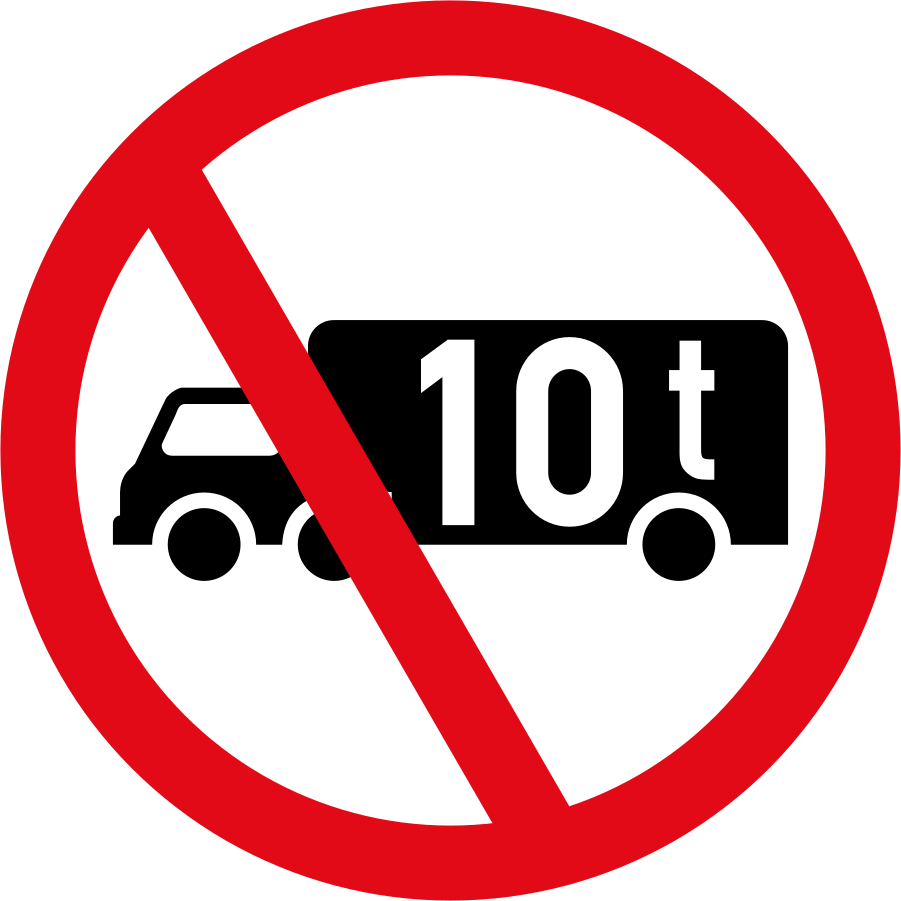
21. Trucks heavier than indicated prohibited
This traffic sign indicates that trucks heavier than indicated are prohibited. Trucks covered by the sign may not continue if they exceed the displayed mass limit. The legally relevant mass is determined by the applicable local rules.
English • R230 • No goods vehicles over 10 t GVM. Goods vehicles with a gross vehicle mass or gross combination mass exceeding 10 tonnes must not proceed beyond the sign.
Sources
🔗 Commons.wikimedia.org
🔗 Transport.gov.za • Department of Transport · SADC RTSM Vol. 1, chapter 2, PDF p. 82 (May 2012)
SVG source: Southern African Development Community • Public domain • Original revision 2017-06-13. Wikimedia original unmodified.
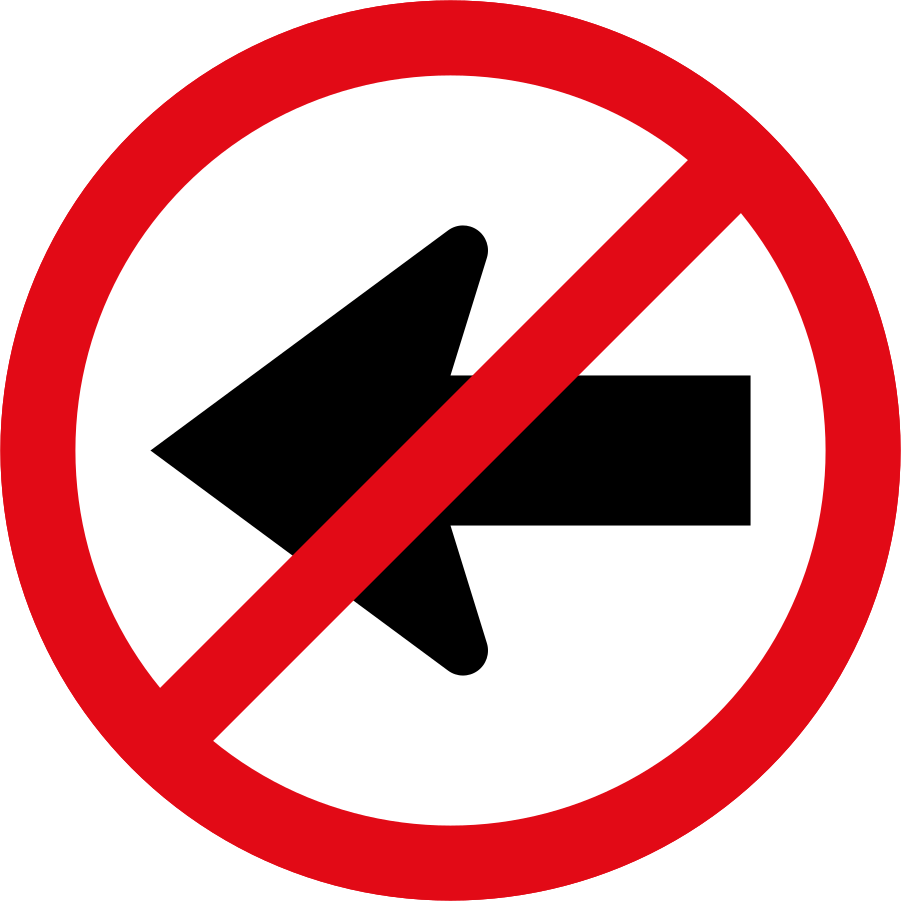
22. Turning left prohibited
This traffic sign indicates that turning left is prohibited. A left turn may not be made where the sign applies. Other movements may still be permitted unless another restriction applies.
English • R211 • No left turn. Do not turn left at the point indicated by the sign.
Sources
🔗 Commons.wikimedia.org
🔗 Transport.gov.za • Department of Transport · SADC RTSM Vol. 1, chapter 2, PDF p. 71 (May 2012) Artwork correction: the earlier R209 source above documents the previous image. The displayed SVG now follows R211 and the captioned meaning.
🔗 Commons.wikimedia.org • Current SVG source • Southern African Development Community • Public domain • Original revision 2017-05-22. Wikimedia original unmodified.
🔗 Transport.gov.za • Department of Transport · SADC RTSM Vol. 1, chapter 2 · R211 · PDF p. 72 (May 2012).
Image via Commons.wikimedia.org
Southern African Development Community • Public domain • Source revision 2017-05-22. Wikimedia original unmodified.
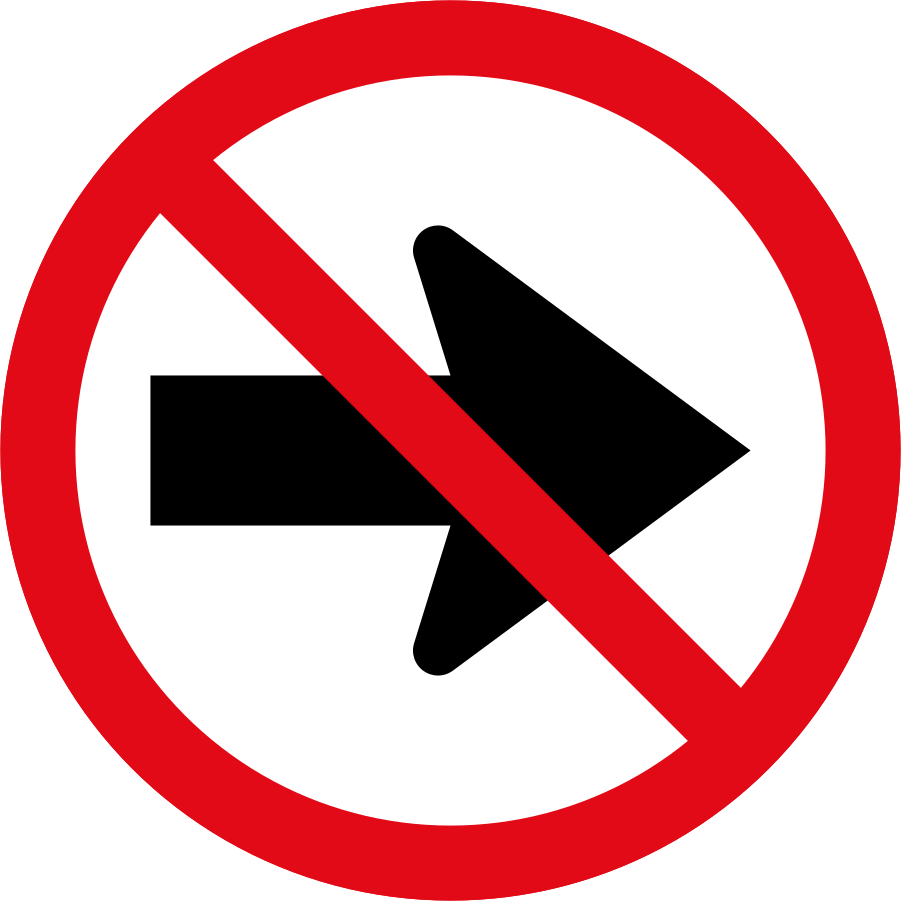
23. Turning right prohibited
This traffic sign indicates that turning right is prohibited. A right turn may not be made where the sign applies. Other movements may still be permitted unless another restriction applies.
English • R212 • No right turn. Do not turn right at the point indicated by the sign.
Sources
🔗 Commons.wikimedia.org
🔗 Transport.gov.za • Department of Transport · SADC RTSM Vol. 1, chapter 2, PDF p. 71 (May 2012) Artwork correction: the earlier R210 source above documents the previous image. The displayed SVG now follows R212 and the captioned meaning.
🔗 Commons.wikimedia.org • Current SVG source • Southern African Development Community • Public domain • Original revision 2017-05-22. Wikimedia original unmodified.
🔗 Transport.gov.za • Department of Transport · SADC RTSM Vol. 1, chapter 2 · R212 · PDF p. 72 (May 2012).
Image via Commons.wikimedia.org
Southern African Development Community • Public domain • Source revision 2017-05-22. Wikimedia original unmodified.
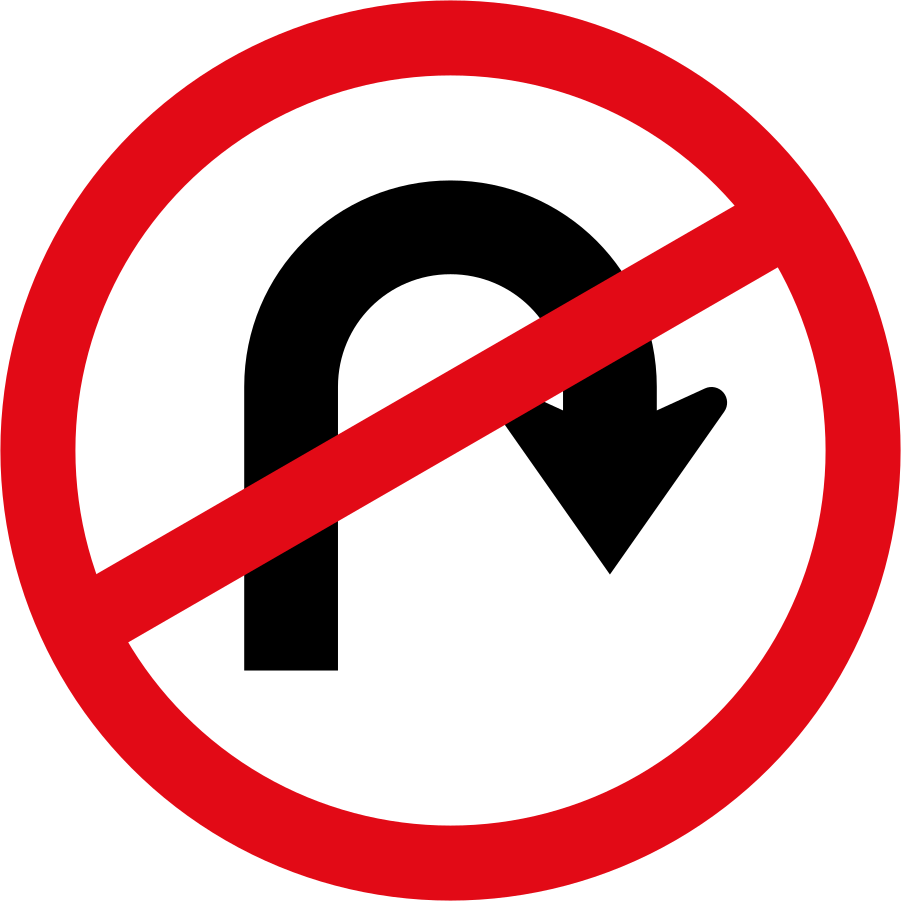
24. Turning around prohibited (U-turn)
This traffic sign indicates that turning around (making a U-turn) is prohibited. A U-turn may not be made where the prohibition applies. Other movements may still be permitted unless another restriction applies.
English • R213 • No U-turn. Do not make a U-turn at the point indicated by the sign.
Sources
🔗 Commons.wikimedia.org
🔗 Transport.gov.za • Department of Transport · SADC RTSM Vol. 1, chapter 2, PDF p. 72 (May 2012)
SVG source: Southern African Development Community • Public domain • Original revision 2017-06-01. Wikimedia original unmodified.
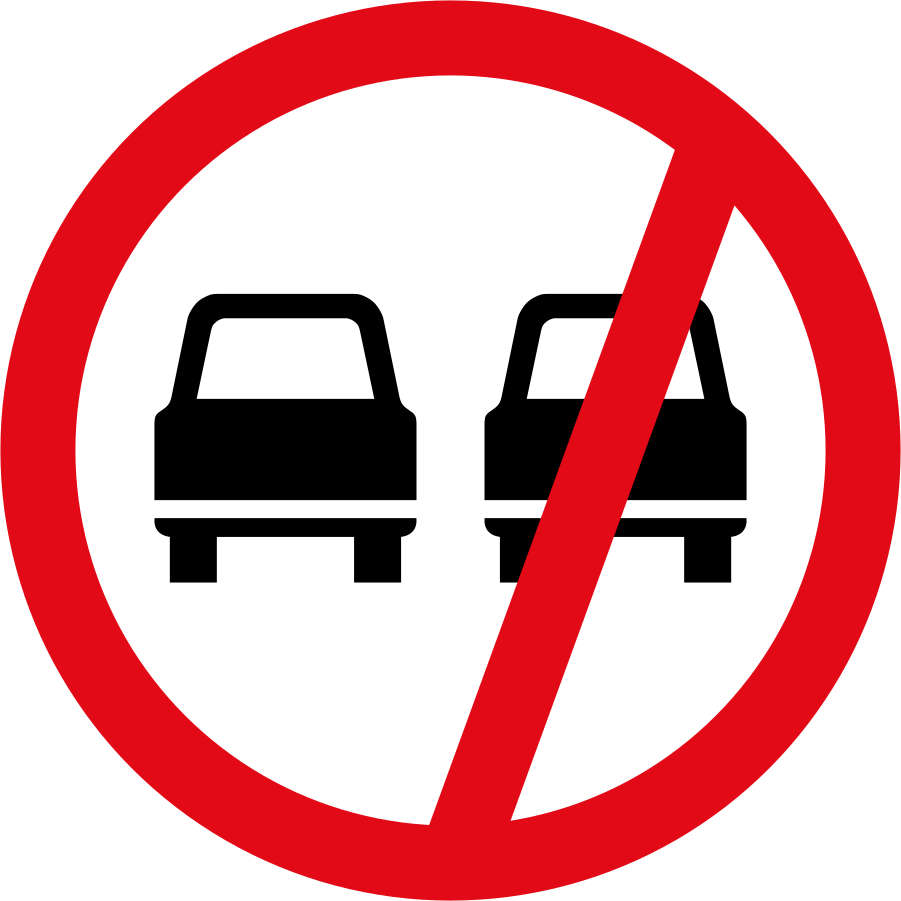
25. Overtaking prohibited
This traffic sign indicates that overtaking is prohibited. The vehicles covered by the prohibition and any categories that may still be overtaken depend on the applicable local rules.
English • R214 • No overtaking: all vehicles. Do not overtake another vehicle travelling in the same direction for 500 metres beyond the sign, unless the applicability is modified by a selective restriction message.
Sources
🔗 Commons.wikimedia.org
🔗 Transport.gov.za • Department of Transport · SADC RTSM Vol. 1, chapter 2, PDF p. 73 (May 2012)
SVG source: Southern African Development Community • Public domain • Original revision 2017-06-22. Wikimedia original unmodified.
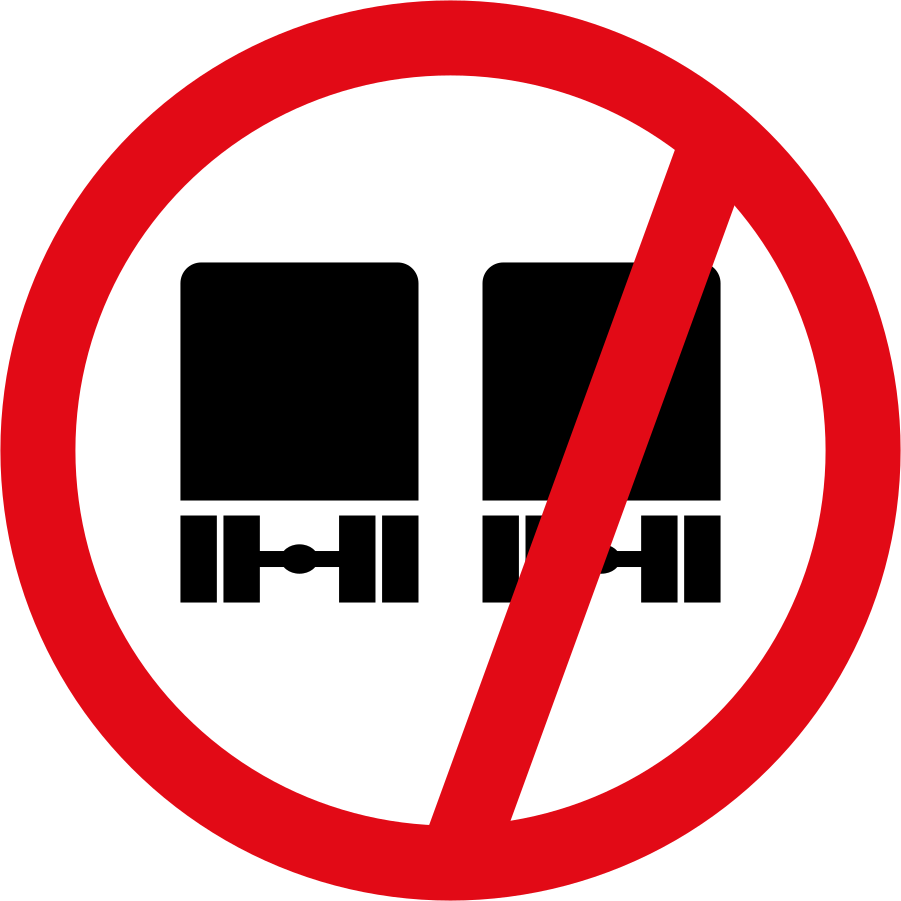
26. Overtaking prohibited for trucks
This traffic sign indicates that overtaking is prohibited for trucks. Trucks covered by the sign may not overtake where the prohibition applies. The affected truck categories and any exceptions depend on the applicable local rules.
English • R215 • No goods vehicles overtaking goods vehicles. Drivers of goods vehicles must not overtake another goods vehicle travelling in the same direction for 500 metres beyond the sign, unless a selective restriction message modifies the applicability.
Sources
🔗 Commons.wikimedia.org
🔗 Transport.gov.za • Department of Transport · SADC RTSM Vol. 1, chapter 2, PDF p. 73 (May 2012)
SVG source: Southern African Development Community • Public domain • Original revision 2017-06-21. Wikimedia original unmodified.
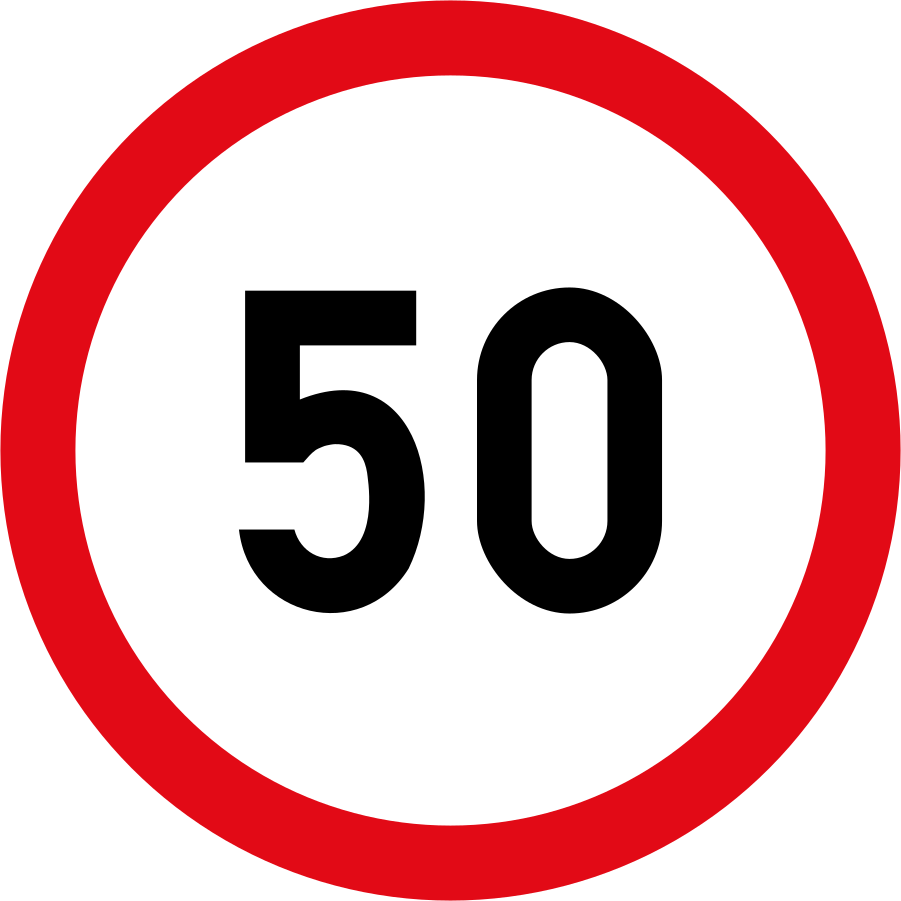
27. Start of a speed limit
This traffic sign indicates the start of a speed limit. The displayed value is the maximum permitted speed from this point. The limit remains in force until it ends or is replaced according to the applicable traffic signs and local rules.
English • R201 • Speed limit: 50 km/h. Do not exceed 50 kilometres per hour.
Sources
🔗 Commons.wikimedia.org
🔗 Transport.gov.za • Department of Transport · SADC RTSM Vol. 1, chapter 2, PDF p. 64 (May 2012)
SVG source: Southern African Development Community • Public domain • Original revision 2017-07-04. Wikimedia original unmodified.
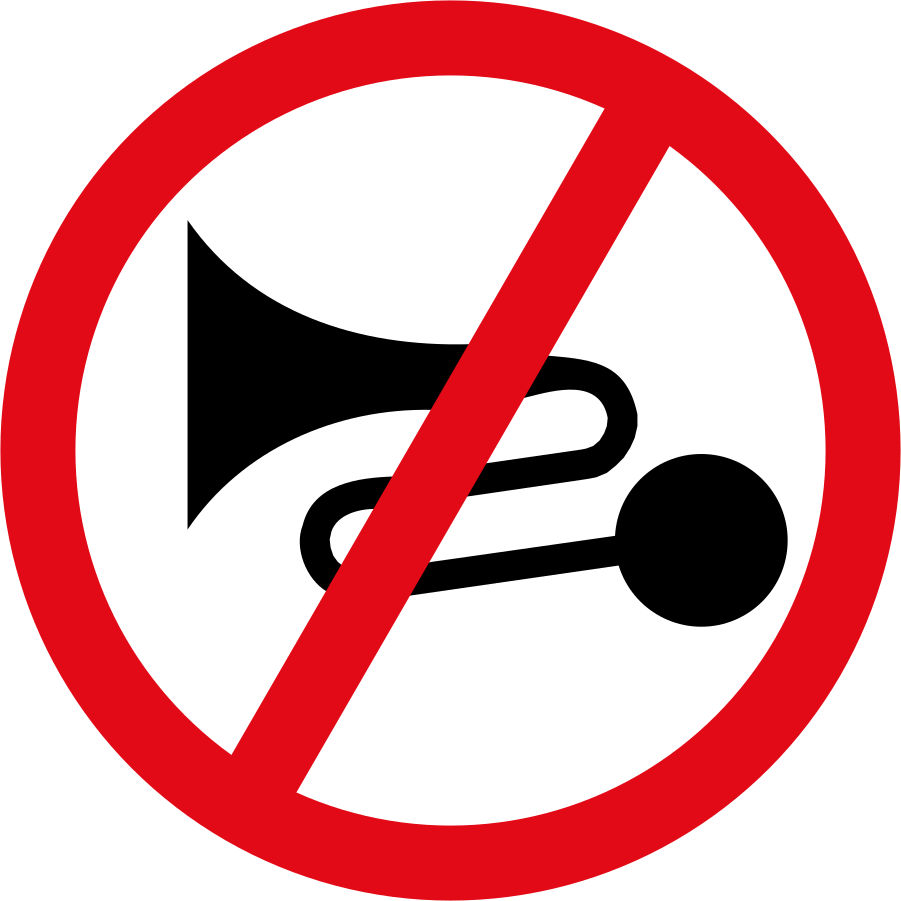
28. Using the horn prohibited
This traffic sign indicates that using the horn is prohibited. The horn or other audible warning device may not be used where the prohibition applies, except where an applicable local rule permits or requires it.
English • R206 • No excessive noise. Do not sound the horn for 100 metres beyond the sign. Vehicles emitting noise above prescribed levels must not proceed beyond it. Any accompanying distance plate may extend the restriction.
Sources
🔗 Commons.wikimedia.org
🔗 Transport.gov.za • Department of Transport · SADC RTSM Vol. 1, chapter 2, PDF p. 69 (May 2012)
SVG source: Southern African Development Community • Public domain • Original revision 2017-06-22. Wikimedia original unmodified.
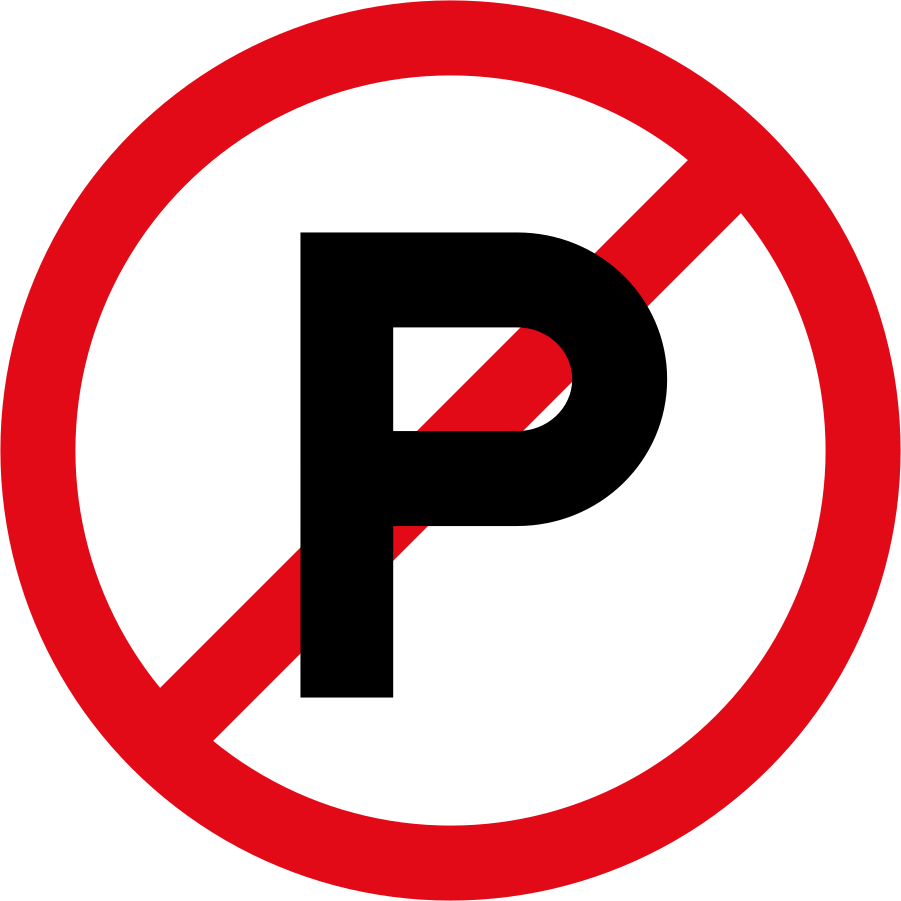
29. Parking prohibited
This traffic sign indicates that parking is prohibited. Vehicles may not be parked in the area covered by the sign unless an exception applies. Brief stopping to pick up or drop off passengers or to load or unload goods may still be permitted where local rules allow it.
English • R216 • No parking. Do not park on the portion of public road indicated by the sign. Read any secondary message for the applicable times or vehicle classes.
Sources
🔗 Commons.wikimedia.org
🔗 Transport.gov.za • Department of Transport · SADC RTSM Vol. 1, chapter 2, PDF p. 74 (May 2012)
SVG source: Southern African Development Community • Public domain • Original revision 2017-05-31. Wikimedia original unmodified.
30. Parking and stopping prohibited
This traffic sign indicates that parking and stopping are prohibited. Vehicles may not stop or park voluntarily where the restriction applies, except where an applicable rule provides an exemption or stopping is required by traffic conditions.
English • R217 • No stopping. Do not stop on the indicated portion of road, except to comply with a traffic signal or officer, or to avoid a collision. Read any secondary message for the scope of the restriction.
Sources
🔗 Commons.wikimedia.org
🔗 Transport.gov.za • Department of Transport · SADC RTSM Vol. 1, chapter 2, PDF p. 75 (May 2012)
SVG source: Southern African Development Community • Public domain • Original revision 2017-05-31. Wikimedia original unmodified.
