


Traffic signsSouth Africa
 Traffic rules
 South Africa
 Priority signs
 Warning signs
 Prohibitory signs
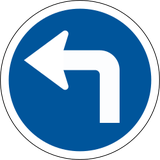 Mandatory signs
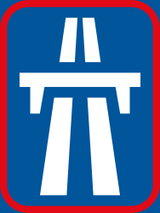 Information signs
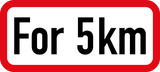 Additional signs
Warning signs
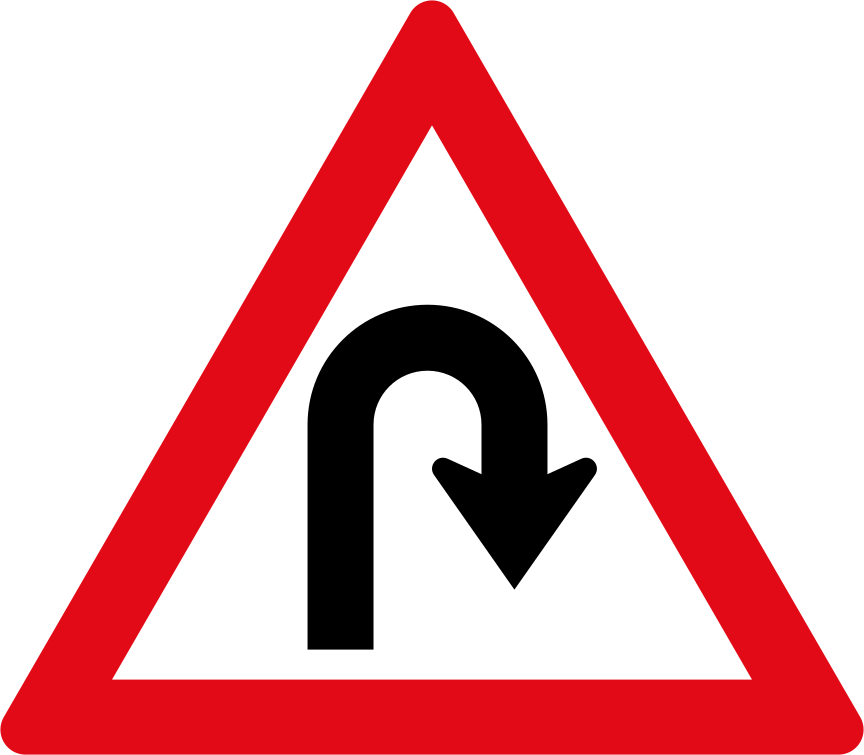
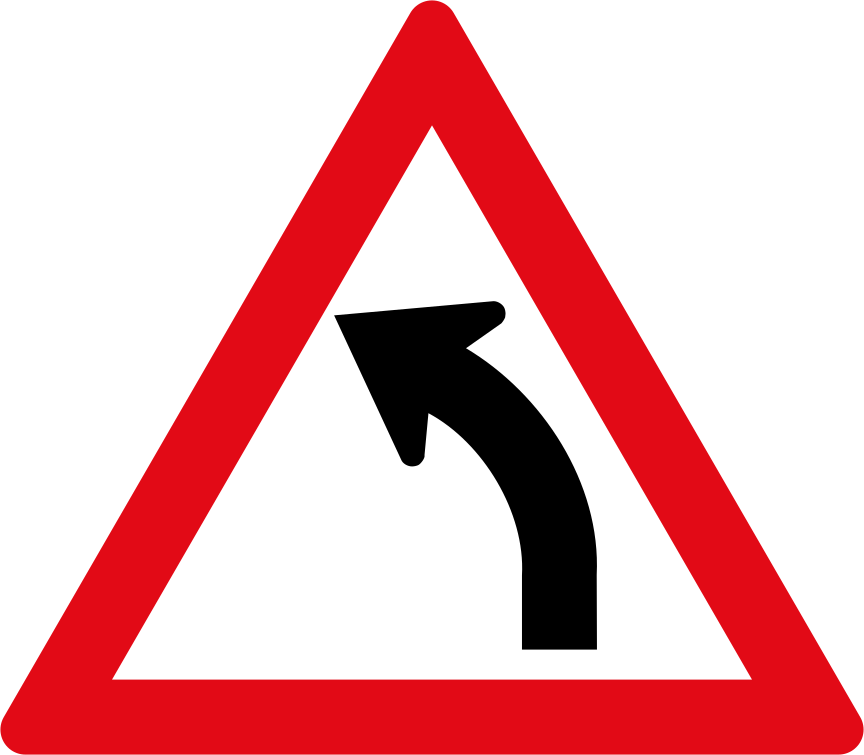
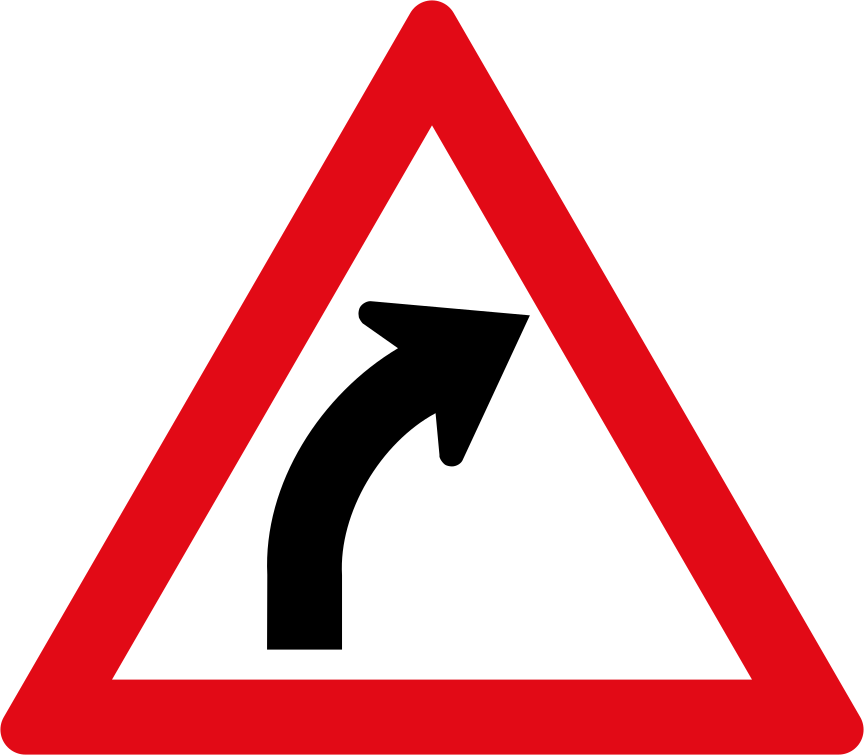
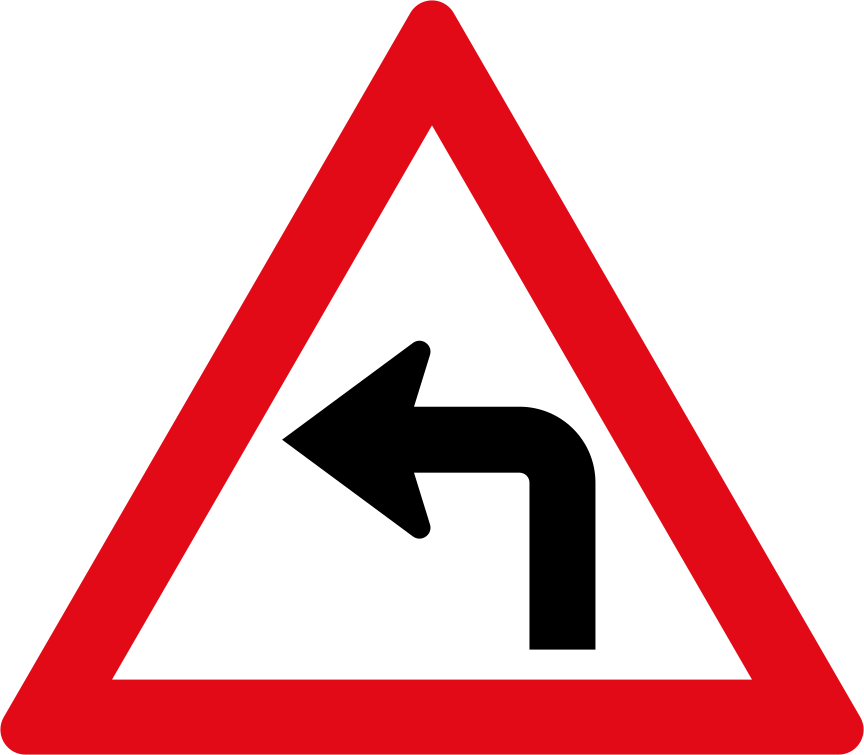
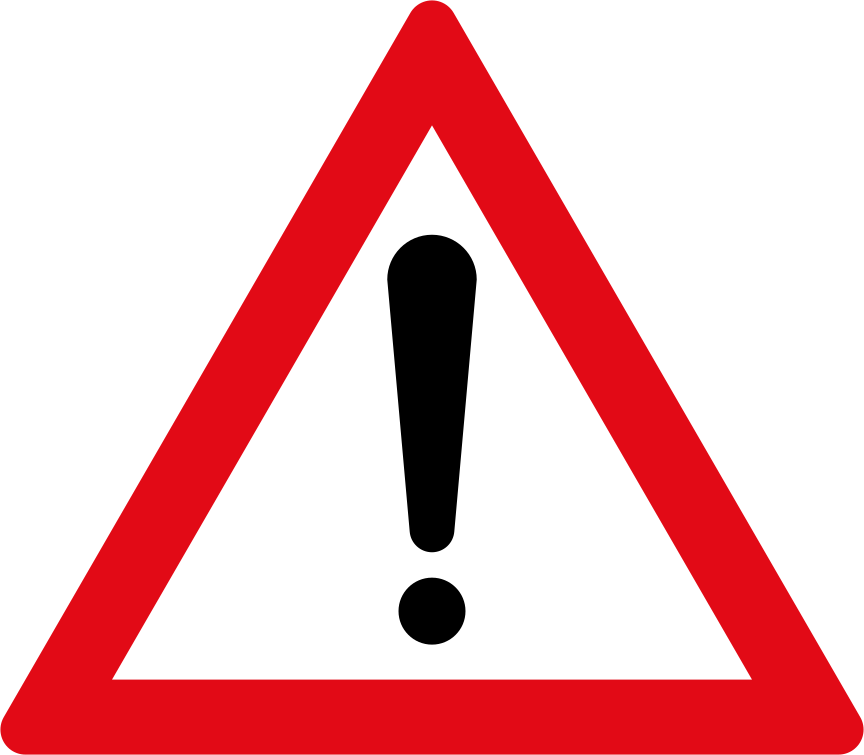
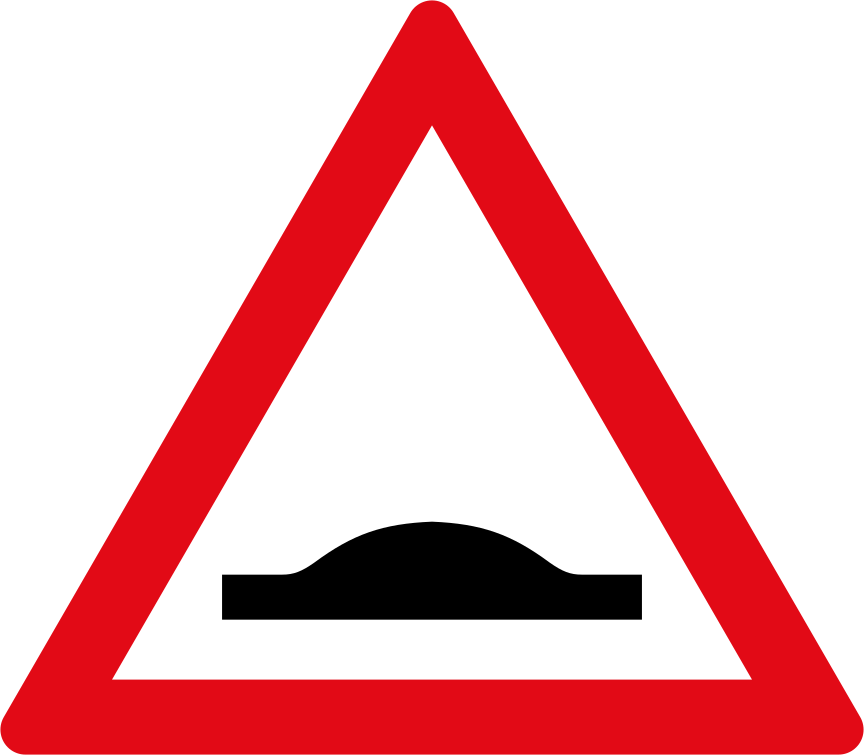
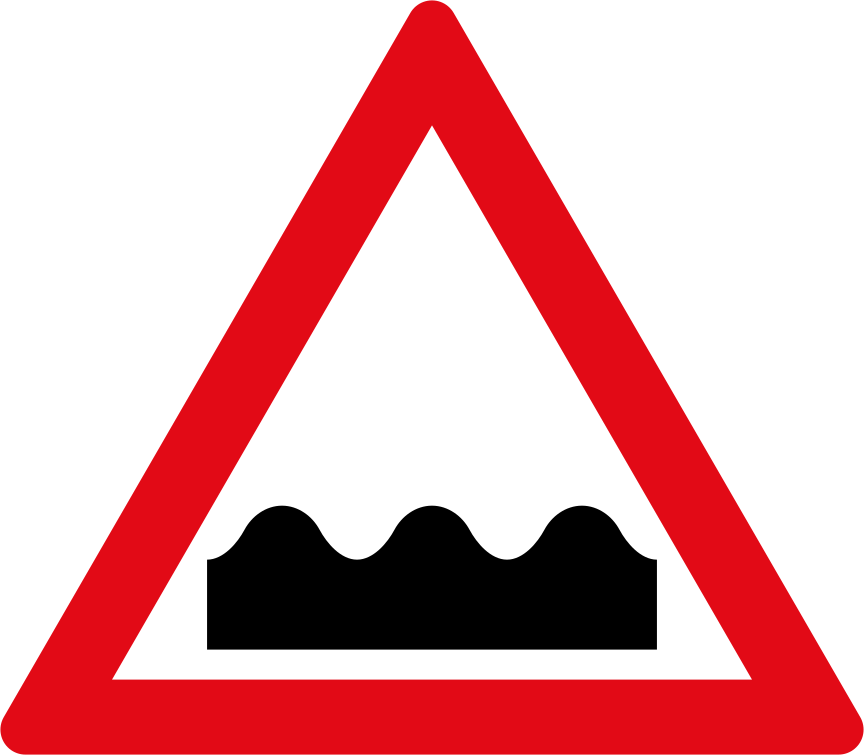
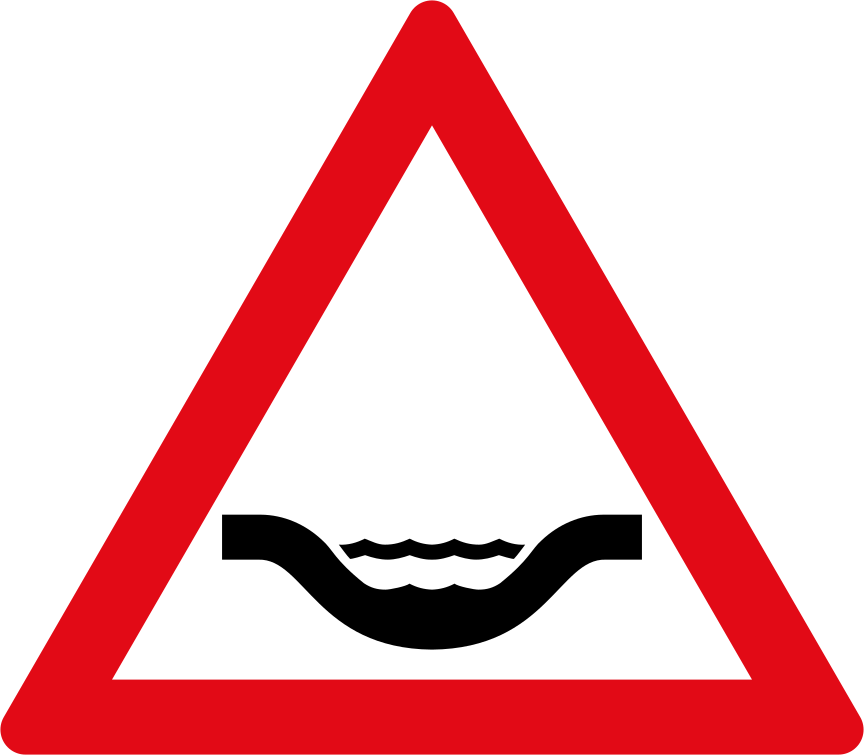
A warning sign is a traffic sign that alerts drivers to a potential danger or change in road conditions ahead, giving them enough time to slow down and react safely. These signs warn about hazards such as sharp bends, pedestrian crossings, slippery surfaces, merging traffic, animals on the road, or upcoming intersections. Their purpose is not to forbid or command anything, but simply to prepare drivers for situations that require extra attention.
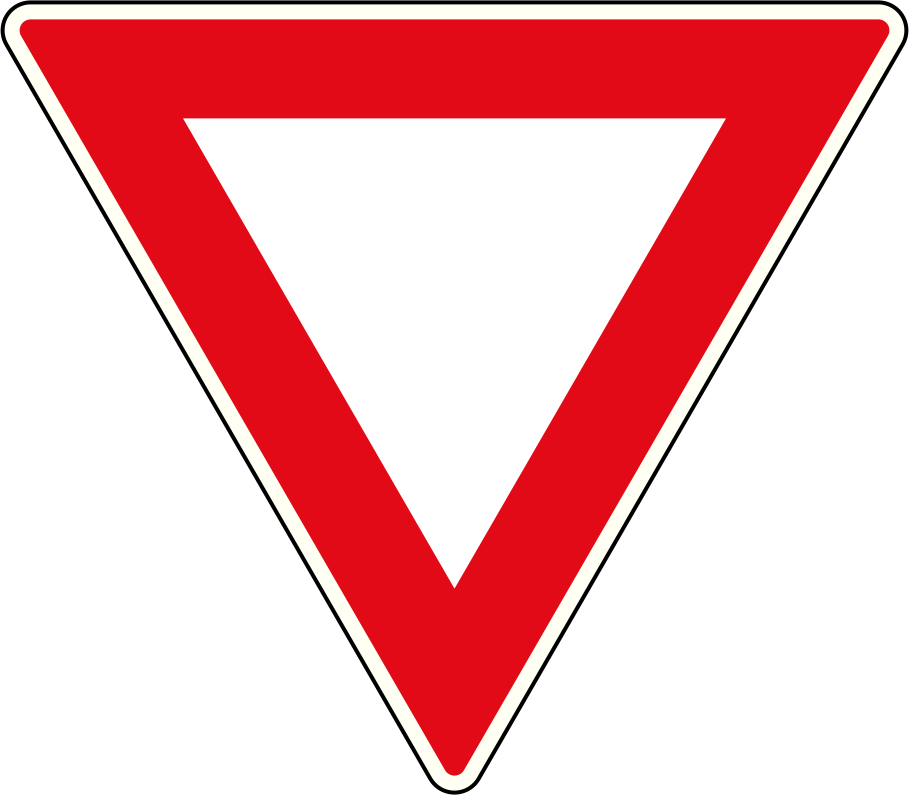
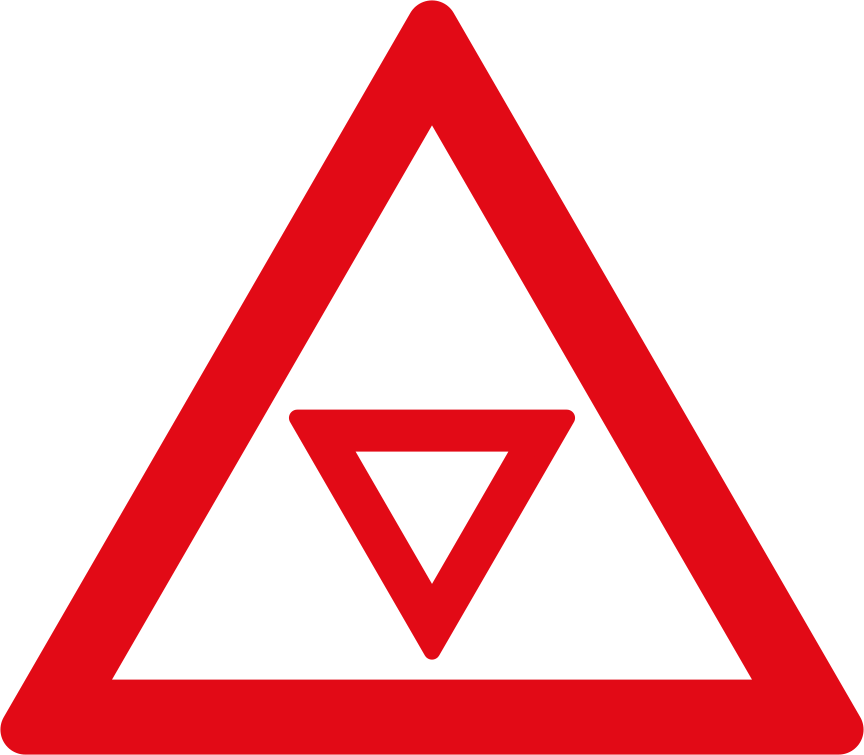
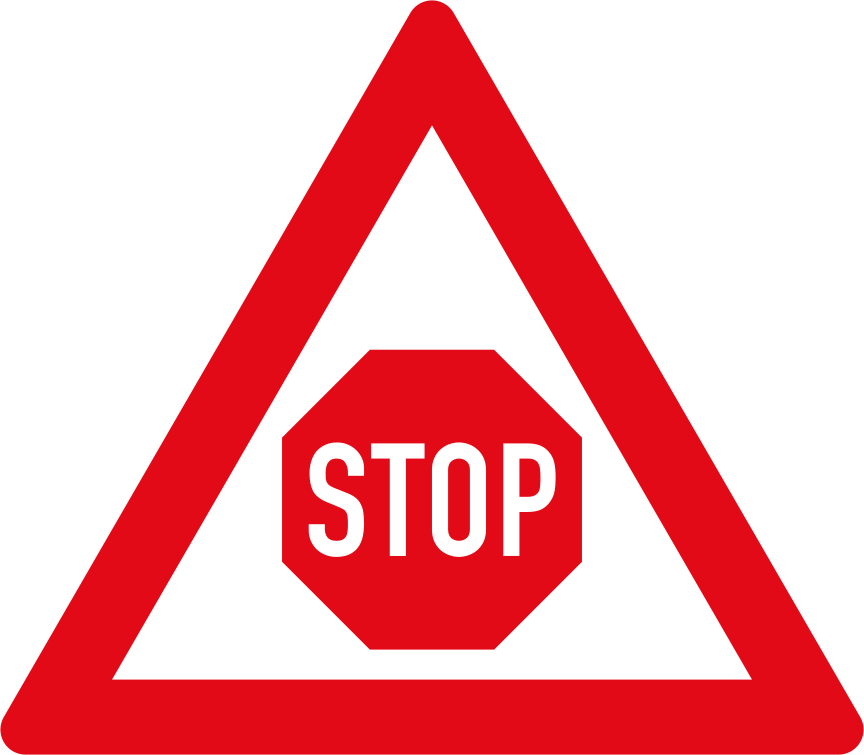
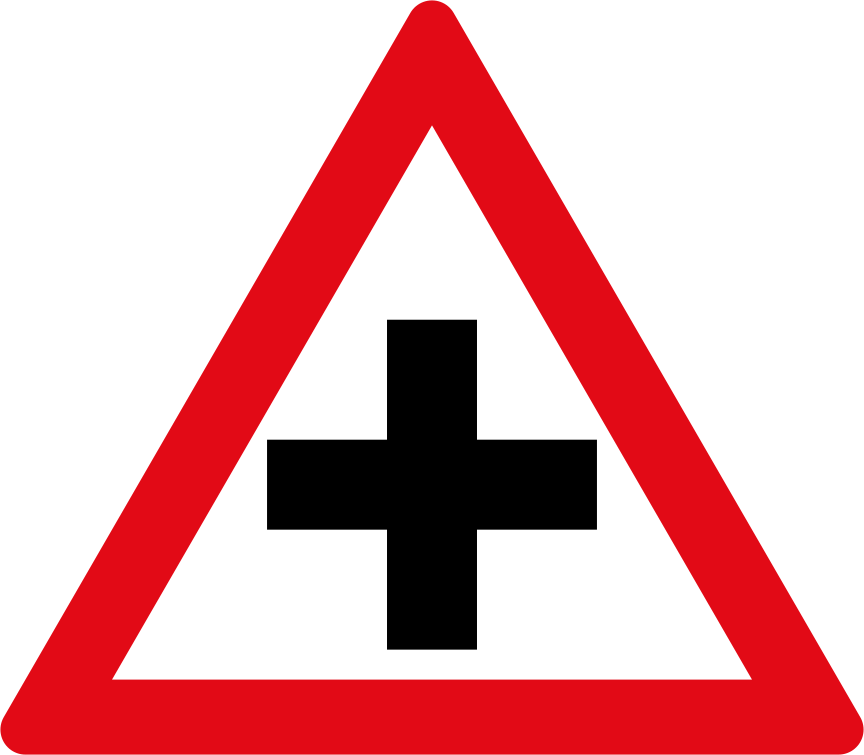
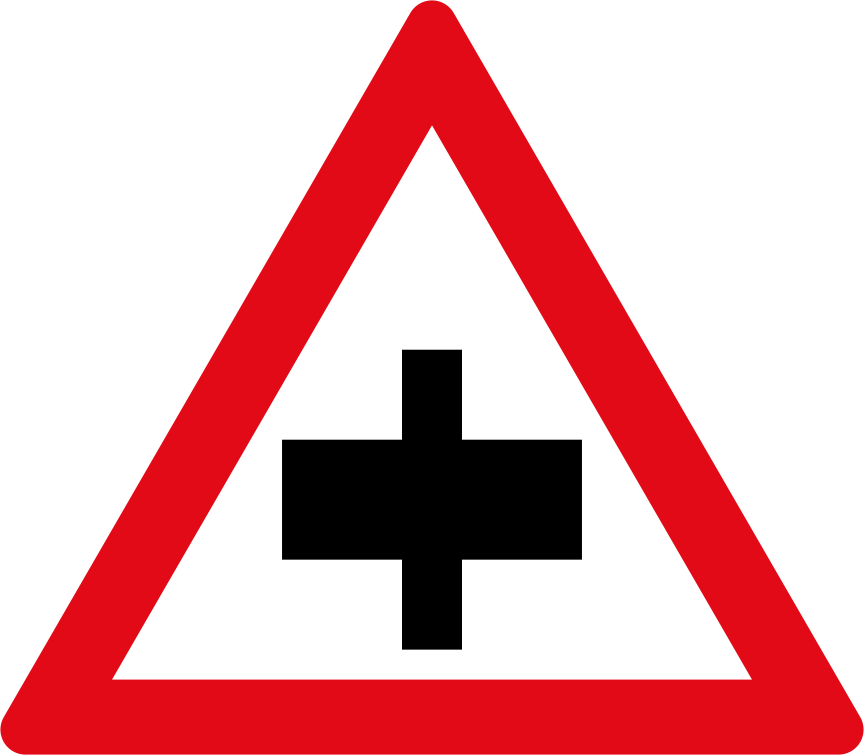
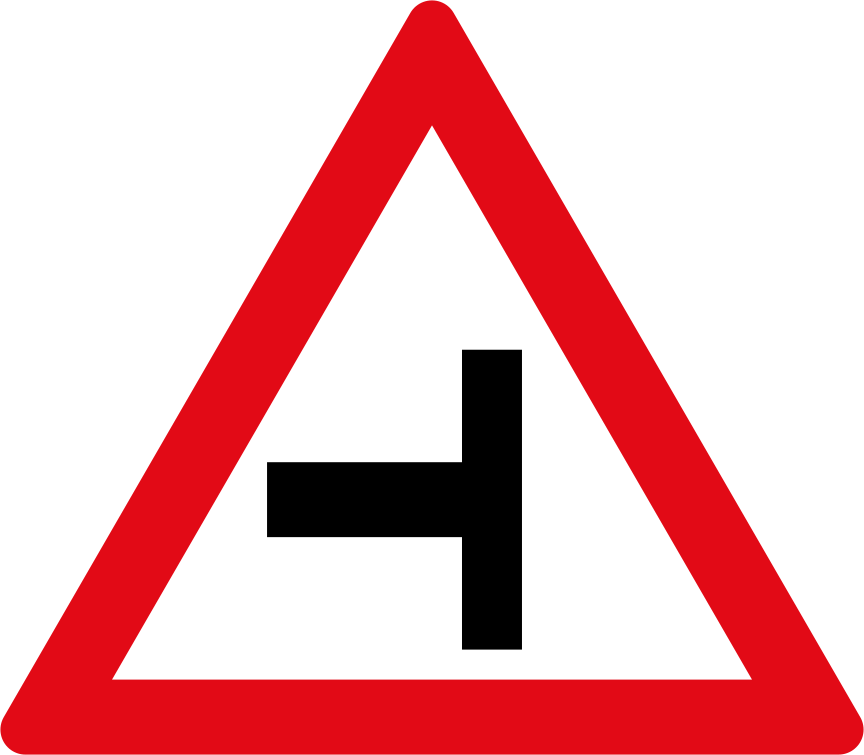
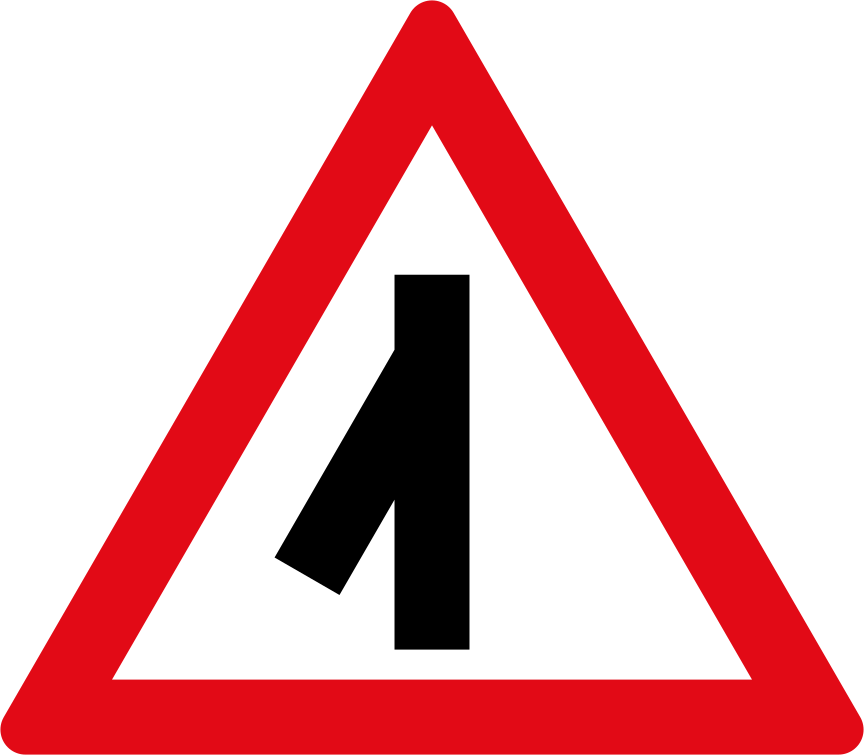
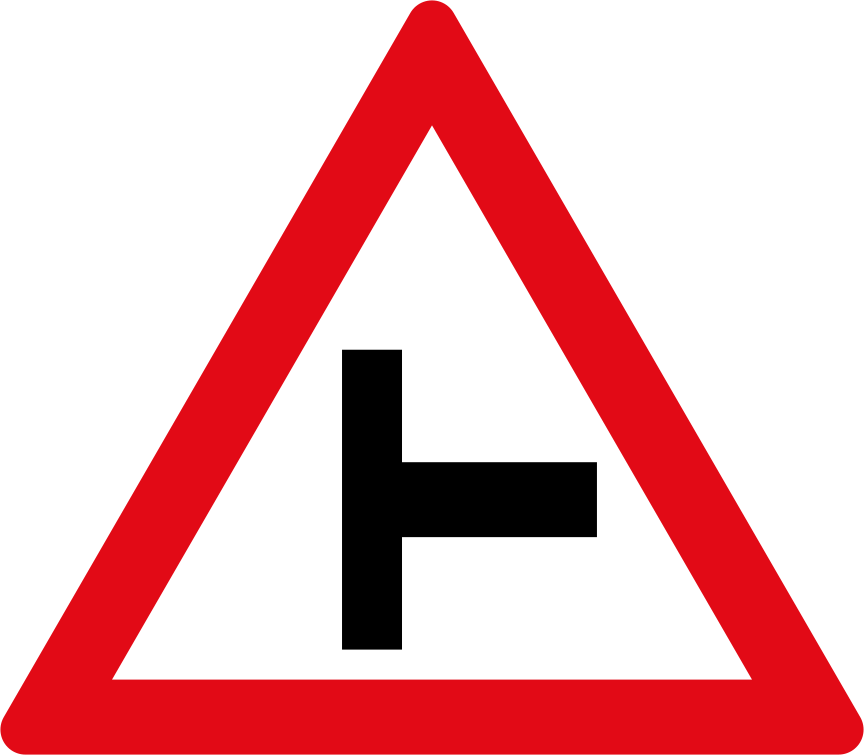
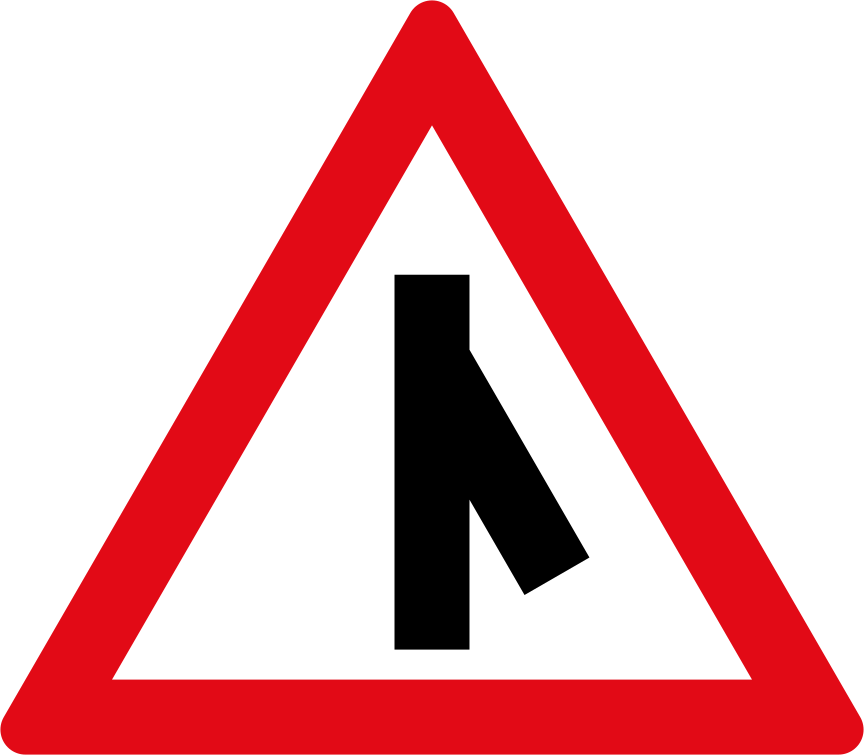
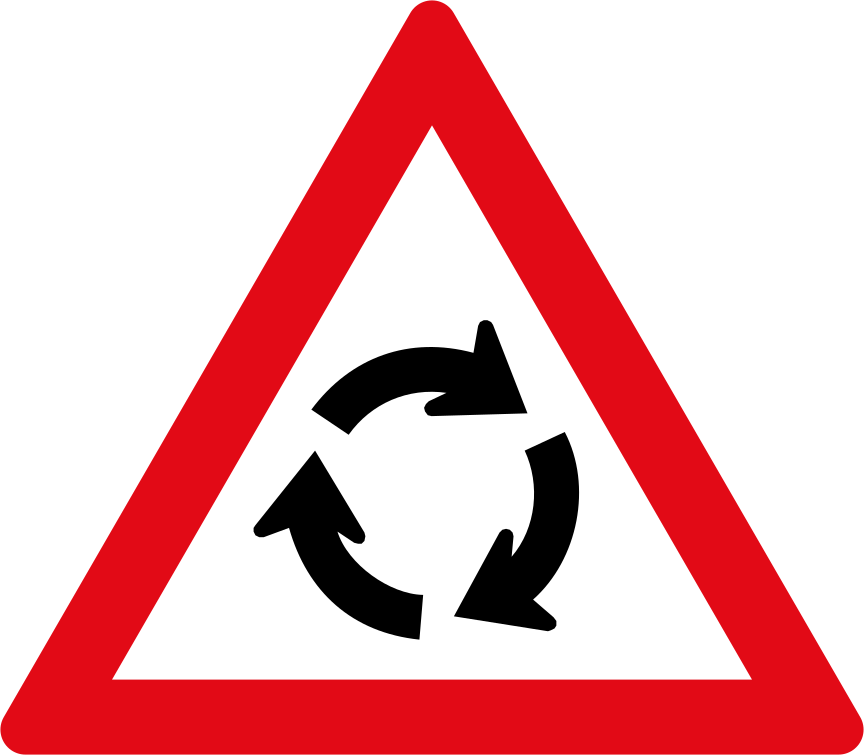
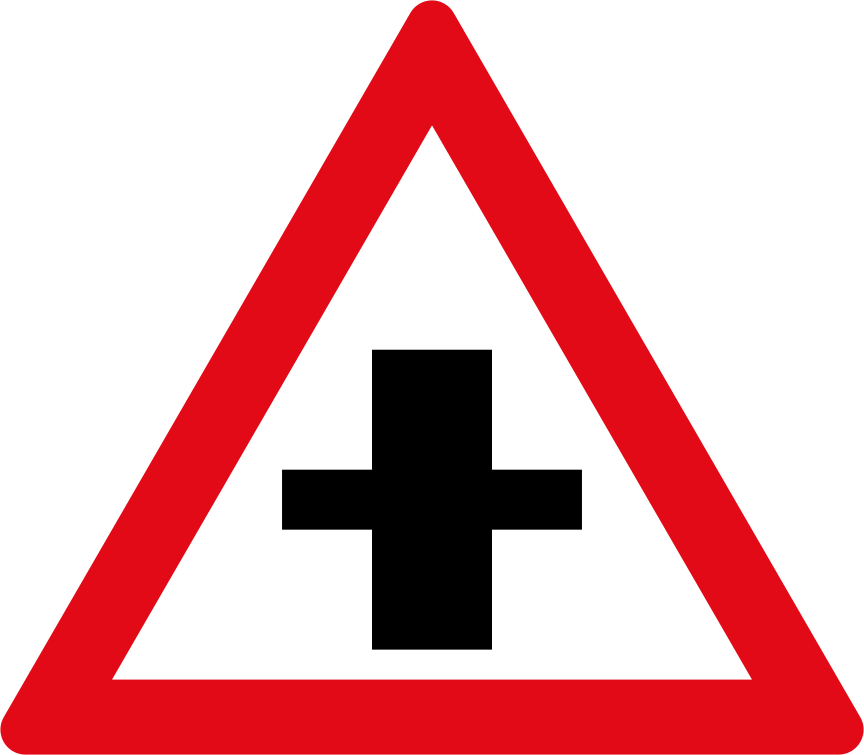
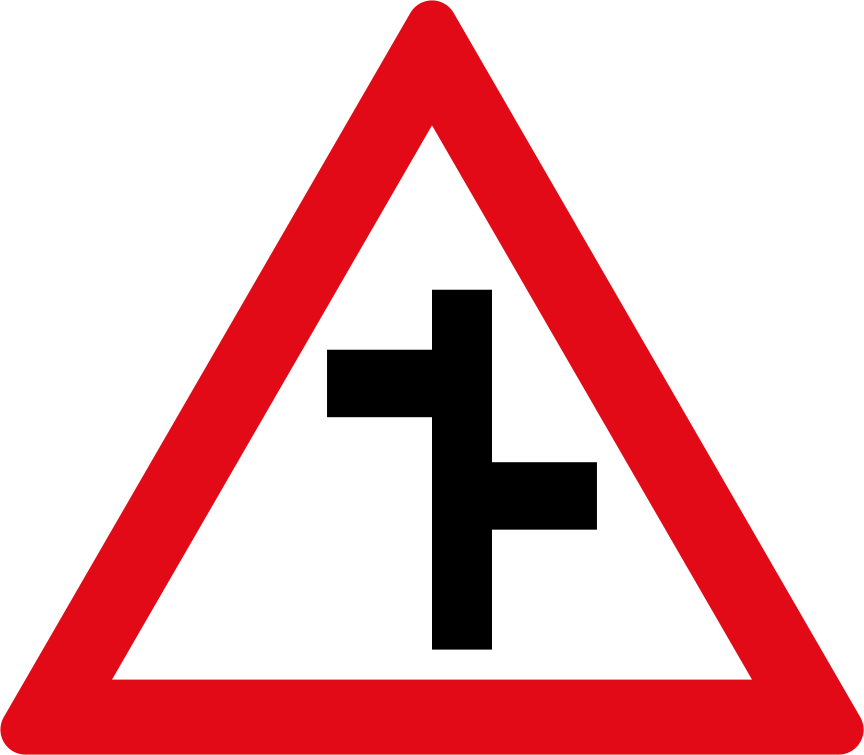
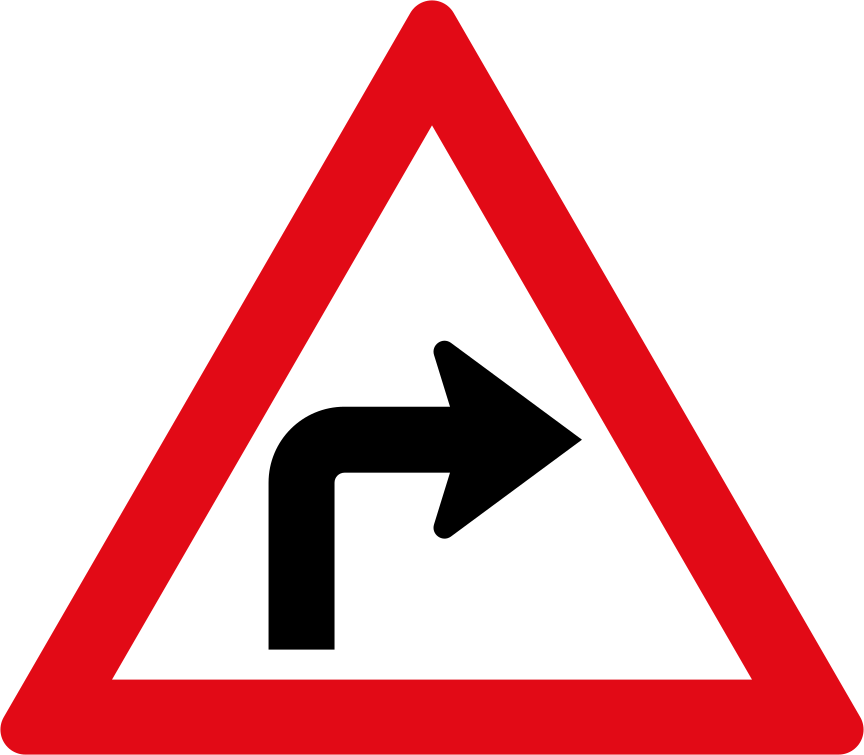
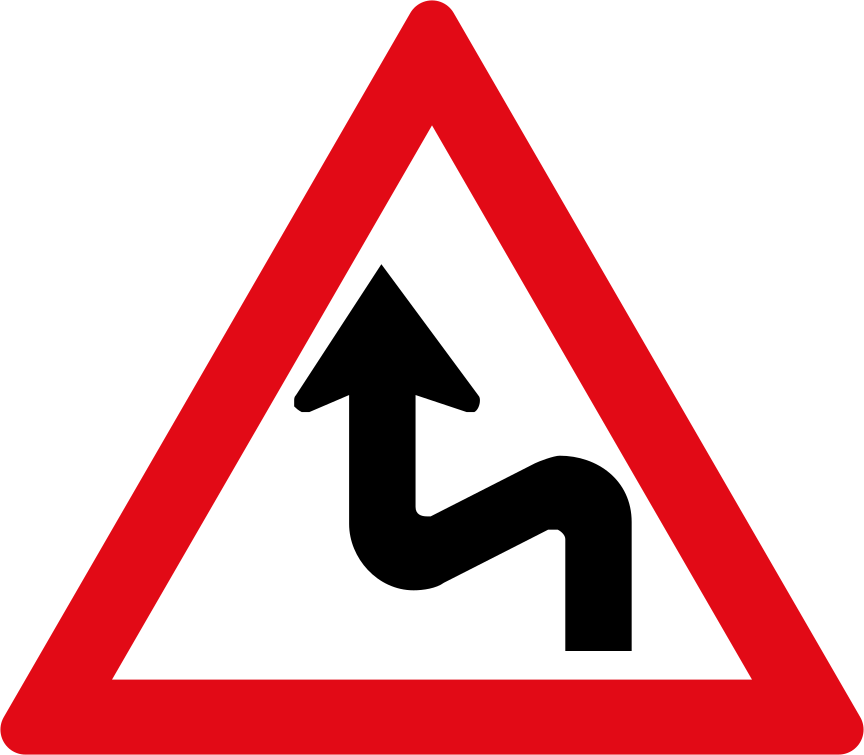
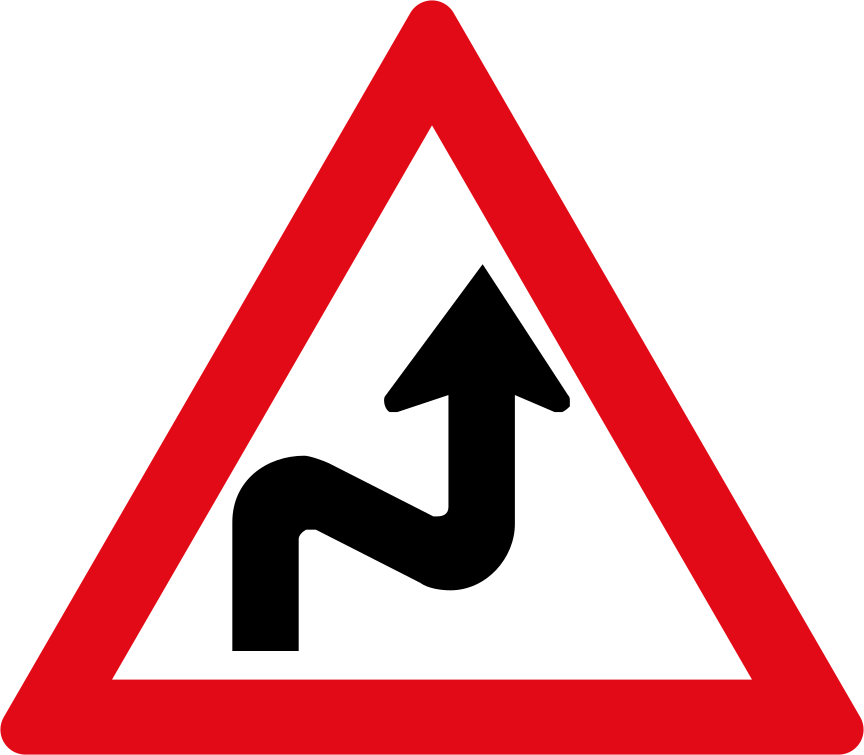
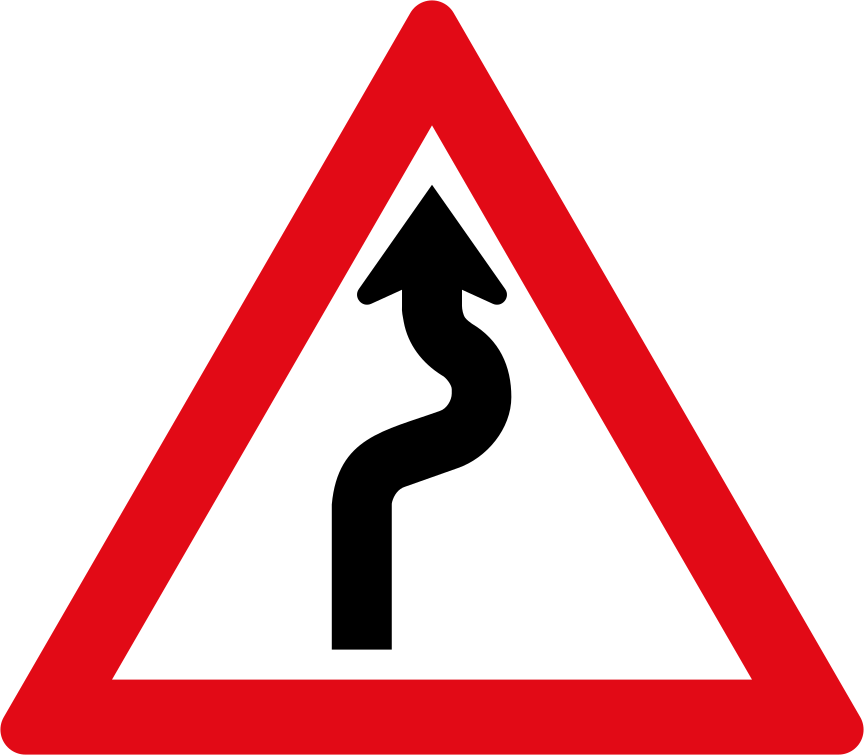
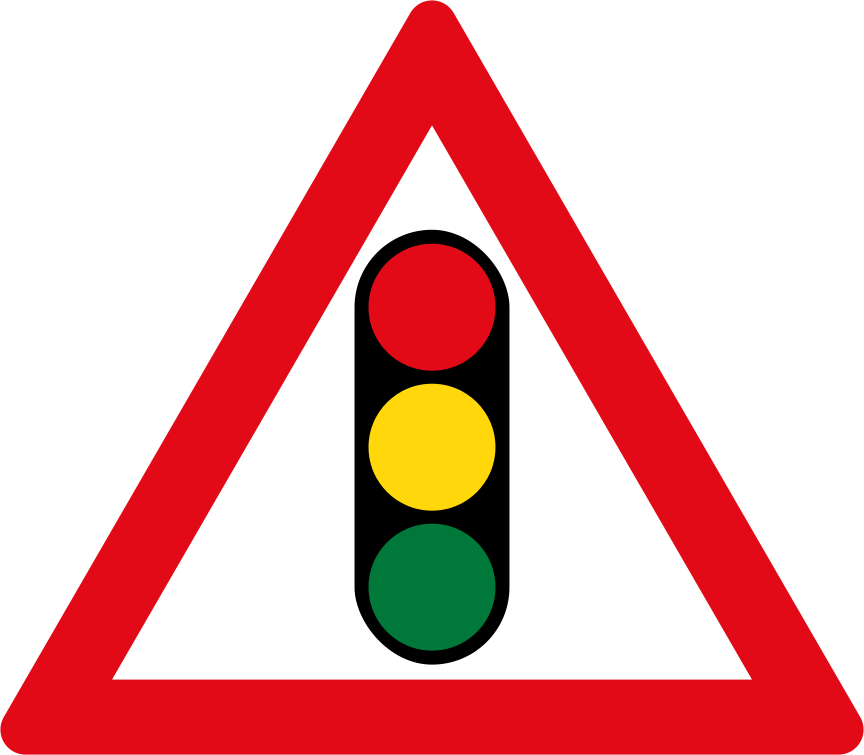
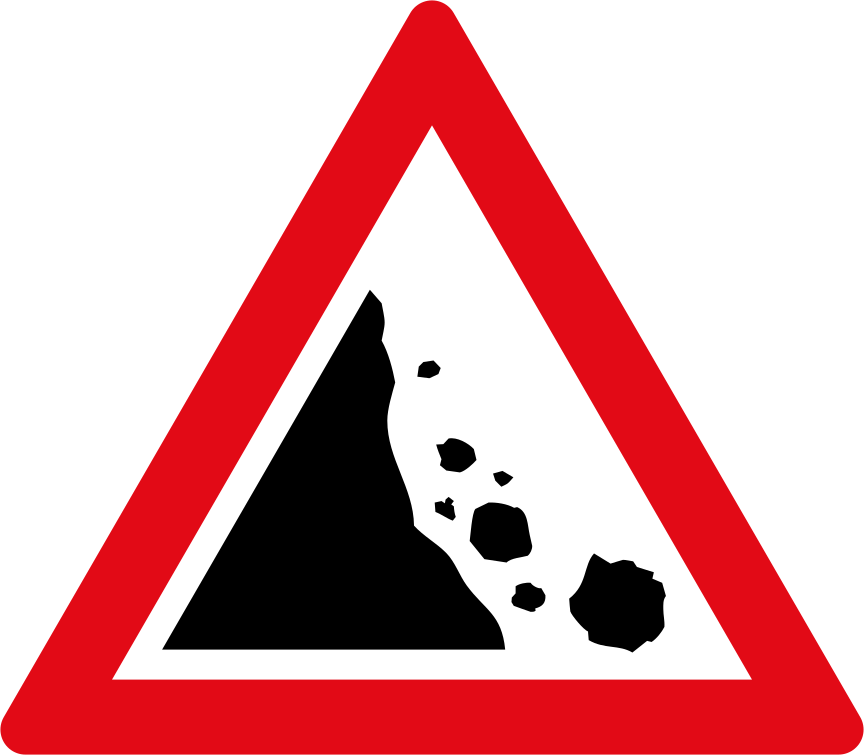
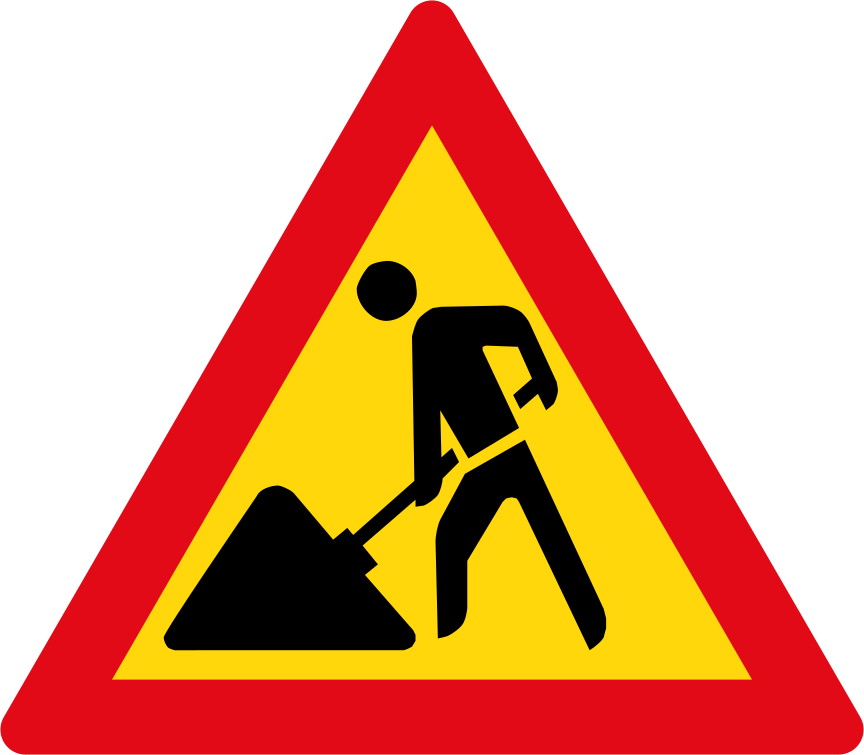
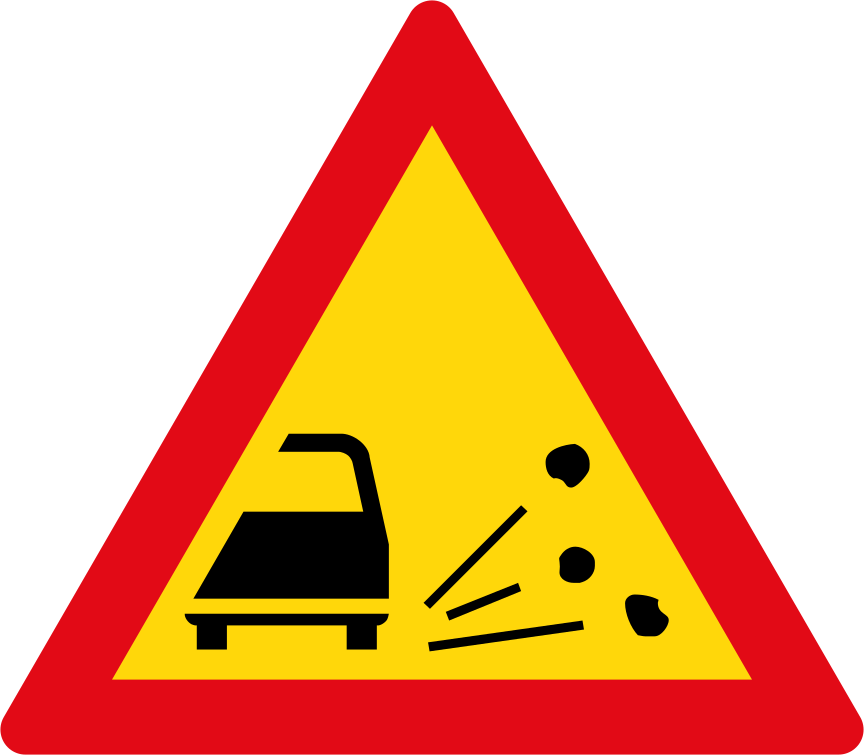
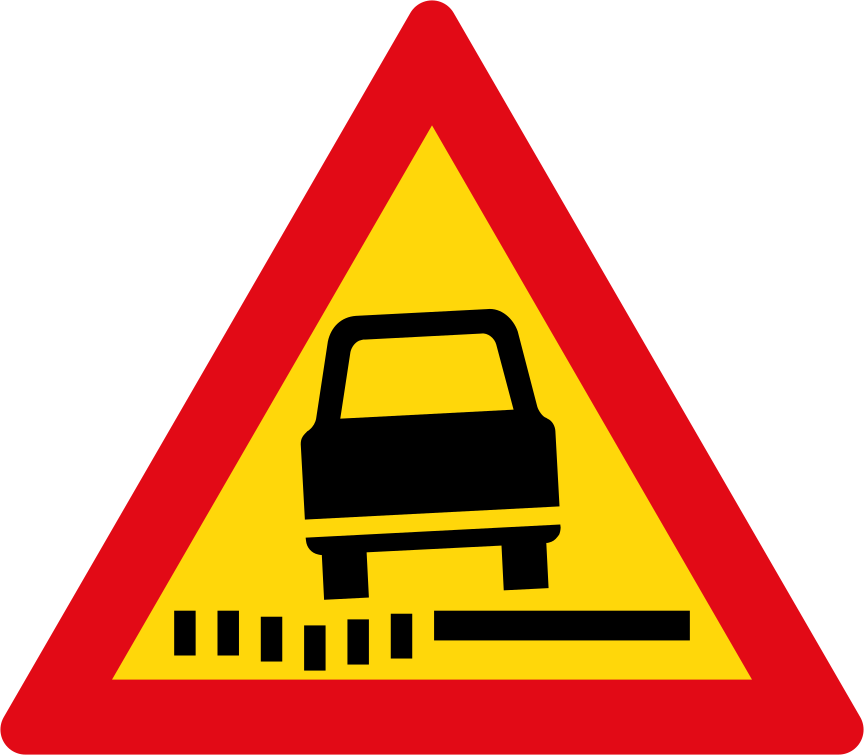
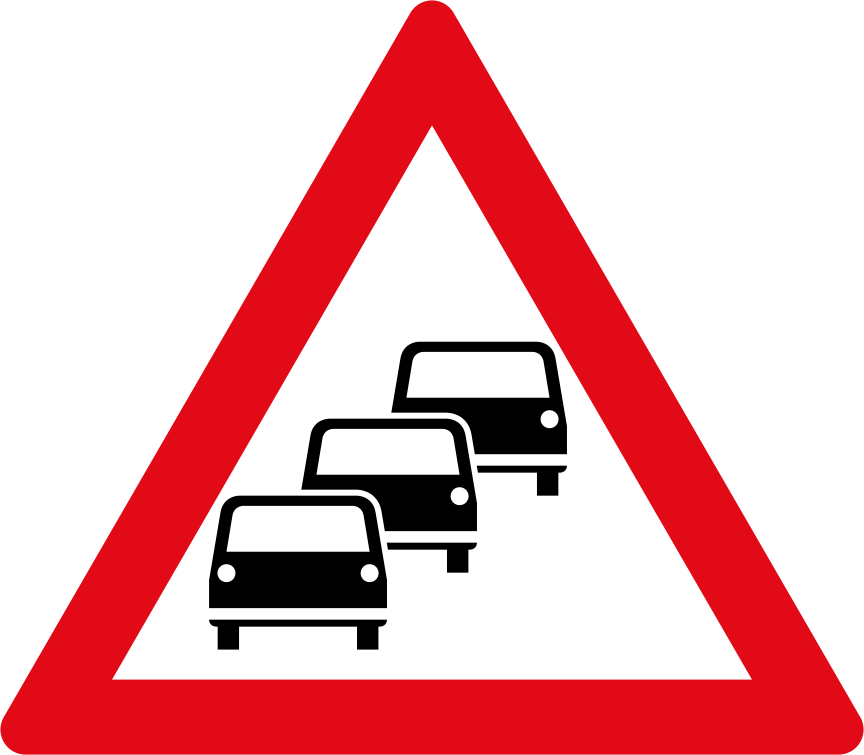
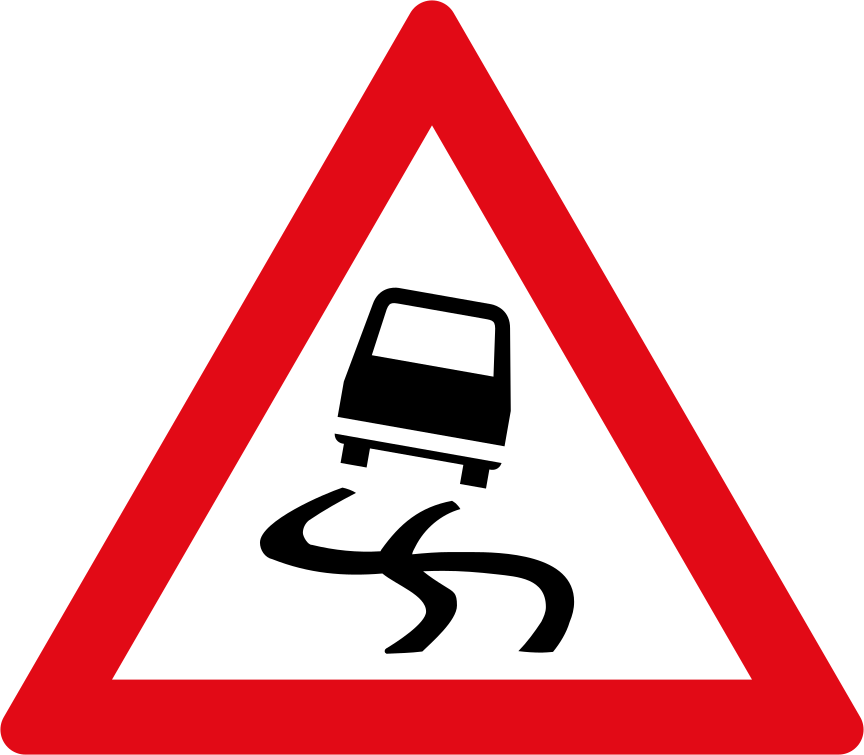
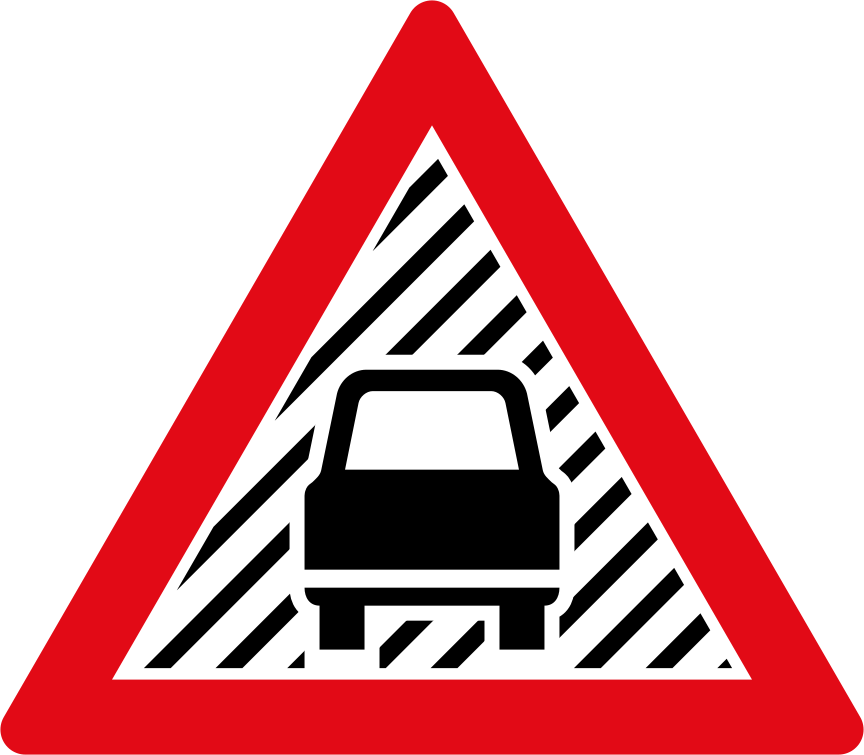

How should I recognise hazard warnings in South Africa?
Warning signs identify road hazards. A warning does not override a regulatory instruction.
🔗 transport.gov.za • South Africa, Department of Transport, SARTSM — warning-signs
How should I react to a pedestrian warning in South Africa?
Reduce speed, look along both sides of the road and be ready to stop. The warning identifies a pedestrian hazard ahead; children, people with limited mobility or others may enter the road unexpectedly.
🔗 transport.gov.za • South Africa, Department of Transport, SARTSM — warning-signs
Does a traffic-lights-ahead warning require an immediate stop in South Africa?
No. A warning sign is not an automatic STOP instruction and does not create a new numerical speed limit. Reduce speed when necessary, look for a queue or a concealed signal, and obey the traffic lights and any separate speed or stop signs.
🔗 transport.gov.za • South Africa, Department of Transport, SARTSM — warning-signs

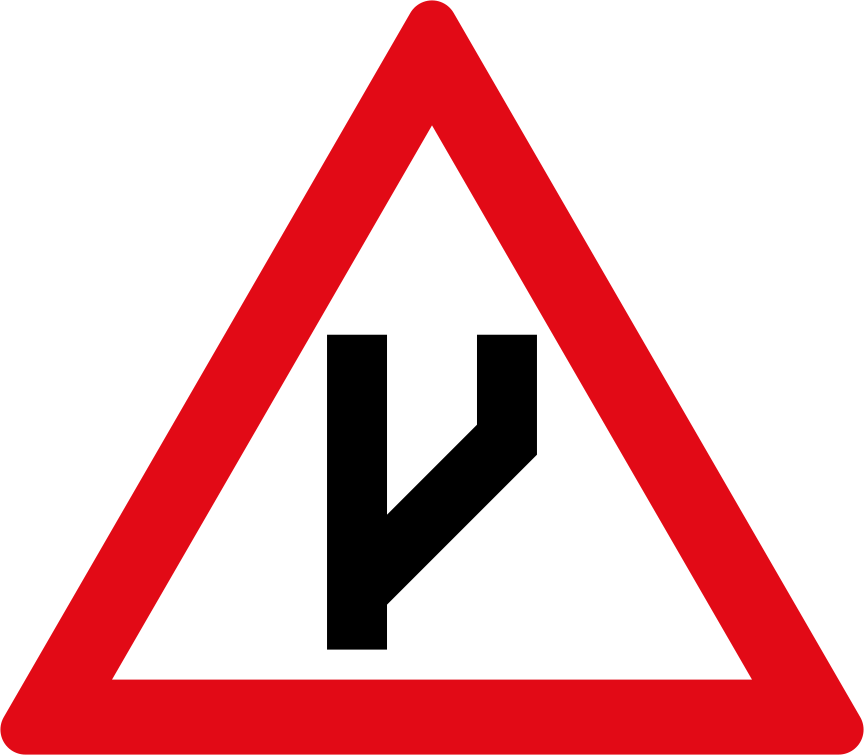
51. Warning for a divided road
This traffic sign indicates a warning for a divided road. The road ahead separates into carriageways for opposing directions of traffic, usually divided by a central reservation or traffic island. Follow the lane markings and adjust your position to the new road layout.
English • W118 • Beginning of a divided roadway. The roadway ahead separates into carriageways divided by a central reservation. Follow the lane markings and the indicated road layout.
Sources
🔗 Commons.wikimedia.org • Wikimedia Commons original • Southern African Development Community • Public domain • Original revision 2017-07-27. Wikimedia original unmodified.
🔗 Transport.gov.za • Department of Transport · SADC RTSM Vol. 1, chapter 3 · W118 · PDF p. 17 (May 2012).
Image via Commons.wikimedia.org
Southern African Development Community • Public domain • Source revision 2017-07-27. Wikimedia original unmodified.
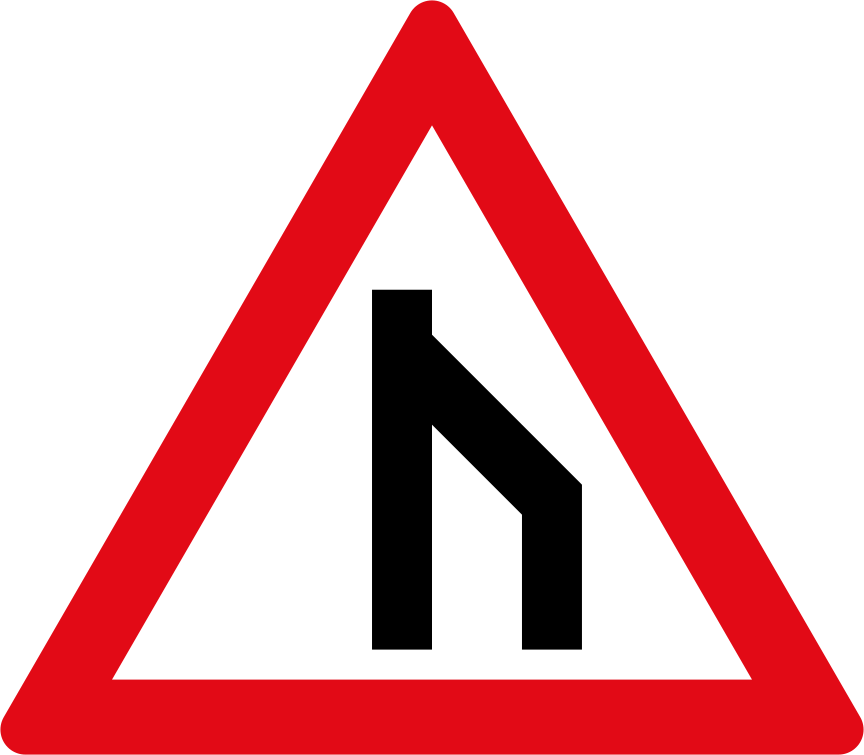
52. Warning for the end of a divided road
This traffic sign indicates a warning for the end of a divided road. The separation between opposing directions of traffic ends ahead, and oncoming traffic will no longer be divided by a central reservation. Reduce speed and adjust to the new road layout.
English • W117 • End of a divided roadway. The separation between opposing traffic streams ends ahead. Be prepared for two-way traffic without a central reservation.
Sources
🔗 Commons.wikimedia.org • Wikimedia Commons original • Southern African Development Community • Public domain • Original revision 2018-08-20. Wikimedia original unmodified.
🔗 Transport.gov.za • Department of Transport · SADC RTSM Vol. 1, chapter 3 · W117 · PDF p. 17 (May 2012).
Image via Commons.wikimedia.org
Southern African Development Community • Public domain • Source revision 2018-08-20. Wikimedia original unmodified.
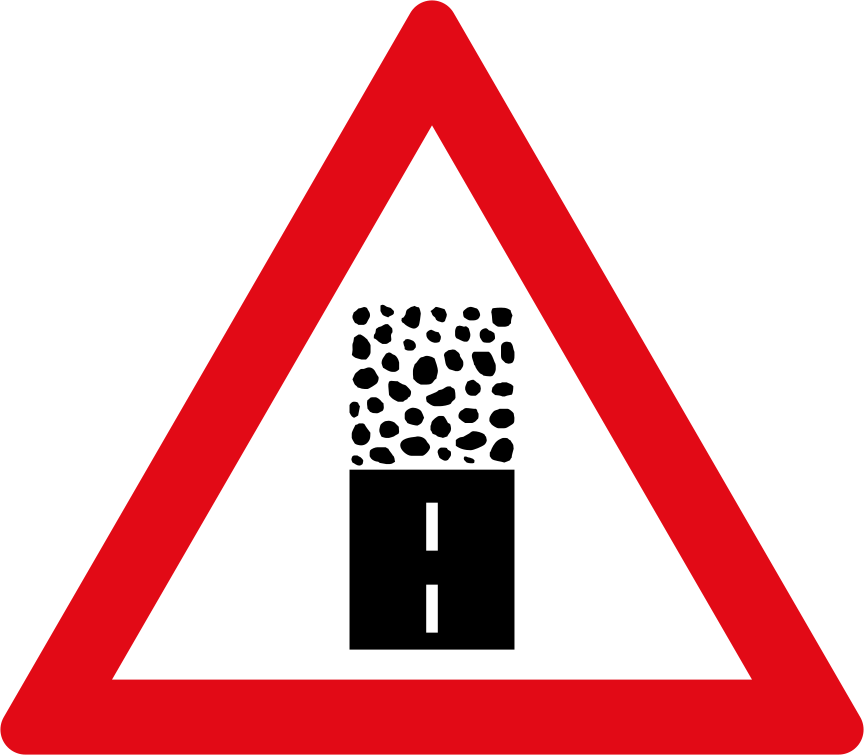
53. Warning for an unpaved road surface
This traffic sign indicates a warning for an unpaved road surface. The paved surface ends or changes to gravel, dirt or another loose material. Reduce speed and be prepared for reduced grip, uneven surfaces, dust and loose stones.
English • W325 • Gravel road begins. The surfaced road changes to a gravel road ahead.
Sources
🔗 Commons.wikimedia.org
🔗 Transport.gov.za • Department of Transport · SADC RTSM Vol. 1, chapter 3, PDF p. 5 (May 2012)
SVG source: Southern African Development Community • Public domain • Original revision 2017-08-03. Wikimedia original unmodified.
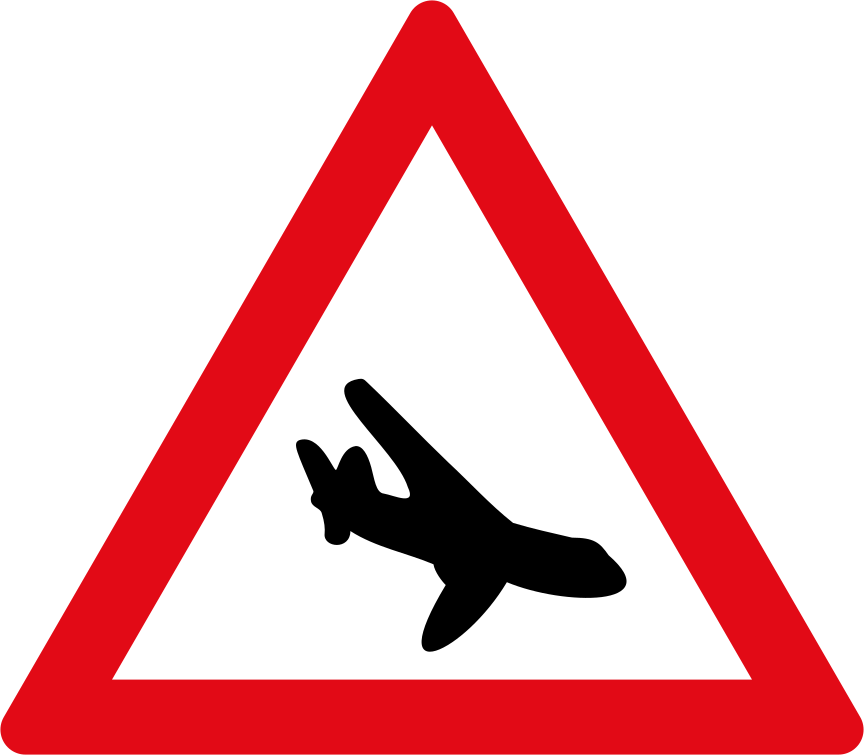
54. Warning for low-flying aircraft
This traffic sign indicates a warning for low-flying aircraft. Aircraft may pass over the road at low altitude and can create sudden noise or visual distraction. Keep your attention on the road and maintain control of the vehicle.
English • W351 • Low-flying aircraft. Low-flying aircraft may pass over the road ahead.
Sources
🔗 Commons.wikimedia.org
🔗 Transport.gov.za • Department of Transport · SADC RTSM Vol. 1, chapter 3, PDF p. 7 (May 2012)
SVG source: Southern African Development Community • Public domain • Original revision 2017-10-06. Wikimedia original unmodified.
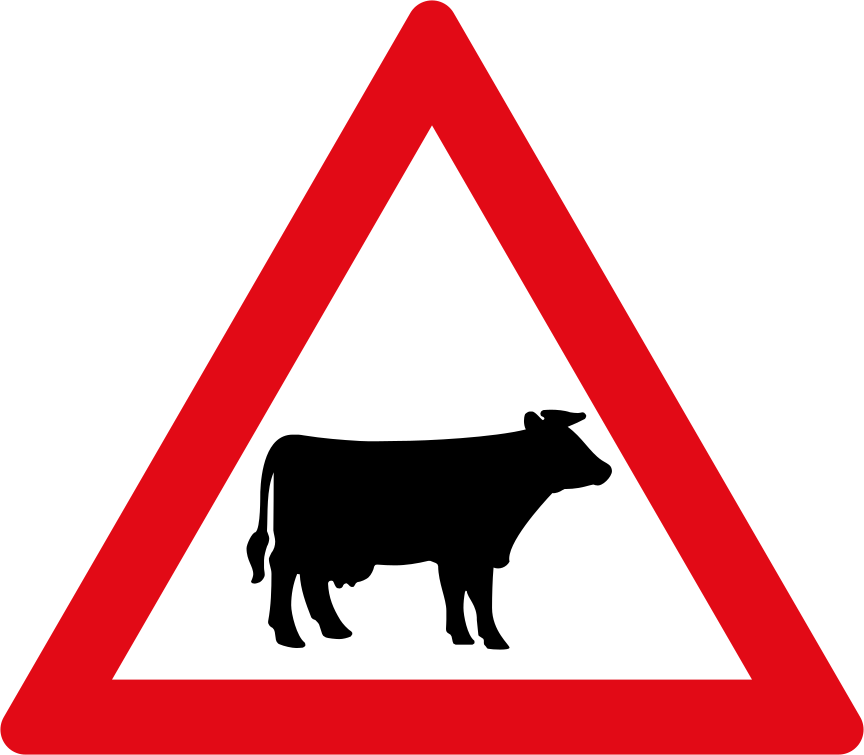
55. Warning for cattle on the road
This traffic sign indicates a warning for cattle. Cattle or other livestock may be crossing, walking along or standing near the road. Reduce speed, be prepared to stop and avoid sudden movements or unnecessary use of the horn that could startle the animals.
English • W310 • Farm animals: cattle. Cattle may be on or crossing the road ahead.
Sources
🔗 Commons.wikimedia.org
🔗 Transport.gov.za • Department of Transport · SADC RTSM Vol. 1, chapter 3, PDF p. 5 (May 2012)
SVG source: Southern African Development Community • Public domain • Original revision 2017-08-01. Wikimedia original unmodified.
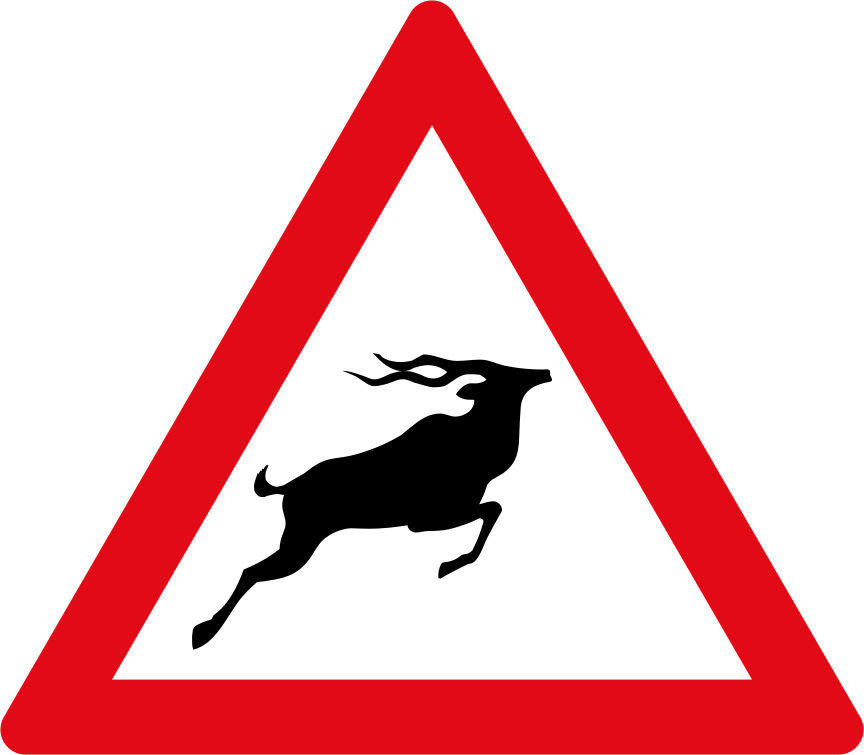
56. Warning for crossing deer
This traffic sign indicates a warning for crossing deer. Deer or other wild animals may enter the road unexpectedly, especially around dawn or dusk. Reduce speed, watch the roadside carefully and be prepared for more than one animal to cross.
English • W313 • Wild animals ahead. Wild animals may be on or crossing the road ahead.
Sources
🔗 Commons.wikimedia.org
🔗 Transport.gov.za • Department of Transport · SADC RTSM Vol. 1, chapter 3, PDF p. 5 (May 2012)
SVG source: Southern African Development Community • Public domain • Original revision 2017-08-01. Wikimedia original unmodified.
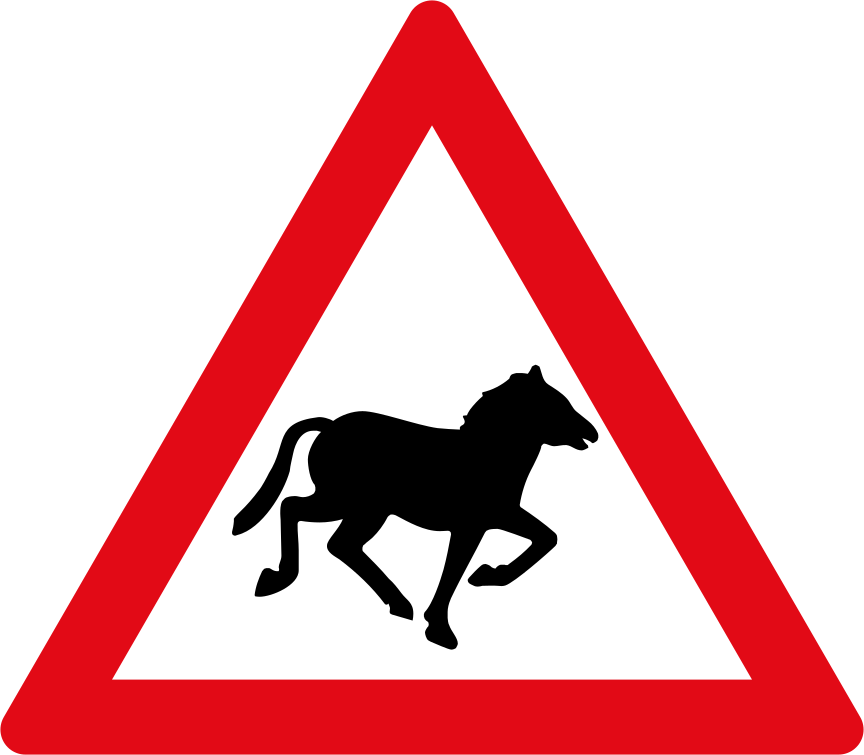
57. Warning for wild horses on the road
This traffic sign indicates a warning for wild or free-roaming horses. Horses may enter or stand on the road unexpectedly. Reduce speed, be prepared to stop and avoid unnecessary use of the horn or other actions that could startle the animals.
English • W311 • Farm animals: horses. Horses may be on or crossing the road ahead.
Sources
🔗 Commons.wikimedia.org
🔗 Transport.gov.za • Department of Transport · SADC RTSM Vol. 1, chapter 3, PDF p. 5 (May 2012)
SVG source: Southern African Development Community • Public domain • Original revision 2017-08-01. Wikimedia original unmodified.
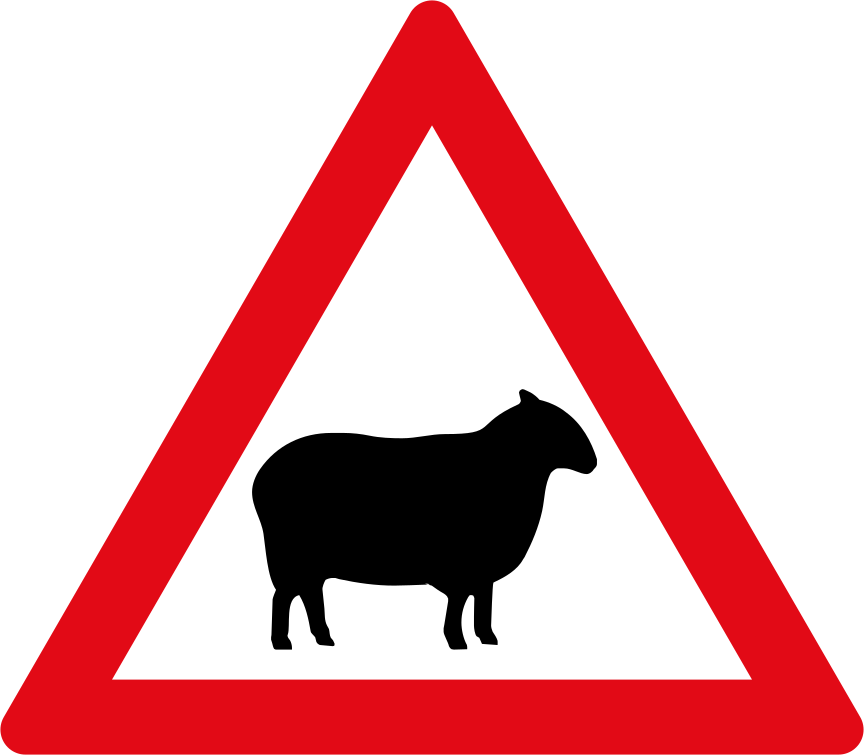
58. Warning for sheep on the road
This traffic sign indicates a warning for sheep. Sheep may be grazing beside the road, crossing it or moving along it, sometimes in groups. Reduce speed, remain alert and be prepared to stop without startling the animals.
English • W312 • Farm animals: sheep. Sheep may be on or crossing the road ahead.
Sources
🔗 Commons.wikimedia.org
🔗 Transport.gov.za • Department of Transport · SADC RTSM Vol. 1, chapter 3, PDF p. 5 (May 2012)
SVG source: Southern African Development Community • Public domain • Original revision 2017-08-01. Wikimedia original unmodified.
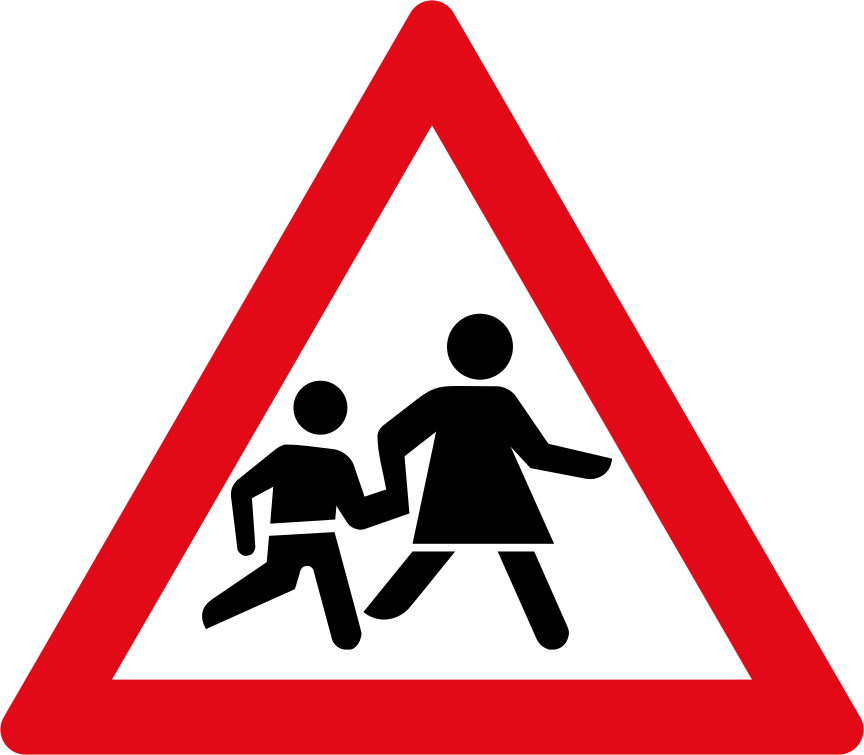
59. Warning for children
This traffic sign indicates a warning for children. Children may be present on or near the road and may cross unexpectedly. Reduce speed, scan both sides of the road carefully and be prepared to stop.
English • W308 • Children. Children may be near or crossing the road ahead.
Sources
🔗 Commons.wikimedia.org
🔗 Transport.gov.za • Department of Transport · SADC RTSM Vol. 1, chapter 3, PDF p. 5 (May 2012)
SVG source: Southern African Development Community • Public domain • Original revision 2017-08-01. Wikimedia original unmodified.
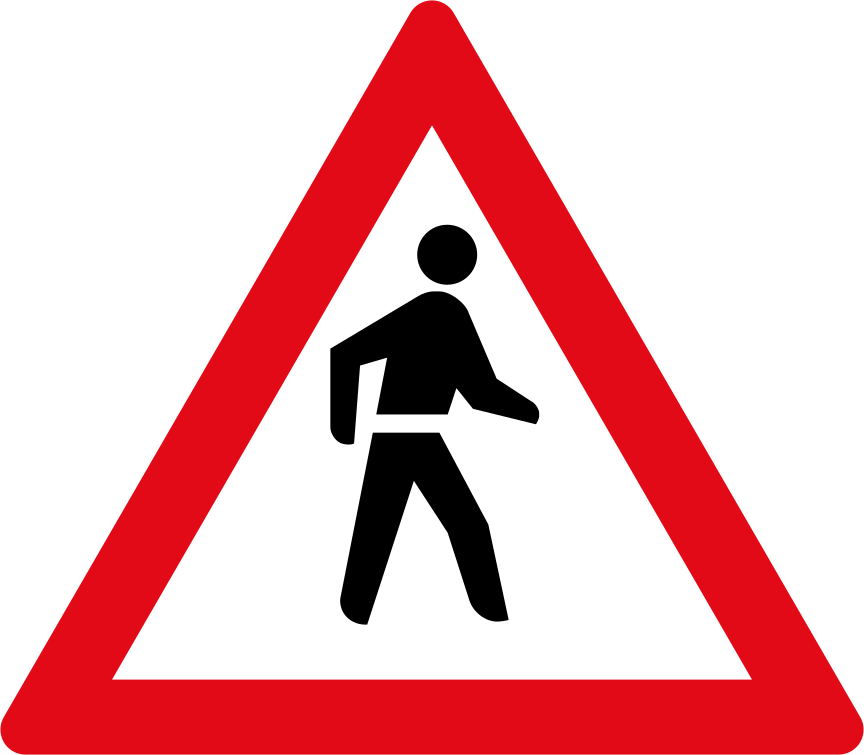
60. Warning for pedestrians
This traffic sign indicates a warning for pedestrians. Pedestrians may be walking near or crossing the road ahead. Reduce speed, watch carefully and be prepared to stop.
English • W307 • Pedestrians. Pedestrians may be on or crossing the road ahead.
Sources
🔗 Commons.wikimedia.org
🔗 Transport.gov.za • Department of Transport · SADC RTSM Vol. 1, chapter 3, PDF p. 5 (May 2012)
SVG source: Southern African Development Community • Public domain • Original revision 2017-08-01. Wikimedia original unmodified.
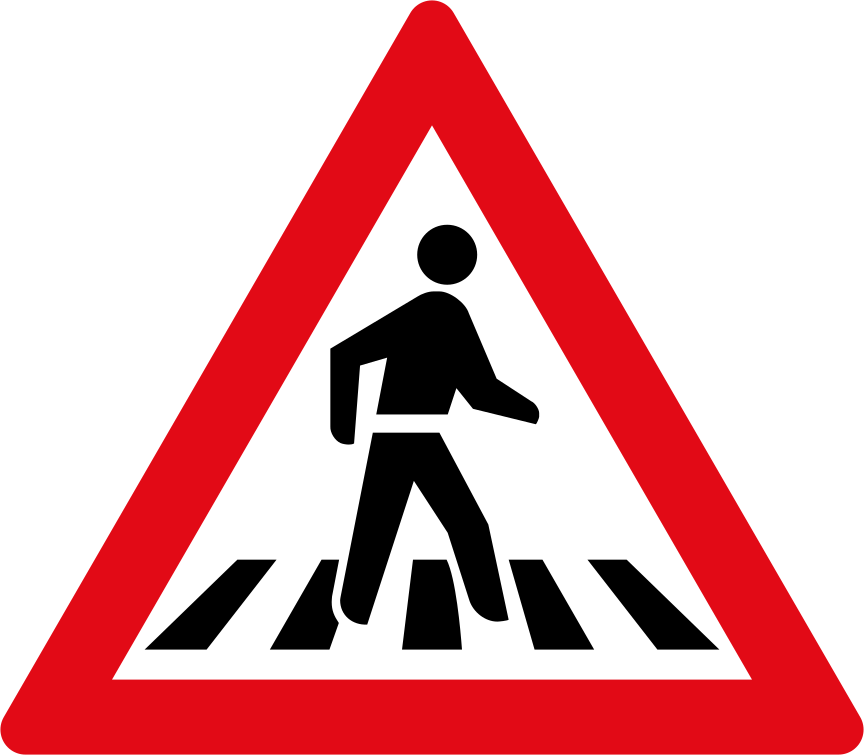
61. Warning for a pedestrian crossing
This traffic sign indicates a warning for a pedestrian crossing. A designated pedestrian crossing lies ahead. Reduce speed when necessary, watch carefully for pedestrians and be prepared to give way or stop according to the applicable local priority rules.
English • W306 • Pedestrian crossing ahead. A pedestrian crossing is ahead. Be prepared to yield or stop as required at the crossing.
Sources
🔗 Commons.wikimedia.org
🔗 Transport.gov.za • Department of Transport · SADC RTSM Vol. 1, chapter 3, PDF p. 5 (May 2012)
SVG source: Southern African Development Community • Public domain • Original revision 2017-08-01. Wikimedia original unmodified.
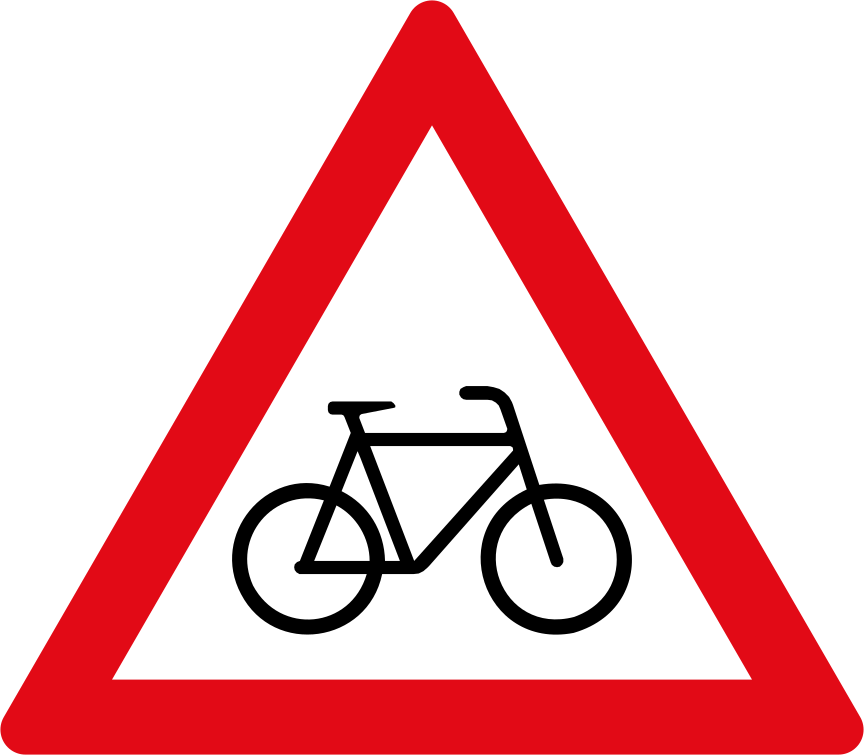
62. Warning for cyclists
This traffic sign indicates a warning for cyclists. Cyclists may be riding along or crossing the road ahead. Reduce speed, watch carefully for cyclists and maintain the passing distance required by the applicable local rules.
English • W309 • Cyclists. Cyclists may be using or crossing the road ahead.
Sources
🔗 Commons.wikimedia.org
🔗 Transport.gov.za • Department of Transport · SADC RTSM Vol. 1, chapter 3, PDF p. 5 (May 2012)
SVG source: Southern African Development Community • Public domain • Original revision 2017-08-01. Wikimedia original unmodified.
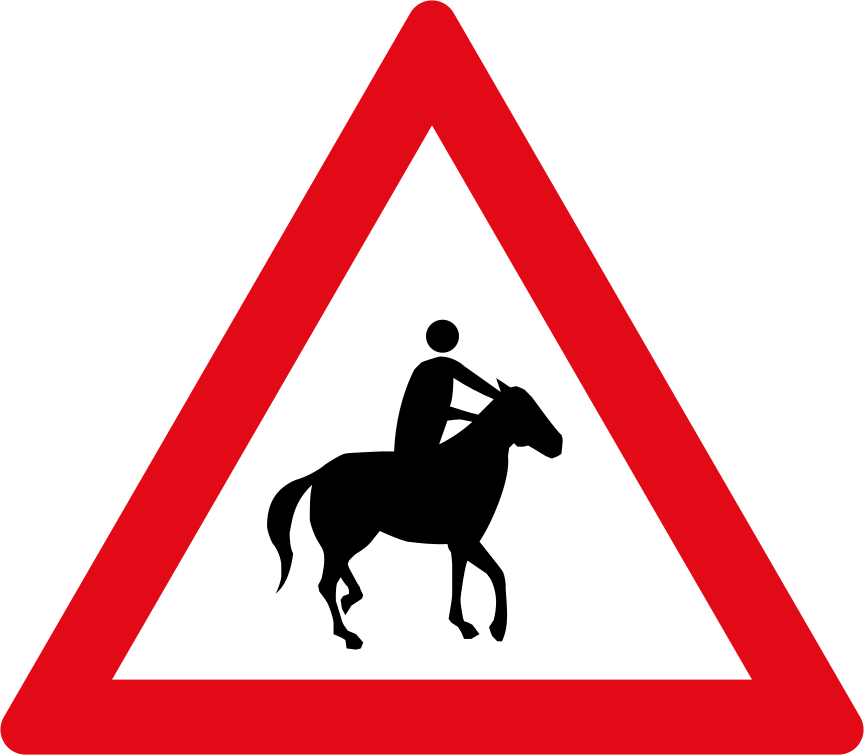
63. Warning for equestrians
This traffic sign indicates a warning for equestrians. Horse riders may be on or near the road ahead. Reduce speed, allow plenty of space and avoid unnecessary use of the horn or sudden movements that could startle a horse.
English • W356 • Horse and rider. Horse riders may be on or crossing the road ahead.
Sources
🔗 Commons.wikimedia.org
🔗 Transport.gov.za • Department of Transport · SADC RTSM Vol. 1, chapter 3, PDF p. 7 (May 2012)
SVG source: Southern African Development Community • Public domain • Original revision 2017-08-02. Wikimedia original unmodified.
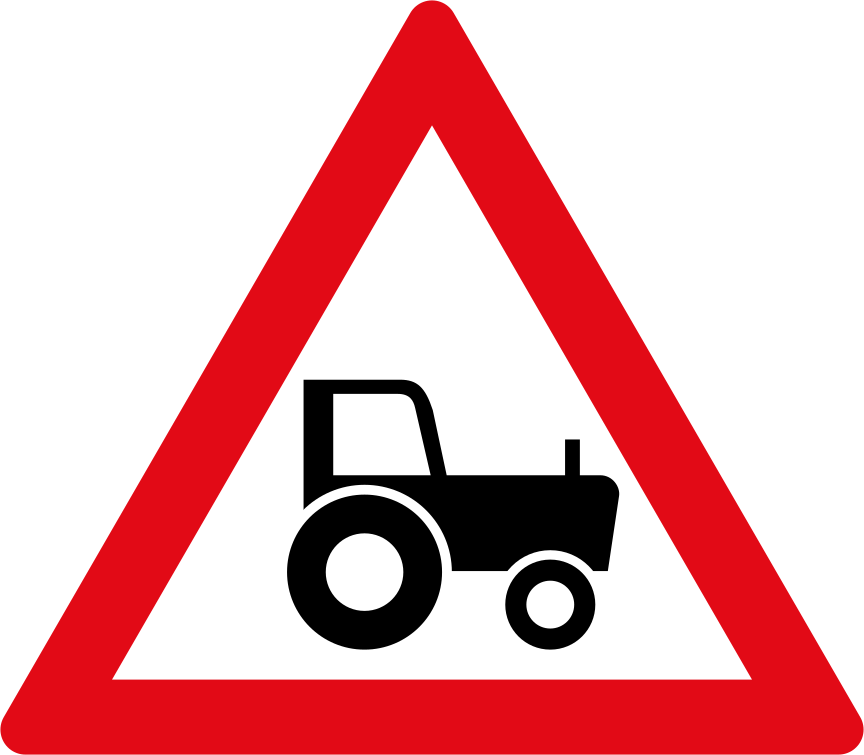
64. Warning for tractors
This traffic sign indicates a warning for tractors or other agricultural vehicles. Slow-moving agricultural vehicles may enter, cross or travel along the road ahead. Reduce speed and overtake only where it is permitted and clearly safe.
English • W352 • Agricultural vehicles. Agricultural vehicles may enter or use the road ahead.
Sources
🔗 Commons.wikimedia.org
🔗 Transport.gov.za • Department of Transport · SADC RTSM Vol. 1, chapter 3, PDF p. 7 (May 2012)
SVG source: Southern African Development Community • Public domain • Original revision 2017-08-16. Wikimedia original unmodified.
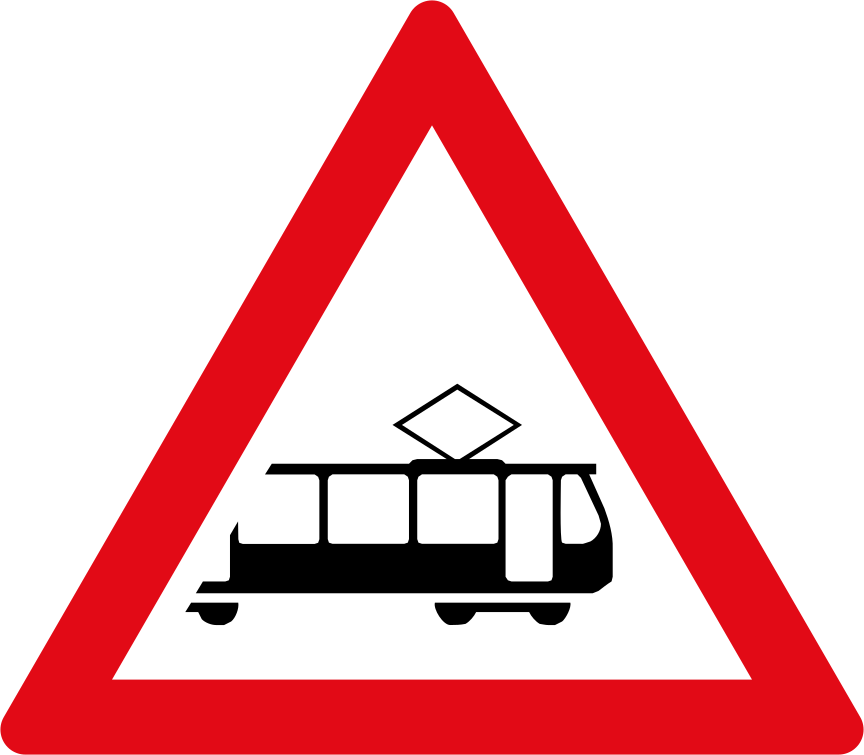
65. Warning for trams
This traffic sign indicates a warning for trams. Tram tracks cross or run along the road ahead, and trams may enter the traffic path. Reduce speed, watch carefully for approaching trams and follow the applicable traffic signals, priority signs and local rules.
English • W362 • Tram. Trams or tram tracks may be encountered ahead.
Sources
🔗 Commons.wikimedia.org
🔗 Transport.gov.za • Department of Transport · SADC RTSM Vol. 1, chapter 3, PDF p. 7 (May 2012)
SVG source: Southern African Development Community • Public domain • Original revision 2018-08-22. Wikimedia original unmodified.
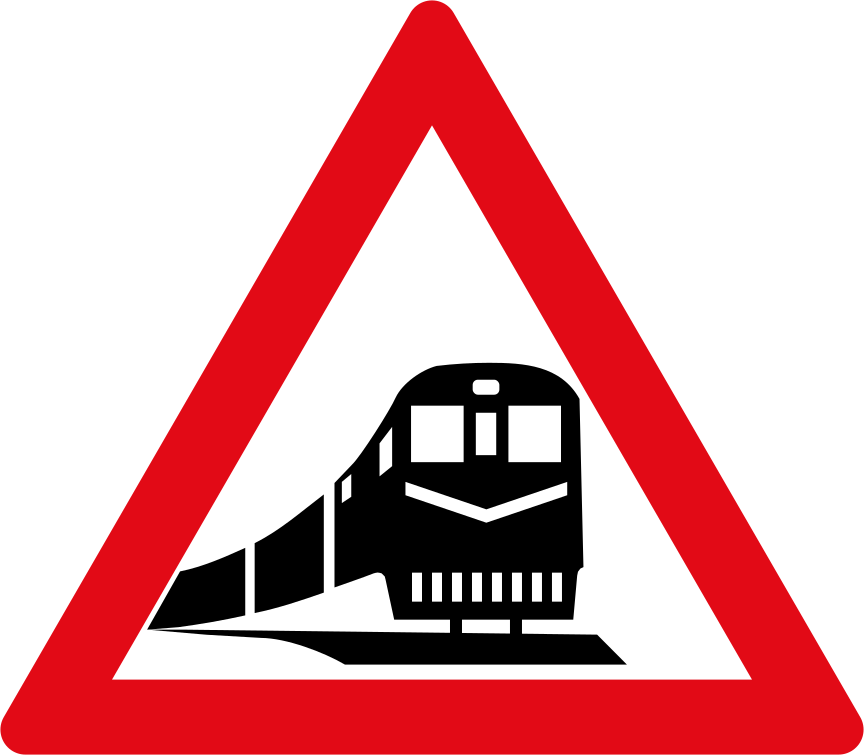
66. Warning for a railway crossing without barriers
This traffic sign indicates a warning for a railway crossing without barriers. It alerts drivers to an upcoming level crossing where railway tracks cross the road and no barriers or gates are present to stop traffic. Drivers should slow down and look both ways for trains.
English • W318 • Railway crossing. A railway crossing is ahead. Follow the crossing controls and check for trains.
Sources
🔗 Commons.wikimedia.org
🔗 Transport.gov.za • Department of Transport · SADC RTSM Vol. 1, chapter 3, PDF p. 5 (May 2012)
SVG source: Southern African Development Community • Public domain • Original revision 2017-08-06. Wikimedia original unmodified.
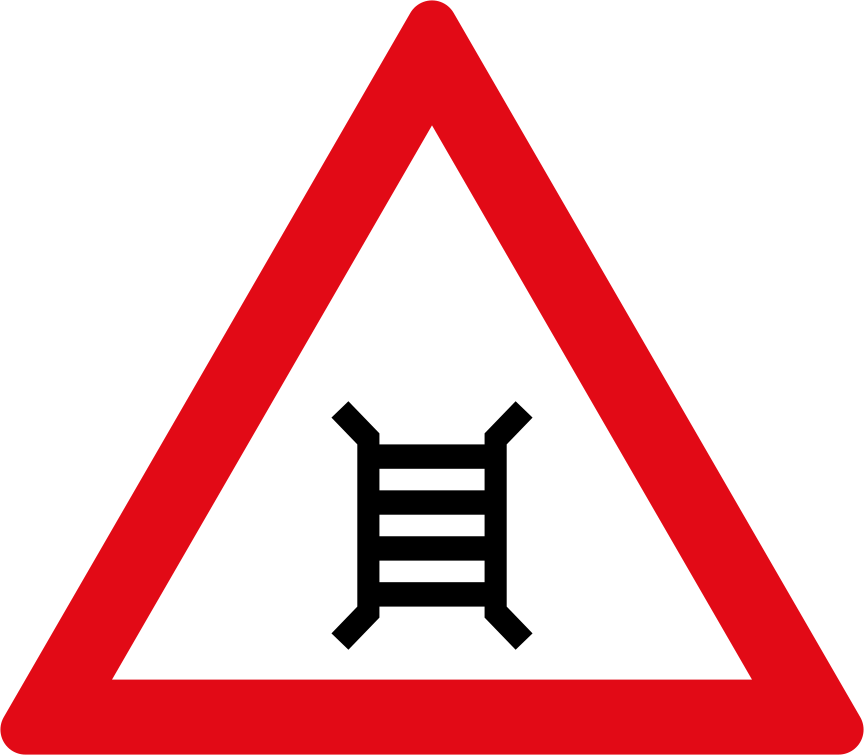
67. Warning for a railway crossing with barriers
This traffic sign indicates a warning for a railway crossing with barriers. It alerts drivers to an upcoming level crossing with gates or barriers that close when a train approaches. Drivers should be ready to stop when the barriers are down or flashing lights activate. Never attempt to cross when gates are closing or closed.
English • W317 • Motor gate. A motor gate across the road is ahead. This ladder-shaped symbol is not a railway barrier warning.
Sources
🔗 Commons.wikimedia.org
🔗 Transport.gov.za • Department of Transport · SADC RTSM Vol. 1, chapter 3, PDF p. 5 (May 2012)
SVG source: Southern African Development Community • Public domain • Original revision 2018-08-23. Wikimedia original unmodified.
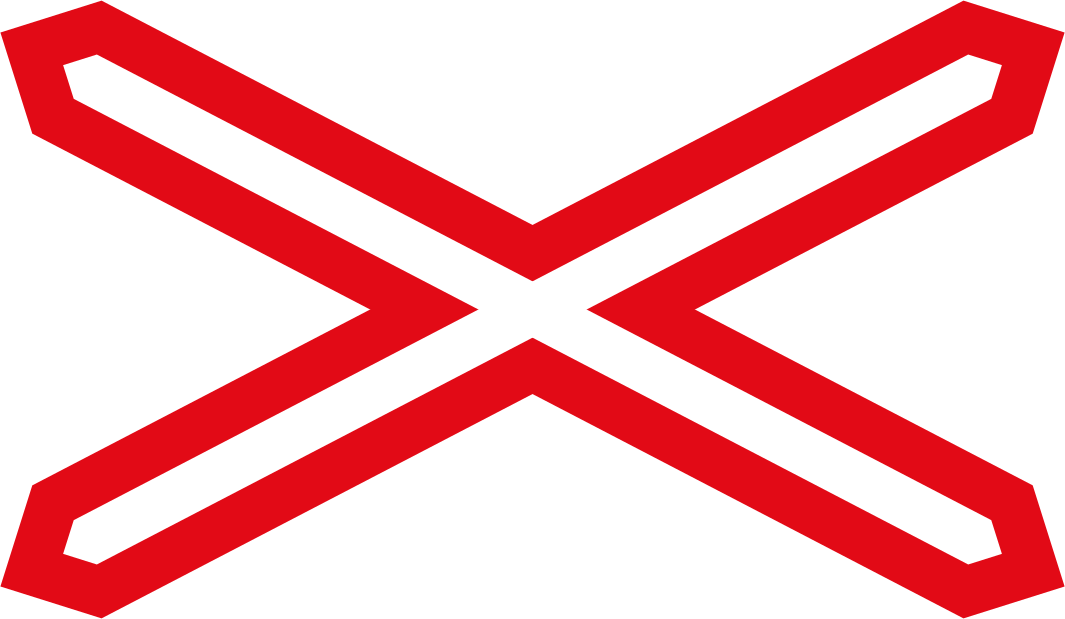
68. Warning for a railway crossing with one track
This traffic sign indicates a warning for a railway crossing with one track. It alerts drivers to a level crossing where a single railway track crosses the road. Drivers should approach with caution and be prepared to stop, even if no barriers or warning lights are active.
English • W403 • Single-track railway crossing. This marker identifies a railway crossing with one track. Check for trains and obey all crossing controls. It marks the crossing rather than serving only as an advance warning.
Sources
🔗 Commons.wikimedia.org • Wikimedia Commons original • Southern African Development Community • Public domain • Original revision 2018-08-25. Wikimedia original unmodified.
🔗 Transport.gov.za • Department of Transport · SADC RTSM Vol. 1, chapter 3 · W403 · PDF p. 53 (May 2012).
Image via Commons.wikimedia.org
Southern African Development Community • Public domain • Source revision 2018-08-25. Wikimedia original unmodified.
69. Warning for a railway crossing with two or more tracks
This traffic sign indicates a warning for a railway crossing with two or more tracks. It alerts drivers to a level crossing where more than one railway track crosses the road. More than one train may pass in succession or from different directions, so drivers should check carefully before crossing and never proceed until all tracks are clear.
English • W404 • Multiple-track railway crossing. This marker identifies a railway crossing with two or more tracks. Check every track for trains and obey all crossing controls. It marks the crossing rather than serving only as an advance warning.
Sources
🔗 Commons.wikimedia.org • Wikimedia Commons original • Southern African Development Community • Public domain • Original revision 2018-08-25. Wikimedia original unmodified.
🔗 Transport.gov.za • Department of Transport · SADC RTSM Vol. 1, chapter 3 · W404 · PDF p. 53 (May 2012).
Image via Commons.wikimedia.org
Southern African Development Community • Public domain • Source revision 2018-08-25. Wikimedia original unmodified.
