

Panneaux d’indicationRoyaume-Uni
 Règles de circulation
 Royaume-Uni
 Panneaux de priorité
 Panneaux de danger
 Panneaux d’interdiction
 Panneaux d’obligation
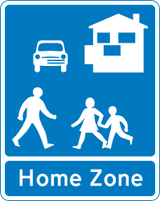 Panneaux d’indication
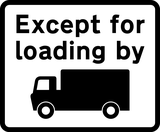 Panneaux additionnels
Panneaux d’indication
Un panneau d’indication est un panneau qui fournit des indications ou précisions utiles aux usagers sans imposer une obligation ni signaler un danger. Il peut informer sur les zones de stationnement, les directions, les services, la configuration de la route ou le début et la fin d’une agglomération. Son objectif est d’aider les conducteurs à s’orienter avec confiance grâce à des informations claires et pratiques qui améliorent l’orientation, le confort et la fluidité de la circulation.
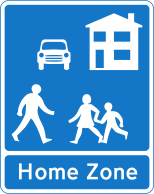

1. Début d'une zone résidentielle
Ce panneau indique le début d’une zone résidentielle. Des règles de circulation particulières s’y appliquent selon la signalisation et la réglementation locale. Elles peuvent concerner la vitesse, le stationnement et l’usage de la route par les différents usagers.
English • GB diagram 881 • Home Zone. You are entering a designated Home Zone: a residential street designed to be shared by pedestrians, cyclists and motor vehicles. Expect people using the street and drive with particular care. The sign alone does not set a universal 20 mph speed limit.
Sources
🔗 Commons.wikimedia.org (UK Government • Crown copyright • OGL v1.0)
🔗 Legislation.gov.uk • Traffic Signs Regulations and General Directions • Great Britain
🔗 Gov.uk • Department for Transport • Know your traffic signs
SVG source: UK Government • OGL v1.0 • Original revision 2023-01-19. Wikimedia original unmodified. © Crown copyright. Traffic signs are Crown copyright. You may reproduce traffic signs free of charge and without having to seek permission, but you must reproduce them accurately and not in a misleading context (e.g. not on roadside billboards where they could mislead drivers). (ref [1])
Artwork verified against Gov.uk • official published diagram 881A.
Current design and permitted variants verified against Legislation.gov.uk • TSRGD, current text.
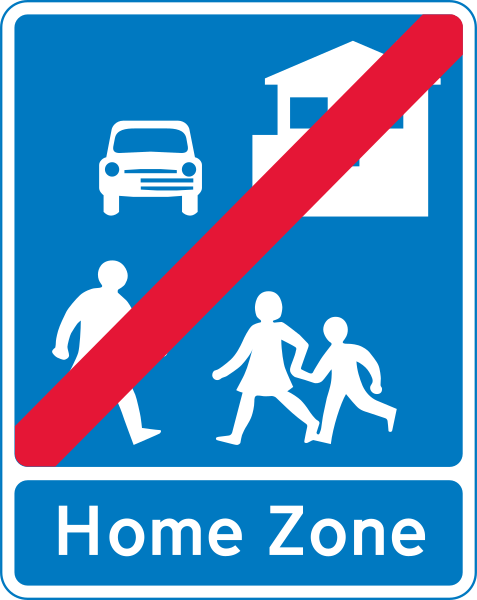
2. Fin de la zone résidentielle
Ce panneau de signalisation indique la fin de la zone résidentielle. La fin de la zone résidentielle marque l’endroit où les règles spéciales de circulation d’une zone résidentielle cessent de s’appliquer et où les règles normales de la route reprennent.
Sources
🔗 Commons.wikimedia.org (UK Government • Crown copyright • OGL v1.0)
Image via Commons.wikimedia.org
UK Government • OGL v1.0 • Source revision 2011-11-29. Wikimedia original unmodified.
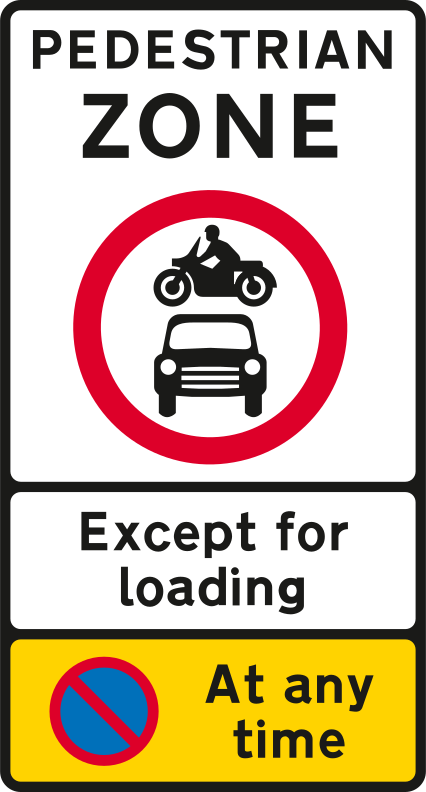
3. Début d'une zone pour piétons
Ce panneau de signalisation indique le début d'une zone piétonne. Le début d'une zone piétonne marque le point de départ d'une zone où seuls les piétons (et parfois les cyclistes) sont autorisés, et où les véhicules motorisés sont restreints ou interdits. Les véhicules motorisés sont généralement interdits ou limités aux riverains, livraisons ou véhicules d'urgence. Cette zone vise à offrir des espaces sûrs sans circulation pour la promenade, le shopping et les loisirs.
English • GB diagram 618.3 (legacy) • Pedestrian zone. Motor vehicles are prohibited in the pedestrian zone except for loading as shown. Waiting is prohibited at any time. This is an older pedestrian-zone sign; the motor-vehicle symbol does not prohibit pedal cycles.
Sources
🔗 Commons.wikimedia.org
🔗 Legislation.gov.uk • Traffic Signs Regulations and General Directions • Great Britain
🔗 Gov.uk • Department for Transport • Know your traffic signs
🔗 Legislation.gov.uk • Retention of existing signs • regulation 14
🔗 Legislation.gov.uk • Earlier prescribed signs • TSRGD 2002
Image via Commons.wikimedia.org
UK Government • Public domain • Source revision 2011-11-29. Wikimedia original unmodified.
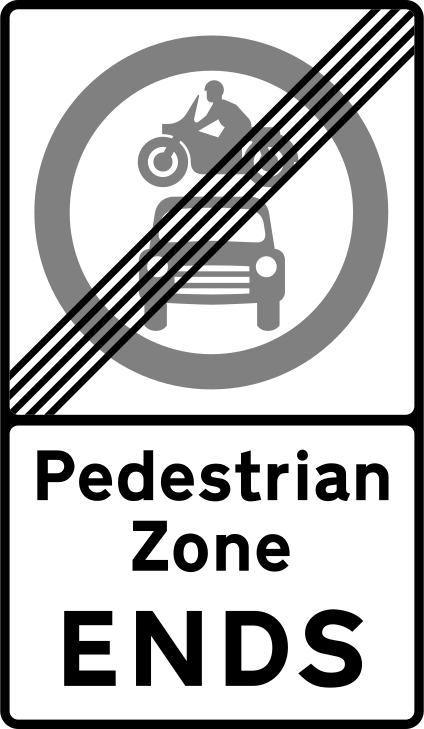
4. Fin de la zone pour piétons
Ce panneau de signalisation indique la fin de la zone piétonne. La fin de la zone piétonne marque l’endroit où la zone réservée uniquement aux piétons se termine et où les règles normales de circulation reprennent. Attendez-vous à rencontrer des véhicules, des vélos et des piétons partageant la route selon les règles habituelles.
English • GB diagram 618.4 • End of pedestrian zone. The pedestrian-zone restrictions indicated by the entry sign end here. Other traffic and parking restrictions may still apply.
Sources
🔗 Commons.wikimedia.org
🔗 Legislation.gov.uk • Traffic Signs Regulations and General Directions • Great Britain
🔗 Gov.uk • Department for Transport • Know your traffic signs
🔗 Legislation.gov.uk • Retention of existing signs • regulation 14
🔗 Legislation.gov.uk • Earlier prescribed signs • TSRGD 2002
SVG source: UK Government • Public domain • Original revision 2011-11-13. Wikimedia original unmodified.
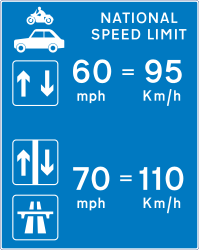
5. Limites de vitesse nationales
Ce panneau de signalisation indique les limites nationales de vitesse. Les limitations nationales de vitesse sont les vitesses maxi par défaut applicables selon le type de route lorsqu’aucun autre panneau spécifique n’est affiché. Les limitations peuvent varier selon les conditions météo, le type de véhicule ou certaines zones spéciales. Des limitations inférieures peuvent s’appliquer dans les écoles, zones résidentielles ou pendant des travaux.
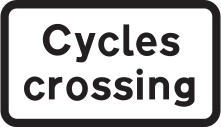
6. Passage pour cyclistes
Ce panneau de signalisation indique un passage pour cyclistes. Un passage pour cyclistes est une partie aménagée de la chaussée où les cyclistes peuvent traverser en toute sécurité, souvent séparée du passage piéton.
English • TSRGD S2 P2 item 26 • Cycles crossing. A cycle route crosses or joins the road at the warned location. This plate normally accompanies the cycle-route warning sign. Read this supplementary plate together with the sign it qualifies.
Sources
🔗 Commons.wikimedia.org (UK Government • Crown copyright • OGL v1.0)
🔗 Legislation.gov.uk • Traffic Signs Regulations and General Directions • Great Britain
🔗 Gov.uk • Department for Transport • Know your traffic signs
SVG source: UK Government • OGL v1.0 • Original revision 2012-06-25. Wikimedia original unmodified. © Crown copyright. Traffic signs are Crown copyright. You may reproduce traffic signs free of charge and without having to seek permission, but you must reproduce them accurately and not in a misleading context (e.g. not on roadside billboards where they could mislead drivers). (ref [1])
Artwork verified against Gov.uk • official published diagram 950.1VCC.
Current design and permitted variants verified against Legislation.gov.uk • TSRGD, current text.
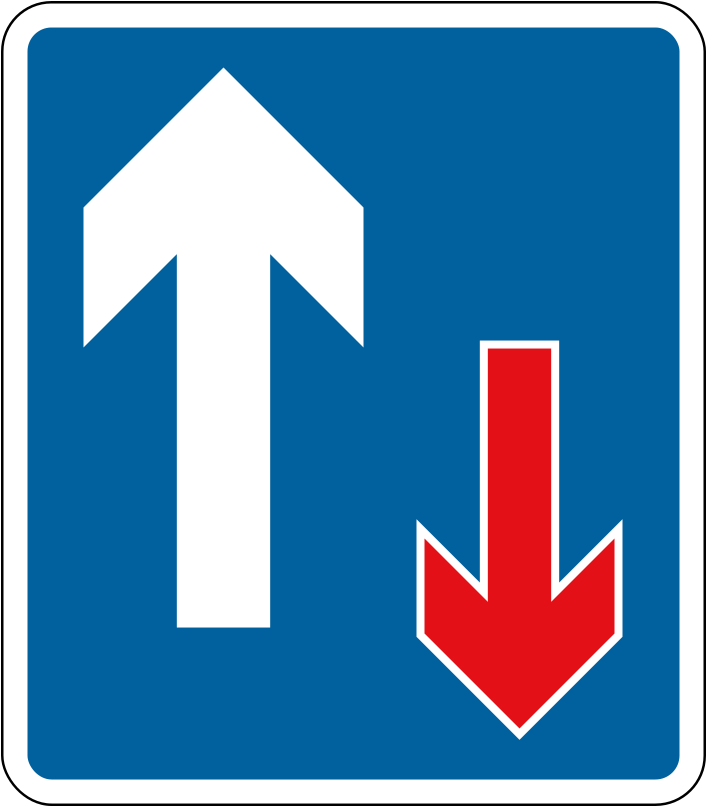
7. Rétrécissement : priorité sur le trafic opposé
Ce panneau de signalisation indique un rétrécissement de la chaussée où les conducteurs venant en sens inverse doivent céder le passage.
English • GB diagram 811A • Priority over oncoming vehicles. You have priority over vehicles approaching from the opposite direction at the narrow section. Proceed only when it is safe.
Sources
🔗 Commons.wikimedia.org (Government of the United Kingdom – Department for Transport • Crown copyright • OGL v1.0)
🔗 Legislation.gov.uk • Traffic Signs Regulations and General Directions • Great Britain
🔗 Gov.uk • Department for Transport • Know your traffic signs
SVG source: Government of the United Kingdom – Department for Transport • OGL v1.0 • Original revision 2022-01-10. Wikimedia original unmodified. © Crown copyright. Traffic signs are Crown copyright. You may reproduce traffic signs free of charge and without having to seek permission, but you must reproduce them accurately and not in a misleading context (e.g. not on roadside billboards where they could mislead drivers). (ref [1])
Artwork verified against Gov.uk • official published diagram 811.
Current design and permitted variants verified against Legislation.gov.uk • TSRGD, current text.
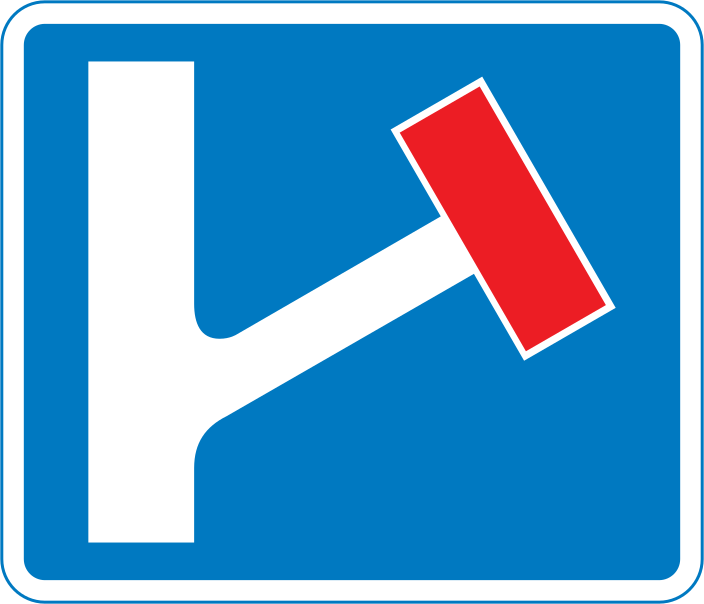
8. Impasse
Ce panneau de signalisation indique une impasse. Une impasse (également appelée cul-de-sac ou voie sans issue) est une route qui se termine sans sortie — les véhicules peuvent y entrer mais doivent faire demi-tour pour repartir, car il n’y a pas de connexion avec une autre route.
English • GB diagram 816 • No through road. The road indicated is a no-through road; the pictured arrangement shows a side road that does not continue through.
Sources
🔗 Commons.wikimedia.org (UK Government • Crown copyright • OGL v1.0)
🔗 Legislation.gov.uk • Traffic Signs Regulations and General Directions • Great Britain
🔗 Gov.uk • Department for Transport • Know your traffic signs
SVG source: UK Government • OGL v1.0 • Original revision 2014-08-11. Wikimedia original unmodified. © Crown copyright. Traffic signs are Crown copyright. You may reproduce traffic signs free of charge and without having to seek permission, but you must reproduce them accurately and not in a misleading context (e.g. not on roadside billboards where they could mislead drivers). (ref [1])
Artwork verified against Gov.uk • official published diagram 817R.
Current design and permitted variants verified against Legislation.gov.uk • TSRGD, current text.
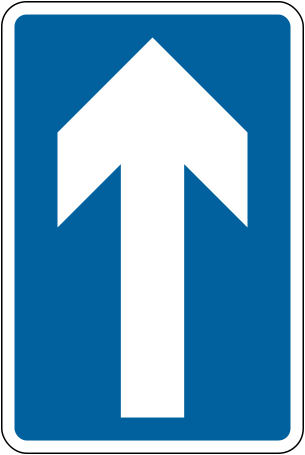
9. Chaussée à sens unique
Ce panneau de signalisation indique une route à sens unique. Un sens unique signifie que les véhicules ne sont autorisés à circuler que dans une seule direction sur une route ou une rue donnée. Faites attention aux piétons et cyclistes qui peuvent parfois circuler à contre-sens (vérifiez les règles locales).
English • GB diagram 652 • One-way traffic. Traffic on the road travels in the direction shown. This rectangular sign identifies one-way traffic.
Sources
🔗 Commons.wikimedia.org (Government of the United Kingdom – Department for Transport • Crown copyright • OGL v1.0)
🔗 Legislation.gov.uk • Traffic Signs Regulations and General Directions • Great Britain
🔗 Gov.uk • Department for Transport • Know your traffic signs
SVG source: Government of the United Kingdom – Department for Transport • OGL v1.0 • Original revision 2022-01-12. Wikimedia original unmodified. © Crown copyright. Traffic signs are Crown copyright. You may reproduce traffic signs free of charge and without having to seek permission, but you must reproduce them accurately and not in a misleading context (e.g. not on roadside billboards where they could mislead drivers). (ref [1])
Artwork verified against Gov.uk • official published diagram 652.
Current design and permitted variants verified against Legislation.gov.uk • TSRGD, current text.
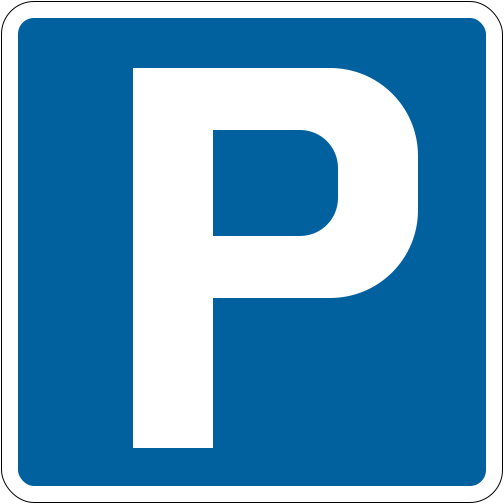
10. Stationnement autorisé
Ce panneau de signalisation indique que le stationnement est autorisé. Stationnement autorisé signifie que les conducteurs peuvent s'arrêter et laisser leur véhicule dans une zone désignée pour une durée déterminée, tout en respectant la réglementation locale. Le stationnement peut être gratuit ou payant, souvent réglementé par : panneaux, horodateurs ou permis.
English • GB diagram 801 • Parking place. A parking place is available. Observe any conditions, charges, time limits and vehicle restrictions shown on accompanying signs.
Sources
🔗 Commons.wikimedia.org (Government of the United Kingdom – Department for Transport • Crown copyright • OGL v1.0)
🔗 Legislation.gov.uk • Traffic Signs Regulations and General Directions • Great Britain
🔗 Gov.uk • Department for Transport • Know your traffic signs
SVG source: Government of the United Kingdom – Department for Transport • OGL v1.0 • Original revision 2026-06-06. Wikimedia original unmodified. © Crown copyright. Traffic signs are Crown copyright. You may reproduce traffic signs free of charge and without having to seek permission, but you must reproduce them accurately and not in a misleading context (e.g. not on roadside billboards where they could mislead drivers). (ref [1])
Artwork verified against Gov.uk • official published diagram 801.
Current design and permitted variants verified against Legislation.gov.uk • TSRGD, current text.
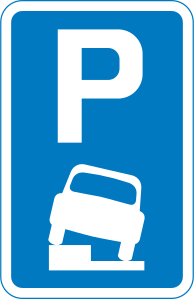
11. Stationnement autorisé uniquement en partie sur la chaussée
Ce panneau de signalisation indique que le stationnement est uniquement autorisé partiellement sur la chaussée. Cela signifie que les véhicules doivent être garés partiellement sur la chaussée et partiellement sur le trottoir, la bande herbeuse ou l’accotement, sans occuper entièrement la voie de circulation.
English • GB diagram 667 • Parking partly on the verge or footway. Vehicles may park partly on the verge or footway in the position shown. Observe the signed area and any other parking conditions.
Sources
🔗 Commons.wikimedia.org
🔗 Legislation.gov.uk • Traffic Signs Regulations and General Directions • Great Britain
🔗 Gov.uk • Department for Transport • Know your traffic signs
SVG source: UK Government • Public domain • Original revision 2011-11-13. Wikimedia original unmodified.
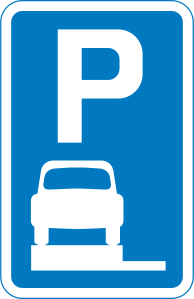
12. Stationnement uniquement sur accotement ou trottoir
Ce panneau de signalisation indique que le stationnement n’est autorisé que sur la bande herbeuse ou le trottoir. Cela signifie que les véhicules doivent être stationnés partiellement ou entièrement sur le trottoir, la bande herbeuse ou l’accotement, et non sur la chaussée. Fréquent dans les rues étroites où le stationnement sur la chaussée gênerait la circulation.
English • GB diagram 668 • Parking wholly on the verge or footway. Vehicles may park wholly on the verge or footway in the position shown. Observe the signed area and any other parking conditions.
Sources
🔗 Commons.wikimedia.org
🔗 Legislation.gov.uk • Traffic Signs Regulations and General Directions • Great Britain
🔗 Gov.uk • Department for Transport • Know your traffic signs
SVG source: UK Government • Public domain • Original revision 2011-11-13. Wikimedia original unmodified.
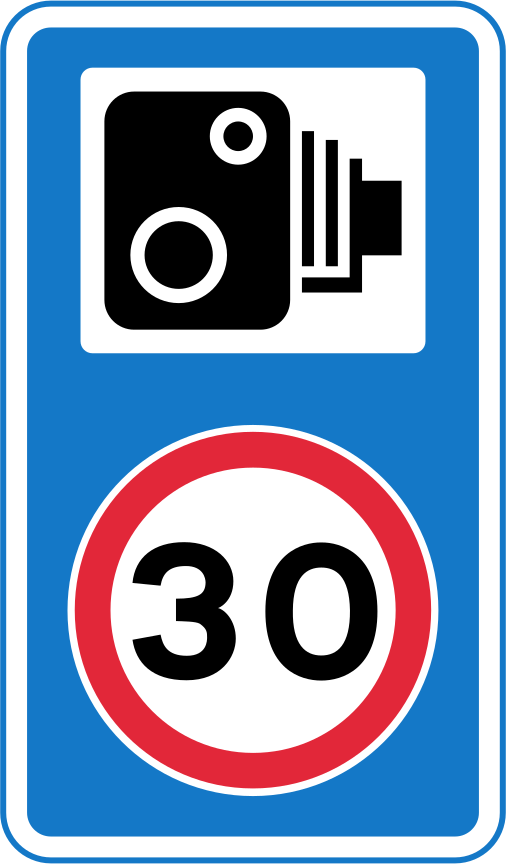
13. Contrôle de vitesse par tronçon
Ce panneau de signalisation indique un contrôle de section. Le contrôle de section (également appelé contrôle de vitesse moyenne) est un système de contrôle routier mesurant la vitesse moyenne d’un véhicule sur une certaine distance afin d’assurer le respect des limitations de vitesse. Encourage les conducteurs à maintenir une vitesse régulière et conforme sur de longues distances.
English • GB diagram 880 • Speed camera and 30 mph reminder. A speed camera is ahead on a lit road with a 30 mph limit. This sign reminds drivers of that limit; it does not itself identify the start of average-speed enforcement. The current Great Britain diagram 880 is specified for England; Wales has a separate 20 mph version.
Sources
🔗 Commons.wikimedia.org (UK Government • Crown copyright • OGL v1.0)
🔗 Legislation.gov.uk • Traffic Signs Regulations and General Directions • Great Britain
🔗 Gov.uk • Department for Transport • Know your traffic signs
SVG source: UK Government • OGL v1.0 • Original revision 2014-05-01. Wikimedia original unmodified. © Crown copyright. Traffic signs are Crown copyright. You may reproduce traffic signs free of charge and without having to seek permission, but you must reproduce them accurately and not in a misleading context (e.g. not on roadside billboards where they could mislead drivers). (ref [1])
Artwork verified against Gov.uk • official published diagram 880.
Current design and permitted variants verified against Legislation.gov.uk • TSRGD, current text.
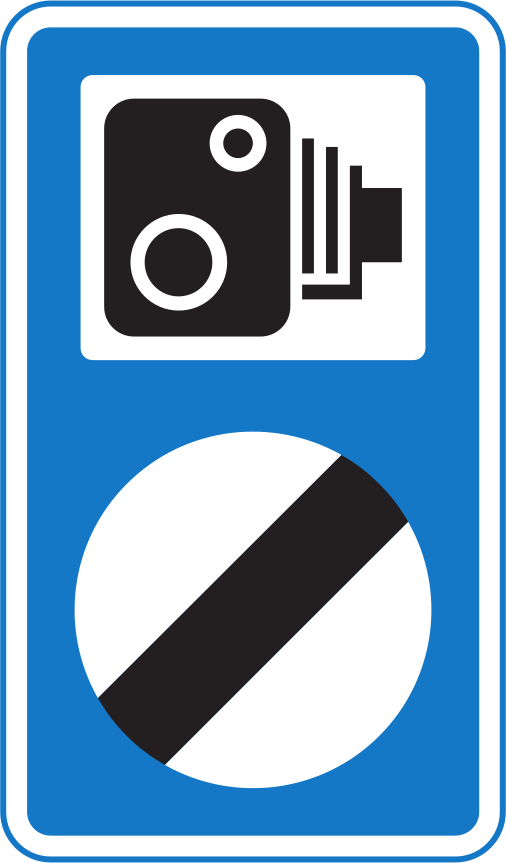
14. Fin du contrôle de vitesse par tronçon
Ce panneau de signalisation indique la fin du contrôle de section. La fin du contrôle de section marque la fin de la zone de contrôle de vitesse moyenne, et les contrôles de vitesse basés sur la moyenne ne s’appliquent plus.
English • GB diagram 880.1 • Speed camera and national speed limit reminder. A speed camera is ahead on an unlit road subject to the national speed limit. The limit depends on the road and vehicle type. This is not an average-speed enforcement end sign.
Sources
🔗 Commons.wikimedia.org (United Kingdom - Department for Transport • Crown copyright • OGL v1.0)
🔗 Legislation.gov.uk • Traffic Signs Regulations and General Directions • Great Britain
🔗 Gov.uk • Department for Transport • Know your traffic signs
SVG source: United Kingdom - Department for Transport • OGL v1.0 • Original revision 2014-05-01. Wikimedia original unmodified. © Crown copyright. Traffic signs are Crown copyright. You may reproduce traffic signs free of charge and without having to seek permission, but you must reproduce them accurately and not in a misleading context (e.g. not on roadside billboards where they could mislead drivers). (ref [1])
Artwork verified against Legislation.gov.uk • official published diagram 880.1.
Current design and permitted variants verified against Legislation.gov.uk • TSRGD, current text.
