

Circulation interfilesThaïlande
 Règles de circulation
 Thaïlande
28. Circulation interfiles
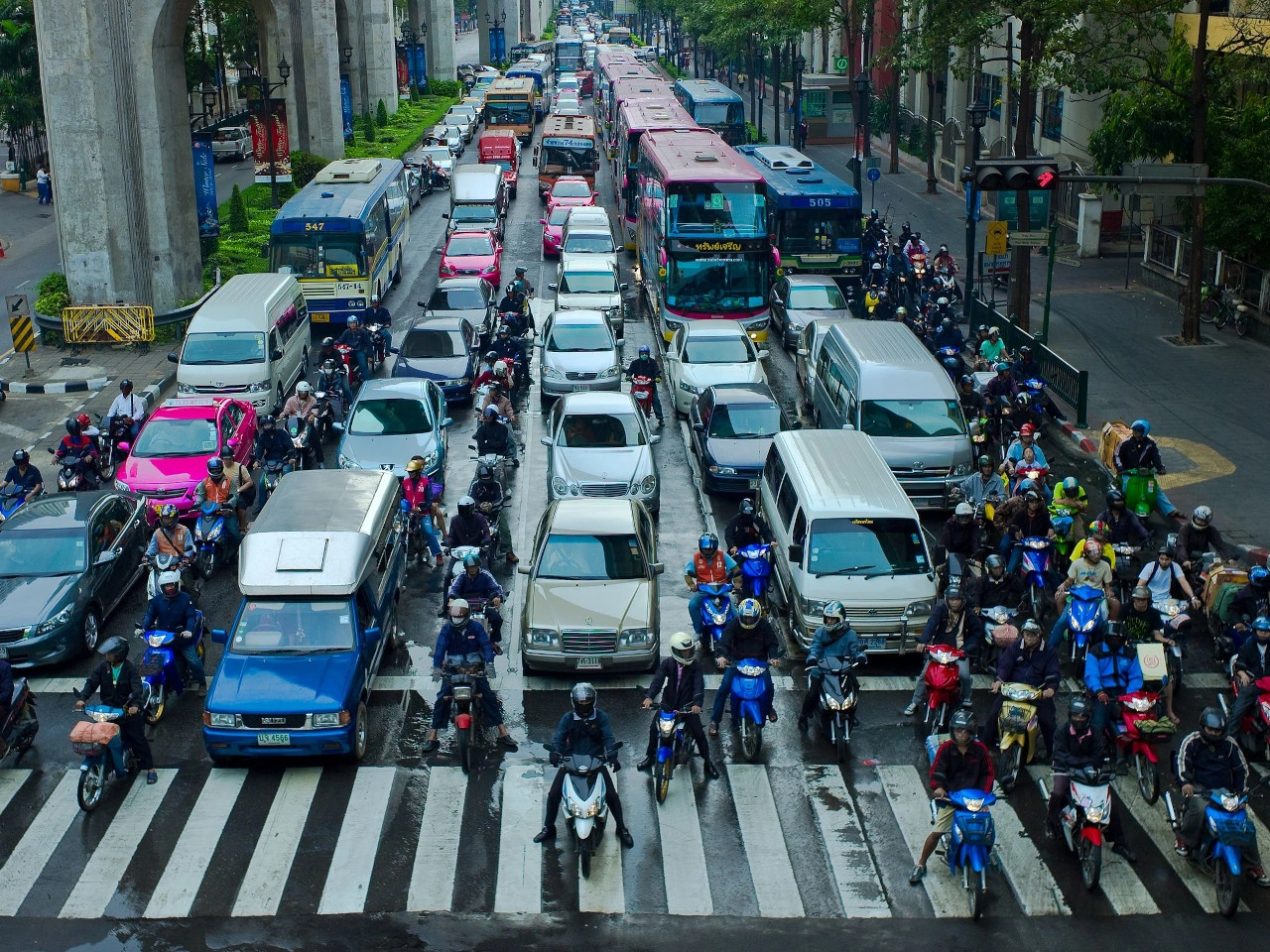
La circulation interfiles consiste, pour une moto ou un autre deux-roues autorisé, à circuler entre deux voies ou files de véhicules allant dans le même sens. Lorsqu’elle s’effectue entre des véhicules arrêtés ou roulant lentement, on parle également de remontée de files.
La circulation interfiles peut réduire le temps passé par les motos dans les embouteillages, mais exige une grande prudence car les véhicules peuvent changer de voie, combler un espace ou se déplacer de manière imprévisible. Son autorisation, les véhicules concernés et les éventuelles limites de vitesse dépendent de la législation locale.
What is lane splitting?
Lane splitting means riding between two lanes or queues of vehicles travelling in the same direction.
What is the difference between lane splitting and lane filtering?
The terms are often used interchangeably. Lane filtering usually refers more specifically to riding between vehicles that are stationary or moving slowly, while lane splitting can be used more broadly.
Is lane splitting legal everywhere?
No. Some countries expressly permit it under specified conditions, some tolerate particular forms of filtering and others prohibit it.
Can motorcycles lane split at any speed?
No. Where lane splitting is permitted, local rules may impose a maximum motorcycle speed, a maximum speed difference compared with surrounding traffic or both.
Can you lane split between opposing traffic?
Lane splitting normally refers to travelling between lanes or queues moving in the same direction. Riding between your traffic queue and opposing traffic may be prohibited or governed by ordinary overtaking rules.
Can you use the road shoulder for lane splitting?
Not automatically. Permission to travel between traffic lanes does not normally give a rider permission to use an emergency lane, shoulder, cycle path or other restricted part of the road.
What are the main dangers of lane splitting?
Important risks include vehicles changing lane, narrowing gaps, blind spots, opening doors and sudden movements by drivers who may not expect a motorcycle between the lanes.
Should drivers check for motorcycles before changing lane?
Yes. Drivers should use their mirrors, signal appropriately and check relevant blind spots before changing lane.
Should a motorcyclist maintain a large speed difference while filtering?
No. A high speed difference reduces the time available for both the rider and other drivers to react. Where filtering is legal, specific limits may apply.
Does permission to lane split give the motorcyclist priority?
No automatic universal priority exists. Riders and other drivers must continue to follow the applicable manoeuvring, lane-changing and right-of-way rules.


