

GebotszeichenPolen
 Verkehrsregeln
 Polen
 Vorfahrtzeichen
 Warnzeichen
 Verbotszeichen
 Gebotszeichen
 Hinweiszeichen
 Zusatzzeichen
Gebotszeichen
Ein Gebotszeichen ist ein Verkehrszeichen, das Fahrern vorgibt, was sie tun müssen. Statt eine Handlung zu verbieten, schreibt es ein bestimmtes Verhalten vor, etwa eine bestimmte Fahrtrichtung, die Benutzung eines bestimmten Fahrstreifens oder eine Mindestgeschwindigkeit. Sein Zweck besteht darin, den Verkehr sicher und effizient zu führen, indem alle Verkehrsteilnehmer an Stellen mit besonderem Regelungsbedarf dieselben vorgeschriebenen Verhaltensweisen einhalten.
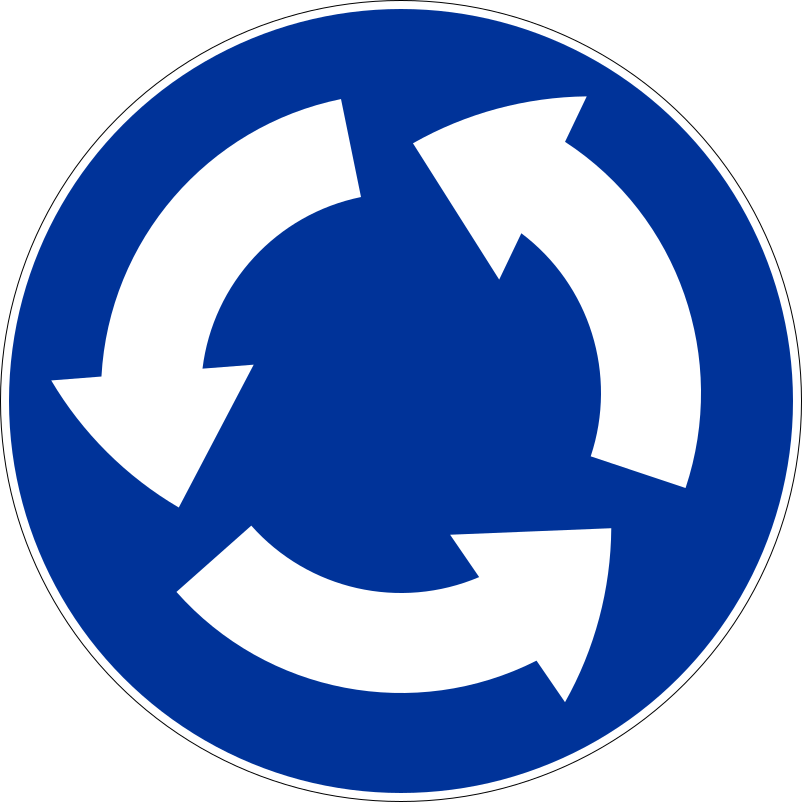






1. Vorgeschriebene Fahrtrichtung im Kreisverkehr
Dieses Verkehrszeichen gibt die vorgeschriebene Fahrtrichtung im Kreisverkehr an. Der Verkehr muss in der durch die Pfeile angezeigten Richtung fahren. Das Zeichen regelt die Vorfahrt nicht selbst; beachten Sie die geltenden Vorfahrtzeichen, Ampeln und örtlichen Regeln.
English • Traffic sign C-12 • Roundabout. Sign C-12 indicates that traffic at the junction circulates around an island or square in the direction shown.
Polski • C-12 • ruch okrężny. Znak C-12 „ruch okrężny” oznacza, że na skrzyżowaniu ruch odbywa się dookoła wyspy lub placu w kierunku wskazanym na znaku.
Quellen
🔗 Commons.wikimedia.org
🔗 Eli.gov.pl • § 36 ust. 1
SVG source: Commons.wikimedia.org • Original SVG
Paweł Grzywocz • Public domain • Original revision 2025-09-26. Wikimedia original unmodified.
Artwork reviewed against the Polish official sign catalogue, Dz.U. 2019 poz. 2310: Eli.gov.pl • C-12, PDF page 43, with amendments 2021/433, 2021/2065, 2022/2372 and 2026/133 checked. Catalogue-equivalent illustration; intentional update from the previous PNG. This is an educational illustration, not a manufacturing specification.
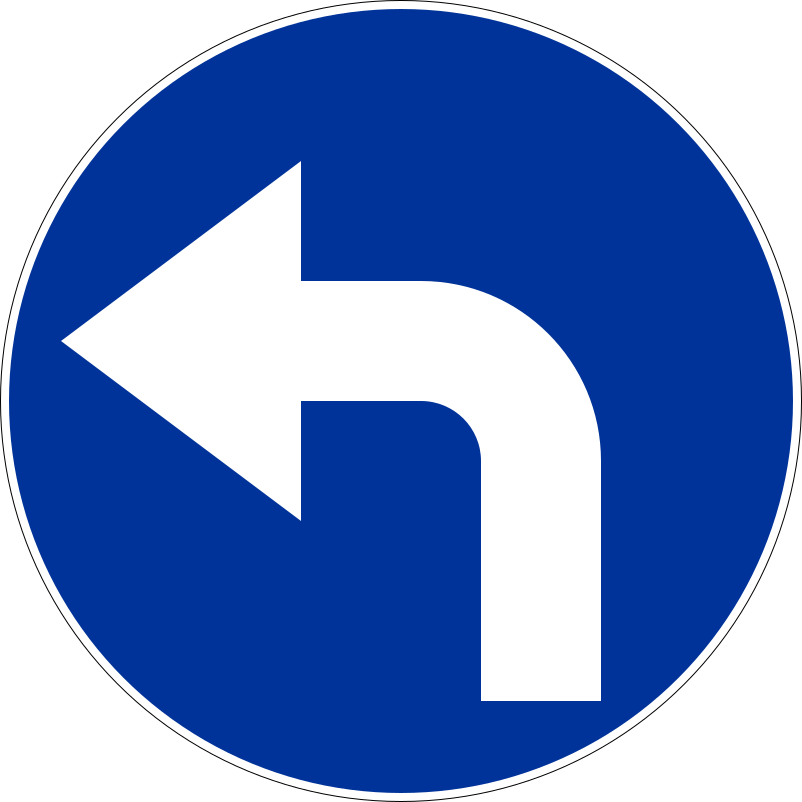
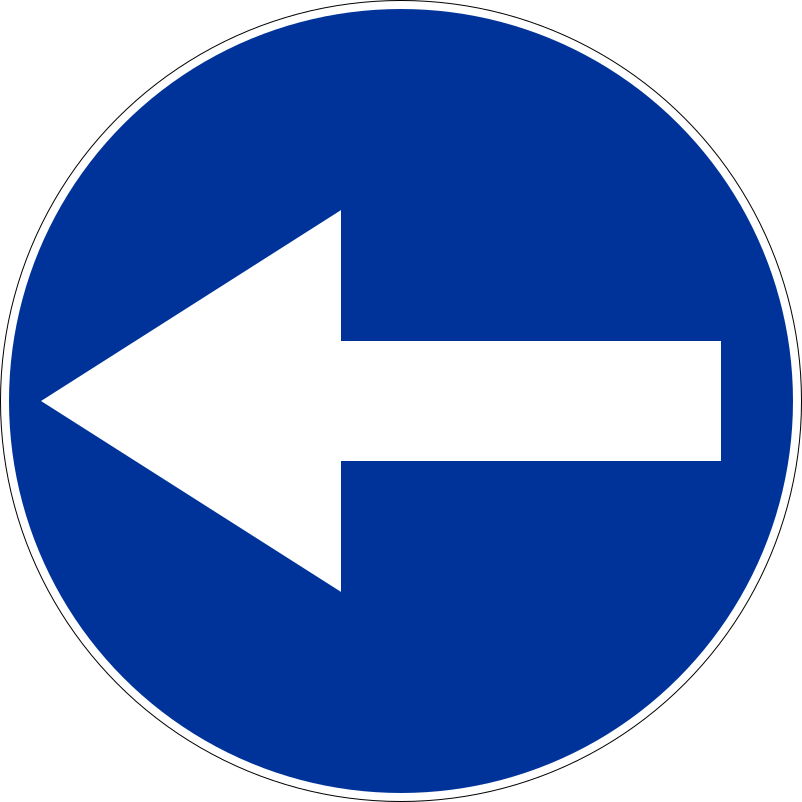
2. Linksabbiegen vorgeschrieben
Dieses Verkehrszeichen zeigt an, dass Linksabbiegen an der vorausliegenden Kreuzung vorgeschrieben ist. Der Verkehr muss nach links abbiegen und darf weder geradeaus weiterfahren noch nach rechts abbiegen.
English • Traffic sign C-4 • Turn left after the sign. Signs C-1, Turn right before the sign; C-2, Turn right after the sign; C-3, Turn left before the sign; C-4, Turn left after the sign; C-5, Ahead only; C-6, Ahead or right only; C-7, Ahead or left only; C-8, Turn right or left; C-9, Pass to the right of the sign; C-10, Pass to the left of the sign; and C-11, Pass to either side of the sign, require drivers to follow the arrows. These signs may be installed in line with the road or carriageway centre line, or on the carriageway itself.
Polski • C-4 • nakaz jazdy w lewo za znakiem. Znaki: C-1 „nakaz jazdy w prawo przed znakiem”, C-2 „nakaz jazdy w prawo za znakiem”, C-3 „nakaz jazdy w lewo przed znakiem”, C-4 „nakaz jazdy w lewo za znakiem”, C-5 „nakaz jazdy prosto”, C-6 „nakaz jazdy prosto lub w prawo”, C-7 „nakaz jazdy prosto lub w lewo”, C-8 „nakaz jazdy w prawo lub w lewo”, C-9 „nakaz jazdy z prawej strony znaku”, C-10 „nakaz jazdy z lewej strony znaku”, C-11 „nakaz jazdy z prawej lub lewej strony znaku” zobowiązują kierującego do ruchu w kierunku zgodnym ze strzałkami; znaki te mogą być umieszczone na przedłużeniu osi drogi (jezdni) lub na samej jezdni.
Quellen
🔗 Commons.wikimedia.org
🔗 Eli.gov.pl • § 35 ust. 1
SVG source: Commons.wikimedia.org • Original SVG
Paweł Grzywocz • Public domain • Original revision 2025-09-26. Wikimedia original unmodified.
Artwork reviewed against the Polish official sign catalogue, Dz.U. 2019 poz. 2310: Eli.gov.pl • C-4, PDF page 43, with amendments 2021/433, 2021/2065, 2022/2372 and 2026/133 checked. Catalogue-equivalent illustration; intentional update from the previous PNG. This is an educational illustration, not a manufacturing specification.
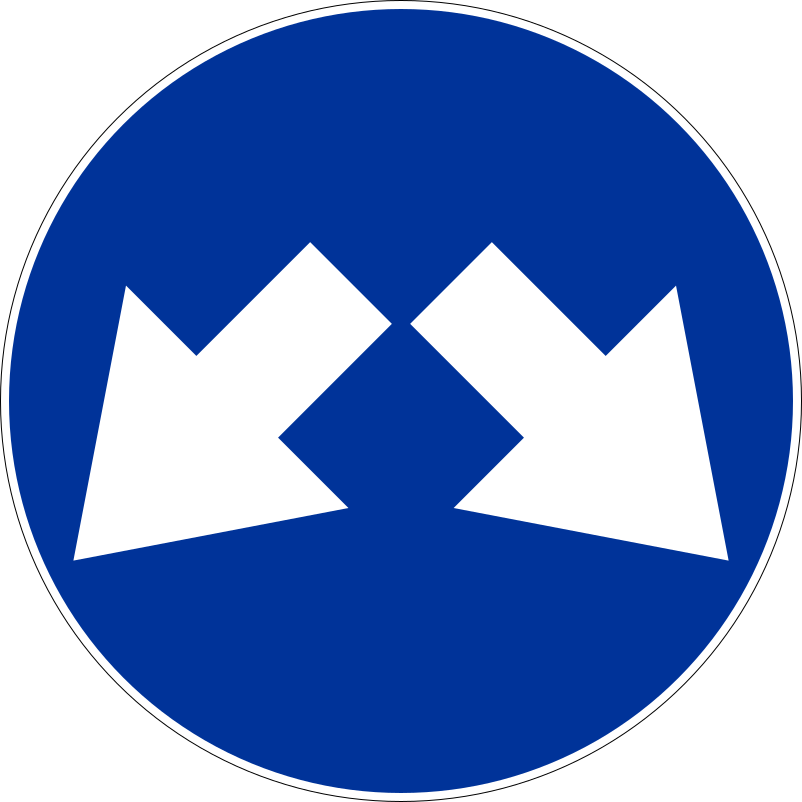
3. Links- oder Rechtsabbiegen vorgeschrieben
Dieses Verkehrszeichen zeigt an, dass Links- oder Rechtsabbiegen an der vorausliegenden Kreuzung vorgeschrieben ist. Der Verkehr darf nach links oder rechts abbiegen, aber nicht geradeaus weiterfahren.
English • Traffic sign C-8 • Turn right or left. Signs C-1, Turn right before the sign; C-2, Turn right after the sign; C-3, Turn left before the sign; C-4, Turn left after the sign; C-5, Ahead only; C-6, Ahead or right only; C-7, Ahead or left only; C-8, Turn right or left; C-9, Pass to the right of the sign; C-10, Pass to the left of the sign; and C-11, Pass to either side of the sign, require drivers to follow the arrows. These signs may be installed in line with the road or carriageway centre line, or on the carriageway itself.
Polski • C-8 • nakaz jazdy w prawo lub w lewo. Znaki: C-1 „nakaz jazdy w prawo przed znakiem”, C-2 „nakaz jazdy w prawo za znakiem”, C-3 „nakaz jazdy w lewo przed znakiem”, C-4 „nakaz jazdy w lewo za znakiem”, C-5 „nakaz jazdy prosto”, C-6 „nakaz jazdy prosto lub w prawo”, C-7 „nakaz jazdy prosto lub w lewo”, C-8 „nakaz jazdy w prawo lub w lewo”, C-9 „nakaz jazdy z prawej strony znaku”, C-10 „nakaz jazdy z lewej strony znaku”, C-11 „nakaz jazdy z prawej lub lewej strony znaku” zobowiązują kierującego do ruchu w kierunku zgodnym ze strzałkami; znaki te mogą być umieszczone na przedłużeniu osi drogi (jezdni) lub na samej jezdni.
Quellen
🔗 Commons.wikimedia.org
🔗 Eli.gov.pl • § 35 ust. 1
SVG source: Commons.wikimedia.org • Original SVG
Paweł Grzywocz • Public domain • Original revision 2025-09-26. Wikimedia original unmodified.
Artwork reviewed against the Polish official sign catalogue, Dz.U. 2019 poz. 2310: Eli.gov.pl • C-8, PDF page 43, with amendments 2021/433, 2021/2065, 2022/2372 and 2026/133 checked. Catalogue-equivalent illustration; intentional update from the previous PNG. This is an educational illustration, not a manufacturing specification.
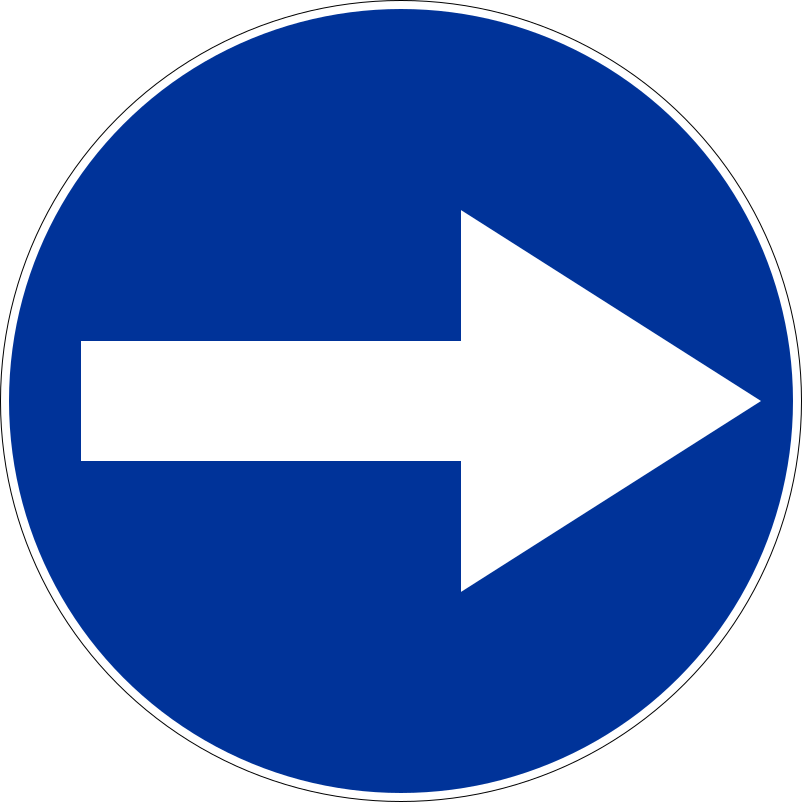
4. Rechtsabbiegen vorgeschrieben
Dieses Verkehrszeichen zeigt an, dass Rechtsabbiegen an der vorausliegenden Kreuzung vorgeschrieben ist. Der Verkehr muss nach rechts abbiegen und darf weder geradeaus weiterfahren noch nach links abbiegen.
English • Traffic sign C-2 • Turn right after the sign. Signs C-1, Turn right before the sign; C-2, Turn right after the sign; C-3, Turn left before the sign; C-4, Turn left after the sign; C-5, Ahead only; C-6, Ahead or right only; C-7, Ahead or left only; C-8, Turn right or left; C-9, Pass to the right of the sign; C-10, Pass to the left of the sign; and C-11, Pass to either side of the sign, require drivers to follow the arrows. These signs may be installed in line with the road or carriageway centre line, or on the carriageway itself.
Polski • C-2 • nakaz jazdy w prawo za znakiem. Znaki: C-1 „nakaz jazdy w prawo przed znakiem”, C-2 „nakaz jazdy w prawo za znakiem”, C-3 „nakaz jazdy w lewo przed znakiem”, C-4 „nakaz jazdy w lewo za znakiem”, C-5 „nakaz jazdy prosto”, C-6 „nakaz jazdy prosto lub w prawo”, C-7 „nakaz jazdy prosto lub w lewo”, C-8 „nakaz jazdy w prawo lub w lewo”, C-9 „nakaz jazdy z prawej strony znaku”, C-10 „nakaz jazdy z lewej strony znaku”, C-11 „nakaz jazdy z prawej lub lewej strony znaku” zobowiązują kierującego do ruchu w kierunku zgodnym ze strzałkami; znaki te mogą być umieszczone na przedłużeniu osi drogi (jezdni) lub na samej jezdni.
Quellen
🔗 Commons.wikimedia.org
🔗 Eli.gov.pl • § 35 ust. 1
SVG source: Commons.wikimedia.org • Original SVG
Paweł Grzywocz • Public domain • Original revision 2025-09-26. Wikimedia original unmodified.
Artwork reviewed against the Polish official sign catalogue, Dz.U. 2019 poz. 2310: Eli.gov.pl • C-2, PDF page 43, with amendments 2021/433, 2021/2065, 2022/2372 and 2026/133 checked. Catalogue-equivalent illustration; intentional update from the previous PNG. This is an educational illustration, not a manufacturing specification.
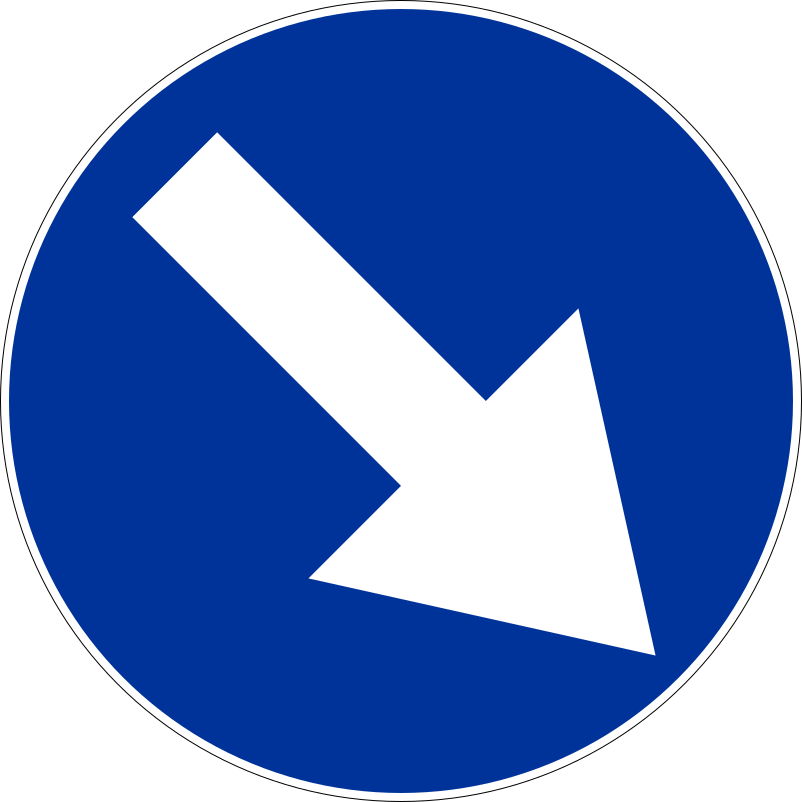
5. Hindernis links passieren
Dieses Verkehrszeichen zeigt an, dass der Verkehr ein Hindernis links passieren muss. Halten Sie sich links vom Hindernis und beachten Sie begleitende Verkehrszeichen oder Fahrbahnmarkierungen.
English • Traffic sign C-10 • Pass to the left of the sign. Signs C-1, Turn right before the sign; C-2, Turn right after the sign; C-3, Turn left before the sign; C-4, Turn left after the sign; C-5, Ahead only; C-6, Ahead or right only; C-7, Ahead or left only; C-8, Turn right or left; C-9, Pass to the right of the sign; C-10, Pass to the left of the sign; and C-11, Pass to either side of the sign, require drivers to follow the arrows. These signs may be installed in line with the road or carriageway centre line, or on the carriageway itself.
Polski • C-10 • nakaz jazdy z lewej strony znaku. Znaki: C-1 „nakaz jazdy w prawo przed znakiem”, C-2 „nakaz jazdy w prawo za znakiem”, C-3 „nakaz jazdy w lewo przed znakiem”, C-4 „nakaz jazdy w lewo za znakiem”, C-5 „nakaz jazdy prosto”, C-6 „nakaz jazdy prosto lub w prawo”, C-7 „nakaz jazdy prosto lub w lewo”, C-8 „nakaz jazdy w prawo lub w lewo”, C-9 „nakaz jazdy z prawej strony znaku”, C-10 „nakaz jazdy z lewej strony znaku”, C-11 „nakaz jazdy z prawej lub lewej strony znaku” zobowiązują kierującego do ruchu w kierunku zgodnym ze strzałkami; znaki te mogą być umieszczone na przedłużeniu osi drogi (jezdni) lub na samej jezdni.
Quellen
🔗 Commons.wikimedia.org
🔗 Eli.gov.pl • § 35 ust. 1
SVG source: Commons.wikimedia.org • Original SVG
odder • CC BY-SA 2.5 • Original revision 2025-09-26. Wikimedia original unmodified.
Artwork reviewed against the Polish official sign catalogue, Dz.U. 2019 poz. 2310: Eli.gov.pl • C-10, PDF page 43, with amendments 2021/433, 2021/2065, 2022/2372 and 2026/133 checked. Catalogue-equivalent illustration; intentional update from the previous PNG. This is an educational illustration, not a manufacturing specification.
6. Hindernis links oder rechts passieren
Dieses Verkehrszeichen zeigt an, dass der Verkehr ein Hindernis links oder rechts passieren muss. Benutzen Sie eine der zulässigen Seiten und beachten Sie die Straßenführung sowie begleitende Verkehrszeichen oder Markierungen.
English • Traffic sign C-11 • Pass to either the right or left of the sign. Signs C-1, Turn right before the sign; C-2, Turn right after the sign; C-3, Turn left before the sign; C-4, Turn left after the sign; C-5, Ahead only; C-6, Ahead or right only; C-7, Ahead or left only; C-8, Turn right or left; C-9, Pass to the right of the sign; C-10, Pass to the left of the sign; and C-11, Pass to either side of the sign, require drivers to follow the arrows. These signs may be installed in line with the road or carriageway centre line, or on the carriageway itself.
Polski • C-11 • nakaz jazdy z prawej lub lewej strony znaku. Znaki: C-1 „nakaz jazdy w prawo przed znakiem”, C-2 „nakaz jazdy w prawo za znakiem”, C-3 „nakaz jazdy w lewo przed znakiem”, C-4 „nakaz jazdy w lewo za znakiem”, C-5 „nakaz jazdy prosto”, C-6 „nakaz jazdy prosto lub w prawo”, C-7 „nakaz jazdy prosto lub w lewo”, C-8 „nakaz jazdy w prawo lub w lewo”, C-9 „nakaz jazdy z prawej strony znaku”, C-10 „nakaz jazdy z lewej strony znaku”, C-11 „nakaz jazdy z prawej lub lewej strony znaku” zobowiązują kierującego do ruchu w kierunku zgodnym ze strzałkami; znaki te mogą być umieszczone na przedłużeniu osi drogi (jezdni) lub na samej jezdni.
Quellen
🔗 Commons.wikimedia.org
🔗 Eli.gov.pl • § 35 ust. 1
SVG source: Commons.wikimedia.org • Original SVG
Paweł Grzywocz • Public domain • Original revision 2025-09-26. Wikimedia original unmodified.
Artwork reviewed against the Polish official sign catalogue, Dz.U. 2019 poz. 2310: Eli.gov.pl • C-11, PDF page 43, with amendments 2021/433, 2021/2065, 2022/2372 and 2026/133 checked. Catalogue-equivalent illustration; intentional update from the previous PNG. This is an educational illustration, not a manufacturing specification.
7. Hindernis rechts passieren
Dieses Verkehrszeichen zeigt an, dass der Verkehr ein Hindernis rechts passieren muss. Halten Sie sich rechts vom Hindernis und beachten Sie begleitende Verkehrszeichen oder Fahrbahnmarkierungen.
English • Traffic sign C-9 • Pass to the right of the sign. Signs C-1, Turn right before the sign; C-2, Turn right after the sign; C-3, Turn left before the sign; C-4, Turn left after the sign; C-5, Ahead only; C-6, Ahead or right only; C-7, Ahead or left only; C-8, Turn right or left; C-9, Pass to the right of the sign; C-10, Pass to the left of the sign; and C-11, Pass to either side of the sign, require drivers to follow the arrows. These signs may be installed in line with the road or carriageway centre line, or on the carriageway itself.
Polski • C-9 • nakaz jazdy z prawej strony znaku. Znaki: C-1 „nakaz jazdy w prawo przed znakiem”, C-2 „nakaz jazdy w prawo za znakiem”, C-3 „nakaz jazdy w lewo przed znakiem”, C-4 „nakaz jazdy w lewo za znakiem”, C-5 „nakaz jazdy prosto”, C-6 „nakaz jazdy prosto lub w prawo”, C-7 „nakaz jazdy prosto lub w lewo”, C-8 „nakaz jazdy w prawo lub w lewo”, C-9 „nakaz jazdy z prawej strony znaku”, C-10 „nakaz jazdy z lewej strony znaku”, C-11 „nakaz jazdy z prawej lub lewej strony znaku” zobowiązują kierującego do ruchu w kierunku zgodnym ze strzałkami; znaki te mogą być umieszczone na przedłużeniu osi drogi (jezdni) lub na samej jezdni.
Quellen
🔗 Commons.wikimedia.org
🔗 Eli.gov.pl • § 35 ust. 1
SVG source: Commons.wikimedia.org • Original SVG
odder • CC BY-SA 2.5 • Original revision 2025-09-26. Wikimedia original unmodified.
Artwork reviewed against the Polish official sign catalogue, Dz.U. 2019 poz. 2310: Eli.gov.pl • C-9, PDF page 43, with amendments 2021/433, 2021/2065, 2022/2372 and 2026/133 checked. Catalogue-equivalent illustration; intentional update from the previous PNG. This is an educational illustration, not a manufacturing specification.
8. Geradeausfahren oder Linksabbiegen vorgeschrieben
Dieses Verkehrszeichen zeigt an, dass der Verkehr geradeaus weiterfahren oder links abbiegen muss. Eine der angegebenen Richtungen muss gewählt werden; Rechtsabbiegen ist verboten.
English • Traffic sign C-7 • Ahead or left only. Signs C-1, Turn right before the sign; C-2, Turn right after the sign; C-3, Turn left before the sign; C-4, Turn left after the sign; C-5, Ahead only; C-6, Ahead or right only; C-7, Ahead or left only; C-8, Turn right or left; C-9, Pass to the right of the sign; C-10, Pass to the left of the sign; and C-11, Pass to either side of the sign, require drivers to follow the arrows. These signs may be installed in line with the road or carriageway centre line, or on the carriageway itself.
Polski • C-7 • nakaz jazdy prosto lub w lewo. Znaki: C-1 „nakaz jazdy w prawo przed znakiem”, C-2 „nakaz jazdy w prawo za znakiem”, C-3 „nakaz jazdy w lewo przed znakiem”, C-4 „nakaz jazdy w lewo za znakiem”, C-5 „nakaz jazdy prosto”, C-6 „nakaz jazdy prosto lub w prawo”, C-7 „nakaz jazdy prosto lub w lewo”, C-8 „nakaz jazdy w prawo lub w lewo”, C-9 „nakaz jazdy z prawej strony znaku”, C-10 „nakaz jazdy z lewej strony znaku”, C-11 „nakaz jazdy z prawej lub lewej strony znaku” zobowiązują kierującego do ruchu w kierunku zgodnym ze strzałkami; znaki te mogą być umieszczone na przedłużeniu osi drogi (jezdni) lub na samej jezdni.
Quellen
🔗 Commons.wikimedia.org
🔗 Eli.gov.pl • § 35 ust. 1
SVG source: Commons.wikimedia.org • Original SVG
Patrol110 • CC BY-SA 2.5 • Original revision 2025-09-26. Wikimedia original unmodified.
Artwork reviewed against the Polish official sign catalogue, Dz.U. 2019 poz. 2310: Eli.gov.pl • C-7, PDF page 43, with amendments 2021/433, 2021/2065, 2022/2372 and 2026/133 checked. Catalogue-equivalent illustration; intentional update from the previous PNG. This is an educational illustration, not a manufacturing specification.
9. Geradeausfahren oder Rechtsabbiegen vorgeschrieben
Dieses Verkehrszeichen zeigt an, dass der Verkehr geradeaus weiterfahren oder rechts abbiegen muss. Eine der angegebenen Richtungen muss gewählt werden; Linksabbiegen ist verboten.
English • Traffic sign C-6 • Ahead or right only. Signs C-1, Turn right before the sign; C-2, Turn right after the sign; C-3, Turn left before the sign; C-4, Turn left after the sign; C-5, Ahead only; C-6, Ahead or right only; C-7, Ahead or left only; C-8, Turn right or left; C-9, Pass to the right of the sign; C-10, Pass to the left of the sign; and C-11, Pass to either side of the sign, require drivers to follow the arrows. These signs may be installed in line with the road or carriageway centre line, or on the carriageway itself.
Polski • C-6 • nakaz jazdy prosto lub w prawo. Znaki: C-1 „nakaz jazdy w prawo przed znakiem”, C-2 „nakaz jazdy w prawo za znakiem”, C-3 „nakaz jazdy w lewo przed znakiem”, C-4 „nakaz jazdy w lewo za znakiem”, C-5 „nakaz jazdy prosto”, C-6 „nakaz jazdy prosto lub w prawo”, C-7 „nakaz jazdy prosto lub w lewo”, C-8 „nakaz jazdy w prawo lub w lewo”, C-9 „nakaz jazdy z prawej strony znaku”, C-10 „nakaz jazdy z lewej strony znaku”, C-11 „nakaz jazdy z prawej lub lewej strony znaku” zobowiązują kierującego do ruchu w kierunku zgodnym ze strzałkami; znaki te mogą być umieszczone na przedłużeniu osi drogi (jezdni) lub na samej jezdni.
Quellen
🔗 Commons.wikimedia.org
🔗 Eli.gov.pl • § 35 ust. 1
SVG source: Commons.wikimedia.org • Original SVG
odder • CC BY-SA 2.5 • Original revision 2025-09-26. Wikimedia original unmodified.
Artwork reviewed against the Polish official sign catalogue, Dz.U. 2019 poz. 2310: Eli.gov.pl • C-6, PDF page 43, with amendments 2021/433, 2021/2065, 2022/2372 and 2026/133 checked. Catalogue-equivalent illustration; intentional update from the previous PNG. This is an educational illustration, not a manufacturing specification.
10. Links fahren vorgeschrieben
Dieses Verkehrszeichen gibt eine vorgeschriebene Fahrtrichtung nach links an. Der Verkehr muss am Zeichen nach links fahren und darf weder geradeaus noch nach rechts weiterfahren.
English • Traffic sign C-3 • Turn left before the sign. Signs C-1, Turn right before the sign; C-2, Turn right after the sign; C-3, Turn left before the sign; C-4, Turn left after the sign; C-5, Ahead only; C-6, Ahead or right only; C-7, Ahead or left only; C-8, Turn right or left; C-9, Pass to the right of the sign; C-10, Pass to the left of the sign; and C-11, Pass to either side of the sign, require drivers to follow the arrows. These signs may be installed in line with the road or carriageway centre line, or on the carriageway itself.
Polski • C-3 • nakaz jazdy w lewo przed znakiem. Znaki: C-1 „nakaz jazdy w prawo przed znakiem”, C-2 „nakaz jazdy w prawo za znakiem”, C-3 „nakaz jazdy w lewo przed znakiem”, C-4 „nakaz jazdy w lewo za znakiem”, C-5 „nakaz jazdy prosto”, C-6 „nakaz jazdy prosto lub w prawo”, C-7 „nakaz jazdy prosto lub w lewo”, C-8 „nakaz jazdy w prawo lub w lewo”, C-9 „nakaz jazdy z prawej strony znaku”, C-10 „nakaz jazdy z lewej strony znaku”, C-11 „nakaz jazdy z prawej lub lewej strony znaku” zobowiązują kierującego do ruchu w kierunku zgodnym ze strzałkami; znaki te mogą być umieszczone na przedłużeniu osi drogi (jezdni) lub na samej jezdni.
Quellen
🔗 Commons.wikimedia.org
🔗 Eli.gov.pl • § 35 ust. 1
SVG source: Commons.wikimedia.org • Original SVG
odder • CC BY-SA 2.5 • Original revision 2025-09-26. Wikimedia original unmodified.
Artwork reviewed against the Polish official sign catalogue, Dz.U. 2019 poz. 2310: Eli.gov.pl • C-3, PDF page 43, with amendments 2021/433, 2021/2065, 2022/2372 and 2026/133 checked. Catalogue-equivalent illustration; intentional update from the previous PNG. This is an educational illustration, not a manufacturing specification.
11. Rechts fahren vorgeschrieben
Dieses Verkehrszeichen gibt eine vorgeschriebene Fahrtrichtung nach rechts an. Der Verkehr muss am Zeichen nach rechts fahren und darf weder geradeaus noch nach links weiterfahren.
English • Traffic sign C-1 • Turn right before the sign. Signs C-1, Turn right before the sign; C-2, Turn right after the sign; C-3, Turn left before the sign; C-4, Turn left after the sign; C-5, Ahead only; C-6, Ahead or right only; C-7, Ahead or left only; C-8, Turn right or left; C-9, Pass to the right of the sign; C-10, Pass to the left of the sign; and C-11, Pass to either side of the sign, require drivers to follow the arrows. These signs may be installed in line with the road or carriageway centre line, or on the carriageway itself.
Polski • C-1 • nakaz jazdy w prawo przed znakiem. Znaki: C-1 „nakaz jazdy w prawo przed znakiem”, C-2 „nakaz jazdy w prawo za znakiem”, C-3 „nakaz jazdy w lewo przed znakiem”, C-4 „nakaz jazdy w lewo za znakiem”, C-5 „nakaz jazdy prosto”, C-6 „nakaz jazdy prosto lub w prawo”, C-7 „nakaz jazdy prosto lub w lewo”, C-8 „nakaz jazdy w prawo lub w lewo”, C-9 „nakaz jazdy z prawej strony znaku”, C-10 „nakaz jazdy z lewej strony znaku”, C-11 „nakaz jazdy z prawej lub lewej strony znaku” zobowiązują kierującego do ruchu w kierunku zgodnym ze strzałkami; znaki te mogą być umieszczone na przedłużeniu osi drogi (jezdni) lub na samej jezdni.
Quellen
🔗 Commons.wikimedia.org
🔗 Eli.gov.pl • § 35 ust. 1
SVG source: Commons.wikimedia.org • Original SVG
odder • CC BY-SA 2.5 • Original revision 2025-09-26. Wikimedia original unmodified.
Artwork reviewed against the Polish official sign catalogue, Dz.U. 2019 poz. 2310: Eli.gov.pl • C-1, PDF page 43, with amendments 2021/433, 2021/2065, 2022/2372 and 2026/133 checked. Catalogue-equivalent illustration; intentional update from the previous PNG. This is an educational illustration, not a manufacturing specification.
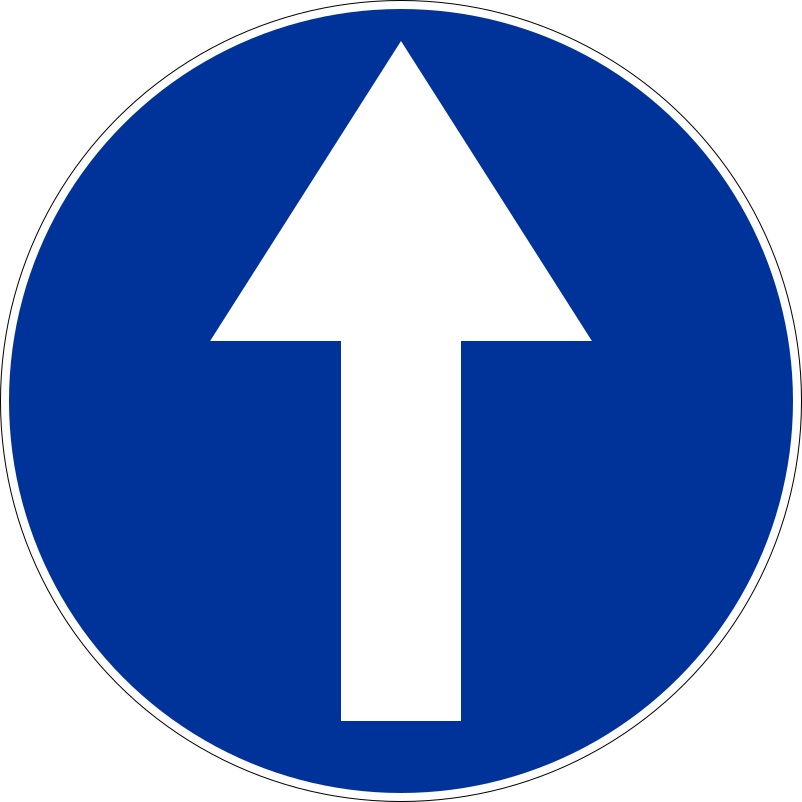
12. Geradeausfahren vorgeschrieben
Dieses Verkehrszeichen zeigt an, dass Geradeausfahren vorgeschrieben ist. Der Verkehr muss geradeaus weiterfahren und darf an der Stelle, für die das Zeichen gilt, weder links noch rechts abbiegen.
English • Traffic sign C-5 • Ahead only. Signs C-1, Turn right before the sign; C-2, Turn right after the sign; C-3, Turn left before the sign; C-4, Turn left after the sign; C-5, Ahead only; C-6, Ahead or right only; C-7, Ahead or left only; C-8, Turn right or left; C-9, Pass to the right of the sign; C-10, Pass to the left of the sign; and C-11, Pass to either side of the sign, require drivers to follow the arrows. These signs may be installed in line with the road or carriageway centre line, or on the carriageway itself.
Polski • C-5 • nakaz jazdy prosto. Znaki: C-1 „nakaz jazdy w prawo przed znakiem”, C-2 „nakaz jazdy w prawo za znakiem”, C-3 „nakaz jazdy w lewo przed znakiem”, C-4 „nakaz jazdy w lewo za znakiem”, C-5 „nakaz jazdy prosto”, C-6 „nakaz jazdy prosto lub w prawo”, C-7 „nakaz jazdy prosto lub w lewo”, C-8 „nakaz jazdy w prawo lub w lewo”, C-9 „nakaz jazdy z prawej strony znaku”, C-10 „nakaz jazdy z lewej strony znaku”, C-11 „nakaz jazdy z prawej lub lewej strony znaku” zobowiązują kierującego do ruchu w kierunku zgodnym ze strzałkami; znaki te mogą być umieszczone na przedłużeniu osi drogi (jezdni) lub na samej jezdni.
Quellen
🔗 Commons.wikimedia.org
🔗 Eli.gov.pl • § 35 ust. 1
SVG source: Commons.wikimedia.org • Original SVG
odder • CC BY-SA 2.5 • Original revision 2025-09-26. Wikimedia original unmodified.
Artwork reviewed against the Polish official sign catalogue, Dz.U. 2019 poz. 2310: Eli.gov.pl • C-5, PDF page 43, with amendments 2021/433, 2021/2065, 2022/2372 and 2026/133 checked. Catalogue-equivalent illustration; intentional update from the previous PNG. This is an educational illustration, not a manufacturing specification.
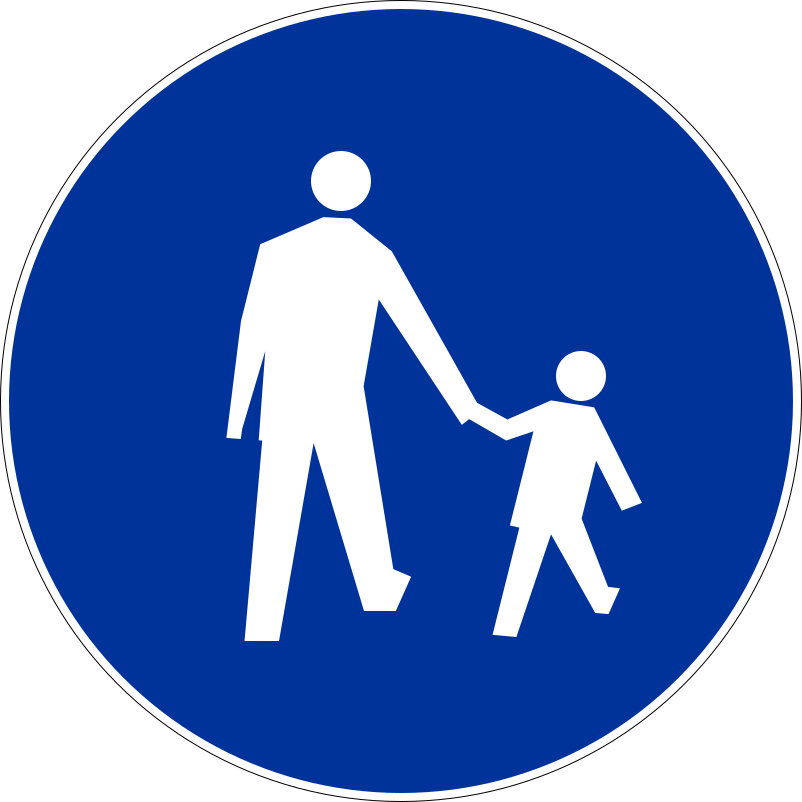
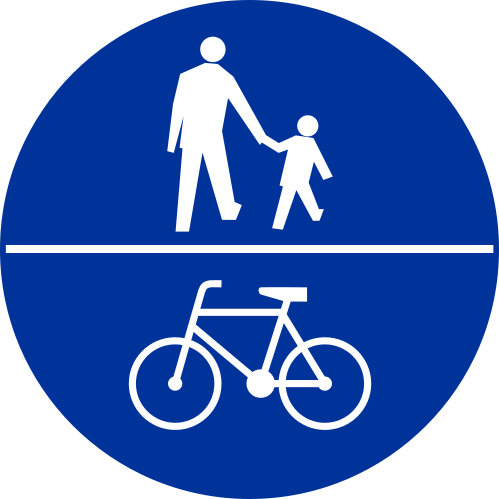
13. Vorgeschriebener Gehweg
Dieses Verkehrszeichen kennzeichnet den Beginn eines vorgeschriebenen Gehwegs. Fußgänger müssen den gekennzeichneten Weg benutzen; andere Verkehrsteilnehmer dürfen ihn nur benutzen, wenn dies durch Verkehrszeichen oder örtliche Regeln erlaubt ist.
English • Traffic sign C-16 • Pedestrian route. Sign C-16 identifies a road or part of it intended for pedestrians, who must use it. Under subsection 1a, the requirement applies until cancelled or until sign B-41, C-13 or D-40.
Polski • C-16 • droga dla pieszych. Znak C-16 „droga dla pieszych” oznacza drogę lub jej część przeznaczoną dla pieszych, którzy są obowiązani z niej korzystać. 1a. Nakaz wyrażony znakiem C-16 obowiązuje do odwołania albo do miejsca umieszczenia znaku B-41, C-13 albo D-40.
Quellen
🔗 Commons.wikimedia.org
🔗 Eli.gov.pl • § 39 ust. 1
SVG source: Commons.wikimedia.org • Original SVG
Paweł Grzywocz • Public domain • Original revision 2025-09-26. Wikimedia original unmodified.
Artwork reviewed against the Polish official sign catalogue, Dz.U. 2019 poz. 2310: Eli.gov.pl • C-16, PDF page 43, with amendments 2021/433, 2021/2065, 2022/2372 and 2026/133 checked. Catalogue-equivalent illustration; intentional update from the previous PNG. This is an educational illustration, not a manufacturing specification.
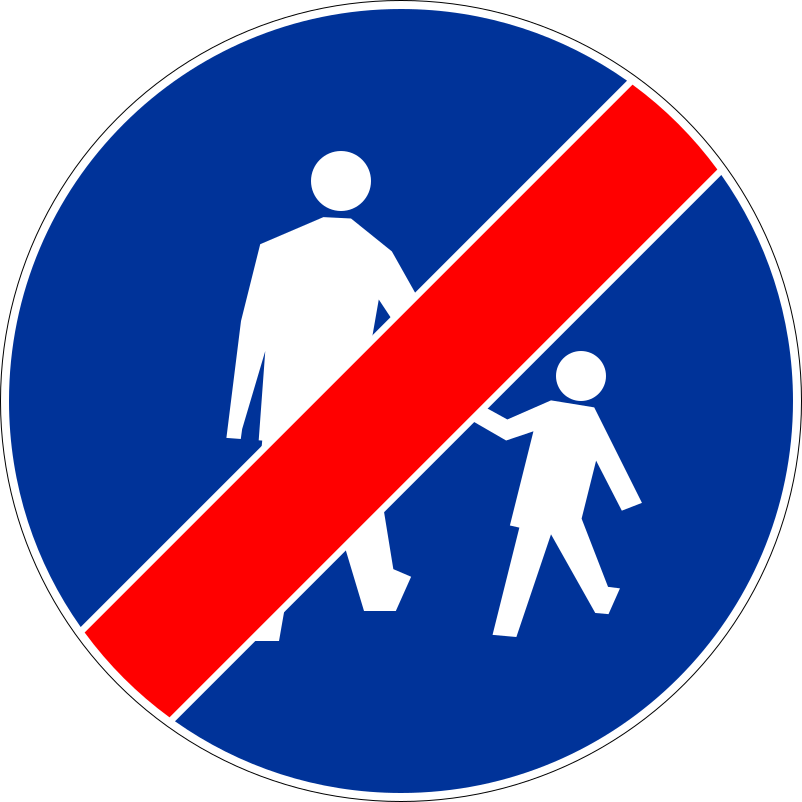
14. Ende des vorgeschriebenen Gehwegs
Dieses Verkehrszeichen kennzeichnet das Ende des vorgeschriebenen Gehwegs. Die Benutzungspflicht endet an dieser Stelle. Fußgänger müssen entsprechend dem anschließenden Weg- oder Straßenverlauf und den örtlich geltenden Regeln weitergehen.
English • Traffic sign C-16a • End of the pedestrian route. Sign C-16a marks the end of a road intended for pedestrians.
Polski • C-16a • koniec drogi dla pieszych. Znak C-16a „koniec drogi dla pieszych” oznacza koniec drogi przeznaczonej dla pieszych.
Quellen
🔗 Commons.wikimedia.org
🔗 Eli.gov.pl • § 39 ust. 2
SVG source: Commons.wikimedia.org • Original SVG
Paweł Grzywocz • Public domain • Original revision 2025-09-26. Wikimedia original unmodified.
Artwork reviewed against the Polish official sign catalogue, Dz.U. 2019 poz. 2310: Eli.gov.pl • C-16a, PDF page 43, with amendments 2021/433, 2021/2065, 2022/2372 and 2026/133 checked. Catalogue-equivalent illustration; intentional update from the previous PNG. This is an educational illustration, not a manufacturing specification.
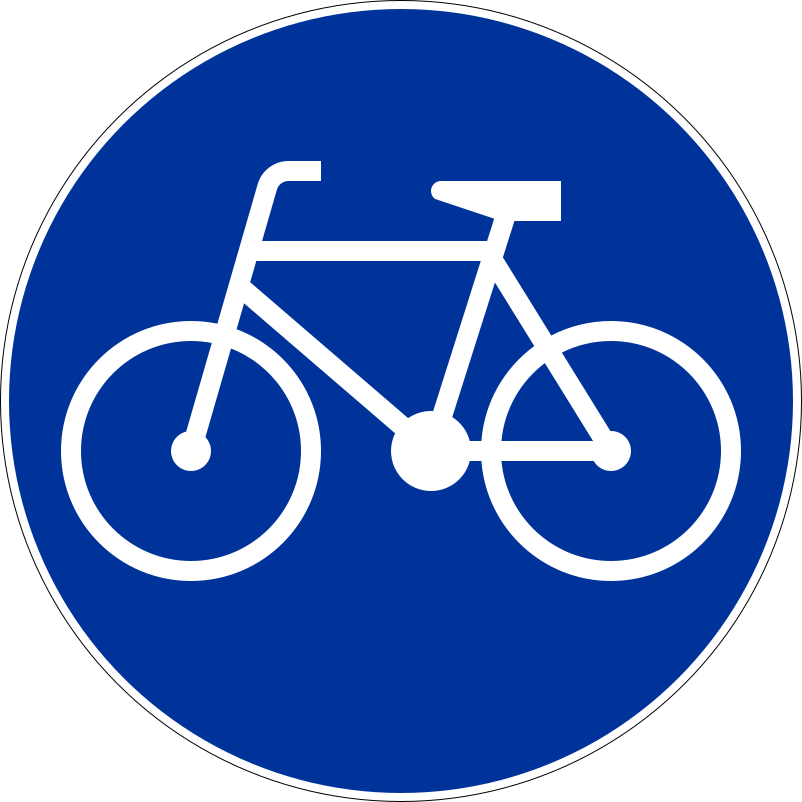
15. Vorgeschriebener Radweg
Dieses Verkehrszeichen kennzeichnet einen vorgeschriebenen Radweg. Radfahrer müssen den gekennzeichneten Weg benutzen. Andere Verkehrsteilnehmer dürfen ihn nur benutzen, wenn dies durch Verkehrszeichen oder örtliche Regeln erlaubt ist.
English • Traffic sign C-13 • Cycle route. Sign C-13 identifies a road intended for cyclists, who must use it if it serves the direction in which they are travelling or intend to turn.
Polski • C-13 • droga dla rowerów. Znak C-13 „droga dla rowerów” oznacza drogę przeznaczoną dla kierujących rowerami, którzy są obowiązani do korzystania z tej drogi, jeżeli jest ona wyznaczona dla kierunku, w którym oni poruszają się lub zamierzają skręcić.
Quellen
🔗 Commons.wikimedia.org
🔗 Eli.gov.pl • § 37 ust. 1
SVG source: Commons.wikimedia.org • Original SVG
Author not stated on source page • Public domain • Original revision 2025-09-26. Wikimedia original unmodified.
Artwork reviewed against the Polish official sign catalogue, Dz.U. 2019 poz. 2310: Eli.gov.pl • C-13, PDF page 43, with amendments 2021/433, 2021/2065, 2022/2372 and 2026/133 checked. Catalogue-equivalent illustration; intentional update from the previous PNG. This is an educational illustration, not a manufacturing specification.
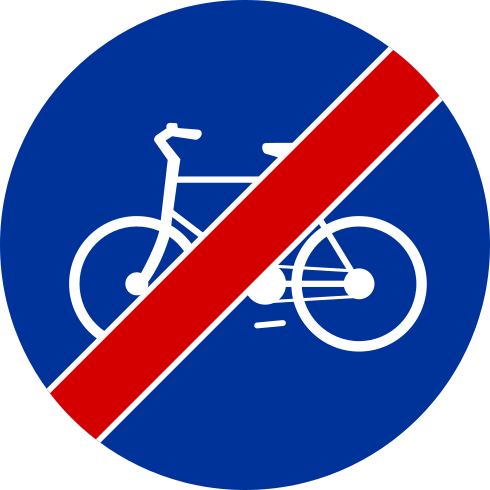
16. Ende des vorgeschriebenen Radwegs
Dieses Verkehrszeichen kennzeichnet das Ende des vorgeschriebenen Radwegs. Die Benutzungspflicht endet an dieser Stelle. Radfahrer müssen entsprechend dem Straßenverlauf, weiteren Verkehrszeichen und den örtlich geltenden Regeln weiterfahren.
English • Traffic sign C-13a • End of the cycle route. Sign C-13a marks the end of a road intended for cyclists.
Polski • C-13a • koniec drogi dla rowerów. Znak C-13a „koniec drogi dla rowerów” oznacza koniec drogi przeznaczonej dla kierujących rowerami.
Quellen
🔗 Commons.wikimedia.org
🔗 Eli.gov.pl • § 37 ust. 3
SVG source: Commons.wikimedia.org • Original SVG
Gigillo83 • Public domain • Original revision 2021-11-15. Wikimedia original unmodified.
Artwork reviewed against the Polish official sign catalogue, Dz.U. 2019 poz. 2310: Eli.gov.pl • C-13a, PDF page 43, with amendments 2021/433, 2021/2065, 2022/2372 and 2026/133 checked. Catalogue-equivalent illustration; intentional update from the previous PNG. This is an educational illustration, not a manufacturing specification.
17. Gemeinsamer Geh- und Radweg vorgeschrieben
Dieses Verkehrszeichen kennzeichnet einen vorgeschriebenen gemeinsamen Geh- und Radweg. Fußgänger und Radfahrer müssen denselben gekennzeichneten Weg benutzen und den Raum sicher gemeinsam nutzen. Dabei gelten die örtlichen Regeln.
English • Traffic sign C-13+C-16 • Cycle route and pedestrian route. The symbols of C-13 and C-16 on one sign, separated by a vertical line, indicate adjoining cycle and pedestrian routes on the respective sides shown. Cyclists must use the route if it serves the direction in which they are travelling or intend to turn.
Polski • C-13+C-16 • droga dla rowerów i droga dla pieszych. Umieszczone na jednej tarczy symbole znaków C-13 i C-16 oddzielone kreską pionową oznaczają drogę dla rowerów i drogę dla pieszych położone obok siebie, odpowiednio po stronach wskazanych na znaku. Kierujący rowerami są obowiązani do korzystania z tak oznakowanej drogi, jeżeli jest ona wyznaczona dla kierunku, w którym oni poruszają się lub zamierzają skręcić.
Quellen
🔗 Commons.wikimedia.org
🔗 Eli.gov.pl • § 40 ust. 2
SVG source: Pz • Public domain • Original revision 2012-04-16. Wikimedia original unmodified.
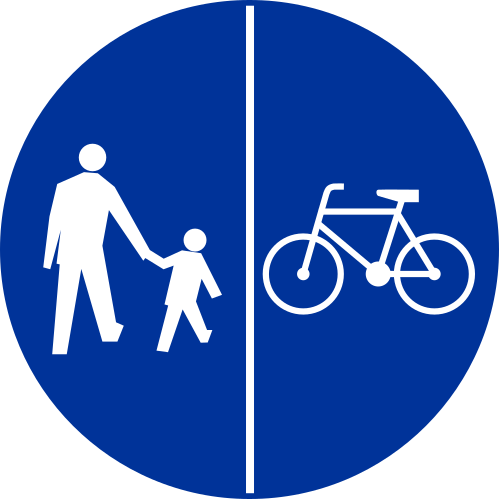
18. Getrennter Geh- und Radweg vorgeschrieben
Dieses Verkehrszeichen kennzeichnet einen vorgeschriebenen getrennten Geh- und Radweg. Fußgänger und Radfahrer müssen jeweils den für sie bestimmten Teil benutzen. Andere Verkehrsteilnehmer dürfen den Weg nur benutzen, wenn dies durch Verkehrszeichen oder örtliche Regeln erlaubt ist.
English • Traffic sign C-13+C-16 • Cycle route and pedestrian route. The symbols of C-13 and C-16 on one sign, separated by a vertical line, indicate adjoining cycle and pedestrian routes on the respective sides shown. Cyclists must use the route if it serves the direction in which they are travelling or intend to turn.
Polski • C-13+C-16 • droga dla rowerów i droga dla pieszych. Umieszczone na jednej tarczy symbole znaków C-13 i C-16 oddzielone kreską pionową oznaczają drogę dla rowerów i drogę dla pieszych położone obok siebie, odpowiednio po stronach wskazanych na znaku. Kierujący rowerami są obowiązani do korzystania z tak oznakowanej drogi, jeżeli jest ona wyznaczona dla kierunku, w którym oni poruszają się lub zamierzają skręcić.
Quellen
🔗 Commons.wikimedia.org
🔗 Eli.gov.pl • § 40 ust. 2
SVG source: Pz • Public domain • Original revision 2012-04-16. Wikimedia original unmodified.
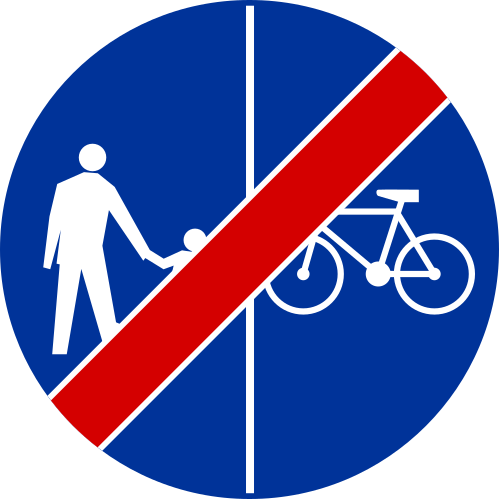
19. Ende des getrennten Geh- und Radwegs
Dieses Verkehrszeichen kennzeichnet das Ende des vorgeschriebenen getrennten Geh- und Radwegs. Die Pflicht zur Benutzung der getrennt gekennzeichneten Bereiche endet an dieser Stelle. Folgen Sie dem anschließenden Weg- oder Straßenverlauf und den örtlich geltenden Regeln.
English • Traffic sign C-13a+C-16a • End of the pedestrian and cycle route. Subsections 1 and 2, section 37(2) and (3), and section 39(1a) and (2) apply correspondingly to marking the end of a route for pedestrians and cyclists or adjoining separate cycle and pedestrian routes. Sign C-13/C-16 is also cancelled by C-13 or C-16.
Polski • C-13a+C-16a • koniec drogi dla pieszych i rowerów. Przepisy ust. 1 i 2, § 37 ust. 2 i 3 oraz § 39 ust. 1a i 2 stosuje się odpowiednio dla oznaczania końca drogi dla pieszych i kierujących rowerami oraz końca drogi dla rowerów i drogi dla pieszych położonych obok siebie, przy czym znak C-13/C-16 jest odwoływany również znakami C-13 albo C-16.
Quellen
🔗 Commons.wikimedia.org
🔗 Eli.gov.pl • § 40 ust. 3
SVG source: Gigillo83 • Public domain • Original revision 2013-02-16. Wikimedia original unmodified.
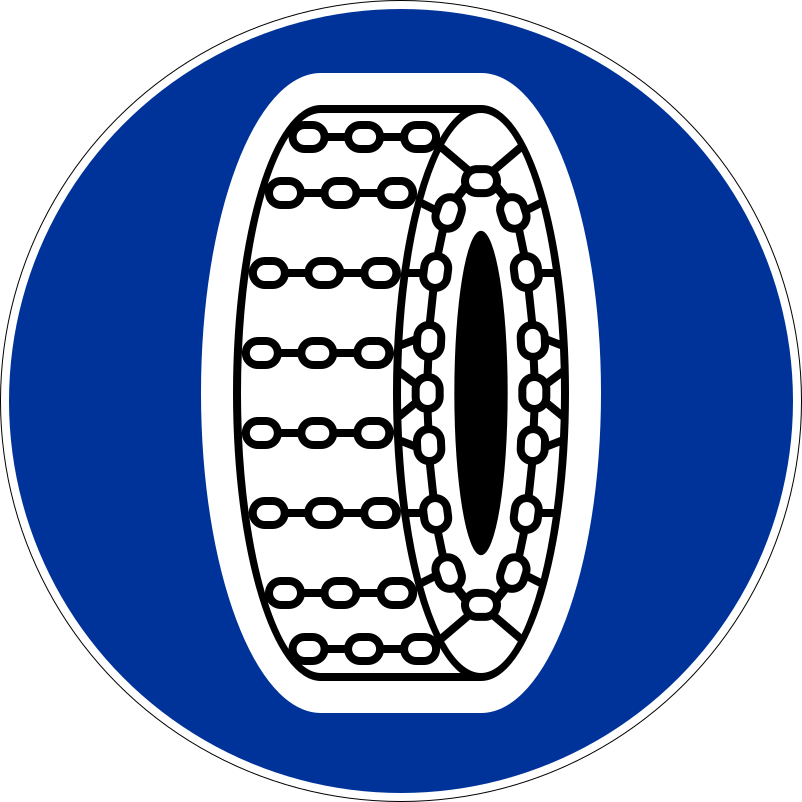
20. Schneeketten vorgeschrieben
Dieses Verkehrszeichen zeigt an, dass Schneeketten vorgeschrieben sind. Vom Zeichen erfasste Fahrzeuge müssen ab dieser Stelle nach den geltenden Regeln Schneeketten verwenden. Zusatzzeichen oder örtliche Anweisungen können die betroffenen Fahrzeuge, Räder oder Bedingungen näher bestimmen.
English • Traffic sign C-18 • Snow chains required. Sign C-18 requires drivers of motor vehicles on the road where it is installed to use snow chains on at least two driven wheels. A plate below it as referred to in section 23(2) means that the sign applies to the vehicles specified on that plate.
Polski • C-18 • nakaz używania łańcuchów przeciwpoślizgowych. Znak C-18 „nakaz używania łańcuchów przeciwpoślizgowych” oznacza, że na drodze, na której znak został umieszczony, kierujący pojazdem silnikowym jest obowiązany stosować łańcuchy przeciwpoślizgowe na co najmniej dwóch kołach napędowych; umieszczona pod znakiem tabliczka, o której mowa w § 23 ust. 2, oznacza, że znak dotyczy pojazdów określonych na tabliczce.
Quellen
🔗 Commons.wikimedia.org
🔗 Eli.gov.pl • § 42 ust. 1
SVG source: Commons.wikimedia.org • Original SVG
Harry-C • CC BY 3.0 • Original revision 2025-09-27. Wikimedia original unmodified.
Artwork reviewed against the Polish official sign catalogue, Dz.U. 2019 poz. 2310: Eli.gov.pl • C-18, PDF page 43, with amendments 2021/433, 2021/2065, 2022/2372 and 2026/133 checked. Catalogue-equivalent illustration; intentional update from the previous PNG. This is an educational illustration, not a manufacturing specification.
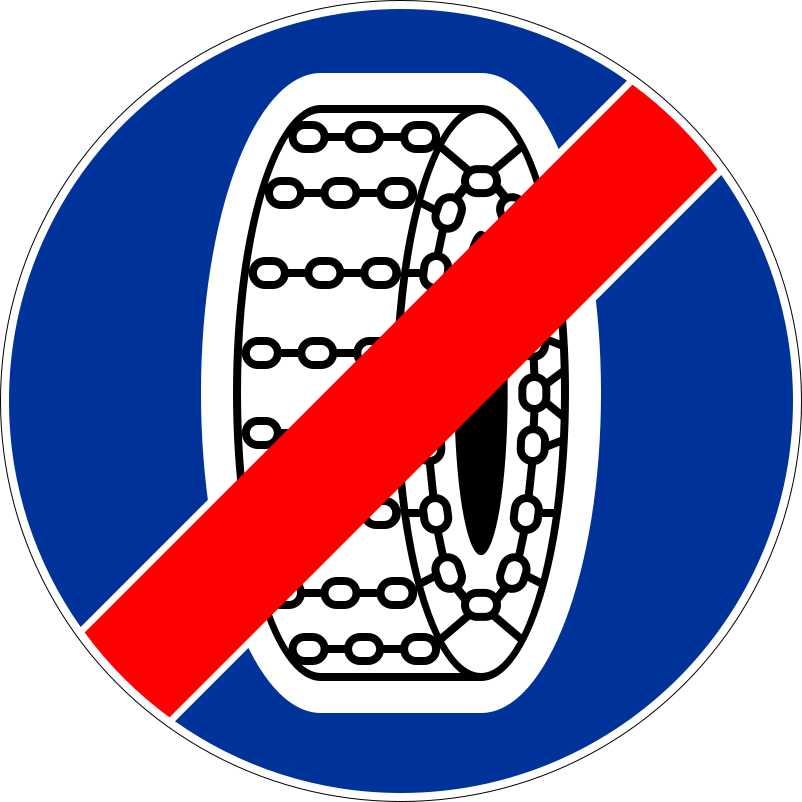
21. Ende der Schneekettenpflicht
Dieses Verkehrszeichen kennzeichnet das Ende der Schneekettenpflicht. Die durch das vorherige Schneekettenzeichen auferlegte Pflicht endet an dieser Stelle. Andere Winterausrüstungsvorschriften können nach örtlichen Regeln oder Straßenbedingungen weiterhin gelten.
English • Traffic sign C-19 • End of the snow-chain requirement. Sign C-19 marks the place where the requirement imposed by C-18 ends.
Polski • C-19 • koniec nakazu używania łańcuchów przeciwpoślizgowych. Znak C-19 „koniec nakazu używania łańcuchów przeciwpoślizgowych” oznacza miejsce, w którym nakaz określony znakiem C-18 przestaje obowiązywać.
Quellen
🔗 Commons.wikimedia.org
🔗 Eli.gov.pl • § 42 ust. 2
SVG source: Commons.wikimedia.org • Original SVG
Harry-C • CC BY 3.0 • Original revision 2025-09-27. Wikimedia original unmodified.
Artwork reviewed against the Polish official sign catalogue, Dz.U. 2019 poz. 2310: Eli.gov.pl • C-19, PDF page 43, with amendments 2021/433, 2021/2065, 2022/2372 and 2026/133 checked. Catalogue-equivalent illustration; intentional update from the previous PNG. This is an educational illustration, not a manufacturing specification.
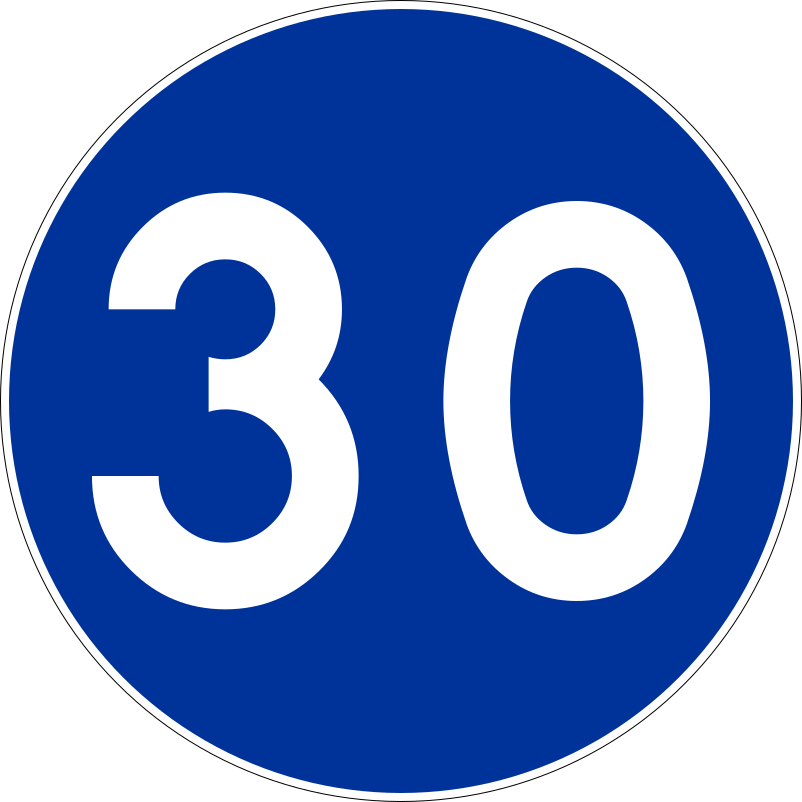
22. Beginn einer Mindestgeschwindigkeit
Dieses Verkehrszeichen kennzeichnet den Beginn einer Mindestgeschwindigkeit. Vom Zeichen erfasste Verkehrsteilnehmer müssen bei geeigneten Bedingungen mindestens mit der angegebenen Geschwindigkeit fahren. Langsameres Fahren kann wegen Verkehr, Wetter, Straßenverhältnissen oder aus einem anderen Sicherheitsgrund erforderlich sein.
English • Traffic sign C-14 • Minimum speed. Sign C-14 requires drivers, while observing speed limits under specific provisions, to travel at least at the speed shown in kilometres per hour, unless traffic conditions or safety require a lower speed.
Polski • C-14 • prędkość minimalna. Znak C-14 „prędkość minimalna” oznacza, że kierujący, przy zachowaniu ograniczeń prędkości wynikających z przepisów szczegółowych, jest obowiązany jechać z prędkością nie mniejszą niż określona na znaku liczbą kilometrów na godzinę, chyba że warunki ruchu lub jego bezpieczeństwo wymagają zmniejszenia prędkości.
Quellen
🔗 Commons.wikimedia.org
🔗 Eli.gov.pl • § 38 ust. 1
SVG source: Commons.wikimedia.org • Original SVG
Paweł Grzywocz • Public domain • Original revision 2025-09-26. Wikimedia original unmodified.
Artwork reviewed against the Polish official sign catalogue, Dz.U. 2019 poz. 2310: Eli.gov.pl • C-14, PDF page 43, with amendments 2021/433, 2021/2065, 2022/2372 and 2026/133 checked. Catalogue-equivalent illustration; intentional update from the previous PNG. This is an educational illustration, not a manufacturing specification.
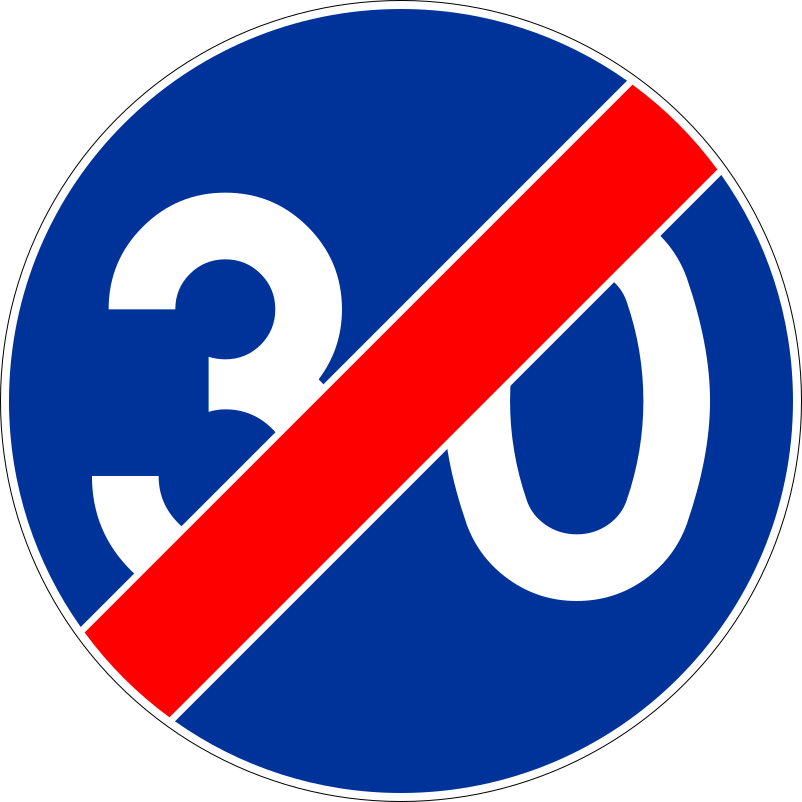
23. Ende der Mindestgeschwindigkeit
Dieses Verkehrszeichen kennzeichnet das Ende der Mindestgeschwindigkeit. Die zuvor angegebene Mindestgeschwindigkeit gilt ab dieser Stelle nicht mehr. Beachten Sie weiterhin andere Geschwindigkeitsvorgaben und die geltenden Verkehrsregeln.
English • Traffic sign C-15 • End of the minimum speed requirement. Sign C-15 marks the place where the minimum speed imposed by C-14 ceases to apply.
Polski • C-15 • koniec minimalnej prędkości. Znak C-15 „koniec minimalnej prędkości” oznacza miejsce, w którym prędkość minimalna określona znakiem C-14 przestaje obowiązywać.
Quellen
🔗 Commons.wikimedia.org
🔗 Eli.gov.pl • § 38 ust. 2
SVG source: Commons.wikimedia.org • Original SVG
Paweł Grzywocz • Public domain • Original revision 2025-09-26. Wikimedia original unmodified.
Artwork reviewed against the Polish official sign catalogue, Dz.U. 2019 poz. 2310: Eli.gov.pl • C-15, PDF page 43, with amendments 2021/433, 2021/2065, 2022/2372 and 2026/133 checked. Catalogue-equivalent illustration; intentional update from the previous PNG. This is an educational illustration, not a manufacturing specification.
