

SwitzerlandSwitzerland
 Traffic rules
 Switzerland
1. Switzerland
Switzerland is a landlocked, mountainous country in Central Europe, bordered by France, Germany, Austria, Liechtenstein and Italy. Traffic drives on the right. Alpine geography is a defining feature of driving: major routes cross the mountains through long tunnels and high passes, while some mountain roads are steep, narrow or affected by seasonal snow. Switzerland has four national languages—German, French, Italian and Romansh—and written road information generally reflects the language of the region; bilingual place names are also used in some areas.
Vehicles up to 3.5 tonnes generally need an annual motorway vignette on designated motorways and expressways, available either as a windscreen sticker or an electronic vignette; unlike many neighbouring systems, Switzerland offers no short-term vignette. Winter tyres are not compulsory under a fixed nationwide seasonal rule, but drivers must remain in control of their vehicle and can face liability if unsuitable equipment contributes to an incident. Daytime lights are compulsory, while motorway congestion brings two particularly important rules: drivers must form an emergency corridor and use zipper merging where lanes end.
AI-generated by Rijbewijs-online.be • WCIT • CC BY-SA
What is the alcohol limit for driving in Switzerland?
Driving is prohibited from 0.5‰ blood alcohol. Specified professional-driver categories, probationary and learner drivers, driving instructors and accompanying drivers are subject to an effectively zero-alcohol rule, with a statutory threshold of 0.1‰. Do not treat either threshold as a safe drinking target.
🔗 ch.ch • Swiss Confederation ch.ch, alcohol thresholds and zero-alcohol driver categories
🔗 europa.eu • Your Europe / national authorities, Switzerland road rules, Alcohol limits
What speed limits apply to passenger cars in Switzerland?
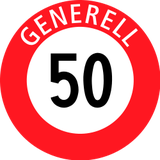
Built-up areas: The general maximum speed in built-up areas is 50 km/h, unless signs establish another limit.
Outside built-up areas: The general maximum on main and secondary roads outside built-up areas is 80 km/h, unless another limit is signed.
Expressways: The general maximum on an Autostrasse is 100 km/h, unless signs indicate a lower limit.
Motorways: The general maximum on a Swiss motorway is 120 km/h, unless a lower limit is indicated.
What are the seat-belt and child-restraint rules in Switzerland?
Drivers and passengers must normally use the seat belts provided, subject to limited statutory exemptions.
Children under 12 and shorter than 150 cm must normally use an approved child restraint suited to their size and weight. Once either their 12th birthday or a height of 150 cm is reached, the fitted seat belt is sufficient under the main rule.
Fit the restraint according to the child-seat and vehicle instructions. If a rear-facing child seat is used on the front passenger seat, the frontal airbag must be deactivated. The Swiss accident-prevention authority recommends installing child seats on the rear seats.
🔗 ch.ch • Official national authority, claim-specific guidance
🔗 bfu.ch • Swiss Council for Accident Prevention, child restraints and front-seat airbags
Can you use a mobile phone while driving in Switzerland?
A driver must remain fully attentive and in control of the vehicle and must not hold or operate a phone in a way that interferes with driving. Hands-free use does not remove the obligation to avoid distraction.
🔗 europa.eu • Your Europe / national authorities, Switzerland road rules, Mobile telephone
What safety equipment must a car carry in Switzerland?
Carry a warning triangle. The official road-safety information for Switzerland lists it as required car safety equipment.
When must children use a child seat in Switzerland?
Children under 12 who are shorter than 150 cm must use an appropriate child seat. Once either threshold is reached, the ordinary seat-belt requirement applies. Use an approved seat that fits the child and the vehicle.
Are motorcycle helmets compulsory in Switzerland?
Yes. Riders and passengers on ordinary motorcycles must wear a protective helmet complying with UN ECE Regulation 22. Wear and fasten it correctly.
🔗 europa.eu • Your Europe / national authorities, Switzerland road rules

