


Traffic lightsIndonesia
 Traffic rules
 Indonesia
14. Traffic lights
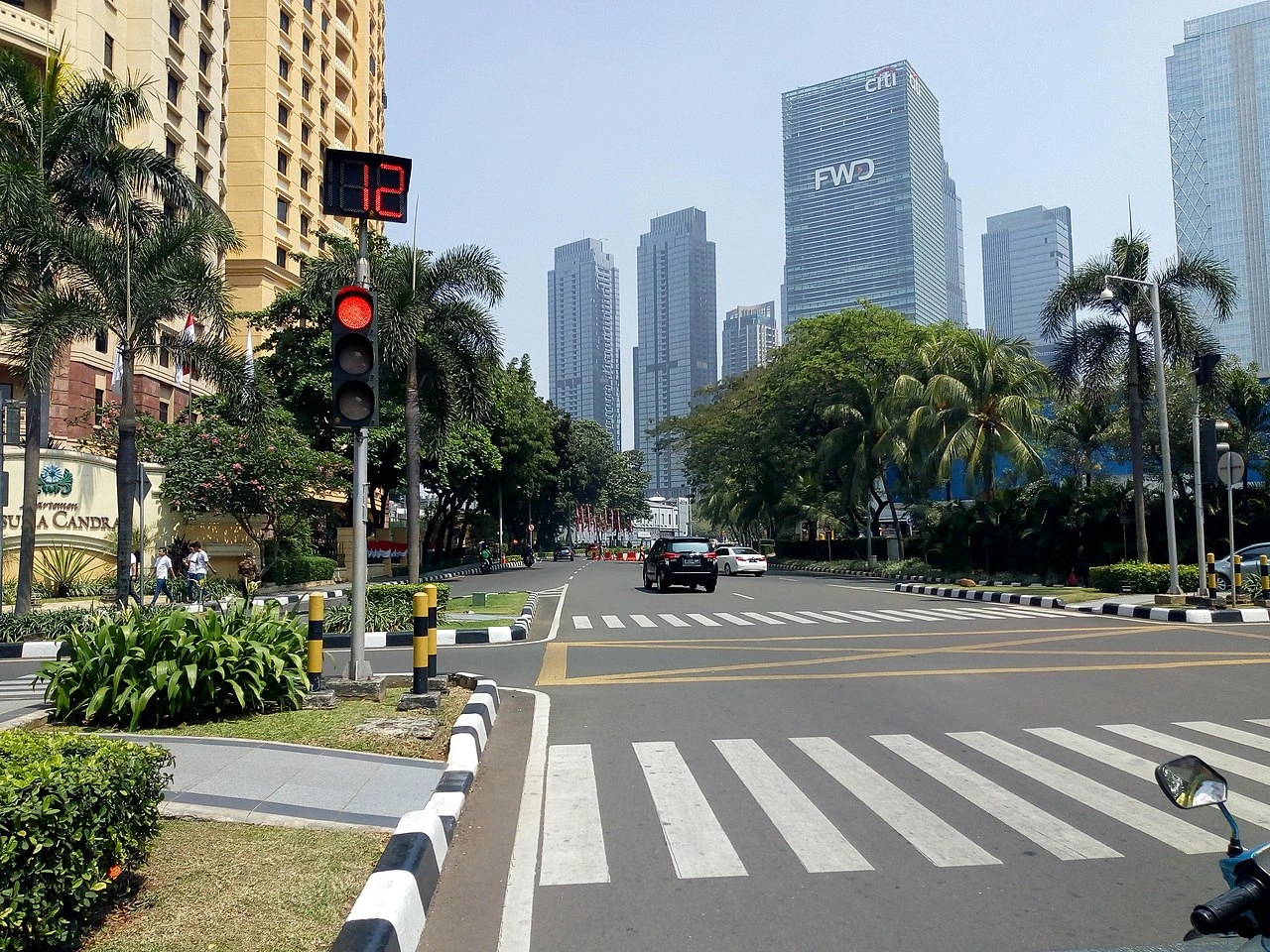
Traffic lights use coloured lights, arrows or symbols to regulate when road users may proceed, must prepare to stop or must remain stopped. Separate signals may apply to particular directions, lanes, pedestrians, cyclists or public-transport vehicles.
A green light permits movement only when the route is clear and the movement is otherwise legal. Road users must still follow priority rules, turning restrictions, lane markings and instructions from authorised traffic controllers.
Wikimedia.org • Rantemario • CC BY-SA
What must a driver do at red, amber and green signals in Indonesia?
Red requires stopping before the stop line. Amber after green warns that red is coming and tells drivers to prepare to stop; amber together with red warns that green is coming and tells drivers to prepare to move. Green permits movement, subject to the other applicable road rules.
May you turn at a red traffic light in Indonesia?
Do not turn left directly through a signal-controlled junction unless a road sign or traffic signal authorises it. Law 22/2009, article 112(3), specifically rejects a general left-turn-without-waiting rule. Follow the actual permitted direction.
🔗 dinhub.purworejokab.go.id • Law 22/2009, article 112(3), official transport-department explanation
Can a green light remove the need to give way to pedestrians in Indonesia?
No. A green light does not remove the duty to protect pedestrians. Indonesia’s Road Traffic and Transport Act requires drivers to prioritise pedestrian and cyclist safety, obey traffic controls, and respect pedestrians’ priority at crossing places. Check the crossing before proceeding.
🔗 peraturan.bpk.go.id • Indonesian Government, Road Traffic and Transport Act 22/2009


