


Speed bumpNorway
 Traffic rules
 Norway
6. Speed bump
A speed bump is a raised traffic-calming device placed across all or part of a road to make drivers reduce their speed. It is commonly used near homes, schools, crossings, parking areas and other places where low vehicle speeds are important.
Speed bumps vary in shape, height and legal status. Drivers should approach them at a low, controlled speed and follow any warning signs or speed limits that apply.
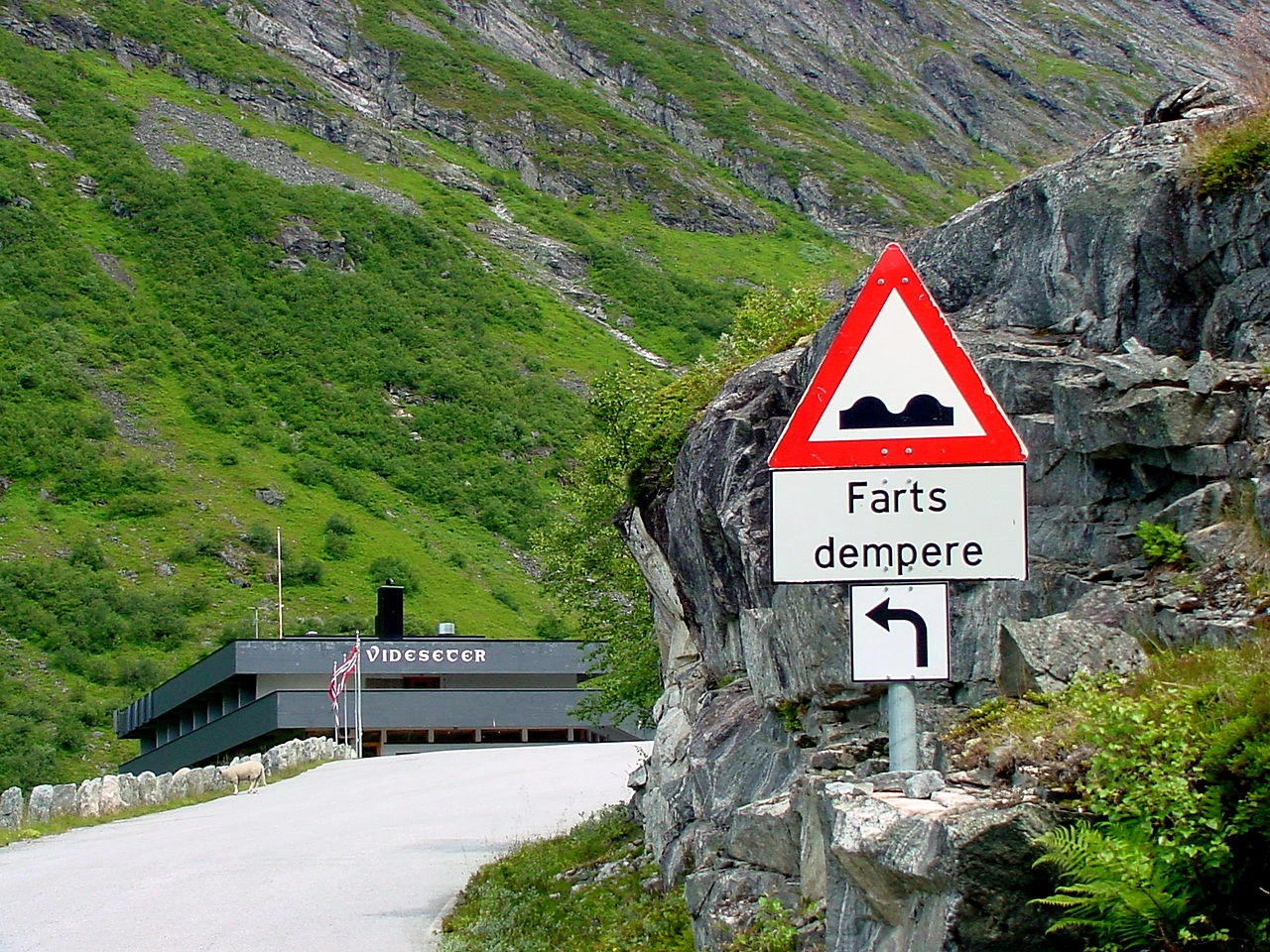
Wikimedia.org • TravelingOtter • CC BY
What is the purpose of a speed bump?
A speed bump is intended to physically reduce vehicle speeds. It encourages drivers to slow down in places where pedestrians, cyclists, children or local traffic may be present.
How can you recognise a speed bump?
A speed bump is a raised section extending across all or part of the road. It may be marked with contrasting paint, road markings or warning signs to make it more visible.
Is a speed bump the same as a speed table?
No. A speed bump or speed hump normally has a rounded profile. A speed table has ramps leading to a longer, flat raised section that may contain an intersection or pedestrian crossing.
Is a speed cushion the same as a speed bump?
No. A speed cushion is a narrower raised device that does not cover the full width of a traffic lane. Its design may allow buses and emergency vehicles to pass with less disturbance while still slowing smaller vehicles.
Is there a universal speed limit over a speed bump?
No. The legal speed depends on the country, traffic signs and road type. Even when no special limit applies, drivers must cross the device at a speed that is safe for the road, vehicle and passengers.
How should you approach a speed bump?
Check surrounding traffic, reduce your speed smoothly and approach in a straight line where possible. Avoid sudden braking immediately before the bump.
Should you brake while crossing a speed bump?
Most of the necessary braking should be completed before reaching the raised surface. Cross at a steady, low speed and avoid harsh braking or acceleration while the wheels are on the device.
Should you drive across a speed bump at an angle?
Normally not. Cross in the normal direction of the traffic lane unless the road layout requires otherwise. Driving diagonally may place the vehicle in the path of approaching or overtaking traffic.
May motorcycles and bicycles use a speed bump?
Yes. Riders should reduce speed, keep the vehicle stable and cross as directly as possible. Painted or wet raised surfaces may provide less grip.
Do pedestrians have priority at a speed bump?
Not automatically. A speed bump does not by itself create a pedestrian crossing. Pedestrian priority depends on crossings, traffic signals, signs and local law.
Does a speed bump change priority at an intersection?
No. The presence of a raised surface does not normally change the priority rules. Drivers must continue to follow traffic signs, signals and the ordinary intersection rules.
May you overtake on a speed bump?
Overtaking may be restricted by local law or signs. Even where it is not expressly prohibited, drivers should avoid overtaking when the raised surface, limited space or nearby vulnerable road users make the manoeuvre unsafe.
May you stop or park on a speed bump?
This depends on local law. Stopping or parking may be prohibited because the vehicle could obstruct visibility, traffic flow or the purpose of the traffic-calming device.
Can a speed bump damage a vehicle?
A correctly designed speed bump should be crossed safely at an appropriate speed. Crossing too quickly may damage tyres, wheels, suspension, bodywork or cargo and may cause passengers discomfort.
Does the road speed limit change after a speed bump?
Not necessarily. A special limit may apply only to the raised device, while a signed speed restriction or speed zone may continue beyond it. Drivers must follow the applicable signs and local rules.
Why do buses and emergency vehicles sometimes avoid speed bumps?
Raised devices can affect passenger comfort, emergency response and large vehicles. Some roads therefore use speed tables, cushions or other traffic-calming measures designed to reduce these effects.


