


RockfallNew Zealand
 Traffic rules
 New Zealand
1. Rockfall
A rockfall warning indicates a road section where rocks or stones may fall from a cliff, cutting or steep slope, or where fallen material may already be present on the road. The danger may affect the full carriageway and can appear suddenly.
Drivers should reduce speed, scan the road and slopes ahead, increase their following distance and remain prepared to stop. They should avoid unnecessary stopping in the exposed section and never attempt to move unstable rocks themselves.
Where might falling rocks be a hazard on roads in New Zealand?
Pay extra attention around mountain passes, steep valleys and coastal cliff roads. After heavy rain, freeze–thaw cycles or work on a steep slope, the hazard may increase depending on local conditions.
🔗 nzta.govt.nz • New Zealand, NZTA official Road Code — rockfall
Does a falling-rocks warning sign in New Zealand impose a speed limit?
A falling-rocks sign is a hazard warning, not normally a numerical speed-limit sign. Follow any separate speed or closure signs, slow down to match visibility and conditions, and watch for material already on the road.
🔗 nzta.govt.nz • New Zealand, NZTA official Road Code — rockfall
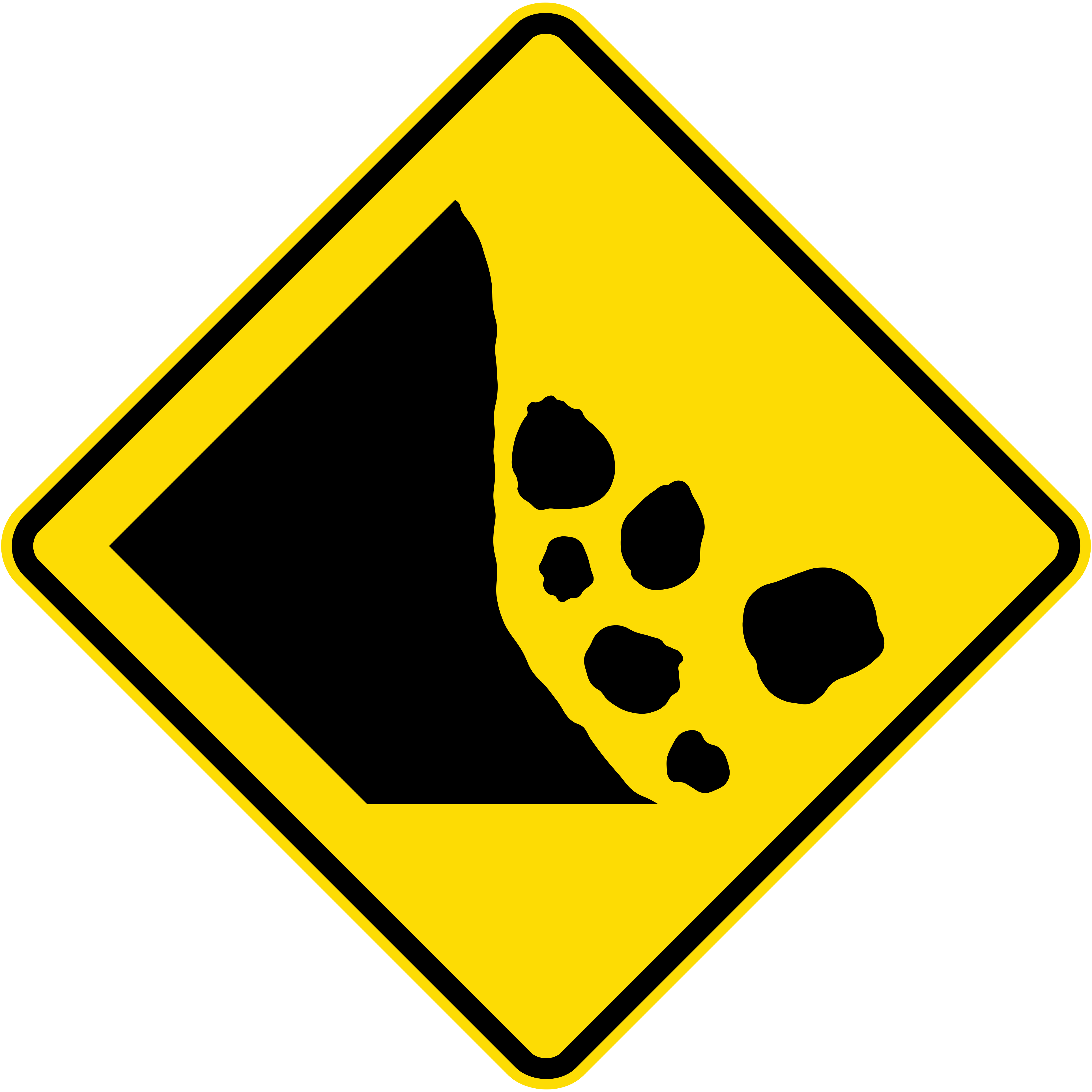 Warning for falling rocks.
English • W14-6 • Slips or falling debris. Slips, falling rocks or other debris may affect the road ahead. Watch for material on the carriageway.
Sources
🔗 Commons.wikimedia.org
🔗 Nzta.govt.nz • NZTA sign specifications • W14-6
Image via Commons.wikimedia.org
New Zealand Transport Agency • NZTA-Sign-Spec • Source revision 2021-04-15. Wikimedia original unmodified.
What should you do if rocks are blocking the road in New Zealand?
Slow or stop in a safe place away from the exposed slope if possible. Do not drive over unstable debris or stop beneath a cliff unnecessarily. Follow any closure or traffic-control instructions and report a dangerous obstruction through the appropriate road authority or emergency channel.
🔗 nzta.govt.nz • New Zealand, NZTA official Road Code — rockfall

