
Traffic rulesNew Zealand
Learn the traffic rules of New Zealand with lots of pictures, clear traffic signs and interactive quizzes. Simple, visual and easy to follow.


The driver-licensing system in New Zealand
Who issues driver licences in New Zealand?
The NZ Transport Agency Waka Kotahi (NZTA) administers driver licensing, testing standards, renewals, endorsements and driver records.
Where are licence applications completed?
Applications are completed through authorised NZTA driver-licensing agents and, for supported services, through NZTA online systems.
Who conducts practical driving tests?
Authorised testing officers conduct practical tests on behalf of NZTA.
Is a New Zealand licence valid throughout the country?
Yes. A valid licence is recognised nationwide, subject to its classes, endorsements, conditions and current legal status.
What is the graduated driver-licensing system?
It is the staged route from a learner licence to a restricted licence and then to a full licence.
What is the Official New Zealand Road Code?
It contains the road rules and safe-driving knowledge used for learner preparation.
What is Drive?
Drive.govt.nz is the official free learning platform for learner, restricted and full licence preparation.
Can licence details be confirmed officially?
Yes. NZTA can provide a certificate of particulars and driving-history information.
Is a digital driver licence generally available?
Drivers should follow current NZTA instructions and carry the official physical licence where required.
Do driving-school prices differ?
Yes. NZTA fees are nationally set, while professional lessons, vehicle hire and course prices vary.
Eligibility, identity and medical fitness
What is the minimum age for a Class 1 learner licence?
The minimum age is 16 years.
Where is the learner application made?
At an authorised driver-licensing agent.
What identity evidence is required?
The applicant must provide acceptable evidence of identity and complete the photograph and signature requirements.
Is an eyesight check required?
Yes. The agent conducts an eyesight screening unless an acceptable eyesight certificate is provided.
Must medical conditions be disclosed?
Yes. Conditions that may affect safe driving must be declared.
Is a full medical certificate required for every learner?
No. It is required when health information or the application procedure makes medical assessment necessary.
Who must commonly provide a medical certificate?
Drivers with relevant health conditions, heavy-class applicants, specified endorsement applicants and drivers aged 75 or older.
Can corrective lenses be required?
Yes. A licence condition can require glasses or contact lenses.
Can a licence require an adapted vehicle?
Yes. Conditions can specify hand controls, an automatic transmission or another adaptation.
Does disability automatically prevent licensing?
No. Fitness is assessed individually and an adapted vehicle or practical assessment may be used.
Can later medical unfitness affect an existing licence?
Yes. NZTA can impose conditions, suspend or revoke the licence.
Can a disqualified person apply?
Not until the disqualification or suspension conditions permit licensing again.
The learner licence and supervision conditions
Must the applicant pass a theory test?
Yes. The learner licence is issued only after the Class 1 theory test is passed.
Does a learner licence allow independent driving?
No. A supervisor must sit beside the learner whenever the learner drives.
Who can supervise a Class 1 learner?
A supervisor must hold a current full New Zealand Class 1 licence and have held that full class for at least two years.
Where must the supervisor sit?
In the front passenger seat beside the learner.
Must L plates be displayed?
Yes. L plates must be displayed clearly at the front and rear.
Can a learner carry passengers?
Yes, if the supervisor agrees and every passenger is carried lawfully.
Can a learner drive at night?
Yes, provided an eligible supervisor is present.
Can a learner drive on motorways?
Yes, with a qualified supervisor and when sufficiently prepared.
Can a learner practise in a family vehicle?
Yes, with the owner’s permission, proper insurance, registration and a qualified supervisor.
Can a learner use a rental vehicle?
Only if the rental agreement and insurer permit learner driving.
Must the learner carry the licence?
Yes. The current licence must be carried and produced when required.
Does passing theory create unrestricted driving entitlement?
No. It creates only the learner stage and its conditions.
The Class 1 theory test
How is the learner theory test delivered?
It is a computer-based multi-choice examination at a licensing agent.
How many questions are in the test?
There are 35 questions.
How many correct answers are required?
At least 32 correct answers.
What topics are tested?
Road rules, signs, safe driving, licence conditions, hazards and driver responsibilities.
What should the candidate study?
The current Official New Zealand Road Code and official practice resources.
Can language or reading assistance be requested?
Approved assistance and language-support arrangements may be available through the licensing agent.
What happens after failure?
The applicant can book and pay for another attempt under the current agent procedure.
Is there a lifetime attempt limit?
No general lifetime limit applies, but each sitting must satisfy current booking and fee requirements.
What happens immediately after passing?
The learner licence is issued once every application requirement is complete.
Can examination fraud invalidate the application?
Yes. Impersonation or dishonest assistance can cause refusal, cancellation and prosecution.
The restricted licence test and conditions
What is the minimum age for a restricted licence?
The applicant must be at least 16 years and 6 months.
How long must the learner licence be held?
At least six months.
Who provides the restricted-test vehicle?
The applicant must provide a suitable, registered, warranted and insured vehicle.
How long does the restricted test take?
Approximately 60 minutes, including preparation and feedback.
What does the test assess?
Observation, gap selection, speed, road position, hazard response, vehicle control and safe independent driving.
Can one critical error cause failure?
Yes. Dangerous actions, intervention or serious traffic-rule breaches can result in failure.
Can a restricted driver normally drive alone?
Yes, during permitted hours and without prohibited passengers.
What night restriction applies?
Between 10 pm and 5 am, a supervisor must sit in the front passenger seat.
Can a restricted driver carry ordinary passengers without a supervisor?
Generally no, except for the statutory passenger exemptions.
Can passengers be carried with a supervisor?
Yes, when the qualified supervisor sits in the front passenger seat.
Can restricted drivers use motorways?
Yes.
What happens after breaching a restricted condition?
The driver can receive a fine and demerit points, and insurance consequences may follow.
The full licence and upcoming system changes
What minimum age applies for the current full licence without an approved course?
Normally 18 years.
How long must a driver under 25 hold the restricted licence?
Normally 18 months.
How can an under-25 driver shorten that period?
An approved advanced driving course can reduce it to 12 months.
How long must a driver aged 25 or older hold the restricted licence?
Normally six months.
How can a driver aged 25 or older shorten that period?
An approved advanced driving course can reduce it to three months.
What test is currently required for the full licence?
The Class 1 full licence practical driving test.
What does the full test assess?
Higher-level hazard detection, response, planning, observation and safe independent driving.
When does the revised car-licensing system begin?
On 25 January 2027.
Does the current system remain applicable on 4 August 2026?
Yes.
What happens to the restricted holding period under the new system?
It generally becomes 12 months, with transitional rules based on age, issue date and driving record.
Will the current full practical test continue unchanged?
No. The new system changes progression to the full licence.
Where can transition eligibility be checked?
On NZTA’s official moving-to-the-new-car-licence-system page.
Licence classes and endorsements
What does Class 1 cover?
Cars and other light vehicles with a gross laden weight of no more than 6,000 kg.
What does Class 2 cover?
Medium rigid vehicles.
What does Class 3 cover?
Medium combination vehicles.
What does Class 4 cover?
Heavy rigid vehicles.
What does Class 5 cover?
Heavy combination vehicles.
What does Class 6 cover?
Motorcycles.
What is an F endorsement?
It authorises operation of a forklift on a road when held with the appropriate licence class.
What are R, T and W endorsements?
They relate to rollers, tractors and special-type wheeled vehicles operated on roads.
What is a P endorsement?
It authorises qualifying passenger-service driving.
What is a V endorsement?
It authorises qualifying vehicle-recovery service driving.
What is an I endorsement?
It authorises paid driving instruction for the specified class.
Does an endorsement replace the underlying licence class?
No. The correct class and endorsement are both required.
Heavy vehicles and professional driving
What must be held before applying for a Class 2 learner licence?
A current full Class 1 licence held for at least six months.
Can a heavy full licence be obtained through an approved course?
Yes. Approved courses can replace the practical test route for specified heavy classes.
Are medical certificates required for heavy classes?
Yes, unless an acceptable recent certificate is already held by NZTA.
How long are heavy-class medical certificates commonly accepted?
Normally within the five-year period specified by NZTA.
What experience is required for a P endorsement?
The applicant must normally have held a full New Zealand Class 1 licence for at least two years.
Does a P endorsement require a medical certificate?
Yes, unless one has been provided within the accepted period.
Are fit-and-proper-person checks used?
Yes. Passenger, recovery, instructor and testing endorsements involve suitability checks.
Can passenger-service work require more than the endorsement?
Yes. Operator, vehicle, employment and service requirements can also apply.
Can vocational entitlements be suspended independently?
Yes. Serious misconduct or failure to remain fit and proper can affect endorsements.
Do heavy and passenger licences have stricter health standards?
Yes.
Validity, renewal and senior drivers
How long are most New Zealand driver licences valid?
Most are valid for 10 years.
What happens when renewing from age 64 and a half?
The new licence normally expires on the holder’s seventy-fifth birthday.
When must senior drivers renew?
At age 75, again at 80, and every two years after that.
Is a medical certificate required from age 75?
Yes.
Can the doctor require an on-road safety test?
Yes.
Can licence conditions be imposed on a senior driver?
Yes. Conditions can limit driving by time, area, vehicle or another safety factor.
Can a senior licence be renewed before expiry?
Yes, normally up to six months before expiry.
What happens after loss, theft or damage?
The driver applies for a replacement through an authorised licensing agent.
Does a replacement create a new 10-year term?
Not necessarily. It normally follows the existing licence record unless renewal is completed.
Can a replacement restore a suspended licence?
No.
Overseas licences, conversion and International Driving Permits
How long may a visitor currently use an overseas car licence?
On 4 August 2026, up to 18 months from the last arrival in New Zealand.
What changes on 1 November 2026?
The ordinary overseas car-licence period reduces to 12 months.
How long may an overseas motorcycle or heavy licence normally be used?
Up to 12 months from the last arrival.
What if the overseas licence is not in English?
The driver must carry an accurate English translation or an acceptable International Driving Permit.
Must the original overseas licence also be carried?
Yes.
Can an International Driving Permit alone be converted?
No. The physical overseas licence is required.
Which countries are exempt from some conversion tests?
NZTA maintains an official exempt-country list for qualifying car and motorcycle licences.
What applies to a non-exempt car licence?
The applicant normally completes a theory test and practical test.
Can foreign experience affect the New Zealand stage issued?
Yes. Age, status, experience and test results determine the granted stage.
Does New Zealand issue International Driving Permits?
Yes. The Automobile Association is the authorised issuer.
Does an IDP replace the New Zealand licence abroad?
No. Both documents must be carried.
Can a rental company impose extra requirements?
Yes. It can require a physical licence, IDP, minimum age or minimum driving experience.
Demerit points, alcohol, drugs and licence loss
When does a demerit suspension occur?
At 100 or more demerit points within two years.
How long is the demerit suspension?
Normally three months.
How long do demerit points remain active?
Normally two years from the offence date.
Can one serious offence cause immediate disqualification?
Yes. Courts and police powers can apply independently of the 100-point total.
What alcohol limit applies to drivers under 20?
Zero alcohol.
What breath-alcohol limit applies from age 20?
250 micrograms per litre of breath.
What blood-alcohol limit applies from age 20?
50 milligrams per 100 millilitres of blood.
Can drug-impaired driving lead to licence consequences?
Yes. It can result in criminal penalties, demerits, suspension or disqualification.
What is an alcohol-interlock licence?
A restricted licence requiring use of vehicles fitted with an approved alcohol interlock.
Can a replacement card defeat a suspension?
No.
Recommended learning and test preparation
How much supervised practice is recommended?
About 120 hours across varied conditions.
Should practice include night driving?
Yes, with a qualified supervisor.
Should practice include rural roads and motorways?
Yes, when the learner is ready and supervision is appropriate.
Is professional instruction compulsory?
No fixed number of professional lessons is required, but qualified instruction is strongly recommended.
Can an approved advanced course shorten the current restricted period?
Yes.
Should the learner use the current Road Code edition?
Yes. NZTA updates the official Road Code and publishes changes.
Can mock tests replace reading the Road Code?
No. They support but do not replace understanding the official material.
Should the test vehicle be checked before the appointment?
Yes. Registration, warrant, tyres, lights, seatbelts and general safety must be compliant.
Sources and methodology
How was this FAQ prepared?
This FAQ was prepared from current NZTA guidance and the latest Driver Licensing Rule, with future changes clearly separated.
Which source explains the learner licence?
NZTA: how to get a learner licenceWhich source explains restricted conditions?
NZTA: restricted licence conditionsWhich source explains the practical tests?
NZTA: practical driving testsWhich source explains the January 2027 changes?
NZTA: changes to getting a car licenceWhich source explains overseas-licence periods?
NZTA: overseas licence time limitWhich source explains licence classes?
NZTA: licence classes and vehiclesWhich source explains demerit points?
NZTA: demerit pointsWhich source contains the current licensing rule?
New Zealand Legislation: Land Transport (Driver Licensing) Rule 1999Is this website affiliated with a New Zealand authority?
This website is an independent educational resource and is not affiliated with NZTA, a driver-licensing agent, testing officer, police authority or driving school.
Official legislation and current NZTA instructions always take precedence. Last reviewed: 4 August 2026.
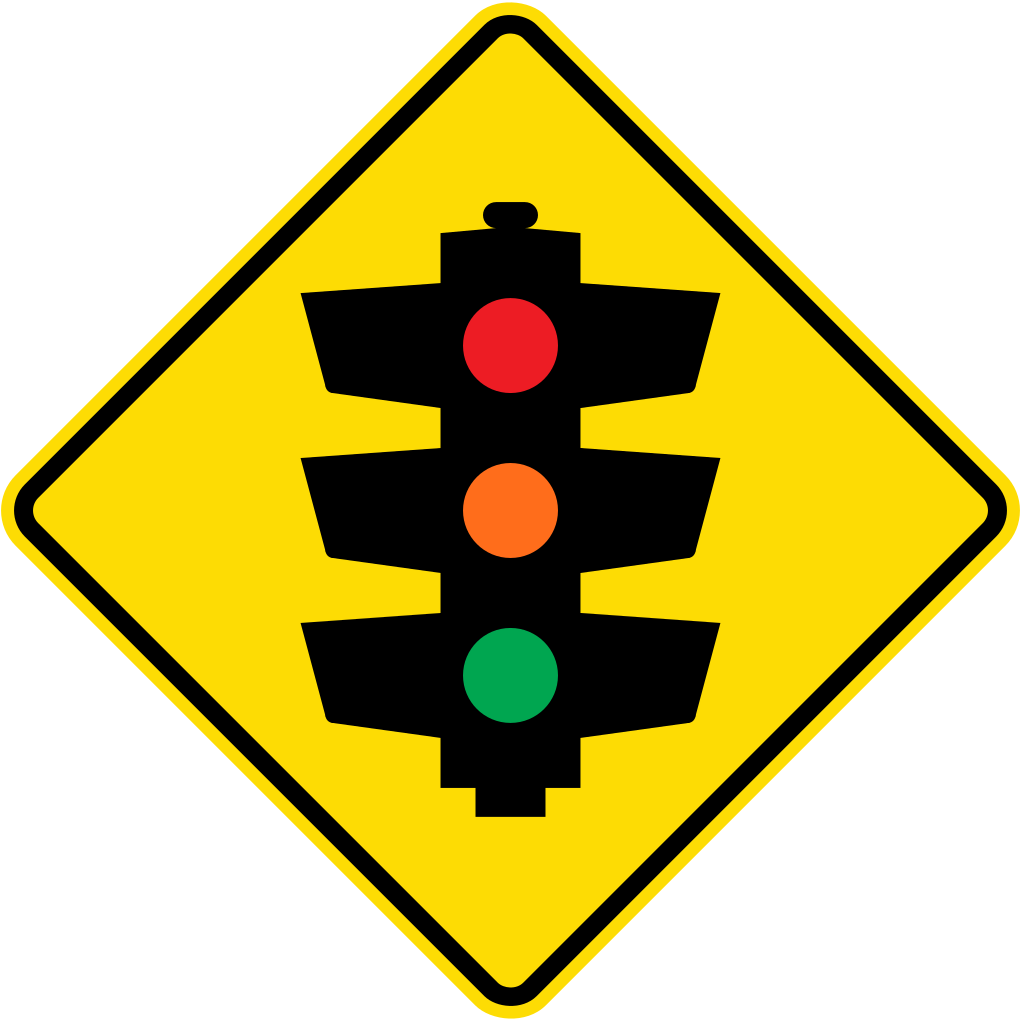
1. What does this traffic sign mean?
This traffic sign indicates a warning for traffic lights ahead. Traffic signals are located ahead and may not be visible early enough without advance warning. Reduce speed and be prepared to stop if the signal requires it.
English • W10-4 • Traffic signals ahead. Traffic signals are ahead. Reduce speed and be prepared to stop.
Sources
🔗 Commons.wikimedia.org
🔗 Nzta.govt.nz • NZTA sign specifications • W10-4
Image via Commons.wikimedia.org
New Zealand Transport Agency • NZTA-Sign-Spec • Source revision 2024-08-14. Wikimedia original unmodified.
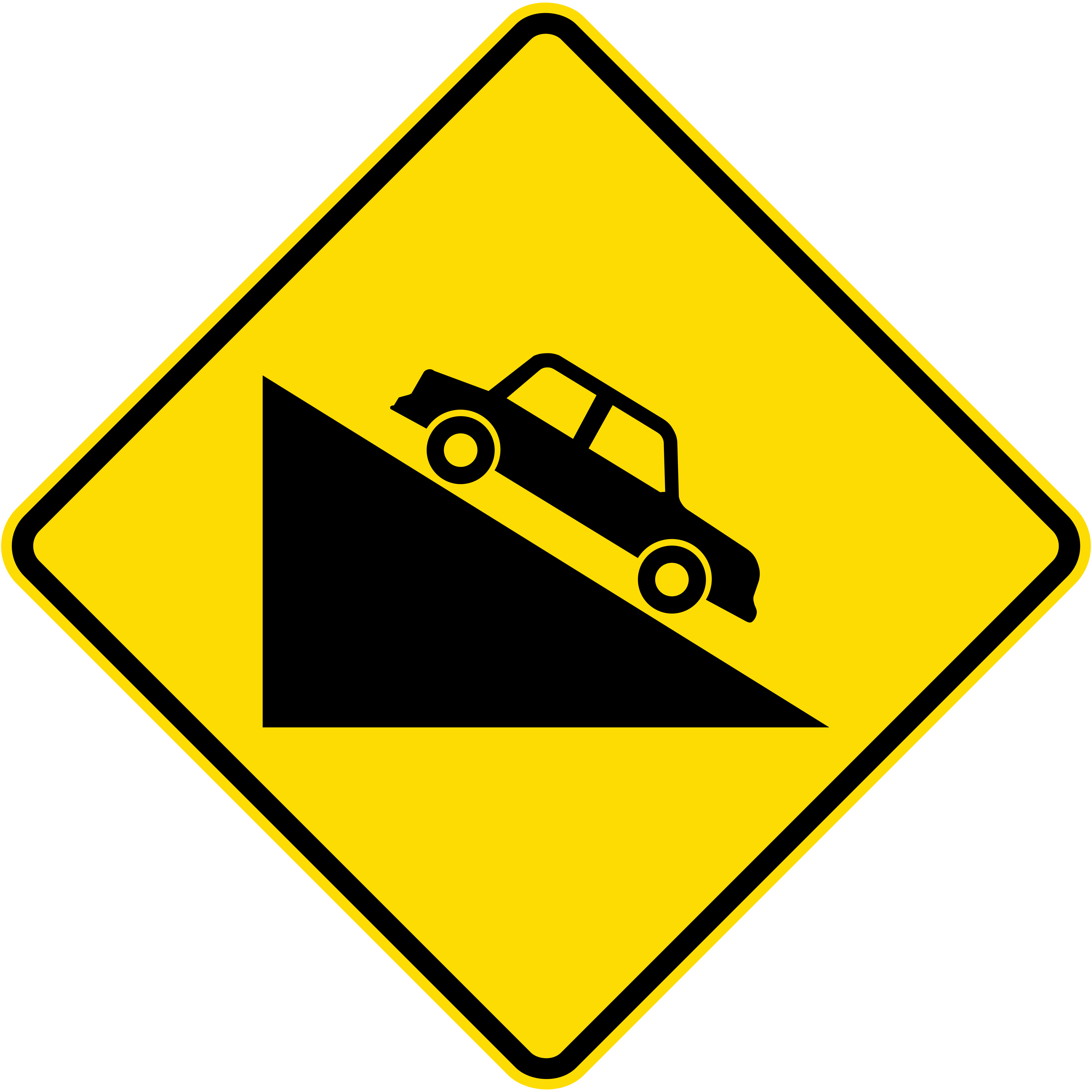
2. What does this traffic sign mean?
This traffic sign indicates a warning for a steep descent. A steep downhill gradient lies ahead and the vehicle may gain speed quickly. Reduce speed before the descent, select a suitable gear and use engine braking where appropriate. Allow extra distance for heavy or towing vehicles.
English • W14-9.1 • Steep descent. A steep downhill section is ahead. Select a suitable gear and control your speed.
Sources
🔗 Commons.wikimedia.org
🔗 Nzta.govt.nz • NZTA sign specifications • W14-9.1
Image via Commons.wikimedia.org
New Zealand Transport Agency • NZTA-Sign-Spec • Source revision 2021-03-22. Wikimedia original unmodified.
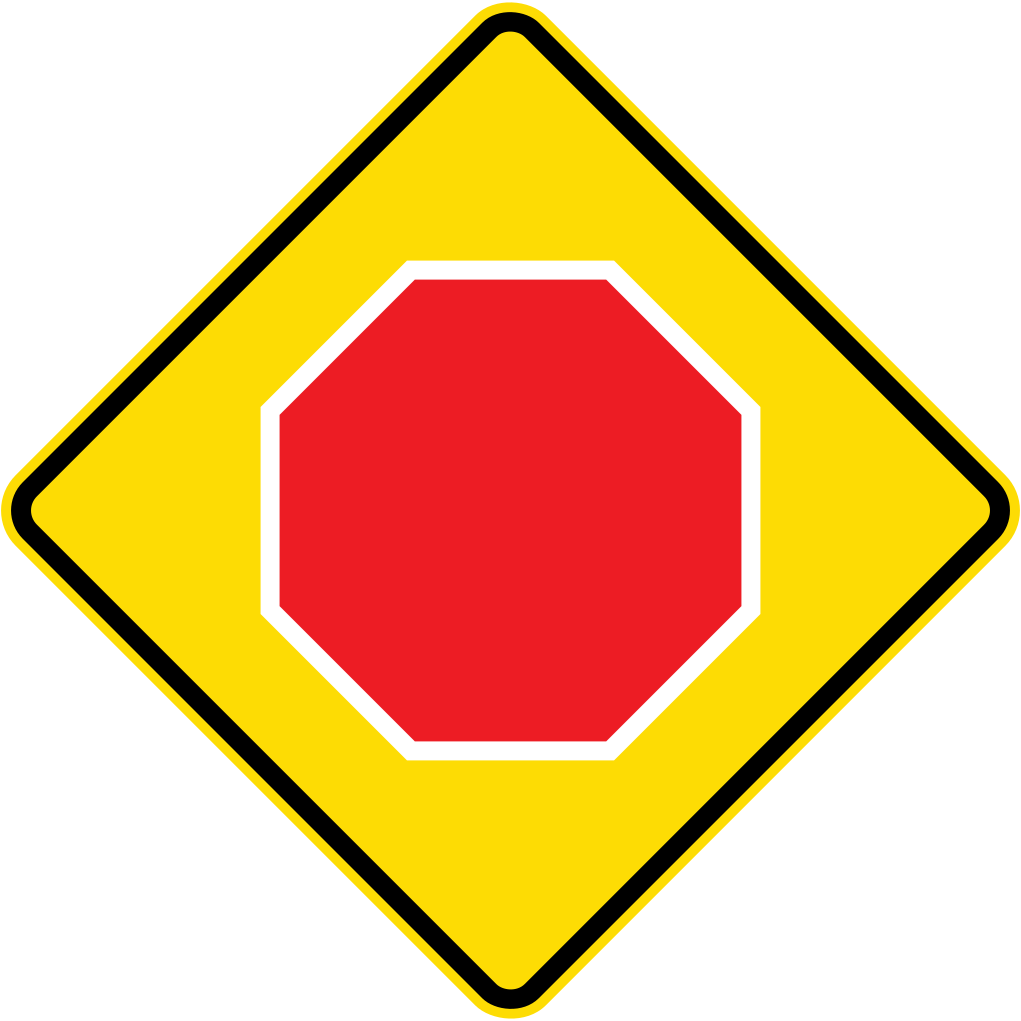
3. What does this traffic sign mean?
This traffic sign indicates stop and give way ahead. A stop sign applies at the location ahead. Reduce speed in good time and be prepared to come to a complete stop.
English • W10-1 • Stop ahead. A Stop control is ahead. Prepare to stop completely at the intersection.
Sources
🔗 Commons.wikimedia.org
🔗 Nzta.govt.nz • NZTA sign specifications • W10-1
Image via Commons.wikimedia.org
New Zealand Transport Agency • NZTA-Sign-Spec • Source revision 2024-08-08. Wikimedia original unmodified.
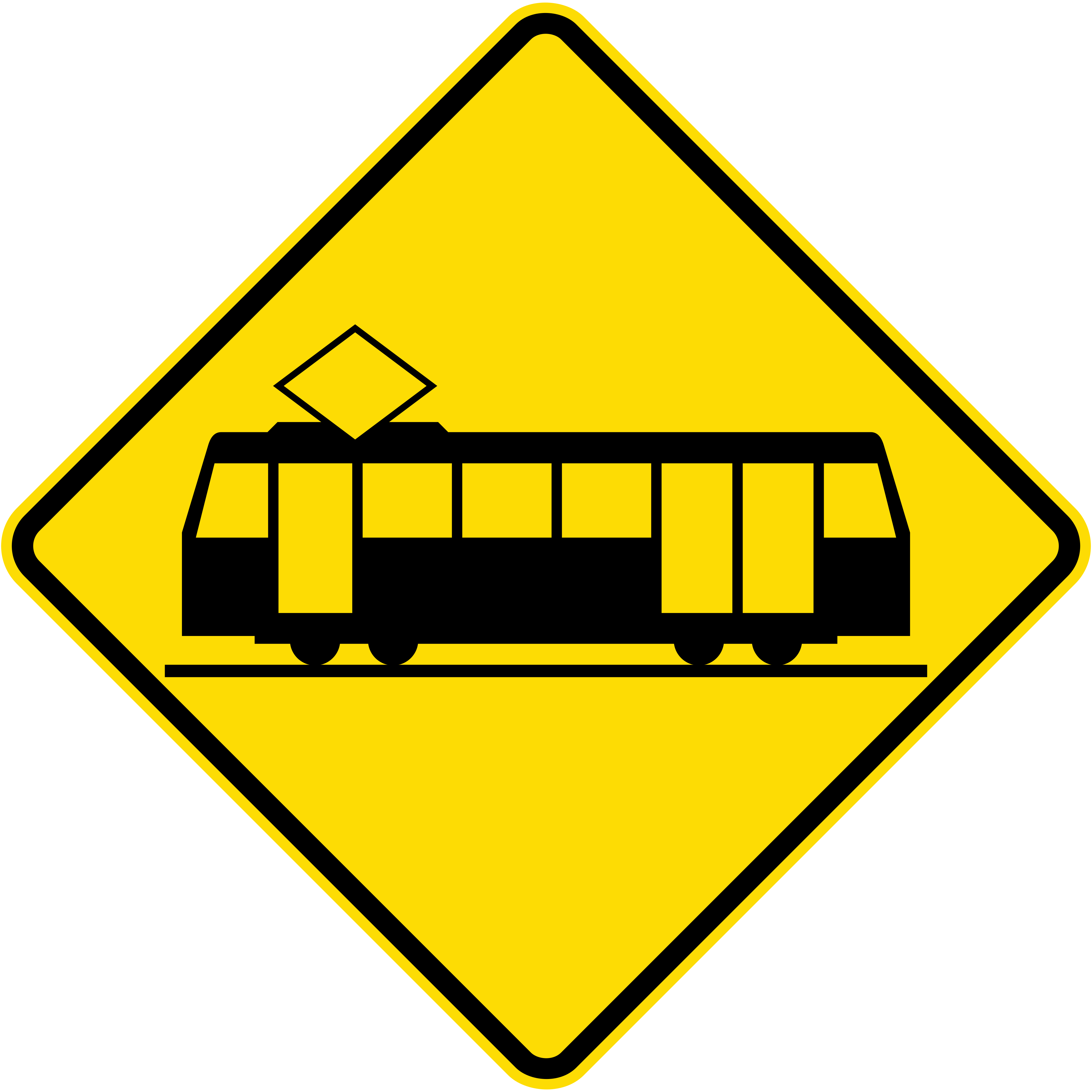
4. What does this traffic sign mean?
This traffic sign indicates a warning for trams. Tram tracks cross or run along the road ahead, and trams may enter the traffic path. Reduce speed, watch carefully for approaching trams and follow the applicable traffic signals, priority signs and local rules.
English • W15-9 • Light rail crossing. Light rail vehicles may cross the road ahead. Watch for them and obey any crossing signals or controls.
Sources
🔗 Commons.wikimedia.org
🔗 Nzta.govt.nz • NZTA sign specifications • W15-9
Image via Commons.wikimedia.org
New Zealand Transport Agency • NZTA-Sign-Spec • Source revision 2021-02-19. Wikimedia original unmodified.
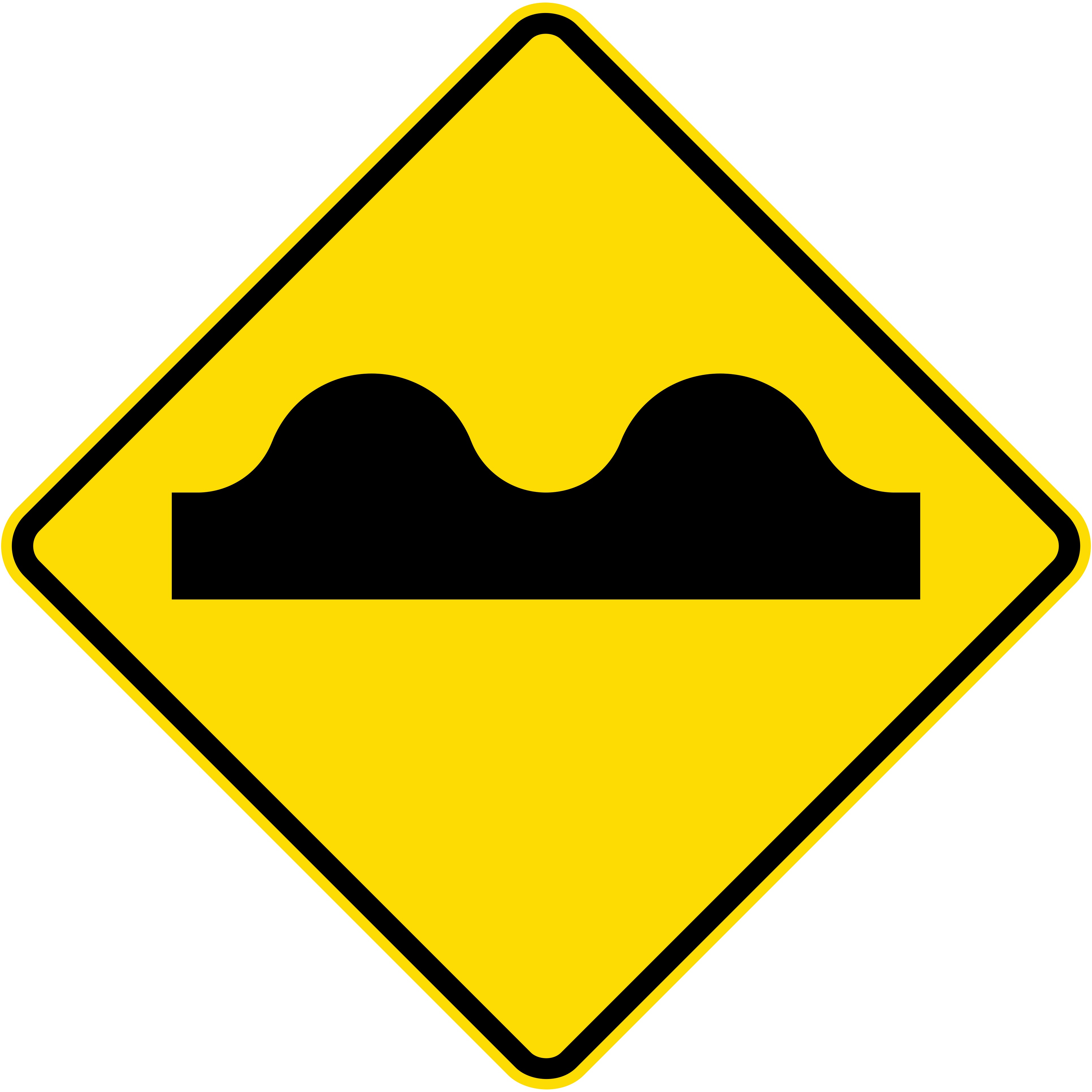
5. What does this traffic sign mean?
This traffic sign indicates a warning for a bad or uneven road surface. Potholes, bumps, depressions or other surface irregularities may affect vehicle stability and braking. Reduce speed and avoid sudden manoeuvres.
English • W14-5 • Uneven surface. An uneven road surface is ahead. Reduce speed to maintain control.
Sources
🔗 Commons.wikimedia.org
🔗 Nzta.govt.nz • NZTA sign specifications • W14-5
Image via Commons.wikimedia.org
New Zealand Transport Agency • NZTA-Sign-Spec • Source revision 2021-04-14. Wikimedia original unmodified.
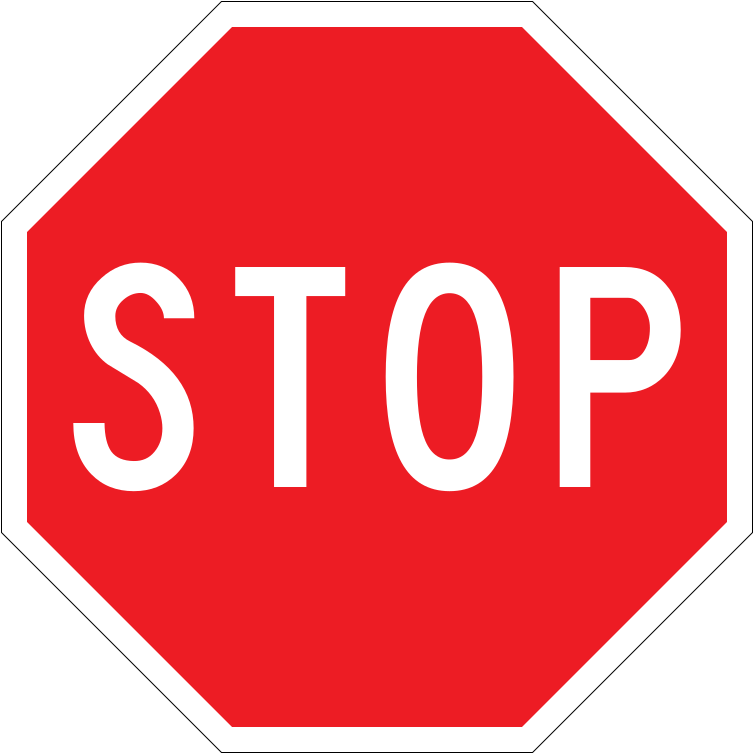
6. What does this traffic sign mean?
This traffic sign means stop and give way. You must come to a complete stop before entering the intersection and give way to traffic that has priority. Proceed only when it is safe.
English • R2-1 • Stop. Stop completely, then give way to traffic with priority before proceeding.
Sources
🔗 Commons.wikimedia.org
🔗 Nzta.govt.nz • NZTA sign specifications • R2-1
Image via Commons.wikimedia.org
New Zealand Transport Agency • NZTA-Sign-Spec • Source revision 2025-01-13. Wikimedia original unmodified.
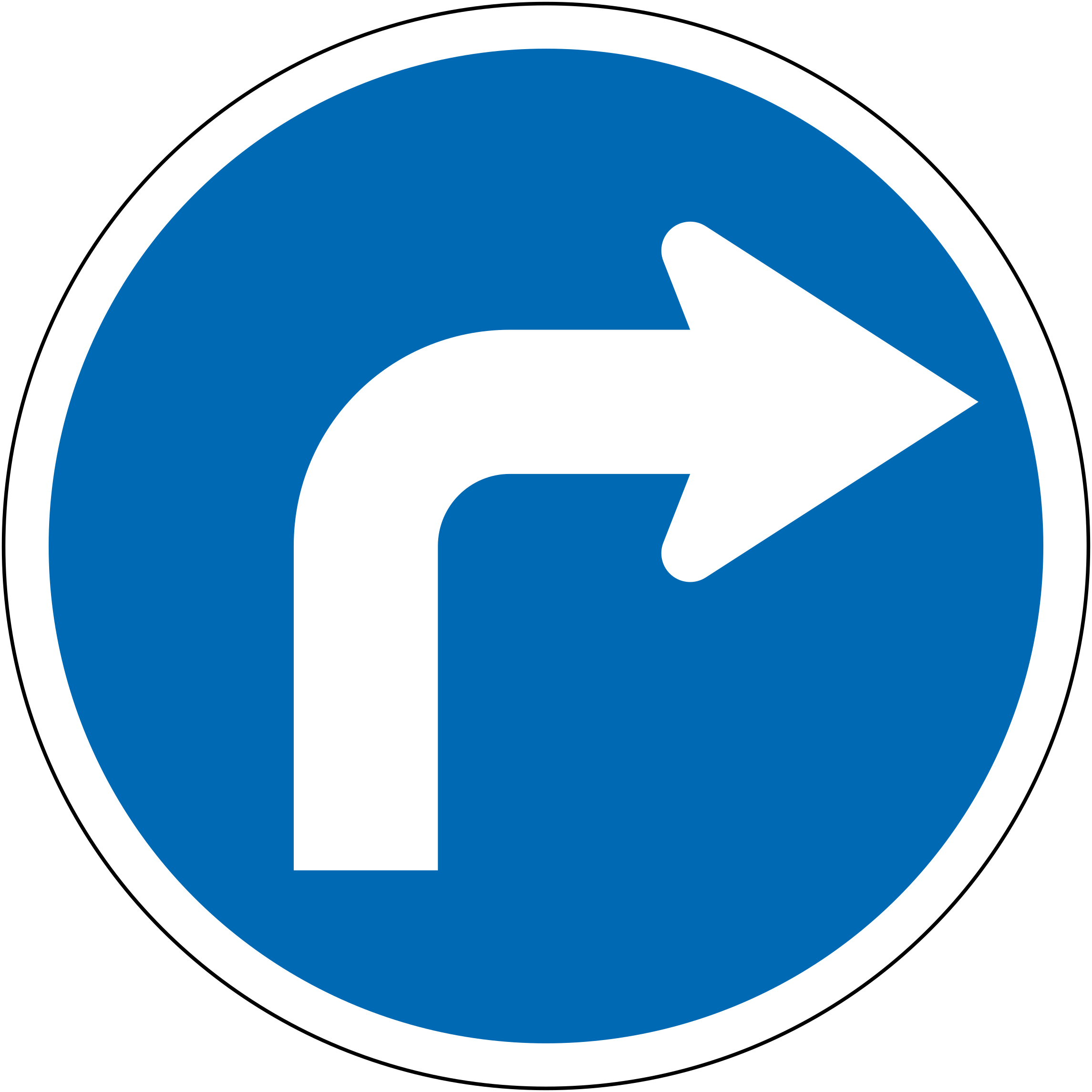
7. What does this traffic sign mean?
This traffic sign indicates that turning right is mandatory at the junction ahead. Traffic must turn right and may not continue straight ahead or turn left.
English • R3-10 • Turn right. Traffic must turn right at the signed location.
Sources
🔗 Commons.wikimedia.org
🔗 Nzta.govt.nz • NZTA sign specifications • R3-10
Image via Commons.wikimedia.org
New Zealand Transport Agency • NZTA-Sign-Spec • Source revision 2020-04-22. Wikimedia original unmodified.
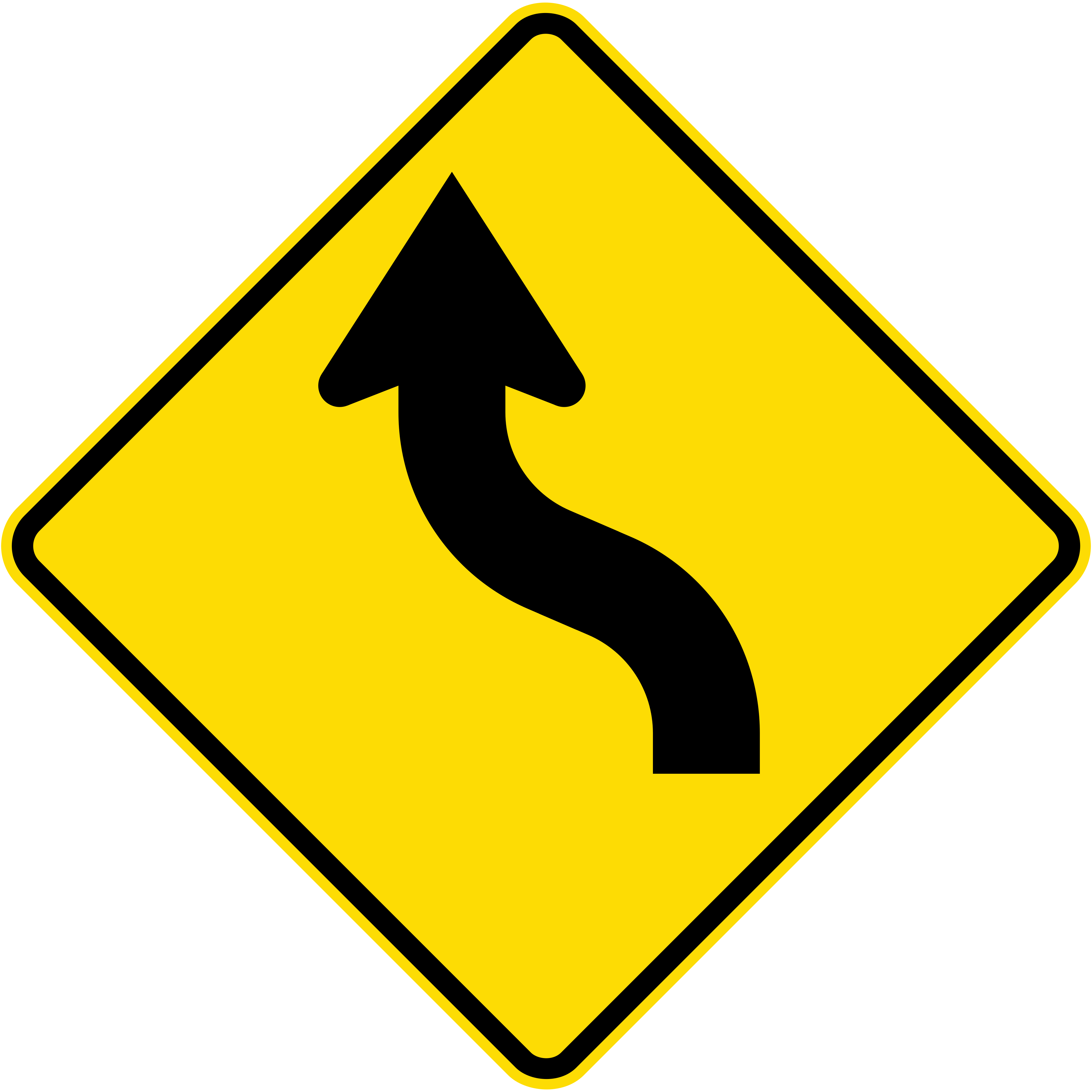
8. What does this traffic sign mean?
This traffic sign indicates a warning for successive curves, with the first curve to the left. Reduce speed before entering the winding section, maintain your lane position and be prepared for further changes in direction.
English • W12-2.1 • Reverse curves, left first. Two successive curves are ahead, beginning to the left and then bending right.
Sources
🔗 Commons.wikimedia.org
🔗 Nzta.govt.nz • NZTA sign specifications • W12-2.1
Image via Commons.wikimedia.org
New Zealand Transport Agency • NZTA-Sign-Spec • Source revision 2021-03-24. Wikimedia original unmodified.
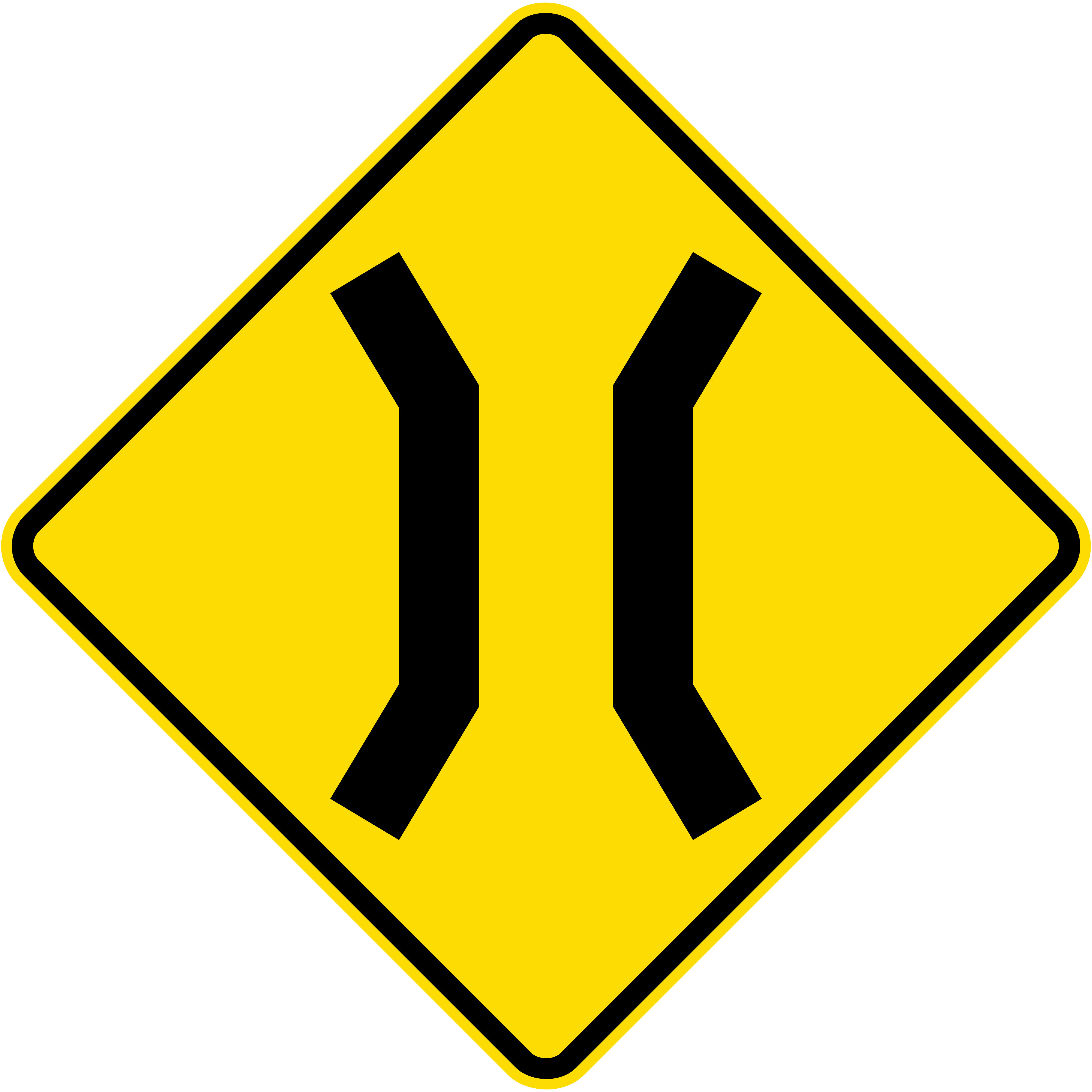
9. What does this traffic sign mean?
This traffic sign indicates a warning for a narrowing ahead. The available road width decreases ahead. Reduce speed when necessary and be prepared for less lateral space between vehicles, obstacles or the road edge.
English • W13-2 • Narrow bridge. A narrow bridge is ahead. Reduce speed and obey any separate give-way or priority signs.
Sources
🔗 Commons.wikimedia.org
🔗 Nzta.govt.nz • NZTA sign specifications • W13-2
Image via Commons.wikimedia.org
New Zealand Transport Agency • NZTA-Sign-Spec • Source revision 2021-02-04. Wikimedia original unmodified.
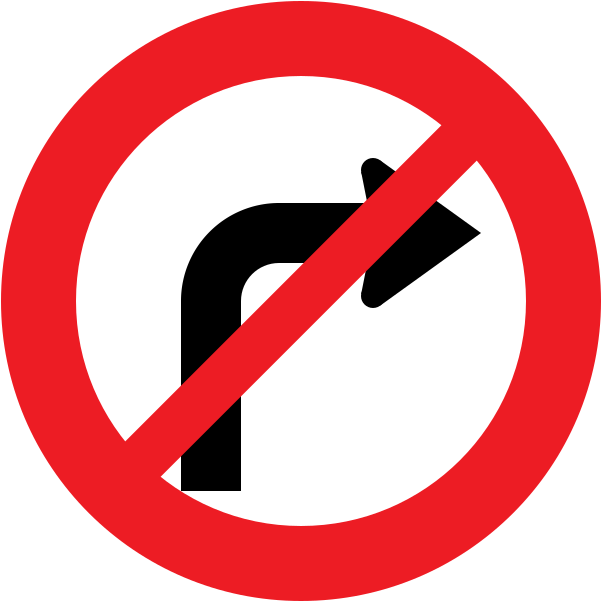
10. What does this traffic sign mean?
This traffic sign indicates that turning right is prohibited. A right turn may not be made where the sign applies. Other movements may still be permitted unless another restriction applies.
English • R3-2 • No right turn. Do not turn right at the signed location.
Sources
🔗 Commons.wikimedia.org
🔗 Nzta.govt.nz • NZTA sign specifications • R3-2
Image via Commons.wikimedia.org
New Zealand Transport Agency • NZTA-Sign-Spec • Source revision 2024-12-13. Wikimedia original unmodified.
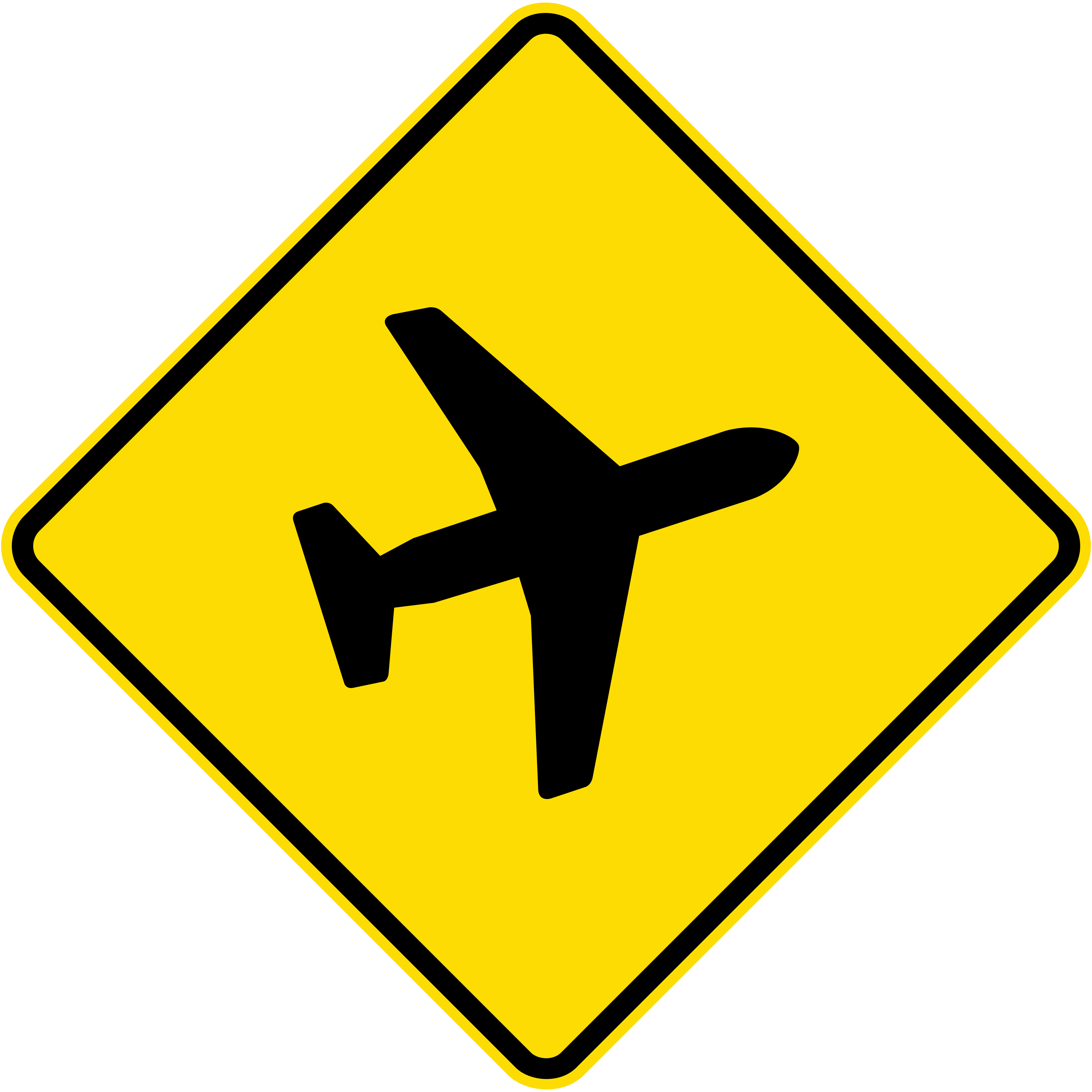
11. What does this traffic sign mean?
This traffic sign indicates a warning for low-flying aircraft. Aircraft may pass over the road at low altitude and can create sudden noise or visual distraction. Keep your attention on the road and maintain control of the vehicle.
English • W18-2 • Aircraft crossing. Aircraft may cross the road ahead. Be alert and prepared to stop.
Sources
🔗 Commons.wikimedia.org
🔗 Nzta.govt.nz • NZTA sign specifications • W18-2
Image via Commons.wikimedia.org
New Zealand Transport Agency • NZTA-Sign-Spec • Source revision 2021-04-12. Wikimedia original unmodified.
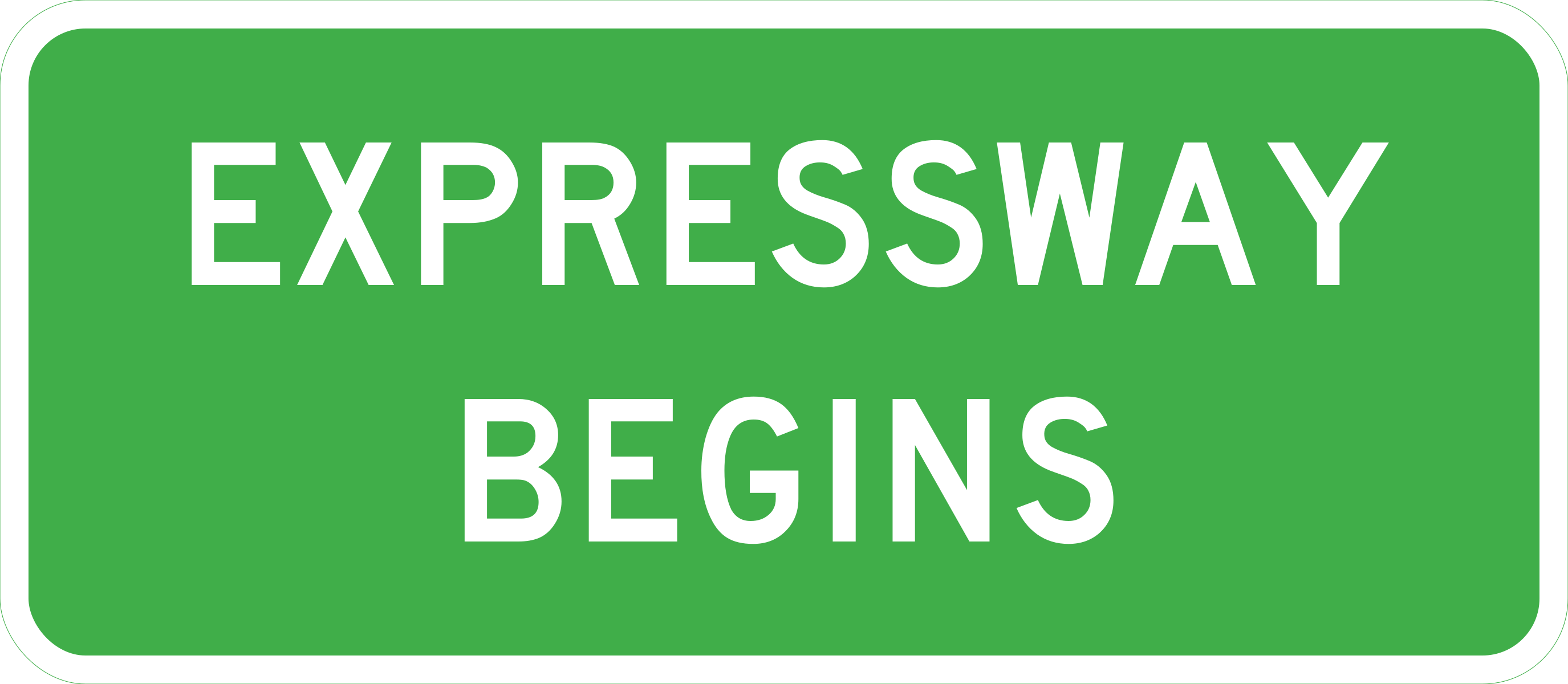
12. What does this traffic sign mean?
This traffic sign indicates the start of an expressway. From this point, the traffic rules and access conditions that apply to expressways take effect according to the applicable local regulations.
English • General advisory • Expressway begins. The expressway starts here. Follow its posted speed, access and lane controls; this sign alone does not specify a speed limit. Illustration identified by its sign family or meaning; the exact current prescribed design has not been confirmed.
Sources
🔗 Commons.wikimedia.org (Mliu92 • CC BY-SA 4.0)
🔗 Nzta.govt.nz • NZTA sign specifications • General advisory
🔗 Nzta.govt.nz • NZTA sign specifications • expressway advisory
Image via Commons.wikimedia.org
Mliu92 • CC BY-SA 4.0 • Source revision 2015-06-14. Wikimedia original unmodified.
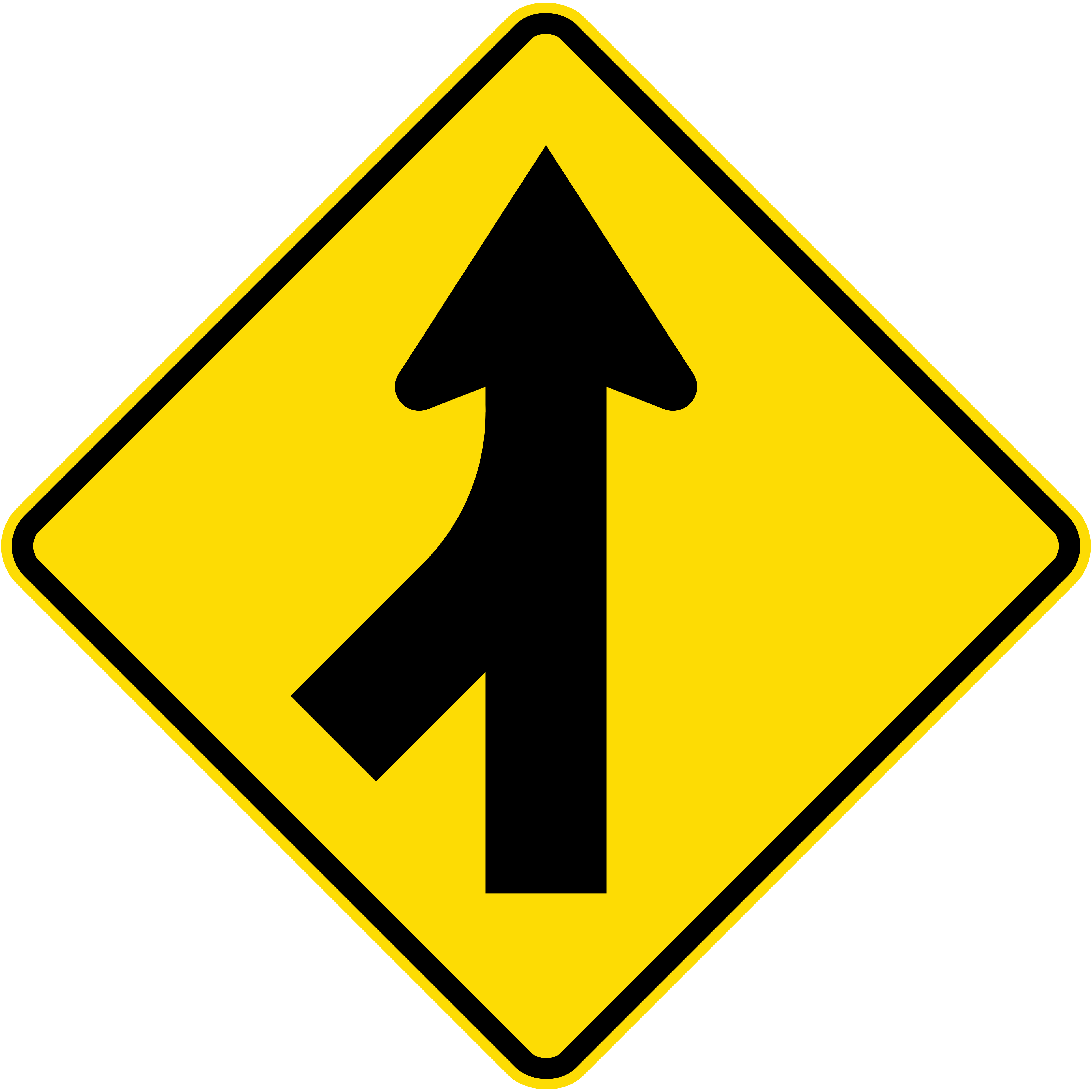
13. What does this traffic sign mean?
This traffic sign indicates a warning for a side road merging with the main road. Traffic from a side road joins the traffic flow ahead. Stay alert, maintain a safe gap and adjust your speed when necessary to allow traffic to merge safely.
English • W11-6 • Traffic merges from the left. Traffic joins the road from the left. Watch for merging vehicles and adjust speed and spacing.
Sources
🔗 Commons.wikimedia.org
🔗 Nzta.govt.nz • NZTA sign specifications • W11-6
Image via Commons.wikimedia.org
New Zealand Transport Agency • NZTA-Sign-Spec • Source revision 2021-06-26. Wikimedia original unmodified.
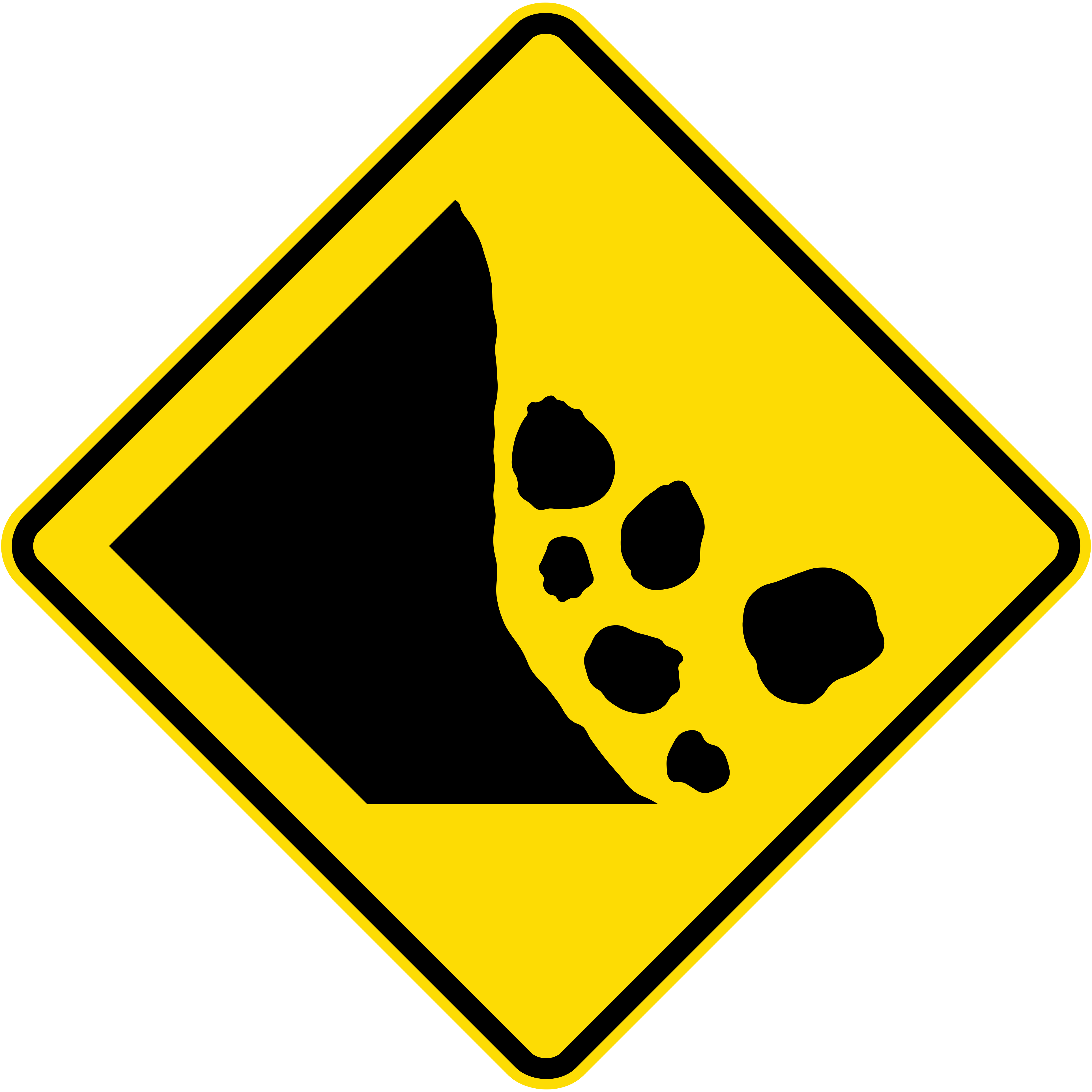
14. What does this traffic sign mean?
This traffic sign indicates a warning for falling rocks. Rocks or stones may fall from nearby slopes or may already be lying on the road. Reduce speed, scan the road ahead and be prepared to avoid or stop for fallen material.
English • W14-6 • Slips or falling debris. Slips, falling rocks or other debris may affect the road ahead. Watch for material on the carriageway.
Sources
🔗 Commons.wikimedia.org
🔗 Nzta.govt.nz • NZTA sign specifications • W14-6
Image via Commons.wikimedia.org
New Zealand Transport Agency • NZTA-Sign-Spec • Source revision 2021-04-15. Wikimedia original unmodified.
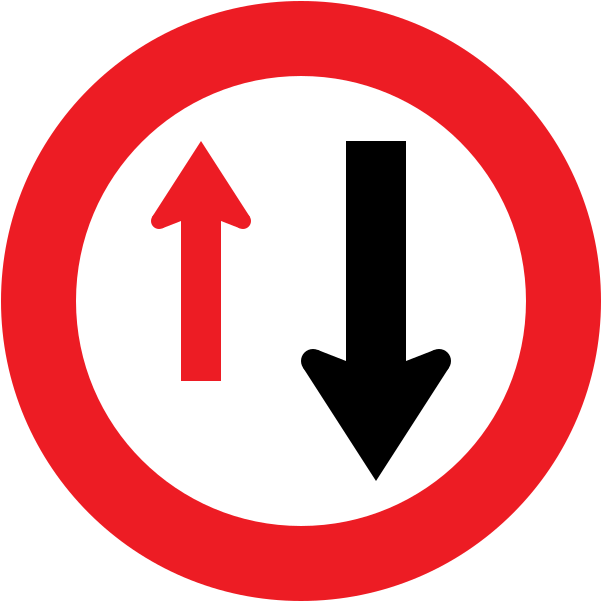
15. What does this traffic sign mean?
This traffic sign indicates a road narrowing where you must give way to oncoming traffic. Allow approaching traffic to pass before entering or continuing through the narrow section when required.
English • R2-7 • Give way to oncoming vehicles. Give way to opposing traffic through the narrow section or one-lane bridge. Wait until you can proceed safely.
Sources
🔗 Commons.wikimedia.org
🔗 Nzta.govt.nz • NZTA sign specifications • R2-7
🔗 Nzta.govt.nz • NZTA Traffic Control Devices Manual • Part 5, June 2026
Image via Commons.wikimedia.org
New Zealand Transport Agency • NZTA-Sign-Spec • Source revision 2024-12-07. Wikimedia original unmodified.
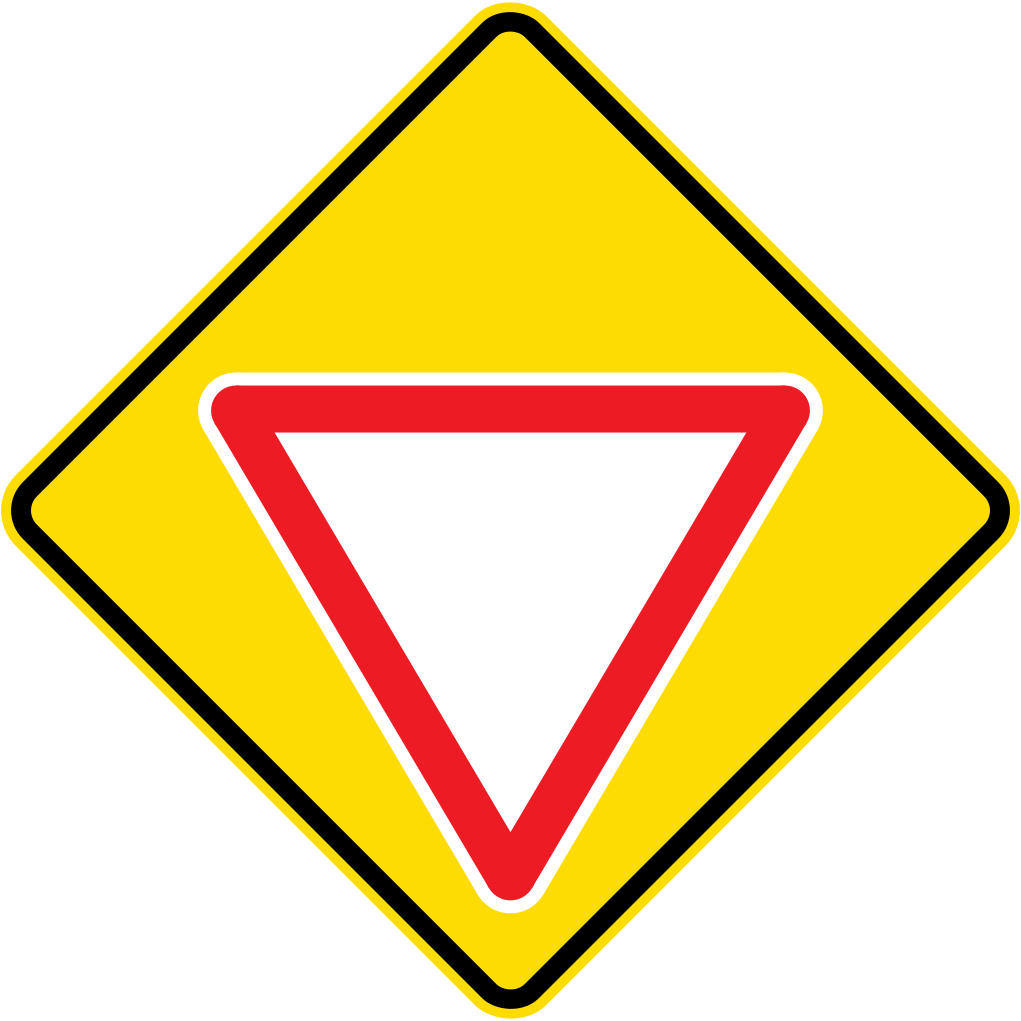
16. What does this traffic sign mean?
This traffic sign indicates give way ahead. A give-way requirement applies at the location ahead. Reduce speed in good time and be prepared to stop if necessary.
English • W10-2 • Give way ahead. A Give Way control is ahead. Prepare to slow down and yield.
Sources
🔗 Commons.wikimedia.org
🔗 Nzta.govt.nz • NZTA sign specifications • W10-2
Image via Commons.wikimedia.org
New Zealand Transport Agency • NZTA-Sign-Spec • Source revision 2024-08-10. Wikimedia original unmodified.
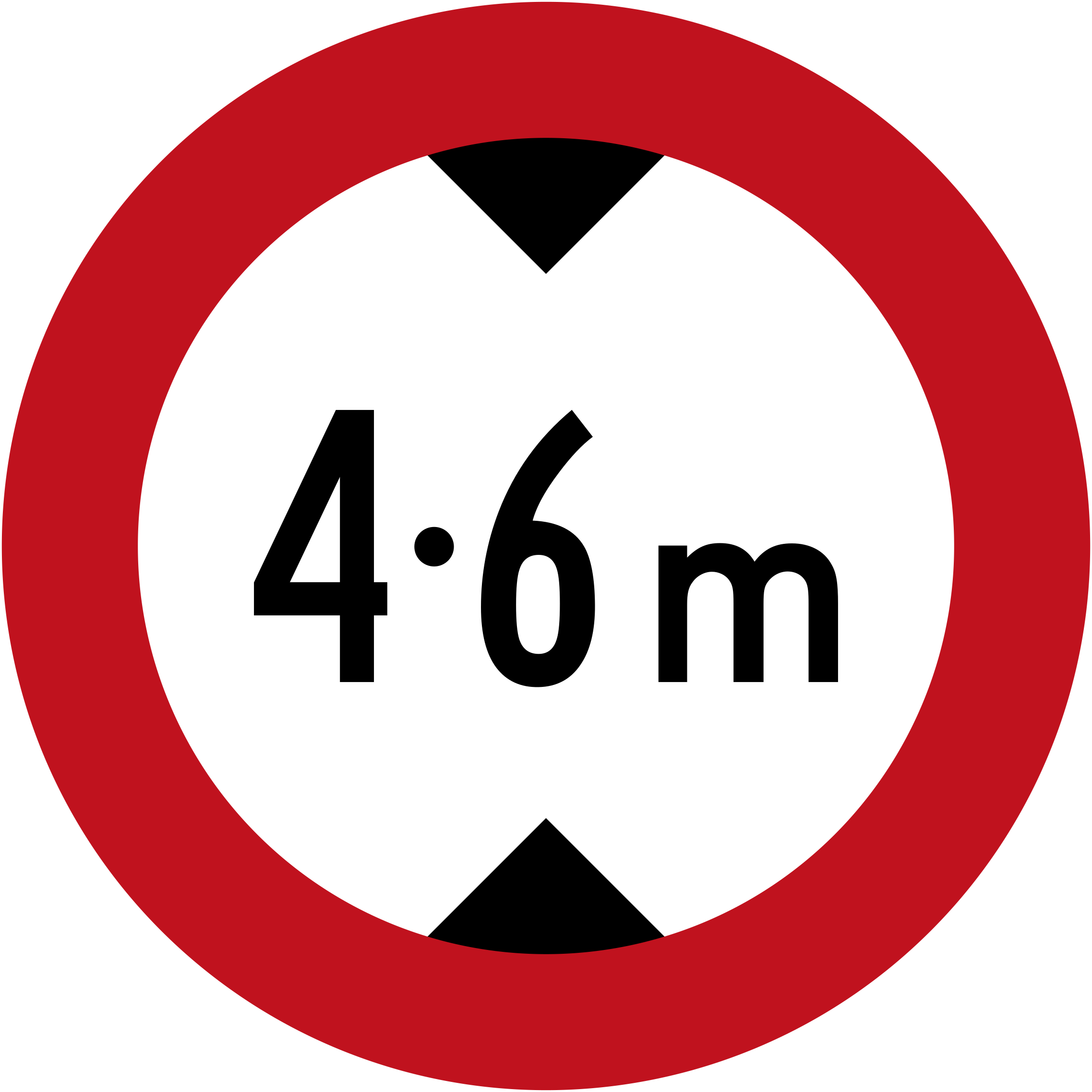
17. What does this traffic sign mean?
This traffic sign indicates that vehicles higher than indicated are prohibited. A vehicle or vehicle combination whose overall height, including its load, exceeds the displayed limit may not continue beyond the sign.
English • R5-4 • Maximum height: 4.6 m. Vehicles and loads higher than 4.6 m must not pass beyond this sign.
Sources
🔗 Commons.wikimedia.org
🔗 Nzta.govt.nz • NZTA sign specifications • R5-4
Image via Commons.wikimedia.org
New Zealand Transport Agency • NZTA-Sign-Spec • Source revision 2020-04-28. Wikimedia original unmodified.
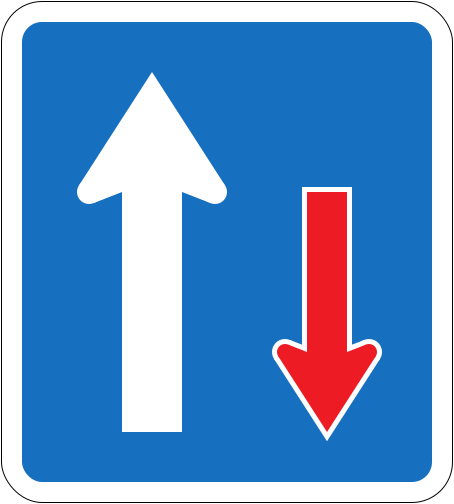
18. What does this traffic sign mean?
This traffic sign indicates a road narrowing where oncoming drivers have to give way.
English • R2-8 • Priority over oncoming vehicles. Your direction has priority through the narrow section or one-lane bridge. Proceed only when the passage is clear and safe.
Sources
🔗 Commons.wikimedia.org
🔗 Nzta.govt.nz • NZTA sign specifications • R2-8
🔗 Nzta.govt.nz • NZTA Traffic Control Devices Manual • Part 5, June 2026
Image via Commons.wikimedia.org
New Zealand Transport Agency • NZTA-Sign-Spec • Source revision 2024-12-11. Wikimedia original unmodified.
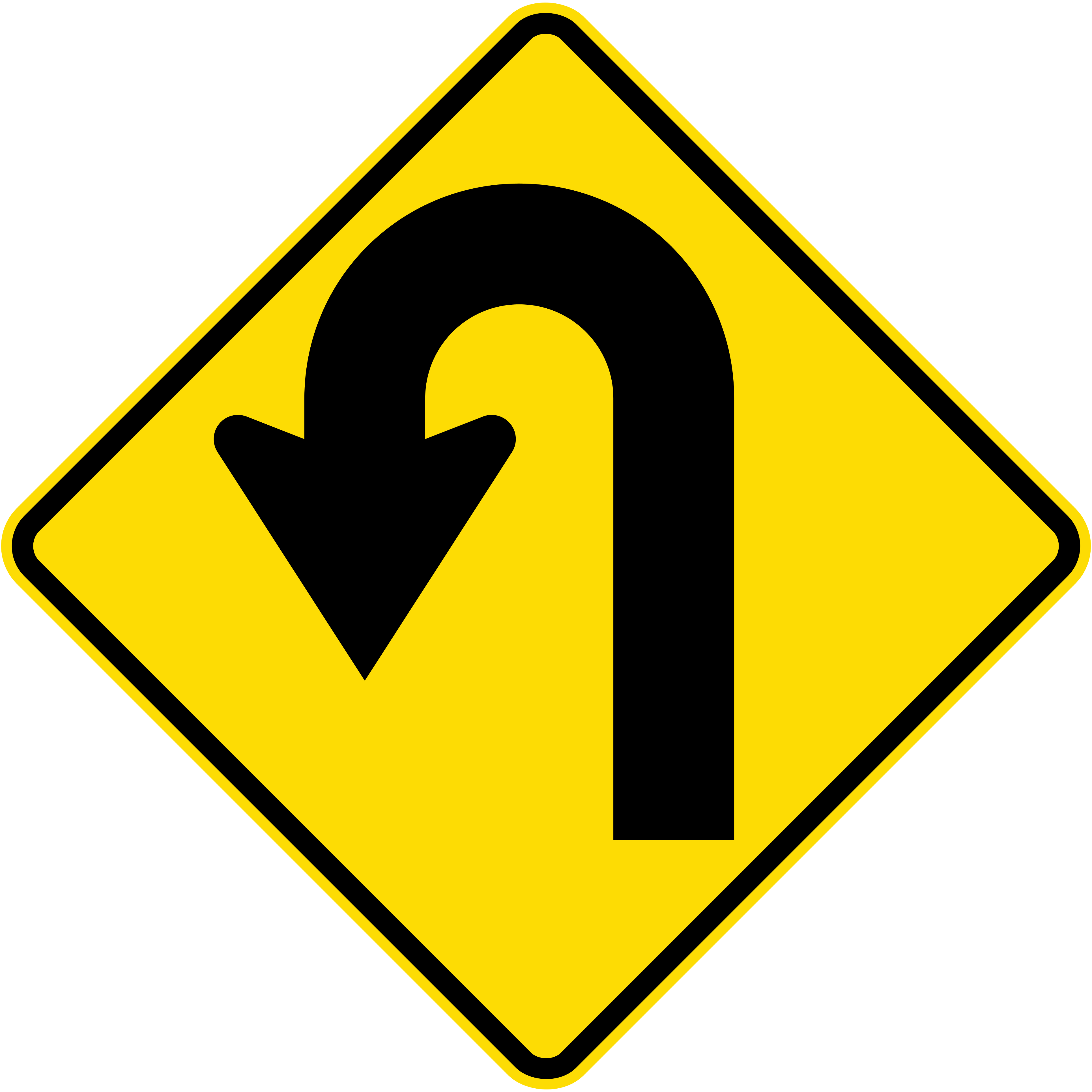
19. What does this traffic sign mean?
This traffic sign warns of a hairpin bend to the left. The road ahead makes a very sharp turn, so reduce speed and be prepared to steer sharply to the left.
English • W12-1.4 • Hairpin bend left. A very sharp bend to the left is ahead. Reduce speed before entering it.
Sources
🔗 Commons.wikimedia.org
🔗 Nzta.govt.nz • NZTA sign specifications • W12-1.4
Image via Commons.wikimedia.org
New Zealand Transport Agency • NZTA-Sign-Spec • Source revision 2021-03-08. Wikimedia original unmodified.
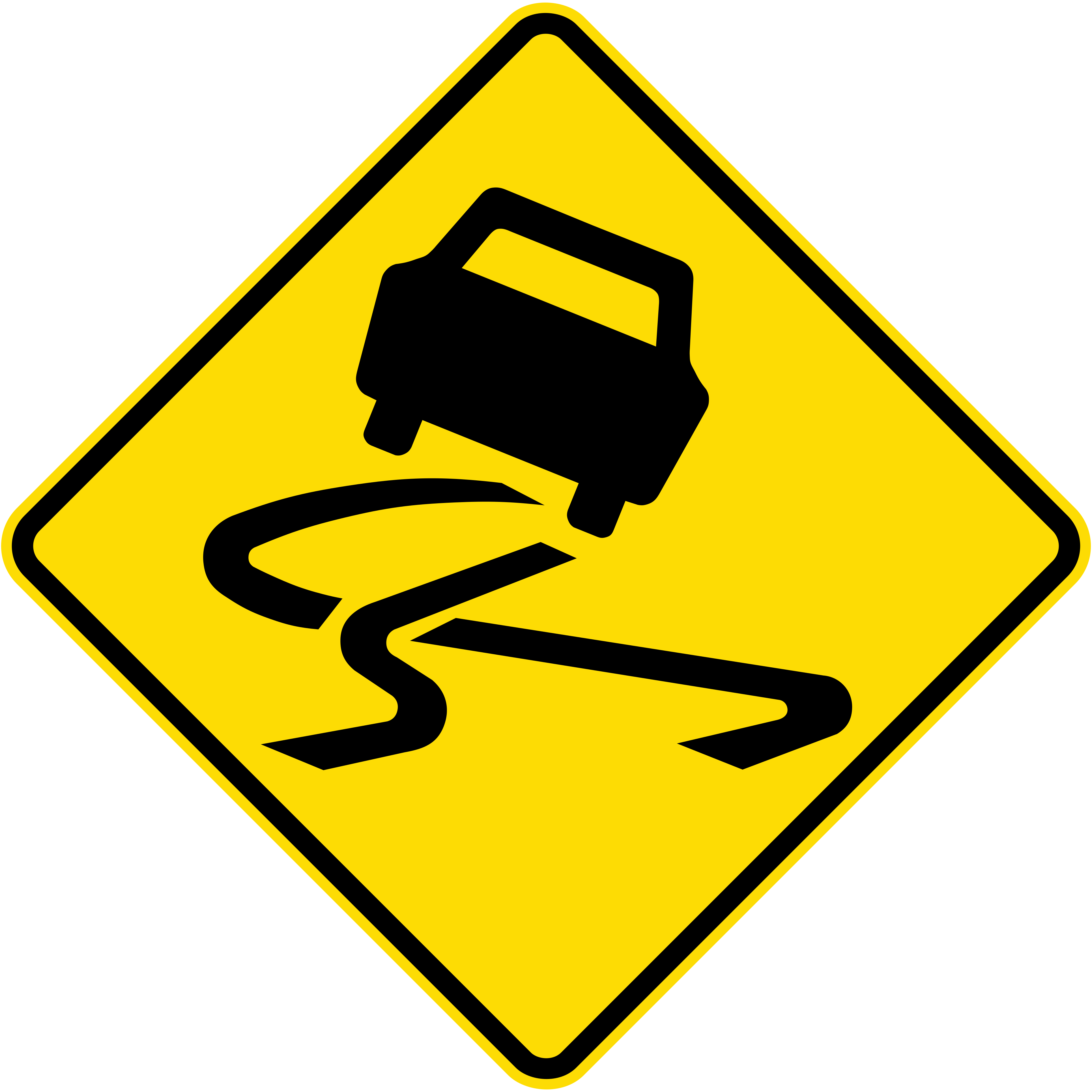
20. What does this traffic sign mean?
This traffic sign indicates a warning for a slippery road surface. The road ahead may provide reduced tyre grip because of water, ice, mud, oil or another surface condition. Reduce speed and avoid sudden braking, acceleration or steering movements.
English • W14-7 • Slippery surface. The road surface may be slippery. Reduce speed and avoid sudden braking or steering.
Sources
🔗 Commons.wikimedia.org
🔗 Nzta.govt.nz • NZTA sign specifications • W14-7
Image via Commons.wikimedia.org
New Zealand Transport Agency • NZTA-Sign-Spec • Source revision 2021-02-03. Wikimedia original unmodified.
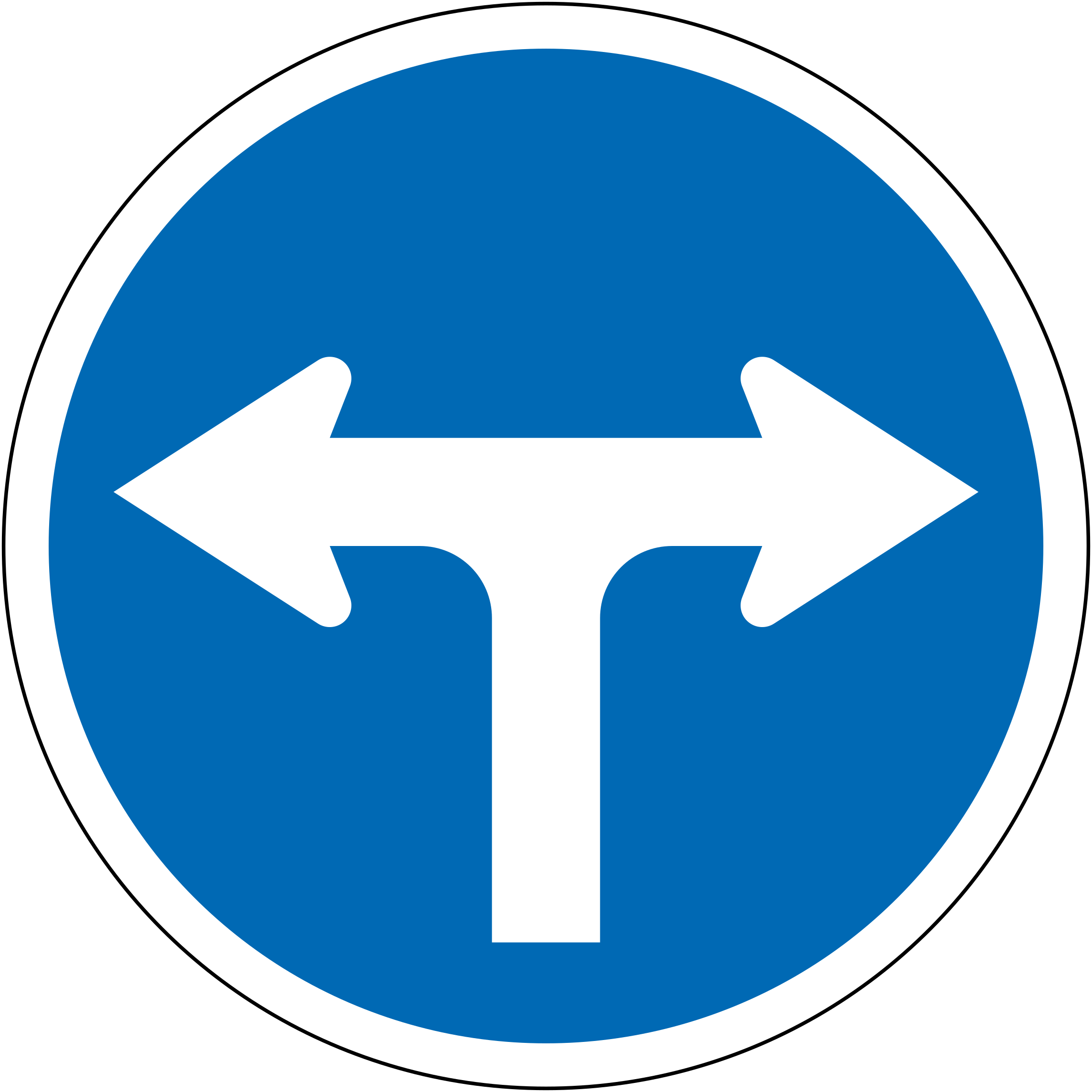
21. What does this traffic sign mean?
This traffic sign indicates that turning left or right is mandatory at the junction ahead. Traffic may turn either left or right but may not continue straight ahead.
English • R3-11 • Turn left or right. Traffic must turn left or right; do not continue straight ahead.
Sources
🔗 Commons.wikimedia.org
🔗 Nzta.govt.nz • NZTA sign specifications • R3-11
Image via Commons.wikimedia.org
New Zealand Transport Agency • NZTA-Sign-Spec • Source revision 2020-04-22. Wikimedia original unmodified.
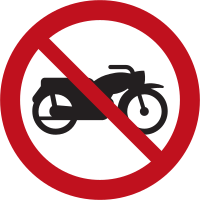
22. What does this traffic sign mean?
This traffic sign indicates that motorcycles are prohibited. Motorcyclists may not enter or continue beyond the sign. Other road users may still be permitted unless another restriction applies.
Sources
🔗 Commons.wikimedia.org (Amateria1121 • CC BY-SA 3.0)
SVG source: Amateria1121 • CC BY-SA 3.0 • Original revision 2014-04-29. Wikimedia original unmodified.
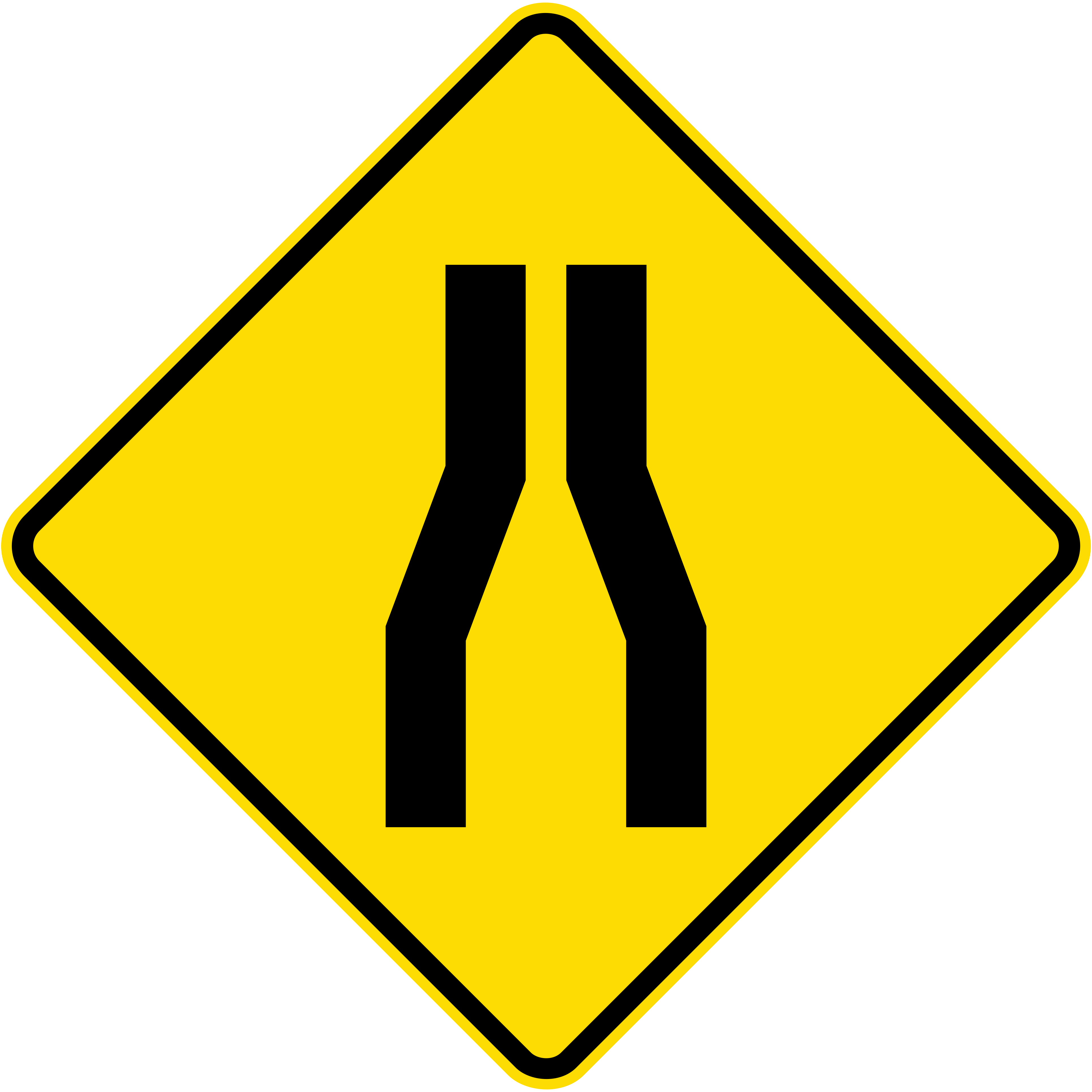
23. What does this traffic sign mean?
This traffic sign indicates a warning for a road narrowing. The available width of the road or carriageway decreases ahead. Reduce speed, maintain sufficient lateral clearance and watch carefully for approaching or adjacent traffic.
English • W13-1.1 • Road narrows on both sides. The road becomes narrower on both sides. Adjust speed and position for the reduced width.
Sources
🔗 Commons.wikimedia.org
🔗 Nzta.govt.nz • NZTA sign specifications • W13-1.1
Image via Commons.wikimedia.org
New Zealand Transport Agency • NZTA-Sign-Spec • Source revision 2021-02-05. Wikimedia original unmodified.
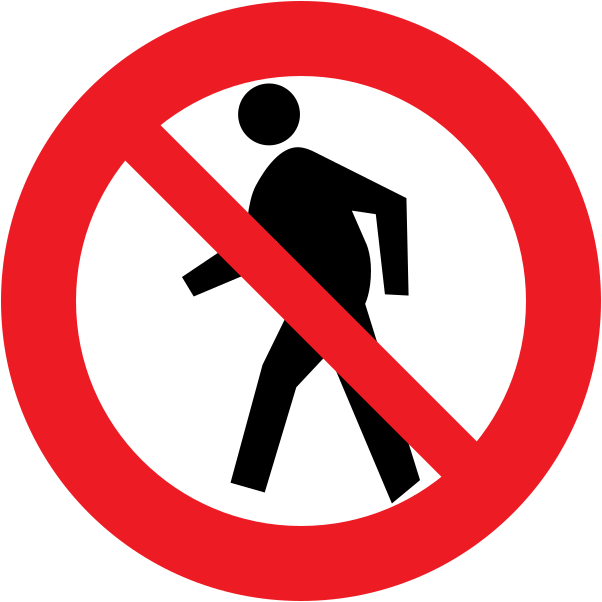
24. What does this traffic sign mean?
This traffic sign indicates that pedestrians are prohibited. Pedestrians may not enter or continue beyond the sign. Other road users may still be permitted unless another restriction applies.
English • R5-2 • No pedestrians. Pedestrians must not enter beyond this sign.
Sources
🔗 Commons.wikimedia.org
🔗 Nzta.govt.nz • NZTA sign specifications • R5-2
Image via Commons.wikimedia.org
New Zealand Transport Agency • NZTA-Sign-Spec • Source revision 2024-12-22. Wikimedia original unmodified.
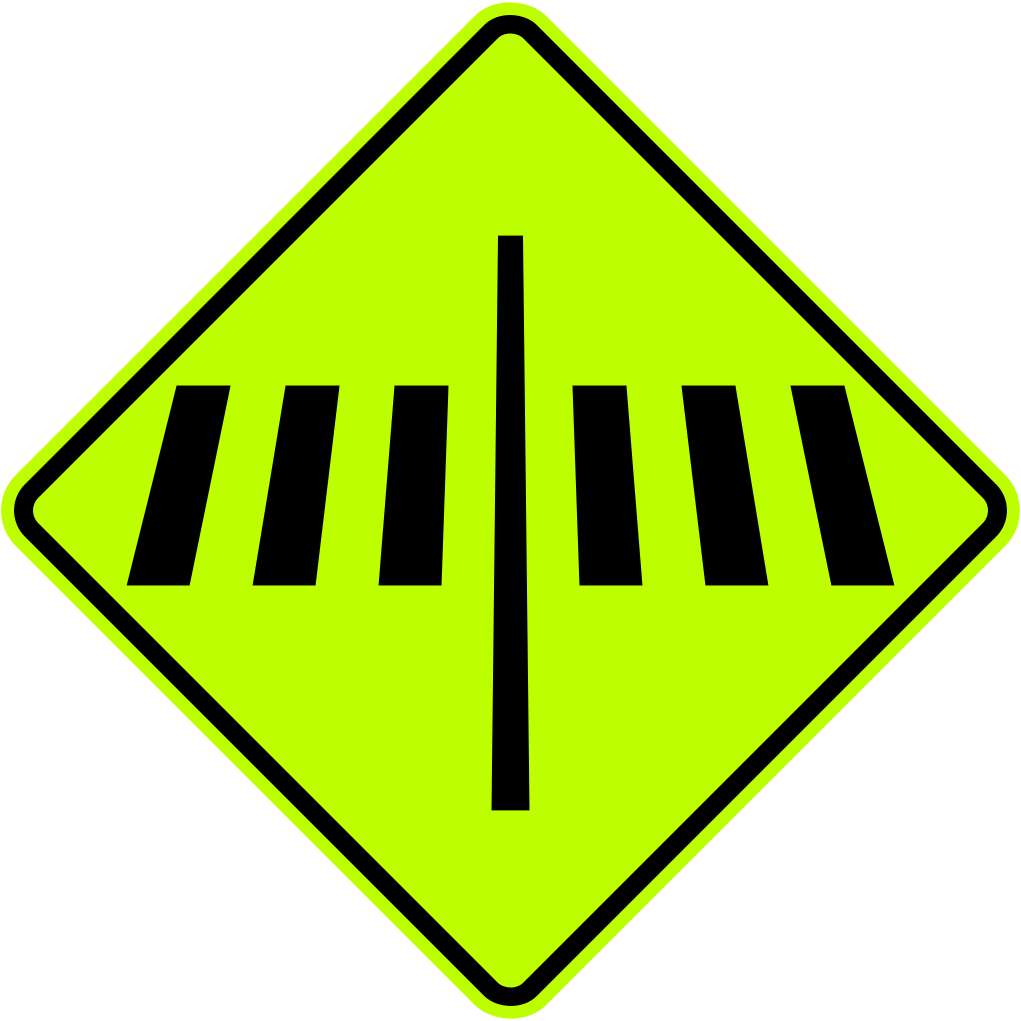
25. What does this traffic sign mean?
This traffic sign indicates a warning for a pedestrian crossing. A designated pedestrian crossing lies ahead. Reduce speed when necessary, watch carefully for pedestrians and be prepared to give way or stop according to the applicable local priority rules.
English • W16-2 • Pedestrian crossing ahead. A pedestrian crossing is ahead. Reduce speed and prepare to give way as required at the crossing.
Sources
🔗 Commons.wikimedia.org
🔗 Nzta.govt.nz • NZTA sign specifications • W16-2
Image via Commons.wikimedia.org
New Zealand Transport Agency • NZTA-Sign-Spec • Source revision 2024-11-08. Wikimedia original unmodified.
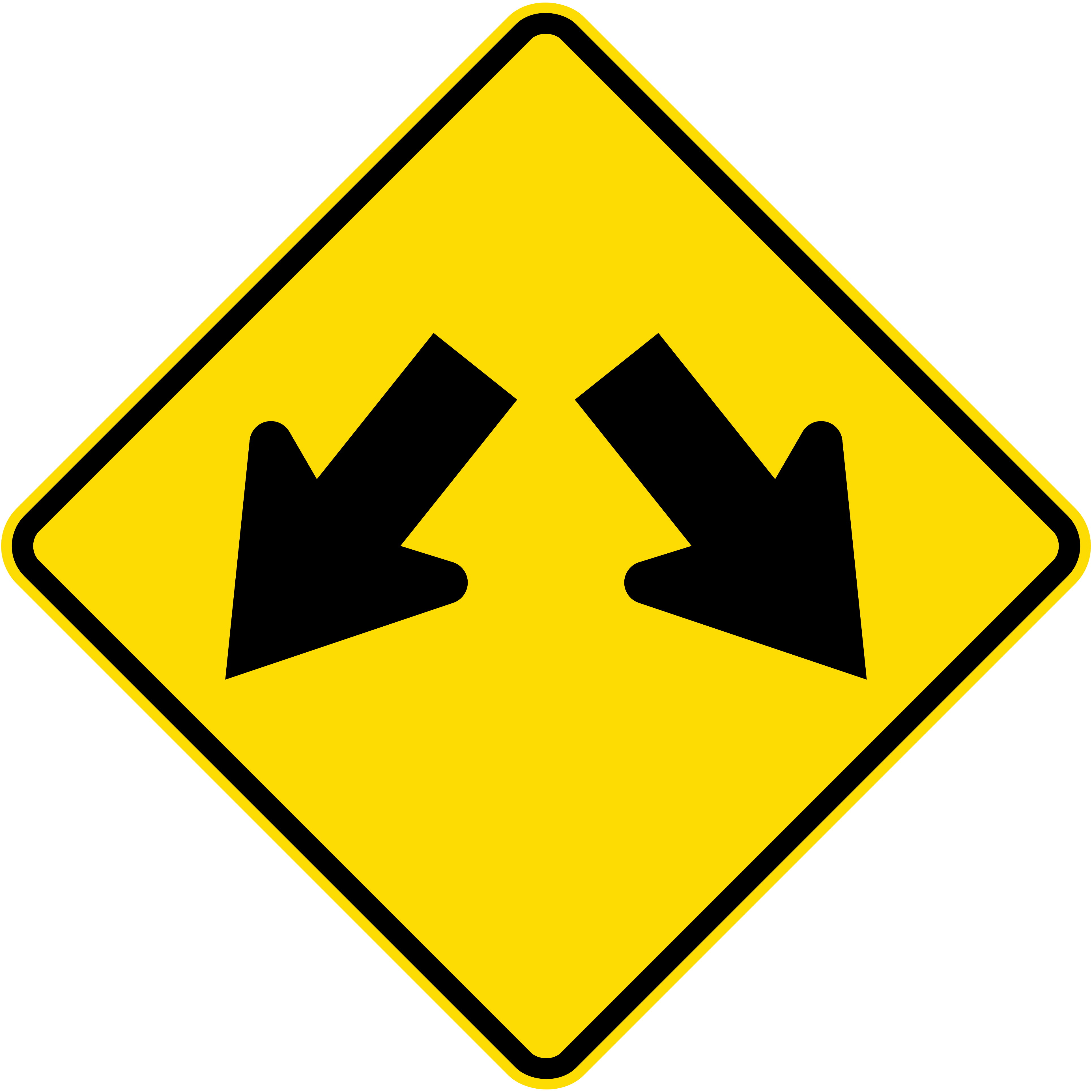
26. What does this traffic sign mean?
This traffic sign indicates a warning for an obstacle where you have to pass left or right. It alerts drivers to a fixed obstacle in the roadway—such as a traffic island, bollard, or construction zone—where vehicles are permitted to pass on either side.
English • W14-1 • Diverge. Traffic lanes in the same direction diverge around an obstruction. Follow your lane; this sign does not authorise entry into opposing traffic.
Sources
🔗 Commons.wikimedia.org
🔗 Nzta.govt.nz • NZTA sign specifications • W14-1
Image via Commons.wikimedia.org
New Zealand Transport Agency • NZTA-Sign-Spec • Source revision 2021-03-02. Wikimedia original unmodified.
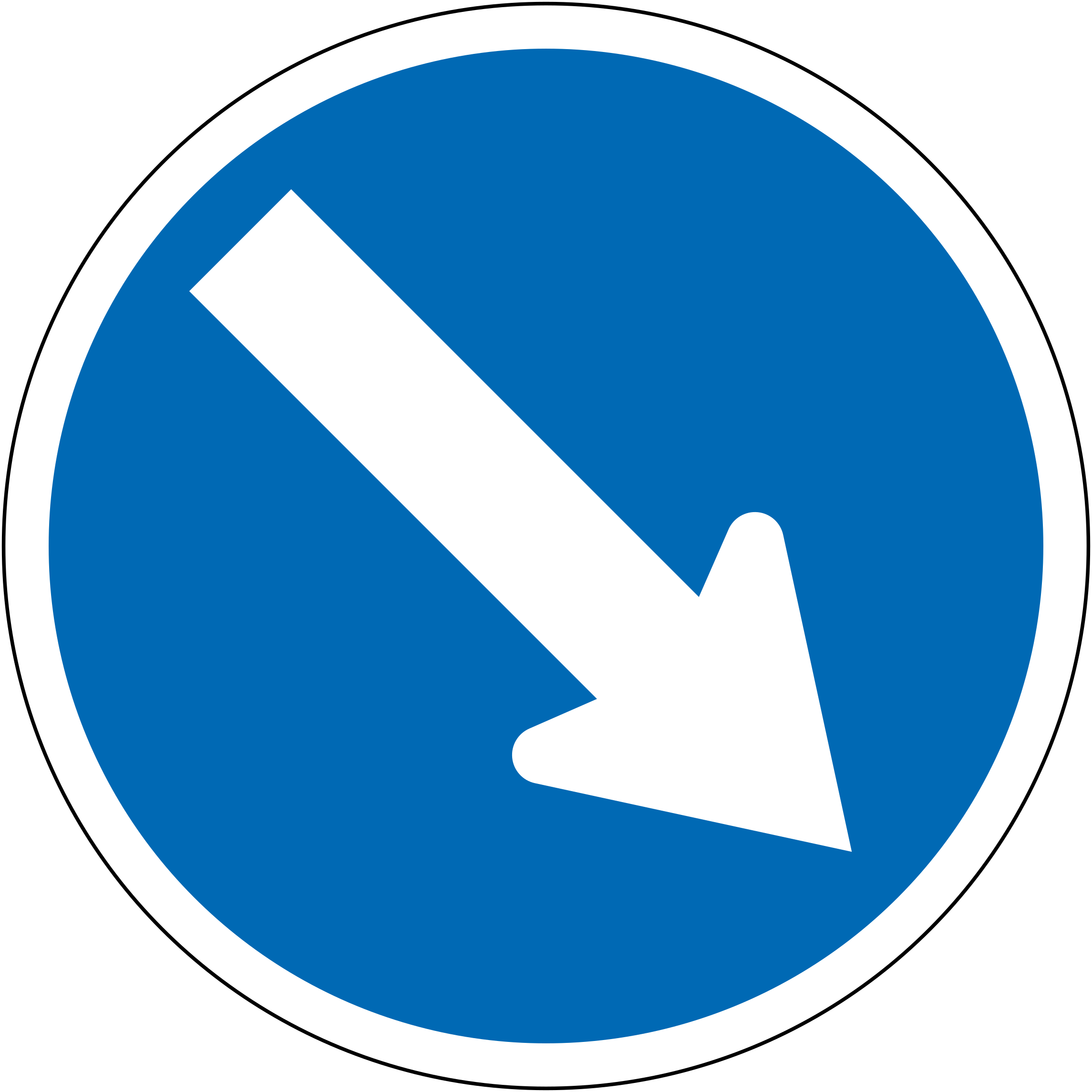
27. What does this traffic sign mean?
This traffic sign indicates that traffic must pass an obstacle on the right. Keep to the right of the obstacle and follow any accompanying signs or road markings.
English • R3-13.2 • Keep right. Pass to the right of the sign or obstruction.
Sources
🔗 Commons.wikimedia.org
🔗 Nzta.govt.nz • NZTA sign specifications • R3-13.2
Image via Commons.wikimedia.org
New Zealand Transport Agency • NZTA-Sign-Spec • Source revision 2020-04-21. Wikimedia original unmodified.
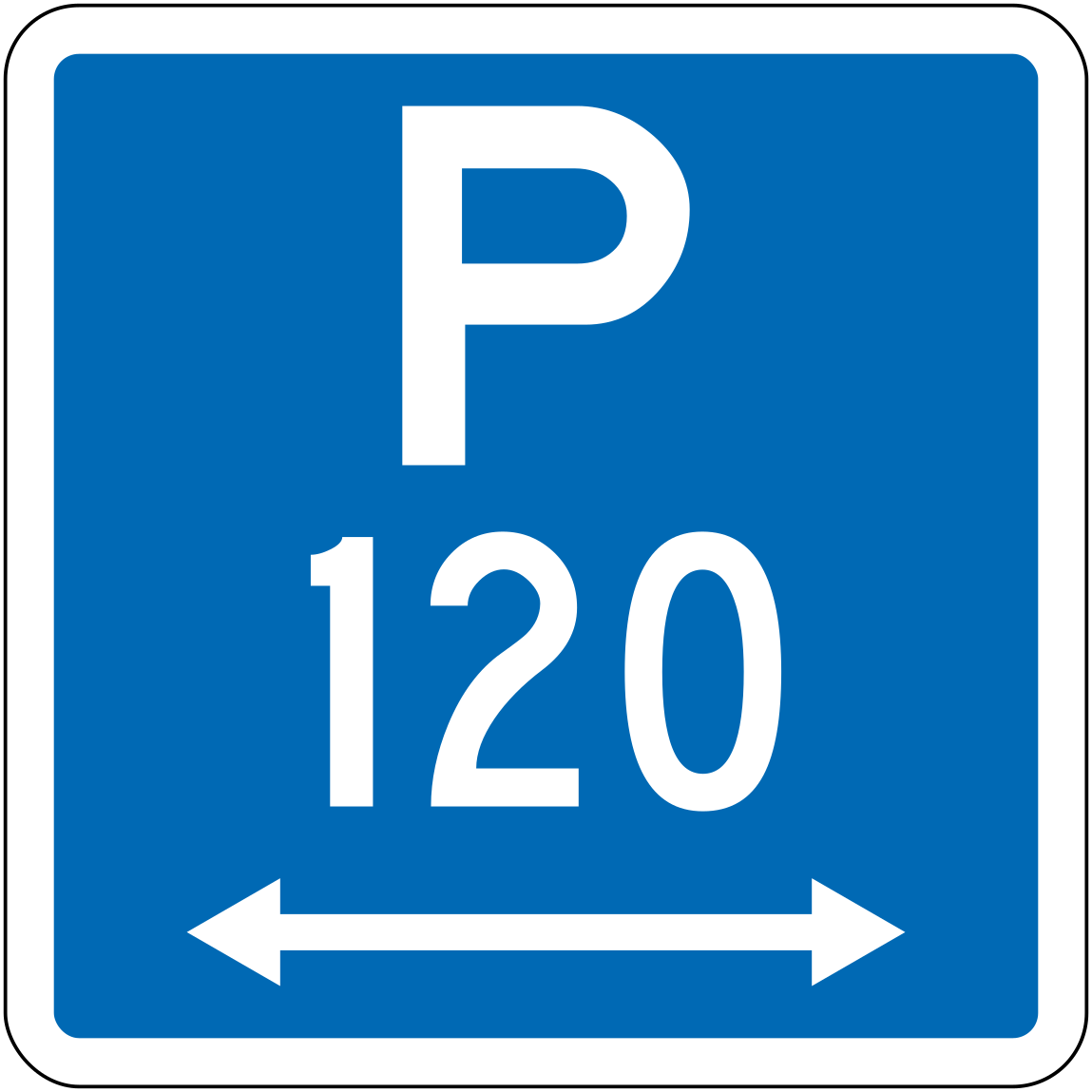
28. What does this traffic sign mean?
This traffic sign indicates that parking is allowed. Vehicles may be parked in the area covered by the sign subject to any indicated conditions, restrictions or local parking rules.
English • P120 • Parking for up to 120 minutes. Parking is permitted for up to 120 minutes along the length indicated by the arrows, during the restriction's operating times. Read any additional conditions.
Sources
🔗 Commons.wikimedia.org
🔗 Nzta.govt.nz • NZTA Road Code • parking signs
🔗 Nzta.govt.nz • NZTA Traffic Control Devices Manual • parking control
Image via Commons.wikimedia.org
New Zealand Transport Agency • NZTA-Sign-Spec • Source revision 2020-05-23. Wikimedia original unmodified.
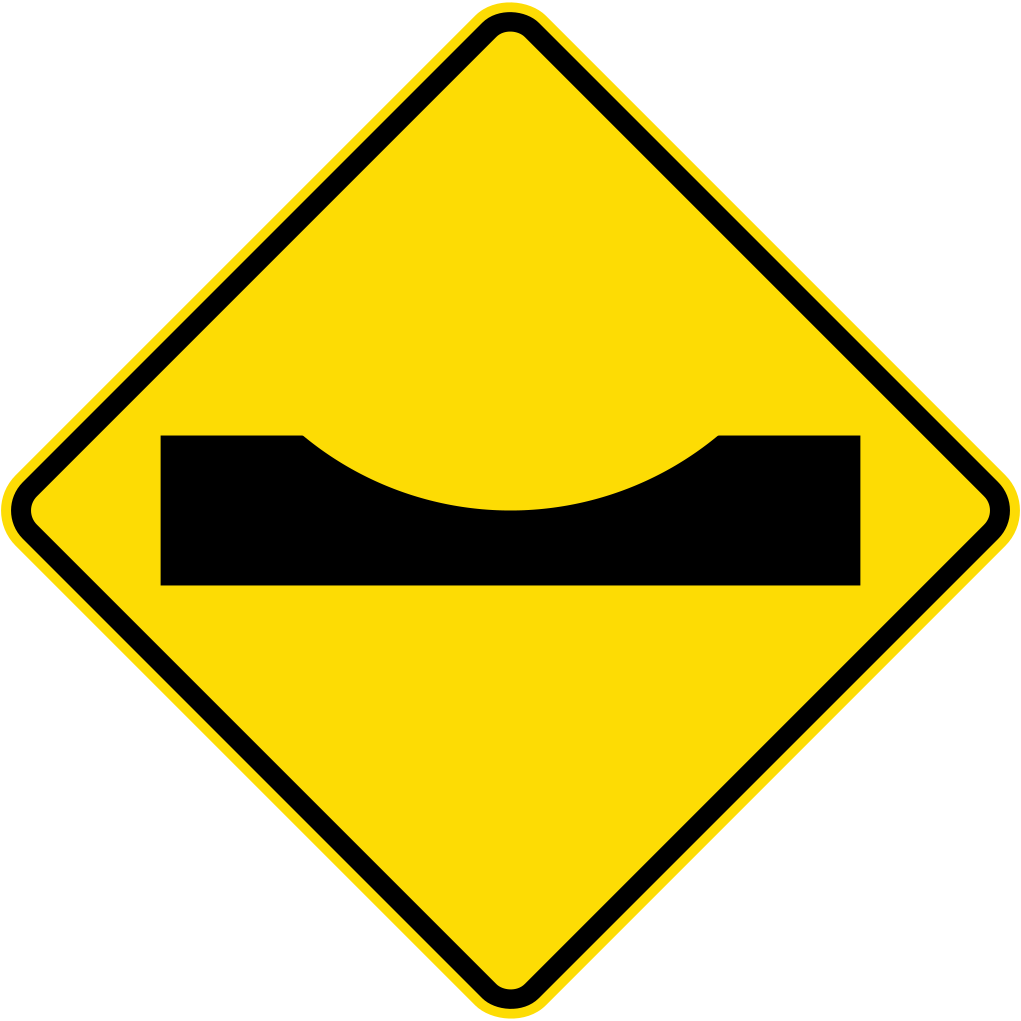
29. What does this traffic sign mean?
This traffic sign indicates a warning for a dip in the road. A sudden depression in the road surface lies ahead and may affect vehicle stability or visibility. Reduce speed before reaching the dip and be prepared for water or other hazards that may collect in the lowered section.
English • W14-3 • Dip. A dip in the road is ahead. Reduce speed before reaching it.
Sources
🔗 Commons.wikimedia.org
🔗 Nzta.govt.nz • NZTA sign specifications • W14-3
Image via Commons.wikimedia.org
New Zealand Transport Agency • NZTA-Sign-Spec • Source revision 2024-09-22. Wikimedia original unmodified.
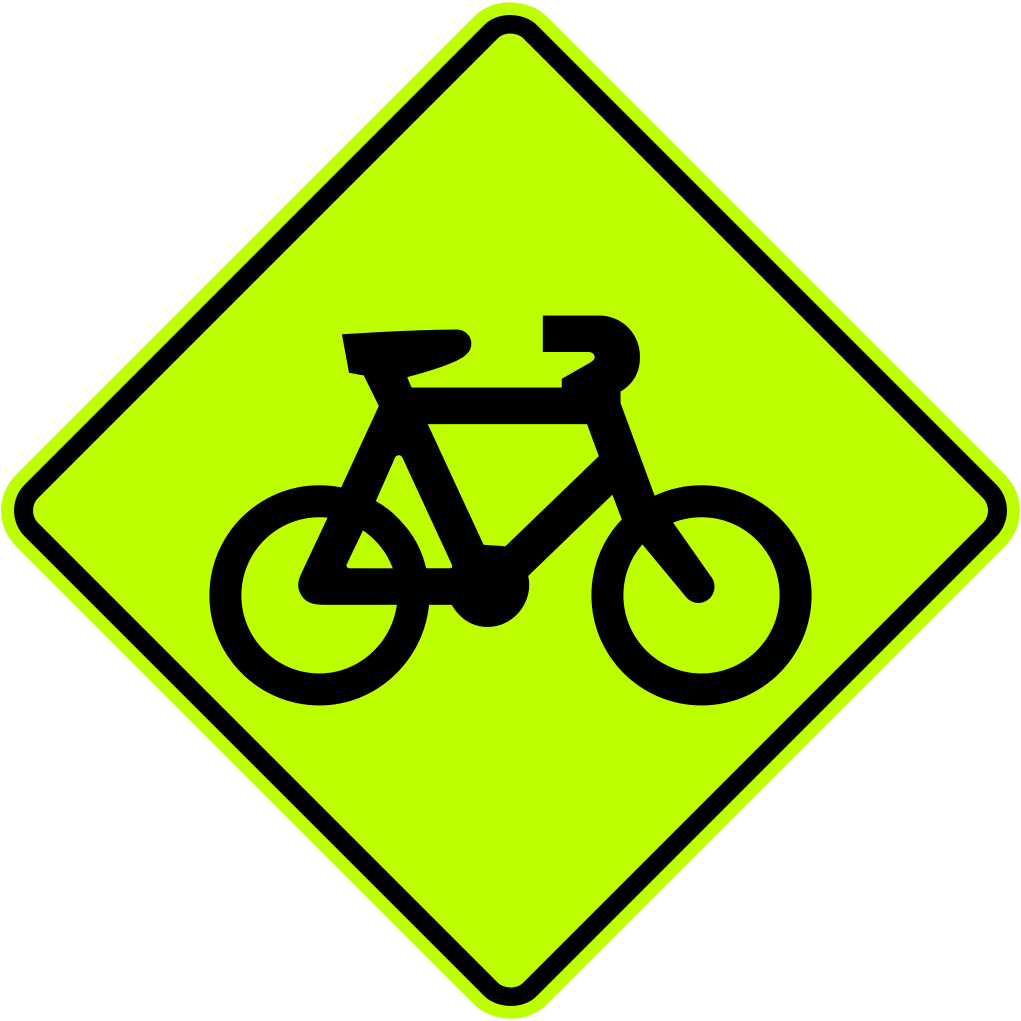
30. What does this traffic sign mean?
This traffic sign indicates a warning for cyclists. Cyclists may be riding along or crossing the road ahead. Reduce speed, watch carefully for cyclists and maintain the passing distance required by the applicable local rules.
English • W16-7 • Cyclists. Cyclists may be near or entering the roadway. Allow adequate space and watch for their movements.
Sources
🔗 Commons.wikimedia.org
🔗 Nzta.govt.nz • NZTA sign specifications • W16-7
Image via Commons.wikimedia.org
New Zealand Transport Agency • NZTA-Sign-Spec • Source revision 2024-10-26. Wikimedia original unmodified.
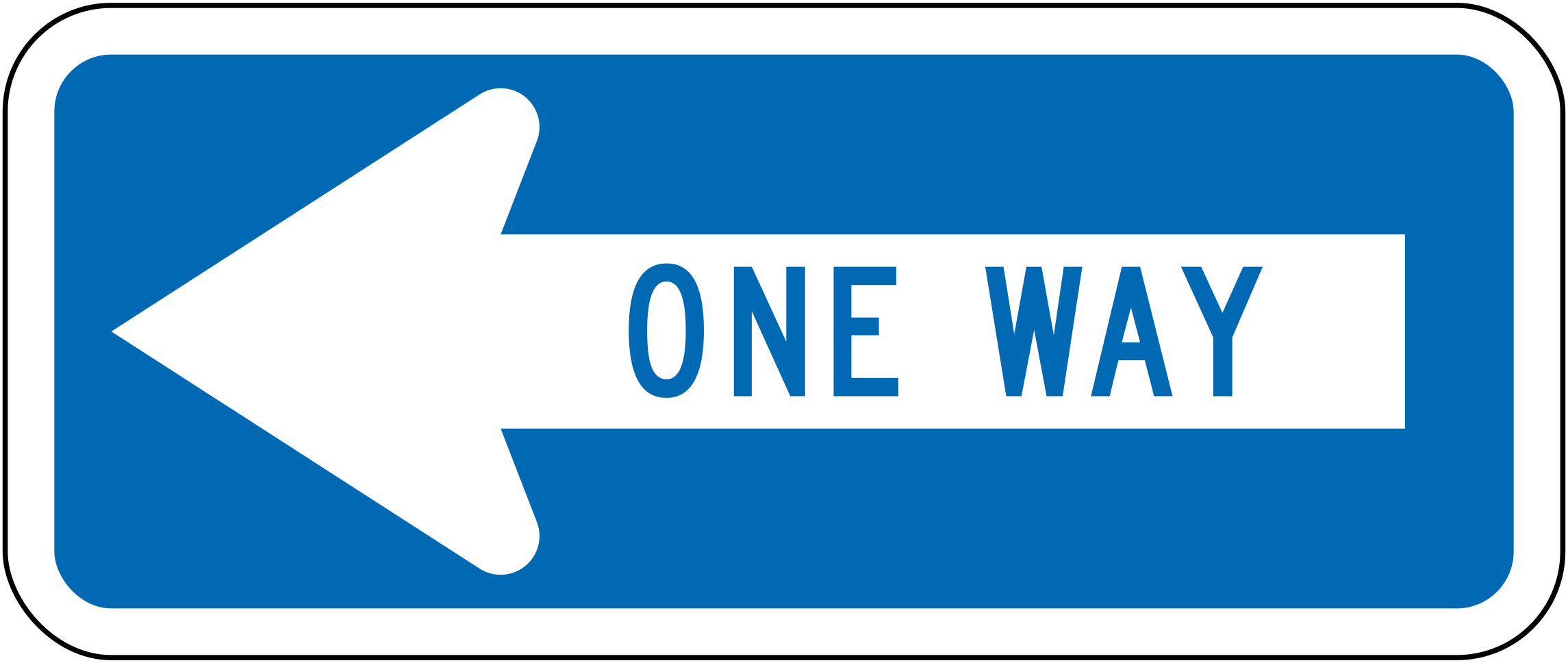
31. What does this traffic sign mean?
This traffic sign indicates a road with one-way traffic. Drivers may travel only in the permitted direction.
English • R3-12 • One-way traffic to the left. Traffic on this road travels only in the direction shown by the arrow.
Sources
🔗 Commons.wikimedia.org
🔗 Nzta.govt.nz • NZTA sign specifications • R3-12
Image via Commons.wikimedia.org
New Zealand Transport Agency • NZTA-Sign-Spec • Source revision 2020-04-27. Wikimedia original unmodified.
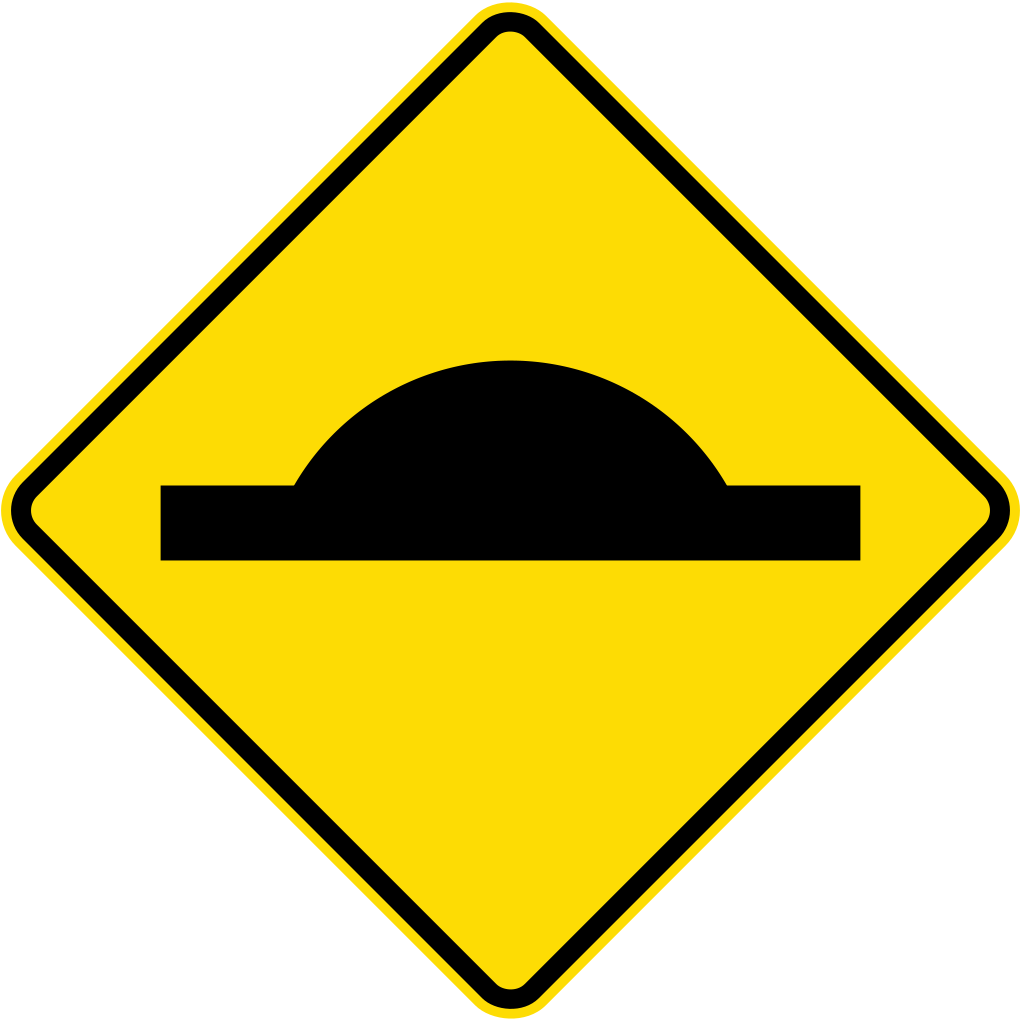
32. What does this traffic sign mean?
This traffic sign indicates a warning for a speed bump. A raised traffic-calming feature lies ahead. Reduce speed before reaching it to maintain vehicle control and avoid damage or discomfort.
English • W14-4 • Hump. A hump in the road is ahead. Slow down before reaching it.
Sources
🔗 Commons.wikimedia.org
🔗 Nzta.govt.nz • NZTA sign specifications • W14-4
Image via Commons.wikimedia.org
New Zealand Transport Agency • NZTA-Sign-Spec • Source revision 2024-09-22. Wikimedia original unmodified.
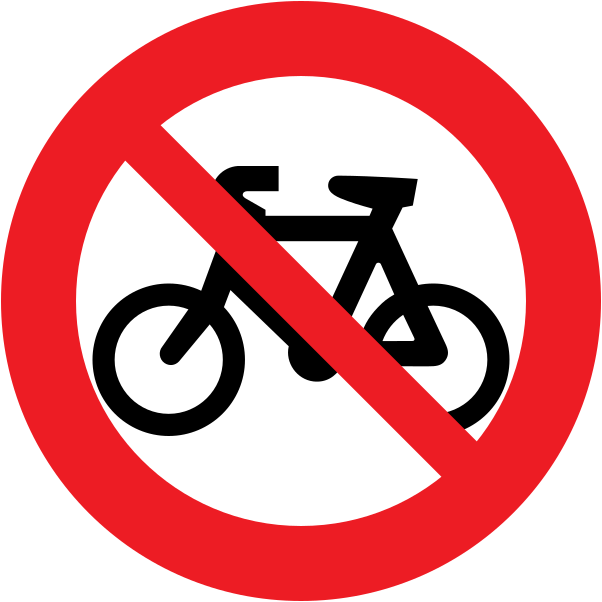
33. What does this traffic sign mean?
This traffic sign indicates that cyclists are prohibited. Cyclists may not enter or continue beyond the sign. Other road users may still be permitted unless another restriction applies.
English • R5-1 • No cycling. Cycling beyond this sign is prohibited. Observe any additional access restrictions.
Sources
🔗 Commons.wikimedia.org
🔗 Nzta.govt.nz • NZTA sign specifications • R5-1
Image via Commons.wikimedia.org
New Zealand Transport Agency • NZTA-Sign-Spec • Source revision 2024-12-21. Wikimedia original unmodified.
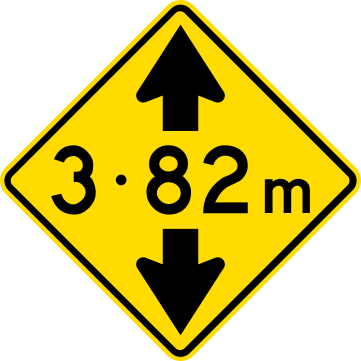
34. What does this traffic sign mean?
This traffic sign indicates a warning for a height restriction. The available clearance ahead is limited, for example at a bridge, tunnel or other overhead structure. Drivers of tall vehicles should check their vehicle height and use another route if the vehicle cannot pass safely.
English • W13-4 • Low overhead clearance: 3.82 m. An overhead obstruction has the displayed clearance of 3.82 m. Check the height of your vehicle and load before proceeding.
Sources
🔗 Commons.wikimedia.org
🔗 Nzta.govt.nz • NZTA sign specifications • W13-4
SVG source: New Zealand Transport Agency • Public domain • Original revision 2012-07-04. Wikimedia original unmodified.
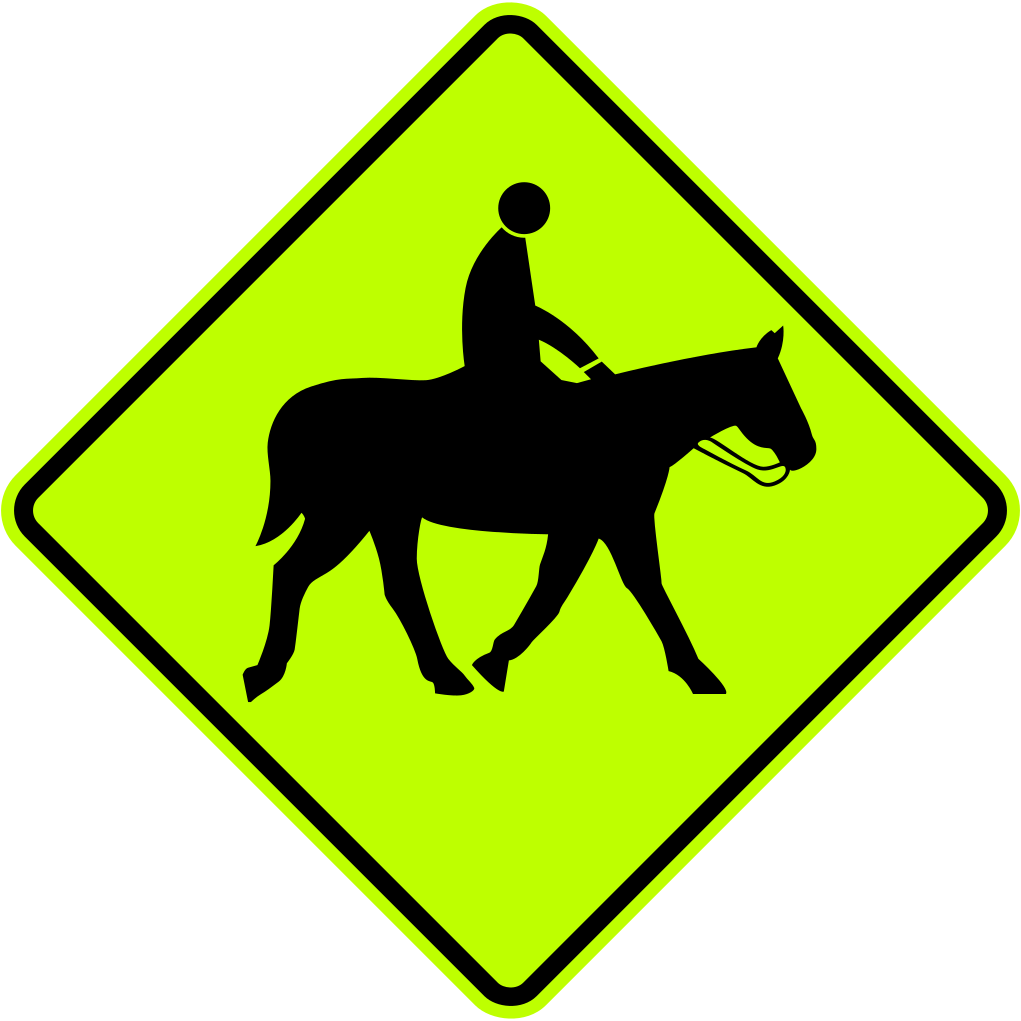
35. What does this traffic sign mean?
This traffic sign indicates a warning for equestrians. Horse riders may be on or near the road ahead. Reduce speed, allow plenty of space and avoid unnecessary use of the horn or sudden movements that could startle a horse.
English • W16-8 • Equestrians. Horse riders may be on or crossing the road. Slow down, leave space and avoid startling horses.
Sources
🔗 Commons.wikimedia.org
🔗 Nzta.govt.nz • NZTA sign specifications • W16-8
Image via Commons.wikimedia.org
New Zealand Transport Agency • NZTA-Sign-Spec • Source revision 2024-10-28. Wikimedia original unmodified.
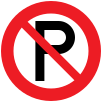
36. What does this traffic sign mean?
This traffic sign indicates that parking is prohibited. Vehicles may not be parked in the area covered by the sign unless an exception applies. Brief stopping to pick up or drop off passengers or to load or unload goods may still be permitted where local rules allow it.
English • R6-70 / R6-1B component • No parking. Parking is prohibited where the restriction applies. Read any accompanying times, arrows or conditions.
Sources
🔗 Commons.wikimedia.org
🔗 Nzta.govt.nz • NZTA sign specifications • R6-70 / R6-1B component
Image via Commons.wikimedia.org
New Zealand Transport Agency • NZTA-Sign-Spec • Source revision 2024-12-30. Wikimedia original unmodified.
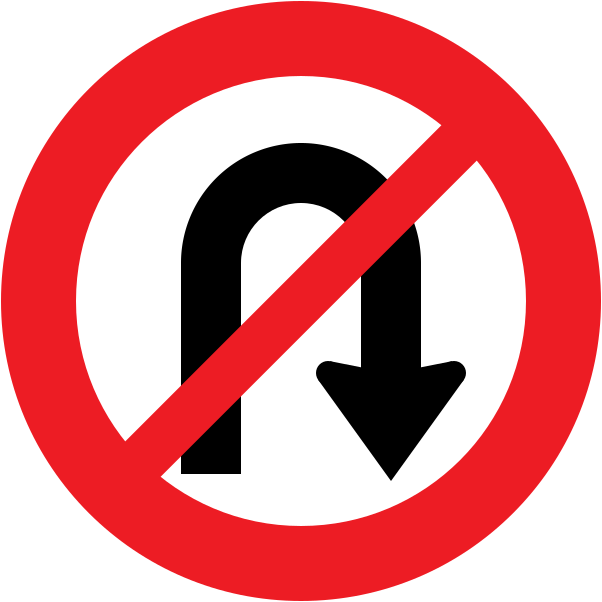
37. What does this traffic sign mean?
This traffic sign indicates that turning around (making a U-turn) is prohibited. A U-turn may not be made where the prohibition applies. Other movements may still be permitted unless another restriction applies.
English • R3-3 • No U-turn. Do not make a U-turn at the signed location.
Sources
🔗 Commons.wikimedia.org
🔗 Nzta.govt.nz • NZTA sign specifications • R3-3
Image via Commons.wikimedia.org
New Zealand Transport Agency • NZTA-Sign-Spec • Source revision 2024-12-13. Wikimedia original unmodified.
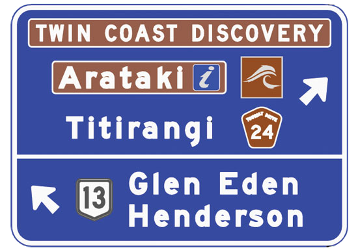
38. What does this traffic sign mean?
This traffic sign gives general information about road directions. The arrows, destinations and route information show which direction to follow.
English • Direction guide • Destination direction signs. The arrows show the directions to the named destinations and facilities. Follow the appropriate arrow for your route. Illustration identified by its sign family or meaning; the exact current prescribed design has not been confirmed.
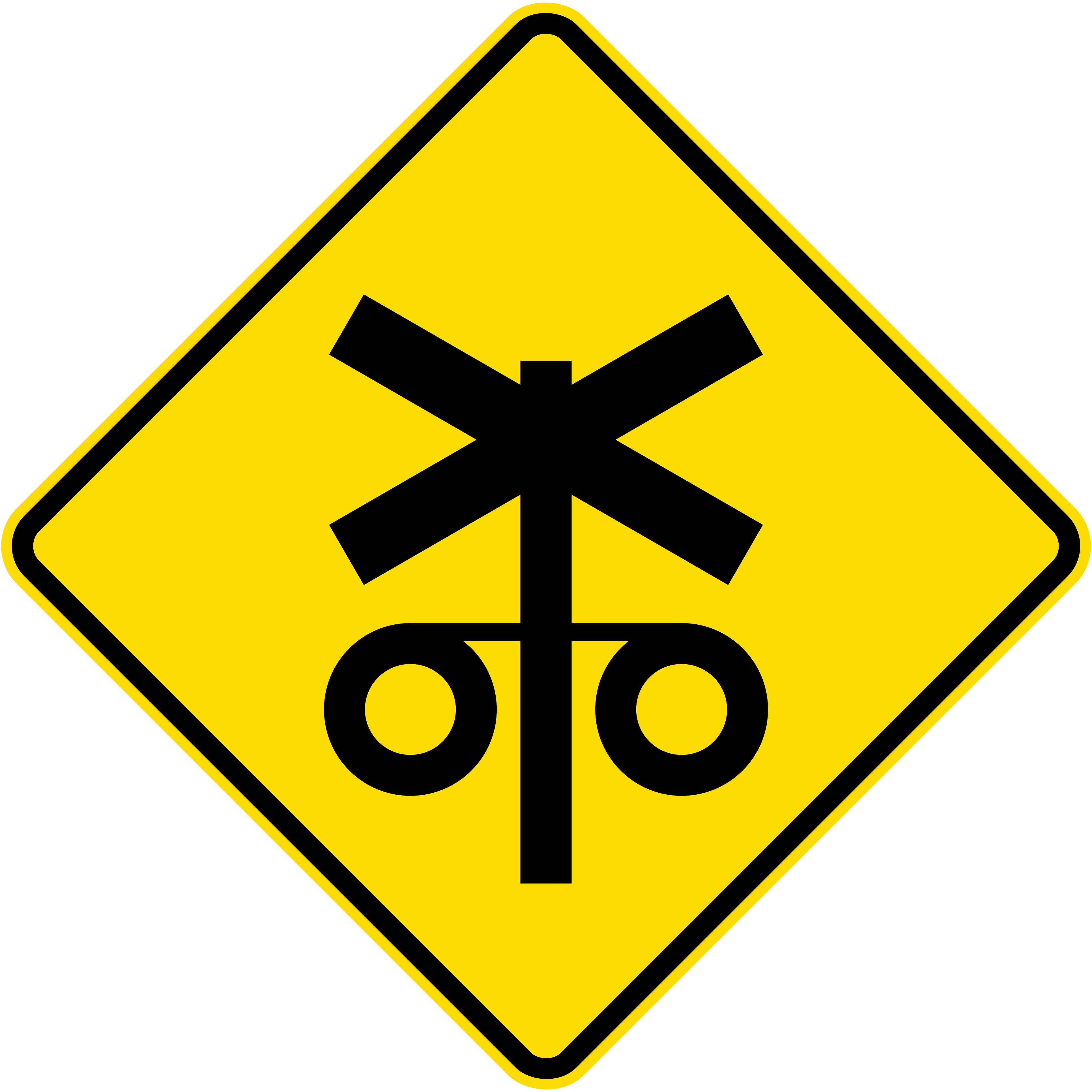
39. What does this traffic sign mean?
This traffic sign indicates a warning for a railway crossing with barriers. It alerts drivers to an upcoming level crossing with gates or barriers that close when a train approaches. Drivers should be ready to stop when the barriers are down or flashing lights activate. Never attempt to cross when gates are closing or closed.
English • W15-6 • Railway flashing signals ahead. A railway crossing with flashing light signals is ahead. Be prepared to stop when the signals operate.
Sources
🔗 Commons.wikimedia.org
🔗 Nzta.govt.nz • NZTA sign specifications • W15-6
Image via Commons.wikimedia.org
New Zealand Transport Agency • NZTA-Sign-Spec • Source revision 2021-01-23. Wikimedia original unmodified.
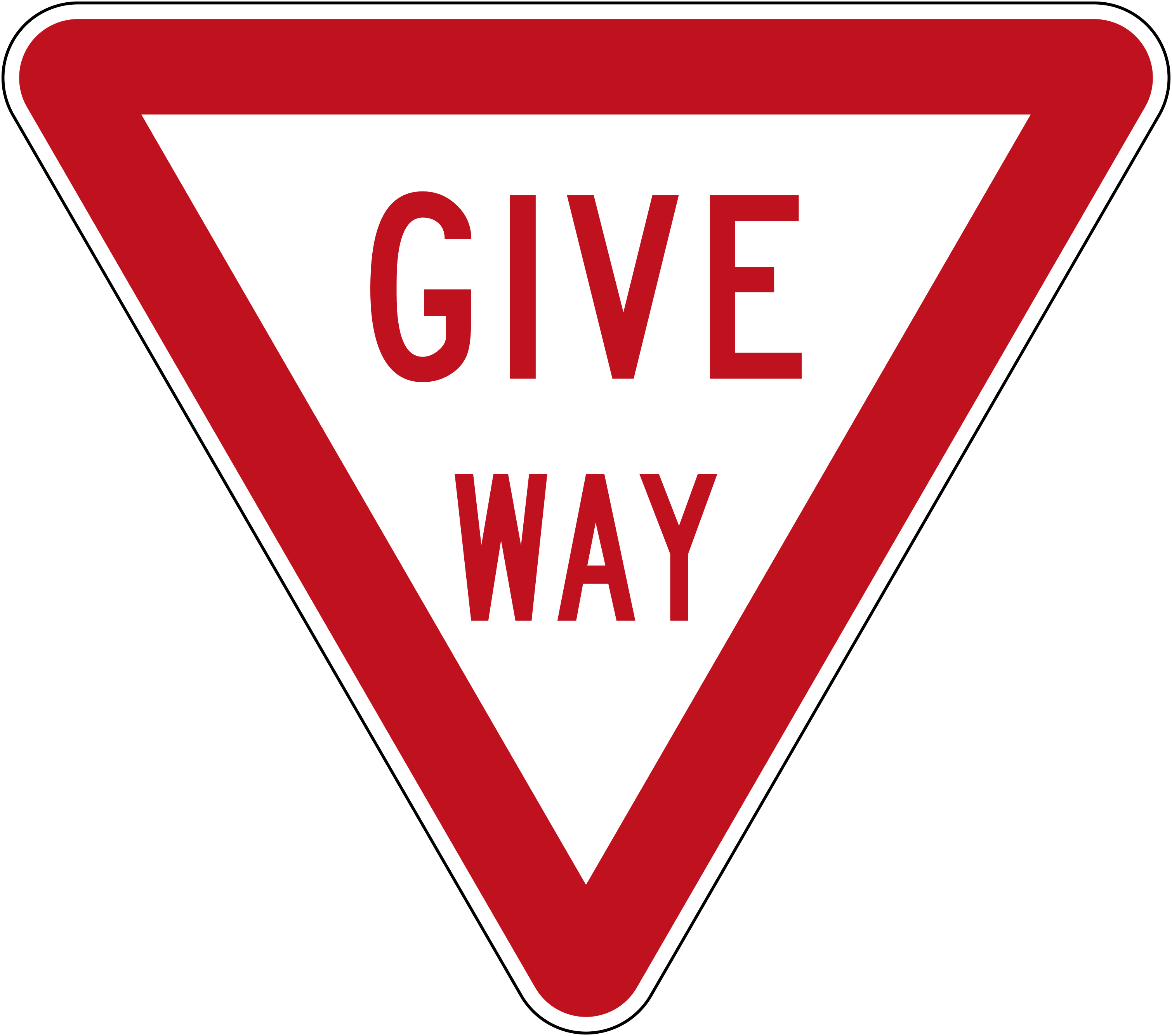
40. What does this traffic sign mean?
This traffic sign means give way. Slow down and give way to traffic that has priority. Stop if necessary and proceed only when it is safe.
English • R2-2 • Give way. Slow down and give way to traffic with priority; stop if necessary.
Sources
🔗 Commons.wikimedia.org
🔗 Nzta.govt.nz • NZTA sign specifications • R2-2
Image via Commons.wikimedia.org
New Zealand Transport Agency • NZTA-Sign-Spec • Source revision 2020-05-07. Wikimedia original unmodified.
41. What does this traffic sign mean?
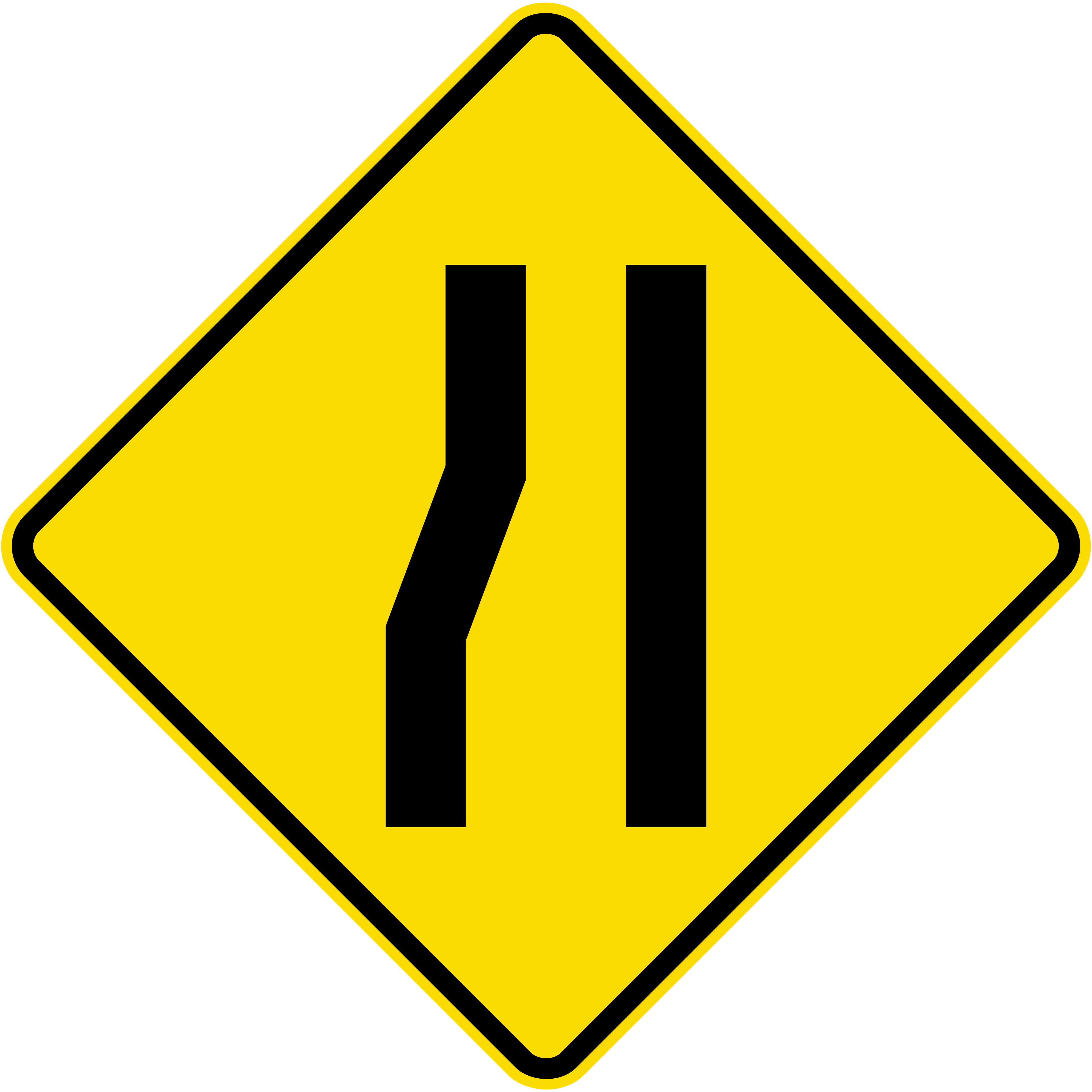
This traffic sign indicates a warning for a road narrowing on the left. The available road width decreases from the left side ahead. Reduce speed, follow the lane markings and maintain sufficient clearance from other traffic and the road edge.
English • W13-1 • Road narrows on the left. The road becomes narrower on the left. Watch for vehicles changing position.
Sources
🔗 Commons.wikimedia.org
🔗 Nzta.govt.nz • NZTA sign specifications • W13-1
Image via Commons.wikimedia.org
New Zealand Transport Agency • NZTA-Sign-Spec • Source revision 2021-02-05. Wikimedia original unmodified.
42. What does this traffic sign mean?
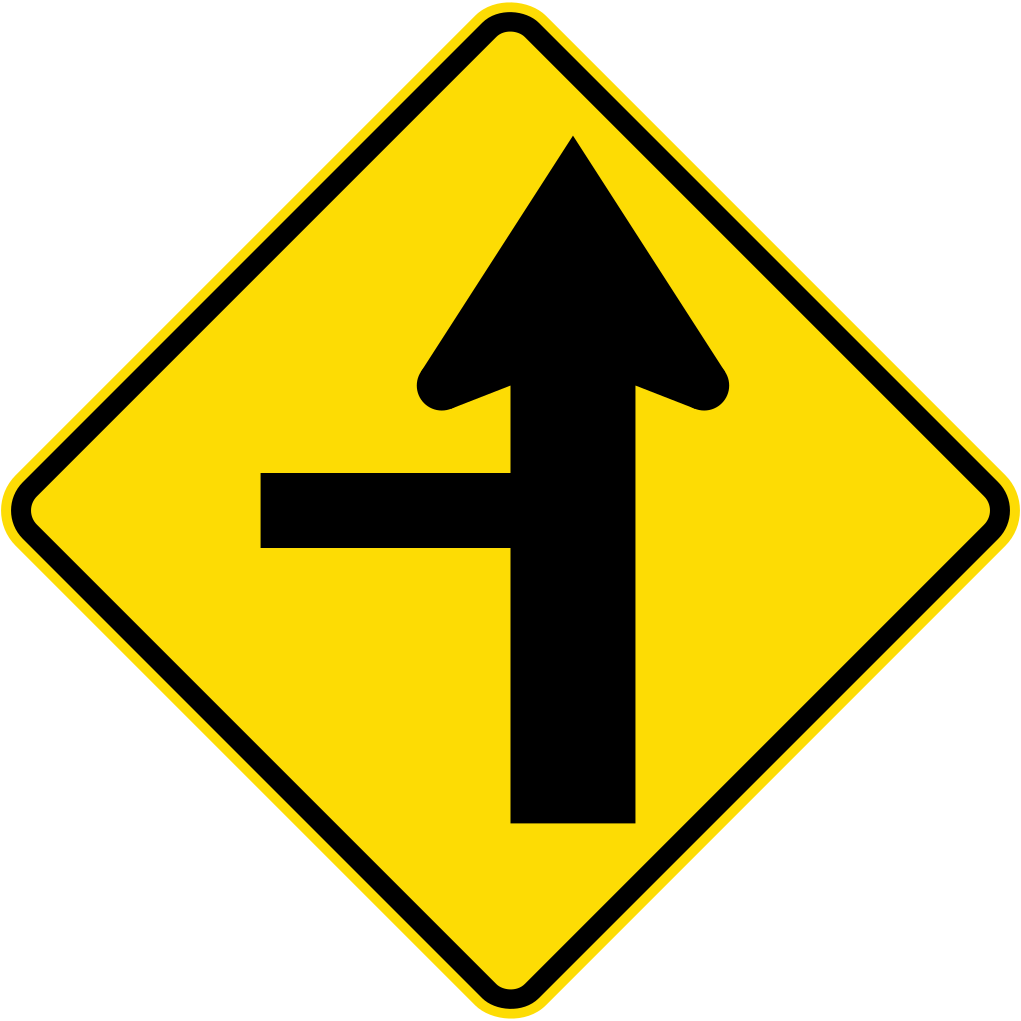
This traffic sign indicates that you have priority at the next intersection. A side road joins from the left, and traffic entering from that side road must give way.
English • W11-4 • Side road on the left. A minor road joins from the left; the diagram shows the main route continuing straight ahead. Watch for joining traffic.
Sources
🔗 Commons.wikimedia.org
🔗 Nzta.govt.nz • NZTA sign specifications • W11-4
Image via Commons.wikimedia.org
New Zealand Transport Agency • NZTA-Sign-Spec • Source revision 2024-11-03. Wikimedia original unmodified.
43. What does this traffic sign mean?
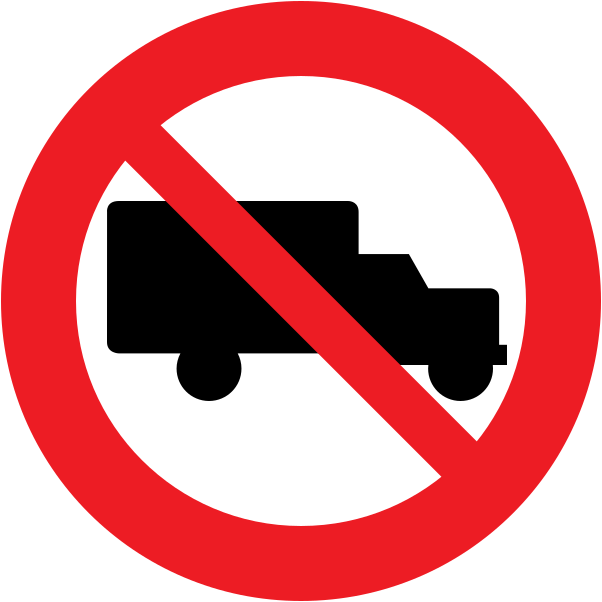
This traffic sign indicates that trucks are prohibited. Trucks covered by the sign may not enter or continue beyond it. Any applicable weight threshold or vehicle-category limitation is determined by the sign, supplementary information and local rules.
English • R5-3 • No heavy vehicles. Heavy vehicles must not enter beyond this sign. Observe any signed exceptions.
Sources
🔗 Commons.wikimedia.org
🔗 Nzta.govt.nz • NZTA sign specifications • R5-3
Image via Commons.wikimedia.org
New Zealand Transport Agency • NZTA-Sign-Spec • Source revision 2024-12-22. Wikimedia original unmodified.
44. What does this traffic sign mean?
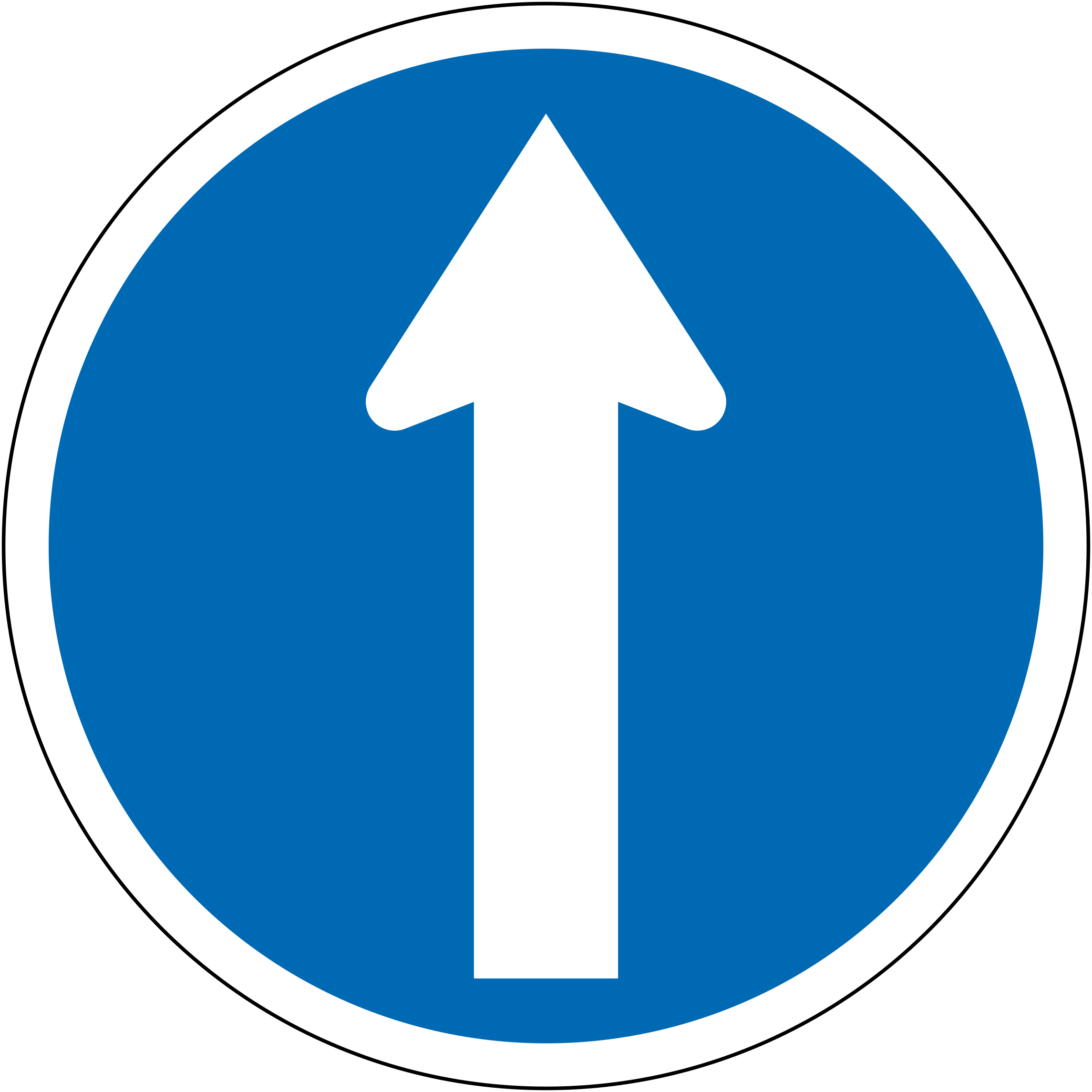
This traffic sign indicates that driving straight ahead is mandatory. Traffic must continue straight ahead and may not turn left or right at the location to which the sign applies.
English • R3-9 • No turns. Continue straight ahead at the signed location; do not turn.
Sources
🔗 Commons.wikimedia.org
🔗 Nzta.govt.nz • NZTA sign specifications • R3-9
Image via Commons.wikimedia.org
New Zealand Transport Agency • NZTA-Sign-Spec • Source revision 2020-04-21. Wikimedia original unmodified.
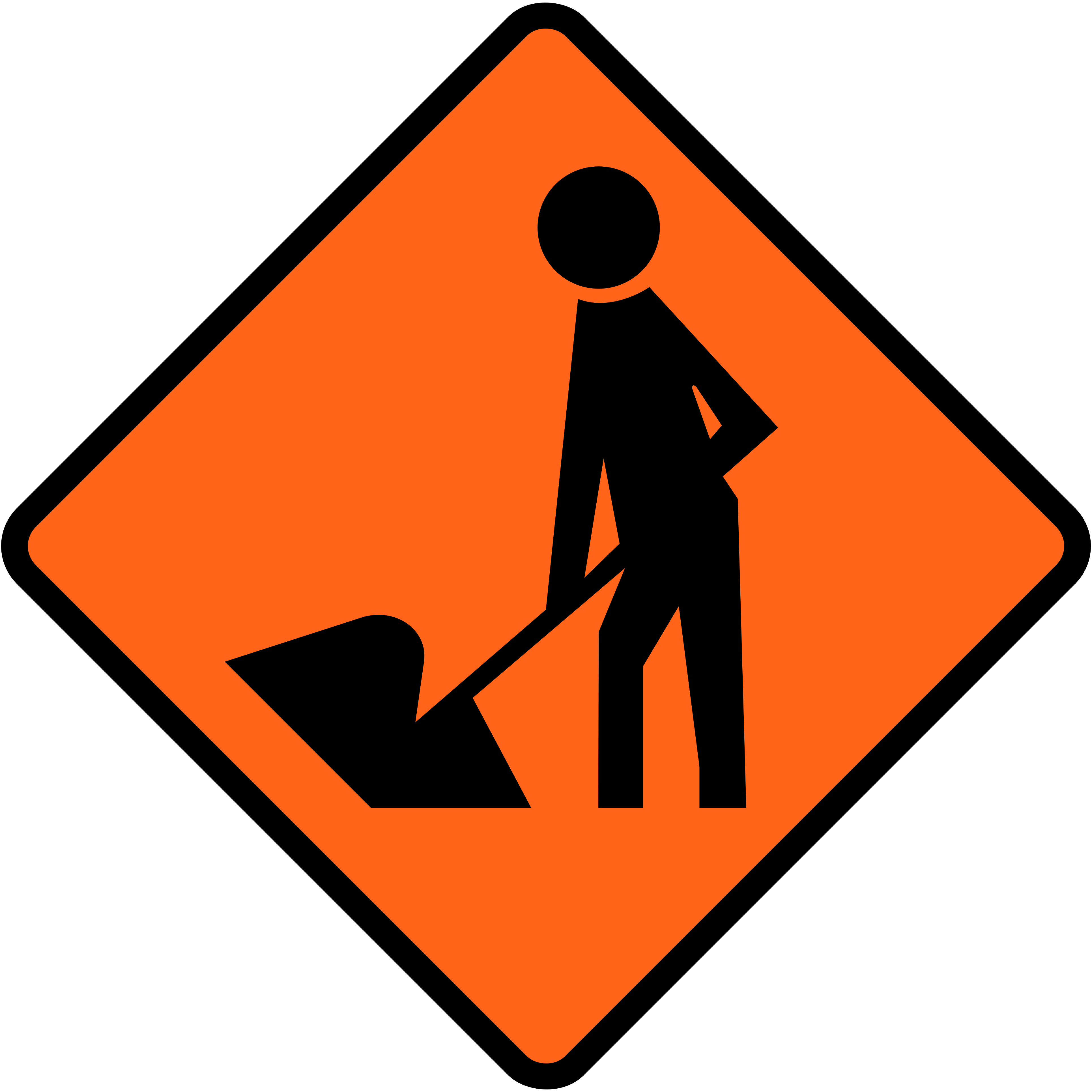
45. What does this traffic sign mean?
This traffic sign indicates a warning for roadworks. Construction or maintenance work is taking place on or beside the road. Reduce speed where necessary and be prepared for workers, machinery, temporary traffic signals, changed lane layouts or uneven road surfaces.
English • S29 symbol • Roadworks warning. Roadworks are ahead. Reduce speed and follow temporary signs, signals and traffic-controller instructions.
Sources
🔗 Commons.wikimedia.org
🔗 Nzta.govt.nz • NZTA Road Code • main types of signs
🔗 Nzta.govt.nz • NZTA sign specifications • S29 roadworks symbol
Image via Commons.wikimedia.org
New Zealand Transport Agency • NZTA-Sign-Spec • Source revision 2020-11-02. Wikimedia original unmodified.
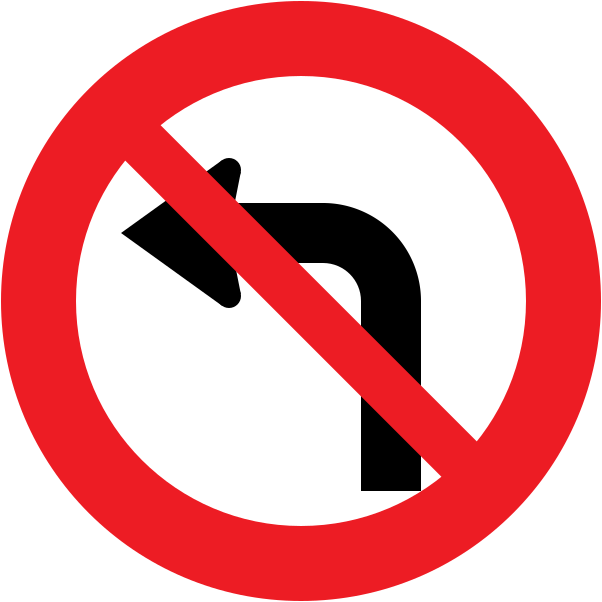
46. What does this traffic sign mean?
This traffic sign indicates that turning left is prohibited. A left turn may not be made where the sign applies. Other movements may still be permitted unless another restriction applies.
English • R3-1 • No left turn. Do not turn left at the signed location.
Sources
🔗 Commons.wikimedia.org
🔗 Nzta.govt.nz • NZTA sign specifications • R3-1
Image via Commons.wikimedia.org
New Zealand Transport Agency • NZTA-Sign-Spec • Source revision 2024-12-13. Wikimedia original unmodified.
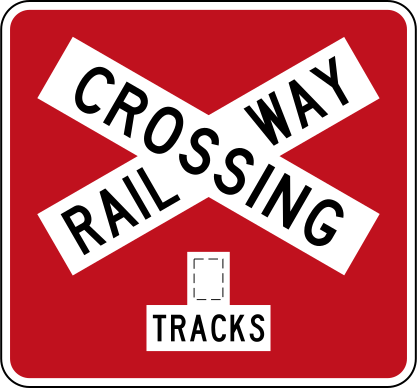
47. What does this traffic sign mean?
This traffic sign indicates a warning for a railway crossing with two or more tracks. It alerts drivers to a level crossing where more than one railway track crosses the road. More than one train may pass in succession or from different directions, so drivers should check carefully before crossing and never proceed until all tracks are clear.
English • W15-3 family • Railway crossbuck with track plate. This marks a railway crossing with a plate identifying the number of tracks. Check every track and obey the crossing controls; the illustrated plate does not display a readable track count. Illustration identified by its sign family or meaning; the exact current prescribed design has not been confirmed.
Sources
🔗 Commons.wikimedia.org
🔗 Nzta.govt.nz • NZTA sign specifications • W15-3.1
SVG source: New Zealand Transport Agency • Public domain • Original revision 2012-11-09. Wikimedia original unmodified.
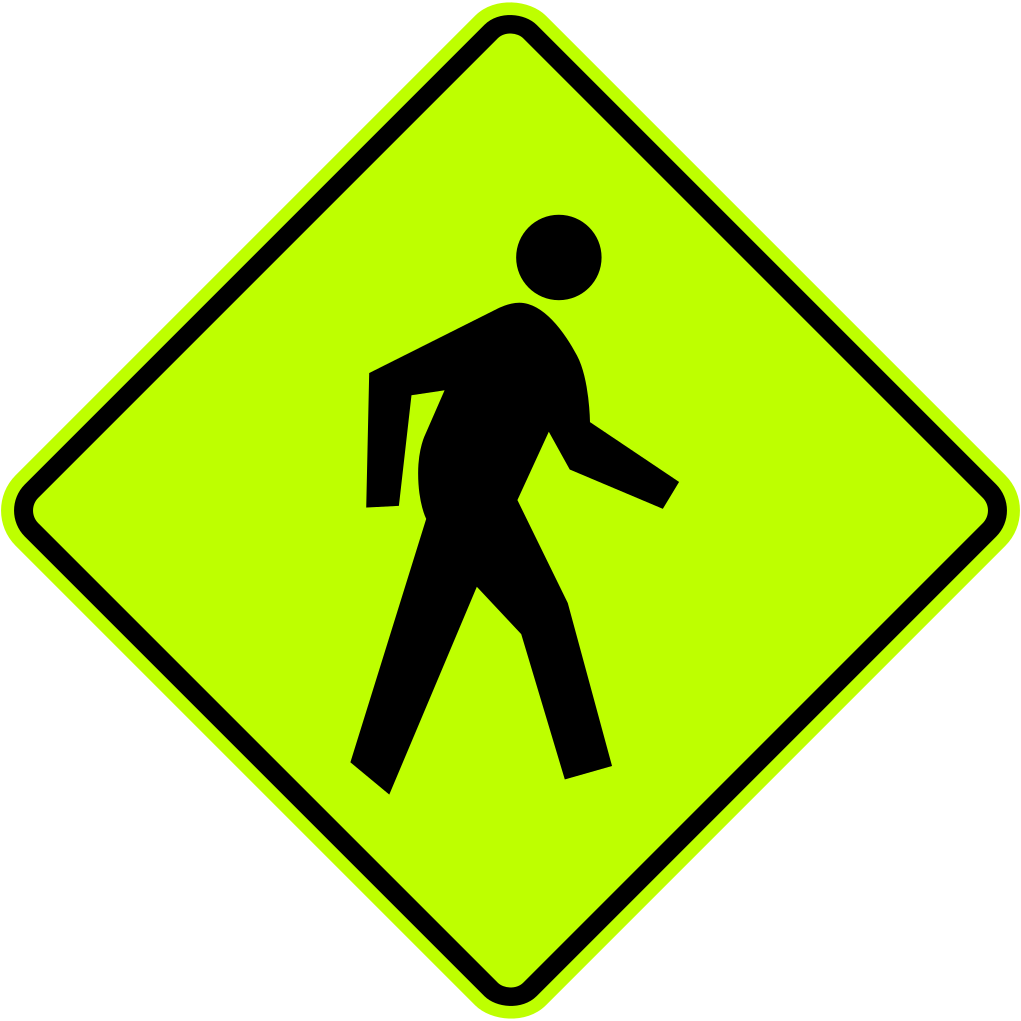
48. What does this traffic sign mean?
This traffic sign indicates a warning for pedestrians. Pedestrians may be walking near or crossing the road ahead. Reduce speed, watch carefully and be prepared to stop.
English • W16-1 • Pedestrians. Pedestrians may be on or crossing the road. Slow down and watch carefully.
Sources
🔗 Commons.wikimedia.org
🔗 Nzta.govt.nz • NZTA sign specifications • W16-1
Image via Commons.wikimedia.org
New Zealand Transport Agency • NZTA-Sign-Spec • Source revision 2024-10-16. Wikimedia original unmodified.
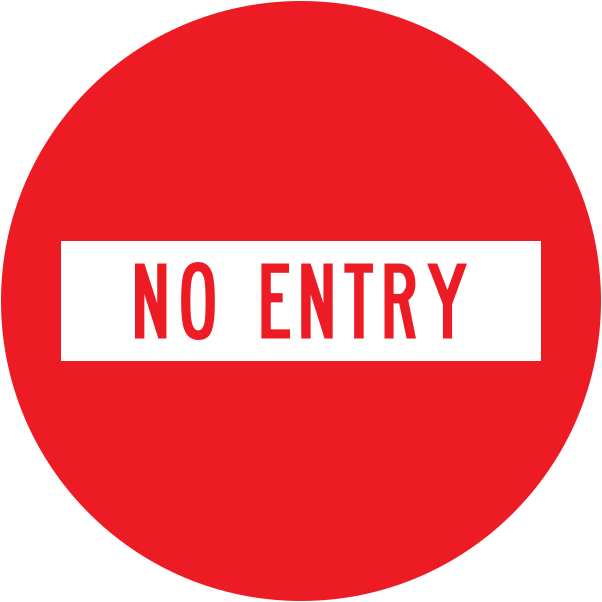
49. What does this traffic sign mean?
This traffic sign means no entry. Drivers may not enter from the direction in which the sign is placed.
English • R3-4 • No entry. Do not enter the road from this direction.
Sources
🔗 Commons.wikimedia.org
🔗 Nzta.govt.nz • NZTA sign specifications • R3-4
Image via Commons.wikimedia.org
New Zealand Transport Agency • NZTA-Sign-Spec • Source revision 2024-12-14. Wikimedia original unmodified.
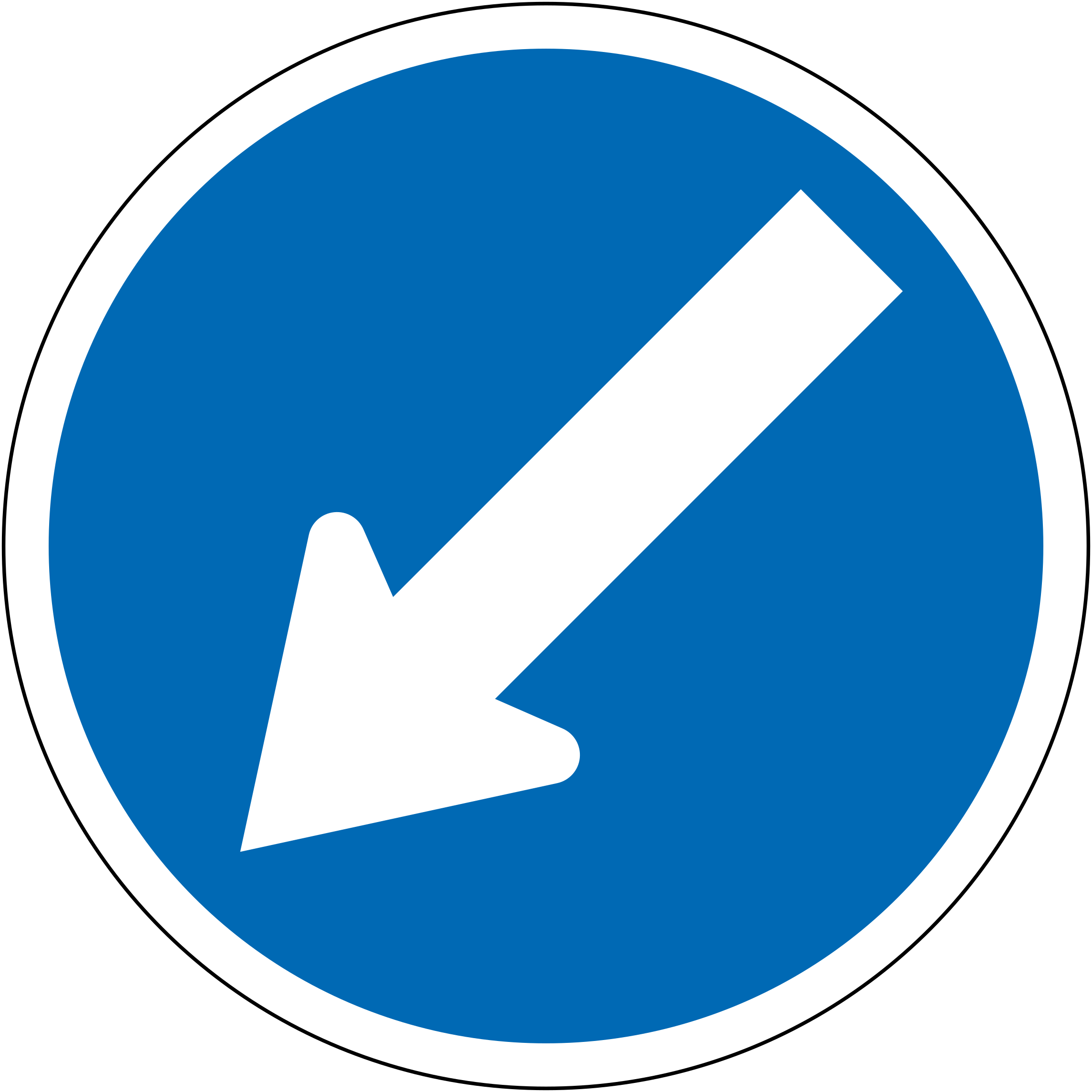
50. What does this traffic sign mean?
This traffic sign indicates that traffic must pass an obstacle on the left. Keep to the left of the obstacle and follow any accompanying signs or road markings.
English • R3-13 • Keep left. Pass to the left of the sign or obstruction.
Sources
🔗 Commons.wikimedia.org
🔗 Nzta.govt.nz • NZTA sign specifications • R3-13
Image via Commons.wikimedia.org
New Zealand Transport Agency • NZTA-Sign-Spec • Source revision 2020-04-21. Wikimedia original unmodified.