


Traffic rulesSlovakia
 Traffic rules
 Slovakia
1. Slovakia
Slovakia is a landlocked country in Central Europe, bordered by Czechia, Austria, Hungary, Ukraine and Poland. Traffic drives on the right. The centre and north of the country are dominated by the Carpathians, including the Tatras, while lower and flatter terrain is more typical in the south and east. This makes mountain gradients, winding roads and rapidly changing winter conditions important considerations outside the main motorway corridors. Slovak is the official language, and visitors should expect written information on road signs primarily in Slovak alongside standard European traffic symbols.
For visitors, a key practical feature is Slovakia's electronic motorway vignette, required on designated sections of motorways and express routes; there is no physical windscreen sticker, and not every motorway section is tolled. Winter-tyre rules for passenger cars are condition-based rather than tied to fixed dates: suitable winter tyres are required on all axles when continuous snow, ice or frost covers the road, or when such conditions can reasonably be expected along the planned route. Slovakia also requires daytime lights throughout the year and applies zero tolerance for alcohol to motor-vehicle drivers.
AI-generated by Rijbewijs-online.be • WCIT • CC BY-SA
Which number can you call in an emergency in Slovakia?
Call 112 for urgent emergency assistance. Give the operator your location and explain what happened.
🔗 slovensko.sk • Slovak Government, services through national emergency numbers
What is the alcohol limit for driving in Slovakia?
Slovakia applies zero tolerance for alcohol to motor-vehicle drivers. Do not drive while alcohol may still be present in your body.
What speed limits apply to passenger cars in Slovakia?
Built-up areas: The general maximum speed in a built-up area is 50 km/h, unless signs establish another limit.
Outside built-up areas: For an ordinary passenger car up to 3.5 tonnes, the general maximum outside built-up areas is 90 km/h, unless another limit applies.
Motorways: For an ordinary motor vehicle up to 3.5 tonnes, the general motorway maximum is 130 km/h, unless signs impose another limit.
What are the seat-belt and child-restraint rules in Slovakia?
A person sitting in a seat equipped with a seat belt or other required restraint must use the available restraint system, subject to limited statutory exemptions.
Children shorter than 150 cm must normally use a suitable approved child restraint in a car fitted with safety systems. A rear-facing seat must not be used in front of an active frontal airbag.
A child aged 3 or older may use a rear-seat belt when two installed restraints leave no space for a third. Another limited exception permits a rear-seat belt for a child aged 3 or older within a built-up area if child restraints are absent or insufficient. Children under 3 may not occupy a seat without a safety system.
Can you use a mobile phone while driving in Slovakia?
A driver must not hold or operate a mobile phone or similar device while driving. Use is permitted through a hands-free system.
Are winter tyres mandatory in Slovakia?
For passenger cars and light goods vehicles, winter tyres are required on all axles when the road has a continuous layer of snow, ice or frost. Drivers must also equip the vehicle when, considering the season, such conditions can reasonably be expected along the route.
Can a visitor use a driving licence issued in another EU country in Slovakia?
Yes. A valid, full EU driving licence is recognised for the vehicle categories it covers. You must meet the applicable minimum age. A learner licence or a temporary replacement certificate does not have the same automatic recognition.
Are motorcycle helmets compulsory in Slovakia?
Yes. On an ordinary, open motorcycle, both the rider and passenger must wear a protective helmet. Use a helmet that meets the applicable approval requirements and fasten it correctly. Check the specific rules before relying on an exemption for an enclosed or specially equipped vehicle.

2. Motorway
A motorway is a road specially designed and signposted for motor traffic. Motorways normally have separate carriageways for opposing traffic, controlled access through designated entrances and exits, no direct access to neighbouring properties, and no level crossings with other roads, railways or paths.
Special traffic rules apply on motorways. The permitted road users, speed limits, lane rules, tolls and emergency procedures vary between countries, so drivers must follow the local traffic signs and regulations.
Wikimedia.org • Doko • CC BY-SA
How do people refer to a motorway in Slovakia?
The Slovak term is diaľnica. Use the road’s legal designation and signs to identify where motorway rules begin.
🔗 static.slov-lex.sk • Slovakia: Traffic Signs Decree 30/2020, effective 31 March 2024
 Start of a motorway.
English • Traffic sign 309 • Motorway. The sign marks the point from which motorway traffic rules apply and from which use of the motorway is subject to payment by motorway vignette.
Slovenčina • Dopravná značka 309 • Diaľnica. Značka označuje miesto, od ktorého platia pravidlá cestnej premávky o správaní sa na diaľnici a miesto, od ktorého užívanie diaľnice podlieha úhrade diaľničnou známkou.
Sources
🔗 Commons.wikimedia.org
🔗 Static.slov-lex.sk • Vyhláška č. 30/2020 Z. z. • značka 309 • znenie účinné od 31. 3. 2024
Image via Commons.wikimedia.org
Ministry of Interior of the Slovak Republic • Public domain • Source revision 2010-08-27. Wikimedia original unmodified.
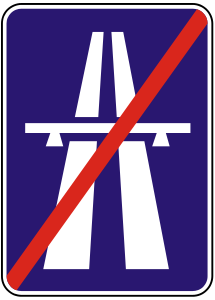 End of the motorway.
English • Traffic sign 310 • End of motorway. The sign marks the end of a motorway.
Slovenčina • Dopravná značka 310 • Koniec diaľnice. Značka označuje koniec diaľnice.
Sources
🔗 Commons.wikimedia.org
🔗 Static.slov-lex.sk • Vyhláška č. 30/2020 Z. z. • značka 310 • znenie účinné od 31. 3. 2024
SVG source: Ministry of Interior of the Slovak Republic • Public domain • Original revision 2010-08-29. Wikimedia original unmodified.
What speed limit applies to cars on a motorway in Slovakia?
For an ordinary motor vehicle up to 3.5 tonnes without a trailer, the general motorway maximum outside built-up areas is 130 km/h. The built-up-area default is 50 km/h unless signs establish another limit. Follow the actual signs, vehicle-specific restrictions and the duty to drive at a safe speed.
🔗 static.slov-lex.sk • Slovakia: Traffic Signs Decree 30/2020, effective 31 March 2024
Is there a minimum driving speed on a Slovak motorway?
Drivers must normally travel at at least 80 km/h. The law provides exceptions where safety or traffic conditions require a lower speed. If a fault prevents the vehicle reaching the required speed on level ground, leave at the nearest exit; if a parking area comes before that exit, stop the vehicle there.
🔗 static.slov-lex.sk • Slovakia: Traffic Signs Decree 30/2020, effective 31 March 2024
What should I do if I miss a motorway exit in Slovakia?
Continue to the next exit and choose a safe onward route. Do not reverse, make a U-turn or cross the central reservation to return to a missed exit.
🔗 static.slov-lex.sk • Slovakia: Traffic Signs Decree 30/2020, effective 31 March 2024
3. Expressway
An expressway is a road intended to carry through traffic efficiently, usually at higher speeds than ordinary roads. Expressways often have limited access, multiple lanes, separated carriageways or grade-separated junctions, but their design and legal status vary between countries.
An expressway is not always a motorway. It may have intersections, traffic lights or direct access, and the permitted road users, speed limits and special rules depend on local signs and regulations.
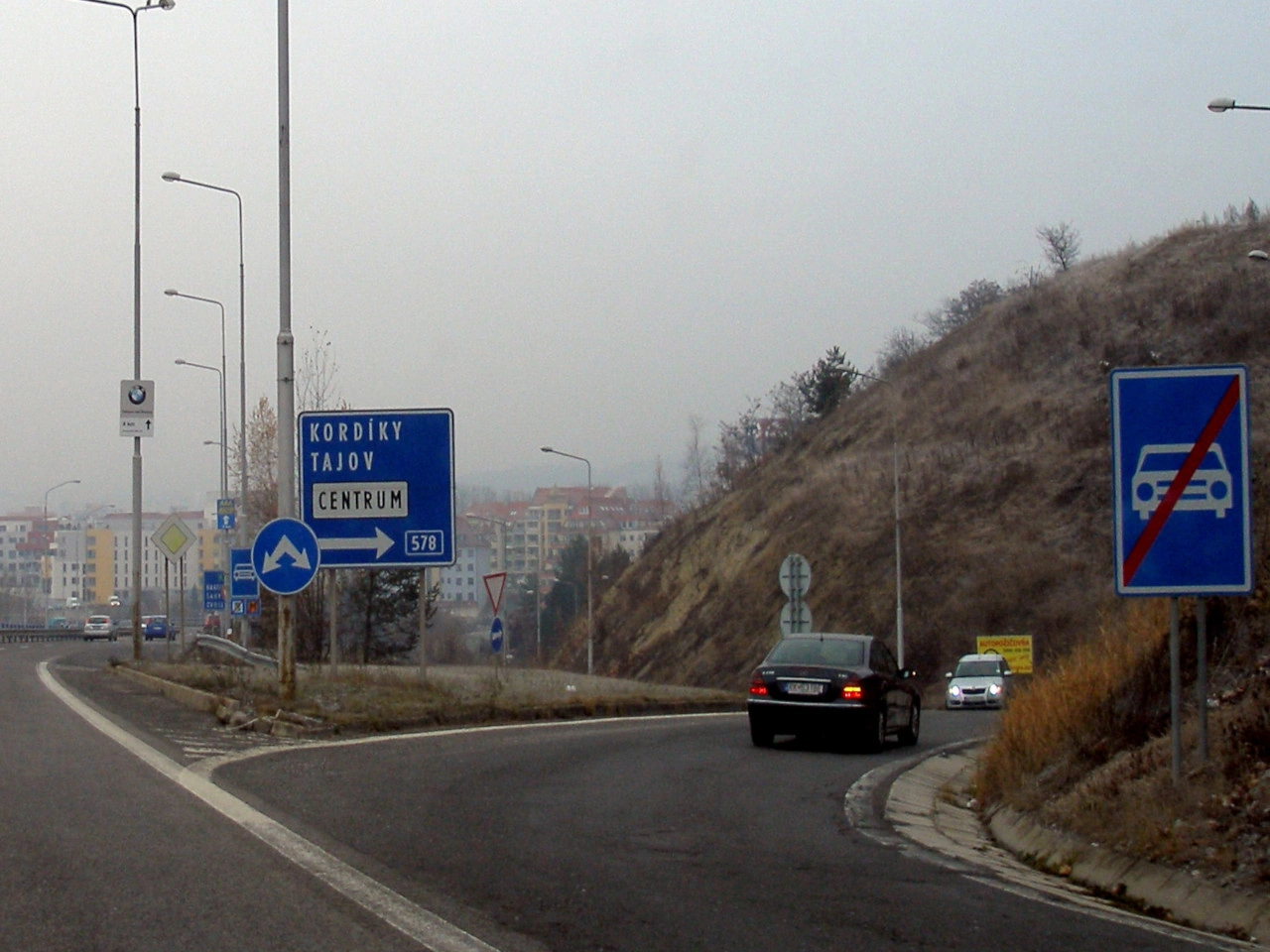
Wikimedia.org • Doko • CC BY-SA
How do people refer to an expressway in Slovakia?
The signed road-for-motor-vehicles category is cesta pre motorové vozidlá. The route term rýchlostná cesta is also used for expressways. Check the actual designation rather than deciding the rules from an R-route name alone.
🔗 static.slov-lex.sk • Slovakia: Traffic Signs Decree 30/2020, effective 31 March 2024
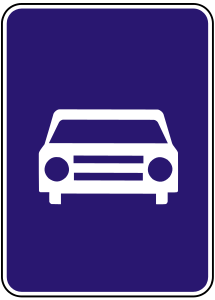 Start of an expressway.
English • Traffic sign 311 • Road for motor vehicles. The sign marks the point from which the traffic rules for roads for motor vehicles apply.
Slovenčina • Dopravná značka 311 • Cesta pre motorové vozidlá. Značka označuje miesto, od ktorého platia pravidlá cestnej premávky o správaní sa na ceste pre motorové vozidlá.
Sources
🔗 Commons.wikimedia.org
🔗 Static.slov-lex.sk • Vyhláška č. 30/2020 Z. z. • značka 311 • znenie účinné od 31. 3. 2024
SVG source: Ministry of Interior of the Slovak Republic • Public domain • Original revision 2010-08-28. Wikimedia original unmodified.
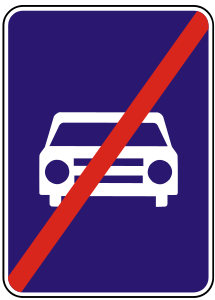 End of the expressway.
English • Traffic sign 312 • End of the road for motor vehicles. The sign marks the end of a road for motor vehicles.
Slovenčina • Dopravná značka 312 • Koniec cesty pre motorové vozidlá. Značka označuje koniec cesty pre motorové vozidlá.
Sources
🔗 Commons.wikimedia.org
🔗 Static.slov-lex.sk • Vyhláška č. 30/2020 Z. z. • značka 312 • znenie účinné od 31. 3. 2024
SVG source: Ministry of Interior of the Slovak Republic • Public domain • Original revision 2010-08-29. Wikimedia original unmodified.
What speed limit applies to cars on an expressway in Slovakia?
On a non-motorway road for motor vehicles, the ordinary car maximum outside built-up areas is normally 90 km/h unless signs provide otherwise. A section designated as a motorway follows motorway limits. Follow the road designation and the actual signs.
🔗 static.slov-lex.sk • Slovakia: Traffic Signs Decree 30/2020, effective 31 March 2024
Who may use an expressway in Slovakia?
A road for motor vehicles normally admits only motor vehicles with a design maximum speed of at least 60 km/h. Other road users may cross only at junctions or other designated crossing places.
🔗 static.slov-lex.sk • Slovakia: Traffic Signs Decree 30/2020, effective 31 March 2024
What if a fault prevents my vehicle reaching a safe expressway speed in Slovakia?
If a vehicle or load fault prevents reaching 60 km/h on level ground, leave the road for motor vehicles at the nearest possible place. Traffic conditions can require slower driving even in a mechanically sound vehicle.
🔗 static.slov-lex.sk • Slovakia: Traffic Signs Decree 30/2020, effective 31 March 2024
4. Speed limit
A speed limit is the maximum legal speed permitted on a road, lane or within a designated area. It may be established by general traffic law or indicated by fixed, variable or temporary traffic signs.
A speed limit is a maximum, not a target speed. Drivers must travel more slowly whenever traffic, visibility, weather, road conditions, vulnerable road users or the condition of the vehicle make the maximum permitted speed unsafe.
Wikimedia.org • pepanos • CC BY
Which general speed limits should car drivers know in Slovakia?
For an ordinary motor vehicle up to 3.5 tonnes without a trailer, the general maxima are 50 km/h in built-up areas, 90 km/h on other roads and 130 km/h on motorways, subject to applicable signs. Heavier vehicles, buses and certain towing combinations have different ceilings. The vehicle’s own permitted design speed must also be respected.
🔗 static.slov-lex.sk • Slovakia: Traffic Signs Decree 30/2020, effective 31 March 2024
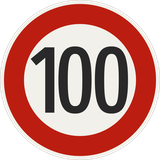
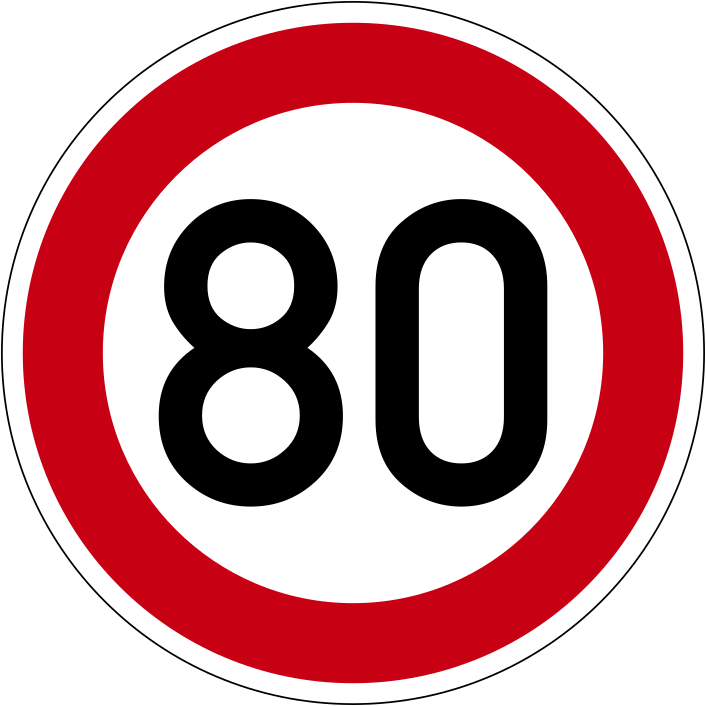 Start of a speed limit.
English • Traffic sign 253 • Maximum permitted speed. The sign prohibits travelling faster than the speed shown in kilometres per hour. It also ends the effect of the preceding Maximum permitted speed sign.
Slovenčina • Dopravná značka 253 • Najvyššia dovolená rýchlosť. Značka zakazuje jazdiť rýchlosťou vyššou ako vyznačenou rýchlosťou v kilometroch za hodinu. Značka zároveň ukončuje platnosť predchádzajúcej značky Najvyššia dovolená rýchlosť.
Sources
🔗 Commons.wikimedia.org
🔗 Static.slov-lex.sk • Vyhláška č. 30/2020 Z. z. • značka 253 • znenie účinné od 31. 3. 2024
Replacement SVG: Commons.wikimedia.org • Wikimedia Commons original • มองโกเลีย๔๔ • CC0 • Original revision 2026-05-19. Wikimedia original unmodified.
Artwork verified against Ssc.sk • official published diagram 253.
Image via Commons.wikimedia.org
มองโกเลีย๔๔ • CC0 • Source revision 2026-05-19. Wikimedia original unmodified.
 End of the speed limit.
English • Traffic sign 263 • End of the maximum speed limit. The sign ends the prohibition imposed by the preceding Maximum permitted speed sign.
Slovenčina • Dopravná značka 263 • Koniec najvyššej dovolenej rýchlosti. Značka ukončuje zákaz vyplývajúci z predchádzajúcej značky Najvyššia dovolená rýchlosť.
Sources
🔗 Commons.wikimedia.org
🔗 Static.slov-lex.sk • Vyhláška č. 30/2020 Z. z. • značka 263 • znenie účinné od 31. 3. 2024
Image via Commons.wikimedia.org
Ministry of Interior of the Slovak Republic • Public domain • Source revision 2010-08-25. Wikimedia original unmodified.
Does a heavier trailer change Slovakia’s ordinary car motorway limit?
Yes. A vehicle up to 3.5 tonnes towing a trailer whose maximum permitted mass is over 750 kg has a 90 km/h ceiling under the relevant vehicle rule. A higher road sign does not remove that combination-specific maximum.
🔗 static.slov-lex.sk • Slovakia: Traffic Signs Decree 30/2020, effective 31 March 2024
Can I use Slovakia’s numerical maximum when I cannot stop within the visible road?
No. Speed must be adapted so you can stop within the distance you can see. Poor visibility, weather, surface conditions or load can therefore require a much lower speed than the general or signed maximum.
🔗 static.slov-lex.sk • Slovakia: Traffic Signs Decree 30/2020, effective 31 March 2024
5. Bike path
A bike path is a part of a road or a separate route intended primarily or exclusively for people riding bicycles. It may be physically separated from motor traffic, marked on the road surface or identified by traffic signs.
Bike paths may be one-way, two-way or shared with other road users. The permitted users, direction of travel, priority rules and obligation to use the path depend on local traffic signs and regulations.
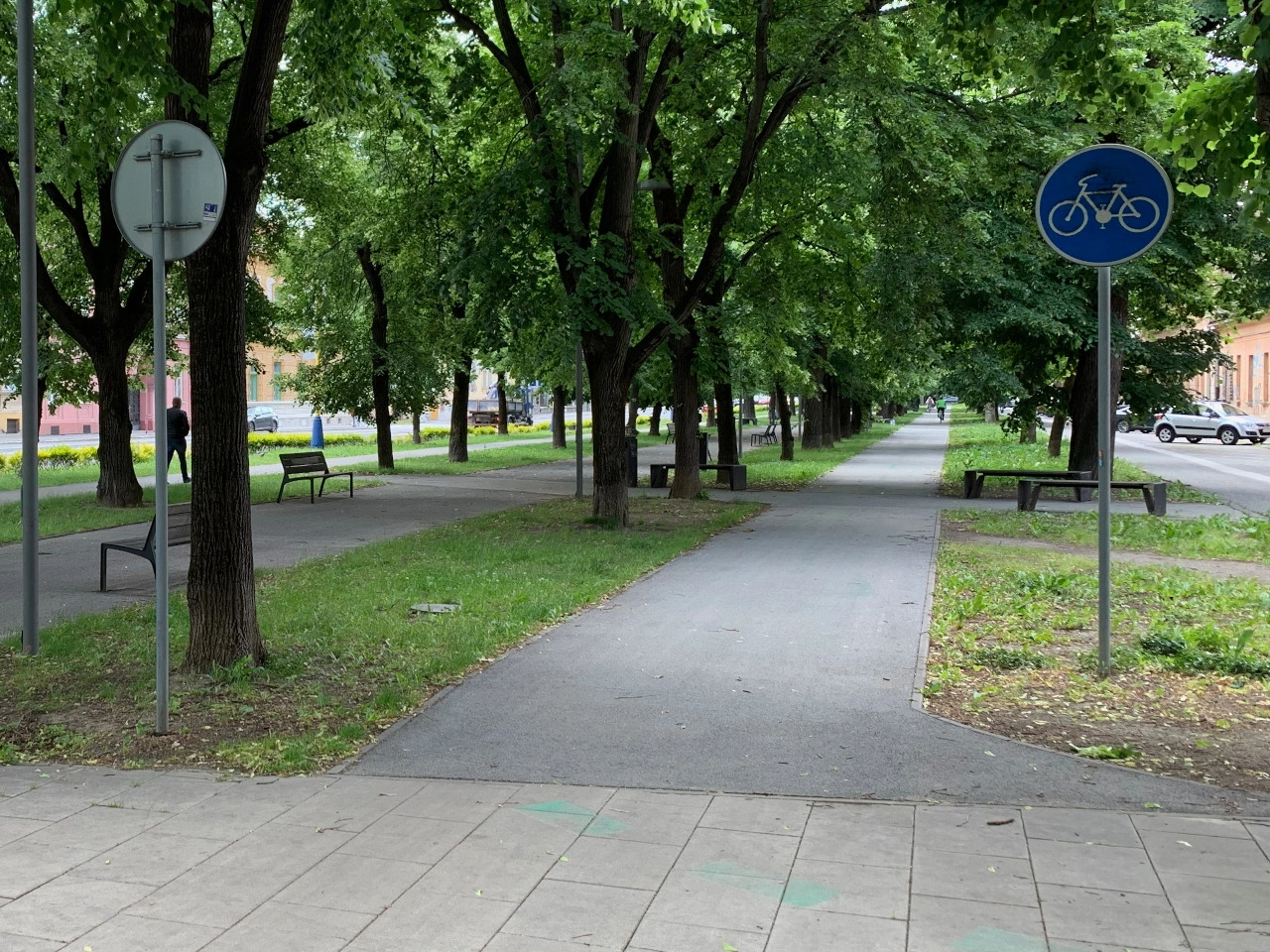
Wikimedia.org • Wkmdjay • CC0
What does Slovakia call a cycle path?
The official term is cestička pre cyklistov. Cyclists primarily use it and keep to the right. A combined walking and cycling path is a cestička pre chodcov a cyklistov, with additional pedestrian-protection rules.
🔗 static.slov-lex.sk • Act 8/2009, §55(1),(2),(6): position, path use and two abreast
Where should I ride if a Slovak cycle path is absent or unusable?
Ride close to the right edge of the carriageway. The right-hand shoulder may also be used if pedestrians are neither endangered nor restricted. An unusable cycle path does not justify ignoring the rules for the alternative surface.
🔗 static.slov-lex.sk • Act 8/2009, §55(1),(2),(6): position, path use and two abreast
Can cyclists ride two abreast on a Slovak cycle path?
Yes, provided they do not restrict or endanger other road users. The Act treats this differently from the usual single-file rule. On a shared or divided walking and cycling route, also respect pedestrians and the part allocated to each group.
🔗 static.slov-lex.sk • Act 8/2009, §55(1),(2),(6): position, path use and two abreast
6. Slope
A slope is a section of road that rises or descends noticeably. A steep slope can affect vehicle speed, braking distance, traction, visibility and the ability of heavy or low-powered vehicles to maintain a steady speed.
Warning signs may indicate a steep ascent or dangerous descent and may show the gradient as a percentage. Drivers should adjust their speed early, select a suitable gear and remain prepared for slow vehicles, bends and changing road conditions.
Wikimedia.org • Oto_Zapletal • CC BY-SA
What does a steep-slope warning mean in Slovakia?
A steep-gradient warning alerts you to the ascent or descent. The actual speed restriction and the duty to adjust speed to the road, vehicle and visibility remain in force.
🔗 static.slov-lex.sk • Slovakia: Act 8/2009 sections 5(4),15-18; Decree signs 112-113
🔗 static.slov-lex.sk • Slovakia: Road Traffic Act 8/2009, effective 1 October 2026
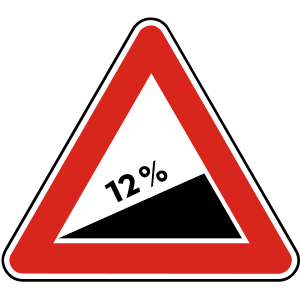 Warning for a steep ascent.
English • Traffic sign 113 • Ascent. The sign warns of a dangerous ascent.
Slovenčina • Dopravná značka 113 • Stúpanie. Značka upozorňuje na nebezpečné stúpanie.
Sources
🔗 Commons.wikimedia.org
🔗 Static.slov-lex.sk • Vyhláška č. 30/2020 Z. z. • značka 113 • znenie účinné od 31. 3. 2024
SVG source: Ministry of Interior of the Slovak Republic • Public domain • Original revision 2010-08-24. Wikimedia original unmodified.
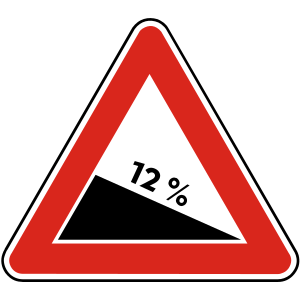 Warning for a steep descent.
English • Traffic sign 112 • Descent. The sign warns of a dangerous descent.
Slovenčina • Dopravná značka 112 • Klesanie. Značka upozorňuje na nebezpečné klesanie.
Sources
🔗 Commons.wikimedia.org
🔗 Static.slov-lex.sk • Vyhláška č. 30/2020 Z. z. • značka 112 • znenie účinné od 31. 3. 2024
SVG source: Ministry of Interior of the Slovak Republic • Public domain • Original revision 2010-08-24. Wikimedia original unmodified.
How should I approach a steep descent in Slovakia?
Reduce speed before the descent and select a suitable gear to help control the vehicle. Keep enough following distance and avoid building up speed that requires continuous heavy braking. A warning gives no fixed safe descent speed: the gradient, surface, visibility, load and vehicle can require a speed well below the legal maximum.
🔗 static.slov-lex.sk • Slovakia: Act 8/2009 sections 5(4),15-18; Decree signs 112-113
🔗 static.slov-lex.sk • Slovakia: Road Traffic Act 8/2009, effective 1 October 2026
What should I check when meeting or overtaking on a slope in Slovakia?
Do not overtake towards a crest without the required view of the road ahead. Follow any priority signs at a narrow section and keep sufficient space for vehicles coming the other way.
🔗 static.slov-lex.sk • Slovakia: Act 8/2009 sections 5(4),15-18; Decree signs 112-113
🔗 static.slov-lex.sk • Slovakia: Road Traffic Act 8/2009, effective 1 October 2026
7. Bus stop
A bus stop is a designated place where buses stop to allow passengers to board or leave. It may be identified by a sign, shelter, raised platform, road marking or other public-transport infrastructure and can be located beside the road or in a specially constructed stopping area.
Drivers approaching a bus stop should watch carefully for buses, pedestrians and passengers crossing or entering the roadway. Parking or stopping restrictions may apply around bus stops to keep the area accessible and visible.
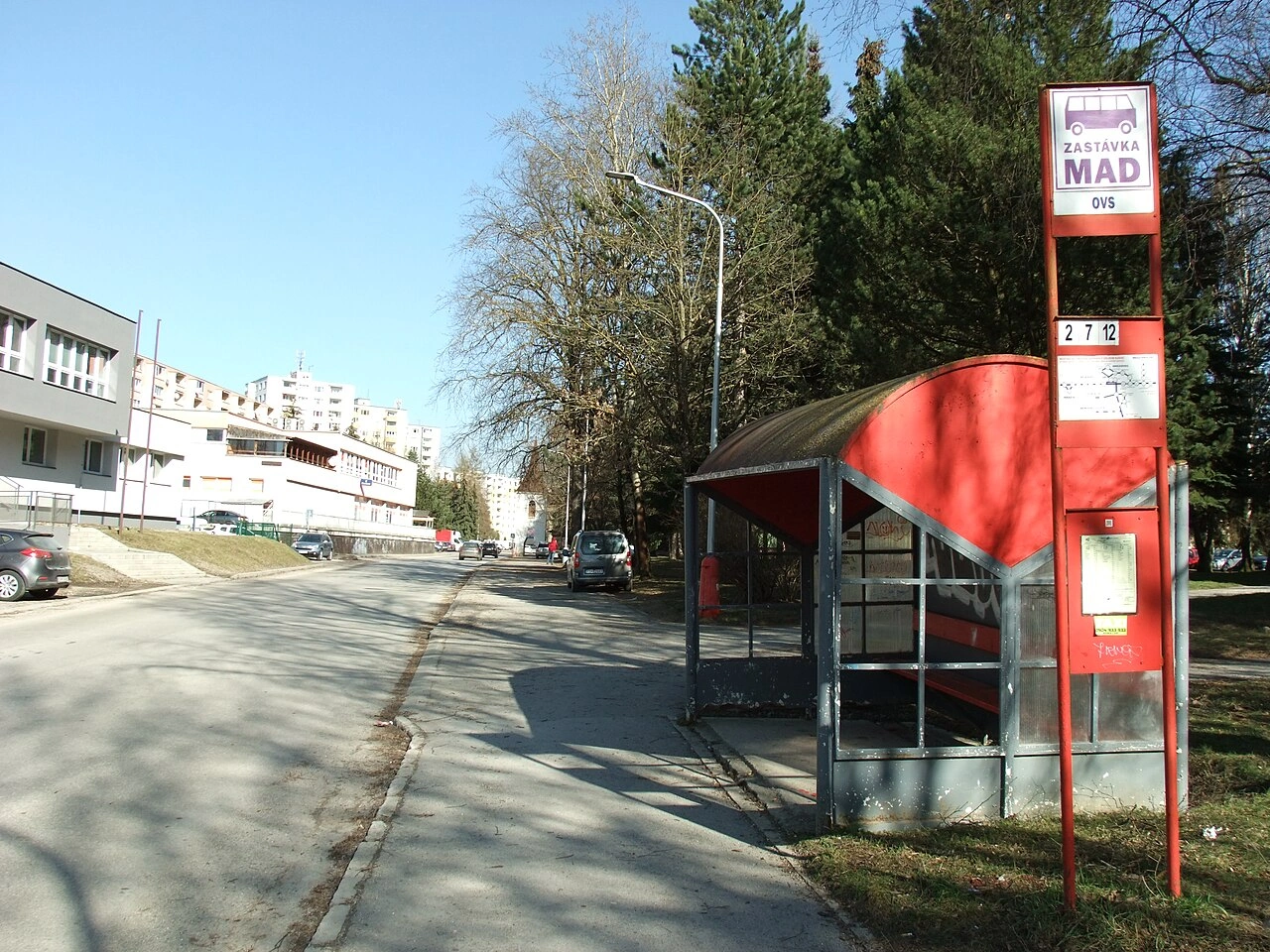
Wikimedia.org • Oto_Zapletal • CC BY-SA
What stopping or parking restrictions apply at bus stops in Slovakia?
Stopping and parking are prohibited from the stop traffic sign to 5 metres beyond the stop marker, including the adjoining platform. Without that traffic sign, the restriction extends 30 metres before and 5 metres after the marker. Where a horizontal marking defines the stop space, the prohibition applies to that marked space and its adjoining platform.
🔗 static.slov-lex.sk • Act 8/2009, §§13–14, 23(5), 25(1)(f): stops and passenger protection
May I briefly drop off a passenger at a bus stop in Slovakia?
A private passenger drop-off does not override the protected stop-area prohibition. Follow the Act’s detailed layout rules and use a permitted alternative.
🔗 static.slov-lex.sk • Act 8/2009, §§13–14, 23(5), 25(1)(f): stops and passenger protection
What should I do near a stopped bus in Slovakia?
In a built-up area, stop behind a public-transport vehicle at a stop without a boarding island or a platform on a raised tramway. If several vehicles are stopped, stop behind the last one. Continue only without endangering boarding or alighting passengers, and use particular care and an appropriate speed throughout the stop area.
🔗 static.slov-lex.sk • Act 8/2009, §§13–14, 23(5), 25(1)(f): stops and passenger protection
8. Roundabout
A roundabout is a circular road arrangement in which traffic travels around a central island in one designated direction. Vehicles enter and leave through connecting roads, and traffic signs or local rules determine who has priority.
Drivers should reduce speed, choose a suitable lane, observe all road users and signal as required when leaving. The direction of travel, entry priority, lane use and rules for cyclists and pedestrians depend on local traffic signs and regulations.
Wikimedia.org • Ing.Mgr.Jozef Kotulič • CC BY-SA
Who has priority at a roundabout in Slovakia?
Slovak law gives circulating drivers priority when the roundabout sign is combined with a give-way or stop sign. Check the combination; the roundabout direction sign alone is not the same priority instruction.
🔗 static.slov-lex.sk • Act 8/2009 sections 10,19,20(5),30(5); Decree sign 213
🔗 static.slov-lex.sk • Supporting official source
 Mandatory roundabout direction.
English • Traffic sign 213 • Roundabout. The sign identifies a roundabout and requires travel in the direction shown by the arrows. Direction-of-travel signs do not apply to trams or trolleybuses.
Slovenčina • Dopravná značka 213 • Kruhový objazd. Značka označuje kruhový objazd a prikazuje smer jazdy v smere vyznačenom šípkami na značke. Značky o smere jazdy neplatia pre električku a trolejbus.
Sources
🔗 Commons.wikimedia.org
🔗 Static.slov-lex.sk • Vyhláška č. 30/2020 Z. z. • značka 213 • znenie účinné od 31. 3. 2024
🔗 Static.slov-lex.sk • Príloha č. 3 • II. 1 • spoločné ustanovenie
SVG source: Ministry of Interior of the Slovak Republic • Public domain • Original revision 2010-08-26. Wikimedia original unmodified.
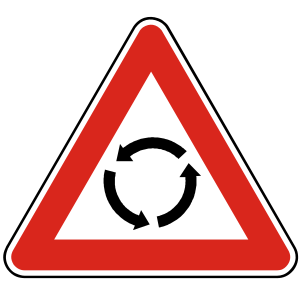 Warning for a roundabout.
Sources
SVG source: Ministry of Interior of the Slovak Republic • Public domain • Original revision 2010-08-25. Wikimedia original unmodified.
How should you choose a roundabout lane in Slovakia?
Choose your intended exit before entering and follow the lane arrows and destination signs. Keep to the marked route and make any permitted lane change only when safe; having priority over entering traffic does not give you priority to change lanes.
🔗 static.slov-lex.sk • Act 8/2009 sections 10,19,20(5),30(5); Decree sign 213
What should you check when leaving a roundabout in Slovakia?
Signal when leaving the roundabout and when changing lanes; entry alone does not require a direction signal. Check the lane you will enter or cross, pedestrians and cyclists. A turning driver must allow a pedestrian who has entered the road being turned into to cross safely; obey separate crossing controls.
🔗 static.slov-lex.sk • Act 8/2009 sections 10,19,20(5),30(5); Decree sign 213
9. Railway crossing
A railway crossing, also called a level crossing or railroad crossing, is a place where a road or path crosses railway tracks at the same level. It may be protected by barriers, warning lights, bells, traffic signs or a combination of these measures.
Road users must approach carefully and never enter when a train is approaching, warning signals are active or the exit is blocked. They should cross promptly and must never stop, wait or become trapped on the tracks.
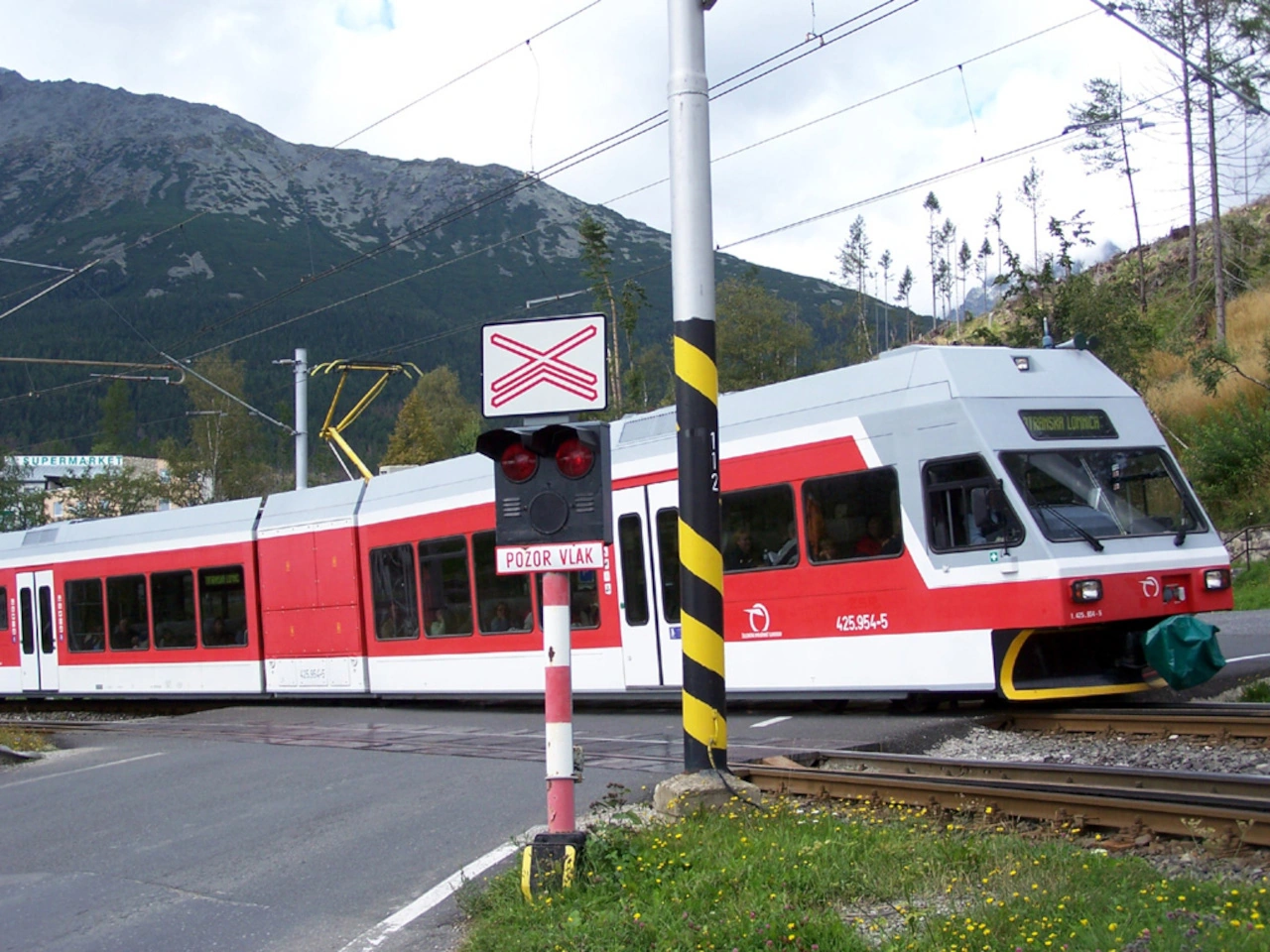
Wikimedia.org • Diesirae • CC BY-SA
When must drivers stop at a railway level crossing in Slovakia?
Do not enter while red crossing warnings or the warning sound operate, while barriers are lowering, down or rising, when a train is seen or heard approaching, when the designated safety person signals stop, or when you cannot clear the crossing. Obey any STOP sign. The designated safety person may direct passage under the specific override in section 29.
🔗 static.slov-lex.sk • Slovakia, Slov-Lex, Road Traffic Act 8/2009, edition 1 October 2026
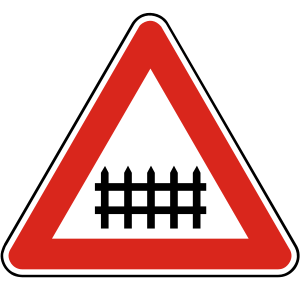 Warning for a railway crossing with barriers.
English • Traffic sign 151 • Level crossing. The sign warns of a level crossing. Note on the illustration: an older variant is shown. Under section 30(1), traffic signs installed by 31 March 2020 remain valid with the meaning of the corresponding signs under this decree, unless the transitional provisions provide otherwise.
Slovenčina • Dopravná značka 151 • Priecestie. Značka upozorňuje na priecestie. Poznámka k vyobrazeniu: Zobrazený je starší variant. Dopravné značky umiestnené do 31. marca 2020 ostávajú podľa § 30 ods. 1 v platnosti s významom zodpovedajúcich značiek podľa tejto vyhlášky, ak prechodné ustanovenia neurčujú inak.
Sources
🔗 Commons.wikimedia.org
🔗 Static.slov-lex.sk • Vyhláška č. 30/2020 Z. z. • značka 151 • znenie účinné od 31. 3. 2024
🔗 Static.slov-lex.sk • § 30 ods. 1 • staršie vyobrazenie
SVG source: Ministry of Interior of the Slovak Republic • Public domain • Original revision 2010-08-25. Wikimedia original unmodified.
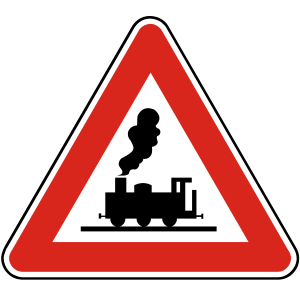 Warning for a railway crossing without barriers.
English • Traffic sign 151 • Level crossing. The sign warns of a level crossing. Note on the illustration: an older variant is shown. Under section 30(1), traffic signs installed by 31 March 2020 remain valid with the meaning of the corresponding signs under this decree, unless the transitional provisions provide otherwise.
Slovenčina • Dopravná značka 151 • Priecestie. Značka upozorňuje na priecestie. Poznámka k vyobrazeniu: Zobrazený je starší variant. Dopravné značky umiestnené do 31. marca 2020 ostávajú podľa § 30 ods. 1 v platnosti s významom zodpovedajúcich značiek podľa tejto vyhlášky, ak prechodné ustanovenia neurčujú inak.
Sources
🔗 Commons.wikimedia.org
🔗 Static.slov-lex.sk • Vyhláška č. 30/2020 Z. z. • značka 151 • znenie účinné od 31. 3. 2024
🔗 Static.slov-lex.sk • § 30 ods. 1 • staršie vyobrazenie
SVG source: Ministry of Interior of the Slovak Republic • Public domain • Original revision 2010-08-25. Wikimedia original unmodified.
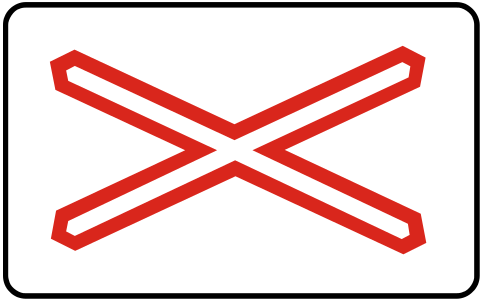 Warning for a railway crossing with one track.
English • Traffic sign 153 • Crossbuck. The sign marks a level crossing. If a lightning bolt appears in the centre of the cross, the sign also indicates that the railway is electrified and high voltage is present in its vicinity. If space makes a vertical crossbuck unsuitable, it is installed horizontally. Note on the illustration: an older variant is shown. Under section 30(1), traffic signs installed by 31 March 2020 remain valid with the meaning of the corresponding signs under this decree, unless the transitional provisions provide otherwise.
Slovenčina • Dopravná značka 153 • Výstražný kríž. Značka označuje priecestie. Ak je na značke v strede kríža vyobrazený symbol blesku, značka tiež informuje o tom, že dráha je elektrifikovaná a v jej priestore je vysoké napätie. Ak z priestorových dôvodov nie je vhodné výstražný kríž umiestniť zvisle, umiestni sa vodorovne. Poznámka k vyobrazeniu: Zobrazený je starší variant. Dopravné značky umiestnené do 31. marca 2020 ostávajú podľa § 30 ods. 1 v platnosti s významom zodpovedajúcich značiek podľa tejto vyhlášky, ak prechodné ustanovenia neurčujú inak.
Sources
🔗 Commons.wikimedia.org
🔗 Static.slov-lex.sk • Vyhláška č. 30/2020 Z. z. • značka 153 • znenie účinné od 31. 3. 2024
🔗 Static.slov-lex.sk • § 30 ods. 1 • staršie vyobrazenie
Image via Commons.wikimedia.org
Ministry of Interior of the Slovak Republic • Public domain • Source revision 2010-08-25. Wikimedia original unmodified.
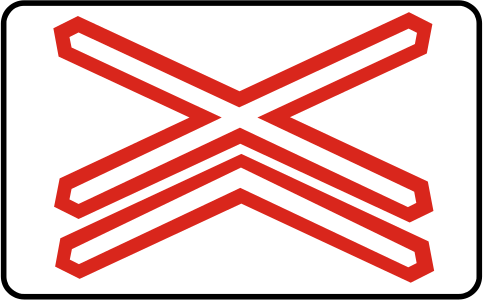 Warning for a railway crossing with two or more tracks.
English • Traffic sign 153 • Crossbuck. The sign marks a level crossing. If a lightning bolt appears in the centre of the cross, the sign also indicates that the railway is electrified and high voltage is present in its vicinity. If space makes a vertical crossbuck unsuitable, it is installed horizontally. Note on the illustration: an older variant is shown. Under section 30(1), traffic signs installed by 31 March 2020 remain valid with the meaning of the corresponding signs under this decree, unless the transitional provisions provide otherwise.
Slovenčina • Dopravná značka 153 • Výstražný kríž. Značka označuje priecestie. Ak je na značke v strede kríža vyobrazený symbol blesku, značka tiež informuje o tom, že dráha je elektrifikovaná a v jej priestore je vysoké napätie. Ak z priestorových dôvodov nie je vhodné výstražný kríž umiestniť zvisle, umiestni sa vodorovne. Poznámka k vyobrazeniu: Zobrazený je starší variant. Dopravné značky umiestnené do 31. marca 2020 ostávajú podľa § 30 ods. 1 v platnosti s významom zodpovedajúcich značiek podľa tejto vyhlášky, ak prechodné ustanovenia neurčujú inak.
Sources
🔗 Commons.wikimedia.org
🔗 Static.slov-lex.sk • Vyhláška č. 30/2020 Z. z. • značka 153 • znenie účinné od 31. 3. 2024
🔗 Static.slov-lex.sk • § 30 ods. 1 • staršie vyobrazenie
Image via Commons.wikimedia.org
Ministry of Interior of the Slovak Republic • Public domain • Source revision 2010-08-25. Wikimedia original unmodified.
Must I stop at every unguarded railway crossing in Slovakia?
Not merely because it has no barriers. Approach with exceptional care and check that you can cross safely. At a STOP sign, stop where you have a proper view of the track. Do not enter when a train approaches, warnings prohibit entry or the exit is blocked, subject to the specific authorised directions in section 29.
🔗 static.slov-lex.sk • Slovakia, Slov-Lex, Road Traffic Act 8/2009, edition 1 October 2026
What if road traffic is queued beyond a railway crossing in Slovakia?
Wait before the tracks until there is room to take your entire vehicle off the crossing. Do not follow another vehicle onto the tracks without checking the exit. Keep the tracks clear even if no train is visible.
🔗 static.slov-lex.sk • Slovakia, Slov-Lex, Road Traffic Act 8/2009, edition 1 October 2026
10. Wrong-way driving
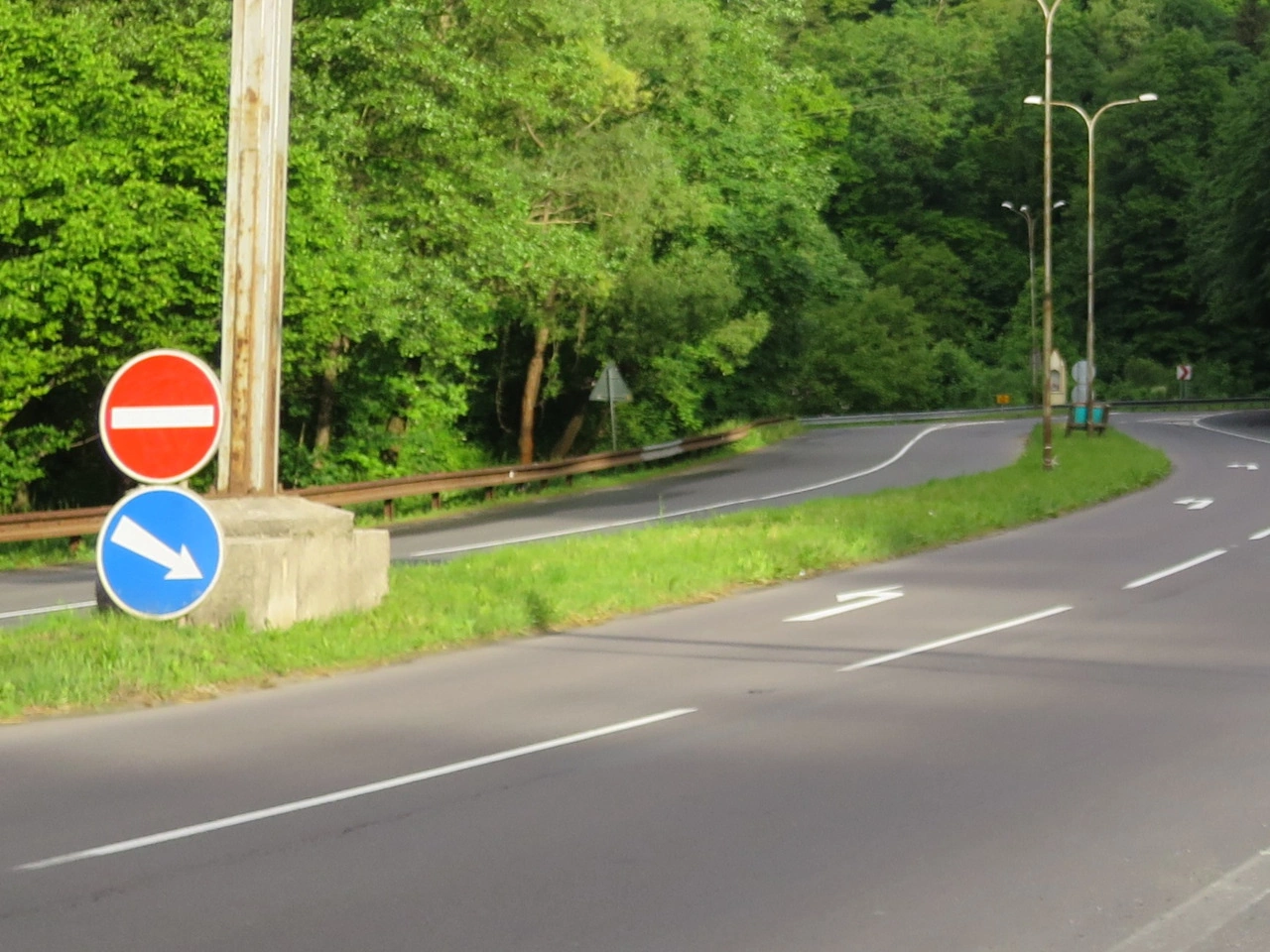
Wrong-way driving occurs when a driver travels against the legally permitted direction of traffic. It may happen on a one-way road, divided road, motorway entrance or exit, or another road section reserved for traffic travelling in one direction.
Wrong-way driving creates an extreme risk of a head-on collision. Drivers must follow direction signs, no-entry signs, lane arrows and road markings. Anyone who accidentally enters a road in the wrong direction should slow down, warn other traffic, stop in the safest available place and contact the emergency services.
Wikimedia.org • Ulancanka84 • CC BY-SA
How can you avoid driving the wrong way in Slovakia?
Traffic normally keeps right here. Keep to the correct side of the road and use no-entry and one-way signs to identify prohibited approaches; do not enter an exit ramp against its permitted direction.
🔗 static.slov-lex.sk • Slovakia: Road Traffic Act 8/2009, effective 1 October 2026
What signs can prevent wrong-way driving in Slovakia?
Read no-entry signs, one-way signs, lane arrows and temporary directions together; a wide road is not automatically two-way. Before entering a motorway, expressway, one-way street or slip road, check the permitted direction rather than relying only on a navigation app.
🔗 static.slov-lex.sk • Slovakia: Road Traffic Act 8/2009, effective 1 October 2026
What should you do if you enter a road against traffic in Slovakia?
Stop as soon as you can safely do so, without continuing towards oncoming traffic. Warn other road users if safe and contact the police for instructions. Do not attempt a U-turn, reverse along a motorway or cross moving traffic to correct the mistake. Keep yourself and passengers clear of moving traffic whenever you can reach protection safely.
🔗 static.slov-lex.sk • Slovakia: Road Traffic Act 8/2009, effective 1 October 2026
11. Traffic lights
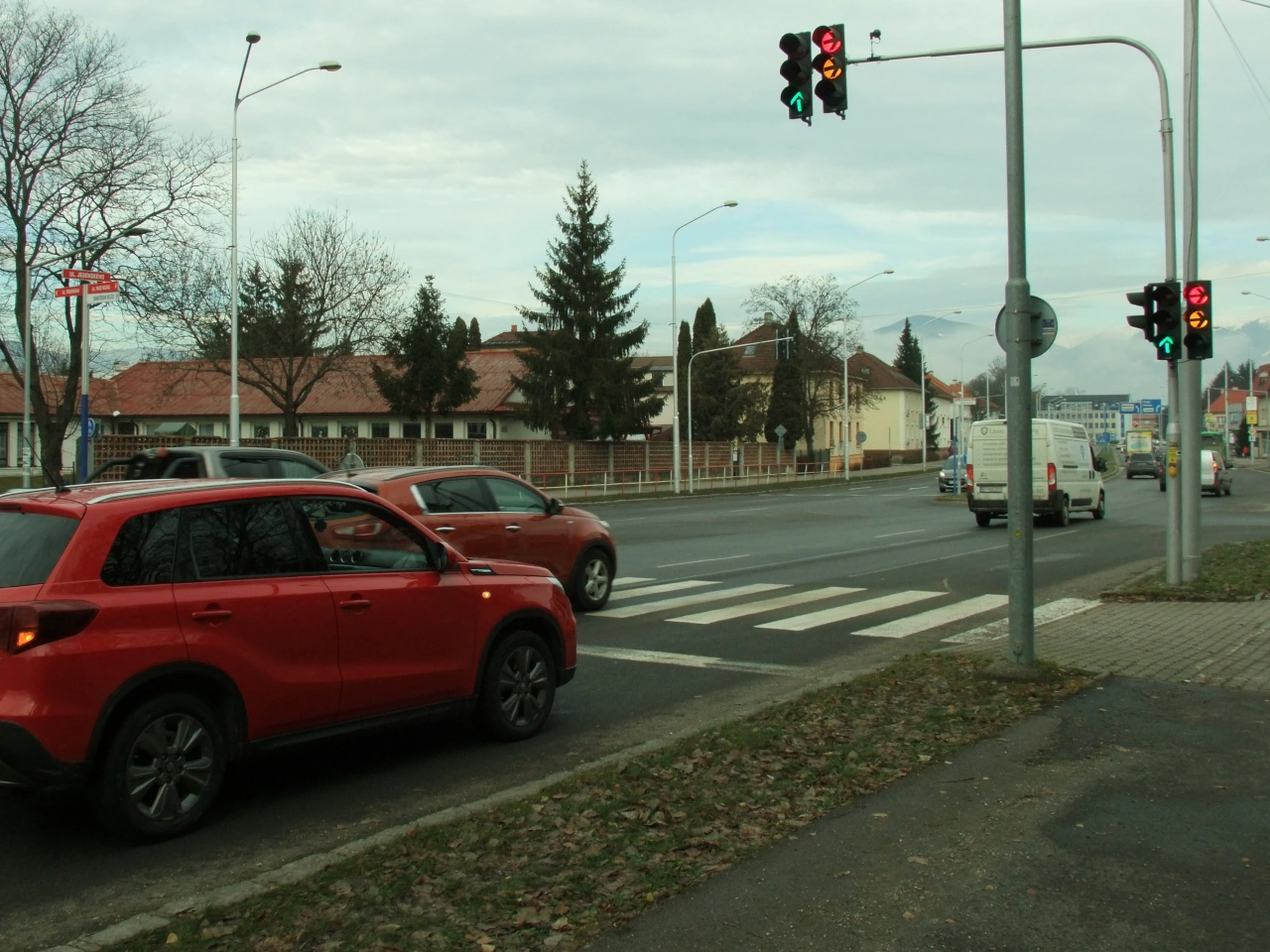
Traffic lights use coloured lights, arrows or symbols to regulate when road users may proceed, must prepare to stop or must remain stopped. Separate signals may apply to particular directions, lanes, pedestrians, cyclists or public-transport vehicles.
A green light permits movement only when the route is clear and the movement is otherwise legal. Road users must still follow priority rules, turning restrictions, lane markings and instructions from authorised traffic controllers.
Wikimedia.org • Oto Zapleta • CC BY
What must a driver do at red, amber and green signals in Slovakia?
Red means stop. Red-and-amber tells you to prepare to move, while red still prohibits entry. Steady amber also requires stopping unless you are too close to stop safely. Green permits movement only in a lawful direction, with due care for other road users. Follow the applicable stop line, directional signals and junction-clearance rules.
🔗 static.slov-lex.sk • Slovakia, Decree 30/2020 sections 14-16; annex7 device 730
May you turn at a red traffic light in Slovakia?
A supplementary illuminated green arrow can permit its direction while the main circular signal is red. A fixed green-arrow device beside the red light permits a right turn only after stopping and without obstructing or endangering other road users; it may be restricted to cyclists.
🔗 static.slov-lex.sk • Slovakia, Decree 30/2020 sections 14-16; annex7 device 730
Can a green light remove the need to give way to pedestrians in Slovakia?
No. A driver must enable safe crossing for pedestrians lawfully on, or preparing to enter, a pedestrian crossing, while respecting the applicable signal instructions. Green does not remove the duty to avoid endangering pedestrians.
🔗 static.slov-lex.sk • Slovakia, Decree 30/2020 sections 14-16; annex7 device 730
12. Traffic mirror
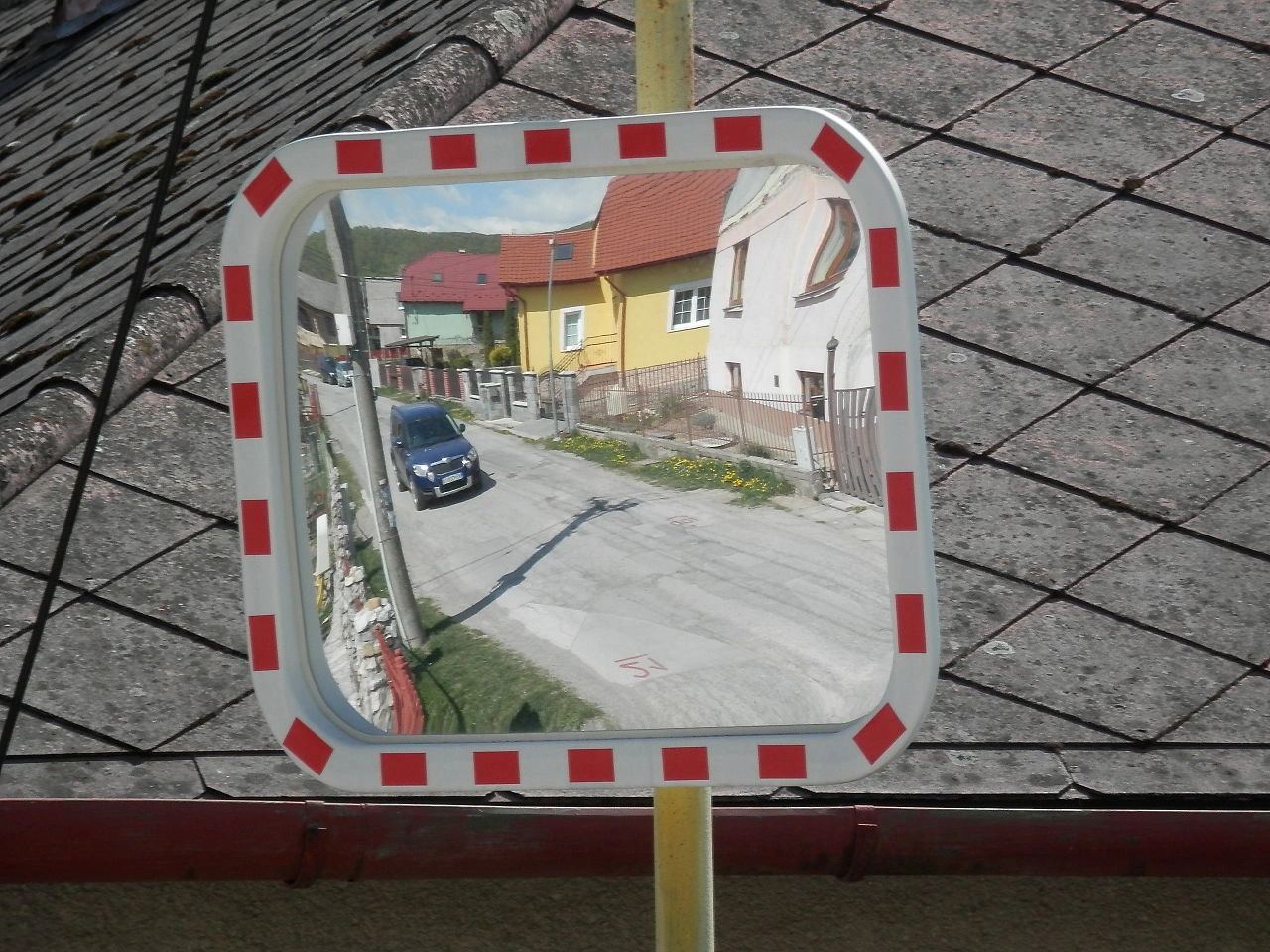
A traffic mirror is a convex mirror installed near an intersection, driveway, bend or other location with restricted visibility. Its curved surface provides a wider view of approaching road users than an ordinary flat mirror.
A traffic mirror is only a visibility aid. It may distort distance, speed and direction and may be affected by darkness, weather, dirt or damage. Drivers must continue to observe the road directly, obey all priority rules and proceed only when it is safe.
Wikimedia.org • Ing.Mgr.Jozef Kotulič • CC BY-SA
What is a traffic mirror?
A traffic mirror is a roadside visibility aid that can help users see around a blind corner or obstruction. It gives an indirect view, which may be restricted or distorted; it does not replace checking whether it is safe to proceed.
🔗 monmouthshire.gov.uk • Monmouthshire Council, roadside visibility mirrors
🔗 devon.gov.uk • Devon County Council, mirrors on the highway
Does a traffic mirror show an exact image?
No. The reflected image can be distorted, and glare, bad weather or dirt can restrict the view. Judging an approaching vehicle’s speed from a mirror can be difficult. Do not rely on the mirror alone.
🔗 monmouthshire.gov.uk • Monmouthshire Council, roadside visibility mirrors
🔗 devon.gov.uk • Devon County Council, mirrors on the highway
Does seeing an empty mirror mean the road is clear?
No. Another road user may be outside the reflected area, hidden by glare or too small to notice. Always check the road directly before proceeding.
🔗 monmouthshire.gov.uk • Monmouthshire Council, roadside visibility mirrors
🔗 devon.gov.uk • Devon County Council, mirrors on the highway
13. Parking
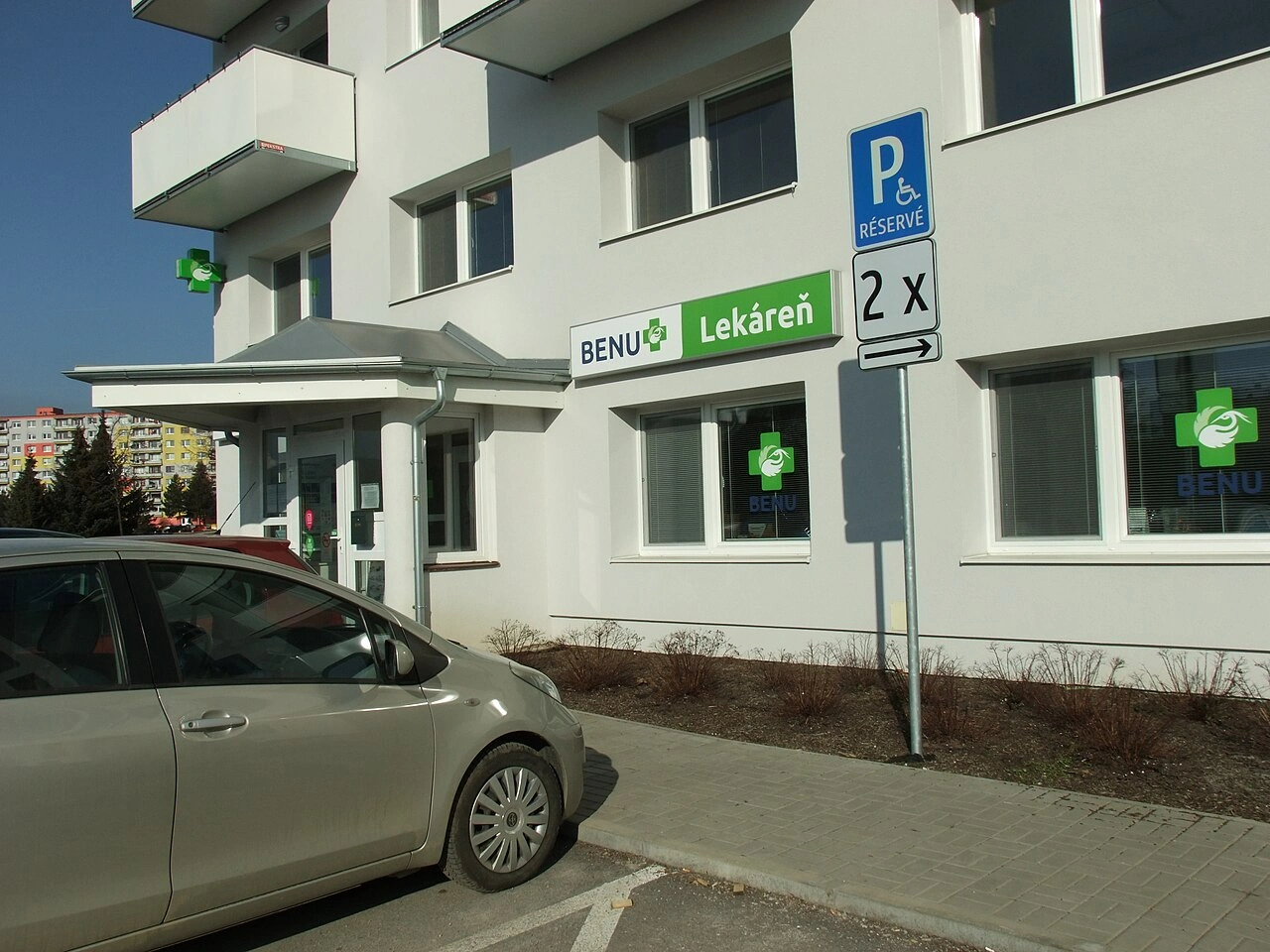
Parking means leaving a vehicle stationary at a place for a period of time rather than stopping only briefly because of traffic conditions or another immediate necessity. Many countries distinguish parking from a short stop made to pick up or drop off passengers or to load or unload goods, although the exact legal definition varies.
Parking may be permitted, restricted, reserved, time-limited or prohibited by traffic signs, road markings, parking zones and local regulations. Drivers must park without creating a danger or unnecessary obstruction and must comply with any conditions concerning payment, permits, vehicle categories or maximum parking duration.
Wikimedia.org • Oto Zapletal • CC BY-SA
On which side should you normally park in Slovakia?
On the right in your direction of travel, normally parallel in one row. One-way roads allow either side.
🔗 static.slov-lex.sk • Slovak Road Traffic Act 8/2009, sections 23–28
How much road width must remain clear when parking in Slovakia?
Leave a lane at least 3 metres wide for each direction. For stopping, one 3-metre lane serves both directions together.
🔗 static.slov-lex.sk • Slovak Road Traffic Act 8/2009, sections 23–28
May you park outside marked bays in a Slovak car park?
No. Where parking spaces are marked, use those spaces.
🔗 static.slov-lex.sk • Slovak Road Traffic Act 8/2009, sections 23–28
14. Reversing
Reversing means driving a vehicle backwards. It is commonly used when parking, leaving a confined space or repositioning a vehicle where forward movement is not practical.
Before reversing, the driver should check mirrors and blind spots, look carefully around the vehicle and make sure the area behind is clear. Reversing should be performed slowly and only for as long as necessary because visibility behind the vehicle is often limited.

Wikimedia.org • Kārlis Dambrāns • CC BY
What duty applies when reversing in Slovakia?
Do not endanger other road users.
🔗 static.slov-lex.sk • Act 8/2009, §22(2)–(5): reversing duties and prohibitions
When must Slovak reversing drivers use a helper?
When circumstances, particularly poor visibility, require assistance for safe reversing.
🔗 static.slov-lex.sk • Act 8/2009, §22(2)–(5): reversing duties and prohibitions
Can you reverse in a Slovak tunnel?
No. Reversing and U-turns are also prohibited in its immediate vicinity.
🔗 static.slov-lex.sk • Act 8/2009, §22(2)–(5): reversing duties and prohibitions
Can you reverse on a Slovak one-way road?
Only when strictly necessary, for example when entering or leaving a parking place.
🔗 static.slov-lex.sk • Act 8/2009, §22(2)–(5): reversing duties and prohibitions
Can you reverse at a Slovak controlled junction?
No. Reversing at a controlled junction is prohibited.
🔗 static.slov-lex.sk • Act 8/2009, §22(2)–(5): reversing duties and prohibitions
15. City limit
A city limit is a boundary or roadside indication showing that a driver is entering or leaving a named city, town, village, locality or municipality. It is commonly marked by a place-name or boundary sign.
The meaning of these signs varies between countries. A city-limit or locality sign may identify an administrative boundary, a named settlement or a traffic-related boundary. It does not necessarily mark the beginning or end of a legally defined built-up area, and passing the sign does not always change the applicable speed limit or other traffic rules.
Wikimedia.org • ŽupaBA VUCBA • CC BY
What is a city limit?
A city limit identifies the boundary of a named city, town or municipality. A roadside place-name or boundary sign may identify that boundary, a locality or a legally defined built-up area; its exact meaning depends on the sign system.
🔗 gov.uk • UK Department for Transport, Know Your Traffic Signs, boundary signs
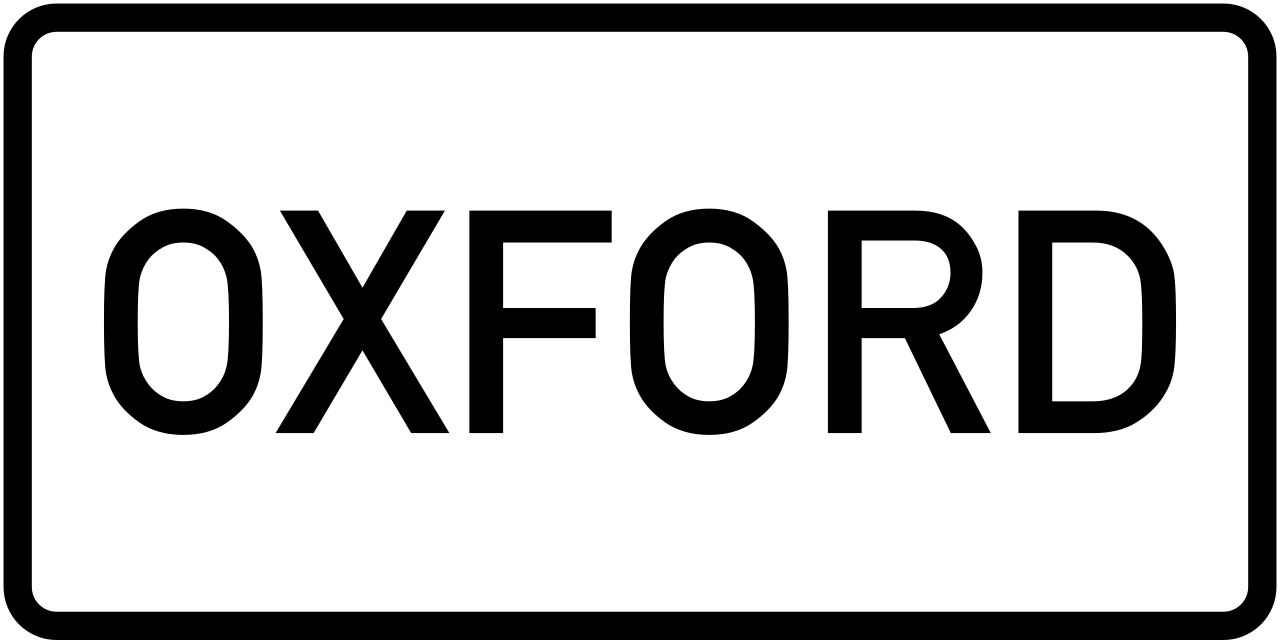 City limit.
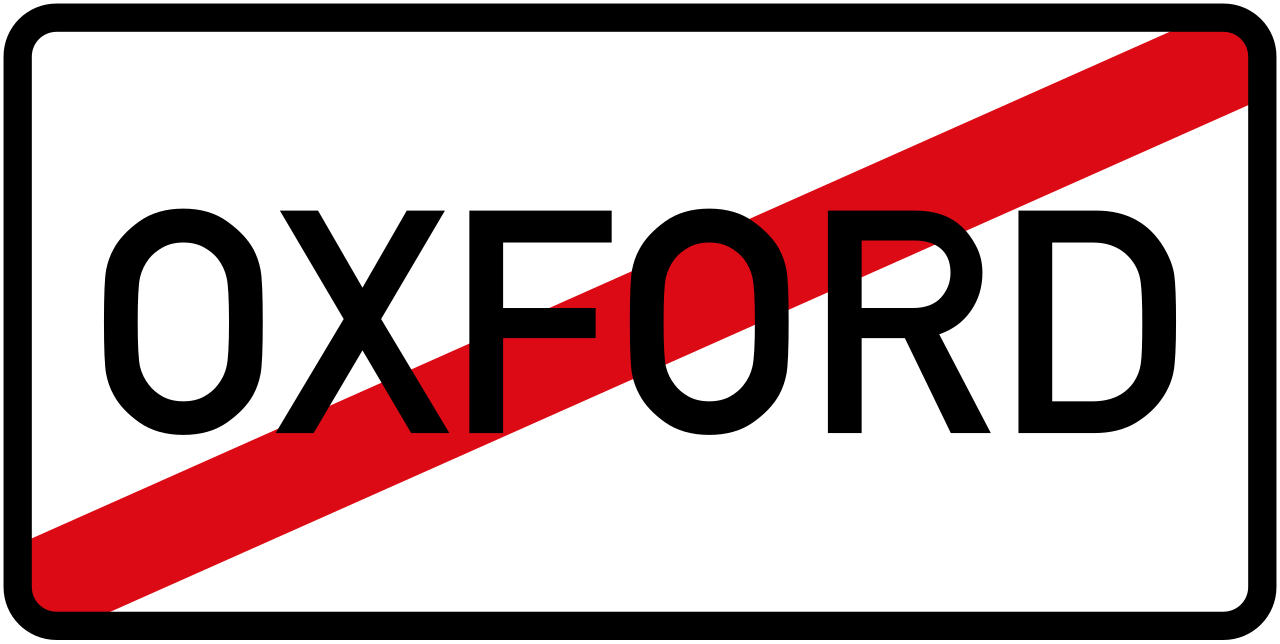 End of city limit.
Does a city-limit sign always mark a built-up area?
No. A city-limit or locality sign may simply identify a place or administrative boundary. A legally defined built-up area can use a different sign or definition.
🔗 gov.uk • UK Department for Transport, Know Your Traffic Signs, boundary signs
What is the difference between a city limit and a built-up area?
A city limit identifies the boundary of a named place or administrative area. A built-up area is a traffic-law concept that may affect rules such as default speed limits. The two boundaries can coincide, but they do not have to.
🔗 gov.uk • UK Department for Transport, Know Your Traffic Signs, boundary signs
16. Licence plate
A licence plate, also called a registration plate or number plate, is a plate displaying a unique registration identifier assigned to a vehicle by the competent registration authority. It allows the vehicle to be identified for purposes such as registration, traffic enforcement, taxation, insurance and parking control.
The appearance, format, placement and number of plates required vary between countries and vehicle categories. Drivers must ensure that required licence plates are correctly fitted, clearly visible and legible and must follow the local rules when a plate is lost, stolen, damaged or replaced.
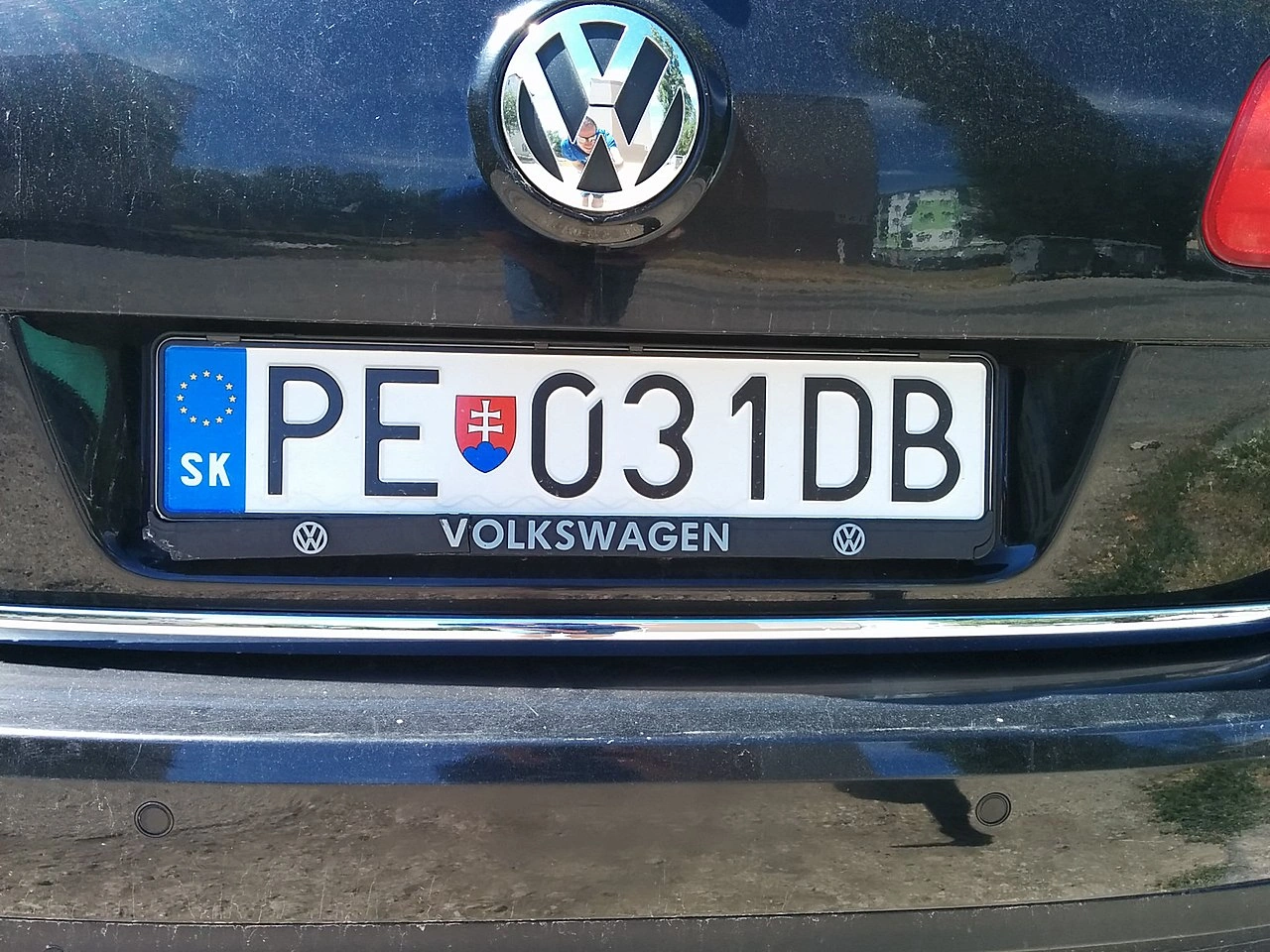
Wikimedia.org • Matej Grochal • CC BY-SA
What is a licence plate?
A licence plate is a plate displaying the registration identifier assigned to a vehicle. It allows authorities and other authorised systems to identify the vehicle's registration.
Is a licence plate the same as a registration plate?
Yes. Licence plate, registration plate and number plate are different terms commonly used for the plate displaying a vehicle's official registration number.
What should you do if a licence plate is lost or stolen?
Follow the local reporting and replacement procedure. For example, UK guidance says stolen plates should be reported to the police and DVLA, and replacement plates are needed before driving. Check the registration authority’s procedure for a lost plate; it may differ from the theft process.
17. Bus
A bus is a motor vehicle designed to transport multiple passengers, usually along roads as part of public transport, school transport, private transport or another passenger service. Buses generally have more passenger capacity than cars and may be designed to carry seated passengers, standing passengers or both.
Special rules may apply to buses concerning the driving licence, passenger capacity, speed limits, seat belts, bus lanes, stops and passenger boarding. The legal classification of buses and coaches and the rules applying to them vary between countries, so drivers and passengers must follow the local traffic regulations.
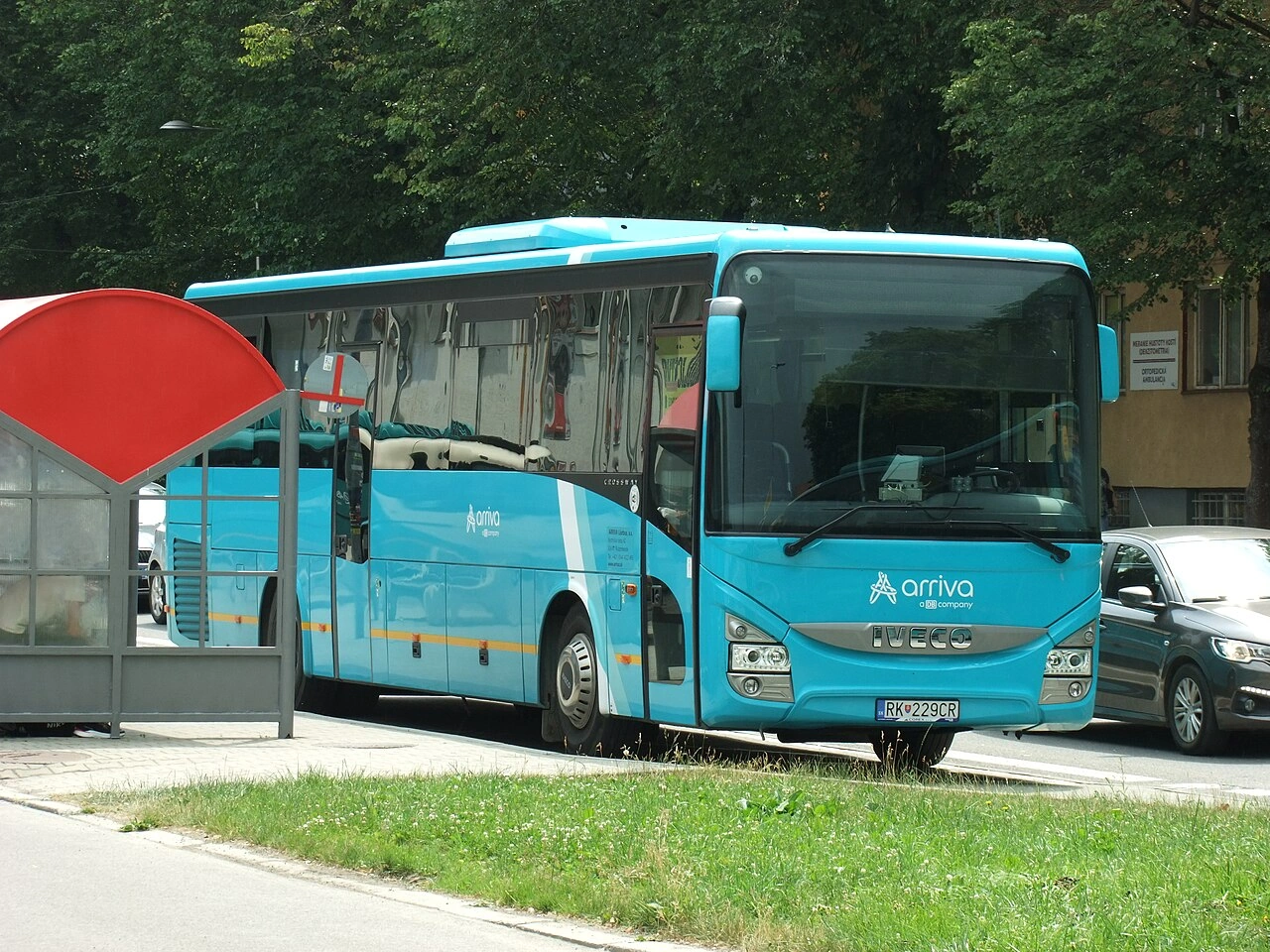
Wikimedia.org • Oto Zapletal • CC BY-SA
What is a bus?
A bus is a motor vehicle designed to transport a relatively large number of passengers. It may be used for public transport, school transport, private services or other passenger transport.
🔗 gov.uk • Great Britain Highway Code, Rules 83–88; national guidance example
🔗 gov.uk • Great Britain Highway Code, Rules 221–223; national guidance example
Do buses always have priority when leaving a bus stop?
No. Some countries require other drivers to give way to buses leaving designated stops, particularly in urban areas, while others apply the normal merging rules.
🔗 gov.uk • Great Britain Highway Code, Rules 83–88; national guidance example
🔗 gov.uk • Great Britain Highway Code, Rules 221–223; national guidance example
Do buses have special speed limits?
They can. Some countries impose lower maximum speeds on buses than on passenger cars, particularly on high-speed roads. Different limits may apply to buses and coaches.
🔗 gov.uk • Great Britain Highway Code, Rules 83–88; national guidance example
🔗 gov.uk • Great Britain Highway Code, Rules 221–223; national guidance example
18. Police
Police are public authorities responsible for enforcing laws, maintaining public safety and managing situations that may affect road traffic. In traffic, police officers may control vehicles, enforce traffic rules, investigate collisions, direct traffic and respond to emergencies.
Road users must follow lawful instructions given by police officers or other authorised traffic-control personnel. Police directions may temporarily override traffic lights, road signs or normal traffic arrangements, depending on local law.
Wikimedia.org • Kevin.B • CC BY-SA
What is the role of police in road traffic?
Police help enforce traffic law, investigate collisions and respond to risks on the road. For example, Greater Manchester Police describe targeted road enforcement, a round-the-clock roads-policing response and specialist serious-collision investigation. Exact responsibilities and powers vary by jurisdiction.
🔗 gmp.police.uk • Greater Manchester Police, Roads Policing Strategy2024–2026
Must you obey a police officer directing traffic?
Yes. Lawful directions given by an authorised police officer must be followed. In many countries, those directions take precedence over traffic lights, road signs and normal priority rules.
What should you do if police signal you to stop?
Slow down, follow the officer's directions and stop at a safe location as instructed. Do not make sudden movements or continue driving unless directed to do so.
19. Ambulance
An ambulance is a vehicle equipped and used to provide emergency medical assistance or transport patients to or between healthcare facilities. Ambulances may carry medical equipment and trained personnel who can provide treatment during transport.
During an emergency response, an ambulance may use warning lights and a siren and may receive special priority or exemptions from certain traffic rules. Other road users must follow the local rules for emergency vehicles, make sufficient space and avoid obstructing their passage.
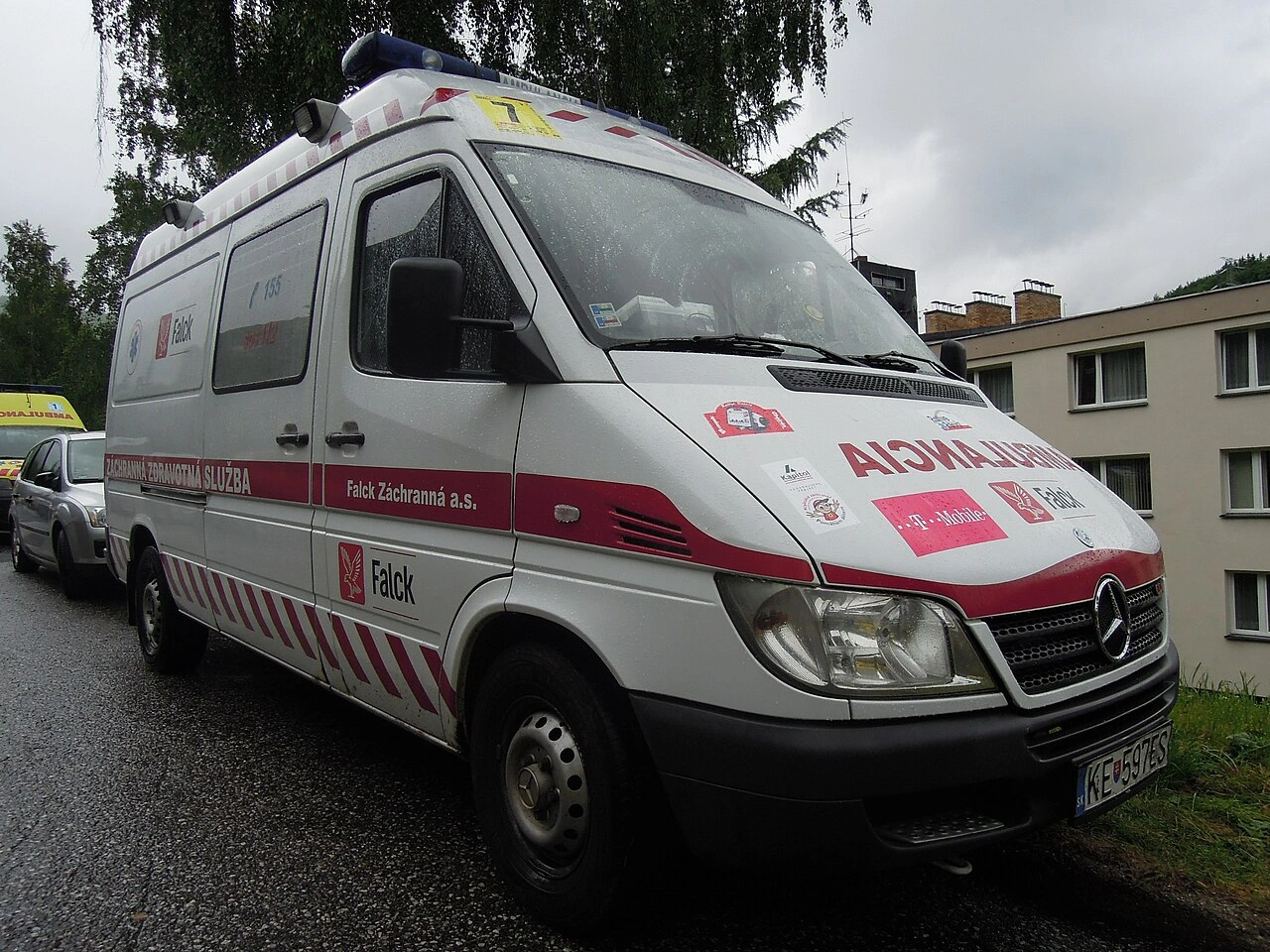
Wikimedia.org • Radim Holiš • CC BY-SA
What is an ambulance?
An ambulance is a specially equipped vehicle used to provide emergency medical assistance and transport sick or injured people.
🔗 gov.uk • Great Britain Highway Code, Rule 219, emergency vehicles; national guidance example
What should you do when an ambulance approaches?
Make space safely for an ambulance on an emergency response, following the local rules and any lawful directions. Slow down or stop where necessary without sudden or dangerous movements. Do not assume that its emergency status allows you to pass a red light or disregard another traffic control.
🔗 gov.uk • Great Britain Highway Code, Rule 219, emergency vehicles; national guidance example
Can an ambulance exceed the speed limit?
Many countries permit emergency vehicles to depart from certain normal speed rules during an urgent mission, subject to safety requirements and national legislation.
🔗 gov.uk • Great Britain Highway Code, Rule 219, emergency vehicles; national guidance example
20. European emission standard
A European emission standard, commonly called a Euro standard, is a European vehicle classification based on limits for pollutants emitted by vehicles and their engines. Successive standards, such as Euro 4, Euro 5 and Euro 6, introduced progressively stricter requirements for pollutants such as nitrogen oxides, particulate matter, carbon monoxide and hydrocarbons.
A vehicle's Euro standard is determined as part of its type approval and depends on factors including the vehicle category, fuel type and applicable emissions legislation when it was approved. Euro standards may also be used by authorities to determine access to low-emission zones, but local access rules vary between countries and cities.

Wikimedia.org • Rfeba • CC0
What is a European emission standard?
A European emission standard, or Euro standard, classifies vehicles according to the emissions requirements they had to satisfy when approved for use in the European market.
🔗 consilium.europa.eu • Council of the EU, Euro 7 adoption explanation, 12 April 2024
What do Euro 4, Euro 5 and Euro 6 mean?
Euro 4, Euro 5 and Euro 6 identify successive stages of European vehicle-pollutant requirements. The applicable limits depend on the vehicle, engine and pollutant, so a higher number does not mean that every individual numerical limit changed. Later stages can also alter testing and durability requirements.
🔗 consilium.europa.eu • Council of the EU, Euro 7 adoption explanation, 12 April 2024
Can petrol and diesel vehicles with the same Euro number have different emission limits?
Yes. The applicable emission limits and testing requirements can differ according to the vehicle category, engine and fuel type even when vehicles belong to the same general Euro generation.
🔗 consilium.europa.eu • Council of the EU, Euro 7 adoption explanation, 12 April 2024
21. Pothole
A pothole is a hole or depression in the road surface caused by wear, weather, water, repeated traffic loads or deterioration of the pavement. Potholes can vary greatly in size and depth and may develop gradually or become worse after freezing, heavy rain or repeated vehicle traffic.
Potholes can affect steering, braking and vehicle stability and may damage tyres, wheels or suspension components. Drivers and riders should observe the road ahead, adapt their speed and avoid sudden or dangerous manoeuvres when encountering damaged road surfaces.

Wikimedia.org • State Farm • CC BY
What is a pothole?
A pothole is a hole or depression that develops in a road surface when the pavement becomes damaged or deteriorates.
What should you do when you see a pothole?
Reduce speed when necessary, maintain control of the vehicle and avoid abrupt steering or braking. Only move around the pothole when this can be done safely without endangering other road users.
🔗 gov.uk • Great Britain Highway Code, Rules 226–237; national guidance example
Are potholes dangerous for cyclists?
Yes. Bicycle wheels can be strongly affected by deep holes or sharp edges, particularly when the cyclist has little time or space to avoid the hazard.
🔗 gov.uk • Great Britain Highway Code, Rules 226–237; national guidance example
22. Path
A path is a relatively narrow route intended for pedestrians and, where permitted, other road users or small vehicles. Paths may run through urban areas, countryside, parks, forests or between other roads and can be surfaced or unsurfaced.
A path is not necessarily the same as a footpath or cycle path. The road users permitted to use it depend on its legal status, width, traffic signs and local regulations.

Wikimedia.org • Tangopaso • CC0
Is a path the same as a footpath?
Not necessarily. A footpath is specifically intended for pedestrians, while a path may also permit cyclists or other users according to local rules.
Can cyclists use a path?
This depends on the legal status, width and signs applying to the path. Some paths permit cyclists, while others are reserved for pedestrians or particular users.
Can motor vehicles use a path?
This depends on local law. Some paths prohibit motor vehicles entirely, while narrow vehicles may be permitted on other paths unless traffic signs restrict access.
Who has priority when a path joins a larger road?
The applicable local priority rules determine who must give way. Special rules often apply when a minor path joins an ordinary road.
23. Particulates
Particulates, or particulate matter (PM), are tiny solid particles or liquid droplets suspended in the air. In road traffic, particulate emissions can come from vehicle exhaust, brake wear, tyre wear and road-surface wear, as well as dust that is disturbed by passing traffic.
Particulate matter is commonly classified by particle size. PM10 refers to particles with a diameter of up to approximately 10 micrometres, while PM2.5 refers to finer particles of up to approximately 2.5 micrometres. Vehicle emission standards, particulate filters and air-quality measures are used to reduce exposure to these pollutants.

Wikimedia.org • wili hybrid • CC BY
What are particulates?
Particulates, or particulate matter, are very small solid particles or liquid droplets suspended in the air.
🔗 epa.gov • US EPA, Particulate Matter Basics
🔗 fhwa.dot.gov • US FHWA, particulate matter and road-transport sources
🔗 epa.gov • US EPA, AP-42 section 13.2.1.1, paved-road emissions and dust resuspension
What are PM10 and PM2.5?
PM10 refers to particles with a diameter of up to approximately 10 micrometres. PM2.5 refers to finer particles with a diameter of up to approximately 2.5 micrometres.
🔗 epa.gov • US EPA, Particulate Matter Basics
🔗 fhwa.dot.gov • US FHWA, particulate matter and road-transport sources
🔗 epa.gov • US EPA, AP-42 section 13.2.1.1, paved-road emissions and dust resuspension
Where do traffic particulates come from?
Road traffic can produce particles through engine exhaust, brake wear, tyre wear and road-surface wear. Passing traffic can also resuspend dust already present on the road.
🔗 epa.gov • US EPA, Particulate Matter Basics
🔗 fhwa.dot.gov • US FHWA, particulate matter and road-transport sources
🔗 epa.gov • US EPA, AP-42 section 13.2.1.1, paved-road emissions and dust resuspension
24. Air pollution
Air pollution is the presence of gases, particles or other substances in the air at concentrations that can harm human health, the environment or ecosystems. Road traffic contributes to air pollution through exhaust emissions and through non-exhaust sources such as brake wear, tyre wear and road dust.
Important traffic-related pollutants include nitrogen oxides, particulate matter, carbon monoxide and volatile organic compounds. Some pollutants are emitted directly by vehicles, while others can form in the atmosphere through chemical reactions. Vehicle-emission standards, cleaner technologies and traffic-management measures are used to reduce these emissions.

Wikimedia.org • Emmanuelkwizera • CC BY-SA
What is air pollution?
Air pollution is the presence of harmful gases, particles or other contaminants in the air. Road transport can contribute through engine emissions, vehicle wear and dust; the sources and pollutants differ by vehicle and conditions.
🔗 epa.gov • US EPA, smog and vehicle emissions
🔗 epa.gov • US EPA, Particulate Matter Basics
🔗 fhwa.dot.gov • US FHWA, particulate matter and road-transport sources
🔗 epa.gov • US EPA, AP-42 section 13.2.1.1, paved-road emissions and dust resuspension
How does road traffic cause air pollution?
Vehicles with combustion engines can emit exhaust pollutants. Road traffic also produces particles through brake, tyre and road-surface wear and can stir up road dust. Vehicles without tailpipe emissions can still contribute to these non-exhaust sources.
🔗 epa.gov • US EPA, smog and vehicle emissions
🔗 epa.gov • US EPA, Particulate Matter Basics
🔗 fhwa.dot.gov • US FHWA, particulate matter and road-transport sources
🔗 epa.gov • US EPA, AP-42 section 13.2.1.1, paved-road emissions and dust resuspension
Which air pollutants are associated with road traffic?
Important traffic-related pollutants include nitrogen oxides, particulate matter, carbon monoxide and volatile organic compounds. Their relative importance depends on the vehicle, fuel and driving conditions.
🔗 epa.gov • US EPA, smog and vehicle emissions
🔗 epa.gov • US EPA, Particulate Matter Basics
🔗 fhwa.dot.gov • US FHWA, particulate matter and road-transport sources
🔗 epa.gov • US EPA, AP-42 section 13.2.1.1, paved-road emissions and dust resuspension
25. Rush hour
Rush hour is a period when roads and public transport networks experience particularly high demand, commonly because large numbers of people are travelling to or from work, school or other regular destinations. It usually occurs during the morning and late afternoon or evening on working days.
Rush-hour traffic can result in congestion, slower speeds, longer journeys and frequent stopping. Drivers should maintain a safe following distance, remain patient, anticipate changing traffic conditions and follow any temporary or dynamic traffic-management measures.

Wikimedia.org • MDRX • CC BY-SA
What is rush hour?
Rush hour is a period when unusually large numbers of people travel at the same time, resulting in increased traffic and often congestion.
🔗 gov.uk • Great Britain Highway Code, Rules 126 and 133–134; national guidance example
🔗 gov.uk • Great Britain Highway Code, Rules 174 and 192; national guidance example
Should you increase your following distance in rush-hour traffic?
Yes. Leave sufficient distance to react to sudden braking and frequent changes in traffic speed. Avoid following another vehicle too closely even when traffic is moving slowly.
🔗 gov.uk • Great Britain Highway Code, Rules 126 and 133–134; national guidance example
🔗 gov.uk • Great Britain Highway Code, Rules 174 and 192; national guidance example
Can speed limits change during rush hour?
Yes. Roads equipped with variable traffic management may display lower speed limits during congestion. Drivers must follow the speed limit currently indicated.
🔗 gov.uk • Great Britain Highway Code, Rules 126 and 133–134; national guidance example
🔗 gov.uk • Great Britain Highway Code, Rules 174 and 192; national guidance example