


Parking meterWallonia
An introduction to the traffic rules and road signs of Wallonia. Learn about driving, road safety and much more in our illustrated book, with answers to frequently asked questions.
For informational purposes only. Always follow official regulations. Some content and images were created with AI assistance.
 Traffic rules
 Wallonia
53. Parking meter
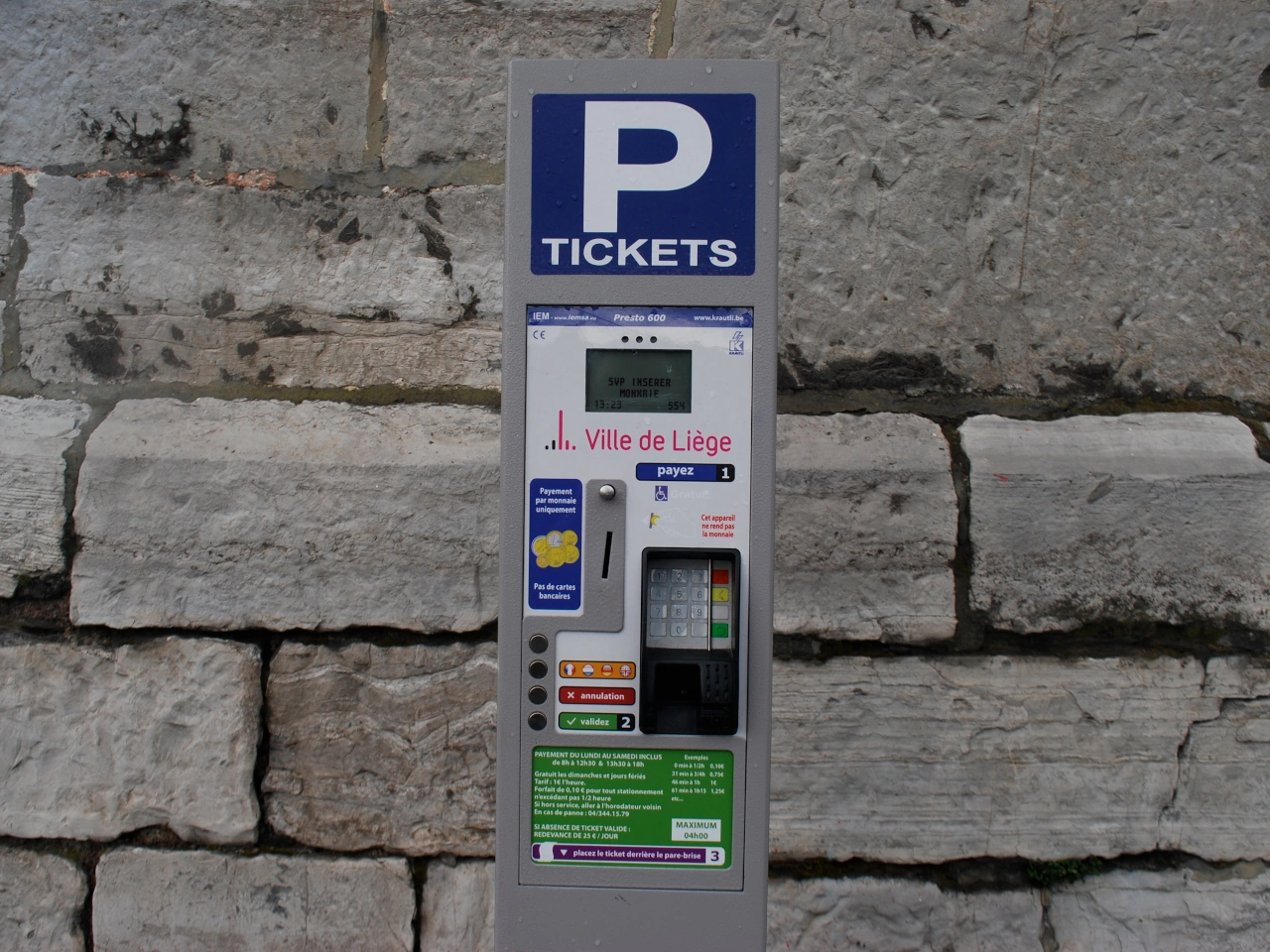
A parking meter is a device used to regulate and usually collect payment for parking in a designated parking space or area. It may require drivers to pay for a particular parking period, enter a vehicle registration number or obtain a ticket that must be displayed in the vehicle.
Parking meters may accept coins, payment cards, contactless payments or electronic payment methods, depending on the local system. Drivers must follow the instructions, operating hours, maximum parking duration and tariffs indicated on the meter, nearby signs or other official parking information.
Wikimedia.org • Jeanhousen • CC BY-SA
How does a parking meter work in Belgium?
At a Belgian parking meter or parking machine, parking must take place according to the method and conditions indicated on the device. These conditions may include the tariff, operating period, maximum parking duration and required payment procedure.
🔗 wegcode.be • Belgian Road Code, Articles 23–27ter, 70–71; Articles 23–27 and 51–52
What should you do if a Belgian parking meter is out of order?
If the parking meter or parking machine is out of service, you must use a parking disc according to the applicable Belgian blue-zone rules, unless another valid local arrangement applies.
🔗 wegcode.be • Belgian Road Code, Articles 23–27ter, 70–71; Articles 23–27 and 51–52
Can a Belgian parking meter impose a maximum parking time?
Yes. Drivers must respect the maximum parking duration indicated by the meter, parking machine or local parking rules. Using another permitted payment method does not allow the maximum authorised period to be exceeded.
🔗 wegcode.be • Belgian Road Code, Articles 23–27ter, 70–71; Articles 23–27 and 51–52


