QuaiIrlande

Apprenez les règles de circulation avec des explications claires et des exemples visuels dans notre livre illustré, simple et agréable à étudier.


11. Quai

Un quai est une zone aménagée au bord d’une rivière, d’un canal, d’un port ou d’une autre étendue d’eau, généralement utilisée pour le chargement, le déchargement, l’amarrage des navires ou l’accès au bord de l’eau. Une route peut longer l’eau ou mener directement au bord du quai.

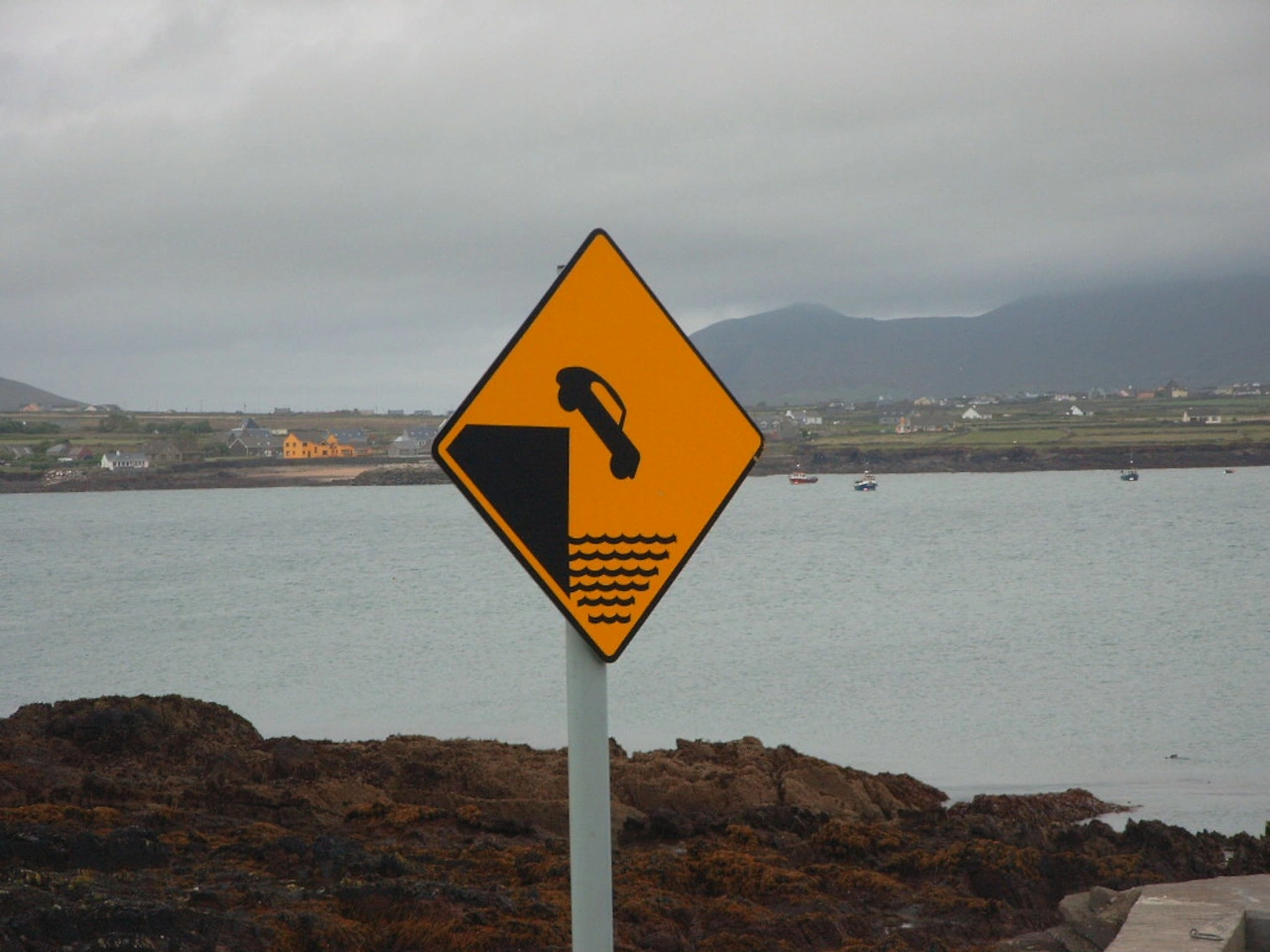
Dans la circulation routière, un avertissement de quai indique un risque qu’un véhicule quitte la route et tombe dans l’eau. Les conducteurs doivent réduire leur vitesse, observer attentivement la configuration de la route et maintenir une distance sûre par rapport au bord de l’eau.
Quai
What is a quay?

A quay is a constructed waterside platform or road area beside a river, canal, harbour or other navigable water. It may be used by ships, vehicles, workers, pedestrians and loading equipment.

What does a quay warning sign mean?

It warns that the road approaches or leads onto a quay, riverbank or waterside edge where a vehicle could enter the water.

Does the sign mean that the road ends at the water?

It may. The road may lead directly towards the water, turn sharply near it or continue alongside an insufficiently protected edge. Drivers must observe the actual road layout.

How should you approach a quay?

Reduce speed early, remain in full control and watch for the road edge, barriers, bends, workers, pedestrians and moving equipment. Avoid sudden steering or braking close to the water.

Is there a universal speed limit near a quay?

No. Drivers must follow the posted or general speed limit and reduce their speed further when the road is narrow, wet, poorly lit or close to an unprotected edge.

Does a quay warning sign impose a prohibition?

No. It normally warns of danger rather than prohibiting access. Additional signs, gates or local rules may restrict particular vehicles or activities.

Does the sign change priority?

No. Drivers must continue to follow traffic lights, priority signs and the normal priority rules.

May you stop or park on a quay?

This depends on local signs and regulations. Do not stop or park where the vehicle could create danger, obstruct traffic, interfere with loading operations or block emergency access.

Should you park close to the water’s edge?

Only in a clearly authorised and suitable place. Leave sufficient space from the edge, apply the parking brake securely and follow any wheel-positioning or local parking instructions.

May you overtake near a quay?

Overtaking may be legal, but it should be avoided when the road is narrow, visibility is limited or the manoeuvre would bring the vehicle close to the waterside edge.

Why can quay surfaces be slippery?

Water, algae, mud, ice, fuel, oil or material from loading operations may reduce grip. Painted markings, rails and metal surfaces may also become especially slippery when wet.

What other hazards may be present on a quay?

Drivers may encounter pedestrians, cyclists, dock workers, cranes, forklifts, railway tracks, mooring equipment, reversing trucks and unsecured edges.

Why should large vehicles take extra care?

Large vehicles need more space to turn and may have limited visibility close to the cab or trailer. Soft edges, narrow roads and nearby equipment can make manoeuvring more difficult.

May pedestrians walk on a quay?

Pedestrian access depends on local rules. Where pedestrians are permitted, drivers should expect them to move between vehicles, vessels, buildings and loading areas.

Should you reverse near a quay edge?

Reverse only when necessary and when the route is clearly visible. Use a guide where available and never rely solely on mirrors or cameras when the vehicle could approach the water.

What should you do in darkness or poor visibility?

Reduce speed, use the required lights and look carefully for reflectors, barriers, road edges and people. Water and dark surroundings can make the boundary of the road difficult to recognise.

What should you do if a barrier is open or missing?

Do not assume that the route is safe. Slow down, identify the road boundary and follow signs or instructions from authorised personnel.

What should you do if a vehicle enters the water?

Leave the vehicle as quickly and safely as possible, help passengers where possible and contact the emergency services. Do not re-enter the water or vehicle to recover belongings.

1 Irlande 2 Autoroute 3 Zone résidentielle 4 Zone 5 Limitation de vitesse 6 Piste cyclable 7 Avertissement piétons 8 Pont 9 Ralentisseur 10 Route à péage 11 Quai 12 Pente 13 Voie de bus 14 Panneau Stop 15 Cédez le passage 16 Rond-point 17 Rétrécissement de chaussée 18 Passage pour piétons 19 Passage à niveau 20 Interdiction de tourner 21 Zone scolaire 22 Traversée d’animaux 23 Chaussée glissante 24 Virage 25 Chevron 26 Circulation à contresens 27 Limitation de hauteur 28 Limitation de poids 29 Panneau de contrôle radar 30 Priorité au prochain carrefour 31 Avertissement de feux de circulation 32 Feux pour piétons 33 Circulation à gauche 34 Permis de conduire 35 Fin de restriction 36 Stationnement 37 Stationnement interdit 38 Marche arrière 39 Demi-tour 40 Auberge de jeunesse 41 Attraction touristique 42 Plaque d’immatriculation 43 Dangers 44 Cycliste 45 Autobus 46 Police 47 Ambulance 48 Taxi 49 Norme européenne d’émissions 50 Nid-de-poule 51 Chemin 52 Particules 53 Pollution de l’air 54 Heure de pointe 55 Code de la route 56 Route 2+2 57 Caniveau 58 Vélo cargo 59 Véhicule forestier 60 Véhicule de chantier 61 Ensemble semi-remorque 62 Trolleybus 63 Speed pedelec 64 Véhicule de livraison 65 Moteur au ralenti 66 Dépanneuse 67 Quatre roues motrices 68 Vélo 69 Équipement de moto 70 Tram 71 Voie ferrée 72 Caravane 73 Remorque 74 Attelage 75 Camion de pompiers 76 Sirène 77 Convoi 78 Feux des véhicules d’urgence 79 Machines agricoles 80 Vélo électrique 81 Véhicule électrique 82 Pedelec 83 Quadricycle 84 Voiturette 85 Véhicule tout-terrain 86 Fourgonnette 87 Véhicule de loisirs 88 Scooter 89 Trikke 90 Engin de déplacement personnel 91 Skateboard 92 Segway 93 Trottinette 94 Patins à roulettes 95 Facteur 96 Auto-stoppeur 97 Jeune enfant 98 Enfant 99 Handicap 100 Train-auto ...