VerkehrsregelnChina
Argentinien
Australien
Bangladesch
Belgien
Bosnien und Herzegowina
Brasilien
Chile
China
Deutschland
Dänemark
Finnland
Frankreich
Griechenland
Indien
Indonesien
Irland
Island
Italien
Japan
Kanada
Kolumbien
Malaysia
Mexiko
Nepal
Neuseeland
Niederlande
Norwegen
Panama
Peru
Philippinen
Polen
Portugal
Rumänien
Russland
Schweden
Schweiz
Serbien
Slowakei
Slowenien
Spanien
Südafrika
Thailand
Tschechien
Türkei
Ukraine
Ungarn
Uruguay
Vereinigte Staaten
Vereinigtes Königreich
Weltweit
Österreich
1. China
Festlandchina umfasst einen riesigen Teil Ostasiens und reicht von dicht besiedelten Küstenregionen bis zu Wüsten, Hochplateaus und großen Gebirgszügen im Westen. Es gilt Rechtsverkehr. Die Fahrbedingungen reichen von enormen mehrspurigen städtischen Straßennetzen und einem ausgedehnten Schnellstraßennetz bis zu abgelegenen Fernstraßen, auf denen Dienstleistungen weit auseinanderliegen können. Schriftliche Straßeninformationen erscheinen hauptsächlich in standardisierten chinesischen Schriftzeichen. Auf Wegweisern, insbesondere auf wichtigen Strecken und in Städten, können zusätzlich Pinyin oder Englisch erscheinen; zweisprachige Beschilderung ist jedoch nicht überall üblich. Wenn Englisch verwendet wird, werden chinesische Ortsnamen grundsätzlich in Hanyu Pinyin wiedergegeben.
China hat keine landesweite Autobahnvignette, aber viele Schnellstraßen sind mautpflichtig und nutzen ETC sowie Mautstellen. Kleine Pkw dürfen auf Schnellstraßen bis zu 120 km/h fahren, wobei ausgeschilderte Höchstgeschwindigkeiten und fahrstreifenbezogene Mindestgeschwindigkeiten beachtet werden müssen. Für ausländische Besucher besonders wichtig ist, dass ein ausländischer Führerschein oder Internationaler Führerschein in Festlandchina normalerweise nicht allein zum Fahren berechtigt. Kurzzeitbesucher mit gültigem ausländischem Führerschein können stattdessen eine chinesische vorläufige Fahrerlaubnis beantragen. Verkehrsregeln und Zufahrtsbeschränkungen für Fahrzeuge können zudem lokal unterschiedlich sein, insbesondere in Großstädten.
Auf welcher Straßenseite fährt man auf dem chinesischen Festland?
Fahren Sie auf der rechten Straßenseite und überholen Sie normalerweise links.
Welche Notrufnummern werden in China verwendet?
Verwenden Sie 110 für die Polizei, 119 für die Feuerwehr, 120 für medizinische Notfälle und 122 für Straßenverkehrsunfälle.
Welche Alkoholgrenze gilt beim Fahren in China?
Eine Blutalkoholkonzentration von 20 mg/100 ml oder mehr, aber unter 80 mg/100 ml gilt als Fahren nach Alkoholkonsum; 80 mg/100 ml oder mehr gilt als Trunkenheitsfahrt. Am sichersten ist es, vor dem Fahren keinen Alkohol zu trinken.
Darf man in China mit einem ausländischen Führerschein fahren?
Nicht mit dem ausländischen Führerschein allein. Ein ausländischer Führerschein ist auf dem chinesischen Festland nicht unmittelbar gültig. Berechtigte Kurzzeitbesucher können eine chinesische vorläufige Fahrerlaubnis beantragen; längerfristige Bewohner können nach dem geltenden Verfahren einen chinesischen Führerschein beantragen oder ihren Führerschein umschreiben lassen.
Ist ein Internationaler Führerschein auf dem chinesischen Festland gültig?
Nein. Ein Internationaler Führerschein allein ist nicht gültig. Ausländische Besucher benötigen die entsprechende chinesische Fahrerlaubnis oder vorläufige Fahrerlaubnis.
Wie lange kann eine chinesische vorläufige Fahrerlaubnis gültig sein?
Bei einem kurzen Aufenthalt kann eine vorläufige Fahrerlaubnis grundsätzlich für bis zu 3 Monate ausgestellt werden. Bei einem genehmigten Aufenthalt von mehr als drei Monaten kann ihre Gültigkeit in bestimmten Fällen auf bis zu 1 Jahr verlängert werden.
Welche Geschwindigkeitsbegrenzungen gelten auf Stadtstraßen in China, wenn kein Tempolimit ausgeschildert ist?
Ohne Geschwindigkeitszeichen oder -markierung gelten grundsätzlich höchstens 30 km/h auf einer Stadtstraße ohne Mittellinie und 50 km/h, wenn je Richtung nur ein Kraftfahrzeugfahrstreifen vorhanden ist.
Welche Geschwindigkeitsbegrenzungen gelten auf gewöhnlichen Fernstraßen in China, wenn kein Tempolimit ausgeschildert ist?
Ohne Geschwindigkeitszeichen oder -markierung gelten grundsätzlich höchstens 40 km/h auf einer Fernstraße ohne Mittellinie und 70 km/h, wenn je Richtung nur ein Kraftfahrzeugfahrstreifen vorhanden ist.
Wie hoch ist die Höchstgeschwindigkeit auf Schnellstraßen in China?
Für kleine Pkw beträgt die landesweite Höchstgeschwindigkeit auf Schnellstraßen 120 km/h. Andere Kraftfahrzeuge sind grundsätzlich auf 100 km/h und Motorräder auf 80 km/h begrenzt; niedrigere ausgeschilderte Werte haben immer Vorrang.
Gibt es auf chinesischen Schnellstraßen eine Mindestgeschwindigkeit?
Ja. Die allgemeine Mindestgeschwindigkeit beträgt 60 km/h. Zusätzlich gelten fahrstreifenbezogene Mindestwerte: Bei zwei Fahrstreifen hat der linke grundsätzlich mindestens 100 km/h; bei drei oder mehr Fahrstreifen gilt links grundsätzlich mindestens 110 km/h und auf dem angrenzenden mittleren Fahrstreifen 90 km/h.
Wer darf chinesische Schnellstraßen nicht benutzen?
Fußgänger, nicht motorisierte Fahrzeuge, Traktoren, radgebundene Spezialmaschinen, Gelenkbusse, Kombinationen mit Vollanhänger und Fahrzeuge mit einer bauartbedingten Höchstgeschwindigkeit unter 70 km/h sind auf Schnellstraßen verboten.
Dürfen Motorräder Schnellstraßen in China benutzen?
Nationale Regeln erkennen Motorradverkehr auf Schnellstraßen an und legen höchstens 80 km/h fest; auf zweirädrigen Motorrädern sind Mitfahrer dort verboten. Einzelne Provinzen können jedoch strengere Zufahrtsbeschränkungen festlegen, daher müssen Motorradfahrer örtliche Regeln und Einfahrtsschilder beachten.
Benötigt man in China eine Autobahnvignette?
Nein. Das chinesische Festland verwendet keine landesweite Autobahnvignette. Viele Schnellstraßen erheben stattdessen Maut nach befahrener Strecke und Fahrzeugkategorie.
Wie wird Maut auf chinesischen Schnellstraßen bezahlt?
China nutzt das landesweite ETC-System zur elektronischen Mauterhebung umfassend. Fahrzeuge ohne ETC können geeignete Spuren an Mautstellen nutzen und mit den dort akzeptierten Zahlungsmethoden bezahlen.
Müssen Pkw in China tagsüber Licht verwenden?
Es gibt keine allgemeine landesweite Pflicht, bei jeder klaren Tagesfahrt Abblendlicht einzuschalten. Die vorgeschriebene Beleuchtung muss nachts, bei schlechter Sicht und überall dort verwendet werden, wo Verkehrszeichen, Tunnel oder Verkehrsbedingungen dies erfordern.
Sind Winterreifen in ganz China vorgeschrieben?
Für gewöhnliche Pkw gibt es keine einheitliche landesweite feste Winterreifensaison. Das Klima variiert stark; in Schnee- oder Eisregionen sollten Fahrer geeignete Ausrüstung verwenden und vorübergehende örtliche Beschränkungen oder Verkehrsmaßnahmen beachten.
Sind Sicherheitsgurte in China vorgeschrieben?
Ja. Fahrer und Fahrgäste müssen während der Fahrt Sicherheitsgurte entsprechend den Vorschriften benutzen.
Müssen Kinder in China ein Kinderrückhaltesystem benutzen?
Das nationale Kinderschutzrecht verlangt von Eltern und Sorgeberechtigten Maßnahmen wie die Bereitstellung von Kindersitzen, um Verkehrsverletzungen zu verhindern. Die nationale Vorschrift selbst legt keinen einheitlichen Alters- oder Größenwert fest; örtlich können genauere Anforderungen bestehen.
Sind Motorradhelme in China vorgeschrieben?
Ja. Sowohl Motorradfahrer als auch Mitfahrer müssen den vorgeschriebenen Schutzhelm tragen.
Darf man beim Fahren in China ein Mobiltelefon benutzen?
Fahrer dürfen keine handgehaltenen Telefongespräche führen oder annehmen und keine ähnlichen Tätigkeiten ausüben, die das sichere Fahren beeinträchtigen.
Gilt in China rechts vor links?
Ja. An einer ungeregelten Kreuzung ohne Verkehrszeichen oder Markierungen zur Vorfahrt müssen Fahrer vor der Einfahrt anhalten und beobachten und Verkehr von rechts Vorfahrt gewähren. Abbiegende Fahrzeuge müssen außerdem geradeaus fahrenden Fahrzeugen Vorfahrt gewähren.
Wer hat in China im Kreisverkehr Vorfahrt?
Ein Fahrer, der in einen Kreisverkehr einfährt, muss bereits im Kreisverkehr fahrenden Fahrzeugen Vorfahrt gewähren.
Darf man in China bei roter Ampel rechts abbiegen?
Bei einem normalen runden roten Licht grundsätzlich ja: Ein rechts abbiegendes Fahrzeug darf weiterfahren, wenn es vorfahrtberechtigte Fahrzeuge oder Fußgänger nicht behindert. Ein roter Richtungspfeil, Verbotszeichen oder eine andere Verkehrsregelung kann das Abbiegen verbieten.
Was bedeutet gelbes Licht an einer Ampel in China?
Gelb warnt vor dem Signalwechsel. Fahrzeuge, die die Haltlinie bereits überquert haben, dürfen weiterfahren; andere Fahrzeuge dürfen nicht mehr in die Kreuzung einfahren.
Haben Fußgänger an Fußgängerüberwegen in China Vorrang?
Fahrer müssen sich einem Fußgängerüberweg langsamer nähern. Überquert ein Fußgänger die Fahrbahn, muss der Fahrer anhalten und Vorfahrt gewähren.
Darf man auf dem Standstreifen einer chinesischen Schnellstraße fahren?
Nein. Fahren oder Halten auf dem Standstreifen ist außer in einem Notfall oder bei ausdrücklicher Freigabe durch die Verkehrsbehörden verboten.
Was ist zu tun, wenn das Fahrzeug auf einer chinesischen Schnellstraße liegen bleibt?
Schalten Sie die Warnblinkanlage ein und bringen Sie das Fahrzeug möglichst aus dem Verkehr. Kann es nicht bewegt werden, lassen Sie die Warnblinker eingeschaltet, stellen Sie das Warndreieck mindestens 150 Meter hinter dem Fahrzeug auf, bringen Sie die Insassen auf den rechten Seitenstreifen oder an einen anderen sicheren Ort und rufen Sie Hilfe.
Können chinesische Städte eigene Fahrzeugbeschränkungen einführen?
Ja. Örtliche Verkehrsbehörden können je nach Verkehrslage Zufahrts-, Kennzeichen-, Zeit- oder straßenspezifische Beschränkungen festlegen. Vor der Einfahrt in Großstädte sollten Fahrer die aktuellen kommunalen Regeln prüfen.
Welche Sprache wird auf Verkehrszeichen in China verwendet?
Straßeninformationen werden hauptsächlich in standardisierten chinesischen Schriftzeichen dargestellt. Auf manchen Wegweisern erscheinen zusätzlich Pinyin oder Englisch, jedoch nicht auf jedem Schild; wo Fremdsprachentext verwendet wird, bleibt Chinesisch die Hauptsprache.
Gelten diese Regeln auch in Hongkong und Macau?
Nein. Diese Seite behandelt das chinesische Festland. Hongkong und Macau haben eigene Verkehrsgesetze und Straßensysteme; insbesondere gilt in Hongkong Linksverkehr.
2. Autobahn
Eine Autobahn ist eine Straße, die speziell für den motorisierten Verkehr gebaut und entsprechend ausgeschildert ist. Autobahnen haben normalerweise getrennte Richtungsfahrbahnen, kontrollierte Zu- und Abfahrten, keine direkten Zufahrten zu angrenzenden Grundstücken und keine höhengleichen Kreuzungen mit anderen Straßen, Eisenbahnen oder Wegen.
Auf Autobahnen gelten besondere Verkehrsregeln. Welche Verkehrsteilnehmer zugelassen sind, welche Geschwindigkeitsbegrenzungen und Fahrstreifenregeln gelten sowie Maut- und Notfallvorschriften unterscheiden sich je nach Land. Fahrer müssen daher die örtlichen Verkehrszeichen und Vorschriften beachten.
How can you recognise a motorway?
A motorway is normally identified by a special motorway sign at its entrance. It commonly has separate carriageways, controlled entrances and exits, and no ordinary intersections or direct access to neighbouring properties.
Who may use a motorway?
Motorways are primarily intended for motor vehicles capable of travelling safely at motorway speeds. Pedestrians, cyclists, animals and certain slow vehicles are generally prohibited, but the exact access requirements differ between countries.
What is the speed limit on a motorway?
There is no universal motorway speed limit. The applicable limit depends on the country, road section, vehicle category and driving conditions. Posted or variable speed-limit signs may replace the general national limit.
How should you enter a motorway?
Use the entrance or acceleration lane to observe motorway traffic and adjust your speed where possible. Enter only when there is a safe gap and follow the local priority and merging rules.
How should you leave a motorway?
Move into the correct lane in good time and signal when required. Enter the exit or deceleration lane before reducing your speed, unless traffic, signs or road conditions require you to slow down earlier.
Which lane should you use on a motorway?
Follow the local keep-left or keep-right rule and any lane-direction signs. Lanes closer to the centre of the motorway are commonly used for overtaking, but lane-use rules differ between countries and vehicle categories.
Can you stop on a motorway?
Voluntary stopping and parking are normally permitted only in designated parking or service areas. Drivers may still have to stop because of congestion, an emergency or another unavoidable situation.
Can you reverse or make a U-turn on a motorway?
Reversing, making a U-turn and driving against the direction of traffic are generally prohibited. If you miss an exit, continue to the next suitable exit.
What should you do if your vehicle breaks down?
Move the vehicle out of the traffic lanes when this can be done safely, activate the hazard warning lights and follow the local breakdown procedures. Leave the vehicle safely, keep away from moving traffic and use a warning triangle or safety vest where required by local law.
What is the difference between a motorway and an expressway?
A motorway normally has the highest level of access control and is governed by specific motorway rules. An expressway may have similar characteristics but may permit different road users or contain lower-standard junctions. The legal distinction varies between countries.
3. Schnellstraße
Eine Schnellstraße ist eine Straße, die den Durchgangsverkehr effizient aufnehmen soll und normalerweise höhere Geschwindigkeiten als gewöhnliche Straßen ermöglicht. Schnellstraßen haben häufig beschränkten Zugang, mehrere Fahrstreifen, getrennte Richtungsfahrbahnen oder planfreie Knotenpunkte; Bauweise und rechtlicher Status unterscheiden sich jedoch je nach Land.
Eine Schnellstraße ist nicht immer eine Autobahn. Sie kann Kreuzungen, Ampeln oder direkte Zufahrten haben; zugelassene Verkehrsteilnehmer, Geschwindigkeitsbegrenzungen und besondere Regeln richten sich nach den örtlichen Verkehrszeichen und Vorschriften.
How can you recognise an expressway?
An expressway may be identified by a special road sign or by its road classification. It often has multiple lanes, limited access and junctions designed for faster traffic, but its exact appearance differs between countries.
Is an expressway the same as a motorway?
No. A motorway normally has full access control and stricter design and traffic rules. An expressway may have partial access control, ordinary intersections, traffic lights or direct entrances. The legal distinction varies between countries.
Is an expressway always divided?
Not necessarily. Many expressways have separate carriageways for opposing traffic, but some countries also classify undivided roads as expressways. Drivers should rely on local signs and road rules rather than the road’s appearance alone.
Who may use an expressway?
Expressways are generally intended for motorised traffic. Pedestrians, cyclists, animals, mopeds and slow vehicles may be restricted or prohibited, but the permitted road users depend on local law and traffic signs.
What is the speed limit on an expressway?
There is no universal expressway speed limit. The applicable limit depends on the country, road design, location, vehicle category and posted signs. An expressway sign does not always impose a particular speed by itself.
Can an expressway have intersections or traffic lights?
Yes. Unlike a motorway, an expressway may have level intersections, roundabouts, pedestrian crossings or traffic lights. Drivers must therefore remain prepared for crossing traffic and changes in priority.
How should you enter an expressway?
Use an entrance or acceleration lane where one is provided, observe approaching traffic and enter only when there is a safe gap. Where the road has an ordinary intersection, follow the applicable priority signs and local rules.
Which lane should you use on an expressway?
Follow the local keep-left or keep-right rule, lane arrows and traffic signs. Lanes nearer the centre are commonly used for overtaking, but special lane restrictions may apply to heavy vehicles or particular destinations.
Can you stop, park, reverse or make a U-turn?
These actions are often restricted on expressways because of the speed and flow of traffic. Stop or park only where permitted, and never reverse or make a U-turn unless the road design and local rules clearly allow it.
What should you do after a breakdown?
Move the vehicle away from moving traffic when this can be done safely, activate the hazard warning lights and follow the local breakdown procedures. Use a warning triangle or safety vest where required and wait in a protected location away from traffic.
4. Wohngebiet
Ein Wohngebiet ist eine Straße oder Gruppe von Straßen, in der Wohnnutzung und die Zufahrt zu örtlichen Grundstücken die Hauptfunktionen darstellen. Fahrer müssen mit Fußgängern, Radfahrern, Kindern, geparkten Fahrzeugen sowie Fahrzeugen rechnen, die aus Einfahrten heraus- oder hineinfahren.
Einige Länder kennzeichnen bestimmte Wohngebiete mit Verkehrszeichen und wenden dort besondere Niedriggeschwindigkeits- oder Mischverkehrsregeln an. Geschwindigkeitsbegrenzung, Rechte von Fußgängern, Parkregeln und zugelassene Verkehrsteilnehmer richten sich daher nach den örtlichen Verkehrszeichen und Vorschriften.
How can you recognise a residential area?
A residential area commonly contains homes, driveways, parked vehicles and local streets. It may also have special entrance signs, traffic-calming measures or shared road space, but its appearance and legal status differ between countries.
Is a residential area the same as a built-up area?
Not necessarily. A built-up area may include residential, commercial and industrial streets. A residential area is primarily associated with housing and local access and may form only one part of a larger built-up area.
Is every residential neighbourhood a legally designated residential zone?
No. In many countries, special residential-zone rules apply only where an official entrance sign is displayed. An ordinary neighbourhood may remain subject to the normal rules for the surrounding road or built-up area.
What is the speed limit in a residential area?
There is no universal residential-area speed limit. Some countries apply a very low limit in signposted residential or shared-space zones, while ordinary residential streets may follow the general built-up-area limit or a posted zone limit.
Do pedestrians have priority in a residential area?
The rights of pedestrians depend on the country and the type of residential area. In some signposted shared-space zones, pedestrians may use the whole road and drivers must give them special consideration. On ordinary residential streets, the normal pedestrian and crossing rules may apply.
May children play in a residential area?
Playing may be expressly permitted in certain legally designated residential or shared-space zones. This is not automatically allowed on every residential street. Drivers should nevertheless remain especially alert for children, who may enter the road unexpectedly.
Which road users may enter a residential area?
Residential areas are normally accessible to local motor traffic, cyclists and pedestrians, but additional signs may restrict certain vehicles or through traffic. A residential area is therefore not necessarily a pedestrian-only zone.
How should you drive in a residential area?
Drive at a speed that allows you to stop safely, watch both sides of the road and expect pedestrians, cyclists, children, pets and vehicles emerging from entrances. Leave enough space and avoid unnecessary acceleration, noise or aggressive overtaking.
May you overtake in a residential area?
Overtaking is not universally prohibited, but it may be restricted by local law, signs or road design. Even where it is permitted, drivers should not overtake when the limited space or presence of vulnerable road users makes it unsafe.
Where may you park in a residential area?
Follow the local parking signs, markings and general parking rules. Do not block entrances, pavements, crossings, sight lines or the passage of other road users. Special residential zones may permit parking only in designated spaces.
What is the difference between a residential area and a pedestrian zone?
Motor vehicles are normally still permitted in a residential area, although they may be subject to strict speed and parking rules. In a pedestrian zone, vehicle access is generally prohibited or limited to specific users, purposes or times.
5. Geschwindigkeitsbegrenzung
Eine Geschwindigkeitsbegrenzung ist die gesetzlich höchstens zulässige Geschwindigkeit auf einer Straße, einem Fahrstreifen oder innerhalb eines ausgewiesenen Bereichs. Sie kann durch allgemeines Verkehrsrecht festgelegt oder durch feste, variable oder vorübergehende Verkehrszeichen angezeigt werden.
Eine Geschwindigkeitsbegrenzung ist ein Höchstwert und keine Zielgeschwindigkeit. Fahrer müssen langsamer fahren, wenn Verkehr, Sicht, Wetter, Straßenzustand, gefährdete Verkehrsteilnehmer oder der Zustand des Fahrzeugs die höchstens zulässige Geschwindigkeit unsicher machen.
What is a speed limit?
A speed limit is the maximum legal speed permitted on a road, lane or within a designated area. It does not require drivers to travel at that speed.
How can you recognise a speed limit?
A speed limit is commonly displayed as a number on a regulatory traffic sign. General limits may also apply automatically because of the country, road category, vehicle type or surrounding area, even when no speed-limit sign is present.
Is the speed limit a recommended driving speed?
No. It is the highest speed legally permitted under suitable conditions. Drivers must reduce their speed whenever travelling at the limit would be unsafe.
Can you drive more slowly than the speed limit?
Yes. Drivers should travel more slowly when required by traffic, weather, visibility, road conditions or nearby vulnerable road users. Driving unnecessarily slowly may nevertheless be prohibited when it obstructs normal traffic.
Does the same speed limit apply to every vehicle?
Not always. Lower limits may apply to heavy vehicles, buses, vehicles towing trailers, novice drivers or other vehicle categories. The lowest applicable limit must be respected.
What is a default speed limit?
A default speed limit applies automatically to a particular road type or area when no traffic sign indicates another limit. Examples include general limits for motorways, built-up areas or roads outside built-up areas.
Does a posted speed limit replace the default limit?
Usually, yes. A legally placed speed-limit sign normally introduces another maximum speed, although lower vehicle-specific or special-road limits may continue to apply.
When does a speed-limit sign take effect?
A speed restriction normally begins at the location of the sign. Drivers should reduce their speed before passing the sign so that they are already travelling within the limit when it takes effect.
When does a speed limit end?
A signed limit may end at an intersection, an end-of-limit sign, another speed-limit sign or the beginning or end of a legally defined area. The exact rule differs between countries.
Does an intersection end a speed limit?
This depends on local law. An ordinary speed restriction may end at an intersection in some countries, while a zonal speed limit normally continues across intersections until an end-of-zone sign.
What is a speed zone?
A speed zone is an area in which the displayed maximum speed applies throughout all included roads. The limit normally remains in force until the corresponding end-of-zone sign.
What is a variable speed limit?
A variable speed limit is displayed on an electronic or changeable sign and may be adjusted according to congestion, weather, incidents or roadworks. When activated, it has the same legal importance as another applicable regulatory speed sign.
Can different lanes have different speed limits?
Yes. Signs positioned above individual lanes may impose different limits on those lanes. Drivers must observe the limit applying to the lane they use.
Can a temporary speed limit apply?
Yes. Temporary limits may be introduced near roadworks, collisions, hazards or special events. Drivers must follow the temporary traffic signs and instructions that are legally in force.
May you exceed the speed limit while overtaking?
No. Overtaking does not normally permit a driver to exceed the applicable maximum speed. The manoeuvre must be completed safely while respecting the speed limit.
Do poor conditions change the legal speed limit?
Some countries impose specific lower limits in rain, snow or other conditions. Even where the numerical limit does not change, drivers must reduce their speed sufficiently for the conditions.
6. Gehweg
Ein Gehweg ist ein Weg oder Teil einer Straße, der hauptsächlich für den Fußgängerverkehr bestimmt ist. Er kann entlang einer Straße, durch einen Park oder ein Wohngebiet oder unabhängig von Straßen für Kraftfahrzeuge verlaufen.
Ein Gehweg kann ausschließlich Fußgängern vorbehalten sein oder Teil einer gemeinsam genutzten Strecke mit Radfahrern oder anderen zugelassenen Nutzern sein. Zugang, Vorfahrt und zugelassene Nutzer richten sich nach den Verkehrszeichen und örtlichen Vorschriften für den jeweiligen Weg.
What is a footpath?
A footpath is a path or part of a road intended primarily for pedestrians.
Is a footpath the same as a pavement?
Not necessarily. A pavement or sidewalk normally runs alongside a roadway, while a footpath may follow an independent route or pass through an area without an adjacent roadway.
Who may use a footpath?
Pedestrians are the primary users. Depending on the signs and local regulations, cyclists or other categories may also be permitted on shared paths.
Can cyclists use a pedestrian-only footpath?
Normally no when the path is specifically reserved for pedestrians. Cyclists may have to dismount unless local rules or signs allow cycling.
Can someone walking a bicycle use a footpath?
In many countries, a person walking a bicycle by hand is treated as a pedestrian and may therefore use pedestrian facilities, subject to local rules.
Can motor vehicles use a footpath?
Normally no when the route is reserved for pedestrians. Limited access may sometimes be authorised for maintenance, emergency or other specific purposes.
Can a footpath be shared with cyclists?
Yes. A route may be designated as a shared pedestrian-and-cycle path. Users must follow any signs indicating how the space should be shared.
Do pedestrians have priority on a shared footpath?
This depends on the local traffic rules and type of shared facility. Cyclists and other permitted users should always avoid endangering pedestrians.
Can a footpath cross a roadway?
Yes. Where a path crosses a roadway, pedestrians must follow the applicable crossing, priority and traffic-light rules.
Can a footpath be part of the public road?
Yes. Pedestrian paths can form part of the wider public-road network even though ordinary motor traffic may not use them.
Can a footpath have its own traffic sign?
Yes. Many countries use a specific pedestrian symbol to indicate a path reserved or compulsory for pedestrians.
What should cyclists do when a footpath is not open to cycling?
Use the appropriate cycle facility or roadway. Where local law permits it, a cyclist may also dismount and continue as a pedestrian.
7. Radweg
Ein Radweg ist ein Teil einer Straße oder eine eigenständige Strecke, die hauptsächlich oder ausschließlich für Radfahrer bestimmt ist. Er kann baulich vom Kraftfahrzeugverkehr getrennt, auf der Fahrbahn markiert oder durch Verkehrszeichen gekennzeichnet sein.
Radwege können in eine oder beide Richtungen geführt oder mit anderen Verkehrsteilnehmern gemeinsam genutzt werden. Zulässige Nutzer, Fahrtrichtung, Vorfahrtsregeln und eine mögliche Benutzungspflicht richten sich nach den örtlichen Verkehrszeichen und Vorschriften.
How can you recognise a bike path?
A bike path may be identified by a bicycle traffic sign, bicycle symbols, coloured surfacing or road markings. It may run beside the carriageway or follow a completely separate route.
Is a bike path the same as a bike lane?
Not always. A bike lane is normally marked directly on or beside the carriageway, while a bike path may be physically separated from motor traffic. The terminology and legal distinction vary between countries.
Must cyclists use a bike path?
This depends on local law and the signs displayed. Some bike paths are mandatory, while others are optional. Cyclists may also be permitted to leave a path to turn, overtake or avoid an obstruction.
Can a bike path carry traffic in both directions?
Yes. Some bike paths are two-way, but others may be used only in the direction indicated by signs, markings or their position beside the road. Cyclists should not assume that every path permits travel in both directions.
May pedestrians use a bike path?
Pedestrians may use a bike path where it is designated as a shared-use path or where local law permits it. On a cycle-only path, pedestrians may be prohibited or permitted only when no suitable pedestrian facility is available.
May mopeds or speed pedelecs use a bike path?
This depends on the country, vehicle category, road speed and traffic signs. Some bike paths permit or require certain mopeds or speed pedelecs, while others are reserved exclusively for ordinary bicycles.
May motor vehicles use a bike path?
Normally not. Motor vehicles may cross a bike path to enter another road or property where this is permitted, but they must follow the applicable priority rules and must not endanger path users.
Who has priority where a vehicle crosses a bike path?
Priority depends on the road layout, signs, signals and local law. Drivers crossing a continuous bike path commonly have to give way to its users, but cyclists approaching a separate cycle crossing may not automatically have priority before entering it.
Does a cyclist always have priority at a cycle crossing?
No. A marked cycle crossing does not universally give an approaching cyclist priority. Cyclists should enter cautiously and observe approaching traffic unless signs, signals or local rules clearly give them priority.
Is there a speed limit on a bike path?
Some countries or local authorities impose specific limits, particularly on shared paths. Even without a posted limit, cyclists must travel at a safe and considerate speed for the width, visibility and number of other users.
May you stop or park on a bike path?
Normally not. Stopping or parking on a bike path can force cyclists into motor traffic and may be expressly prohibited by law.
What should cyclists do when passing pedestrians?
Reduce speed, give a clear warning where appropriate and leave sufficient space. Pedestrians may change direction unexpectedly, especially on a shared path.
What should cyclists do when a bike path is blocked?
Slow down and check surrounding traffic before leaving the path. Avoid the obstruction safely and return to the bike path when permitted and practical.
Can cyclists ride side by side on a bike path?
This depends on local law and the available width. Even where riding side by side is permitted, cyclists must not block, endanger or unnecessarily hinder other path users.
What is the difference between a bike path and a shared-use path?
A bike path is intended primarily or exclusively for cycling. A shared-use path is legally intended for cyclists together with pedestrians or other indicated road users, who must use the space considerately.
8. Tunnel
Ein Tunnel ist ein überdeckter Verkehrsweg, der eine Straße durch oder unter einem Hindernis wie einem Hügel, Berg, Gebäude, Gewässer oder einem anderen Verkehrsweg hindurchführt. Straßentunnel können einen oder mehrere Fahrstreifen haben und Verkehr in eine oder beide Richtungen aufnehmen.
Das Fahren im Tunnel erfordert besondere Aufmerksamkeit, weil Sicht, Fluchtmöglichkeiten und Ausweichraum begrenzt sind. Fahrer sollten die geltenden Beleuchtungs-, Geschwindigkeits-, Fahrstreifen- und Abstandsregeln beachten und auf Notausgänge, Lichtsignale und Wechselverkehrszeichen achten.
What is a road tunnel?
A road tunnel is a covered passage that carries a road through or beneath an obstacle.
Should you use headlights in a tunnel?
Follow the local lighting rules and traffic signs. Many countries require dipped headlights in tunnels even during daylight, while general visibility rules may also require vehicle lights.
Should you increase your following distance in a tunnel?
Yes. Additional distance gives more time to react to sudden congestion, a breakdown or another hazard where escape space may be limited.
Can you stop or park in a tunnel?
Voluntary stopping and parking are generally prohibited or strongly restricted in road tunnels. Drivers should stop only where permitted or when traffic, an emergency or another unavoidable situation requires it.
Can you reverse or make a U-turn in a tunnel?
Normally this should not be done unless specifically authorised or directed by emergency or traffic-control personnel. Motorway tunnels are additionally subject to the normal motorway prohibitions on reversing and U-turns.
What should you do if traffic stops in a tunnel?
Keep a safe distance from the vehicle ahead, follow traffic signals and instructions and avoid blocking emergency access. Switch on hazard warning lights where appropriate to warn following traffic.
What should you do if your vehicle breaks down in a tunnel?
Move into an emergency bay or other safe position if possible, switch on the hazard warning lights and follow the tunnel's emergency procedures. Use an emergency telephone or contact the emergency services where necessary.
What should you do if there is a fire in a tunnel?
Follow the emergency signs and instructions immediately. If evacuation is necessary, leave the vehicle and use the indicated emergency exit rather than remaining in a dangerous traffic or smoke-filled area.
What are tunnel emergency exits?
Emergency exits provide a route away from the traffic tunnel during incidents such as a fire. Signs may indicate the nearest exit and the direction or distance to it.
Should you remove sunglasses before entering a tunnel?
Where necessary, removing dark sunglasses before entering can help your eyes adapt more quickly to the lower light level inside the tunnel.
Can speed limits change inside a tunnel?
Yes. Tunnels may have permanent or variable speed restrictions. Drivers must follow the speed limit currently indicated.
Can dangerous goods be restricted in tunnels?
Yes. Certain tunnels may restrict vehicles carrying dangerous goods because an incident in an enclosed space can create additional risks. Follow all applicable tunnel-category and dangerous-goods signs.
9. Mautstraße
Eine Mautstraße ist eine Straße, Autobahn, Brücke, ein Tunnel oder eine andere Strecke, für deren Nutzung eine Gebühr erhoben wird. Die Maut kann für alle Fahrzeuge oder nur bestimmte Fahrzeugkategorien gelten; ihre Höhe kann unter anderem von gefahrener Strecke, Fahrzeugtyp, Gewicht oder Emissionen abhängen.
Maut kann an Mautstellen, elektronisch oder über eine Vignette bzw. ein entfernungsabhängiges Gebührensystem erhoben werden. Fahrer sollten die geltenden Zahlungsregeln vor der Nutzung einer Mautstrecke prüfen, insbesondere bei Fahrten in einem anderen Land.
What is a toll road?
A toll road is a road or section of road for which a charge must be paid to use it. Tolls may also apply to particular bridges, tunnels or other road infrastructure.
How are road tolls paid?
Depending on the country, tolls may be paid at a toll booth, through an electronic toll system, vignette or distance-based charging system.
Do all vehicles pay the same toll?
Not necessarily. Toll rates can vary according to vehicle type, size, weight, emissions, distance travelled or the particular road being used.
10. Steigung oder Gefälle
Eine Steigung oder ein Gefälle ist ein Straßenabschnitt, der deutlich ansteigt oder abfällt. Ein starker Höhenunterschied kann Fahrzeuggeschwindigkeit, Bremsweg, Traktion, Sicht und die Fähigkeit schwerer oder leistungsschwacher Fahrzeuge beeinflussen, eine gleichmäßige Geschwindigkeit zu halten.
Warnzeichen können auf eine starke Steigung oder ein gefährliches Gefälle hinweisen und die Neigung in Prozent anzeigen. Fahrer sollten ihre Geschwindigkeit frühzeitig anpassen, einen geeigneten Gang wählen und mit langsamen Fahrzeugen, Kurven sowie wechselnden Straßenbedingungen rechnen.
What is a road slope?
A road slope is a section of road that rises or descends over a particular distance. It may also be called a gradient, incline or decline.
How can you recognise a steep slope?
A steep slope may be indicated by a warning sign showing an ascending or descending road. The sign may also display the gradient as a percentage.
What does a gradient of 10% mean?
A gradient of 10% means that the road rises or falls approximately 10 metres for every 100 metres travelled horizontally. It does not mean that the road is inclined at 10 degrees.
What is the difference between an ascent and a descent?
An ascent rises in the direction of travel, while a descent falls in the direction of travel. The same section of road is therefore an ascent in one direction and a descent in the other.
Does a slope warning sign impose a speed limit?
Not normally. It warns of a hazard rather than setting a numerical limit. Drivers must still respect the applicable speed limit and reduce their speed further when necessary.
How should you approach a steep descent?
Reduce speed before the descent, select a suitable gear and maintain a safe following distance. Avoid allowing the vehicle to gain excessive speed.
Which gear should you use when descending?
Use a gear that provides sufficient engine braking and helps keep the vehicle at a controlled speed. The appropriate gear depends on the vehicle, gradient and road conditions.
Should you coast downhill in neutral?
No. Coasting reduces engine braking and may make it harder to control the vehicle’s speed. Keep the transmission engaged while descending.
Why should you avoid continuous heavy braking?
Continuous braking on a long descent can cause the brakes to become excessively hot and lose effectiveness. Select a suitable gear, control speed early and use the brakes progressively when needed.
What is brake fade?
Brake fade is a reduction in braking performance caused by excessive heat. It can occur when the brakes are used continuously during a long or steep descent.
How should you drive uphill?
Select a suitable gear before the engine begins to struggle and maintain a steady speed where possible. Be prepared for heavy or low-powered vehicles travelling slowly ahead.
May a vehicle lose speed on a steep ascent?
Yes. Heavy vehicles, vehicles towing trailers and low-powered vehicles may slow considerably. Other drivers should maintain a safe distance and avoid impatient manoeuvres.
May you overtake near the top of a slope?
Do not overtake when the crest prevents you from seeing far enough ahead. Overtaking near a hilltop may also be expressly prohibited by local law, signs or road markings.
Why is visibility limited near the crest of a slope?
The road surface itself may hide approaching traffic, stopped vehicles, pedestrians or other hazards beyond the crest.
Who has priority on a narrow slope?
Some countries give priority to uphill traffic, while others rely on signs or ordinary obstruction rules. Drivers must follow local law and cooperate when passing is difficult.
How should you meet another vehicle on a narrow slope?
Reduce speed and use a passing place where available. The driver who can reverse or move aside more safely should cooperate, subject to any applicable priority signs or local rules.
How do rain, snow or ice affect a slope?
They reduce traction and make acceleration, braking and steering more difficult. Increase the following distance, use smooth controls and reduce speed before entering the slope.
Why are cyclists vulnerable on slopes?
Cyclists may travel slowly and move less steadily when climbing, while they may reach high speeds when descending. Drivers should leave sufficient space and avoid overtaking without a clear view.
How should you park on a slope?
Use the parking brake, select the appropriate gear or parking position and follow local rules concerning wheel position. Make sure the vehicle cannot roll into traffic.
Can a slope affect towing?
Yes. A trailer increases the load on the engine and brakes and may affect stability. Drivers should use a suitable gear, maintain additional distance and avoid excessive speed.
11. Busspur
Eine Busspur ist ein Fahrstreifen, der hauptsächlich Bussen oder anderen berechtigten Fahrzeugen des öffentlichen Verkehrs vorbehalten ist. Sie soll Zuverlässigkeit und Verkehrsfluss des öffentlichen Verkehrs verbessern, indem berechtigte Fahrzeuge allgemeinen Stau umgehen können.
Andere Verkehrsteilnehmer wie Taxis, Radfahrer, Motorräder oder Fahrzeuge mit mehreren Insassen können ebenfalls zugelassen sein, wenn dies ausdrücklich ausgeschildert ist. Betriebszeiten, zugelassene Fahrzeuge, Fahrtrichtung sowie Regeln für das Einfahren oder Queren der Spur richten sich nach den örtlichen Verkehrszeichen und Vorschriften.
What is a bus lane?
A bus lane is a lane reserved primarily for buses or other authorised public-transport vehicles. Its purpose is to help public transport move efficiently through traffic.
How can you recognise a bus lane?
A bus lane may be identified by a bus-lane sign, lane markings, coloured surfacing or the word BUS painted on the road. The markings and colours differ between countries.
Is a bus lane the same as a bus-only road?
No. A bus lane forms part of a wider road arrangement, while a bus-only road may reserve the entire road for buses and other authorised users.
Who may use a bus lane?
Buses operating authorised or scheduled services may normally use it. Other vehicles may enter only when the traffic signs or local regulations expressly permit them.
May taxis use a bus lane?
This depends on local law and the signs displayed. Some bus lanes permit licensed taxis, while others are reserved exclusively for buses.
May cyclists use a bus lane?
Cyclists may use a bus lane where signs or local law permit them. They should remain alert for large vehicles, stops, passengers and buses moving towards the kerb.
May motorcycles use a bus lane?
Only where motorcycles are expressly permitted. Permission may apply to all motorcycles, particular times or specific bus lanes.
Can a bus lane operate only at certain times?
Yes. A sign may show days or hours during which the restriction applies. Outside those periods, the lane may become available to general traffic, subject to the local rules.
Does a bus lane have a special speed limit?
Not necessarily. The normal road or posted speed limit generally applies unless a separate restriction is displayed.
May ordinary vehicles enter a bus lane to turn?
Some countries allow drivers to enter a bus lane shortly before a junction to make a turn. Drivers must follow the lane markings and enter only at the point where local rules permit it.
May you cross a bus lane?
Usually, where necessary and permitted. A driver may need to cross it at an intersection or to enter or leave a property, parking area or side road. The driver must check carefully for buses, cyclists and other authorised users.
May you use a bus lane to pass congestion?
No. An unauthorised driver may not use the bus lane simply to overtake a queue or reach the front of traffic.
May you stop or park in a bus lane?
Stopping and parking are normally prohibited unless a sign or marked bay expressly permits them. A stopped vehicle can obstruct buses and force authorised lane users into general traffic.
Do buses always have priority when leaving a stop?
Not universally. Some countries require drivers to allow a signalling bus to leave a stop, particularly inside built-up areas. Elsewhere, ordinary merging rules apply.
Does a bus lane change priority at an intersection?
No. Traffic lights, priority signs and the ordinary intersection rules continue to apply unless special public-transport signals indicate otherwise.
Can a bus lane run against the direction of general traffic?
Yes. A contraflow bus lane may carry authorised vehicles in the opposite direction from nearby general traffic. Drivers and pedestrians should check both directions before crossing.
What do special bus traffic lights mean?
Some countries use separate lights or symbols for public-transport vehicles. Only drivers authorised to use that lane should follow those signals, while other traffic follows its own lights.
What should you check before crossing a bus lane?
Check mirrors and blind spots and look for buses, taxis, cyclists, motorcycles or other authorised vehicles. Their lane may be moving even when general traffic is stationary.
How does a bus lane end?
It may end at a sign, a change in road markings, an intersection or the end of its stated operating period. Drivers should follow the lane arrows and merge safely where required.
12. Bushaltestelle
Eine Bushaltestelle ist ein ausgewiesener Ort, an dem Busse halten, damit Fahrgäste ein- oder aussteigen können. Sie kann durch ein Schild, einen Unterstand, eine erhöhte Plattform, Fahrbahnmarkierungen oder andere Einrichtungen des öffentlichen Verkehrs gekennzeichnet sein und sich am Fahrbahnrand oder in einer eigens angelegten Haltebucht befinden.
Fahrer sollten sich einer Bushaltestelle mit besonderer Aufmerksamkeit für Busse, Fußgänger und Fahrgäste nähern, die die Fahrbahn überqueren oder betreten. Rund um Haltestellen können Halt- oder Parkverbote gelten, um Zugänglichkeit und Sicht zu gewährleisten.
What is a bus stop?
A bus stop is a designated location where buses stop so that passengers can board or leave the vehicle.
What should you watch for near a bus stop?
Watch for buses entering or leaving the stop, passengers near the roadway and pedestrians who may cross the road.
Can you park at a bus stop?
Parking or stopping at or near a bus stop is often restricted or prohibited so that buses can reach the stop safely. The exact restrictions depend on local traffic rules.
13. Stoppschild
Ein Stoppschild verpflichtet Fahrer, vollständig anzuhalten und Vorfahrt zu gewähren, bevor sie in die vorausliegende Straße einfahren oder sie überqueren. Angehalten werden muss an der Haltlinie oder an einer anderen gesetzlich vorgeschriebenen Stelle.
Nach dem Anhalten darf der Fahrer erst weiterfahren, wenn dies sicher und ohne Behinderung bevorrechtigten Verkehrs möglich ist. Das Stoppschild verschafft dem Fahrer durch das Anhalten selbst keine Vorfahrt.
What does a stop sign mean?
A stop sign requires a driver to come to a complete stop and give way before proceeding.
How can you recognise a stop sign?
A stop sign is commonly a red octagonal sign displaying the word STOP. Some countries use another legally recognised design, so drivers must learn the signs used locally.
Must you stop when no other traffic is visible?
Yes. The obligation to stop applies even when the road appears completely clear.
What is a complete stop?
A complete stop means that the vehicle has ceased moving entirely. Merely slowing down or allowing the vehicle to continue rolling does not satisfy the requirement.
Where should you stop?
Stop before the stop line where one is provided. Without a line, stop at the legally prescribed position before entering the intersection, crossing or priority road.
May you stop beyond the stop line?
No. The required first stop must be made before the line. If visibility is limited, move forward cautiously after stopping and stop again where necessary before proceeding.
Must every vehicle in a queue stop separately?
Yes. Each driver must make an individual complete stop. Following another vehicle through without stopping is not permitted.
Does stopping give you priority?
No. After stopping, you must continue to give way to all road users who have priority.
Who must you give way to?
Give way to traffic on the road being entered or crossed and to pedestrians, cyclists or other road users who have priority under the applicable rules.
What is the difference between a stop sign and a give-way sign?
A stop sign always requires a complete stop. A give-way sign requires the driver to yield but normally allows continued movement when the road is clearly free.
May you turn after stopping?
Yes. After stopping and giving way, you may turn in any direction permitted by signs, signals, lane arrows and road markings.
May you turn right at a red traffic light after stopping?
This depends entirely on local law and traffic signs. A stop sign does not by itself permit a turn against a red light.
Does a stop sign impose a speed limit?
No. It imposes a stopping and yielding obligation. The normal posted or general speed limit remains applicable before and after the intersection.
Does a stop sign apply to cyclists?
In many countries, cyclists are drivers and must stop unless a specific sign or local rule provides an exception.
What happens at an all-way stop?
The order in which drivers may proceed depends on local rules, commonly involving arrival order, vehicle position and turning direction. Drivers should communicate cautiously and never assume another driver will yield.
What if two vehicles stop at the same time?
Apply the local priority rule and proceed only when the intentions of the other driver are clear. Avoid forcing the other vehicle to brake or change direction.
Do traffic lights override a stop sign?
Where functioning traffic lights control the same movement, they commonly take precedence over the stop sign. Local rules determine what applies when the lights are switched off or flashing.
Do instructions from a police officer override a stop sign?
Yes. Instructions from an authorised traffic officer normally take precedence over traffic signs and ordinary priority rules.
Can a temporary stop sign be legally binding?
Yes. A correctly placed temporary stop sign at roadworks, an event or another temporary traffic arrangement must be obeyed.
What should you do when the stop sign is partly hidden?
If you recognise that a stop sign applies, reduce speed and obey it. Report damaged, obscured or missing signs to the responsible road authority where appropriate.
14. Vorfahrt gewähren
Ein Vorfahrt-gewähren-Zeichen verpflichtet Fahrer, bevor sie in eine Straße einfahren, sie überqueren oder sich in sie einfädeln, bevorrechtigten Verkehr zuerst passieren zu lassen. Fahrer müssen die Geschwindigkeit verringern, den sich nähernden Verkehr beobachten und bei Bedarf anhalten.
Anders als ein Stoppschild verlangt dieses Zeichen nicht immer ein vollständiges Anhalten. Ohne anzuhalten darf nur weitergefahren werden, wenn die Strecke eindeutig frei ist und kein bevorrechtigter Verkehrsteilnehmer gezwungen wird, Geschwindigkeit oder Richtung zu ändern.
What does a give-way sign mean?
A give-way sign requires drivers to allow traffic with priority to proceed first. The driver must slow down and stop when necessary.
How can you recognise a give-way sign?
It is commonly an inverted triangular sign with a red border and a light-coloured centre. In some countries, it is called a yield sign.
Must you always stop at a give-way sign?
No. You must stop only when necessary to give way or obtain a sufficiently clear view. You may continue slowly when the road is clearly free.
What does giving way mean?
Giving way means allowing another road user to continue without being forced to brake, accelerate, stop or change direction because of your movement.
Where should you stop when necessary?
Stop before the give-way line where one is provided. Without a line, stop before entering the intersection or priority road at a position where you can observe traffic safely.
May you cross the give-way line before stopping?
You may move beyond the line only when this does not interfere with traffic that has priority. Where visibility is limited, first slow or stop at the line and then move forward cautiously.
What is the difference between give way and stop?
A stop sign always requires a complete stop. A give-way sign permits the driver to continue without stopping when the road is clearly free and it is safe to proceed.
Does slowing down satisfy the give-way requirement?
Only when slowing down is sufficient to let all priority traffic proceed safely. If another road user would be hindered, the driver must slow further or stop.
Who must you give way to?
Give way to traffic travelling on the road being entered or crossed and to any pedestrians, cyclists or other road users who have priority under the applicable rules.
Does giving way apply only to vehicles approaching from one direction?
No. Check every direction from which lawful traffic may approach, including cycle paths, one-way roads with authorised contraflow traffic and separate carriageways.
Does a give-way sign give the other road permanent priority?
The sign determines priority at the particular location. The priority arrangement at later intersections may be different unless the road is separately identified as a priority road.
Does giving way give you priority afterwards?
No. You may proceed only when it is safe. Another driver’s hesitation or courtesy does not remove your responsibility to avoid danger.
Must every vehicle in a queue give way separately?
Yes. Each driver must observe the road and make an individual decision. You may not follow another vehicle through without checking that the way remains clear.
Does a give-way sign apply to cyclists?
Normally, yes. Cyclists are generally treated as drivers and must obey the sign unless a supplementary sign or local rule provides otherwise.
Can a give-way sign apply only to cyclists?
Yes. Some countries use supplementary signs or path-specific signs to require cyclists to give way while other traffic follows a different priority arrangement.
Does a give-way sign change the speed limit?
No. It regulates priority rather than speed. Drivers must still approach slowly enough to observe traffic and stop when necessary.
Does a give-way sign change turning rules?
No. Drivers must still obey traffic lights, lane arrows, mandatory-direction signs and turning prohibitions.
How does give way work at a roundabout?
Many roundabout entrances have give-way signs requiring entering traffic to yield to vehicles already circulating. Drivers must follow the actual signs because roundabout priority rules differ between countries.
Do traffic lights override a give-way sign?
Functioning traffic lights commonly take precedence over priority signs controlling the same movement. The give-way sign may apply again when the lights are switched off or flashing, depending on local law.
Do police instructions override a give-way sign?
Yes. Instructions from an authorised traffic officer normally take precedence over traffic signs and ordinary priority rules.
What should you do when visibility is limited?
Reduce speed substantially and stop when necessary. Move forward cautiously only after giving way and checking that the road can be entered without danger.
15. Kreisverkehr
Ein Kreisverkehr ist ein Knotenpunkt, an dem der Verkehr um eine Mittelinsel in einer festgelegten Richtung geführt wird. Einfahrten werden normalerweise durch Verkehrszeichen und Fahrbahnmarkierungen geregelt; je nach Land müssen einfahrende Fahrzeuge dem bereits im Kreisverkehr fahrenden Verkehr Vorfahrt gewähren oder es gelten andere Prioritätsregeln.
Fahrer sollten sich rechtzeitig einordnen, alle Verkehrsteilnehmer beobachten und beim Verlassen entsprechend blinken. Fahrtrichtung, Einfahrtsvorfahrt, Fahrstreifennutzung sowie Regeln für Radfahrer und Fußgänger richten sich nach den örtlichen Verkehrszeichen und Vorschriften.
What is a roundabout?
A roundabout is a circular road arrangement where traffic travels in one direction around a central island before leaving through the chosen exit.
How can you recognise a roundabout?
A roundabout is normally identified by a circular-direction sign, a central island and entry roads controlled by signs, markings or local priority rules.
Which direction does traffic travel around a roundabout?
The direction depends on the country’s driving side. Traffic normally travels anticlockwise in right-hand-traffic countries and clockwise in left-hand-traffic countries.
Who has priority at a roundabout?
Priority differs between countries and roundabout designs. Entering traffic commonly gives way to traffic already circulating, but drivers must always follow the actual priority signs and signals.
Must you stop before entering a roundabout?
Not always. Stop when required by a stop sign, traffic light or approaching priority traffic. Otherwise, reduce speed and enter only when there is a safe gap.
Does a roundabout always have a give-way sign?
No. The sign arrangement depends on local law. Some circular intersections use ordinary priority rules or traffic lights instead.
How should you approach a roundabout?
Reduce speed, observe the signs and markings, choose the appropriate lane and check for pedestrians, cyclists and circulating traffic.
Which lane should you choose?
Follow the lane arrows and destination signs. As a general guide, use the lane appropriate for your exit, but exact lane-selection rules differ between countries and roundabout layouts.
May you use an inner lane?
Yes, where the road layout and local rules permit it. Before leaving, change lanes safely and give way to road users already travelling in the lane you wish to enter.
Do you need to signal when entering?
This depends on local law. Some countries require a signal for particular exits, while others require no signal when entering.
Do you need to signal when leaving?
Usually, yes. Signal in the direction of the exit early enough to inform other road users, but not so early that your intention becomes misleading.
Does signalling give you priority?
No. A direction indicator communicates your intention but does not permit you to force another road user to brake or change direction.
May you change lanes on a roundabout?
Only when the lane markings permit it and the manoeuvre can be completed safely. Check mirrors and blind spots, signal where required and give way to traffic already in the target lane.
What should you do if you miss your exit?
Continue around the roundabout and approach the exit again. Do not stop, reverse or cut suddenly across another lane.
May you drive over the central island?
Normally not. Some small roundabouts have a mountable central section intended only for vehicles that cannot otherwise negotiate the road safely.
Do cyclists have priority at a roundabout?
Priority depends on whether cyclists use the carriageway, a continuing bike path or a separate cycle crossing. Drivers and cyclists must follow the signs, markings and local priority rules.
What should drivers check before leaving?
Check mirrors and blind spots for cyclists, mopeds, motorcycles and vehicles beside you. Also check for pedestrians crossing the exit road.
Do pedestrians have priority at roundabout exits?
Pedestrian priority depends on crossings and local law. Drivers should approach exits slowly and be prepared to yield to pedestrians crossing or about to cross.
Does a roundabout have a special speed limit?
Not universally. The posted or general road limit applies, but drivers must travel slowly enough to negotiate the roundabout safely.
May you overtake on a roundabout?
Passing another vehicle may be permitted on a multilane roundabout, but drivers must remain within their lane and avoid unsafe lane changes. Local overtaking restrictions may apply.
May you stop or park on a roundabout?
Follow local signs and parking rules. Stopping or parking on the circulating roadway is commonly prohibited or unsafe because it obstructs traffic and reduces visibility.
Is every circular intersection a roundabout?
No. A circular junction may be governed by traffic lights, ordinary priority rules or another road design. Its legal status depends on its signs and local definition.
16. Fahrbahnverengung
Eine Fahrbahnverengung ist ein Abschnitt, in dem die verfügbare Breite der Straße oder Fahrbahn geringer wird. Die Verengung kann beidseitig, nur auf einer Seite oder dadurch entstehen, dass ein oder mehrere Fahrstreifen enden.
Fahrer sollten die Geschwindigkeit verringern, Gegen- und Nebenverkehr beobachten, ausreichend seitlichen Abstand halten und sich bei Bedarf einfädeln. Warnzeichen legen nicht immer die Vorfahrt fest; deshalb müssen Vorfahrtzeichen, Fahrbahnmarkierungen und örtliche Verkehrsregeln beachtet werden.
What is a road narrowing?
A road narrowing is a section where the usable width of the road becomes smaller. Traffic may have less space to pass, merge or travel beside other road users.
How can you recognise a road narrowing?
It may be indicated by a triangular warning sign showing the road edges moving closer together. The symbol may show narrowing on both sides, the left side or the right side.
What can cause a road to narrow?
A road may narrow because of a bridge, tunnel, barrier, traffic-calming measure, roadworks, parked vehicles, landslide, damaged road edge or reduction in the number of lanes.
Does a narrowing sign impose a speed limit?
No. It normally warns of danger rather than setting a numerical speed limit. Drivers must still reduce speed when necessary to pass safely.
Does a narrowing sign determine who has priority?
Not by itself. Priority may be established by separate signs, signals or local rules. Without them, drivers should approach cautiously and cooperate.
Who has priority when the obstruction is on one side?
In many countries, the driver whose side is obstructed must give way to approaching traffic. The precise rule depends on local law and any priority signs displayed.
What if the road narrows equally from both sides?
Neither direction necessarily has automatic priority. Drivers should reduce speed, assess who can pass safely and avoid entering when doing so would block approaching traffic.
What do priority signs at a narrow section mean?
One sign may require you to give way to oncoming traffic, while the corresponding sign may indicate that you have priority. Drivers must still avoid entering when the passage is already occupied or blocked.
Does having priority mean you must continue?
No. Priority is not an obligation to proceed. Slow down or stop when another vehicle is already in the narrow section or when continuing would create danger.
What should you do when another vehicle is already in the narrowing?
Allow it enough room to leave the narrow section. Do not enter if the available width is insufficient for both vehicles to pass safely.
How should you approach a road narrowing?
Check mirrors, reduce speed smoothly and observe oncoming traffic, cyclists, pedestrians and vehicles beside you. Be prepared to stop or merge.
Must you use an indicator when the road narrows?
Use an indicator when you must change lanes or move laterally. Merely following a lane that bends with the road may not require a signal under local law.
What should you do when your lane ends?
Check the adjacent lane, signal and merge safely according to the local merging rules. Do not force another driver to brake or leave the road.
What is zipper merging?
Zipper merging means that vehicles from an ending or blocked lane merge alternately with vehicles in the continuing lane, usually immediately before the narrowing during congestion.
Should you merge early during heavy congestion?
Where zipper merging applies, continue using both lanes and merge alternately near the narrowing. In free-flowing traffic, change lanes safely when a suitable gap is available.
May you overtake near a road narrowing?
A narrowing sign does not always prohibit overtaking, but overtaking should be avoided when there is insufficient width, visibility or distance to complete the manoeuvre safely.
How should you pass cyclists at a narrowing?
Wait behind the cyclist when the required passing distance cannot be maintained. Do not squeeze past or force the cyclist towards a kerb, barrier or damaged road edge.
How should large vehicles use a narrow section?
Large vehicles may need additional width and may cross lane or centre markings where legally permitted. Other drivers should leave sufficient space and avoid passing alongside them in the narrowing.
May pedestrians be present at a road narrowing?
Yes. Pavements or verges may also become narrow or blocked. Drivers should expect pedestrians or wheelchair users to enter the carriageway to pass an obstruction.
May you stop or park in a road narrowing?
Only where it is permitted and enough width remains for traffic to pass safely. Never stop or park where the vehicle would create danger, obstruct visibility or prevent other vehicles from passing.
What should you do at a temporary roadworks narrowing?
Follow temporary signs, signals, barriers and instructions from authorised workers. Temporary traffic controls may replace the normal priority or lane arrangement.
What should you do in poor visibility?
Reduce speed further, increase the following distance and be prepared for a stopped vehicle beyond the narrowing. Use the required lights without dazzling approaching road users.
17. Fußgängerüberweg
Ein Fußgängerüberweg ist eine ausgewiesene Stelle, an der Fußgänger eine Straße überqueren können. Er wird häufig durch Fahrbahnmarkierungen, Verkehrszeichen, Lichtsignale oder eine Kombination dieser Maßnahmen gekennzeichnet.
Fahrer müssen sich mit angemessener Vorsicht nähern und Vorfahrt gewähren, wenn das örtliche Recht dies verlangt. Fußgänger müssen ebenfalls auf den herannahenden Verkehr achten und vorhandene Fußgängersignale oder Anweisungen befugter Verkehrsregler befolgen.
What is a pedestrian crossing?
A pedestrian crossing is a designated place for pedestrians to cross a road. It may be controlled by traffic lights or operate without signals.
How can you recognise a pedestrian crossing?
It may be indicated by white road markings, traffic signs, flashing lights, pedestrian signals or a raised crossing. Its appearance varies between countries.
Is a pedestrian crossing the same as a zebra crossing?
A zebra crossing is a type of pedestrian crossing marked by broad contrasting stripes or rectangles. Not every pedestrian crossing uses this design.
Do pedestrians always have priority?
Not universally. Priority depends on local law, traffic signals and whether the pedestrian is already crossing or clearly preparing to cross.
Must drivers stop for pedestrians waiting beside the crossing?
This depends on local law. In many countries, drivers must give way when a pedestrian is clearly intending or preparing to enter the crossing.
How should drivers approach a pedestrian crossing?
Reduce speed, observe both sides of the road and be prepared to stop. Pay particular attention to children, older people and persons with limited mobility.
May you enter a crossing when traffic is congested?
No. Do not enter when traffic ahead may force you to stop on the crossing and block pedestrians.
Where should you stop for a pedestrian?
Stop before the crossing or before the applicable stop line. Leave the crossing completely clear.
May you overtake near a pedestrian crossing?
Overtaking may be prohibited, particularly when another vehicle has stopped or slowed for the crossing. Even where no specific prohibition applies, overtaking is unsafe when pedestrians may be hidden from view.
May you stop or park on a pedestrian crossing?
Normally not. Stopping or parking on or immediately before a crossing can obstruct pedestrians and hide them from approaching drivers.
Does a pedestrian crossing impose a speed limit?
Not by itself. Drivers must respect the applicable speed limit and reduce their speed further when necessary to stop safely.
Do traffic lights change the priority rules?
Yes. Drivers and pedestrians must follow the signals applying to them. Drivers must still allow pedestrians who lawfully started crossing to finish safely.
May pedestrians cross when their signal is red?
No. Pedestrians must wait when the pedestrian signal prohibits them from entering the road.
What if the pedestrian signal changes while someone is crossing?
A pedestrian who entered lawfully should continue at a normal pace. Drivers must allow the crossing to be completed safely.
May cyclists ride across a pedestrian crossing?
This depends on local law. In many countries, a person riding a bicycle is treated as a driver and does not receive pedestrian priority. A cyclist walking beside the bicycle is normally treated as a pedestrian.
Is a pedestrian crossing also a cycle crossing?
Not automatically. A separate cycle crossing, cycle path or combined crossing may be indicated by additional markings or signs.
Must pedestrians use a nearby crossing?
Some countries require pedestrians to use a crossing when one is located within a specified distance. Other countries allow crossing elsewhere when it can be done safely.
May pedestrians remain standing on the crossing?
No. Pedestrians should cross without unnecessary delay and should not obstruct traffic by stopping or lingering on the road.
Does a raised pedestrian crossing change priority?
The raised surface itself does not necessarily determine priority. Drivers and pedestrians must follow the crossing markings, signs, signals and local rules.
What should drivers check when turning across a crossing?
Check for pedestrians approaching from both sides and give way where required. Turning drivers should not focus only on motor traffic.
What should pedestrians do before crossing?
Observe approaching traffic, make sure drivers have sufficient time to react and cross carefully. Priority does not remove the need to avoid stepping into the path of a vehicle that cannot stop safely.
18. Bahnübergang
Ein Bahnübergang ist eine Stelle, an der eine Straße oder ein Weg Bahngleise höhengleich kreuzt. Er kann durch Schranken, Warnlichter, Glocken, Verkehrszeichen oder eine Kombination dieser Einrichtungen gesichert sein.
Verkehrsteilnehmer müssen sich vorsichtig nähern und dürfen niemals einfahren, wenn sich ein Zug nähert, Warnsignale aktiv sind oder die Ausfahrt blockiert ist. Sie sollten die Gleise zügig überqueren und dürfen niemals auf den Gleisen anhalten, warten oder eingeschlossen werden.
What is a railway crossing?
A railway crossing is a place where a road or path crosses railway tracks at the same level.
What is another name for a railway crossing?
It may also be called a level crossing or, particularly in North America, a railroad crossing.
How can you recognise a railway crossing?
It may be indicated by warning signs, crossbuck signs, barriers, flashing lights, bells or road markings. The design differs between countries.
What is the difference between a crossing with and without barriers?
A protected crossing uses full or partial barriers to block road traffic when a train approaches. A crossing without barriers relies on signs, lights, bells or the road user’s own observation.
Must you always stop at a railway crossing?
Not necessarily. You must stop when required by lights, barriers, signs, an approaching train or an authorised person. At an unprotected crossing, slow down and proceed only after checking that no train is approaching.
What do flashing red lights mean?
Flashing red lights mean stop and do not enter the crossing. Remain stopped until the signal permits you to continue.
May you cross while a barrier is moving?
No. Do not enter while a barrier is lowering, rising or closed. Wait until the crossing is fully open and all prohibiting signals have stopped.
May you drive around a closed barrier?
No. Never drive, cycle or walk around or underneath a closed or moving barrier.
What does a warning bell mean?
A warning bell or audible signal normally means that the crossing is closing or that a train is approaching. Do not enter the crossing while it is sounding.
What does a flashing white light mean?
In some countries, a flashing white light indicates that the crossing equipment is operating and road users may pass when the route is clear. Its exact meaning depends on local law.
What should you do at a crossing without lights or barriers?
Reduce speed, look and listen carefully in both directions and cross only after making sure that no train or other rail vehicle is approaching.
May you cross immediately after a train has passed?
Not automatically. Another train may approach on a second track. Wait until all warning signals stop and the crossing is fully open.
What if traffic ahead is blocking the exit?
Do not enter the crossing unless there is enough room beyond the tracks for your entire vehicle. Never rely on traffic moving before a train arrives.
May you wait on the tracks?
No. Railway tracks must always remain clear. Do not stop because of congestion, traffic lights or another obstruction beyond the crossing.
May you overtake at a railway crossing?
Overtaking is often prohibited or restricted because another vehicle can obstruct the view of an approaching train or warning signal. Follow local signs and overtaking rules.
May you stop or park on a railway crossing?
No. Stopping or parking on the tracks creates an immediate and potentially fatal danger.
Do the crossing signals apply to pedestrians and cyclists?
Yes. Pedestrians and cyclists must obey barriers, lights, bells and authorised personnel in the same way as other road users.
Should cyclists ride across the tracks at an angle?
Where possible, cross the rails at an angle close to 90 degrees. Rails can trap a bicycle wheel, especially when they are wet or cross the road diagonally.
What should drivers of long vehicles check?
Make sure the entire vehicle and any trailer can clear the crossing without stopping. Consider the available space, road gradient, turning room and traffic beyond the tracks.
What should drivers of high vehicles check?
Observe all height restrictions and warning signs. Electrified railway lines may have overhead equipment that can be struck by an excessively high vehicle or load.
What should you do if the signals appear defective?
Treat the crossing with extreme caution. Do not assume that no train is approaching merely because the lights or barriers are not operating.
What should you do if your vehicle becomes stuck on the tracks?
Evacuate everyone immediately, move well away from the railway and contact the emergency services or railway operator. Do not remain in the vehicle or return for belongings.
Is a railway crossing the same as tram tracks in the road?
Not always. A railway crossing normally crosses tracks that are separate from the carriageway, while tram or street-running railway tracks may form part of the road itself.
19. Vorgeschriebene Fahrtrichtung
Ein Gebotszeichen zur Fahrtrichtung verpflichtet Fahrer, nur in die durch einen oder mehrere Pfeile angezeigte Richtung zu fahren. Es kann vorschreiben, geradeaus zu fahren, abzubiegen oder ein Hindernis auf einer bestimmten Seite zu passieren.
Das Zeichen bestimmt für sich allein weder Vorfahrt noch Geschwindigkeit. Fahrer müssen weiterhin den richtigen Fahrstreifen benutzen, bei Bedarf blinken und gemäß den örtlichen Verkehrszeichen und Vorschriften Vorfahrt gewähren.
What does a mandatory-direction sign mean?
It requires drivers to follow the direction or one of the directions shown by the arrow or arrows.
How can you recognise a mandatory-direction sign?
It is commonly a blue circular sign with one or more white arrows. Colours and designs may differ in some countries.
What does an upward arrow mean?
It normally means that drivers must continue straight ahead and may not turn in another direction at that location.
What does a left or right arrow mean?
It normally requires drivers to turn or proceed in the direction shown by the arrow.
What do two arrows mean?
Drivers may choose one of the displayed directions. Any direction not shown is prohibited.
What does an arrow beside an obstacle mean?
It requires drivers to pass the traffic island, barrier, roadworks equipment or other obstruction on the side indicated by the arrow.
Is a mandatory-direction sign the same as a one-way sign?
No. A mandatory-direction sign prescribes a movement at a particular location. A one-way sign indicates the permitted direction along a road or carriageway.
Is it the same as a no-turn sign?
No. A mandatory sign states which direction must be followed, while a prohibition sign states which movement is forbidden. Both may produce a similar practical result.
Does the sign impose a speed limit?
No. Drivers must follow the applicable general, zonal or posted speed limit and reduce speed when necessary to complete the required movement safely.
Does the sign give you priority?
No. You must still obey traffic lights, priority signs and the ordinary rules concerning oncoming traffic, pedestrians, cyclists and other road users.
When does the obligation begin?
It normally applies at the sign, intersection or obstacle associated with it. An advance sign may indicate that the obligation begins farther ahead.
Can a mandatory-direction sign apply to only one lane?
Yes. When it is positioned above a particular lane or clearly associated with that lane, it normally applies only to traffic using that lane.
Can road arrows also prescribe a direction?
Yes. Lane arrows may require drivers to use a particular lane and follow one of the directions displayed within that lane.
Must you use an indicator?
Yes, when the required movement involves turning or changing position and local law requires signalling. The sign does not replace the obligation to indicate.
Does signalling give you priority?
No. An indicator communicates your intention but does not allow you to force another road user to brake or change direction.
May you make a U-turn?
Not when doing so would conflict with the mandatory direction or another prohibition. Drivers must follow the permitted route shown by the signs and markings.
May you reverse to avoid following the sign?
No. Reversing must not be used to evade a mandatory direction. Continue along a lawful route and turn around later where permitted.
Does the sign apply to cyclists?
Cyclists are normally treated as drivers and must obey the sign unless a supplementary panel or local rule expressly exempts them.
Can other road users be exempted?
Yes. Supplementary signs may exempt or separately regulate cyclists, public transport or other specified categories where local law permits this.
What if the required route is blocked?
Do not enter a closed or unsafe route. Stop where safe and follow temporary signs, traffic lights or instructions from authorised personnel.
Do traffic lights cancel a mandatory-direction sign?
Not normally. Traffic lights determine when traffic may proceed, while the mandatory-direction sign determines which movement is permitted.
Do police instructions override the sign?
Yes. Instructions from an authorised traffic officer normally take precedence over traffic signs and ordinary traffic rules.
Can a temporary mandatory-direction sign be binding?
Yes. Properly placed temporary signs at roadworks, incidents or events must be obeyed.
What is a mandatory route for dangerous-goods vehicles?
It requires vehicles carrying specified dangerous goods to follow a designated route suitable for their cargo and any applicable tunnel restrictions.
When does the mandatory direction end?
The obligation is normally completed after the driver has followed the required direction at the intersection or passed the obstacle on the indicated side.
20. Abbiegeverbot
Ein Abbiegeverbot untersagt Fahrern das Abbiegen in die durch ein Verkehrszeichen bezeichnete Richtung. Es kann an einer Kreuzung oder entlang eines bestimmten Straßenabschnitts das Linksabbiegen, Rechtsabbiegen oder Wenden verbieten.
Fahrer müssen einer zulässigen Route folgen und vorhandene Fahrstreifenpfeile oder Gebotszeichen beachten. Ein Abbiegeverbot bestimmt für sich allein weder Vorfahrt noch Geschwindigkeit; Ausnahmen für Radfahrer, öffentliche Verkehrsmittel oder andere Verkehrsteilnehmer müssen ausdrücklich angezeigt werden.
What is a turn prohibition?
A turn prohibition prevents drivers from making a particular turn or change of direction indicated by a traffic sign.
How can you recognise a turn-prohibition sign?
It is commonly a circular sign with a red border showing a crossed or barred turning arrow. The arrow indicates the movement that is prohibited.
What does a no-left-turn sign mean?
It prohibits drivers from turning left at the location or intersection to which the sign applies.
What does a no-right-turn sign mean?
It prohibits drivers from turning right at the location or intersection to which the sign applies.
What does a no-U-turn sign mean?
It prohibits drivers from turning around to travel in the opposite direction.
Is a prohibited turn the same as a mandatory direction?
No. A prohibition sign identifies a movement that may not be made. A mandatory-direction sign identifies the direction or directions that must be followed.
Is a turn prohibition the same as a no-entry sign?
No. A turn prohibition prevents a particular approach from turning into a road. A no-entry sign prohibits vehicles from entering the road from the direction where it is displayed.
Is a turn prohibition the same as one-way traffic?
No. A one-way rule controls the permitted direction along a road. A turn prohibition controls a particular movement at or near an intersection.
When does a turn prohibition apply?
It may apply at the sign, at the next intersection or throughout a stated section. Drivers must follow the sign design and the rules of the country concerned.
Can a turn prohibition be announced in advance?
Yes. An advance sign or supplementary distance panel may warn drivers that the prohibited turn is farther ahead.
Can the sign apply to only one lane?
Yes. A sign positioned above or clearly associated with one lane may apply only to drivers using that lane.
Do lane arrows also restrict turning?
Yes. Drivers must choose the correct lane and follow one of the directions displayed by its legally binding arrows.
Does a green traffic light permit a prohibited turn?
No. A green light permits traffic to proceed, but drivers must still respect turn prohibitions, lane arrows and other regulatory signs.
Does a turn prohibition change priority?
No. Drivers making another permitted movement must still follow traffic lights, priority signs and the ordinary rules concerning pedestrians, cyclists and other vehicles.
Does a turn prohibition impose a speed limit?
No. The applicable general, zonal or posted speed limit remains in force.
Must you use an indicator for a permitted turn?
Yes, where local law requires it. Signal early enough to communicate your intention and stop signalling after completing the movement.
Does signalling make a prohibited turn legal?
No. An indicator communicates an intention but cannot authorise a movement prohibited by a traffic sign.
May cyclists be exempted?
Yes. A supplementary sign may allow cyclists or other specified road users to make a turn that remains prohibited for general traffic.
May buses or taxis be exempted?
Public transport, taxis or other authorised vehicles may be exempted where a supplementary sign or local rule expressly permits the movement.
Does a no-left-turn sign also prohibit a U-turn?
Not universally. Some countries treat these as separate prohibitions. Drivers must check whether a separate no-U-turn sign or general rule applies.
May you turn into a driveway before the prohibited intersection?
This depends on the exact legal scope of the sign. A sign applying specifically to the next intersection may not regulate an earlier property entrance, but another sign or road marking may still prohibit the movement.
May you reverse to avoid the turn prohibition?
No. Do not reverse through traffic or into an intersection to evade the sign. Continue along a permitted route and change direction later where it is legal and safe.
What should you do after entering the wrong lane?
Follow the movement permitted from that lane. Do not turn suddenly across another lane or ignore the sign; continue and choose another legal route.
Can a temporary turn prohibition be binding?
Yes. Properly placed temporary signs near roadworks, incidents or events must be obeyed.
Do instructions from an authorised officer override the sign?
Yes. Follow instructions from an authorised traffic officer even when they differ from the displayed turn prohibition.
21. Schulbereich
Ein Schulbereich ist eine Straße oder Gruppe von Straßen in der Nähe einer Schule, wo viele Kinder zu Fuß gehen, Rad fahren, die Fahrbahn überqueren oder in Fahrzeuge ein- und aussteigen können. Er kann durch Warn- oder Zonenzeichen, Fahrbahnmarkierungen, Verkehrsberuhigungsmaßnahmen oder Blinklichter gekennzeichnet sein.
Besondere Geschwindigkeitsbegrenzungen, Parkverbote oder Zufahrtsregeln können dauerhaft oder nur zu den Bring- und Abholzeiten gelten. Fahrer sollten die Geschwindigkeit verringern, besonders auf Kinder achten und bremsbereit sein.
What is a school area?
A school area is a road or group of roads near a school where drivers should expect large numbers of children, pedestrians, cyclists and stopping vehicles.
How can you recognise a school area?
It may be identified by school warning signs, speed-zone signs, flashing lights, road markings, coloured surfacing or traffic-calming measures. The signs differ between countries.
Does every road beside a school have special legal rules?
No. Special school-area rules normally apply only where signs, signals or local legislation establish them.
What is the speed limit in a school area?
There is no universal school-area speed limit. The applicable limit depends on the country, region, signs and whether a variable restriction is active.
Is the school-area speed limit always active?
Some limits apply permanently, while others apply only during displayed times or when flashing or variable signs are active. Drivers must observe the actual sign arrangement.
Must you drive below the displayed limit?
Yes, when necessary. The displayed speed is a maximum. Children, congestion, poor visibility or vehicles stopping near the school may require a much lower speed.
Why are children especially vulnerable in traffic?
Children may have difficulty judging speed and distance, may be hidden by parked vehicles and may enter the road unexpectedly.
How should you approach a school area?
Reduce speed early, increase your observation and be prepared for children crossing, cyclists changing direction, vehicle doors opening and cars stopping suddenly.
Do children automatically have priority everywhere?
No. Priority depends on crossings, traffic lights, authorised crossing supervisors and local rules. Drivers must nevertheless take exceptional care to avoid endangering children.
Must you obey a school crossing supervisor?
Yes. Drivers and other road users must follow lawful instructions given by an authorised person controlling traffic for children.
May children cross away from a pedestrian crossing?
This depends on local pedestrian rules. Drivers should remain prepared for children to cross unexpectedly, even where they are required to use a nearby crossing.
Does a school sign create pedestrian priority?
Not by itself. A school warning sign alerts drivers to children but does not normally create the legal effect of a pedestrian crossing.
Does a school area change intersection priority?
No. Traffic lights, priority signs and the ordinary intersection rules remain applicable unless another traffic arrangement provides otherwise.
May you overtake in a school area?
Overtaking may be restricted by signs or local law. Even where it is permitted, drivers should not overtake when children, crossings, limited visibility or stopped vehicles make the manoeuvre unsafe.
May you stop to drop off a child?
Only where stopping is permitted and can be completed safely. Do not stop on a crossing, pavement, bike path, bus stop or another prohibited or dangerous location.
May you park near a school entrance?
Follow the parking signs and markings. Do not block entrances, pavements, bike paths, crossings, visibility or access for buses and emergency vehicles.
Why is double parking dangerous near a school?
It blocks traffic and visibility and may force children to walk between moving vehicles or enter the road from behind an obstruction.
What should you watch for near school buses?
Expect children to enter or leave the vehicle and possibly cross the road. Reduce speed and follow any special warning lights, signs or local school-bus rules.
May cyclists ride through a school area?
Normally, yes. They must follow the applicable road, bike-path, speed and priority rules. Drivers should expect inexperienced young cyclists.
Is a school area the same as a school street?
No. A school area normally remains open to traffic under special caution or speed rules. A school street temporarily restricts or excludes motor traffic during specified periods.
Is a school area the same as a Zone 30?
Not universally. A school area may form part of a Zone 30, use another speed limit or have a variable restriction that applies only at particular times.
When do the school-area rules end?
They normally end at an end sign, at the end of the stated time period or when the variable signal is no longer active. The surrounding road rules then apply.
22. Steinschlag
Eine Steinschlagwarnung kennzeichnet einen Straßenabschnitt, auf dem Felsen oder Steine von einer Felswand, einem Einschnitt oder steilen Hang herabfallen können oder bereits Material auf der Fahrbahn liegen kann. Die Gefahr kann die gesamte Fahrbahn betreffen und plötzlich auftreten.
Fahrer sollten die Geschwindigkeit verringern, Straße und Hänge voraus aufmerksam beobachten, den Abstand vergrößern und bremsbereit bleiben. Unnötiges Anhalten im gefährdeten Abschnitt sollte vermieden werden; instabile Steine dürfen nicht eigenständig bewegt werden.
What does a rockfall warning mean?
It warns that rocks or stones may fall onto the road or may already be lying on the carriageway.
How can you recognise a rockfall sign?
It is commonly a triangular warning sign showing rocks falling from a steep slope. The exact colour and design vary between countries.
Does the sign mean rocks are falling at that moment?
No. It indicates an increased risk. The road may be clear, contain stones from an earlier fall or become dangerous without additional warning.
Does the sign warn only about falling rocks?
Not necessarily. It may also warn about loose or fallen stones already present on the road.
What can cause a rockfall?
Rockfalls may be caused by erosion, heavy rain, frost and thawing, storms, ground movement, vegetation loss, roadworks or natural instability.
When can the risk be greater?
The risk may increase during or after heavy rain, freezing weather, rapid thawing, strong winds, earthquakes or work on a nearby slope.
Does a rockfall sign impose a speed limit?
No. It normally warns of danger rather than setting a numerical limit. Drivers must reduce speed when necessary to react safely.
Does the sign change priority?
No. Traffic lights, priority signs and the ordinary priority rules remain applicable.
How should you approach a rockfall area?
Reduce speed smoothly, increase your following distance and watch the road surface, slope, barriers and vehicles ahead for signs of falling or fallen material.
Should you drive close to the vehicle ahead?
No. Leave additional distance so you can see stones on the road and react if the vehicle ahead brakes or changes direction suddenly.
Should you stop in a rockfall area?
Avoid unnecessary stopping in the exposed section. Stop only when required by traffic, an obstruction or an emergency, and choose the safest available location.
May you overtake in a rockfall area?
The warning sign does not necessarily prohibit overtaking, but drivers should avoid overtaking when visibility, road width, loose stones or the risk of falling material makes it unsafe.
May you stop or park beneath an unstable slope?
Avoid doing so. Even where parking is not expressly prohibited, remaining beneath an unstable cliff or slope may expose the vehicle and its occupants to unnecessary danger.
What should you do when stones are lying on the road?
Reduce speed without harsh steering or braking. Pass only when there is enough clear space and visibility; otherwise, stop at a safe distance and report the obstruction.
Should you swerve around a rock?
Avoid a sudden uncontrolled swerve. Brake while maintaining control and steer around the obstruction only when the adjacent space is clearly safe.
What if the road is completely blocked?
Stop at a safe distance, activate the hazard warning lights when appropriate and contact the police, road authority or emergency services. Do not attempt to drive over unstable debris.
What should you do during an active rockfall?
Do not enter the affected section. Stop well before the danger where possible and move away only when this can be done safely without reversing blindly or entering another hazard.
Should you leave the vehicle during an active rockfall?
Do not stand near the unstable slope or falling material. Leave the vehicle only when remaining inside creates a greater immediate danger and a protected escape route is available.
May you move rocks from the road yourself?
Normally not. A stone may be too heavy, unstable or followed by additional falling material. Keep a safe distance and allow trained services to clear the road.
Why are motorcycles and bicycles especially vulnerable?
Even small stones can cause a rider to lose balance or damage a tyre. Riders should reduce speed, avoid sudden steering and keep a greater distance from other traffic.
Can protective nets eliminate the danger?
No. Nets, barriers and retaining structures reduce the risk but cannot guarantee that every stone will be contained.
What does a distance panel below the sign mean?
It may indicate how far ahead the danger begins. Another panel may indicate the length of the hazardous road section.
What should you do after striking a rock?
Keep control of the vehicle, stop at a safe location and activate the hazard warning lights. Check the tyres, wheels and underside only when it is safe and report any dangerous debris.
Does the absence of a sign mean there is no rockfall risk?
No. Drivers must remain attentive wherever roads run beside cliffs, cuttings or steep slopes, even when no warning sign is displayed.
23. Kurve
Eine Kurve ist ein Straßenabschnitt, der seine Richtung nach links oder rechts ändert. Eine enge, unerwartete oder schlecht einsehbare Kurve kann die Sicht auf Gegenverkehr, stehende Fahrzeuge, Fußgänger und andere Gefahren einschränken.
Fahrer sollten vor dem Einfahren in die Kurve die Geschwindigkeit verringern, im eigenen Fahrstreifen bleiben und gleichmäßig lenken, bremsen und beschleunigen. Warnzeichen können die Richtung der ersten Kurve oder eine Folge mehrerer Kurven anzeigen.
What is a road curve?
A road curve is a section where the road changes direction to the left or right.
How can you recognise a dangerous curve?
It may be indicated by a triangular warning sign showing a curved line. The symbol normally indicates whether the first curve turns left or right.
What is a double curve?
A double curve consists of two curves in opposite directions. The warning sign normally shows the direction of the first curve.
Can a sign warn of more than two curves?
Yes. A double-curve symbol may also warn of a longer sequence of successive curves. A supplementary panel may indicate the length of the winding section.
Does a curve-warning sign impose a speed limit?
No. It normally warns of danger rather than setting a numerical limit. Drivers must still reduce speed when the permitted maximum would be unsafe.
When should you reduce speed for a curve?
Reduce speed before entering the curve, while the vehicle is travelling straight and has maximum stability.
Should you brake heavily while cornering?
No. Harsh braking in a curve can reduce stability and grip. Complete most braking beforehand and use smooth adjustments where necessary.
Should you accelerate through a curve?
Maintain a controlled speed through the curve. Accelerate smoothly only when the exit becomes visible and the vehicle is stable.
Where should you look while driving through a curve?
Look towards the path you intend to follow and the visible exit of the curve. Continue checking the road surface, lane position and nearby traffic.
Must you remain in your lane?
Yes. Do not cross the centre line or cut across another lane, even when this would make the curve appear easier to negotiate.
Why is visibility limited in a curve?
Buildings, vegetation, slopes, barriers and the road alignment may hide oncoming traffic, cyclists, pedestrians, stopped vehicles or debris.
How fast should you drive through a curve?
Choose a speed that allows you to remain in your lane and stop within the distance you can see to be clear. The safe speed may be far below the legal maximum.
What is an advisory speed for a curve?
An advisory speed is a recommended safe speed for negotiating the curve under suitable conditions. It is not necessarily the legal maximum speed.
How do rain, snow or ice affect a curve?
They reduce tyre grip and increase the risk of skidding. Reduce speed earlier, use smooth controls and leave additional distance from other vehicles.
What should you do if gravel or debris is present?
Avoid sudden braking or steering. Reduce speed smoothly and follow a clear path without entering another traffic lane.
May you overtake in a curve?
Do not overtake when visibility is insufficient to see approaching traffic and complete the manoeuvre safely. Local law, signs and continuous road markings may also prohibit overtaking.
May you stop or park in a curve?
Only where it is permitted and the vehicle remains clearly visible. Stopping or parking in a poorly visible curve may create a serious hazard and is often prohibited.
Should you follow another vehicle closely through a curve?
No. Leave enough distance to react if the vehicle ahead brakes for a hidden obstruction or a sharper part of the curve.
Why should motorcyclists take extra care?
Motorcycles require grip for both cornering and braking. Riders should reduce speed before the curve, choose a stable line and avoid painted markings, gravel and slippery surfaces.
How can a curve affect a trailer or caravan?
A trailer may sway, track closer to the inside of the curve or become unstable when speed and steering inputs are excessive. Enter slowly and steer smoothly.
Why do large vehicles need more space?
Buses and trucks may move closer to lane boundaries because of their length and width. Other drivers should avoid travelling beside them through a tight curve.
What should you do if an oncoming vehicle crosses the centre line?
Reduce speed, move safely towards your side of the road and avoid a sudden manoeuvre that could cause another collision. Sound a warning only when reasonably necessary.
Does the absence of a warning sign mean every curve is safe at the speed limit?
No. Drivers must assess every curve and adapt their speed even when no warning sign is displayed.
24. Richtungstafel
Eine Richtungstafel ist eine V- oder pfeilförmige Straßenmarkierung bzw. Tafel, die eine starke Richtungsänderung der Straße hervorhebt. Solche Tafeln stehen normalerweise entlang der Außenseite einer Kurve, wobei ihre Spitzen in die Richtung zeigen, in der die Straße weiterführt.
Richtungstafeln verbessern Sichtbarkeit und Verlauf einer Kurve, insbesondere bei Dunkelheit oder schlechtem Wetter. Sie legen normalerweise weder eine Geschwindigkeitsbegrenzung noch Vorfahrt fest; Fahrer müssen daher vor der Kurve die Geschwindigkeit verringern und alle übrigen Verkehrszeichen und Fahrbahnmarkierungen beachten.
What is a road chevron?
A road chevron is a V-shaped or arrow-shaped marker used to guide drivers through a curve or another sharp change in road direction.
How can you recognise a chevron?
It is normally displayed on a rectangular board using strongly contrasting colours. Several chevrons may be placed in sequence around a curve.
Which direction does a chevron indicate?
The point of the chevron indicates the direction in which the road continues. A chevron pointing left guides traffic through a left curve, while one pointing right guides traffic through a right curve.
Where are chevrons normally placed?
They are generally placed along the outside of a curve, facing approaching traffic so that drivers can clearly see the road alignment.
What is the purpose of a series of chevrons?
A series of chevrons visually traces the curve and helps drivers judge its direction, length and changing alignment.
Is a chevron the same as a curve-warning sign?
No. A curve-warning sign normally warns drivers before the curve. Chevron boards are usually positioned within or around the curve to guide drivers through it.
Does a chevron impose a speed limit?
No. It guides drivers through the change in direction but does not normally introduce a numerical speed limit.
Does a chevron show a recommended speed?
Not by itself. A separate advisory-speed or speed-limit sign may indicate an appropriate or legally required speed.
Does a chevron determine priority?
No. Traffic lights, priority signs and the ordinary priority rules remain applicable.
Does a chevron mean the curve is dangerous?
It normally indicates that the curve requires additional visual guidance. Drivers should expect a noticeable or potentially sharp change in direction.
Does the number of chevrons show how sharp the curve is?
Not directly. The number and spacing depend on the length, radius and design of the curve and on the road authority’s signing standards.
Does a larger chevron mean a sharper curve?
Not necessarily. Larger boards may be used where approach speeds are higher or where greater visibility is needed.
How should you approach chevrons?
Reduce speed before the curve, observe the direction of the boards and remain within your traffic lane.
Should you brake heavily after reaching the chevrons?
No. Complete most braking before entering the curve and use smooth steering, braking and acceleration while following it.
May you drive towards the chevron boards?
No. The boards normally mark the outside edge of the curve. Follow the road around them rather than steering towards them.
May you cut across the centre line to straighten the curve?
No. Remain within your lane and do not enter the path of oncoming traffic.
May you overtake beside chevrons?
The chevrons do not automatically prohibit overtaking, but overtaking is unsafe when the curve restricts visibility or available road width.
Why are chevrons reflective?
Reflective material makes the boards easier to see in darkness and poor weather when illuminated by vehicle headlights.
Can chevrons be illuminated?
Yes. Some high-risk curves use illuminated or flashing chevrons to make the change in direction more conspicuous.
Can chevrons have different colours?
Yes. Their colours and design vary between countries, but contrasting colours are used to make the direction clearly visible.
What should motorcyclists consider?
Reduce speed before the curve, choose a stable path and look through the turn. Do not focus exclusively on the chevrons or allow the motorcycle to cross the centre line while leaning.
Does the absence of chevrons mean a curve is safe at the speed limit?
No. Drivers must assess every curve and select a safe speed whether or not chevron boards are installed.
25. Falschfahrt
Eine Falschfahrt liegt vor, wenn ein Fahrer entgegen der gesetzlich zulässigen Verkehrsrichtung fährt. Dies kann auf einer Einbahnstraße, einer baulich getrennten Straße, einer Autobahnauffahrt oder -ausfahrt oder einem anderen nur für eine Fahrtrichtung bestimmten Straßenabschnitt geschehen.
Falschfahren birgt ein extremes Risiko eines Frontalzusammenstoßes. Fahrer müssen Richtungsschilder, Einfahrt-verboten-Zeichen, Fahrstreifenpfeile und Fahrbahnmarkierungen beachten. Wer versehentlich in falscher Richtung auf eine Straße gerät, sollte die Geschwindigkeit verringern, andere Verkehrsteilnehmer warnen, an der sichersten verfügbaren Stelle anhalten und die Rettungsdienste kontaktieren.
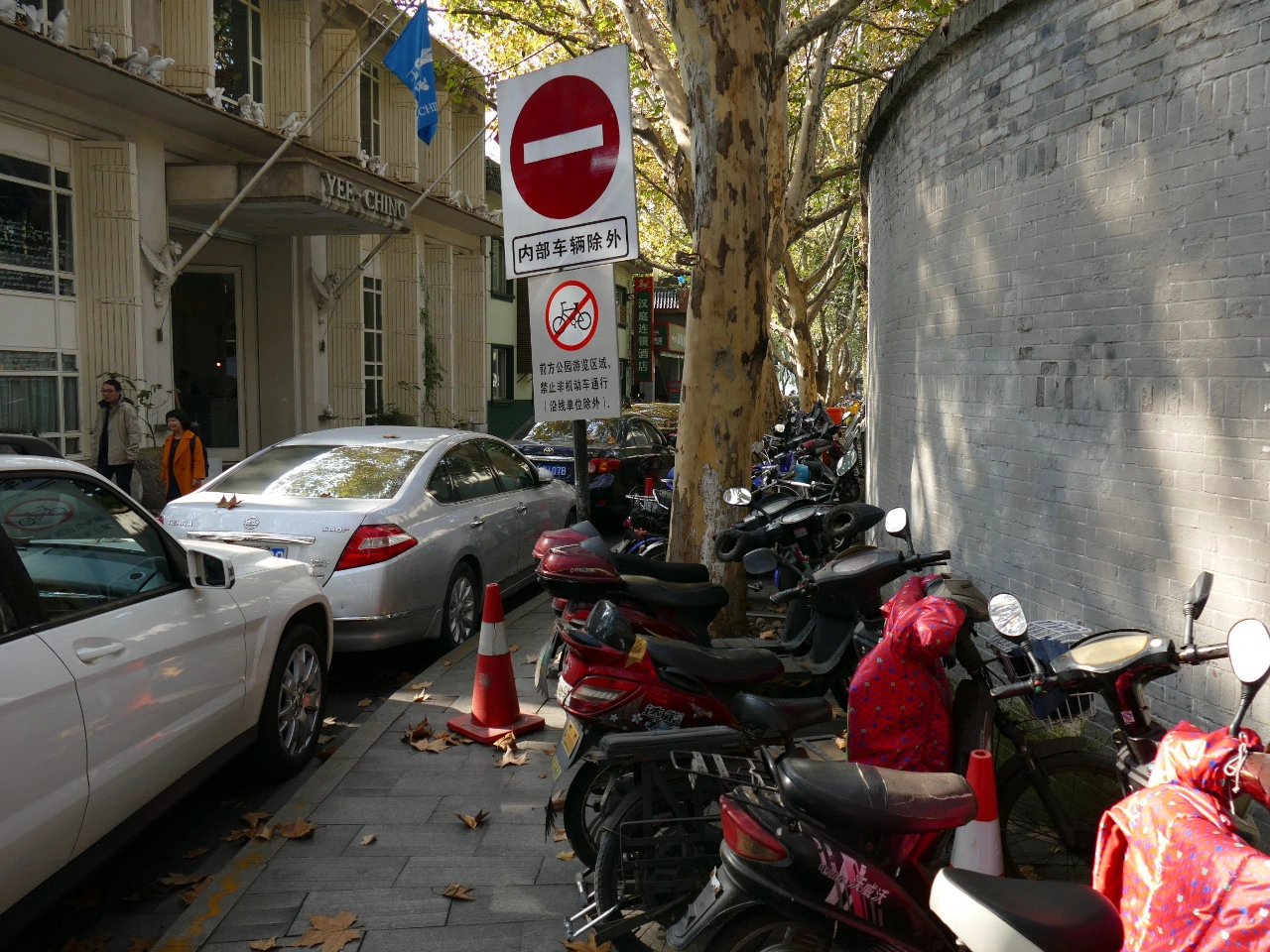
What is wrong-way driving?
Wrong-way driving means travelling against the legally permitted direction of traffic.
Where can wrong-way driving occur?
It can occur on one-way streets, divided roads, motorways, slip roads, tunnels, car parks and temporary traffic arrangements.
Why is wrong-way driving especially dangerous?
Other drivers do not expect approaching traffic in their lane, and the combined speeds can make a head-on collision extremely severe.
How can you recognise a prohibited direction?
Look for no-entry signs, one-way signs, mandatory-direction signs, lane arrows and road markings. Motorway exits may also have repeated signs or warning systems facing the wrong direction.
Is wrong-way driving the same as entering a no-entry road?
Entering past a no-entry sign can cause wrong-way driving, but the term also covers turning around on a divided road or using the wrong carriageway without passing such a sign.
Is driving against a one-way street always prohibited?
Normally, yes. However, signs may expressly permit certain road users, such as cyclists or public transport, to travel in the opposite direction.
Is authorised contraflow traffic wrong-way driving?
No. A cyclist, bus or other road user travelling in an expressly authorised contraflow lane or direction is using the road legally.
Can roadworks temporarily change the normal direction?
Yes. Temporary signs, barriers, lane signals and markings may redirect traffic onto another lane or carriageway. Follow the temporary arrangement rather than the usual road layout.
What should you do when you see a wrong-way driver?
Reduce speed immediately, keep as far as safely possible towards the outer edge of your carriageway and avoid sudden lane changes. Warn the police or emergency services as soon as this can be done safely.
Should you attempt to stop the wrong-way driver?
No. Do not block, chase or turn after the vehicle. Protect yourself and allow trained emergency services to intervene.
Should you flash your headlights?
A brief warning may help the driver recognise the error, but avoid prolonged or aggressive signalling that could cause panic or an unpredictable manoeuvre.
Should you sound the horn?
Use the horn only when reasonably necessary to warn of immediate danger. Your first priority is to reduce speed and create as much safe space as possible.
Should you stop in a live traffic lane?
Normally not. Sudden stopping may cause a rear-end collision. Slow down and move towards a safe shoulder, refuge or other protected location where possible.
What should you do after receiving a wrong-way-driver warning?
Reduce speed, stop overtaking, increase your following distance and remain in the lane or position recommended by the local authorities or warning system.
Should you continue using the overtaking lane?
Avoid unnecessary use of lanes nearest opposing or central traffic when a wrong-way driver has been reported. Follow local emergency guidance and electronic signs.
What should you do if you are driving in the wrong direction?
Slow down immediately, activate the hazard warning lights and use dipped headlights where required. Move to the safest available edge or shoulder and stop.
Should you accelerate to reach the next exit?
No. Increasing speed greatly increases the collision risk. Stop safely and wait for instructions from the police.
Should you make a U-turn across traffic?
No. Do not turn across live lanes, cross a central reservation or attempt to correct the mistake through another dangerous manoeuvre.
Should you reverse back to the entrance?
No. Reversing against traffic or along a motorway slip road creates additional danger. Stop safely and contact the emergency services.
Should you leave the vehicle after stopping?
This depends on the location and immediate danger. Remain protected from moving traffic and follow instructions from the emergency services. Do not stand in a live lane.
How should you contact the emergency services?
Stop safely before using a handheld phone. A passenger may call while the vehicle is moving when local law permits and this can be done without distracting the driver.
What information should you report?
Report the road name or number, direction, nearby exit or landmark, vehicle description and the wrong-way driver’s approximate location and direction.
What commonly causes wrong-way driving?
Possible causes include confusion at junctions, poor visibility, unfamiliar roads, impairment, navigation errors, turning around illegally or deliberately ignoring traffic signs.
How can drivers prevent entering the wrong direction?
Slow down at unfamiliar junctions, read signs before turning, verify the road layout and do not rely exclusively on navigation instructions.
Does a navigation system override traffic signs?
No. Traffic signs, signals, markings and instructions from authorised persons always take precedence over navigation guidance.

Verkehrsregeln