VerkehrsregelnTürkei
Argentinien
Australien
Bangladesch
Belgien
Bosnien und Herzegowina
Brasilien
Chile
China
Deutschland
Dänemark
Finnland
Frankreich
Griechenland
Indien
Indonesien
Irland
Island
Italien
Japan
Kanada
Kolumbien
Malaysia
Mexiko
Nepal
Neuseeland
Niederlande
Norwegen
Panama
Peru
Philippinen
Polen
Portugal
Rumänien
Russland
Schweden
Schweiz
Serbien
Slowakei
Slowenien
Spanien
Südafrika
Thailand
Tschechien
Türkei
Ukraine
Ungarn
Uruguay
Vereinigte Staaten
Vereinigtes Königreich
Weltweit
Österreich
1. Türkei
Die Türkei erstreckt sich über Südosteuropa und Westasien; Bosporus und Dardanellen trennen den europäischen Landesteil Thrakien von Anatolien. Es gilt Rechtsverkehr. Die Fahrbedingungen unterscheiden sich stark, von dichtem Verkehr sowie großen Brücken und Tunneln rund um Istanbul über lange baulich getrennte Fernstraßen auf dem anatolischen Hochland bis zu Küstenstraßen am Mittelmeer und an der Ägäis und steilen Bergstrecken im Norden und Osten. Türkisch ist die Amtssprache und wird normalerweise für schriftliche Informationen auf Verkehrszeichen verwendet; es nutzt das lateinische Alphabet, während die meisten Vorschrifts- und Warnzeichen auf international verständlichen Symbolen beruhen.
Die Türkei hat keine landesweite Autobahnvignette. Stattdessen werden auf bestimmten Autobahnen, Brücken und Tunneln Mautgebühren erhoben, wobei das elektronische HGS-Mautsystem eine zentrale Rolle spielt, auch für ausländisch zugelassene Fahrzeuge. Auch die Geschwindigkeitsbegrenzungen sind charakteristisch: Gewöhnliche Pkw sind auf zweispurigen Überlandstraßen grundsätzlich auf 90 km/h und auf baulich getrennten Straßen auf 110 km/h begrenzt; auf Autobahnen können je nach Betreiber 130 oder 140 km/h gelten. Die Winterbedingungen unterscheiden sich regional stark; die landesweite Winterreifenpflicht betrifft hauptsächlich gewerblich eingesetzte Personen- und Güterfahrzeuge, während lokal zusätzliche Anforderungen möglich sind.
Auf welcher Straßenseite fährt man in der Türkei?
Fahren Sie auf der rechten Straßenseite und überholen Sie normalerweise links.
Wie lautet die Notrufnummer in der Türkei?
Rufen Sie 112 für Notfälle an. Die Türkei bündelt Polizei, Rettungsdienst, Feuerwehr, Gendarmerie und weitere Notfalldienste im einheitlichen 112-System.
Welche Alkoholgrenze gilt beim Fahren in der Türkei?
Für Fahrer privater Pkw beträgt der gesetzliche Grenzwert 0,50‰ (0,5 g/l). Fahrer anderer Fahrzeugtypen unterliegen grundsätzlich einem niedrigeren Grenzwert von 0,20‰ (0,2 g/l).
Gelten für Fahranfänger in der Türkei besondere Regeln?
Ja. Wer erstmals einen Führerschein erhält, gilt grundsätzlich zwei Jahre als Fahranfänger. Während dieser Zeit gelten strengere Bedingungen, darunter erhebliche Folgen bei mehr als 0,20‰ Alkohol und beim Ansammeln bestimmter Verkehrsverstöße.
Wie hoch ist die Geschwindigkeitsbegrenzung innerhalb geschlossener Ortschaften in der Türkei?
Für einen gewöhnlichen Pkw beträgt die allgemeine Höchstgeschwindigkeit innerhalb geschlossener Ortschaften 50 km/h, sofern keine andere Begrenzung angegeben ist.
Wie hoch ist die Geschwindigkeitsbegrenzung auf zweispurigen Überlandstraßen in der Türkei?
Für einen gewöhnlichen Pkw beträgt die allgemeine Höchstgeschwindigkeit auf einer außerörtlichen Straße mit Gegenverkehr 90 km/h, sofern Verkehrszeichen nichts anderes bestimmen.
Wie hoch ist die Geschwindigkeitsbegrenzung auf baulich getrennten Straßen in der Türkei?
Für einen gewöhnlichen Pkw beträgt die allgemeine Höchstgeschwindigkeit auf einer baulich getrennten Straße 110 km/h, sofern keine andere Begrenzung ausgeschildert ist.
Wie hoch ist die Autobahn-Höchstgeschwindigkeit in der Türkei?
Für gewöhnliche Pkw beträgt die Höchstgeschwindigkeit grundsätzlich 130 km/h auf von KGM betriebenen Autobahnen und bis zu 140 km/h auf Autobahnen im Build-Operate-Transfer-Modell. Maßgeblich ist stets die ausgeschilderte Begrenzung, da auf einzelnen Abschnitten niedrigere Werte gelten können.
Gibt es auf türkischen Autobahnen eine Mindestgeschwindigkeit?
Ja. Auf zugangsbeschränkten Autobahnen beträgt die vorgeschriebene Mindestgeschwindigkeit grundsätzlich 40 km/h, sofern Verkehr, Wetter, Straßenzustand oder andere berechtigte Gründe kein langsameres Fahren erfordern.
Wer darf türkische Autobahnen nicht benutzen?
Zugangsbeschränkte Autobahnen dürfen nicht von Fußgängern, Tieren, Fahrrädern, nicht motorisierten Fahrzeugen, Radtraktoren und Baumaschinen sowie anderen nicht zugelassenen Verkehrsteilnehmern benutzt werden.
Benötigt man in der Türkei eine Autobahnvignette?
Nein. Die Türkei verwendet keine landesweite Autobahnvignette. Auf bestimmten Autobahnen, Brücken und Tunneln wird Maut erhoben.
Wie funktioniert das HGS-Mautsystem in der Türkei?
HGS ist das elektronische Mautzahlungssystem der Türkei. Das Fahrzeug wird einem HGS-Konto zugeordnet; die entsprechende Maut wird je nach genutzter Straße und Fahrzeugklasse abgebucht.
Benötigen im Ausland zugelassene Fahrzeuge in der Türkei HGS?
Im Ausland zugelassene Fahrzeuge, die mautpflichtige KGM-Autobahnen und -Brücken nutzen, sollten ein HGS-Konto mit ausreichendem Guthaben besitzen. Bei KGM-Mautpassagen kann ein HGS-Konto grundsätzlich innerhalb von 15 Tagen nach einer unbezahlten Passage eröffnet oder aufgeladen werden, um eine Strafgebühr zu vermeiden.
Müssen Pkw in der Türkei tagsüber Licht verwenden?
Für gewöhnliche Pkw besteht keine allgemeine Pflicht, bei jeder Fahrt unter klarem Tageslicht Abblendlicht zu benutzen. Beleuchtung ist nachts und bei eingeschränkter Sicht, etwa bei Nebel oder starkem Regen, sowie gegebenenfalls in Tunneln vorgeschrieben.
Sind Winterreifen in der Türkei vorgeschrieben?
Die landesweite Winterreifenpflicht betrifft hauptsächlich gewerblich eingesetzte Fahrzeuge zur Personen- oder Güterbeförderung. Der aktuelle nationale Zeitraum läuft vom 15. November bis 15. April. Private Pkw unterliegen nicht derselben allgemeinen Pflicht; Provinzbehörden können jedoch je nach Klima und Straßenbedingungen zusätzliche Regeln festlegen.
Sind Sicherheitsgurte in der Türkei vorgeschrieben?
Ja. Fahrer und Fahrgäste müssen in Fahrzeugen und auf Sitzen, für die die Vorschrift gilt, Sicherheitsgurte und andere vorgeschriebene Rückhaltesysteme benutzen.
Wann müssen Kinder in der Türkei ein Kinderrückhaltesystem benutzen?
Kinder, die kleiner als 150 cm und leichter als 36 kg sind, müssen grundsätzlich in einem ihrer Größe und ihrem Gewicht entsprechenden Kinderrückhaltesystem befördert werden. Fahrer sind dafür verantwortlich, dass Kinder unter 15 Jahren die vorgeschriebene Schutzausrüstung richtig benutzen.
Sind Motorradhelme in der Türkei vorgeschrieben?
Ja. Motorradfahrer und Mitfahrer müssen den vorgeschriebenen Schutzhelm tragen. Zusätzlich gelten weitere Anforderungen an Schutzausrüstung.
Sind Schutzhandschuhe für Motorradfahrer in der Türkei vorgeschrieben?
Ja. Seit dem 4. November 2025 müssen Motorradfahrer und Mitfahrer Schutzhandschuhe nach der Norm TS EN 13594 tragen. Diese spezielle Handschuhpflicht gilt nicht für Fahrräder oder Mopeds.
Darf man beim Fahren in der Türkei ein Mobiltelefon benutzen?
Die Benutzung eines Mobil- oder Fahrzeugtelefons oder ähnlichen Kommunikationsgeräts während der Fahrt ist verboten. Fahrer dürfen ein Telefon beim Fahren nicht in die Hand nehmen oder bedienen.
Gilt in der Türkei rechts vor links?
Ja. An einer ungeregelten Kreuzung ohne unterschiedliche Vorfahrt der Straßen muss ein Kraftfahrzeugführer, der von links kommt, grundsätzlich dem von rechts kommenden Fahrzeug Vorfahrt gewähren.
Wer hat in der Türkei im Kreisverkehr Vorfahrt?
Wer sich einem Kreisverkehr nähert, muss grundsätzlich bereits im Kreisverkehr fahrenden Fahrzeugen Vorfahrt gewähren. Ampeln, Polizeianweisungen und Vorfahrtzeichen haben Vorrang, wenn sie vorhanden sind.
Haben Fußgänger an Überwegen in der Türkei Vorrang?
Ja. An ausgeschilderten Fußgänger- und Schulüberwegen ohne Ampel oder verkehrsregelnde Person müssen Fahrer langsamer fahren und anhalten, um Fußgängern Vorrang zu geben, die die Fahrbahn überqueren oder überqueren wollen.
Was müssen Fahrer tun, wenn ein türkischer Schulbus sein STOP-Schild zeigt?
Wenn ein Schulfahrzeug beim Ein- oder Aussteigen von Kindern sein „DUR“ (STOP)-Schild aktiviert, müssen andere Fahrer anhalten und dürfen erst weiterfahren, wenn es sicher ist und die Haltanzeige beendet wurde.
Was müssen Fahrer an Bahnübergängen in der Türkei tun?
Fahrer müssen Licht- und Tonsignale sowie Schranken beachten und dürfen nicht einfahren, wenn Schranken sich schließen oder geschlossen sind. An einem ungeregelten Bahnübergang müssen Fahrer anhalten und sicherstellen, dass kein Schienenfahrzeug naht, bevor sie überqueren.
Welche Sicherheitsausrüstung muss ein Auto in der Türkei mitführen?
Die türkischen Fahrzeugvorschriften verlangen vorgeschriebene Notfall- und Sicherheitsausrüstung. Bei gewöhnlichen Pkw gehören dazu unter anderem Feuerlöscher, Erste-Hilfe-Kasten und Warnreflektor; je nach Fahrzeug und Bedingungen gelten außerdem Anforderungen für Abschleppen, Radwechsel und Winterausrüstung.
Welche Sprache wird auf Verkehrszeichen in der Türkei verwendet?
Schriftliche Straßeninformationen erscheinen normalerweise auf Türkisch, das das lateinische Alphabet verwendet. Wegweiser zeigen daher Namen wie İstanbul, İzmir, Çanakkale und Şanlıurfa mit türkischen Zeichen; Vorschrifts- und Warnzeichen verwenden überwiegend international erkennbare Symbole.
2. Autobahn
Eine Autobahn ist eine Straße, die speziell für den motorisierten Verkehr gebaut und entsprechend ausgeschildert ist. Autobahnen haben normalerweise getrennte Richtungsfahrbahnen, kontrollierte Zu- und Abfahrten, keine direkten Zufahrten zu angrenzenden Grundstücken und keine höhengleichen Kreuzungen mit anderen Straßen, Eisenbahnen oder Wegen.
Auf Autobahnen gelten besondere Verkehrsregeln. Welche Verkehrsteilnehmer zugelassen sind, welche Geschwindigkeitsbegrenzungen und Fahrstreifenregeln gelten sowie Maut- und Notfallvorschriften unterscheiden sich je nach Land. Fahrer müssen daher die örtlichen Verkehrszeichen und Vorschriften beachten.
How can you recognise a motorway?
A motorway is normally identified by a special motorway sign at its entrance. It commonly has separate carriageways, controlled entrances and exits, and no ordinary intersections or direct access to neighbouring properties.
Who may use a motorway?
Motorways are primarily intended for motor vehicles capable of travelling safely at motorway speeds. Pedestrians, cyclists, animals and certain slow vehicles are generally prohibited, but the exact access requirements differ between countries.
What is the speed limit on a motorway?
There is no universal motorway speed limit. The applicable limit depends on the country, road section, vehicle category and driving conditions. Posted or variable speed-limit signs may replace the general national limit.
How should you enter a motorway?
Use the entrance or acceleration lane to observe motorway traffic and adjust your speed where possible. Enter only when there is a safe gap and follow the local priority and merging rules.
How should you leave a motorway?
Move into the correct lane in good time and signal when required. Enter the exit or deceleration lane before reducing your speed, unless traffic, signs or road conditions require you to slow down earlier.
Which lane should you use on a motorway?
Follow the local keep-left or keep-right rule and any lane-direction signs. Lanes closer to the centre of the motorway are commonly used for overtaking, but lane-use rules differ between countries and vehicle categories.
Can you stop on a motorway?
Voluntary stopping and parking are normally permitted only in designated parking or service areas. Drivers may still have to stop because of congestion, an emergency or another unavoidable situation.
Can you reverse or make a U-turn on a motorway?
Reversing, making a U-turn and driving against the direction of traffic are generally prohibited. If you miss an exit, continue to the next suitable exit.
What should you do if your vehicle breaks down?
Move the vehicle out of the traffic lanes when this can be done safely, activate the hazard warning lights and follow the local breakdown procedures. Leave the vehicle safely, keep away from moving traffic and use a warning triangle or safety vest where required by local law.
What is the difference between a motorway and an expressway?
A motorway normally has the highest level of access control and is governed by specific motorway rules. An expressway may have similar characteristics but may permit different road users or contain lower-standard junctions. The legal distinction varies between countries.
3. Zone
Eine Verkehrszone ist ein Gebiet, in dem eine Verkehrsregel auf allen einbezogenen Straßen oder Straßenabschnitten gilt. Die Regel beginnt normalerweise an einem Zonenbeginn-Schild und bleibt wirksam, bis das entsprechende Ende-Zone-Schild passiert wird.
Zonen können Geschwindigkeit, Parken, Zufahrt, Fahrzeugkategorien, Emissionen oder anderes Verkehrsverhalten regeln. Welche Zeichen verwendet werden, welche Straßen erfasst sind und wie Kreuzungen oder örtliche Ausnahmen wirken, richtet sich nach dem örtlichen Verkehrsrecht.
What is a traffic zone?
A traffic zone is a defined area in which a particular restriction, prohibition or obligation applies throughout the included roads rather than only at one location.
How can you recognise a traffic zone?
A traffic zone normally begins with a zone-entry sign showing the applicable rule. A corresponding end-of-zone sign indicates where that rule stops applying.
What is the difference between a zone sign and an ordinary traffic sign?
An ordinary sign usually applies to a particular road, direction, lane or section. A zone sign applies throughout a designated area, which may contain several roads and intersections.
Does a zone normally continue after an intersection?
Usually, yes. A zonal rule commonly continues through intersections until an end-of-zone sign is reached. The exact effect of intersections depends on local law.
How does a traffic zone end?
A traffic zone normally ends when you pass the corresponding end-of-zone sign. The normal road rules or another signed regulation then apply.
Can more than one rule apply inside a zone?
Yes. A zone may contain several regulations, such as a speed limit together with parking or access restrictions. Drivers must observe every applicable sign.
Can another traffic sign apply inside a zone?
Yes. A local sign may introduce a different or more restrictive rule on a particular road or section. Whether the original zonal rule resumes afterwards depends on local law and the type of regulation.
What types of traffic zones exist?
Common examples include speed zones, parking zones, low-emission zones, pedestrian zones, cycling zones, school zones and zones restricting particular vehicle categories.
Is a traffic zone the same as a built-up area?
No. A built-up area is a broader legally defined urban area. A traffic zone imposes a specific signed rule and may be located inside or outside a built-up area.
Is a traffic zone the same as a residential area?
No. A residential area describes an area mainly used for housing. It may contain one or more traffic zones, but the terms do not automatically have the same legal meaning.
Does a zonal rule apply to every road user?
Not necessarily. The sign, symbol or additional panel may limit the rule to particular vehicles, road users, times or circumstances.
What should you do when entering a traffic zone?
Observe the entrance sign carefully, identify every displayed rule and remember that the regulation may continue across several roads and intersections until the zone ends.
4. Geschwindigkeitsbegrenzung
Eine Geschwindigkeitsbegrenzung ist die gesetzlich höchstens zulässige Geschwindigkeit auf einer Straße, einem Fahrstreifen oder innerhalb eines ausgewiesenen Bereichs. Sie kann durch allgemeines Verkehrsrecht festgelegt oder durch feste, variable oder vorübergehende Verkehrszeichen angezeigt werden.
Eine Geschwindigkeitsbegrenzung ist ein Höchstwert und keine Zielgeschwindigkeit. Fahrer müssen langsamer fahren, wenn Verkehr, Sicht, Wetter, Straßenzustand, gefährdete Verkehrsteilnehmer oder der Zustand des Fahrzeugs die höchstens zulässige Geschwindigkeit unsicher machen.
What is a speed limit?
A speed limit is the maximum legal speed permitted on a road, lane or within a designated area. It does not require drivers to travel at that speed.
How can you recognise a speed limit?
A speed limit is commonly displayed as a number on a regulatory traffic sign. General limits may also apply automatically because of the country, road category, vehicle type or surrounding area, even when no speed-limit sign is present.
Is the speed limit a recommended driving speed?
No. It is the highest speed legally permitted under suitable conditions. Drivers must reduce their speed whenever travelling at the limit would be unsafe.
Can you drive more slowly than the speed limit?
Yes. Drivers should travel more slowly when required by traffic, weather, visibility, road conditions or nearby vulnerable road users. Driving unnecessarily slowly may nevertheless be prohibited when it obstructs normal traffic.
Does the same speed limit apply to every vehicle?
Not always. Lower limits may apply to heavy vehicles, buses, vehicles towing trailers, novice drivers or other vehicle categories. The lowest applicable limit must be respected.
What is a default speed limit?
A default speed limit applies automatically to a particular road type or area when no traffic sign indicates another limit. Examples include general limits for motorways, built-up areas or roads outside built-up areas.
Does a posted speed limit replace the default limit?
Usually, yes. A legally placed speed-limit sign normally introduces another maximum speed, although lower vehicle-specific or special-road limits may continue to apply.
When does a speed-limit sign take effect?
A speed restriction normally begins at the location of the sign. Drivers should reduce their speed before passing the sign so that they are already travelling within the limit when it takes effect.
When does a speed limit end?
A signed limit may end at an intersection, an end-of-limit sign, another speed-limit sign or the beginning or end of a legally defined area. The exact rule differs between countries.
Does an intersection end a speed limit?
This depends on local law. An ordinary speed restriction may end at an intersection in some countries, while a zonal speed limit normally continues across intersections until an end-of-zone sign.
What is a speed zone?
A speed zone is an area in which the displayed maximum speed applies throughout all included roads. The limit normally remains in force until the corresponding end-of-zone sign.
What is a variable speed limit?
A variable speed limit is displayed on an electronic or changeable sign and may be adjusted according to congestion, weather, incidents or roadworks. When activated, it has the same legal importance as another applicable regulatory speed sign.
Can different lanes have different speed limits?
Yes. Signs positioned above individual lanes may impose different limits on those lanes. Drivers must observe the limit applying to the lane they use.
Can a temporary speed limit apply?
Yes. Temporary limits may be introduced near roadworks, collisions, hazards or special events. Drivers must follow the temporary traffic signs and instructions that are legally in force.
May you exceed the speed limit while overtaking?
No. Overtaking does not normally permit a driver to exceed the applicable maximum speed. The manoeuvre must be completed safely while respecting the speed limit.
Do poor conditions change the legal speed limit?
Some countries impose specific lower limits in rain, snow or other conditions. Even where the numerical limit does not change, drivers must reduce their speed sufficiently for the conditions.
5. Tunnel
Ein Tunnel ist ein überdeckter Verkehrsweg, der eine Straße durch oder unter einem Hindernis wie einem Hügel, Berg, Gebäude, Gewässer oder einem anderen Verkehrsweg hindurchführt. Straßentunnel können einen oder mehrere Fahrstreifen haben und Verkehr in eine oder beide Richtungen aufnehmen.
Das Fahren im Tunnel erfordert besondere Aufmerksamkeit, weil Sicht, Fluchtmöglichkeiten und Ausweichraum begrenzt sind. Fahrer sollten die geltenden Beleuchtungs-, Geschwindigkeits-, Fahrstreifen- und Abstandsregeln beachten und auf Notausgänge, Lichtsignale und Wechselverkehrszeichen achten.
What is a road tunnel?
A road tunnel is a covered passage that carries a road through or beneath an obstacle.
Should you use headlights in a tunnel?
Follow the local lighting rules and traffic signs. Many countries require dipped headlights in tunnels even during daylight, while general visibility rules may also require vehicle lights.
Should you increase your following distance in a tunnel?
Yes. Additional distance gives more time to react to sudden congestion, a breakdown or another hazard where escape space may be limited.
Can you stop or park in a tunnel?
Voluntary stopping and parking are generally prohibited or strongly restricted in road tunnels. Drivers should stop only where permitted or when traffic, an emergency or another unavoidable situation requires it.
Can you reverse or make a U-turn in a tunnel?
Normally this should not be done unless specifically authorised or directed by emergency or traffic-control personnel. Motorway tunnels are additionally subject to the normal motorway prohibitions on reversing and U-turns.
What should you do if traffic stops in a tunnel?
Keep a safe distance from the vehicle ahead, follow traffic signals and instructions and avoid blocking emergency access. Switch on hazard warning lights where appropriate to warn following traffic.
What should you do if your vehicle breaks down in a tunnel?
Move into an emergency bay or other safe position if possible, switch on the hazard warning lights and follow the tunnel's emergency procedures. Use an emergency telephone or contact the emergency services where necessary.
What should you do if there is a fire in a tunnel?
Follow the emergency signs and instructions immediately. If evacuation is necessary, leave the vehicle and use the indicated emergency exit rather than remaining in a dangerous traffic or smoke-filled area.
What are tunnel emergency exits?
Emergency exits provide a route away from the traffic tunnel during incidents such as a fire. Signs may indicate the nearest exit and the direction or distance to it.
Should you remove sunglasses before entering a tunnel?
Where necessary, removing dark sunglasses before entering can help your eyes adapt more quickly to the lower light level inside the tunnel.
Can speed limits change inside a tunnel?
Yes. Tunnels may have permanent or variable speed restrictions. Drivers must follow the speed limit currently indicated.
Can dangerous goods be restricted in tunnels?
Yes. Certain tunnels may restrict vehicles carrying dangerous goods because an incident in an enclosed space can create additional risks. Follow all applicable tunnel-category and dangerous-goods signs.
6. Steigung oder Gefälle
Eine Steigung oder ein Gefälle ist ein Straßenabschnitt, der deutlich ansteigt oder abfällt. Ein starker Höhenunterschied kann Fahrzeuggeschwindigkeit, Bremsweg, Traktion, Sicht und die Fähigkeit schwerer oder leistungsschwacher Fahrzeuge beeinflussen, eine gleichmäßige Geschwindigkeit zu halten.
Warnzeichen können auf eine starke Steigung oder ein gefährliches Gefälle hinweisen und die Neigung in Prozent anzeigen. Fahrer sollten ihre Geschwindigkeit frühzeitig anpassen, einen geeigneten Gang wählen und mit langsamen Fahrzeugen, Kurven sowie wechselnden Straßenbedingungen rechnen.
What is a road slope?
A road slope is a section of road that rises or descends over a particular distance. It may also be called a gradient, incline or decline.
How can you recognise a steep slope?
A steep slope may be indicated by a warning sign showing an ascending or descending road. The sign may also display the gradient as a percentage.
What does a gradient of 10% mean?
A gradient of 10% means that the road rises or falls approximately 10 metres for every 100 metres travelled horizontally. It does not mean that the road is inclined at 10 degrees.
What is the difference between an ascent and a descent?
An ascent rises in the direction of travel, while a descent falls in the direction of travel. The same section of road is therefore an ascent in one direction and a descent in the other.
Does a slope warning sign impose a speed limit?
Not normally. It warns of a hazard rather than setting a numerical limit. Drivers must still respect the applicable speed limit and reduce their speed further when necessary.
How should you approach a steep descent?
Reduce speed before the descent, select a suitable gear and maintain a safe following distance. Avoid allowing the vehicle to gain excessive speed.
Which gear should you use when descending?
Use a gear that provides sufficient engine braking and helps keep the vehicle at a controlled speed. The appropriate gear depends on the vehicle, gradient and road conditions.
Should you coast downhill in neutral?
No. Coasting reduces engine braking and may make it harder to control the vehicle’s speed. Keep the transmission engaged while descending.
Why should you avoid continuous heavy braking?
Continuous braking on a long descent can cause the brakes to become excessively hot and lose effectiveness. Select a suitable gear, control speed early and use the brakes progressively when needed.
What is brake fade?
Brake fade is a reduction in braking performance caused by excessive heat. It can occur when the brakes are used continuously during a long or steep descent.
How should you drive uphill?
Select a suitable gear before the engine begins to struggle and maintain a steady speed where possible. Be prepared for heavy or low-powered vehicles travelling slowly ahead.
May a vehicle lose speed on a steep ascent?
Yes. Heavy vehicles, vehicles towing trailers and low-powered vehicles may slow considerably. Other drivers should maintain a safe distance and avoid impatient manoeuvres.
May you overtake near the top of a slope?
Do not overtake when the crest prevents you from seeing far enough ahead. Overtaking near a hilltop may also be expressly prohibited by local law, signs or road markings.
Why is visibility limited near the crest of a slope?
The road surface itself may hide approaching traffic, stopped vehicles, pedestrians or other hazards beyond the crest.
Who has priority on a narrow slope?
Some countries give priority to uphill traffic, while others rely on signs or ordinary obstruction rules. Drivers must follow local law and cooperate when passing is difficult.
How should you meet another vehicle on a narrow slope?
Reduce speed and use a passing place where available. The driver who can reverse or move aside more safely should cooperate, subject to any applicable priority signs or local rules.
How do rain, snow or ice affect a slope?
They reduce traction and make acceleration, braking and steering more difficult. Increase the following distance, use smooth controls and reduce speed before entering the slope.
Why are cyclists vulnerable on slopes?
Cyclists may travel slowly and move less steadily when climbing, while they may reach high speeds when descending. Drivers should leave sufficient space and avoid overtaking without a clear view.
How should you park on a slope?
Use the parking brake, select the appropriate gear or parking position and follow local rules concerning wheel position. Make sure the vehicle cannot roll into traffic.
Can a slope affect towing?
Yes. A trailer increases the load on the engine and brakes and may affect stability. Drivers should use a suitable gear, maintain additional distance and avoid excessive speed.
7. Stoppschild
Ein Stoppschild verpflichtet Fahrer, vollständig anzuhalten und Vorfahrt zu gewähren, bevor sie in die vorausliegende Straße einfahren oder sie überqueren. Angehalten werden muss an der Haltlinie oder an einer anderen gesetzlich vorgeschriebenen Stelle.
Nach dem Anhalten darf der Fahrer erst weiterfahren, wenn dies sicher und ohne Behinderung bevorrechtigten Verkehrs möglich ist. Das Stoppschild verschafft dem Fahrer durch das Anhalten selbst keine Vorfahrt.
What does a stop sign mean?
A stop sign requires a driver to come to a complete stop and give way before proceeding.
How can you recognise a stop sign?
A stop sign is commonly a red octagonal sign displaying the word STOP. Some countries use another legally recognised design, so drivers must learn the signs used locally.
Must you stop when no other traffic is visible?
Yes. The obligation to stop applies even when the road appears completely clear.
What is a complete stop?
A complete stop means that the vehicle has ceased moving entirely. Merely slowing down or allowing the vehicle to continue rolling does not satisfy the requirement.
Where should you stop?
Stop before the stop line where one is provided. Without a line, stop at the legally prescribed position before entering the intersection, crossing or priority road.
May you stop beyond the stop line?
No. The required first stop must be made before the line. If visibility is limited, move forward cautiously after stopping and stop again where necessary before proceeding.
Must every vehicle in a queue stop separately?
Yes. Each driver must make an individual complete stop. Following another vehicle through without stopping is not permitted.
Does stopping give you priority?
No. After stopping, you must continue to give way to all road users who have priority.
Who must you give way to?
Give way to traffic on the road being entered or crossed and to pedestrians, cyclists or other road users who have priority under the applicable rules.
What is the difference between a stop sign and a give-way sign?
A stop sign always requires a complete stop. A give-way sign requires the driver to yield but normally allows continued movement when the road is clearly free.
May you turn after stopping?
Yes. After stopping and giving way, you may turn in any direction permitted by signs, signals, lane arrows and road markings.
May you turn right at a red traffic light after stopping?
This depends entirely on local law and traffic signs. A stop sign does not by itself permit a turn against a red light.
Does a stop sign impose a speed limit?
No. It imposes a stopping and yielding obligation. The normal posted or general speed limit remains applicable before and after the intersection.
Does a stop sign apply to cyclists?
In many countries, cyclists are drivers and must stop unless a specific sign or local rule provides an exception.
What happens at an all-way stop?
The order in which drivers may proceed depends on local rules, commonly involving arrival order, vehicle position and turning direction. Drivers should communicate cautiously and never assume another driver will yield.
What if two vehicles stop at the same time?
Apply the local priority rule and proceed only when the intentions of the other driver are clear. Avoid forcing the other vehicle to brake or change direction.
Do traffic lights override a stop sign?
Where functioning traffic lights control the same movement, they commonly take precedence over the stop sign. Local rules determine what applies when the lights are switched off or flashing.
Do instructions from a police officer override a stop sign?
Yes. Instructions from an authorised traffic officer normally take precedence over traffic signs and ordinary priority rules.
Can a temporary stop sign be legally binding?
Yes. A correctly placed temporary stop sign at roadworks, an event or another temporary traffic arrangement must be obeyed.
What should you do when the stop sign is partly hidden?
If you recognise that a stop sign applies, reduce speed and obey it. Report damaged, obscured or missing signs to the responsible road authority where appropriate.
8. Fußgängerüberweg
Ein Fußgängerüberweg ist eine ausgewiesene Stelle, an der Fußgänger eine Straße überqueren können. Er wird häufig durch Fahrbahnmarkierungen, Verkehrszeichen, Lichtsignale oder eine Kombination dieser Maßnahmen gekennzeichnet.
Fahrer müssen sich mit angemessener Vorsicht nähern und Vorfahrt gewähren, wenn das örtliche Recht dies verlangt. Fußgänger müssen ebenfalls auf den herannahenden Verkehr achten und vorhandene Fußgängersignale oder Anweisungen befugter Verkehrsregler befolgen.
What is a pedestrian crossing?
A pedestrian crossing is a designated place for pedestrians to cross a road. It may be controlled by traffic lights or operate without signals.
How can you recognise a pedestrian crossing?
It may be indicated by white road markings, traffic signs, flashing lights, pedestrian signals or a raised crossing. Its appearance varies between countries.
Is a pedestrian crossing the same as a zebra crossing?
A zebra crossing is a type of pedestrian crossing marked by broad contrasting stripes or rectangles. Not every pedestrian crossing uses this design.
Do pedestrians always have priority?
Not universally. Priority depends on local law, traffic signals and whether the pedestrian is already crossing or clearly preparing to cross.
Must drivers stop for pedestrians waiting beside the crossing?
This depends on local law. In many countries, drivers must give way when a pedestrian is clearly intending or preparing to enter the crossing.
How should drivers approach a pedestrian crossing?
Reduce speed, observe both sides of the road and be prepared to stop. Pay particular attention to children, older people and persons with limited mobility.
May you enter a crossing when traffic is congested?
No. Do not enter when traffic ahead may force you to stop on the crossing and block pedestrians.
Where should you stop for a pedestrian?
Stop before the crossing or before the applicable stop line. Leave the crossing completely clear.
May you overtake near a pedestrian crossing?
Overtaking may be prohibited, particularly when another vehicle has stopped or slowed for the crossing. Even where no specific prohibition applies, overtaking is unsafe when pedestrians may be hidden from view.
May you stop or park on a pedestrian crossing?
Normally not. Stopping or parking on or immediately before a crossing can obstruct pedestrians and hide them from approaching drivers.
Does a pedestrian crossing impose a speed limit?
Not by itself. Drivers must respect the applicable speed limit and reduce their speed further when necessary to stop safely.
Do traffic lights change the priority rules?
Yes. Drivers and pedestrians must follow the signals applying to them. Drivers must still allow pedestrians who lawfully started crossing to finish safely.
May pedestrians cross when their signal is red?
No. Pedestrians must wait when the pedestrian signal prohibits them from entering the road.
What if the pedestrian signal changes while someone is crossing?
A pedestrian who entered lawfully should continue at a normal pace. Drivers must allow the crossing to be completed safely.
May cyclists ride across a pedestrian crossing?
This depends on local law. In many countries, a person riding a bicycle is treated as a driver and does not receive pedestrian priority. A cyclist walking beside the bicycle is normally treated as a pedestrian.
Is a pedestrian crossing also a cycle crossing?
Not automatically. A separate cycle crossing, cycle path or combined crossing may be indicated by additional markings or signs.
Must pedestrians use a nearby crossing?
Some countries require pedestrians to use a crossing when one is located within a specified distance. Other countries allow crossing elsewhere when it can be done safely.
May pedestrians remain standing on the crossing?
No. Pedestrians should cross without unnecessary delay and should not obstruct traffic by stopping or lingering on the road.
Does a raised pedestrian crossing change priority?
The raised surface itself does not necessarily determine priority. Drivers and pedestrians must follow the crossing markings, signs, signals and local rules.
What should drivers check when turning across a crossing?
Check for pedestrians approaching from both sides and give way where required. Turning drivers should not focus only on motor traffic.
What should pedestrians do before crossing?
Observe approaching traffic, make sure drivers have sufficient time to react and cross carefully. Priority does not remove the need to avoid stepping into the path of a vehicle that cannot stop safely.
9. Schulbereich
Ein Schulbereich ist eine Straße oder Gruppe von Straßen in der Nähe einer Schule, wo viele Kinder zu Fuß gehen, Rad fahren, die Fahrbahn überqueren oder in Fahrzeuge ein- und aussteigen können. Er kann durch Warn- oder Zonenzeichen, Fahrbahnmarkierungen, Verkehrsberuhigungsmaßnahmen oder Blinklichter gekennzeichnet sein.
Besondere Geschwindigkeitsbegrenzungen, Parkverbote oder Zufahrtsregeln können dauerhaft oder nur zu den Bring- und Abholzeiten gelten. Fahrer sollten die Geschwindigkeit verringern, besonders auf Kinder achten und bremsbereit sein.
What is a school area?
A school area is a road or group of roads near a school where drivers should expect large numbers of children, pedestrians, cyclists and stopping vehicles.
How can you recognise a school area?
It may be identified by school warning signs, speed-zone signs, flashing lights, road markings, coloured surfacing or traffic-calming measures. The signs differ between countries.
Does every road beside a school have special legal rules?
No. Special school-area rules normally apply only where signs, signals or local legislation establish them.
What is the speed limit in a school area?
There is no universal school-area speed limit. The applicable limit depends on the country, region, signs and whether a variable restriction is active.
Is the school-area speed limit always active?
Some limits apply permanently, while others apply only during displayed times or when flashing or variable signs are active. Drivers must observe the actual sign arrangement.
Must you drive below the displayed limit?
Yes, when necessary. The displayed speed is a maximum. Children, congestion, poor visibility or vehicles stopping near the school may require a much lower speed.
Why are children especially vulnerable in traffic?
Children may have difficulty judging speed and distance, may be hidden by parked vehicles and may enter the road unexpectedly.
How should you approach a school area?
Reduce speed early, increase your observation and be prepared for children crossing, cyclists changing direction, vehicle doors opening and cars stopping suddenly.
Do children automatically have priority everywhere?
No. Priority depends on crossings, traffic lights, authorised crossing supervisors and local rules. Drivers must nevertheless take exceptional care to avoid endangering children.
Must you obey a school crossing supervisor?
Yes. Drivers and other road users must follow lawful instructions given by an authorised person controlling traffic for children.
May children cross away from a pedestrian crossing?
This depends on local pedestrian rules. Drivers should remain prepared for children to cross unexpectedly, even where they are required to use a nearby crossing.
Does a school sign create pedestrian priority?
Not by itself. A school warning sign alerts drivers to children but does not normally create the legal effect of a pedestrian crossing.
Does a school area change intersection priority?
No. Traffic lights, priority signs and the ordinary intersection rules remain applicable unless another traffic arrangement provides otherwise.
May you overtake in a school area?
Overtaking may be restricted by signs or local law. Even where it is permitted, drivers should not overtake when children, crossings, limited visibility or stopped vehicles make the manoeuvre unsafe.
May you stop to drop off a child?
Only where stopping is permitted and can be completed safely. Do not stop on a crossing, pavement, bike path, bus stop or another prohibited or dangerous location.
May you park near a school entrance?
Follow the parking signs and markings. Do not block entrances, pavements, bike paths, crossings, visibility or access for buses and emergency vehicles.
Why is double parking dangerous near a school?
It blocks traffic and visibility and may force children to walk between moving vehicles or enter the road from behind an obstruction.
What should you watch for near school buses?
Expect children to enter or leave the vehicle and possibly cross the road. Reduce speed and follow any special warning lights, signs or local school-bus rules.
May cyclists ride through a school area?
Normally, yes. They must follow the applicable road, bike-path, speed and priority rules. Drivers should expect inexperienced young cyclists.
Is a school area the same as a school street?
No. A school area normally remains open to traffic under special caution or speed rules. A school street temporarily restricts or excludes motor traffic during specified periods.
Is a school area the same as a Zone 30?
Not universally. A school area may form part of a Zone 30, use another speed limit or have a variable restriction that applies only at particular times.
When do the school-area rules end?
They normally end at an end sign, at the end of the stated time period or when the variable signal is no longer active. The surrounding road rules then apply.
10. Überholen
Überholen ist das Vorbeifahren an einem anderen Verkehrsteilnehmer, der sich in derselben Richtung bewegt. Dabei wird normalerweise die Position oder der Fahrstreifen gewechselt, der langsamere Verkehrsteilnehmer passiert und anschließend bei ausreichender Sicherheit wieder die vorgesehene Position eingenommen.
Vor dem Überholen sollte ein Fahrer ausreichende Sicht und genügend Raum sicherstellen, Spiegel und tote Winkel kontrollieren, bei Bedarf blinken und prüfen, dass nicht bereits ein anderer Verkehrsteilnehmer überholt. Das Manöver muss ohne Überschreiten der Geschwindigkeitsbegrenzung und ohne Gefährdung anderer Verkehrsteilnehmer abgeschlossen werden.
On which side should you overtake?
In right-hand traffic countries, overtaking normally takes place on the left. In left-hand traffic countries, it normally takes place on the right. National rules can provide exceptions in particular situations.
What should you check before overtaking?
Make sure there is sufficient visibility and space, check mirrors and blind spots, ensure that nobody behind has already started overtaking and confirm that you can safely return to your normal position after passing.
When should you not overtake?
Do not overtake where signs or road markings prohibit it or where visibility, approaching traffic, intersections, crossings, bends, hills or other conditions make the manoeuvre unsafe.
11. Wild- oder Viehwechsel
Eine Warnung vor querenden Tieren weist auf einen Straßenabschnitt hin, auf dem Wildtiere, Nutztiere oder Reittiere die Straße betreten oder überqueren können. Tiere können plötzlich auftauchen, sich unvorhersehbar bewegen oder bei Dunkelheit, Vegetation oder schlechtem Wetter schwer zu erkennen sein.
Fahrer sollten die Geschwindigkeit verringern, beide Straßenseiten aufmerksam beobachten und bremsbereit bleiben. Das Warnzeichen gibt Tieren nicht automatisch Vorfahrt und legt keine konkrete Geschwindigkeitsbegrenzung fest; Fahrer müssen jedoch vermeiden, Tiere zu erschrecken, zu gefährden oder mit ihnen zusammenzustoßen.
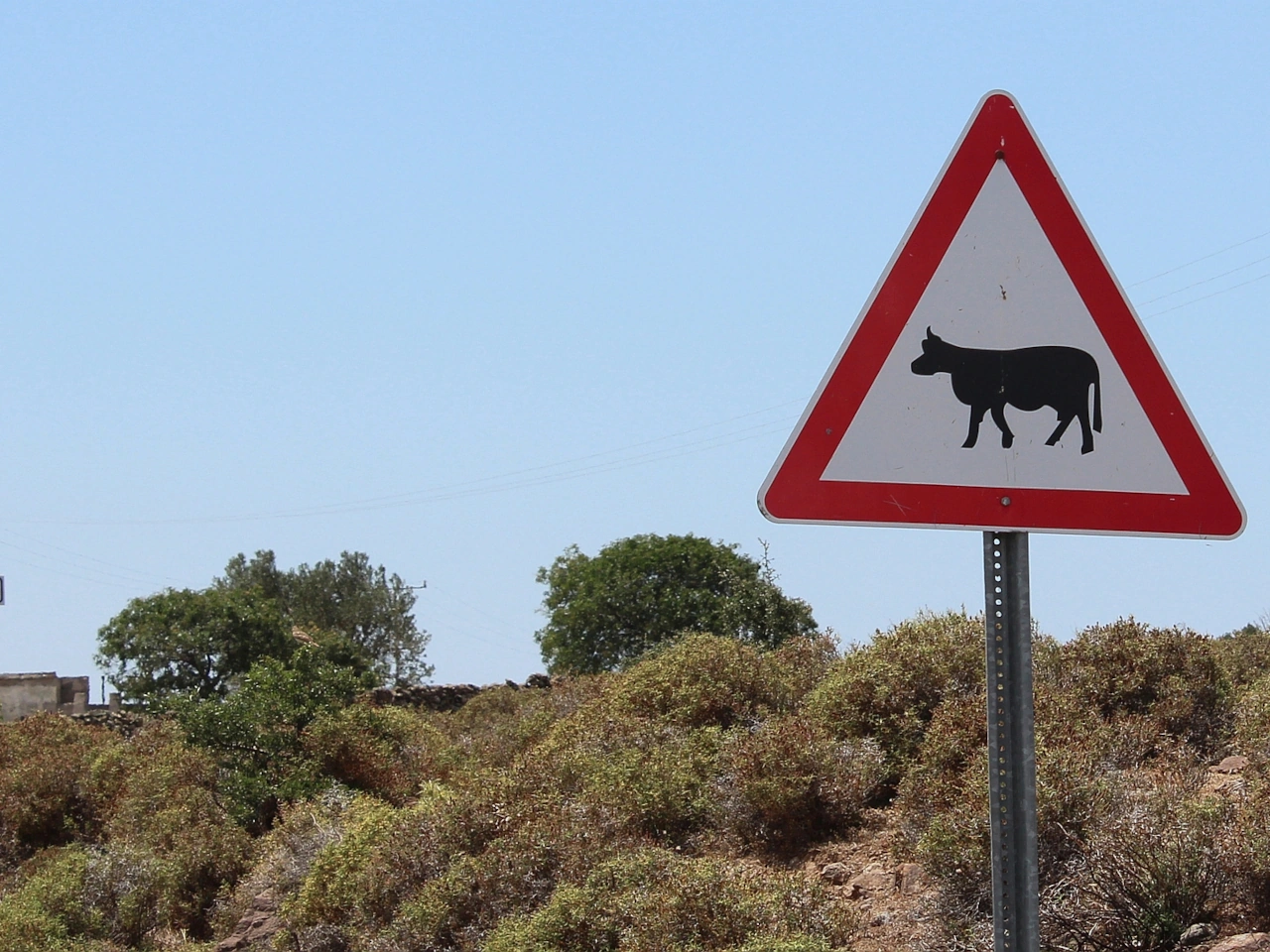
What does an animals-crossing sign mean?
It warns that animals may enter or cross the road in the area ahead.
Which animals may the sign refer to?
Depending on the symbol and local conditions, it may refer to deer, cattle, horses, sheep, goats, wild boar or other animals.
How can you recognise an animals-crossing sign?
It is commonly a triangular warning sign displaying the silhouette of an animal. The species shown may indicate the type of animal most likely to be encountered.
Does the sign mean animals are always present?
No. It indicates an increased likelihood of animals crossing, not that animals will be present every time.
Does the sign impose a speed limit?
No. The normal posted or general speed limit remains applicable, but drivers must reduce speed when necessary to react safely.
Do animals have priority because of the sign?
No automatic priority is created by the warning sign. Drivers must nevertheless avoid danger and allow animals already on the road to pass safely.
How should you approach an animal-crossing area?
Reduce speed, increase your following distance and scan the road, verges, fields and vegetation for movement or reflected eyes.
When are wild animals most likely to appear?
Animal activity is often greater around dawn, dusk and darkness, although animals may cross at any time.
Why should you expect more than one animal?
Many animals travel in groups. When one animal crosses, others may follow immediately from the same direction.
Should you sound the horn?
Avoid unnecessary horn use or engine revving because it may frighten an animal and make its movement less predictable. Use a warning only when reasonably necessary to prevent danger.
Should you use full-beam headlights?
Use the appropriate lights without dazzling other road users. When an animal is visible, reduce speed and avoid relying on full beam to make it move away.
What should you do when an animal is on the road?
Slow down smoothly, stop when necessary and allow it enough time and space to leave. Avoid sudden acceleration or aggressive steering.
Should you swerve to avoid an animal?
Avoid an uncontrolled swerve that could cause a collision with another vehicle, tree, barrier, cyclist or pedestrian. Brake firmly while maintaining control and steer only when a safe escape path is clearly available.
How should you pass livestock?
Pass only when the animals and their handlers have sufficient space. Drive slowly, avoid noise and be prepared for an animal to change direction unexpectedly.
How should you pass a horse and rider?
Reduce speed, leave a large lateral distance and pass quietly. Avoid sounding the horn, accelerating sharply or passing when oncoming traffic prevents sufficient clearance.
Must you follow instructions from an animal handler?
Follow lawful instructions from an authorised person and cooperate with handlers controlling animals on or across the road.
May you overtake near an animal crossing?
The warning sign does not necessarily prohibit overtaking, but overtaking should be avoided when animals, limited visibility or approaching traffic make the manoeuvre unsafe.
What if an animal appears behind another vehicle?
Maintain enough following distance to see beyond the vehicle ahead. Be prepared for it to brake suddenly when an animal enters the road.
What should motorcyclists and cyclists do?
Reduce speed, keep both hands firmly in control and avoid sudden movements. Animals may react unexpectedly to quiet or fast-approaching two-wheeled vehicles.
What should you do after hitting an animal?
Stop safely, activate the hazard warning lights and check for injured people. Contact the emergency services or police when necessary and do not approach a wounded wild animal, which may defend itself.
Should you move an injured or dead wild animal?
Normally not. Keep a safe distance and allow the police, wildlife authorities or an animal-rescue service to handle it.
Can animals be present without a warning sign?
Yes. Drivers remain responsible for observing the road and adjusting their speed even where no animal warning sign is displayed.
12. Falschfahrt
Eine Falschfahrt liegt vor, wenn ein Fahrer entgegen der gesetzlich zulässigen Verkehrsrichtung fährt. Dies kann auf einer Einbahnstraße, einer baulich getrennten Straße, einer Autobahnauffahrt oder -ausfahrt oder einem anderen nur für eine Fahrtrichtung bestimmten Straßenabschnitt geschehen.
Falschfahren birgt ein extremes Risiko eines Frontalzusammenstoßes. Fahrer müssen Richtungsschilder, Einfahrt-verboten-Zeichen, Fahrstreifenpfeile und Fahrbahnmarkierungen beachten. Wer versehentlich in falscher Richtung auf eine Straße gerät, sollte die Geschwindigkeit verringern, andere Verkehrsteilnehmer warnen, an der sichersten verfügbaren Stelle anhalten und die Rettungsdienste kontaktieren.
What is wrong-way driving?
Wrong-way driving means travelling against the legally permitted direction of traffic.
Where can wrong-way driving occur?
It can occur on one-way streets, divided roads, motorways, slip roads, tunnels, car parks and temporary traffic arrangements.
Why is wrong-way driving especially dangerous?
Other drivers do not expect approaching traffic in their lane, and the combined speeds can make a head-on collision extremely severe.
How can you recognise a prohibited direction?
Look for no-entry signs, one-way signs, mandatory-direction signs, lane arrows and road markings. Motorway exits may also have repeated signs or warning systems facing the wrong direction.
Is wrong-way driving the same as entering a no-entry road?
Entering past a no-entry sign can cause wrong-way driving, but the term also covers turning around on a divided road or using the wrong carriageway without passing such a sign.
Is driving against a one-way street always prohibited?
Normally, yes. However, signs may expressly permit certain road users, such as cyclists or public transport, to travel in the opposite direction.
Is authorised contraflow traffic wrong-way driving?
No. A cyclist, bus or other road user travelling in an expressly authorised contraflow lane or direction is using the road legally.
Can roadworks temporarily change the normal direction?
Yes. Temporary signs, barriers, lane signals and markings may redirect traffic onto another lane or carriageway. Follow the temporary arrangement rather than the usual road layout.
What should you do when you see a wrong-way driver?
Reduce speed immediately, keep as far as safely possible towards the outer edge of your carriageway and avoid sudden lane changes. Warn the police or emergency services as soon as this can be done safely.
Should you attempt to stop the wrong-way driver?
No. Do not block, chase or turn after the vehicle. Protect yourself and allow trained emergency services to intervene.
Should you flash your headlights?
A brief warning may help the driver recognise the error, but avoid prolonged or aggressive signalling that could cause panic or an unpredictable manoeuvre.
Should you sound the horn?
Use the horn only when reasonably necessary to warn of immediate danger. Your first priority is to reduce speed and create as much safe space as possible.
Should you stop in a live traffic lane?
Normally not. Sudden stopping may cause a rear-end collision. Slow down and move towards a safe shoulder, refuge or other protected location where possible.
What should you do after receiving a wrong-way-driver warning?
Reduce speed, stop overtaking, increase your following distance and remain in the lane or position recommended by the local authorities or warning system.
Should you continue using the overtaking lane?
Avoid unnecessary use of lanes nearest opposing or central traffic when a wrong-way driver has been reported. Follow local emergency guidance and electronic signs.
What should you do if you are driving in the wrong direction?
Slow down immediately, activate the hazard warning lights and use dipped headlights where required. Move to the safest available edge or shoulder and stop.
Should you accelerate to reach the next exit?
No. Increasing speed greatly increases the collision risk. Stop safely and wait for instructions from the police.
Should you make a U-turn across traffic?
No. Do not turn across live lanes, cross a central reservation or attempt to correct the mistake through another dangerous manoeuvre.
Should you reverse back to the entrance?
No. Reversing against traffic or along a motorway slip road creates additional danger. Stop safely and contact the emergency services.
Should you leave the vehicle after stopping?
This depends on the location and immediate danger. Remain protected from moving traffic and follow instructions from the emergency services. Do not stand in a live lane.
How should you contact the emergency services?
Stop safely before using a handheld phone. A passenger may call while the vehicle is moving when local law permits and this can be done without distracting the driver.
What information should you report?
Report the road name or number, direction, nearby exit or landmark, vehicle description and the wrong-way driver’s approximate location and direction.
What commonly causes wrong-way driving?
Possible causes include confusion at junctions, poor visibility, unfamiliar roads, impairment, navigation errors, turning around illegally or deliberately ignoring traffic signs.
How can drivers prevent entering the wrong direction?
Slow down at unfamiliar junctions, read signs before turning, verify the road layout and do not rely exclusively on navigation instructions.
Does a navigation system override traffic signs?
No. Traffic signs, signals, markings and instructions from authorised persons always take precedence over navigation guidance.
13. Geschwindigkeitskontrolle
Ein Hinweis auf Geschwindigkeitskontrolle warnt Fahrer, dass Fahrzeuggeschwindigkeiten durch eine stationäre Kamera, mobiles Radar, Lidar oder eine Abschnittskontrolle überwacht werden können. Er erinnert daran, die geltende Geschwindigkeitsbegrenzung zu prüfen und einzuhalten.
Das Zeichen legt normalerweise nicht selbst die Geschwindigkeitsbegrenzung fest. Fahrer müssen die allgemeine, ausgeschilderte oder variable Begrenzung der Straße beachten und dürfen nicht plötzlich bremsen, nur weil eine Geschwindigkeitskontrolle angekündigt wird.
What does a radar speed sign mean?
It warns that vehicle speeds may be measured or enforced on the road ahead or throughout a specified section.
Is a radar speed sign the same as a speed-limit sign?
No. A speed-limit sign establishes the maximum legal speed. A radar sign only warns that compliance with an applicable limit may be monitored.
Where can the applicable speed limit be found?
Check the most recent speed-limit sign, variable sign, speed-zone sign or general limit applying to the road and vehicle category.
Does the radar sign impose a lower speed?
No. It does not normally change the existing limit. Drivers must nevertheless travel more slowly when traffic, visibility, weather or road conditions require it.
Does the sign mean a camera is definitely present?
It may announce a permanent camera, a mobile-control area or a section where enforcement can occur. The exact meaning depends on the country and sign design.
Does the sign guarantee that the camera is active?
No. Drivers should never rely on assumptions about whether equipment is operating and should respect the speed limit at all times.
What is a fixed speed camera?
A fixed speed camera is permanently installed at a particular location and measures the speed of passing vehicles.
What is a mobile speed camera?
A mobile speed camera is temporarily positioned in a police vehicle, trailer, roadside unit or another approved location.
What is lidar speed enforcement?
Lidar uses laser pulses to measure the speed and position of vehicles. It may be used by police officers or in temporary automatic installations.
What is average-speed enforcement?
Average-speed enforcement records a vehicle at two or more points and calculates its average speed across the controlled section.
Can slowing only at the camera avoid an average-speed offence?
No. Average-speed enforcement considers the travel time across the complete measured section rather than speed at only one point.
Can a camera enforce both speed and red lights?
Yes. Some systems monitor vehicle speed and whether a vehicle passes a red traffic signal.
Is a radar warning sign legally required everywhere?
No. Some authorities announce speed cameras, while others permit enforcement without advance warning. The rules differ between countries and regions.
Can speed enforcement occur without a radar sign?
Yes. The absence of a warning sign does not normally prevent police or authorised authorities from carrying out a lawful speed check.
Does the sign give permission to drive at the displayed road limit?
The applicable limit remains a maximum rather than a target. Drivers must reduce speed whenever travelling at that limit would be unsafe.
Should you brake suddenly after seeing the sign?
No. Check your speed and reduce it smoothly when necessary. Sudden braking can cause a rear-end collision.
May you accelerate again after passing the camera?
Only while remaining within the applicable limit and driving safely. The restriction may continue, and another camera or average-speed section may follow.
Does the radar sign end the speed limit?
No. Passing a camera or radar sign does not end the applicable speed restriction.
What is a radar speed display?
A radar speed display measures an approaching vehicle and shows its current speed, sometimes with a colour, message or smiley symbol.
Is a radar speed display an enforcement camera?
Not necessarily. Many displays are preventive devices intended to make drivers aware of their speed and may collect anonymous traffic statistics without issuing penalties.
Is the displayed speed legally authoritative?
No. The roadside display is generally informational. Drivers remain responsible for observing the vehicle’s speedometer and the legal speed limit.
Can radar monitor motorcycles?
Yes. The technical ability to measure a motorcycle and the method used to identify it depend on the enforcement equipment.
Can a camera monitor several lanes?
Yes. Modern systems may measure vehicles in one or more lanes and may distinguish between traffic directions or vehicle categories.
Can different vehicles have different speed limits?
Yes. Heavy vehicles, buses, trailers or other vehicle categories may be subject to lower limits than passenger cars on the same road.
What should you do when you are already exceeding the limit?
Release the accelerator and reduce speed smoothly and safely. Do not brake harshly or make an abrupt lane change.
14. Ampeln
Ampeln regeln mit farbigen Lichtzeichen, Pfeilen oder Symbolen, wann Verkehrsteilnehmer fahren dürfen, sich auf das Anhalten vorbereiten müssen oder stehen bleiben müssen. Getrennte Signale können für bestimmte Richtungen, Fahrstreifen, Fußgänger, Radfahrer oder Fahrzeuge des öffentlichen Verkehrs gelten.
Grünes Licht erlaubt die Fahrt nur, wenn der Weg frei und die Bewegung ansonsten zulässig ist. Verkehrsteilnehmer müssen weiterhin Vorfahrtsregeln, Abbiegeverbote, Fahrbahnmarkierungen und Anweisungen befugter Verkehrsregler beachten.
What are traffic lights?
Traffic lights are signals that use coloured lights, arrows or road-user symbols to regulate traffic movements.
What does a red traffic light mean?
A red light requires road users to stop before the stop line or signal and remain stopped until movement is permitted.
What does a steady amber light mean?
A steady amber light normally requires drivers to stop unless they are already too close to stop safely. It warns that the signal is changing to red.
What does a green traffic light mean?
A green light permits road users to pass the signal, but only when the route is clear and the intended movement is otherwise legal.
Does green mean that you have priority over everyone?
No. You may still have to give way to pedestrians, cyclists, oncoming traffic or other road users when turning or following a conditional arrow.
May you enter a blocked intersection on green?
No. Do not enter when congestion is likely to leave you stopped inside the intersection and obstructing crossing traffic.
Where should you stop at a red light?
Stop before the stop line. When no stop line is provided, stop before the traffic light or at another legally prescribed position.
May you cross the stop line and then stop?
No. The required stop must normally be completed before the stop line. Do not stop on a pedestrian or cycle crossing.
What if the light changes to amber while you are approaching?
Stop when this can be done safely. Continue only when you are already too close to stop without creating danger.
Should you accelerate to pass an amber light?
No. Do not accelerate to avoid stopping. Maintain control and stop unless doing so safely is no longer possible.
What do arrow-shaped traffic lights mean?
They have the same general meaning as circular lights, but the prohibition or permission applies only to the direction shown by the arrow.
What does a green arrow displayed with a red light mean?
It may permit travel in the indicated direction while other movements remain prohibited. Drivers may still have to give way to conflicting traffic and pedestrians.
Does a green arrow override a no-turn sign?
Not universally. Drivers must follow the complete local sign arrangement. A traffic signal does not necessarily cancel a separate regulatory prohibition.
May you turn right on red?
Only where local law or a specific sign or signal expressly permits it. There is no universal right to turn on red.
What does a flashing amber light mean?
It warns of a potential hazard and normally allows cautious passage. The ordinary priority arrangement remains applicable.
What should you do when the normal lights are flashing amber?
Reduce speed, observe the intersection carefully and follow the applicable priority signs or default priority rules.
What does a flashing red light mean?
Its meaning depends on local law. At railway crossings and some movable bridges, flashing red lights normally require road users to stop.
What do lane-control signals mean?
A red cross normally closes the lane, a green downward arrow opens it and an amber diagonal arrow instructs drivers to leave the lane in the indicated direction.
May you continue beneath a red lane-control cross?
No. Move out of the lane safely before reaching the red cross unless an authorised person or emergency rule directs otherwise.
What does an amber diagonal lane arrow mean?
It warns that the lane is closing or unavailable ahead. Drivers must move into the adjacent lane indicated by the arrow when safe.
Can separate lights apply to cyclists?
Yes. A signal displaying a bicycle symbol applies to the road users legally covered by that signal rather than to general motor traffic.
Can separate lights apply to pedestrians?
Yes. Pedestrian lights normally use red and green human figures to indicate whether pedestrians may begin crossing.
What does a flashing green pedestrian light mean?
It normally warns that the crossing period is about to end. Pedestrians who have not started should wait for the next green signal.
What if the pedestrian signal changes while someone is crossing?
A person who entered lawfully should continue without unnecessary delay. Turning drivers must allow the crossing to be completed safely.
Can buses and trams have separate traffic lights?
Yes. Public-transport signals may use bars, circles, triangles or other symbols that apply only to authorised service vehicles.
Do functioning traffic lights override priority signs?
They commonly replace the priority arrangement at that location. Priority signs may apply again when the normal signals are inactive or flashing.
Do instructions from a police officer override traffic lights?
Yes. Instructions from an authorised traffic controller normally take precedence over lights, signs, markings and ordinary rules.
What should you do when the lights are not working?
Reduce speed and follow the priority signs, temporary signals, authorised personnel or default priority rules that apply.
May you clear an intersection after the light turns red?
Yes, when you entered lawfully and must leave the intersection. Complete the movement cautiously without endangering other road users.
Does a green light impose a minimum speed?
No. Drivers may proceed but must continue at a safe and legal speed.
May you use a handheld phone while waiting at red?
This depends on local law. In many countries, a driver temporarily stopped in traffic is still considered to be driving and may not use a handheld device.
15. Halteverbot
Halteverbot bedeutet, dass Fahrzeuge an der angegebenen Stelle freiwillig überhaupt nicht anhalten dürfen, auch nicht kurz zum Ein- oder Aussteigenlassen von Personen oder zum Be- und Entladen. Es ist eine strengere Beschränkung als ein Parkverbot.
Ein Halteverbot kann durch Verkehrszeichen, Fahrbahnmarkierungen oder örtliche Verkehrsregeln angezeigt werden. Fahrer sollten bis zu einer Stelle weiterfahren, an der Halten erlaubt ist, sofern sie nicht durch Verkehrslage, Notfall oder eine andere gesetzliche Pflicht zum Anhalten gezwungen sind.
What does a no stopping restriction mean?
It means that a driver may not voluntarily stop the vehicle in the restricted area. The prohibition normally includes stopping to pick up or drop off passengers or to load or unload goods.
What is the difference between no stopping and no parking?
No stopping is the stricter restriction. A no-parking rule may still allow a brief stop for activities such as picking up passengers or loading goods, while a no-stopping rule prohibits these voluntary stops as well.
Can you stop in a no-stopping area during an emergency?
A driver may have to stop because of an emergency, traffic conditions, a red light, police instructions or another situation outside the driver's control. Such compulsory stops are generally different from voluntarily stopping the vehicle.
16. Rückwärtsfahren
Rückwärtsfahren bedeutet, ein Fahrzeug rückwärts zu bewegen. Es wird häufig beim Parken, beim Verlassen enger Bereiche oder zum Umsetzen eines Fahrzeugs genutzt, wenn Vorwärtsfahren nicht praktisch ist.
Vor dem Rückwärtsfahren sollte der Fahrer Spiegel und tote Winkel prüfen, den Bereich rund um das Fahrzeug sorgfältig beobachten und sicherstellen, dass der Raum hinter dem Fahrzeug frei ist. Rückwärtsfahren sollte langsam und nur so lange wie nötig erfolgen, weil die Sicht nach hinten häufig eingeschränkt ist.
What should you check before reversing?
Check behind and around the vehicle for pedestrians, cyclists, other vehicles and obstacles. Use mirrors and cameras where available, but also look directly because monitoring systems can have blind spots.
Who has priority when a vehicle is reversing?
In many countries, reversing is treated as a manoeuvre and the reversing driver must give way to other road users. The exact legal requirements depend on national traffic rules.
Should you reverse for a long distance?
No. Reversing should normally be limited to the distance necessary to complete the manoeuvre safely. Driving forward generally provides better visibility and vehicle control.
17. Fahrbahnschäden
Eine Warnung vor Fahrbahnschäden weist darauf hin, dass die Straße voraus uneben, beschädigt oder in schlechtem Zustand sein kann und dadurch Stabilität, Lenkung oder Bremsen eines Fahrzeugs beeinträchtigt werden können. Die Gefahr kann Bodenwellen, Vertiefungen, Schlaglöcher, beschädigten Belag oder andere Unebenheiten umfassen.
Fahrer sollten bei Bedarf die Geschwindigkeit verringern, ausreichend Abstand halten und auf unebenem Untergrund abruptes Lenken oder Bremsen vermeiden. Die genaue Bedeutung und Gestaltung des Warnzeichens unterscheiden sich je nach Land; daher sind die örtlichen Verkehrszeichen und Vorschriften zu beachten.
What does a road surface warning mean?
A road surface warning indicates that the surface ahead may be uneven, damaged or otherwise capable of affecting the safe movement of vehicles.
What kinds of road defects can the warning indicate?
Depending on the country, it may warn of bumps, depressions, potholes, broken pavement, uneven repairs or other surface irregularities.
What should you do when you see a road surface warning?
Reduce speed where necessary, increase your awareness of the road ahead and be prepared for changes in the vehicle's stability or direction.
Does a road surface warning impose a specific speed limit?
Not normally. A warning sign alerts drivers to a hazard rather than establishing a numerical speed limit. A separate speed-limit sign may be used where a particular maximum speed is required.
Should you brake before reaching an uneven road surface?
Where slowing is necessary, it is generally safer to reduce speed before reaching the irregular surface rather than braking sharply while travelling over it.
Why can an uneven road surface be dangerous?
A severe surface irregularity can affect tyre contact, steering, braking and vehicle stability. It can also damage tyres, wheels or suspension components.
Are motorcycles and bicycles particularly affected by uneven surfaces?
Yes. Two-wheeled vehicles can be particularly sensitive to potholes, ridges and other irregularities because these hazards may disturb their balance or alter their direction suddenly.
Is an uneven-road warning the same as a slippery-road warning?
No. An uneven-road warning concerns the physical condition or shape of the road surface. A slippery-road warning concerns reduced tyre grip caused by the surface or conditions such as water, ice, mud or other substances.
Can the warning apply over a longer section of road?
Yes. A supplementary sign may indicate the distance to the hazard or the length of the affected section, depending on the country's traffic-sign system.
Should you increase your following distance on a poor road surface?
Yes, when conditions require it. Additional distance provides more time to react if the vehicle ahead slows suddenly to avoid a pothole or other surface defect.
18. Ortsgrenze
Eine Ortsgrenze ist die Grenze, an der für Zwecke des Straßenverkehrs eine geschlossene Ortschaft oder ein städtisches Gebiet beginnt oder endet. Sie wird häufig durch ein Ortsnamens- oder Ortstafelzeichen gekennzeichnet und kann den Punkt markieren, an dem besondere Verkehrsregeln wie innerörtliche Geschwindigkeitsbegrenzungen, Parkregeln oder andere Beschränkungen beginnen oder enden.
Eine verkehrsrechtliche Ortsgrenze entspricht nicht zwingend genau der Verwaltungsgrenze einer Stadt oder Gemeinde. Ihre rechtliche Bedeutung richtet sich nach den im jeweiligen Land verwendeten Verkehrszeichen und Verkehrsregeln.
What is a city limit?
A city limit marks the boundary of a city, town, village, locality or municipality. On roads, it is often indicated by a place-name or boundary sign.
Does a city-limit sign always mark a built-up area?
No. A city-limit or locality sign may simply identify a place or administrative boundary. A legally defined built-up area can use a different sign or definition.
Does passing a city-limit sign always change the speed limit?
No. In some countries a locality or boundary sign has consequences for traffic rules, while in others it mainly identifies the place. Drivers must follow the traffic signs and rules that apply in that country.
Is a city limit the same as a municipal boundary?
Not always. Some signs indicate an administrative municipal boundary, while others identify a city, town, village or locality without exactly following the municipality's legal boundary.
What is the difference between a city limit and a built-up area?
A city limit identifies the boundary of a named place or administrative area. A built-up area is a traffic-law concept that may affect rules such as default speed limits. The two boundaries can coincide, but they do not have to.
19. Kennzeichen
Ein Kennzeichen, auch Zulassungs- oder Nummernschild genannt, ist eine Tafel mit einer eindeutigen Registrierungskennung, die einem Fahrzeug von der zuständigen Zulassungsbehörde zugeteilt wird. Es ermöglicht die Identifizierung des Fahrzeugs für Zulassung, Verkehrsüberwachung, Besteuerung, Versicherung und Parkraumkontrolle.
Aussehen, Format, Anbringung und Anzahl vorgeschriebener Kennzeichen unterscheiden sich zwischen Ländern und Fahrzeugkategorien. Fahrer müssen sicherstellen, dass vorgeschriebene Kennzeichen ordnungsgemäß angebracht, gut sichtbar und lesbar sind, und die örtlichen Regeln bei Verlust, Diebstahl, Beschädigung oder Ersatz beachten.
What is a licence plate?
A licence plate is a plate displaying the registration identifier assigned to a vehicle. It allows authorities and other authorised systems to identify the vehicle's registration.
Is a licence plate the same as a registration plate?
Yes. Licence plate, registration plate and number plate are different terms commonly used for the plate displaying a vehicle's official registration number.
Does every vehicle need a licence plate?
Most motor vehicles used on public roads must display one or more registration plates, but requirements differ for motorcycles, trailers, agricultural vehicles and other special vehicle categories.
Do vehicles need both front and rear licence plates?
This depends on the country and vehicle type. Cars commonly require front and rear plates, while motorcycles and certain other vehicles may require only a rear plate.
Must a licence plate remain visible?
Yes. A required registration plate must normally remain clearly visible and readable. It should not be hidden by luggage, dirt, accessories or other objects.
Can you modify a licence plate?
Generally no. Changing the characters, colours, dimensions or appearance of an official plate may make it invalid or illegal. Plates and authorised reproductions must comply with local specifications.
What should you do if a licence plate is lost or stolen?
Follow the local reporting and replacement procedure. Many countries require the loss or theft to be reported to the police or vehicle-registration authority before a replacement plate can be issued.
Can you drive with a damaged licence plate?
A plate must remain legible and compliant with local requirements. If damage prevents it from being read or makes it invalid, it should be replaced according to the local registration procedure.
Can a licence plate be personalised?
Some countries allow motorists to request a personalised registration combination. The available characters, formats and prohibited combinations are determined by the registration authority.
Does a licence plate stay with the vehicle when it is sold?
This varies between countries. In some systems the plate remains with the vehicle, while in others it remains associated with the registered holder and may be retained or returned when the vehicle is sold.
20. Allgemeine Gefahr
Ein allgemeines Gefahrzeichen warnt Verkehrsteilnehmer vor einer Gefahr voraus, für die kein spezielleres Warnzeichen vorgesehen ist. Die konkrete Gefahr kann durch eine Zusatztafel, Text, Symbol oder andere Kennzeichnung zusammen mit dem Warnzeichen erläutert werden.
Fahrer sollten ihre Aufmerksamkeit erhöhen, die Straße voraus beobachten und die Geschwindigkeit an Art der Gefahr und Umgebungsbedingungen anpassen. Das genaue Aussehen des Zeichens und die Art der Gefahrenkennzeichnung unterscheiden sich je nach Land; Verkehrsteilnehmer müssen die örtlichen Verkehrszeichen und Vorschriften beachten.
What does a general danger warning sign mean?
A general danger warning sign indicates that there is a hazard ahead that is not represented by a more specific warning sign in the local traffic-sign system.
What kind of danger can the sign indicate?
It can be used for unusual or uncommon hazards for which no dedicated warning symbol exists. The nature of the danger may be explained by an additional panel, symbol or message.
How can you know what the danger is?
Look for a supplementary panel, text or symbol accompanying the warning sign. It may describe the hazard or provide information needed to understand the warning.
What should you do when you see a general danger warning sign?
Increase your attention, observe the road and surroundings carefully and adapt your speed where necessary so that you can respond safely to the hazard.
Does the sign impose a specific speed limit?
Not normally. A warning sign alerts road users to danger rather than establishing a numerical speed limit. A separate speed-limit sign may be provided where a specific maximum speed is required.
Why is a general warning sign used instead of a specific warning sign?
It is used when the traffic-sign system does not contain a specific symbol that accurately represents the particular hazard.
Can the danger be temporary?
Yes. A general warning sign may be used for either a temporary or continuing hazard, depending on local signing rules and the circumstances.
Can a supplementary panel indicate the distance to the danger?
Yes. Depending on the country's traffic-sign system, an additional panel may indicate the distance to the hazard, the length of the dangerous section or other useful information.
Does a general danger sign give anyone priority?
No. A danger warning sign does not by itself change the priority rules. Drivers must continue to follow traffic lights, priority signs and the normal right-of-way rules.
Does the warning end immediately after the sign?
Not necessarily. The sign normally warns of a hazard ahead of the sign, and the dangerous situation may extend over a section of road. Supplementary information may indicate its location or length.
21. Lkw
Ein Lkw ist ein Kraftfahrzeug, das in erster Linie für den Gütertransport bestimmt ist. Lkw reichen von relativ kleinen Lieferfahrzeugen bis zu großen schweren Nutzfahrzeugen und Sattelzügen für den Fernverkehr.
Da Lkw im Allgemeinen größer, schwerer und weniger wendig als Pkw sind, benötigen sie mehr Platz zum Abbiegen und Bremsen und haben häufig größere tote Winkel. Je nach Fahrzeuggewicht und Land können besondere Vorschriften zu Geschwindigkeit, Fahrstreifennutzung, Überholen und Zufahrt gelten.
What is a truck?
A truck is a motor vehicle designed primarily for transporting goods.
Are all trucks considered heavy goods vehicles?
No. Trucks can include lighter goods vehicles as well as heavy trucks. Traffic laws often apply different rules according to the vehicle's maximum authorised mass.
Why should other road users take extra care around trucks?
Trucks may have larger blind spots, longer stopping distances and wider turning paths than smaller vehicles, so other road users should avoid remaining unnecessarily close beside or in front of them.
22. Bus
Ein Bus ist ein Kraftfahrzeug zur Beförderung von mehreren Fahrgästen, meist im öffentlichen Verkehr, Schülerverkehr, privaten Personenverkehr oder einem anderen Personenbeförderungsdienst. Busse haben in der Regel eine höhere Fahrgastkapazität als Pkw und können für sitzende Fahrgäste, stehende Fahrgäste oder beides ausgelegt sein.
Für Busse können besondere Vorschriften hinsichtlich Führerschein, Fahrgastkapazität, Geschwindigkeitsbegrenzungen, Sicherheitsgurten, Busspuren, Haltestellen und Fahrgastwechsel gelten. Die rechtliche Einordnung von Bussen und Reisebussen sowie die für sie geltenden Regeln unterscheiden sich zwischen den Ländern; Fahrer und Fahrgäste müssen daher die örtlichen Verkehrsvorschriften beachten.
What is a bus?
A bus is a motor vehicle designed to transport a relatively large number of passengers. It may be used for public transport, school transport, private services or other passenger transport.
What is the difference between a bus and a coach?
A bus is commonly designed for frequent passenger boarding and may allow standing passengers, while a coach is generally designed for longer journeys with passengers seated. Exact legal definitions vary between countries.
Do you need a special driving licence to drive a bus?
Yes. Driving a vehicle designed to carry more than a specified number of passengers normally requires a dedicated bus or passenger-vehicle driving licence.
Can passengers stand on a bus?
Only when the vehicle is designed and approved to carry standing passengers. Coaches and other vehicles designed exclusively for seated passengers must not be used beyond their approved passenger configuration.
Must bus passengers wear seat belts?
Where seat belts are provided and local law requires their use, passengers must wear them correctly. Urban buses designed for standing passengers may have seating positions or operating conditions that differ from coaches.
Can buses use bus lanes?
Yes, where permitted. Bus lanes are commonly reserved for public transport buses, although local signs may also allow taxis, bicycles or other specified vehicles to use them.
Do buses always have priority when leaving a bus stop?
No. Some countries require other drivers to give way to buses leaving designated stops, particularly in urban areas, while others apply the normal merging rules.
Should you take extra care near a stopped bus?
Yes. Passengers may be boarding, leaving or crossing the road near the bus. Reduce speed where necessary and watch carefully for pedestrians emerging from behind or in front of the vehicle.
Do buses have special speed limits?
They can. Some countries impose lower maximum speeds on buses than on passenger cars, particularly on high-speed roads. Different limits may apply to buses and coaches.
Can a bus use a motorway?
Yes, normally. Buses that satisfy the applicable construction and access requirements may use motorways, but they must obey any vehicle-specific speed limits, lane restrictions and other local rules.
23. Polizei
Die Polizei ist eine öffentliche Behörde, die für die Durchsetzung von Gesetzen, die Aufrechterhaltung der öffentlichen Sicherheit und die Bewältigung von Situationen zuständig ist, die den Straßenverkehr beeinträchtigen können. Im Verkehr können Polizeibeamte Fahrzeuge kontrollieren, Verkehrsregeln durchsetzen, Unfälle untersuchen, den Verkehr regeln und auf Notfälle reagieren.
Verkehrsteilnehmer müssen rechtmäßige Anweisungen von Polizeibeamten oder anderem befugtem Verkehrspersonal befolgen. Polizeiliche Weisungen können je nach örtlichem Recht vorübergehend Ampeln, Verkehrszeichen oder die normale Verkehrsführung außer Kraft setzen.
What is the role of police in road traffic?
Police help enforce traffic laws, manage traffic, investigate collisions and respond to dangerous situations. They may also carry out roadside checks and direct road users.
Must you obey a police officer directing traffic?
Yes. Lawful directions given by an authorised police officer must be followed. In many countries, those directions take precedence over traffic lights, road signs and normal priority rules.
What should you do if police signal you to stop?
Slow down, follow the officer's directions and stop at a safe location as instructed. Do not make sudden movements or continue driving unless directed to do so.
Can police direct you through a red traffic light?
Yes, where authorised by local law. A police officer controlling traffic may instruct road users to proceed even when a traffic light or sign would normally require them to stop.
Can police check your driving documents?
Yes. Police may require drivers to provide documents such as a driving licence, vehicle registration, identification or proof of insurance according to local law.
Can police carry out alcohol or drug checks?
Yes. Traffic police may conduct legally authorised alcohol and drug checks using procedures such as breath, saliva or other approved tests.
Can police temporarily close a road?
Yes. Roads or lanes may be temporarily closed or traffic diverted because of collisions, emergencies, investigations, public events or other safety concerns.
What should you do near police controlling an accident scene?
Reduce speed, remain alert and follow all directions. Do not enter a closed area or interfere with emergency personnel, and leave sufficient space for emergency vehicles.
What should you do when a police vehicle approaches with emergency signals?
Follow the local rules for priority vehicles. Drivers generally have to make sufficient space, give way and stop where necessary so that the emergency vehicle can pass safely.
Can police order a parked vehicle to be moved?
Yes, where local law permits it. Police or another authorised authority may require a vehicle to be moved when it obstructs traffic, creates danger or must be removed for operational reasons.
24. Krankenwagen
Ein Krankenwagen ist ein Fahrzeug, das für medizinische Notfallhilfe oder den Transport von Patienten zu oder zwischen medizinischen Einrichtungen ausgerüstet und eingesetzt wird. Krankenwagen können medizinische Geräte und geschultes Personal mitführen, das während des Transports eine Behandlung durchführen kann.
Bei einem Notfalleinsatz kann ein Krankenwagen Warnleuchten und eine Sirene verwenden und besondere Vorrechte oder Ausnahmen von bestimmten Verkehrsregeln haben. Andere Verkehrsteilnehmer müssen die örtlichen Regeln für Einsatzfahrzeuge befolgen, ausreichend Platz schaffen und ihre Durchfahrt nicht behindern.
What is an ambulance?
An ambulance is a specially equipped vehicle used to provide emergency medical assistance and transport sick or injured people.
When does an ambulance have priority?
This depends on the local traffic rules and warning signals being used. Ambulances responding to emergencies commonly use flashing lights and a siren to indicate that other road users must make way.
What should you do when an ambulance approaches?
Remain calm and make sufficient space for it to pass. Slow down or stop where necessary, but avoid sudden or dangerous manoeuvres.
Should you stop immediately when you hear an ambulance siren?
Not necessarily in your exact position. Move or stop in a way that creates a safe passage without blocking an intersection, pedestrian crossing or another part of the road needed by the ambulance.
Can an ambulance pass a red traffic light?
Emergency vehicles may be allowed to pass a red light during an urgent response under special legal conditions. The precise rules differ between countries, and the ambulance driver must still take appropriate precautions.
Can an ambulance exceed the speed limit?
Many countries permit emergency vehicles to depart from certain normal speed rules during an urgent mission, subject to safety requirements and national legislation.
Can an ambulance drive through a traffic queue?
Yes, when responding to an emergency and legally permitted to do so. Other road users should create space and keep emergency corridors or access routes clear where required.
Can you follow an ambulance through traffic?
You should not use the passage created for an ambulance as a way to bypass congestion. Maintain a safe distance and continue to obey the normal traffic rules.
Do ambulances always use their sirens?
No. The use of warning lights and sirens depends on the urgency of the mission and local regulations. An ambulance transporting a patient does not necessarily need to use emergency signals throughout the journey.
What should you do near a stationary ambulance?
Reduce speed and remain alert. Medical personnel, patients or other emergency workers may be entering the road, and the ambulance may need to move unexpectedly.
25. Schlagloch
Ein Schlagloch ist ein Loch oder eine Vertiefung in der Fahrbahnoberfläche, verursacht durch Verschleiß, Witterung, Wasser, wiederholte Verkehrsbelastung oder die Alterung des Straßenbelags. Schlaglöcher können stark in Größe und Tiefe variieren und sich allmählich entwickeln oder nach Frost, starkem Regen oder wiederholter Fahrzeugbelastung verschlimmern.
Schlaglöcher können Lenkung, Bremsen und Fahrzeugstabilität beeinträchtigen und Reifen, Räder oder Fahrwerkskomponenten beschädigen. Fahrer und Zweiradfahrer sollten die Fahrbahn voraus beobachten, ihre Geschwindigkeit anpassen und bei beschädigter Fahrbahn plötzliche oder gefährliche Ausweichmanöver vermeiden.
What is a pothole?
A pothole is a hole or depression that develops in a road surface when the pavement becomes damaged or deteriorates.
How do potholes form?
Potholes can develop through a combination of water, temperature changes, traffic loads and deterioration of the road material. Cracks can gradually expand until pieces of the surface break away.
Why are potholes dangerous?
A pothole can cause a vehicle to change direction suddenly, lose stability or suffer tyre, wheel or suspension damage. Deep potholes can present a particularly serious hazard at higher speeds.
What should you do when you see a pothole?
Reduce speed when necessary, maintain control of the vehicle and avoid abrupt steering or braking. Only move around the pothole when this can be done safely without endangering other road users.
Should you brake while driving through a pothole?
If possible, reduce your speed before reaching the pothole. Sudden heavy braking or steering while passing over a damaged surface can make the vehicle less stable.
Are potholes particularly dangerous for motorcycles?
Yes. A pothole can disturb the steering or balance of a motorcycle and may cause the rider to lose control.
Are potholes dangerous for cyclists?
Yes. Bicycle wheels can be strongly affected by deep holes or sharp edges, particularly when the cyclist has little time or space to avoid the hazard.
Can a pothole damage a car?
Yes. Severe impacts can damage tyres, wheel rims, suspension components, steering parts or wheel alignment.
Should you swerve suddenly to avoid a pothole?
No. A sudden evasive movement may create a greater danger by bringing the vehicle into conflict with cyclists, pedestrians, oncoming traffic or vehicles in another lane.
Can a warning sign indicate potholes ahead?
Yes. Depending on the country's traffic-sign system, an uneven-road or general-danger warning sign may be used where poor road conditions create a significant hazard.

Verkehrsregeln