


BrazilBrazil
 Traffic rules
 Brazil
1. Brazil
Brazil occupies a vast part of South America, and traffic drives on the right. Its size makes road conditions exceptionally varied, from heavily travelled urban expressways and major intercity highways to long routes through agricultural regions, tropical forest and remote interior areas. Some rural journeys cover very large distances between services, while intense rainfall can cause flooding, landslides and road closures in susceptible regions.
Brazil has a national traffic framework under the Código de Trânsito Brasileiro (CTB), although local authorities can set and sign road-specific rules such as speed limits. There is no nationwide vignette; selected concessioned highways charge tolls through conventional plazas or increasingly through barrier-free Free Flow electronic collection. Written road signs are primarily in Portuguese. Brazil also has a zero-alcohol driving policy, and daytime headlight requirements apply in several specific situations, including certain single-carriageway highways.
AI
Which side of the road do you drive on in Brazil?
Drive on the right-hand side of the road.
Which side should you overtake on in Brazil?
Normally overtake on the left. Passing on the right is permitted in limited situations, such as when the vehicle ahead is positioned to turn left.
What are the emergency telephone numbers in Brazil?
Call 190 for the Military Police, 192 for SAMU emergency medical assistance and 193 for the Fire Department. On federal highways, the Federal Highway Police (PRF) can be contacted on 191.
What is the alcohol limit for drivers in Brazil?
Brazil applies a zero-alcohol policy. The CTB provides that any alcohol concentration can subject a driver to drink-driving penalties, subject to the technical measurement tolerances used in enforcement. The safest rule is therefore do not drink before driving.
When does drink-driving become a criminal offence in Brazil?
The CTB provides a criminal threshold of 0.3 mg of alcohol per litre of alveolar air or 6 decigrams per litre of blood, and impairment can also be established through other legally accepted evidence. Measurement tolerances apply when an evidential breathalyser is used.
What are the default urban speed limits in Brazil?
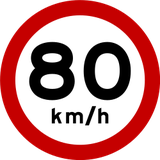
Where no regulatory speed sign is present, the CTB sets defaults according to road class: 80 km/h on urban express roads, 60 km/h on arterial roads, 40 km/h on collector roads and 30 km/h on local roads.
What is the default speed limit on divided rural highways in Brazil?
On a paved rural highway with divided carriageways and no different posted limit, the maximum is 110 km/h for cars, motorcycles, pickup trucks and similar light vehicles, and 90 km/h for other vehicles.
What is the default speed limit on single-carriageway rural highways in Brazil?
On a paved single-carriageway rural highway without a different posted limit, the maximum is 100 km/h for cars, motorcycles, pickup trucks and similar light vehicles, and 90 km/h for other vehicles.
What is the speed limit on unpaved rural roads in Brazil?
The CTB defines an estrada as an unpaved rural road. Where no other limit is signed, the maximum is 60 km/h.
Can posted speed limits differ from Brazil's statutory defaults?
Yes. The authority responsible for the road may establish higher or lower signed limits according to the road's characteristics and traffic conditions. The posted limit takes precedence.
Is there a minimum speed in Brazil?
As a general rule, the minimum speed must not be less than half of the applicable maximum speed, taking account of traffic and road conditions.
Do you need a vignette to drive in Brazil?
No. Brazil has no nationwide road vignette. Tolls are charged only on particular concessioned highways and facilities.
How are road tolls paid in Brazil?
Payment depends on the concession. Brazil uses both conventional toll plazas and electronic Free Flow tolling. Free Flow gantries identify vehicles using electronic tags or number plates, and drivers without a tag can pay through official concessionaire channels.
What is Free Flow tolling in Brazil?
Free Flow is barrier-free electronic tolling: vehicles pass beneath a gantry without stopping, and the system identifies a tag or reads the registration plate so the applicable toll can be collected electronically.
Are seat belts compulsory in Brazil?
Yes. Drivers and passengers must wear seat belts on roads throughout Brazil, subject only to specific regulated exceptions.
Are child car seats compulsory in Brazil?
Yes. Children under 10 years old who have not reached 1.45 metres in height must generally travel in the rear seat using a restraint appropriate to their age, weight and height, subject to specific vehicle-related exceptions.
Are motorcycle helmets compulsory in Brazil?
Yes. Both the motorcycle rider and passenger must wear a safety helmet. Riders must also comply with the rules concerning visors or protective eyewear.
Can children ride as motorcycle passengers in Brazil?
A motorcycle may not carry a child under 10 years old, or a person who is otherwise unable in the circumstances to take care of their own safety.
Must motorcycles use headlights during the daytime in Brazil?
Yes. Motorcycles, scooters and mopeds must use their dipped headlight during both day and night.
Must cars use headlights during the daytime in Brazil?
Cars must use dipped headlights during the day in tunnels and during rain, fog or mist. Vehicles without daytime running lights must also use dipped headlights during the day on single-carriageway highways outside urban areas.
Can you use a mobile phone while driving in Brazil?
Driving while holding or handling a mobile phone is prohibited. The CTB also restricts driving while using a phone or headphones connected to audio equipment.
Who has priority at an uncontrolled intersection in Brazil?
If one traffic stream is on a highway, traffic already on that highway has priority. At a roundabout, circulating traffic has priority. In other otherwise uncontrolled intersections, give way to the vehicle approaching from your right.
Who has priority at roundabouts in Brazil?
A driver entering a roundabout must give way to vehicles already circulating in it, unless traffic signals or signs establish another arrangement.
Do pedestrians have priority at pedestrian crossings in Brazil?
Yes. Pedestrians already crossing on a marked pedestrian crossing have priority. Where signals control the crossing, pedestrians who began crossing lawfully retain priority until they have completed the crossing.
Can you turn right at a red light in Brazil?
Only where specific traffic signage permits the right turn on red. The presence of a red signal by itself does not create a general right-turn-on-red permission.
Must slower traffic keep right in Brazil?
Yes. On roads with several lanes in the same direction, the right-hand lanes are generally for slower and larger vehicles, while the left lanes are principally used for overtaking and faster traffic.
What should you do when an emergency vehicle approaches in Brazil?
You must give priority to emergency vehicles operating in an emergency with the required audible and flashing-light signals. Do not obstruct them or follow closely behind them to take advantage of their passage.
How much space must you leave when passing a cyclist in Brazil?
A driver must leave at least 1.5 metres of lateral distance when passing or overtaking a bicycle.
Can you use the horn freely in Brazil?
No. The horn should be used only briefly when necessary to avoid danger or, outside urban areas, to warn another driver of an intention to overtake.
What warning equipment must an ordinary car carry in Brazil?
Brazilian vehicle-equipment rules require a portable emergency warning device, normally the safety triangle. PRF also advises motorists to check required equipment such as the spare tyre, jack and wheel wrench where applicable before travelling.
What should you do if your vehicle breaks down on the road in Brazil?
Activate the hazard lights and warn approaching traffic. When a vehicle is immobilised in an emergency, the safety triangle or equivalent warning device should normally be placed at least 30 metres behind the vehicle, with additional distance used where visibility requires it.
Can tourists drive in Brazil with a foreign driving licence?
A driver licensed abroad and covered by an applicable international convention, agreement or reciprocity arrangement may generally drive in Brazil for up to 180 days from entry into the country, provided the foreign licence remains valid and the required documents are carried.
Do tourists need an International Driving Permit in Brazil?
The document requirements depend on the international arrangement covering the foreign licence. Under the current rules, drivers covered by the 1968 Vienna Convention should carry the International Driving Permit together with the valid foreign licence, identification and proof of their date of entry into Brazil. Other bilateral or international agreements can establish different requirements.
What should drivers know about heavy rain in Brazil?
Heavy rainfall can cause flooding, landslides, falling debris and road closures in susceptible areas. Reduce speed, increase following distance and never enter floodwater when its depth or the condition of the road underneath is uncertain.
What language is used on road signs in Brazil?
Brazil uses nationally standardised traffic signs, with internationally recognisable symbols and written legends primarily in Portuguese.

