


No stoppingBrazil
 Traffic rules
 Brazil
16. No stopping
No stopping means that vehicles are not permitted to stop voluntarily at the indicated location, even briefly for picking up or dropping off passengers or loading or unloading goods. It is a stricter restriction than a no-parking rule.
A no-stopping restriction may be indicated by a traffic sign, road marking or local traffic regulation. Drivers should continue to a place where stopping is permitted unless they are forced to stop by traffic conditions, an emergency or another legal requirement.
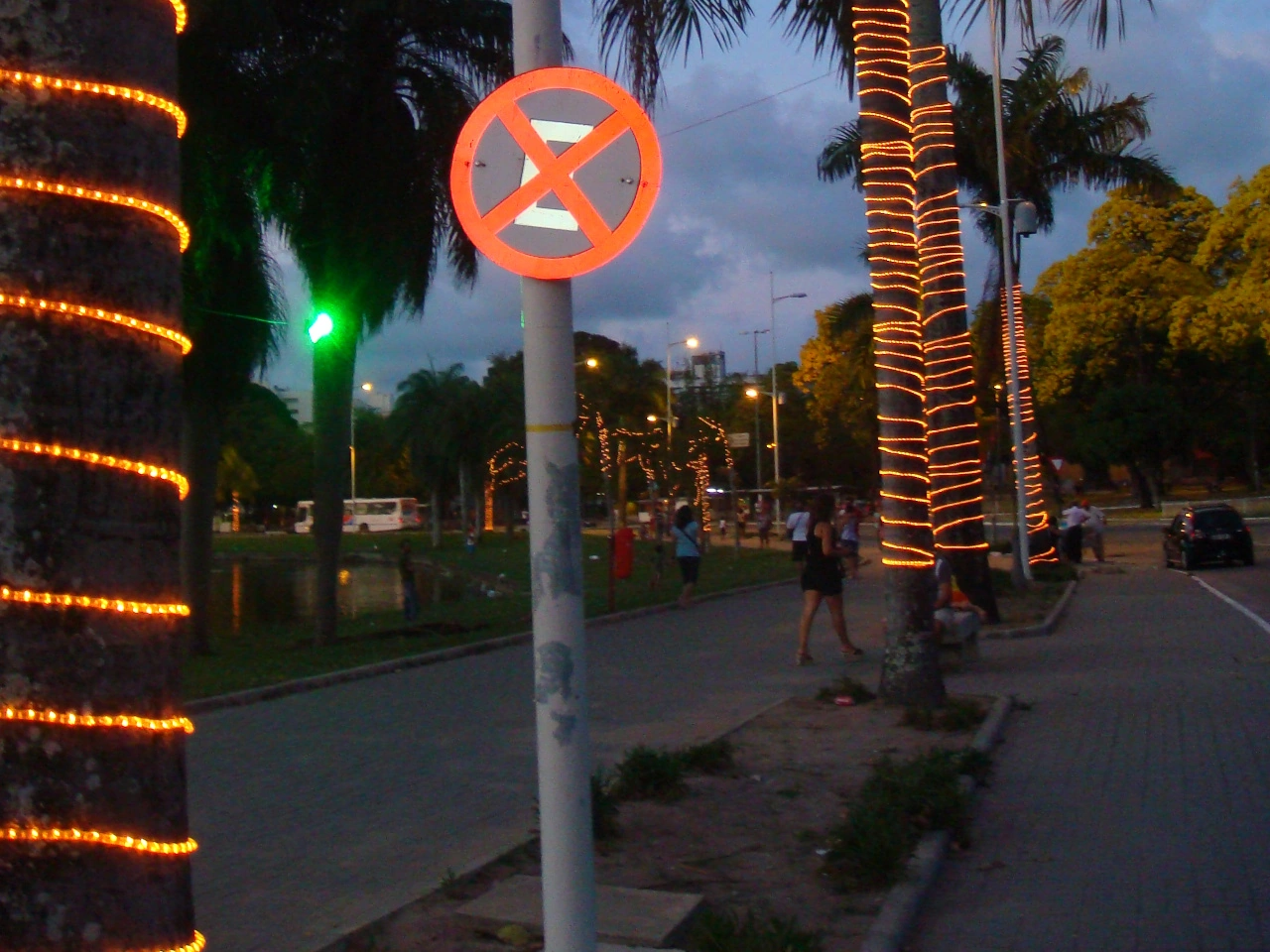
Wikimedia.org • Zelma Brito • CC BY-SA
What does a no stopping restriction mean?
It means that a driver may not voluntarily stop the vehicle in the restricted area. The prohibition normally includes stopping to pick up or drop off passengers or to load or unload goods.
🔗 ris.bka.gv.at • Austria, StVO sections 2, 23–24 and 52
🔗 gov.uk • Great Britain Highway Code, Rules 238–252; national guidance example
🔗 gov.uk • UK Department for Transport, parking-control signs and road markings
🔗 wegcode.be • Belgium, 1975 Road Code, Articles 2 and 23–27
Can you stop in a no-stopping area during an emergency?
A driver may have to stop because of an emergency, traffic conditions, a red light, police instructions or another situation outside the driver's control. Such compulsory stops are generally different from voluntarily stopping the vehicle.
🔗 ris.bka.gv.at • Austria, StVO sections 2, 23–24 and 52
🔗 gov.uk • Great Britain Highway Code, Rules 238–252; national guidance example
🔗 gov.uk • UK Department for Transport, parking-control signs and road markings
🔗 wegcode.be • Belgium, 1975 Road Code, Articles 2 and 23–27


