

Priority signsUnited Kingdom
 Traffic rules
 United Kingdom
 Priority signs
 Warning signs
 Prohibitory signs
 Mandatory signs
 Information signs
 Additional signs
Priority signs
A priority sign is a traffic sign that indicates the order in which vehicles shall pass intersection points. Vehicles often come into conflict with other vehicles and pedestrians because their intended courses of travel intersect, and thus interfere with each other's routes. The general principle that establishes who has the right to go first is called 'right of way' or 'priority'. It establishes who has the right to use the conflicting part of the road and who has to wait until the other does so. The vehicle that does not need to wait is said to 'have the right of way' or to 'have priority.'
What should I know about priority signs in the United Kingdom?
STOP requires stopping and checking before entering; GIVE WAY requires yielding to the major road. Consult Northern Ireland’s own Highway Code where applicable.
🔗 gov.uk • Department for Transport — regulatory signs, STOP/GIVE WAY and vehicle/turn restrictions
🔗 nidirect.gov.uk • Northern Ireland Government — separate Highway Code signs and markings
Must you always stop when giving way in the United Kingdom?
In Great Britain, Give Way requires yielding to the main-road traffic; stop if necessary. A Stop sign and its stop line require a complete stop. Northern Ireland has a separate Highway Code.
🔗 gov.uk • Department for Transport — regulatory signs, STOP/GIVE WAY and vehicle/turn restrictions
🔗 nidirect.gov.uk • Northern Ireland Government — separate Highway Code signs and markings

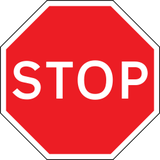
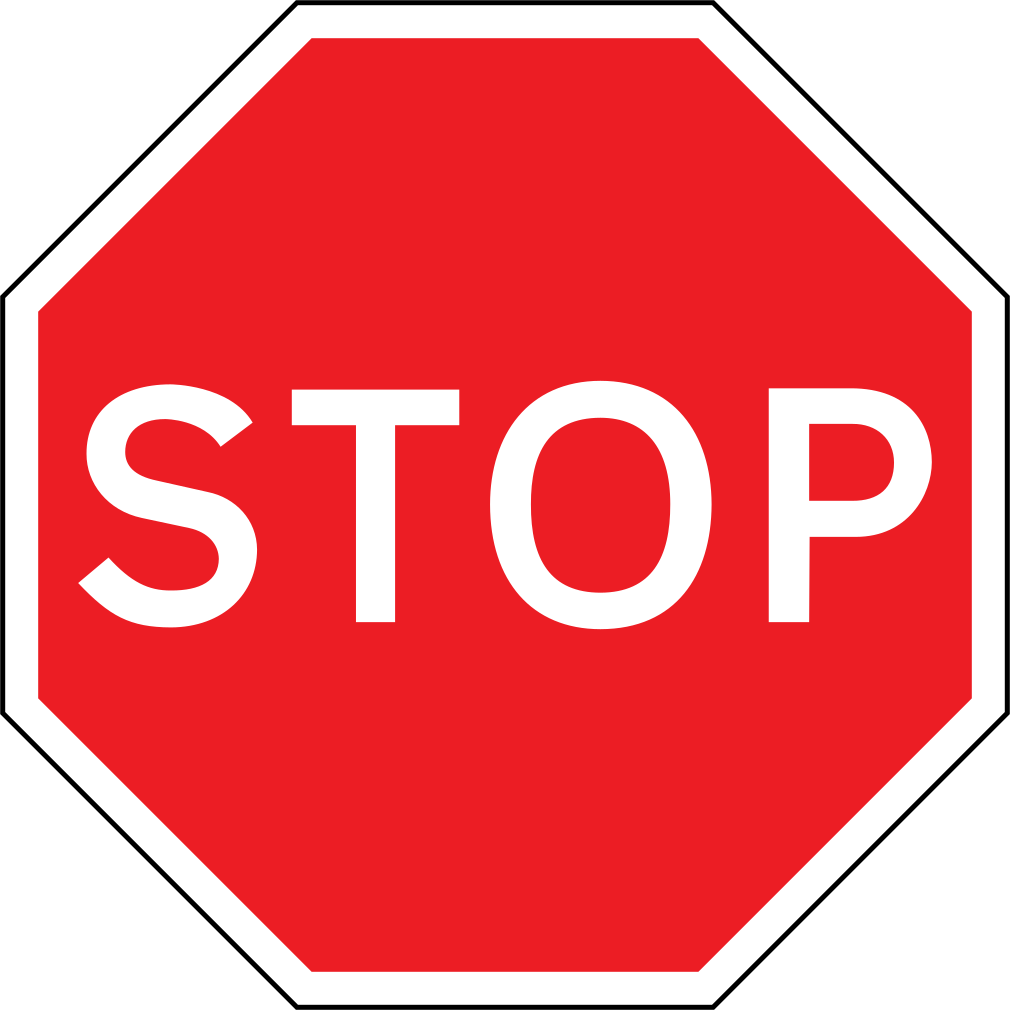
1. Stop and give way
This traffic sign means stop and give way. You must come to a complete stop before entering the intersection and give way to traffic that has priority. Proceed only when it is safe.
English • GB diagram 601.1 • Stop and give way. You must stop at the stop line and give way to traffic on the major road. If the line is not clearly visible, stop before entering the major road.
Sources
🔗 Commons.wikimedia.org
🔗 Legislation.gov.uk • Traffic Signs Regulations and General Directions • Great Britain
🔗 Gov.uk • Department for Transport • Know your traffic signs
SVG source: UK Department of Transport • Public domain • Original revision 2022-10-02. Wikimedia original unmodified.
Artwork verified against Legislation.gov.uk • official published diagram 601.1.
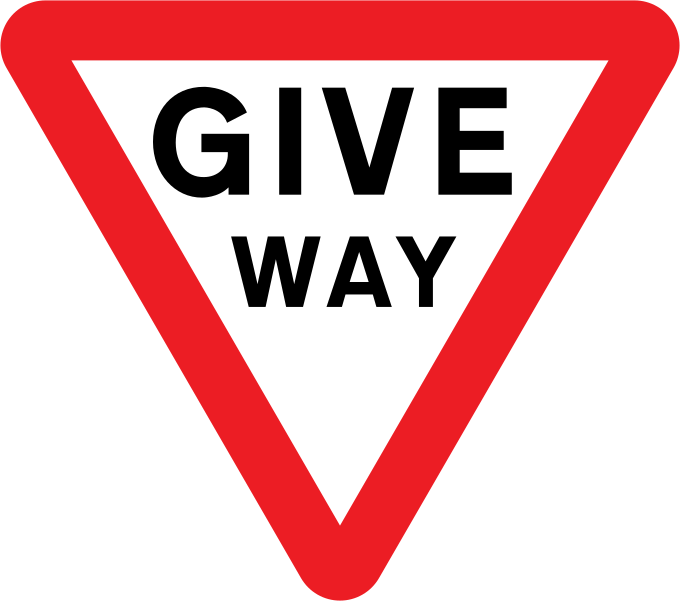
2. Give way
This traffic sign means give way. Slow down and give way to traffic that has priority. Stop if necessary and proceed only when it is safe.
English • GB diagram 602 • Give way. Give way to traffic on the major road. Stop if necessary before proceeding safely.
Sources
🔗 Commons.wikimedia.org (Government of the United Kingdom • Crown copyright • OGL v1.0)
🔗 Legislation.gov.uk • Traffic Signs Regulations and General Directions • Great Britain
🔗 Gov.uk • Department for Transport • Know your traffic signs
SVG source: Government of the United Kingdom • OGL v1.0 • Original revision 2016-07-03. Wikimedia original unmodified. © Crown copyright. Traffic signs are Crown copyright. You may reproduce traffic signs free of charge and without having to seek permission, but you must reproduce them accurately and not in a misleading context (e.g. not on roadside billboards where they could mislead drivers). (ref [1])
Artwork verified against Gov.uk • official published diagram 602.
Current design and permitted variants verified against Legislation.gov.uk • TSRGD, current text.
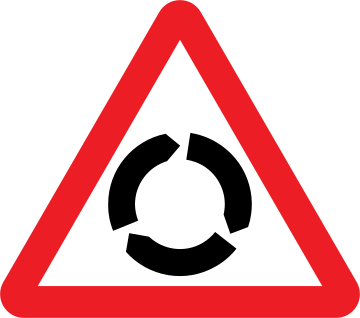
3. Warning for a roundabout
This traffic sign indicates a warning for a roundabout. A roundabout lies ahead. Reduce speed and follow the applicable priority signs, traffic signals and local roundabout rules when approaching and entering it.
English • GB diagram 510 • Roundabout ahead. A roundabout is ahead. Reduce speed and prepare to give way as required by the signs and markings at the junction.
Sources
🔗 Commons.wikimedia.org
🔗 Legislation.gov.uk • Traffic Signs Regulations and General Directions • Great Britain
🔗 Gov.uk • Department for Transport • Know your traffic signs
SVG source: UK Government • Public domain • Original revision 2013-12-13. Wikimedia original unmodified.
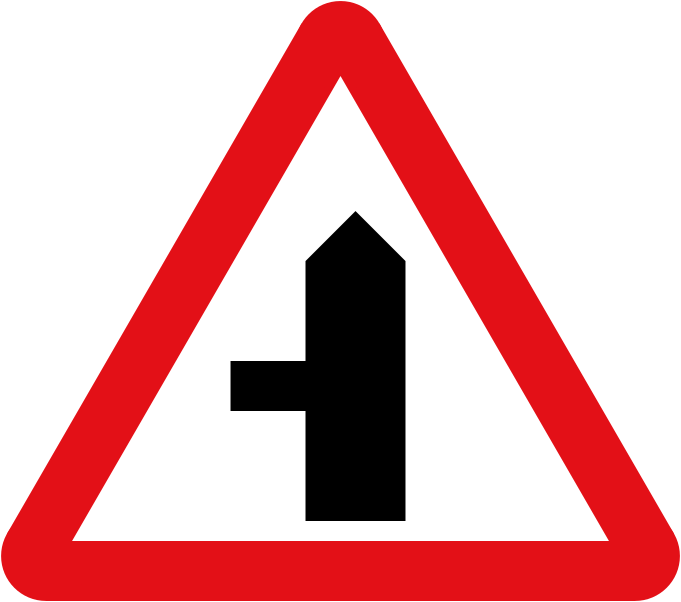
4. Priority at the junction
This traffic sign indicates that you have priority at the next intersection. A side road joins from the left, and traffic entering from that side road must give way.
English • GB diagram 506.1 • Side road ahead. A side road joins from the left. The broad line represents the main route through the junction.
Sources
🔗 Commons.wikimedia.org (Government of the United Kingdom – Department for Transport • Crown copyright • OGL v1.0)
🔗 Legislation.gov.uk • Traffic Signs Regulations and General Directions • Great Britain
🔗 Gov.uk • Department for Transport • Know your traffic signs
SVG source: Government of the United Kingdom – Department for Transport • OGL v1.0 • Original revision 2022-02-15. Wikimedia original unmodified. © Crown copyright. Traffic signs are Crown copyright. You may reproduce traffic signs free of charge and without having to seek permission, but you must reproduce them accurately and not in a misleading context (e.g. not on roadside billboards where they could mislead drivers). (ref [1])
Artwork verified against Gov.uk • official published diagram 506.1.
Current design and permitted variants verified against Legislation.gov.uk • TSRGD, current text.
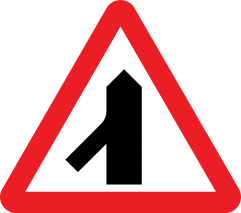
5. Warning for merging traffic from the left
This traffic sign indicates a warning for merging traffic from the left. Traffic travelling in the same general direction may join your traffic stream from the left. Stay alert and adjust your speed or position when necessary to allow traffic to merge safely.
English • GB diagram 506.1 • Side road ahead. A side road joins from the left at an angle. The broad line represents the main route.
Sources
🔗 Commons.wikimedia.org
🔗 Legislation.gov.uk • Traffic Signs Regulations and General Directions • Great Britain
🔗 Gov.uk • Department for Transport • Know your traffic signs
SVG source: UK Government • Public domain • Original revision 2011-11-12. Wikimedia original unmodified.
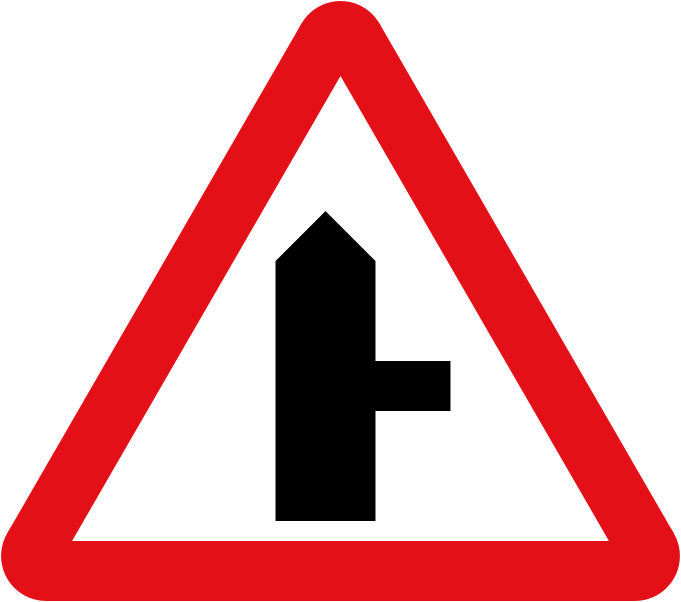
6. Priority at the junction
This traffic sign indicates that you have priority at the next intersection. A side road joins from the right, and traffic entering from that side road must give way.
English • GB diagram 506.1 • Side road ahead. A side road joins from the right. The broad line represents the main route.
Sources
🔗 Commons.wikimedia.org (Government of the United Kingdom – Department for Transport • Crown copyright • OGL v1.0)
🔗 Legislation.gov.uk • Traffic Signs Regulations and General Directions • Great Britain
🔗 Gov.uk • Department for Transport • Know your traffic signs
SVG source: Government of the United Kingdom – Department for Transport • OGL v1.0 • Original revision 2022-02-15. Wikimedia original unmodified. © Crown copyright. Traffic signs are Crown copyright. You may reproduce traffic signs free of charge and without having to seek permission, but you must reproduce them accurately and not in a misleading context (e.g. not on roadside billboards where they could mislead drivers). (ref [1])
Artwork verified against Gov.uk • official published diagram 506.1.
Current design and permitted variants verified against Legislation.gov.uk • TSRGD, current text.
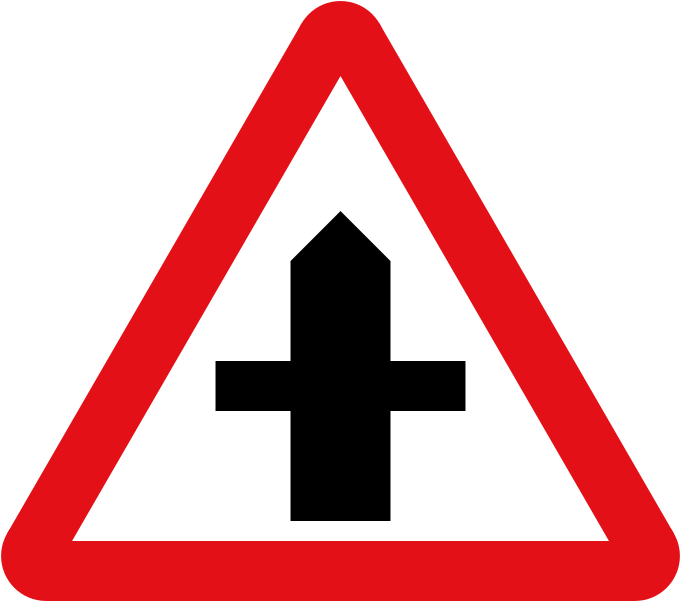
7. Priority at the junction
This traffic sign indicates that you have priority at the next intersection. Side roads join from the left and right, and traffic entering from those side roads must give way.
English • GB diagram 504.1 • Crossroads ahead. A crossroads is ahead. The broad line represents the main route through the junction.
Sources
🔗 Commons.wikimedia.org (Government of the United Kingdom – Department for Transport • Crown copyright • OGL v1.0)
🔗 Legislation.gov.uk • Traffic Signs Regulations and General Directions • Great Britain
🔗 Gov.uk • Department for Transport • Know your traffic signs
SVG source: Government of the United Kingdom – Department for Transport • OGL v1.0 • Original revision 2022-02-12. Wikimedia original unmodified. © Crown copyright. Traffic signs are Crown copyright. You may reproduce traffic signs free of charge and without having to seek permission, but you must reproduce them accurately and not in a misleading context (e.g. not on roadside billboards where they could mislead drivers). (ref [1])
Artwork verified against Gov.uk • official published diagram 504.1.
Current design and permitted variants verified against Legislation.gov.uk • TSRGD, current text.
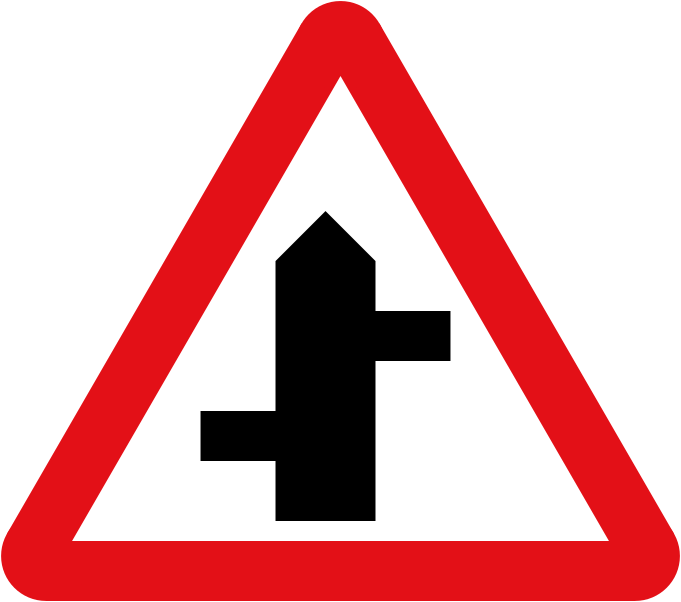
8. Warning for a staggered junction
This traffic sign indicates a warning for a staggered junction. Side roads join the main road at different points rather than directly opposite each other. Reduce speed and watch carefully for vehicles entering, leaving or crossing the main road.
English • GB diagram 507.1 • Staggered junction ahead. Side roads join first from the right and then from the left, when approaching from the bottom of the diagram.
Sources
🔗 Commons.wikimedia.org (Government of the United Kingdom – Department for Transport • Crown copyright • OGL v1.0)
🔗 Legislation.gov.uk • Traffic Signs Regulations and General Directions • Great Britain
🔗 Gov.uk • Department for Transport • Know your traffic signs
SVG source: Government of the United Kingdom – Department for Transport • OGL v1.0 • Original revision 2022-02-17. Wikimedia original unmodified. © Crown copyright. Traffic signs are Crown copyright. You may reproduce traffic signs free of charge and without having to seek permission, but you must reproduce them accurately and not in a misleading context (e.g. not on roadside billboards where they could mislead drivers). (ref [1])
Artwork verified against Gov.uk • official published diagram 507.1.
Current design and permitted variants verified against Legislation.gov.uk • TSRGD, current text.
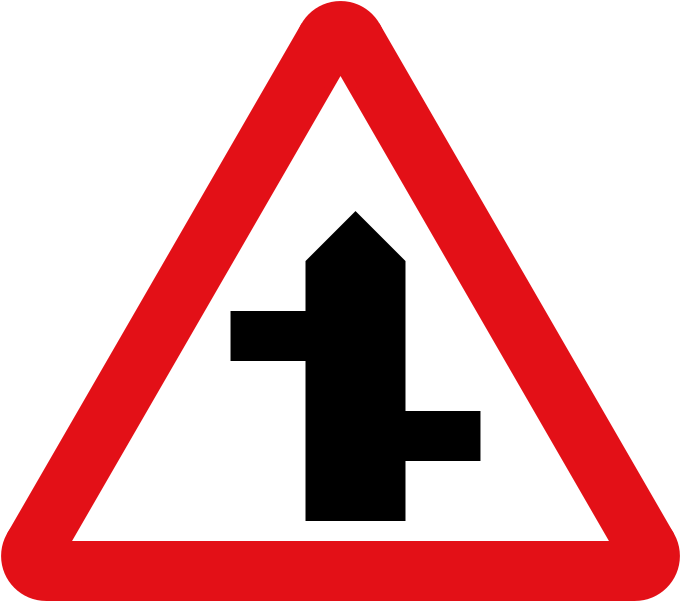
9. Warning for a staggered junction
This traffic sign indicates a warning for a staggered junction. Side roads join the main road at different points rather than directly opposite each other. Reduce speed and watch carefully for vehicles entering, leaving or crossing the main road.
English • GB diagram 507.1 • Staggered junction ahead. Side roads join first from the left and then from the right, when approaching from the bottom of the diagram.
Sources
🔗 Commons.wikimedia.org (Government of the United Kingdom – Department for Transport • Crown copyright • OGL v1.0)
🔗 Legislation.gov.uk • Traffic Signs Regulations and General Directions • Great Britain
🔗 Gov.uk • Department for Transport • Know your traffic signs
SVG source: Government of the United Kingdom – Department for Transport • OGL v1.0 • Original revision 2022-02-17. Wikimedia original unmodified. © Crown copyright. Traffic signs are Crown copyright. You may reproduce traffic signs free of charge and without having to seek permission, but you must reproduce them accurately and not in a misleading context (e.g. not on roadside billboards where they could mislead drivers). (ref [1])
Artwork verified against Gov.uk • official published diagram 507.1.
Current design and permitted variants verified against Legislation.gov.uk • TSRGD, current text.
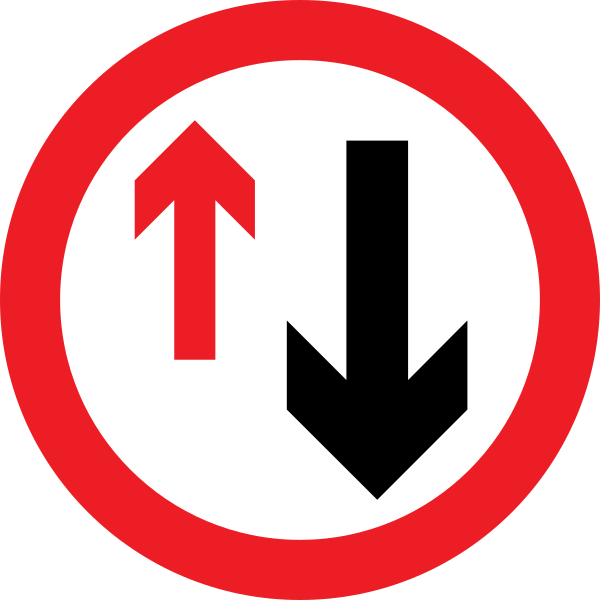
10. Road narrowing, give way to oncoming drivers
This traffic sign indicates a road narrowing where you must give way to oncoming traffic. Allow approaching traffic to pass before entering or continuing through the narrow section when required.
English • GB diagram 615 • Give way to oncoming vehicles. You must give priority to vehicles approaching from the opposite direction at the narrow section.
Sources
🔗 Commons.wikimedia.org
🔗 Legislation.gov.uk • Traffic Signs Regulations and General Directions • Great Britain
🔗 Gov.uk • Department for Transport • Know your traffic signs
SVG source: UK Government • Public domain • Original revision 2011-01-20. Wikimedia original unmodified.
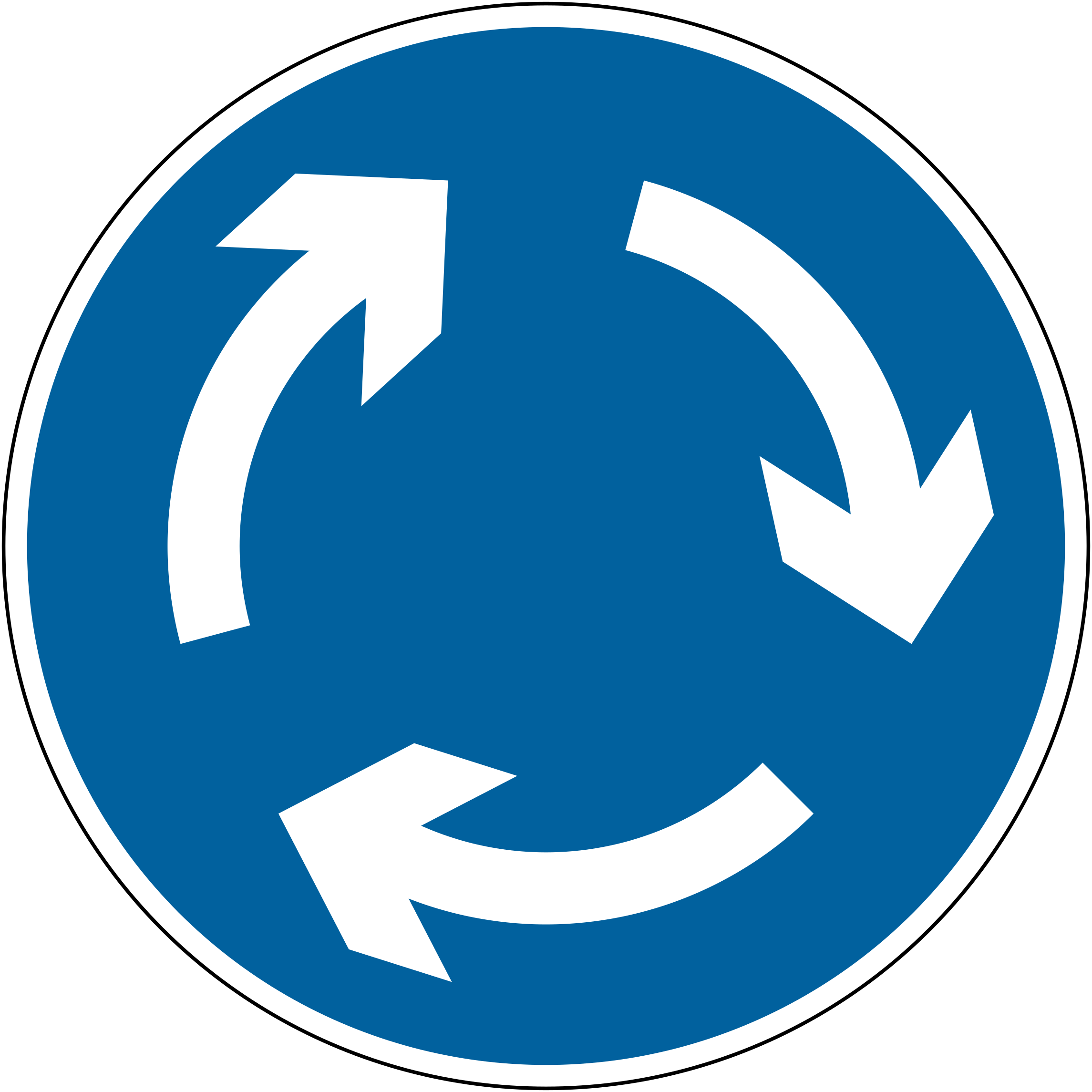
11. Mandatory roundabout direction
This traffic sign indicates the mandatory direction around a roundabout. Traffic must circulate in the direction shown by the arrows. The sign does not itself determine priority; follow the applicable priority signs, traffic signals and local rules.
English • GB diagram 611.1 • Mini-roundabout. Give priority to traffic from the right at the give-way markings. Pass to the left of the central white circle and circulate clockwise, unless the size of the vehicle or layout makes passing to the left impracticable.
Sources
🔗 Commons.wikimedia.org (Government of the United Kingdom – Department for Transport • Crown copyright • OGL v1.0)
🔗 Legislation.gov.uk • Traffic Signs Regulations and General Directions • Great Britain
🔗 Gov.uk • Department for Transport • Know your traffic signs
SVG source: Government of the United Kingdom – Department for Transport • OGL v1.0 • Original revision 2021-12-21. Wikimedia original unmodified. © Crown copyright. Traffic signs are Crown copyright. You may reproduce traffic signs free of charge and without having to seek permission, but you must reproduce them accurately and not in a misleading context (e.g. not on roadside billboards where they could mislead drivers). (ref [1])
Artwork verified against Gov.uk • official published diagram 611.1.
Current design and permitted variants verified against Legislation.gov.uk • TSRGD, current text.
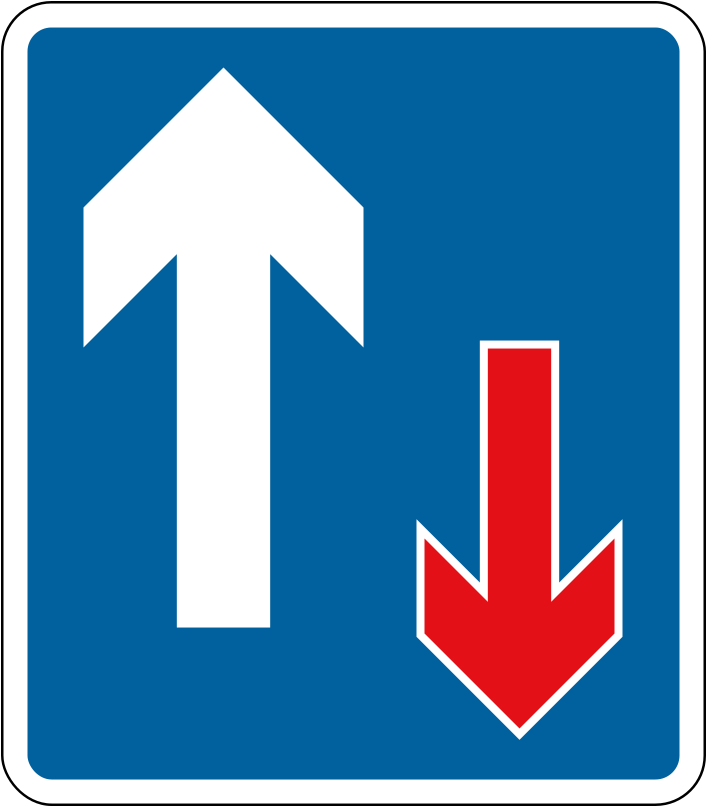
12. Road narrowing, oncoming drivers have to give way
This traffic sign indicates a road narrowing where oncoming drivers have to give way.
English • GB diagram 811A • Priority over oncoming vehicles. You have priority over vehicles approaching from the opposite direction at the narrow section. Proceed only when it is safe.
Sources
🔗 Commons.wikimedia.org (Government of the United Kingdom – Department for Transport • Crown copyright • OGL v1.0)
🔗 Legislation.gov.uk • Traffic Signs Regulations and General Directions • Great Britain
🔗 Gov.uk • Department for Transport • Know your traffic signs
SVG source: Government of the United Kingdom – Department for Transport • OGL v1.0 • Original revision 2022-01-10. Wikimedia original unmodified. © Crown copyright. Traffic signs are Crown copyright. You may reproduce traffic signs free of charge and without having to seek permission, but you must reproduce them accurately and not in a misleading context (e.g. not on roadside billboards where they could mislead drivers). (ref [1])
Artwork verified against Gov.uk • official published diagram 811.
Current design and permitted variants verified against Legislation.gov.uk • TSRGD, current text.
