

Stop signUnited Kingdom
 Traffic rules
 United Kingdom
15. Stop sign
A stop sign requires drivers to bring their vehicle to a complete stop and give way before entering or crossing the road ahead. The stop must be made at the stop line or another legally prescribed position.
After stopping, the driver may continue only when this can be done safely and without interfering with traffic that has priority. The sign does not create priority for the driver who has stopped.
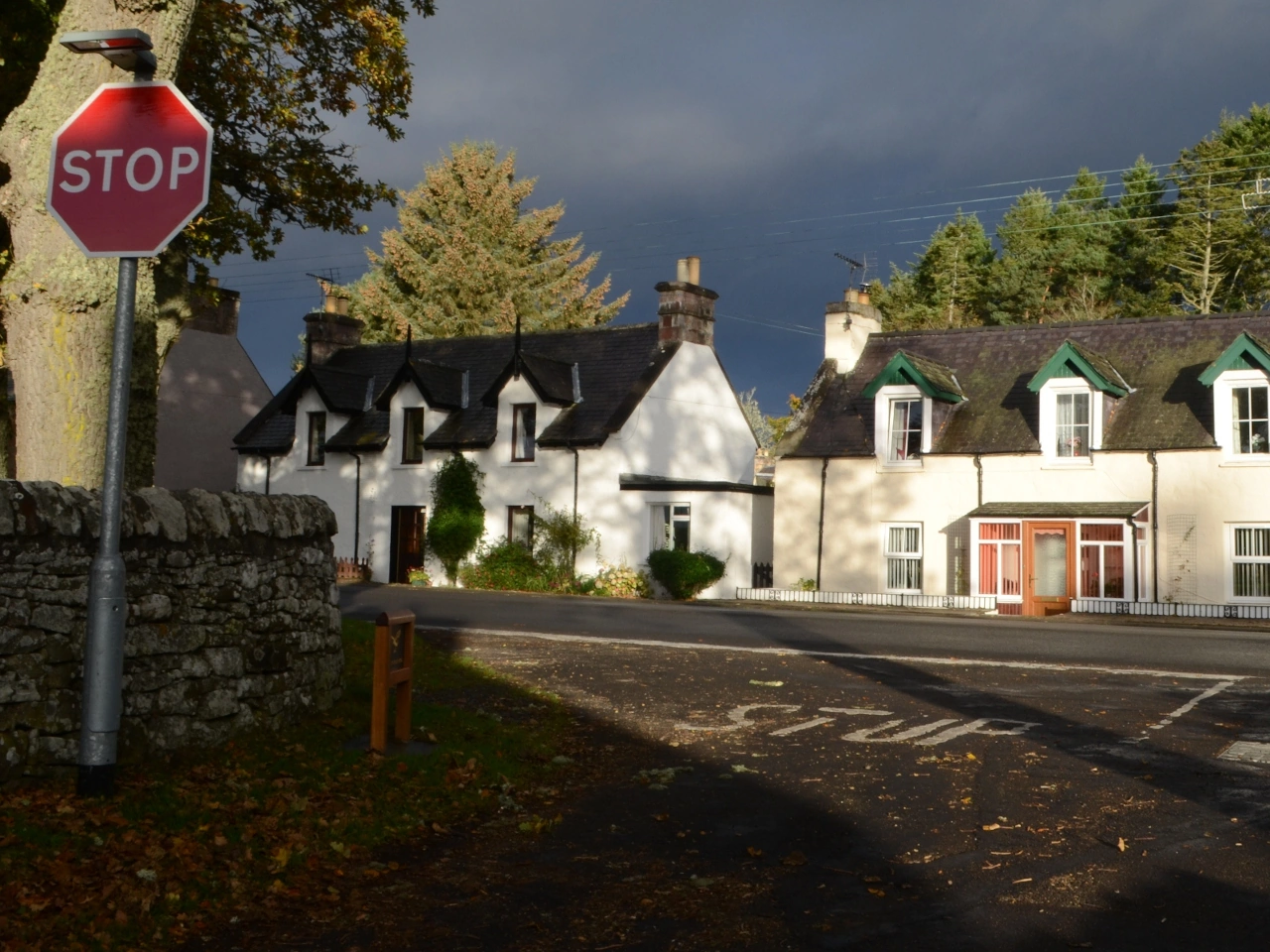
Wikimedia.org • Andrew Tryon • CC BY-SA
Must I stop completely at a stop sign in the United Kingdom?
In Great Britain, yes. Come to a complete stop when the applicable stop sign controls your approach, even when you cannot see another road user. Slowing to a crawl is not a stop. The stopping duty is separate from the duty to give way before continuing. Northern Ireland has its own Highway Code.
🔗 gov.uk • Great Britain Highway Code: Rules 170–172: complete stop and safe entry
🔗 gov.uk • DfT Know Your Traffic Signs: regulatory signs (Great Britain)
Where must I stop at a stop-controlled junction in the United Kingdom?
In Great Britain, stop behind the solid white line at a junction with a stop sign. Wait for a safe gap before moving off. If the view is restricted, a completed stop does not authorise entry into another road user’s path.
🔗 gov.uk • Great Britain Highway Code: Rules 170–172: complete stop and safe entry
🔗 gov.uk • DfT Know Your Traffic Signs: regulatory signs (Great Britain)
Does stopping first give me priority at a stop sign in the United Kingdom?
A complete stop does not, by itself, give you priority. Give way to the road users entitled to pass under the junction’s signs and rules, check pedestrians and cyclists, and proceed only when the gap is safe. Do not follow another stopped vehicle through without satisfying your own stopping and yielding duties.
🔗 gov.uk • Great Britain Highway Code: Rules 170–172: complete stop and safe entry
🔗 gov.uk • DfT Know Your Traffic Signs: regulatory signs (Great Britain)


