

Separated pathUnited Kingdom
 Traffic rules
 United Kingdom
1. Separated path
A separated path is a path or part of a road where different categories of road users, typically pedestrians and cyclists, are assigned separate sections of the same overall route. The sections may be distinguished by road markings, different paving materials, a kerb or another physical separation.
Users should remain within the part of the path intended for them and take particular care where the sections cross, merge or connect with roads. The permitted users, priority rules and any speed restrictions depend on the local traffic signs and regulations.
How are separated walking and cycling routes identified in Great Britain?
The Highway Code describes cycle tracks alongside footpaths or pavements, divided by a white line, different material, a verge or a kerb. Signs and the layout identify the sections. An adjoining cycle track does not make the pedestrian section available for ordinary cycling.
🔗 gov.uk • DfT Know Your Traffic Signs: bus and cycle signs and road markings (Great Britain)
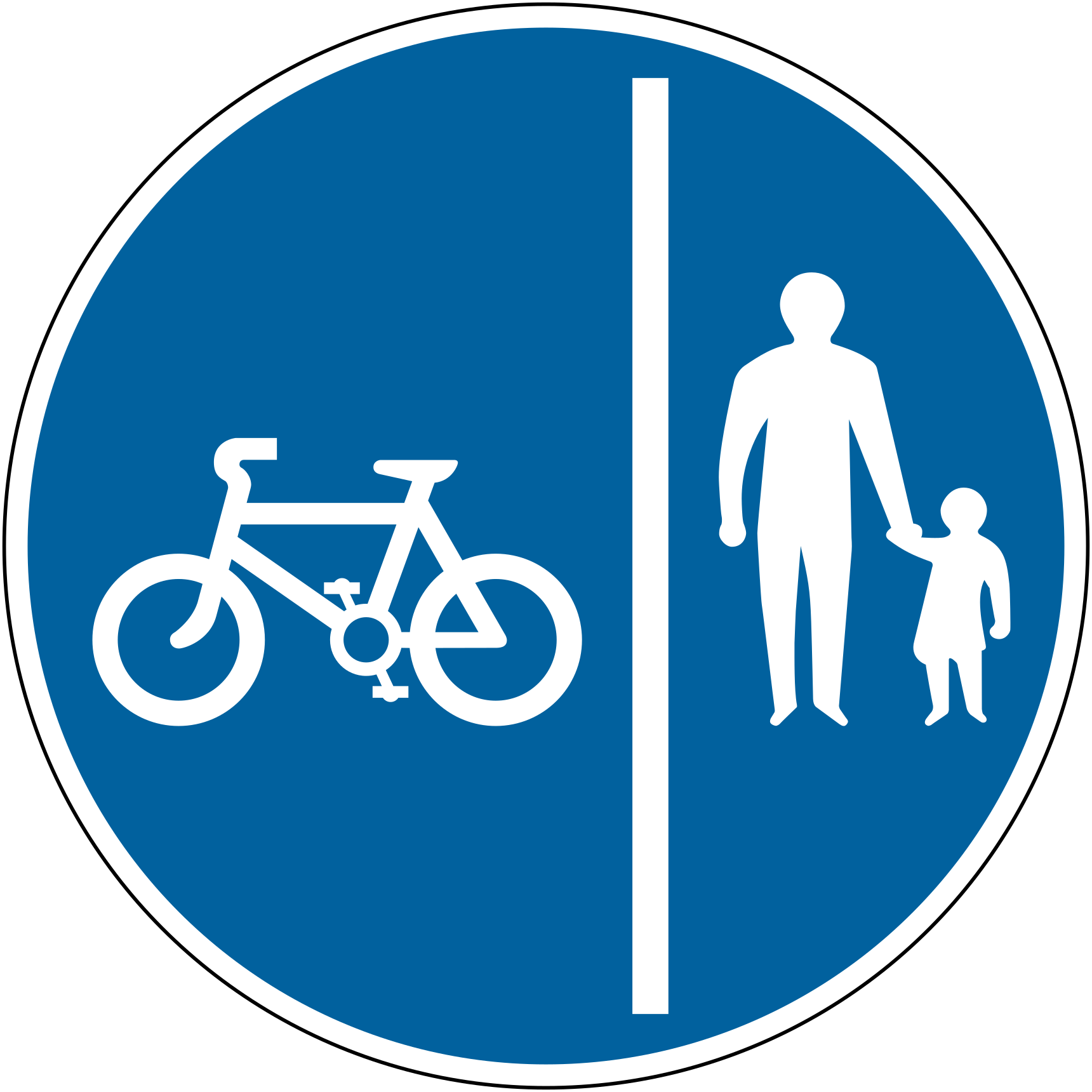 Mandatory divided pedestrian and cycle path.
English • GB diagram 957 • Segregated pedestrian and cycle route. Use the side shown for your class of traffic: cycles on the left and pedestrians on the right. In Great Britain, permitted trial electric scooters use the cycle side where applicable.
Sources
🔗 Commons.wikimedia.org (Government of the United Kingdom – Department for Transport • Crown copyright • OGL v1.0)
🔗 Legislation.gov.uk • Traffic Signs Regulations and General Directions • Great Britain
🔗 Gov.uk • Department for Transport • Know your traffic signs
SVG source: Government of the United Kingdom – Department for Transport • OGL v1.0 • Original revision 2021-08-02. Wikimedia original unmodified. © Crown copyright. Traffic signs are Crown copyright. You may reproduce traffic signs free of charge and without having to seek permission, but you must reproduce them accurately and not in a misleading context (e.g. not on roadside billboards where they could mislead drivers). (ref [1])
Artwork verified against Gov.uk • official published diagram 957.
Current design and permitted variants verified against Legislation.gov.uk • TSRGD, current text.
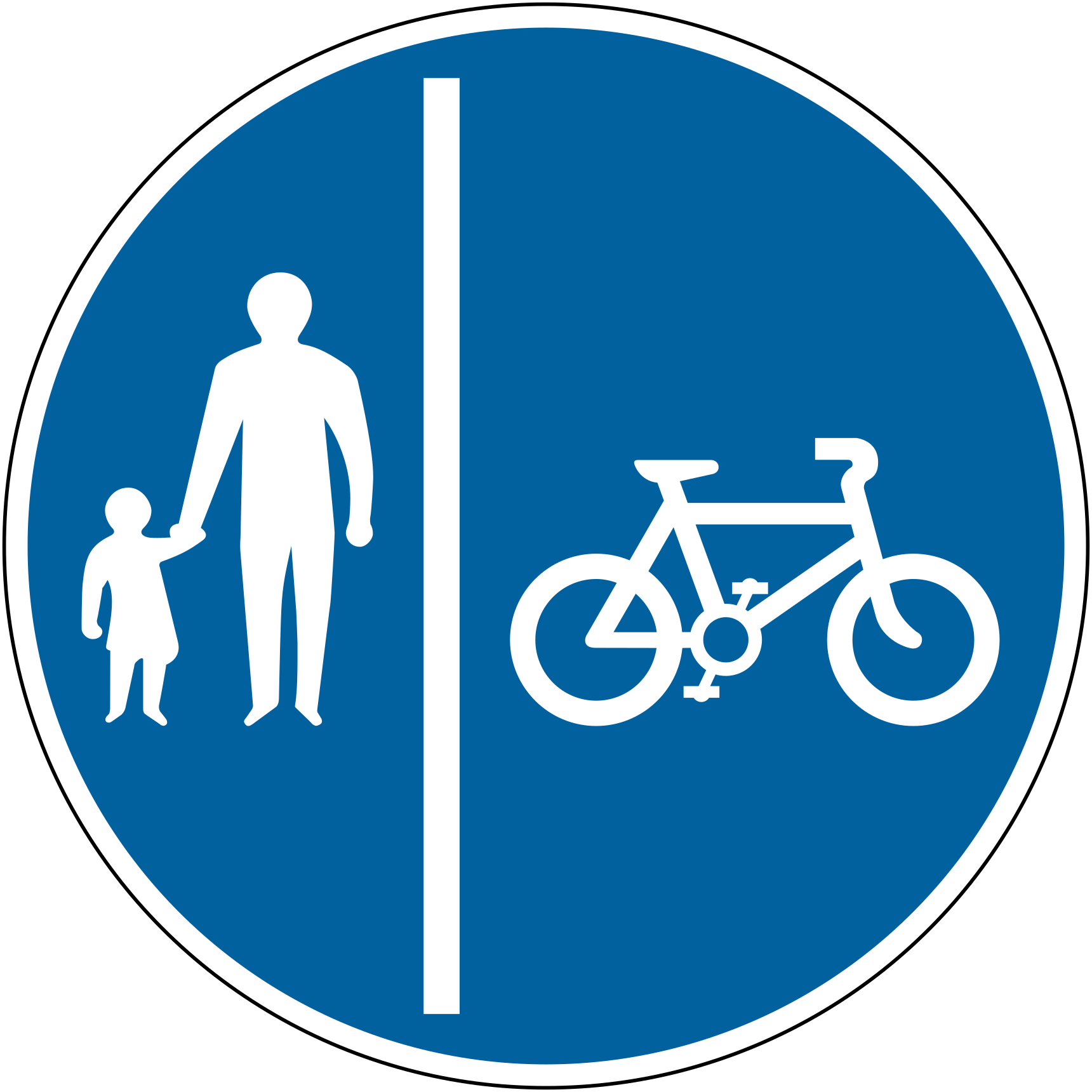 Mandatory divided pedestrian and cycle path.
English • GB diagram 957 • Segregated pedestrian and cycle route. Use the side shown for your class of traffic: pedestrians on the left and cycles on the right. In Great Britain, permitted trial electric scooters use the cycle side where applicable.
Sources
🔗 Commons.wikimedia.org (Government of the United Kingdom – Department for Transport • Crown copyright • OGL v1.0)
🔗 Legislation.gov.uk • Traffic Signs Regulations and General Directions • Great Britain
🔗 Gov.uk • Department for Transport • Know your traffic signs
SVG source: Government of the United Kingdom – Department for Transport • OGL v1.0 • Original revision 2021-08-02. Wikimedia original unmodified. © Crown copyright. Traffic signs are Crown copyright. You may reproduce traffic signs free of charge and without having to seek permission, but you must reproduce them accurately and not in a misleading context (e.g. not on roadside billboards where they could mislead drivers). (ref [1])
Artwork verified against Gov.uk • official published diagram 957R.
Current design and permitted variants verified against Legislation.gov.uk • TSRGD, current text.
Must cyclists keep to the cycling side of a segregated route in Great Britain?
Yes. The Highway Code says cyclists must keep to the side intended for cyclists where a route is segregated from pedestrians. This is different from an undivided shared route, where both groups use the same surface.
🔗 gov.uk • DfT Know Your Traffic Signs: bus and cycle signs and road markings (Great Britain)
What do the tactile strips on a British separated path mean?
DfT tactile-paving guidance describes a ladder pattern across the direction of travel on the pedestrian side and a tramline pattern along the direction of travel on the cycling side of the relevant divided route. These surfaces help users identify the allocated parts. Cyclists must keep to their cycling side.
🔗 gov.uk • DfT, Guidance on the Use of Tactile Paving Surfaces, January 2022, section 5
🔗 gov.uk • DfT Know Your Traffic Signs: bus and cycle signs and road markings (Great Britain)

