


CrosswindJapan
An introduction to the traffic rules and road signs of Japan. Learn about driving, road safety and much more in our illustrated book, with answers to frequently asked questions.
For informational purposes only. Always follow official regulations. Some content and images were created with AI assistance.
 Traffic rules
 Japan
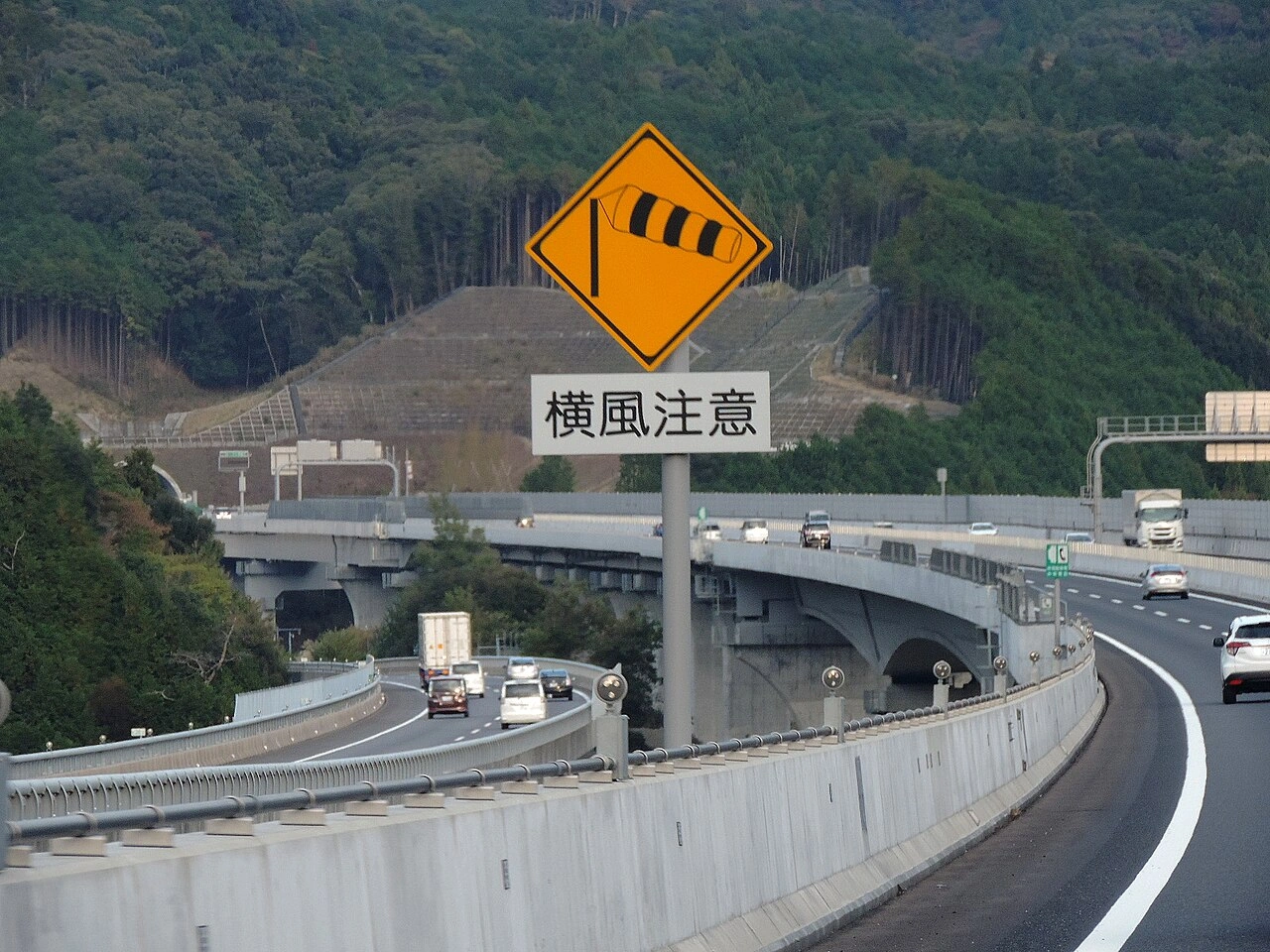
33. Crosswind
Crosswind is wind blowing across the direction of travel and can push a vehicle sideways or affect its stability. Strong or sudden gusts are especially dangerous for motorcycles, bicycles, caravans, trailers and high-sided vehicles. Drivers should reduce speed, keep a firm but relaxed grip on the steering wheel and allow extra space from other road users. Particular care is needed on bridges, exposed roads and when passing large vehicles or leaving sheltered areas, where a sudden change in wind force can move the vehicle unexpectedly.
🔗 Sources
Image credit: Wikimedia.org • 運動会プロテインパワー • CC BY-SA
Where can crosswinds be especially hazardous in Japan?
Exposed roads, bridges and the transition out of shelter can leave a vehicle vulnerable to sudden gusts. Allow for a change in steering force, especially beside a large vehicle. Follow actual wind warnings, closures and vehicle restrictions, and reduce speed smoothly when conditions require it.
🔗 laws.e-gov.go.jp • e-Gov — current enforced Road Traffic Act, revision metadata and full text
Does a crosswind warning automatically impose a speed limit in Japan?
A crosswind warning does not itself set a numerical speed limit. Obey any separate speed restriction or electronic message, and choose a lower speed whenever gusts could affect control.
🔗 laws.e-gov.go.jp • e-Gov — current enforced Road Traffic Act, revision metadata and full text
How should you drive a motorcycle, van or vehicle towing a caravan in strong winds in Japan?
These vehicles may react sharply to gusts. Reduce speed smoothly, leave more room from traffic, hold the controls steadily and take extra care when passing a lorry or emerging from shelter. Follow any temporary restriction for high-sided vehicles.
🔗 laws.e-gov.go.jp • e-Gov — current enforced Road Traffic Act, revision metadata and full text


