


Speed limitJapan
 Traffic rules
 Japan
5. Speed limit
A speed limit is the maximum legal speed permitted on a road, lane or within a designated area. It may be established by general traffic law or indicated by fixed, variable or temporary traffic signs.
A speed limit is a maximum, not a target speed. Drivers must travel more slowly whenever traffic, visibility, weather, road conditions, vulnerable road users or the condition of the vehicle make the maximum permitted speed unsafe.
Wikimedia.org • 運動会プロテインパワー • CC BY-SA
Which general speed limits should car drivers know in Japan?
From 1 September 2026, qualifying ordinary roads without a centre line, marked traffic lanes or separated directions have a statutory car maximum of 30 km/h. Other specified ordinary-road categories retain 60 km/h. A designated speed sign replaces that road’s statutory default. On qualifying national expressway main carriageways, the ordinary car default is 100 km/h, with different signed limits on many sections.
🔗 laws.e-gov.go.jp • Japan Road Traffic Act — Articles 22–23; decree Articles 11 and 27
🔗 laws.e-gov.go.jp • e-Gov — current enforced Road Traffic Act, revision metadata and full text
🔗 laws.e-gov.go.jp • e-Gov — current enforced decree revision metadata
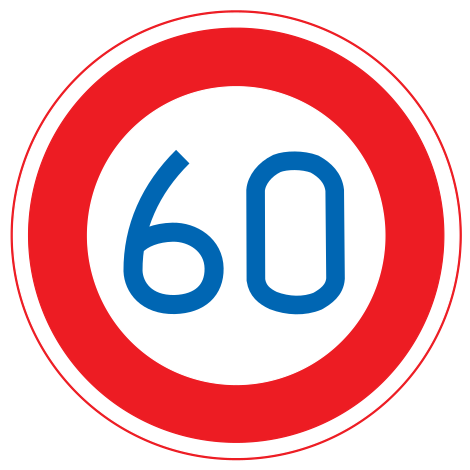 Start of a speed limit.
English • Traffic sign 323 • Maximum speed: 60 km/h. Observe any lower statutory vehicle-category limit and a speed safe for road conditions.
日本語 • 323 • 最高速度:60 km/h。 表示された最高速度は時速60キロメートルです。車種ごとの、これより低い法定速度や道路状況に応じた安全な速度にも従ってください。
Sources
🔗 Commons.wikimedia.org
🔗 Laws.e-gov.go.jp • 道路標識、区画線及び道路標示に関する命令、別表第一・第二
🔗 Mlit.go.jp • 国土交通省、道路標識一覧
SVG source: Monaneko • Public domain • Original revision 2007-03-19. Wikimedia original unmodified.
Did Japan reduce every ordinary-road default to 30 km/h in September 2026?
No. The change concerns qualifying roads without centre lines, marked traffic lanes or separated directions. Roads in the specified exempt categories retain a 60 km/h statutory default. The official term 生活道路 refers to roads used in everyday local life; the legal layout criteria and actual signs matter.
🔗 laws.e-gov.go.jp • Japan Road Traffic Act — Articles 22–23; decree Articles 11 and 27
🔗 laws.e-gov.go.jp • e-Gov — current enforced Road Traffic Act, revision metadata and full text
🔗 laws.e-gov.go.jp • e-Gov — current enforced decree revision metadata
What if a Japanese qualifying 30 km/h-default road is signed at 40 km/h?
The designated speed applies: the National Police Agency gives 40 km/h as an example replacing the road’s 30 km/h statutory default. Equally, a 30 km/h sign can reduce a road with a 60 km/h default. Always choose a safe speed within the applicable maximum.
🔗 laws.e-gov.go.jp • Japan Road Traffic Act — Articles 22–23; decree Articles 11 and 27
🔗 laws.e-gov.go.jp • e-Gov — current enforced Road Traffic Act, revision metadata and full text
🔗 laws.e-gov.go.jp • e-Gov — current enforced decree revision metadata


