


Bike pathPeru
 Traffic rules
 Peru
2. Bike path
A bike path is a part of a road or a separate route intended primarily or exclusively for people riding bicycles. It may be physically separated from motor traffic, marked on the road surface or identified by traffic signs.
Bike paths may be one-way, two-way or shared with other road users. The permitted users, direction of travel, priority rules and obligation to use the path depend on local traffic signs and regulations.
Wikimedia.org • Ianyou78 • CC BY-SA
Must cyclists use a provided Peruvian urban cycleway?
Yes. On urban roads, cyclists must use the ciclovía where one is available. Where there is none, the Regulations normally direct them to the right side of the carriageway, with particular arrangements for bus lanes and specified one-way roads.
May ordinary motor vehicles use Peruvian cycleways?
No. The Regulations prohibit motor vehicles from circulating on cycleways. They provide access for bicycles, qualifying pedal-assisted bicycles and other specified cycles that meet the stated conditions. Do not assume that every vehicle with two wheels qualifies.
Who gives way at an unsignalised pedestrian crossing on a Peruvian cycleway?
At intersections of a cycleway or other cycling infrastructure that have no traffic signs, cyclists must give pedestrians priority under Article 106-B.2. This is not a blanket rule for every crossing merely lacking traffic lights. Follow any applicable signs and signals, and take care of pedestrians crossing the facility.
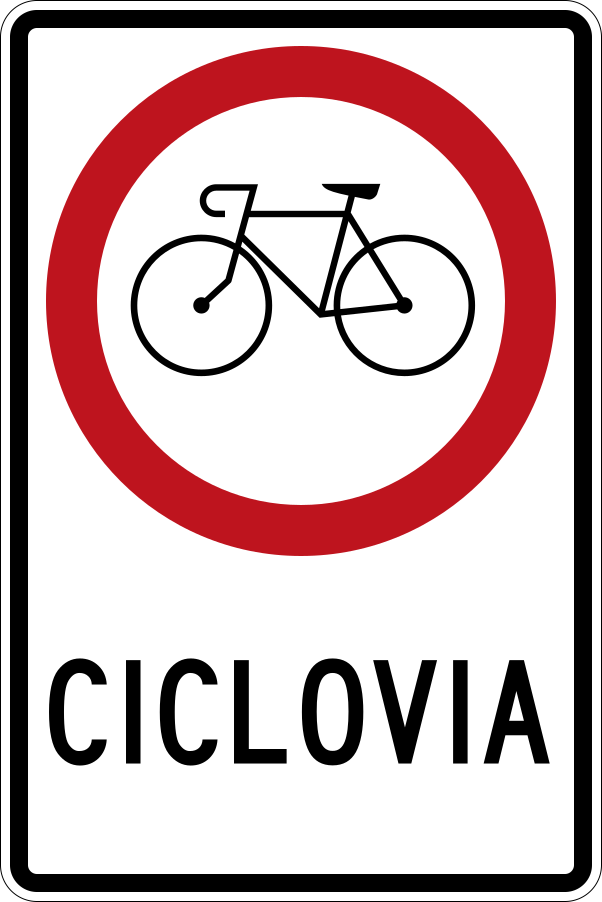 Mandatory path for cyclists.
English • Traffic sign R-42 • Cycleway. Marks a road exclusively for cycle traffic.
Español • R-42 • Ciclovía. Indica una vía exclusiva para el tránsito de ciclos: ciclovía.
Sources
🔗 Commons.wikimedia.org
🔗 Cdn.www.gob.pe • MTC: Manual 2024, página PDF 89 (impresa 85)
SVG source: Government of the Republic of Peru – Ministry of Transport and Communications • Public domain • Original revision 2026-10-09. Wikimedia original unmodified.


