


Mandatory signsPhilippines
 Traffic rules
 Philippines
 Priority signs
 Warning signs
 Prohibitory signs
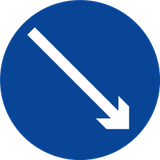 Mandatory signs
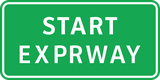 Information signs
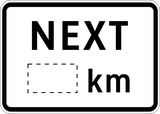 Additional signs
Mandatory signs
A mandatory sign is a traffic sign that tells drivers what they must do. Instead of prohibiting actions, these signs impose obligations such as following a specific direction, using a particular lane, or keeping a minimum speed. Their purpose is to guide traffic safely and efficiently by ensuring that all road users follow the same required behaviour in places where it is necessary for order and safety.
What does a mandatory-direction sign require in the Philippines?
Where a compulsory-direction sign is installed in the Philippines, follow only the arrow direction or permitted combination of directions. The restriction applies at the location or movement it regulates; it is not an instruction to ignore other traffic controls.
Does a mandatory-direction sign give me priority over pedestrians in the Philippines?
No. It tells you which way to move, not who goes first. Check traffic lights, other priority signs, pedestrians and cyclists, and give way when required before completing the manoeuvre.

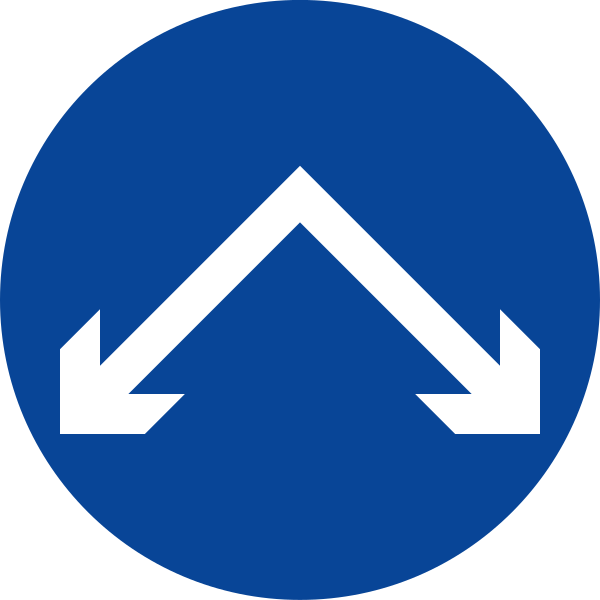
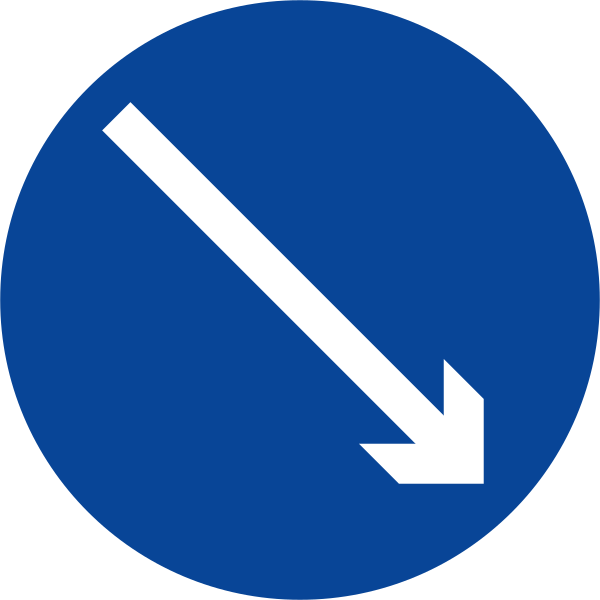
1. Pass obstacle on either side
This traffic sign indicates that traffic must pass an obstacle on either the left or the right. Use either permitted side while following the road layout and any accompanying signs or markings.
English • Traffic sign R2-4 • Pass on either side. You may pass the traffic island or obstruction on the left or right, as shown by the arrows.
Filipino • R2-4 • Maaaring dumaan sa alinmang panig. Maaaring daanan ang isla o sagabal sa kaliwa o kanan, ayon sa mga palaso.
Sources
🔗 Commons.wikimedia.org
🔗 Fliphtml5.com • LTO • Road Traffic Signs & Pavement Markings • p. 6 (pampublikong kopya)
🔗 Lto.gov.ph • LTO • opisyal na materyal
🔗 Scribd.com • DPWH • R2-4 (pampublikong kopya)
SVG source: Government of the Philippines - Department of Public Works and Highways derivative work: Photo07 • Public domain • Original revision 2014-05-25. Wikimedia original unmodified.
2. Pass obstacle on the right
This traffic sign indicates that traffic must pass an obstacle on the right. Keep to the right of the obstacle and follow any accompanying signs or road markings.
English • Traffic sign R2-3 • Pass on the right. Pass the traffic island or obstruction on its right, as shown by the arrow.
Filipino • R2-3 • Dumaan sa kanan. Daanan ang isla o sagabal sa kanang panig nito, ayon sa palaso.
Sources
🔗 Commons.wikimedia.org
🔗 Fliphtml5.com • LTO • Road Traffic Signs & Pavement Markings • p. 6 (pampublikong kopya)
🔗 Lto.gov.ph • LTO • opisyal na materyal
🔗 Scribd.com • DPWH • R2-3 (pampublikong kopya)
SVG source: Government of the Philippines - Department of Public Works and Highways derivative work: Fry1989 eh? • Public domain • Original revision 2015-05-14. Wikimedia original unmodified.
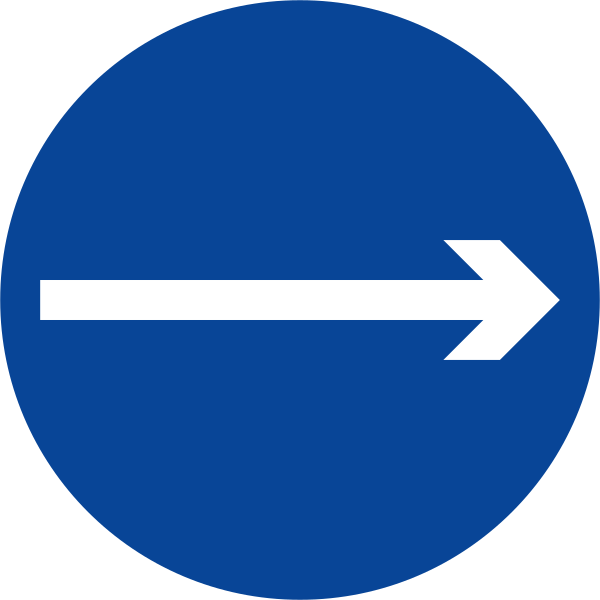
3. Mandatory right
This traffic sign indicates a mandatory direction to the right. Traffic must proceed to the right at the sign and may not continue straight ahead or to the left.
English • Traffic sign R2-2 • One-way traffic to the right. Follow the one-way flow of traffic to the right, as shown by the arrow.
Filipino • R2-2 • Isahang direksiyon pakanan. Sundin ang isahang daloy ng trapiko patungo sa kanan, ayon sa palaso.
Sources
🔗 Commons.wikimedia.org
🔗 Fliphtml5.com • LTO • Road Traffic Signs & Pavement Markings • p. 6 (pampublikong kopya)
🔗 Lto.gov.ph • LTO • opisyal na materyal
🔗 Scribd.com • DPWH • R2-2 (pampublikong kopya)
SVG source: Government of the Philippines - Department of Public Works and Highways derivative work: Fry1989 eh? • Public domain • Original revision 2015-04-23. Wikimedia original unmodified.
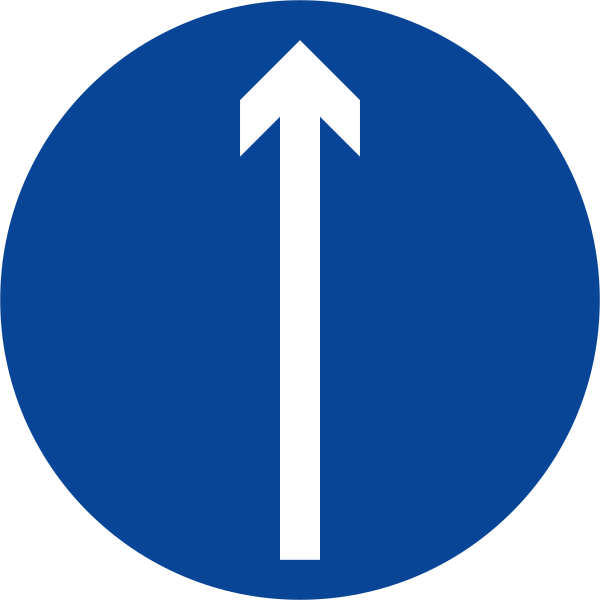
4. Driving straight ahead mandatory
This traffic sign indicates that driving straight ahead is mandatory. Traffic must continue straight ahead and may not turn left or right at the location to which the sign applies.
English • Traffic sign R2-1 • Ahead only. Continue straight ahead in the direction of the arrow. Turning is prohibited where this sign applies.
Filipino • R2-1 • Dumiretso lamang. Dumiretso sa direksiyong ipinapakita ng palaso. Bawal lumiko sa lugar na sakop ng karatula.
Sources
🔗 Commons.wikimedia.org
🔗 Fliphtml5.com • LTO • Road Traffic Signs & Pavement Markings • p. 6 (pampublikong kopya)
🔗 Lto.gov.ph • LTO • opisyal na materyal
🔗 Scribd.com • DPWH • R2-1 (pampublikong kopya)
SVG source: Government of the Philippines - Department of Public Works and Highways derivative work: Fry1989 eh? • Public domain • Original revision 2015-04-23. Wikimedia original unmodified.
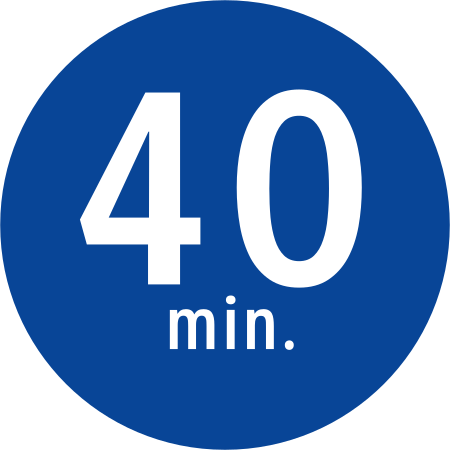
5. Start of a minimum speed
This traffic sign indicates the start of a minimum speed. Road users covered by the sign must travel at or above the indicated speed when conditions allow. Driving more slowly may still be necessary because of traffic, weather, road conditions or another safety-related reason.
English • Traffic sign R4-3 • Minimum speed: 40 km/h. This sign indicates a minimum speed of 40 km/h on the section of expressway it covers. Continue to adapt your driving to traffic and safety conditions.
Filipino • R4-3 • Pinakamababang bilis: 40 km/h. Ipinapakita ng karatulang ito ang 40 km/h na pinakamababang bilis sa bahaging sakop nito sa expressway. Iangkop pa rin ang pagmamaneho sa trapiko at kaligtasan.
Sources
🔗 Commons.wikimedia.org
🔗 Fliphtml5.com • LTO • Road Traffic Signs & Pavement Markings • p. 9 (pampublikong kopya)
🔗 Lto.gov.ph • LTO • opisyal na materyal
🔗 Scribd.com • DPWH • R4-3 (pampublikong kopya)
SVG source: Government of the Philippines derivative work: Fry1989 eh? • Public domain • Original revision 2018-10-14. Wikimedia original unmodified.
