

Kiss and ridePoland
 Traffic rules
 Poland
59. Kiss and ride
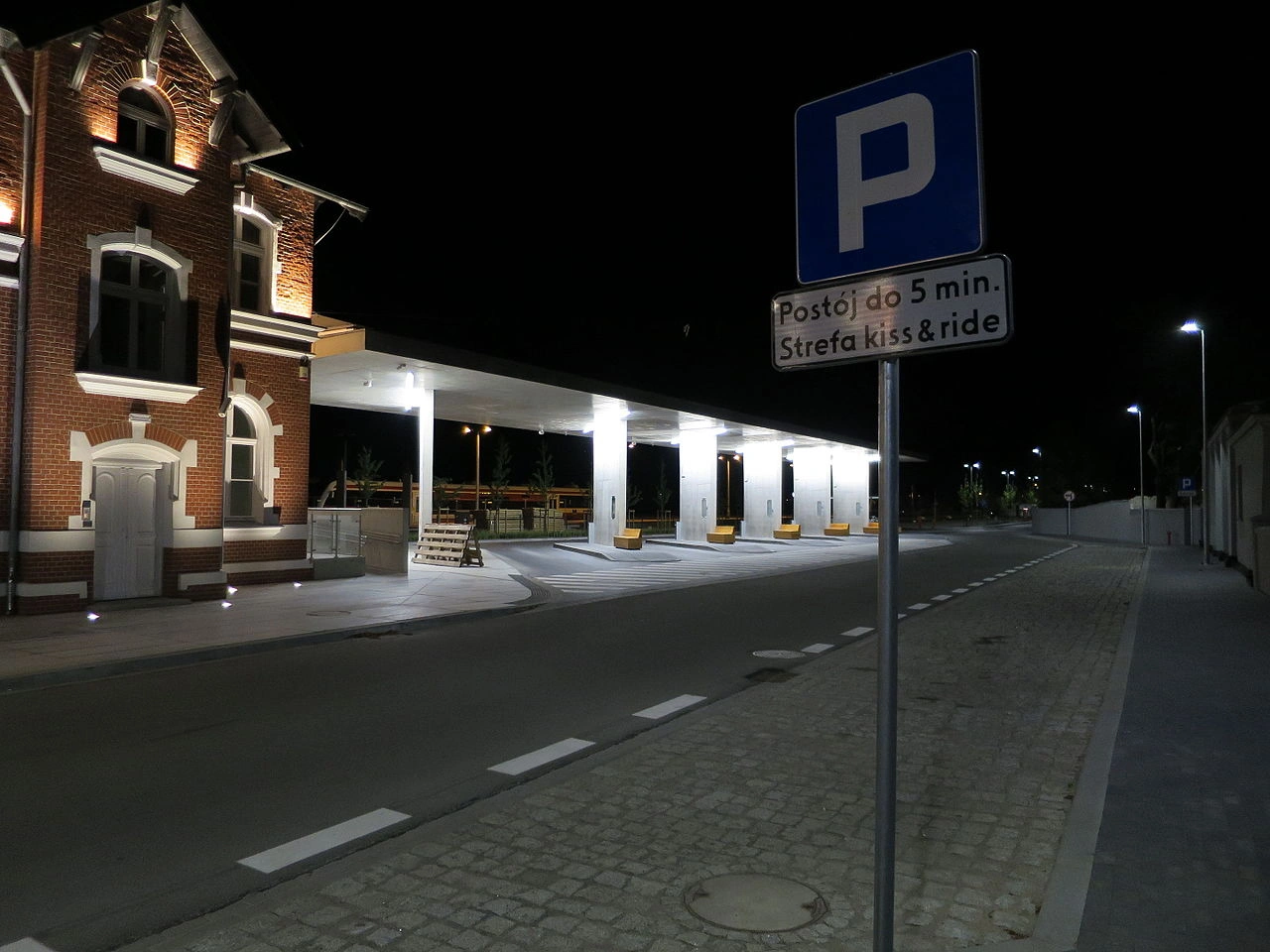
A Kiss and Ride area is a designated place where drivers may stop briefly to drop off or pick up passengers. These areas are commonly provided near schools, railway stations, airports and other busy destinations to allow passengers to enter or leave a vehicle without occupying ordinary parking spaces.
A Kiss and Ride area is intended for very short stops rather than waiting or parking. Drivers should remain only as long as necessary for passengers to get in or out and must follow any traffic signs, time limits, road markings or local regulations applying to the area.
Wikimedia.org • Travelarz • CC BY-SA
What is a Kiss and Ride area?
A Kiss and Ride area is a designated place where drivers can briefly stop to drop off or pick up passengers. It is intended to keep passenger transfers quick and reduce unnecessary parking or congestion near busy destinations.
Can you park in a Kiss and Ride area?
Normally no. Kiss and Ride areas are intended for immediate passenger drop-off or pick-up rather than ordinary parking. The exact legal restrictions depend on the signs and local regulations applying to the area.
Can you wait for someone in a Kiss and Ride area?
Generally, you should not remain in the area waiting for a passenger who is not ready to enter the vehicle. If waiting is necessary, use an ordinary parking or waiting area unless local signs specifically permit waiting.
How long may you stay in a Kiss and Ride area?
Only for the short period necessary for passengers to get in or out, unless signs specify a particular maximum time. Some locations establish an explicit time limit, while others simply require immediate drop-off or pick-up.
Should the driver remain in the vehicle?
Where possible, the driver should normally remain ready to move the vehicle immediately. Leaving the vehicle to accompany a passenger into a building may turn the stop into parking and can prevent other drivers from using the area efficiently.
Can you use a Kiss and Ride area to load luggage?
Passengers may normally take the luggage they need when entering or leaving the vehicle, provided this forms part of the immediate passenger transfer. Using the area for prolonged loading or unloading may not be permitted.
Where are Kiss and Ride areas commonly found?
They are frequently located near schools, railway stations, airports, hospitals and other busy destinations where many passengers are dropped off or collected within a short period.
Can taxis use a Kiss and Ride area?
This depends on the local signs and regulations. A general passenger drop-off area may be available to taxis, while some locations provide separate taxi ranks or reserve the Kiss and Ride area for particular users.
Can you leave your vehicle unattended in a Kiss and Ride area?
Normally this should be avoided. Kiss and Ride areas are designed for rapid passenger transfers, and leaving the vehicle unattended can obstruct other users. Specific local rules may expressly prohibit parking or unattended vehicles.
What should you do if your passenger is not ready?
Move to a suitable parking or waiting area and return when the passenger is ready to be collected. Remaining in the Kiss and Ride area unnecessarily can block the facility and contribute to congestion.


