

Private propertyPoland
 Traffic rules
 Poland
86. Private property
Private property is land, buildings or other property owned or controlled by a private person, company or organisation rather than by a public authority. Examples can include private homes, driveways, company grounds, private car parks and access roads.
Private property may be completely closed to the public or may allow access to customers, visitors or other authorised users. The traffic rules that apply depend not only on ownership but also on whether the area is open to public traffic and how it is legally classified.
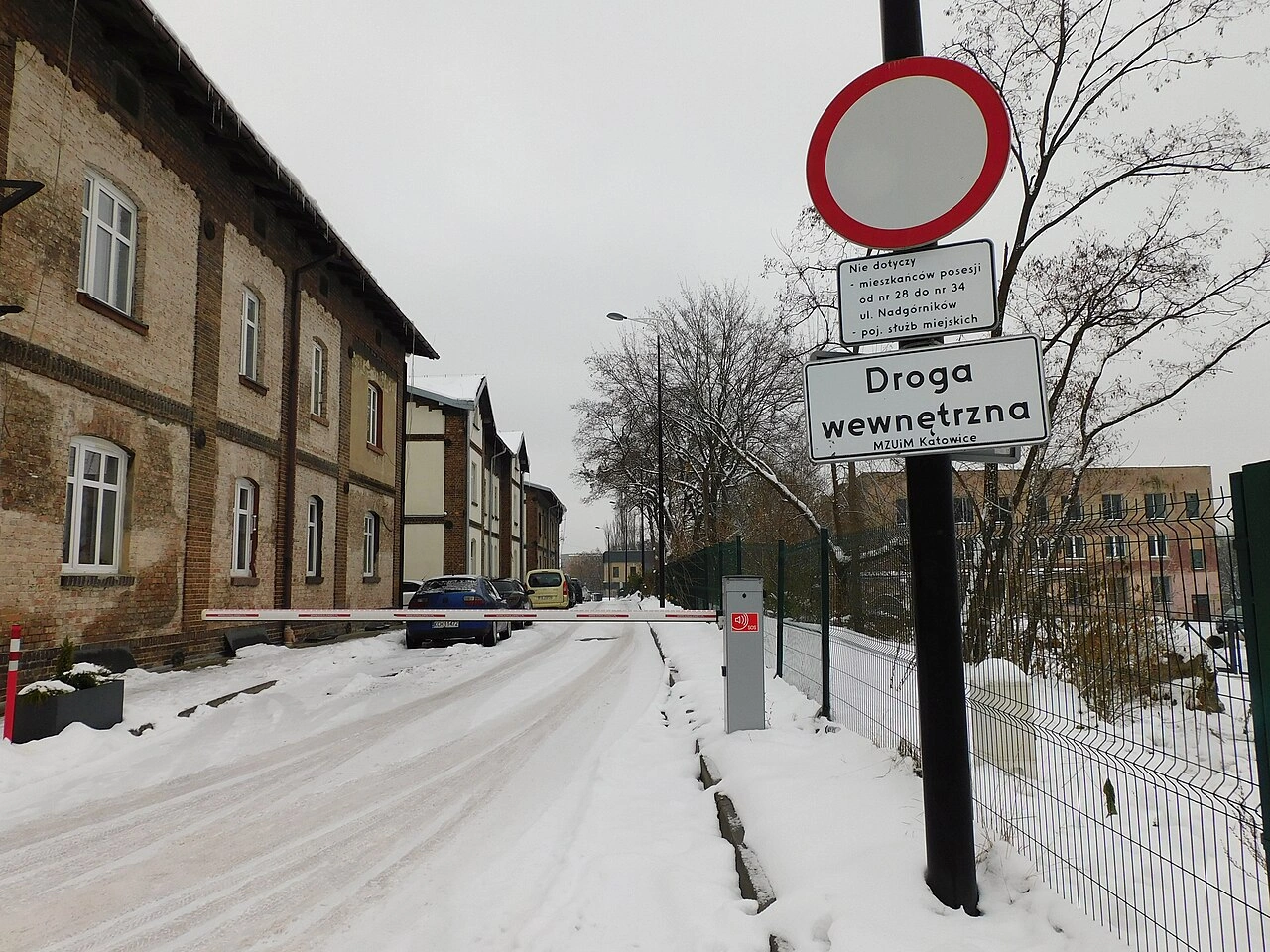
Wikimedia.org • Panek • CC BY-SA
What is private property?
Private property is land, buildings or other property owned or controlled by a private person, company or organisation.
What are examples of private property?
Examples include homes, driveways, private roads, company grounds, shopping-centre car parks and privately owned parking facilities.
Is private property always closed to the public?
No. Some private property is restricted to its owner or authorised users, while other privately owned areas are open to customers, visitors or the general public.
Is private property the same as a private road?
No. A private road is only one type of private property. Private property can also include buildings, car parks, yards and other land.
Can a privately owned road be open to public traffic?
Yes. Ownership and public accessibility are separate issues. A privately owned road can be made available to public traffic and may then be subject to traffic rules that normally apply to public roads.
Do road traffic rules apply on every private driveway?
Not necessarily. The applicable rules depend on the legal status and accessibility of the area. A driveway used only by its owner is different from a privately owned road that is open to general traffic.
Can the owner restrict access to private property?
Yes, subject to applicable law. Access may be limited using gates, barriers, permits, signs or other conditions established by the owner or operator.
Can a private car park be open to the public?
Yes. A privately owned supermarket, shopping-centre or commercial car park can be accessible to customers or the general public even though the land remains privately owned.
Can vehicles be removed from private property?
This depends on local law and the circumstances. Owners or authorised operators may have procedures for dealing with vehicles that are unlawfully parked or obstruct access.
What should you do when leaving private property and entering a road?
Enter carefully and follow the applicable rules for joining traffic from a driveway or adjoining property. In many countries, the driver entering the road must give way to road users already using it.
Can traffic signs be placed on private property?
Yes. Owners may use signs to indicate access, parking or safety conditions, although their legal status and enforceability can differ from official road signs installed on public roads.
Why is the distinction between private property and public road important?
Because traffic laws often depend on the legal status and accessibility of the place rather than simply on who owns the land.


