

Public roadPoland
 Traffic rules
 Poland
84. Public road
A public road is a road, street, path or other traffic area that is open for use by the public. It can contain different parts intended for motor vehicles, cyclists, pedestrians and other road users, such as carriageways, cycle paths, pavements, verges and parking areas.
Different parts of a public road may be reserved for particular categories of road users and can be subject to different traffic rules. Everyone using the public road must follow the applicable traffic signs, signals, road markings and local traffic regulations.
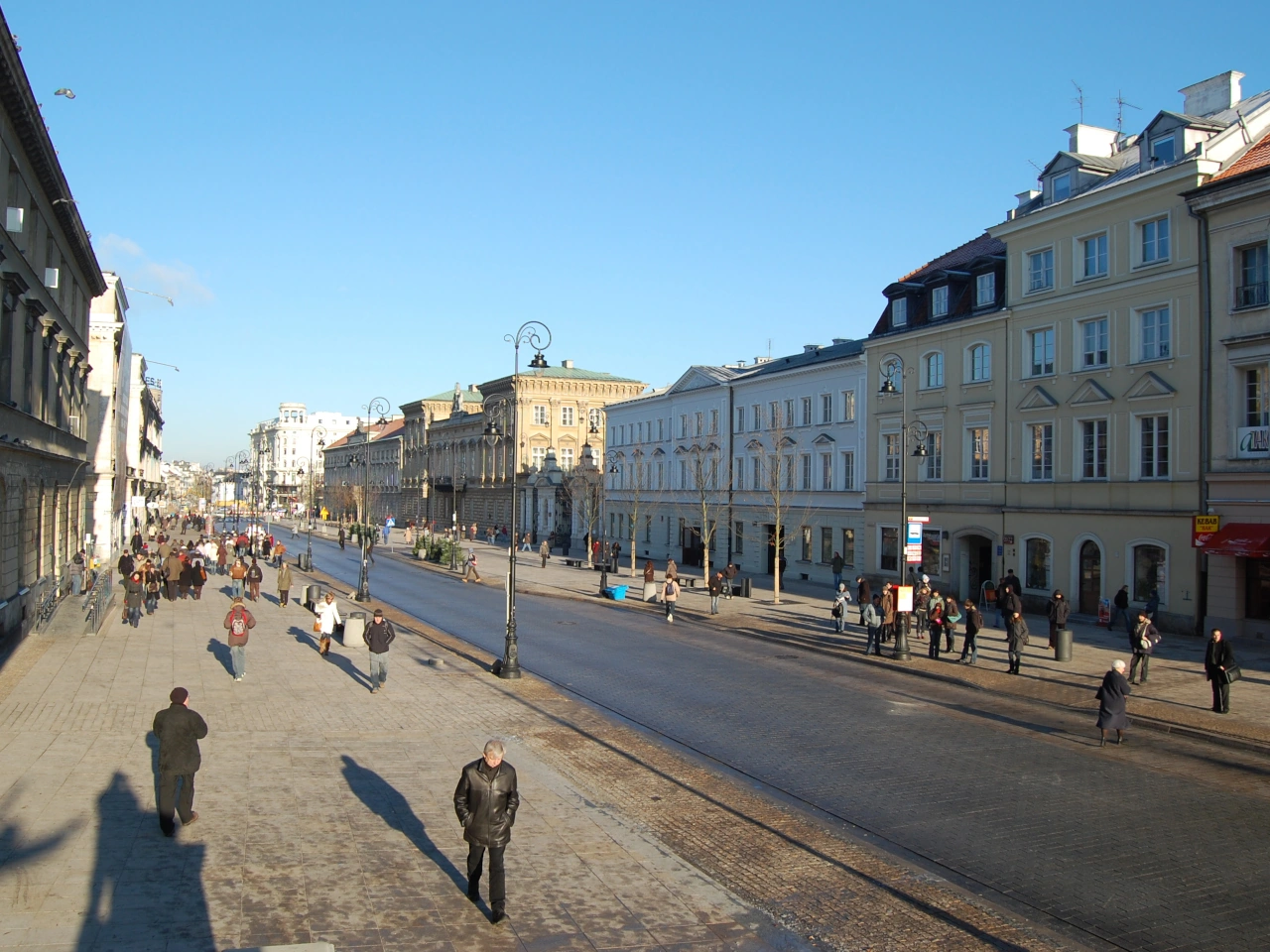
Wikimedia.org • sfu • CC BY-SA
What is a public road?
A public road is a road, street, path or other traffic area that is open for use by the public.
Is the public road the same as the carriageway?
No. The carriageway is normally only the part of the road intended primarily for vehicle traffic. The public road can also include cycle paths, pavements, verges and other areas.
Can a public road include a pavement?
Yes. Pavements or sidewalks intended for pedestrians can form part of the public road even though motor vehicles normally may not use them.
Can a cycle path be part of the public road?
Yes. A cycle path can form a separate part of the public road reserved for bicycles and other permitted road users.
Can a public road include a verge?
Yes. Verges beside the carriageway can form part of the public road and may be subject to specific rules concerning walking, cycling, stopping or parking.
Does a public road have to be owned by the government?
Not necessarily. In some legal systems, whether a road is considered public depends mainly on whether it is open to public traffic rather than simply on who owns the land.
Do traffic rules apply on every public road?
Yes, generally. Road users must comply with the traffic regulations applying to the road and to the particular part of it they are using.
Can parts of a public road be reserved for certain road users?
Yes. Cycle paths, pavements, bus lanes, pedestrian areas and other sections may be reserved for specified categories of road users.
Can access to a public road be restricted?
Yes. Traffic signs or regulations may prohibit or restrict particular vehicles or road users even though the road remains part of the public-road network.
Can a public road be temporarily closed?
Yes. Roads can be temporarily closed or restricted because of roadworks, emergencies, events or other traffic-management measures.
Does a path count as a public road?
It can. A path that is legally open to public traffic may form part of the public-road network even when only pedestrians, cyclists or other limited categories of road users can use it.
What should you do when entering a public road from private property?
Follow the local rules for entering traffic from a driveway, property or other private area. Drivers commonly have to give way to road users already using the public road.


