


Cycling routeSlovenia
 Traffic rules
 Slovenia
33. Cycling route
A cycling route is a planned or signposted route intended to guide cyclists between places or through a particular area. It may follow cycle paths, quiet streets, shared roads, greenways or other routes considered suitable for cycling.
A cycling route does not necessarily give cyclists exclusive use of the road or path and should not be confused with a cycle path or cycle lane. The traffic rules, priority rules and permitted road users depend on the individual roads and paths that form the route and on the local signs and regulations.
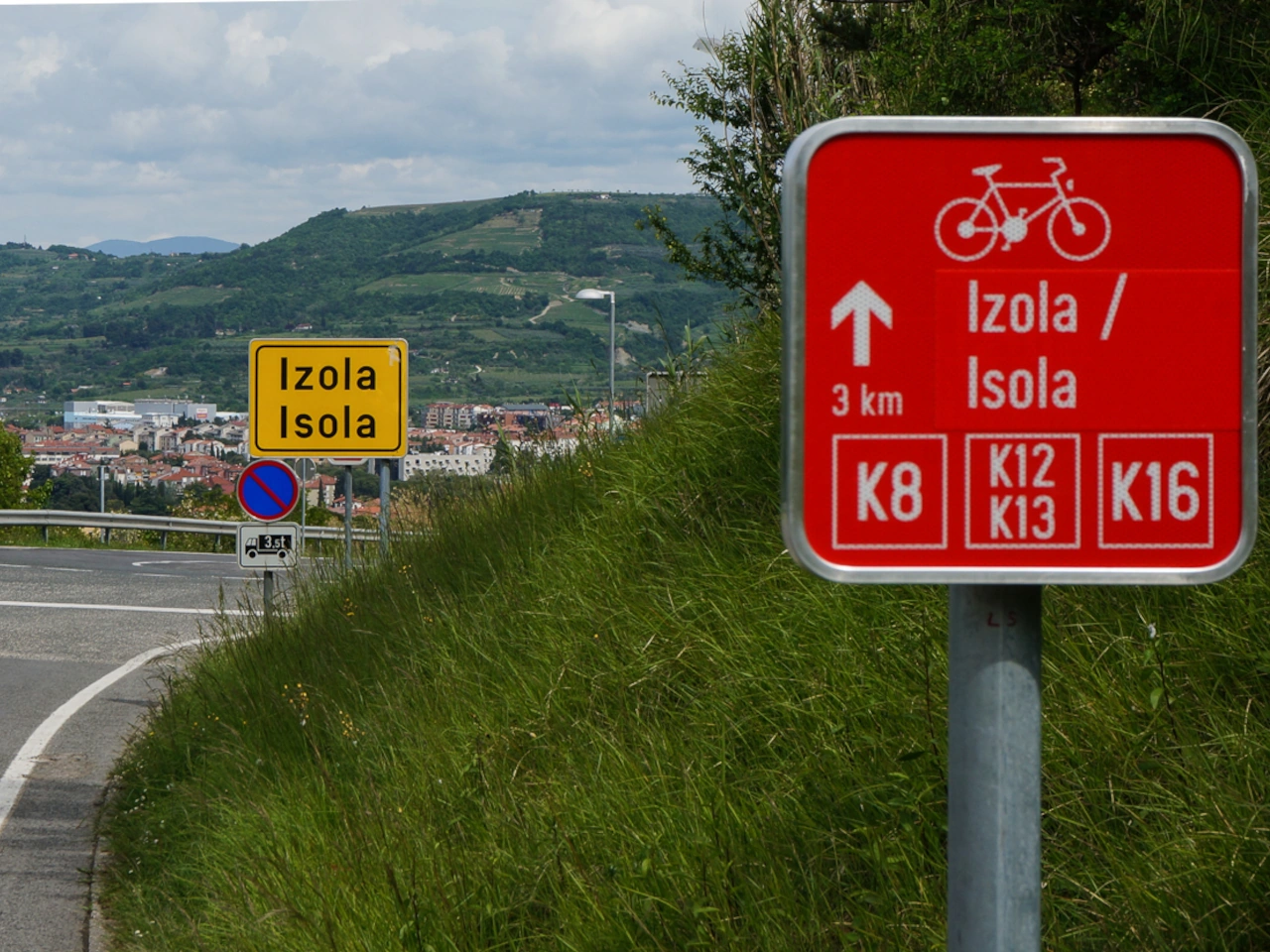
Wikimedia.org • Naturpuur • CC BY
How can you recognise a cycling route?
Cycling routes are commonly indicated by direction signs, bicycle symbols, route numbers, colours or destination markers. The design of the signs and route-numbering system varies between countries and regions.
Do cyclists have to follow a cycling route?
Usually not. A cycling-route sign normally provides direction or route guidance rather than imposing a mandatory direction. However, separate mandatory traffic signs may require cyclists to use a particular cycle path or direction.
Is a cycling route the same as a cycle path?
No. A cycle path is a specific part of a road or separate path intended for cyclists under local traffic rules. A cycling route is an entire itinerary and may include cycle paths, ordinary roads, cycle streets and other types of infrastructure.
Are cycling routes reserved for cyclists?
Not necessarily. Many cycling routes use roads and paths that are also open to motor vehicles, pedestrians or other road users. Access is determined by the signs and rules applying to each individual section.
Do cyclists have priority on a cycling route?
Not automatically. Being on a designated cycling route does not normally change the priority rules. Cyclists must continue to obey traffic lights, give-way and stop signs, crossing rules and other applicable traffic regulations.
Does a cycling route always have cycle paths?
No. A route may combine dedicated cycle infrastructure with quiet streets, shared roads, rural roads and other suitable connections. The quality and level of separation from motor traffic can therefore change along the route.
Can a cycling route cross busy roads?
Yes. A cycling route may cross or temporarily follow busy roads. At such locations, cyclists must follow the crossing, priority and traffic-light rules indicated by local signs and markings.
Can other vehicles use roads forming part of a cycling route?
Yes, unless access is restricted by separate traffic signs or regulations. A cycling-route designation by itself does not normally prohibit cars, motorcycles or other vehicles from using an otherwise public road.
Can cycling routes be recreational or long-distance routes?
Yes. Cycling routes may be designed for daily travel, tourism or recreation. Some form part of regional, national or international networks and may be identified by route names or numbers.
What should you do when a cycling-route sign conflicts with a traffic sign?
Always follow the official traffic signs, signals and road markings. A route marker provides navigation and does not override a prohibition, mandatory direction, road closure or other traffic regulation.


