


動物横断ベルギー
 交通ルール
交通ルール
 ベルギー
ベルギー
30. 動物横断
動物横断警戒は、野生動物、家畜、乗用動物が道路へ進入または横断する可能性がある場所を示します。動物は突然現れ、予測できない動きをし、暗闇や植生、悪天候では見えにくいことがあります。
運転者は減速し、道路両側を確認し、停止できるよう備える必要があります。この標識自体が動物に法的優先権を与えたり特定速度を定めたりするわけではありませんが、動物を驚かせたり危険にさらしたり衝突したりしないよう運転します。
Which Belgian signs warn of animals crossing?
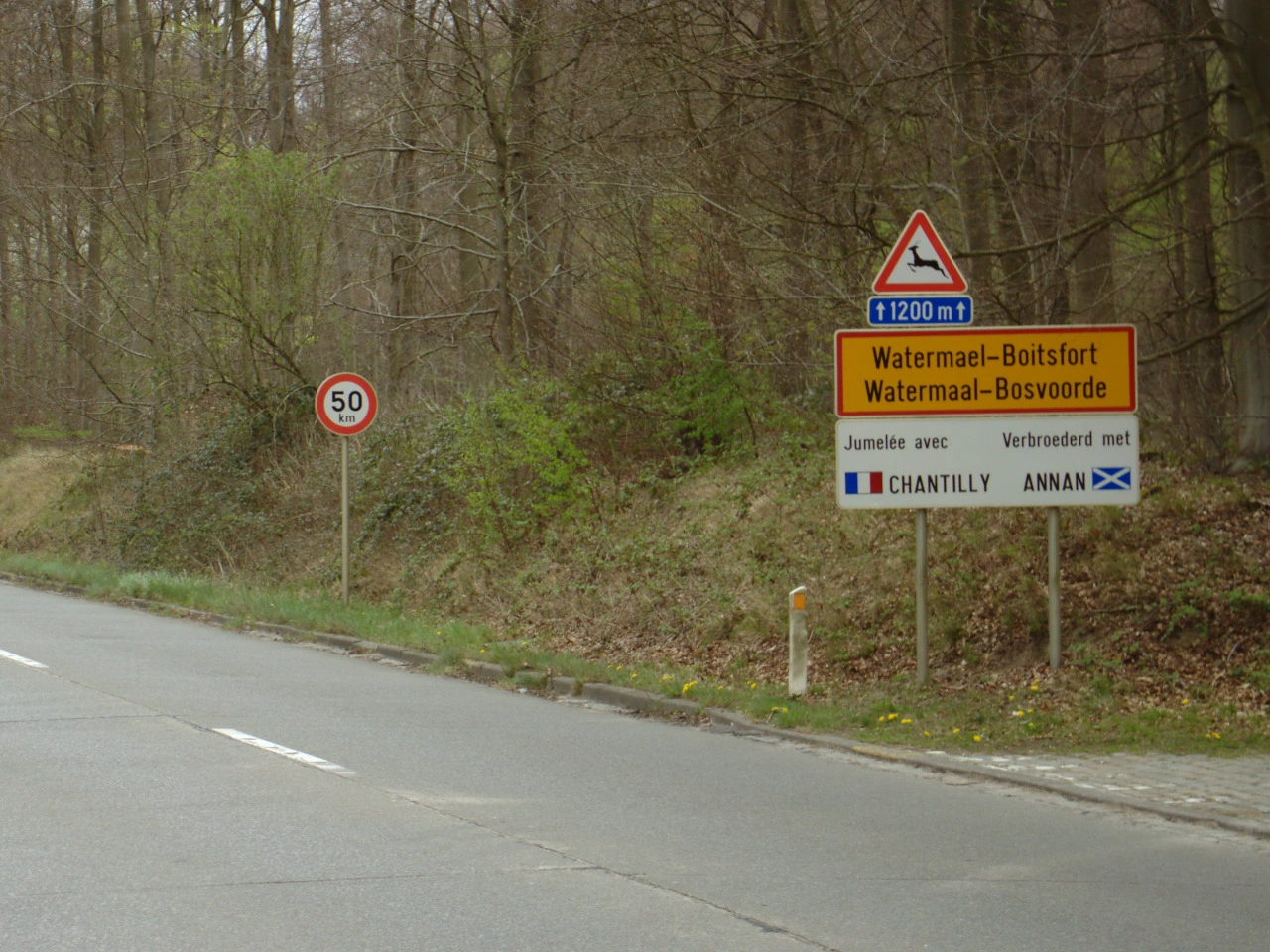
Under the current Belgian Highway Code, traffic sign A27 warns of large wild animals and traffic sign A29 warns of livestock crossing.
 家畜に注意。
Signal routier A29 • Traversée de bétail.
Verkeersbord A29 • Doortocht van vee.
 横断するシカに注意。
Signal routier A27 • Traversée de gros gibier.
Verkeersbord A27 • Doortocht van groot wild.
What does Belgian sign A27 mean?
Traffic sign A27 warns of a road section where large wild animals may cross.
Which animals does A27 commonly concern?
Belgian placement rules specifically refer to road sections regularly crossed by animals such as deer, roe deer and wild boar.
What does Belgian sign A29 mean?
Traffic sign A29 warns that livestock may cross or travel on the road.
Which animals may be considered livestock?
The sign may warn of controlled farm animals such as cattle, sheep, goats or other livestock being moved across or along the public road.
Does A27 or A29 impose a speed limit?
No. They are warning signs. The applicable regional, zonal, posted and vehicle-specific speed limits remain in force.
Must you drive below the speed limit?
Yes, when necessary. Belgian drivers must adapt their speed to visibility, traffic, road conditions and foreseeable hazards and remain able to stop before an obstruction.
Must you slow down when approaching livestock or horses?
Yes. A driver must slow down when approaching draft, load or riding animals or livestock on the public road.
When must you stop near controlled animals?
You must stop when the animals show signs of fear.
Does the same specific stopping rule apply to wild animals?
The express rule concerning frightened animals applies to draft, load and riding animals and livestock. A driver encountering wild animals must still reduce speed or stop whenever necessary to avoid danger.
Do animals have legal priority because A27 or A29 is displayed?
No. The signs warn of danger but do not create a separate priority rule. Drivers must nevertheless avoid striking, frightening or trapping animals already on the road.
Is the person leading livestock considered a driver?
Yes. A person riding, leading or supervising draft, load or riding animals or livestock is considered a driver under Belgian traffic law.
Must animals on the road be supervised?
Yes. Moving animals and livestock must have a driver, whether they travel individually or in a herd.
Must handlers remain near their animals?
Yes. Drivers and assistants must remain close enough to control the animals and prevent them from obstructing traffic or causing an accident.
Can additional handlers be required?
Yes. The person controlling draft, load or riding animals or livestock must be assisted by enough handlers when this is necessary for traffic safety.
May animals use the carriageway?
Animals being ridden, led or supervised generally follow the applicable rules for drivers. Outside built-up areas, certain animals or livestock may use the right-hand level verge when this does not endanger other road users.
May ridden or harnessed animals gallop inside a built-up area?
No. Under the current Belgian Highway Code, harnessed or ridden animals may not be allowed to gallop inside built-up areas.
Should you sound the horn near animals?
Avoid unnecessary horn use because it may frighten them. In a built-up area, the horn may generally be used only to provide a necessary warning to prevent an immediate accident.
How should you pass a horse in Belgium?
Reduce speed considerably, leave as much lateral space as reasonably possible and pass quietly. Stop if the horse shows signs of fear.
How should you approach a herd crossing the road?
Slow down early, stop when necessary and follow the handler’s directions. Do not attempt to drive through the herd or separate the animals.
May you overtake animals on the road?
Only when the manoeuvre can be completed safely, quietly and with sufficient space. The A27 or A29 sign itself does not create a specific overtaking prohibition.
May you stop or park near an animal-crossing sign?
The signs do not create an automatic stopping or parking prohibition. A vehicle may still not be stopped or parked where it creates danger, reduces visibility or obstructs animals and their handlers.
What should you do if a wild animal is standing on the road?
Reduce speed smoothly, stop at a safe distance and allow it to leave. Expect another animal to follow and avoid approaching or trying to move it yourself.
What should you do after colliding with an animal?
Stop safely, activate the hazard warning lights, protect the scene and check whether anyone is injured. Contact the police or emergency services when the animal, vehicle or debris creates danger.
Should you approach a wounded wild animal?
No. Keep your distance because an injured animal may react defensively. Let the police, a wildlife rescue centre or another competent service handle it.
What if the injured animal runs away?
Do not follow it into woodland or fields. Record the location and direction in which it travelled and provide that information to the police or wildlife professionals.
Does the absence of A27 or A29 mean animals will not cross?
No. Animals can appear on any road. Drivers must remain attentive and adapt their speed even where no warning sign is installed.
What changes on 1 June 2027?
Belgium’s new Code of the Public Road uses a single traffic sign A27 for animals crossing. The animal symbol displayed on the sign identifies the species concerned.
What happens to the separate livestock sign?
Under the new sign system, the adaptable A27 animal sign replaces the current distinction between A27 for large wild animals and A29 for livestock. Existing signs remain recognised during the applicable transitional period.


