

KurveBrüssel
 Verkehrsregeln
 Brüssel
32. Kurve
Eine Kurve ist ein Straßenabschnitt, der seine Richtung nach links oder rechts ändert. Eine enge, unerwartete oder schlecht einsehbare Kurve kann die Sicht auf Gegenverkehr, stehende Fahrzeuge, Fußgänger und andere Gefahren einschränken.
Fahrer sollten vor dem Einfahren in die Kurve die Geschwindigkeit verringern, im eigenen Fahrstreifen bleiben und gleichmäßig lenken, bremsen und beschleunigen. Warnzeichen können die Richtung der ersten Kurve oder eine Folge mehrerer Kurven anzeigen.
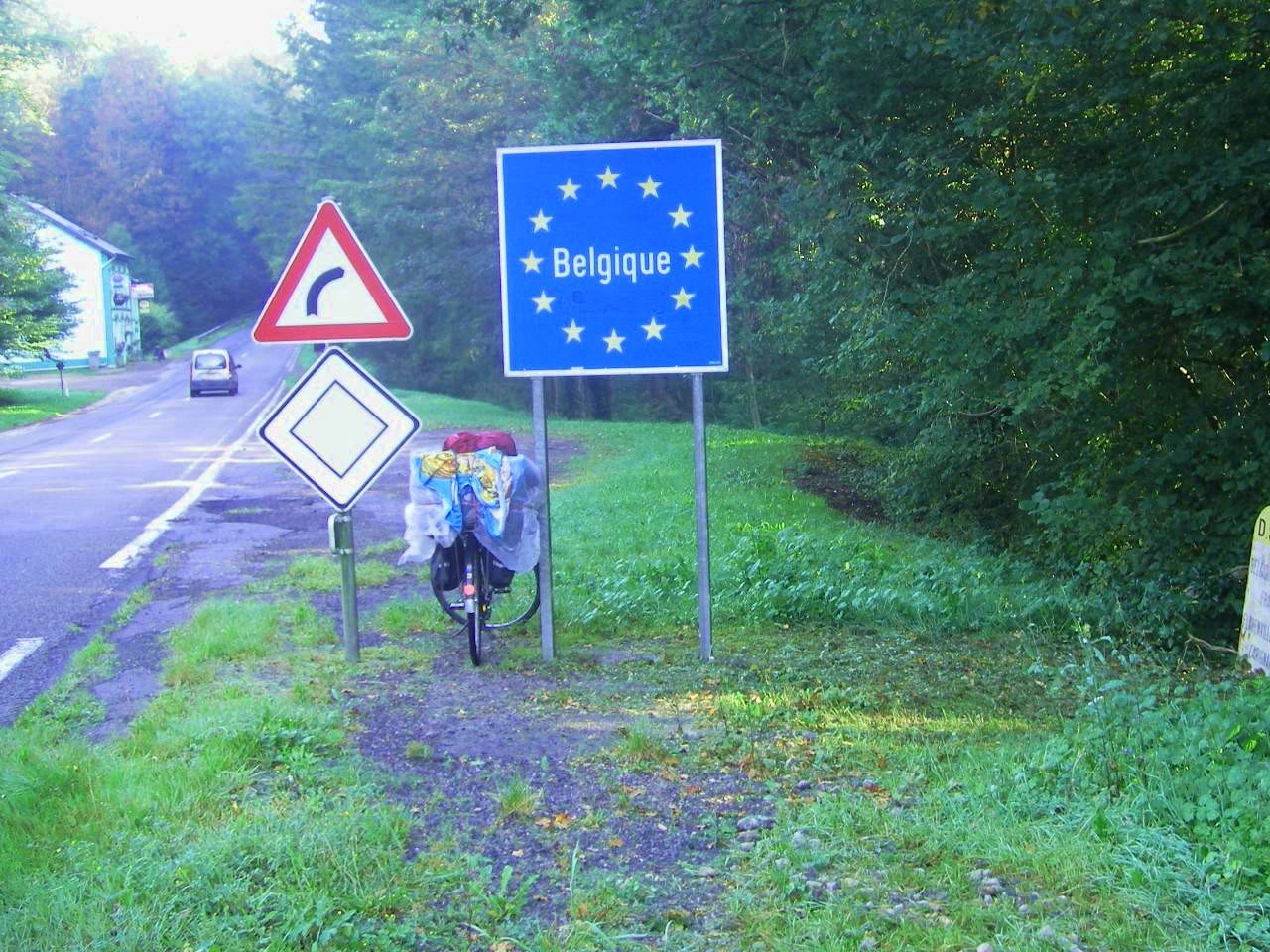
Which Belgian signs warn of dangerous curves?
Belgian traffic signs A1a, A1b, A1c and A1d warn of dangerous curves.
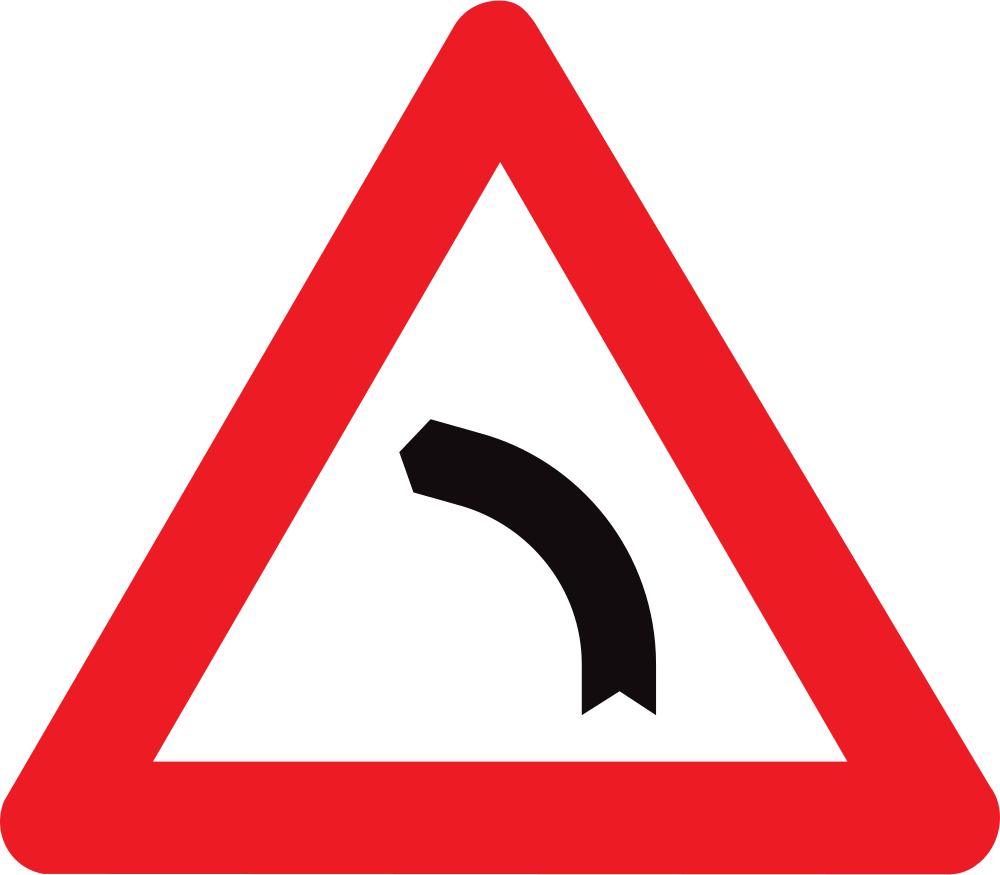 Warnung vor einer Linkskurve.
Signal routier A1a • Virage dangereux. Virage à gauche.
Verkeersbord A1a • Gevaarlijke bocht. Bocht naar links.
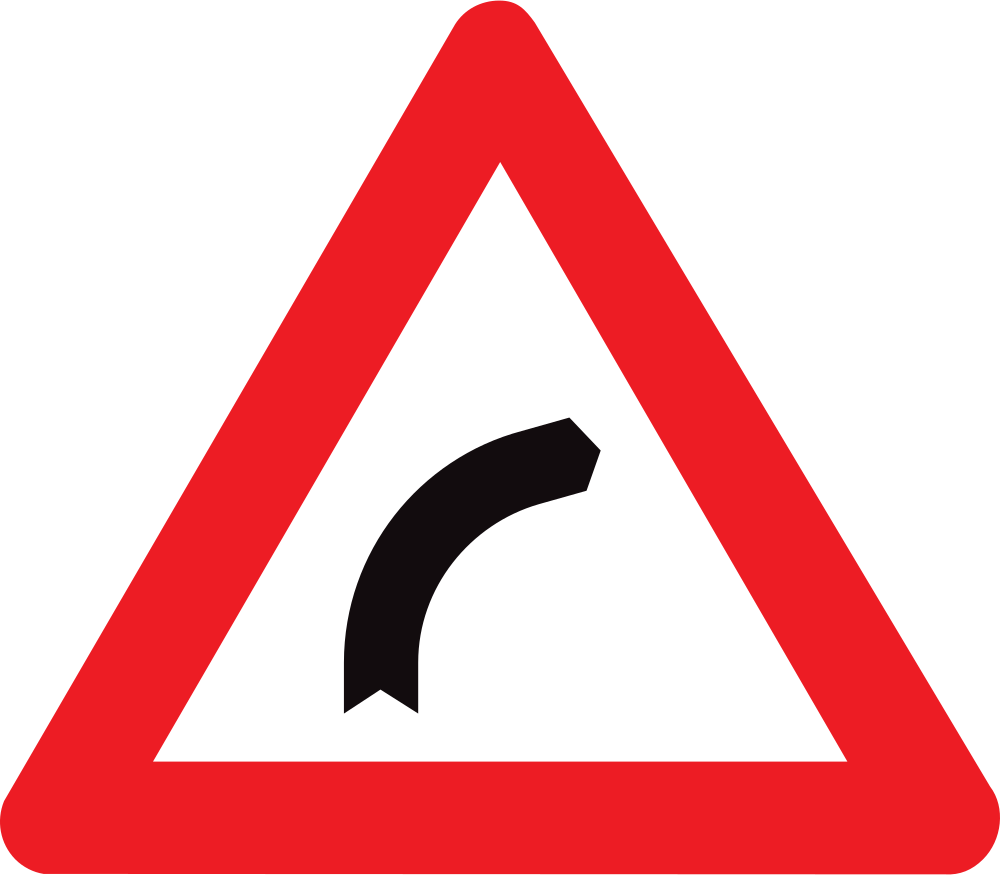 Warnung vor einer Rechtskurve.
Signal routier A1b • Virage dangereux. Virage à droite.
Verkeersbord A1b • Gevaarlijke bocht. Bocht naar rechts.
 Warnung vor Doppelkurve, zuerst links.
Signal routier A1c • Virage dangereux. Double virage ou succession de plus de deux virages, le premier à gauche.
Verkeersbord A1c • Gevaarlijke bocht. Dubbele bocht of opeenvolging van meer dan twee bochten, de eerste naar links.
 Warnung vor Doppelkurve, zuerst rechts.
Signal routier A1d • Virage dangereux. Double virage ou succession de plus de deux virages, le premier à droite.
Verkeersbord A1d • Gevaarlijke bocht. Dubbele bocht of opeenvolging van meer dan twee bochten, de eerste naar rechts.
What does Belgian sign A1a mean?
Traffic sign A1a warns of a dangerous curve to the left.
What does Belgian sign A1b mean?
Traffic sign A1b warns of a dangerous curve to the right.
What does Belgian sign A1c mean?
Traffic sign A1c warns of a double curve or a succession of more than two curves, with the first curve turning left.
What does Belgian sign A1d mean?
Traffic sign A1d warns of a double curve or a succession of more than two curves, with the first curve turning right.
Does the sign show every curve in the sequence?
No. A1c and A1d primarily indicate the direction of the first curve. The following curves may differ in shape, length and sharpness.
When may Belgian A1 signs be installed?
Belgian placement rules reserve them for curves that appear unexpectedly or must be negotiated with a significant reduction in speed.
How is a longer winding section indicated?
For successive curves, the warning sign is normally placed before the first curve. A supplementary panel may indicate the length of the winding road section.
Can a panel indicate the distance to the curve?
Yes. A supplementary distance panel may indicate approximately how far ahead the dangerous curve begins.
Does an A1 sign impose a speed limit?
No. The applicable regional, zonal, posted and vehicle-specific speed limits remain in force.
Must you sometimes drive below the speed limit?
Yes. Belgian drivers must adapt their speed to the road layout, visibility, weather, traffic and vehicle condition and remain able to stop before a foreseeable obstruction.
When should you brake for a Belgian curve?
Reduce speed before entering the curve. Use smooth steering and avoid harsh braking or acceleration while the vehicle is cornering.
Must you remain on the right side of the carriageway?
Yes. Drivers must normally remain as close as possible to the right-hand side and may not cut across the part intended for oncoming traffic.
May you cross a continuous centre line in a curve?
No. Drivers may not cross a continuous white line or drive to its left when it separates opposing directions of traffic.
May you overtake in a Belgian curve?
The specified left-side overtaking is prohibited in a curve when visibility is insufficient. An exception applies when the manoeuvre can be completed without crossing the continuous white line separating opposing traffic.
Does every A1 sign automatically prohibit overtaking?
No. The prohibition depends on insufficient visibility and the applicable overtaking and road-marking rules, not solely on the presence of the warning sign.
May you stop or park in a Belgian curve?
Stopping and parking on the carriageway are prohibited in a curve when visibility is insufficient.
May you park in a clearly visible gentle curve?
The curve-specific prohibition applies where visibility is insufficient. All other stopping and parking rules, signs and safety requirements must still be respected.
Does a curve sign change priority?
No. Drivers must continue to follow traffic lights, priority signs and the ordinary priority rules.
What if an intersection is located in or after the curve?
Reduce speed and observe the priority signs carefully. The bend may hide crossing traffic, cyclists or pedestrians until the driver is close to the intersection.
How should you pass a cyclist in a curve?
Wait until there is sufficient visibility and room to leave at least one metre inside a built-up area or 1.5 metres outside a built-up area. Do not cross a continuous line or enter the path of approaching traffic.
What should motorcyclists consider?
Motorcyclists must remain within their part of the carriageway and ensure that neither they nor their motorcycle enters the section intended for oncoming traffic while leaning through the curve.
What if the road is wet or icy?
Reduce speed before the curve, increase following distance and use the steering, brakes and accelerator smoothly. Painted markings and metal surfaces may be especially slippery.
Will the A1 signs remain under Belgium’s new road code?
Yes. From 1 June 2027, A1a and A1b continue to indicate dangerous left and right curves, while A1c and A1d continue to indicate double or successive curves according to the direction of the first curve.


