


No parkingNetherlands
 Traffic rules
 Netherlands
36. No parking
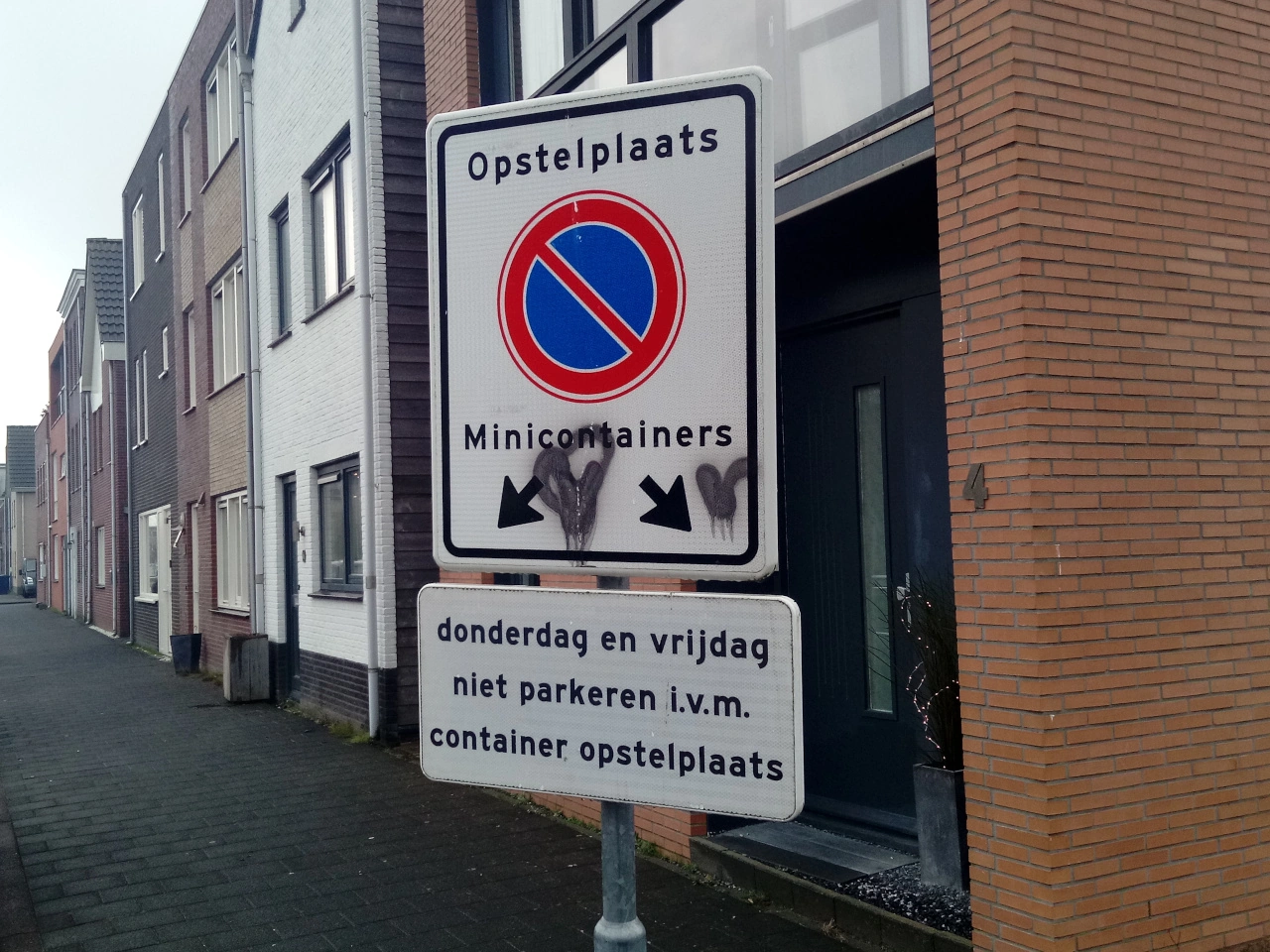
No parking indicates that vehicles may not be left parked at the location or along the section of road covered by the restriction. Depending on local law, a driver may still be allowed to stop briefly to pick up or drop off passengers or to load or unload goods, provided stopping itself is not prohibited.
A no-parking restriction may apply continuously or only during specified times, days, vehicle categories or sections of road. Its exact extent and exceptions are determined by the traffic sign, supplementary panels, road markings and local traffic regulations.
Wikimedia.org • Donald_Trung • CC BY-SA
What does a Dutch E1 sign mean?
Sign E1 means no parking (parkeerverbod). Sign E2 is a stronger no-stopping prohibition. Drivers must not treat E1 as identical to E2.
🔗 wetten.overheid.nl • Netherlands, RVV 1990, Articles 23–25 and signs E1/E2
 Parking prohibited.
English • Traffic sign E1 • No parking.
Nederlands • Verkeersbord E1 • Parkeerverbod.
 Parking and stopping prohibited.
English • Traffic sign E2 • No stopping.
Nederlands • Verkeersbord E2 • Verbod stil te staan.
What does a broken yellow kerbside line mean in the Netherlands?
Under the Dutch RVV, parking alongside a broken yellow line is prohibited; a continuous yellow line is associated with a stricter no-stopping rule. The lines do not mean the same thing.
🔗 wetten.overheid.nl • Netherlands, RVV 1990, Articles 23–25 and signs E1/E2
Can a disability parking card provide an exception to a Dutch no-parking sign?
Yes, for up to three hours at sign E1, using a parking disc, when parking directly relates to transporting the disabled person. This is not a general permission to stop anywhere.
Parking prohibited.
English • Traffic sign E1 • No parking.
Nederlands • Verkeersbord E1 • Parkeerverbod.


