


Rush-hour laneNetherlands
 Traffic rules
 Netherlands
47. Rush-hour lane
A rush-hour lane is an additional traffic lane that is opened temporarily when traffic is heavy to increase the capacity of a road. It is commonly found on motorways and may use part of the emergency shoulder or another lane that is normally closed to regular traffic.
Rush-hour lanes are usually controlled by dynamic signs or lane-control signals. Drivers may use the lane only when it is shown as open and must leave it when signs or signals indicate that it is closing or closed.
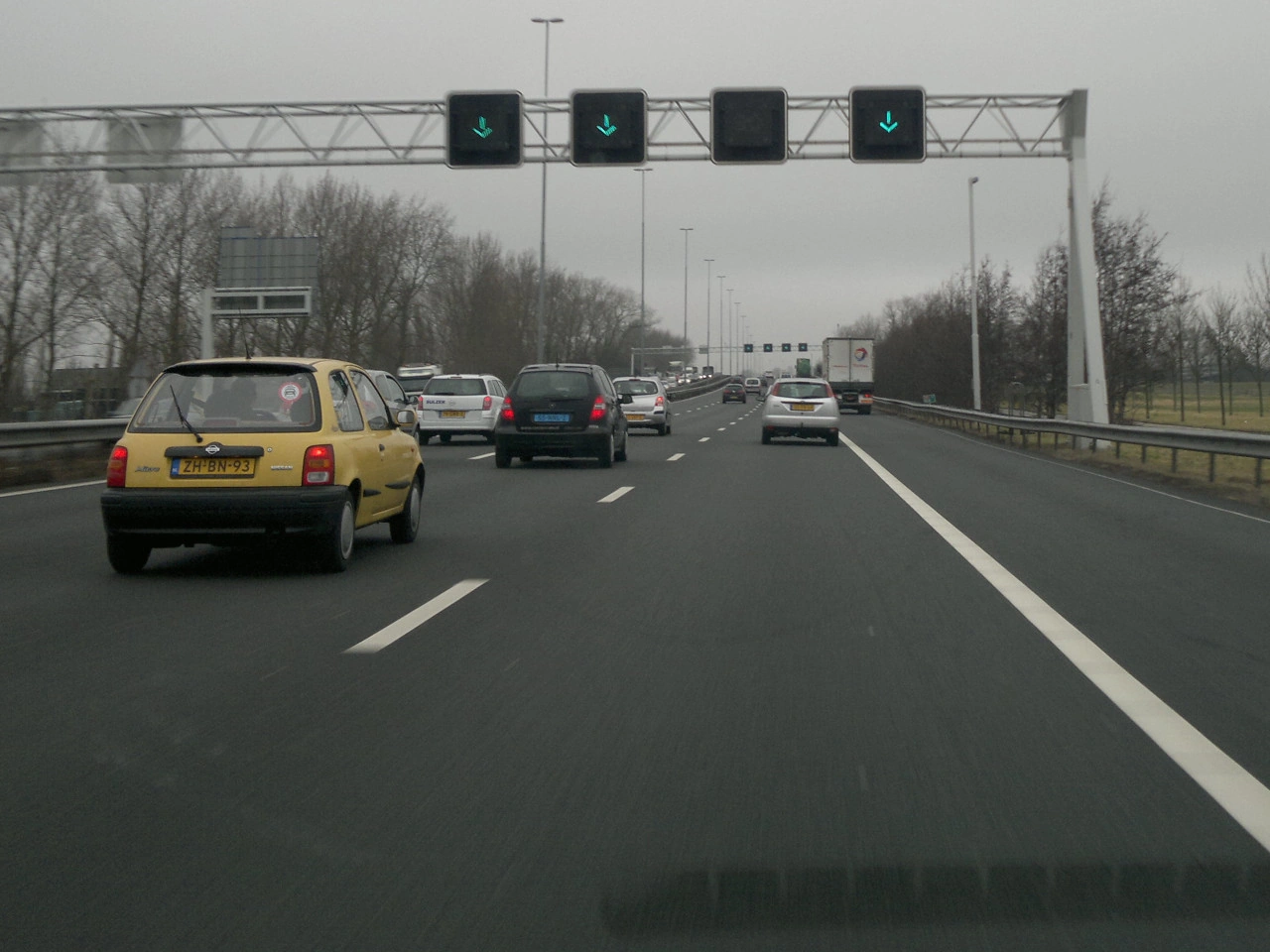
Wikimedia.org • Marco Raaphorst • CC BY
How can you recognise an open rush-hour lane in the Netherlands?
An open spitsstrook is shown by green downward arrows over the lane and supporting signs. A red cross means the lane is closed. When a right-hand shoulder is opened as a spitsstrook, drivers may use it as a normal lane according to the displayed controls.
Does a Dutch rush-hour lane have a different speed limit?
Yes, when an official spitsstrook is open, Rijkswaterstaat says the maximum is 100 km/h, or 80 km/h on certain sections. Follow the specific signs and matrix displays; do not assume the ordinary night-time motorway limit applies.
Why might a Dutch rush-hour lane remain closed during a traffic jam?
Rijkswaterstaat may keep it closed because of a stranded vehicle, collision, poor camera visibility, weather or a technical fault. A queue does not itself authorise drivers to enter a closed lane.


