Carril busReino Unido

Aprende normas de tráfico con explicaciones claras y ejemplos visuales en nuestro libro ilustrado, diseñado para que estudiar sea sencillo y ameno.


12. Carril bus

Un carril bus es un carril de tráfico reservado principalmente para autobuses y, según las normas locales, posiblemente para otros vehículos autorizados como taxis, bicicletas, motocicletas o vehículos con alta ocupación.

Otros conductores solo pueden utilizar un carril bus cuando las señales, marcas viales y horarios lo permitan. Los conductores también deben tener cuidado al cruzar un carril bus para girar, acceder a una propiedad o estacionar cuando esté permitido.
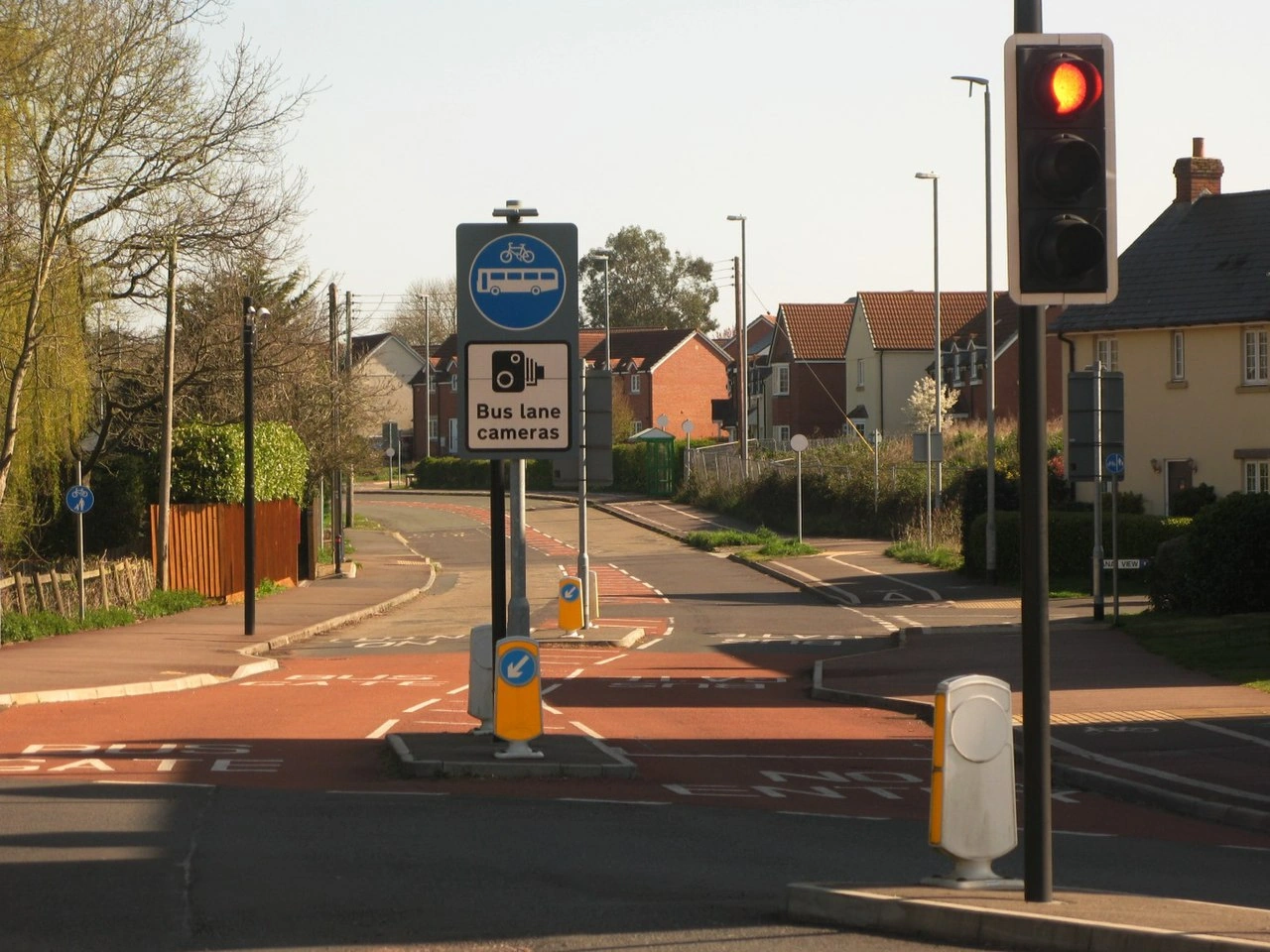
Carril bus
What is a bus lane?

A bus lane is a lane reserved primarily for buses or other authorised public-transport vehicles. Its purpose is to help public transport move efficiently through traffic.

How can you recognise a bus lane?

A bus lane may be identified by a bus-lane sign, lane markings, coloured surfacing or the word BUS painted on the road. The markings and colours differ between countries.

Is a bus lane the same as a bus-only road?

No. A bus lane forms part of a wider road arrangement, while a bus-only road may reserve the entire road for buses and other authorised users.

Who may use a bus lane?

Buses operating authorised or scheduled services may normally use it. Other vehicles may enter only when the traffic signs or local regulations expressly permit them.

May taxis use a bus lane?

This depends on local law and the signs displayed. Some bus lanes permit licensed taxis, while others are reserved exclusively for buses.

May cyclists use a bus lane?

Cyclists may use a bus lane where signs or local law permit them. They should remain alert for large vehicles, stops, passengers and buses moving towards the kerb.

May motorcycles use a bus lane?

Only where motorcycles are expressly permitted. Permission may apply to all motorcycles, particular times or specific bus lanes.

Can a bus lane operate only at certain times?

Yes. A sign may show days or hours during which the restriction applies. Outside those periods, the lane may become available to general traffic, subject to the local rules.

Does a bus lane have a special speed limit?

Not necessarily. The normal road or posted speed limit generally applies unless a separate restriction is displayed.

May ordinary vehicles enter a bus lane to turn?

Some countries allow drivers to enter a bus lane shortly before a junction to make a turn. Drivers must follow the lane markings and enter only at the point where local rules permit it.

May you cross a bus lane?

Usually, where necessary and permitted. A driver may need to cross it at an intersection or to enter or leave a property, parking area or side road. The driver must check carefully for buses, cyclists and other authorised users.

May you use a bus lane to pass congestion?

No. An unauthorised driver may not use the bus lane simply to overtake a queue or reach the front of traffic.

May you stop or park in a bus lane?

Stopping and parking are normally prohibited unless a sign or marked bay expressly permits them. A stopped vehicle can obstruct buses and force authorised lane users into general traffic.

Do buses always have priority when leaving a stop?

Not universally. Some countries require drivers to allow a signalling bus to leave a stop, particularly inside built-up areas. Elsewhere, ordinary merging rules apply.

Does a bus lane change priority at an intersection?

No. Traffic lights, priority signs and the ordinary intersection rules continue to apply unless special public-transport signals indicate otherwise.

Can a bus lane run against the direction of general traffic?

Yes. A contraflow bus lane may carry authorised vehicles in the opposite direction from nearby general traffic. Drivers and pedestrians should check both directions before crossing.

What do special bus traffic lights mean?

Some countries use separate lights or symbols for public-transport vehicles. Only drivers authorised to use that lane should follow those signals, while other traffic follows its own lights.

What should you check before crossing a bus lane?

Check mirrors and blind spots and look for buses, taxis, cyclists, motorcycles or other authorised vehicles. Their lane may be moving even when general traffic is stationary.

How does a bus lane end?

It may end at a sign, a change in road markings, an intersection or the end of its stated operating period. Drivers should follow the lane arrows and merge safely where required.

1 Reino Unido 2 Autopista 3 Límite de velocidad 4 Carril bici 5 Advertencia de peatones 6 Puente 7 Resalto 8 Carretera de peaje 9 Sentido único 10 Muelle 11 Pendiente 12 Carril bus 13 Parada de autobús 14 Calle sin salida 15 Señal de STOP 16 Ceda el paso 17 Glorieta 18 Estrechamiento de calzada 19 Prioridad sobre el tráfico en sentido contrario 20 Ceda el paso al tráfico en sentido contrario 21 Paso de peatones 22 Paso a nivel 23 Dirección obligatoria 24 Prohibición de giro 25 Zona escolar 26 Cruce de animales 27 Calzada deslizante 28 Desprendimiento de rocas 29 Aeronaves 30 Curva 31 Panel direccional 32 Circulación en sentido contrario 33 Obras 34 Límite de altura 35 Señal de control de velocidad 36 Barreras selectivas 37 Zona de bajas emisiones 38 Prioridad en la próxima intersección 39 Semáforos 40 Advertencia de semáforos 41 Marcas viales 42 Carril para vehículos lentos 43 Zona avanzada para bicicletas 44 Circulación por la izquierda 45 Indicador de velocidad 46 Permiso de conducir 47 Ruta ciclista 48 Estacionamiento 49 Prohibido estacionar 50 Aparcamiento disuasorio 51 Estacionamiento para personas con discapacidad 52 Marcha atrás 53 Desvío 54 Estado de la calzada 55 Berma 56 Calmado del tráfico 57 Equitación 58 Salida de emergencia 59 Límite de población 60 Atracción turística 61 Matrícula 62 Estación de carga 63 Peligros 64 Depresión 65 Carril de tranvía 66 Ciclista 67 Autobús 68 Policía 69 Ambulancia 70 Calzada 71 Calle 72 Bache 73 Carretera privada 74 Camino 75 Partículas 76 Contaminación del aire 77 Hora punta 78 Código de circulación 79 Doble sentido 80 Parada de tranvía 81 Canaleta de la calle 82 Bicicleta de carga 83 Vehículo forestal 84 Vehículo de construcción 85 Camión articulado 86 Trolebús 87 Speed pedelec 88 Vehículo de reparto 89 Motor al ralentí 90 Grúa 91 Tracción a las cuatro ruedas 92 Pasajero 93 Bicicleta 94 Equipamiento de motocicleta 95 Tranvía 96 Vía férrea 97 Transporte público 98 Caravana 99 Remolque 100 Enganche de remolque ...