

Estrechamiento de calzadaReino Unido
 Normas de tráfico
 Reino Unido
18. Estrechamiento de calzada
Un estrechamiento de calzada es un tramo donde la anchura disponible para el tráfico disminuye. Puede deberse a obras, un puente, un obstáculo, una reducción del número de carriles o al diseño de la carretera.
Los conductores deben reducir la velocidad, observar las señales de prioridad y estar preparados para ceder el paso cuando no haya espacio suficiente para que pasen vehículos en ambos sentidos. También deben dejar espacio adicional a ciclistas y vehículos anchos.
What is a road narrowing?
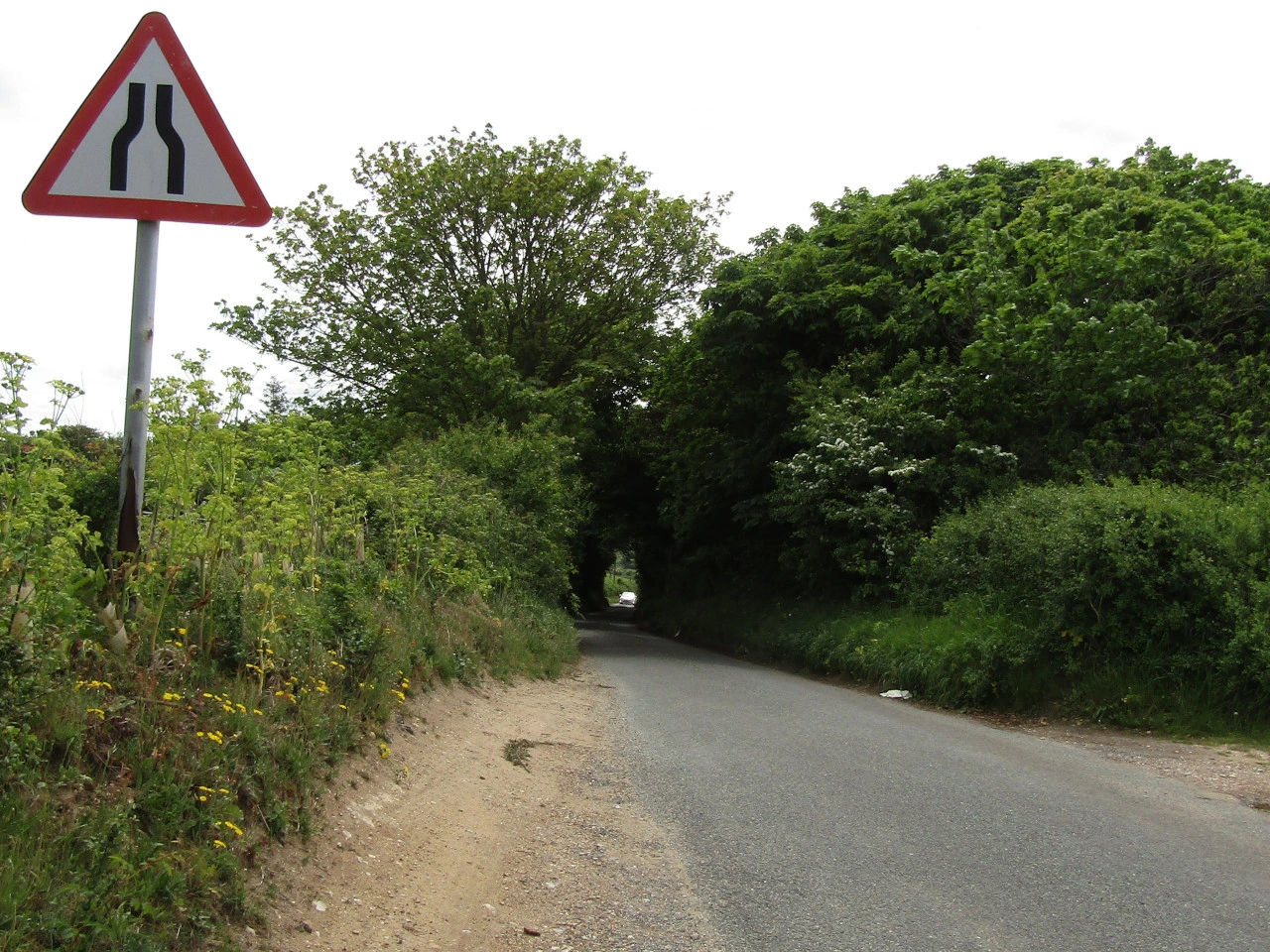
A road narrowing is a section where the usable width of the road becomes smaller. Traffic may have less space to pass, merge or travel beside other road users.
How can you recognise a road narrowing?
It may be indicated by a triangular warning sign showing the road edges moving closer together. The symbol may show narrowing on both sides, the left side or the right side.
What can cause a road to narrow?
A road may narrow because of a bridge, tunnel, barrier, traffic-calming measure, roadworks, parked vehicles, landslide, damaged road edge or reduction in the number of lanes.
Does a narrowing sign impose a speed limit?
No. It normally warns of danger rather than setting a numerical speed limit. Drivers must still reduce speed when necessary to pass safely.
Does a narrowing sign determine who has priority?
Not by itself. Priority may be established by separate signs, signals or local rules. Without them, drivers should approach cautiously and cooperate.
Who has priority when the obstruction is on one side?
In many countries, the driver whose side is obstructed must give way to approaching traffic. The precise rule depends on local law and any priority signs displayed.
What if the road narrows equally from both sides?
Neither direction necessarily has automatic priority. Drivers should reduce speed, assess who can pass safely and avoid entering when doing so would block approaching traffic.
What do priority signs at a narrow section mean?
One sign may require you to give way to oncoming traffic, while the corresponding sign may indicate that you have priority. Drivers must still avoid entering when the passage is already occupied or blocked.
Does having priority mean you must continue?
No. Priority is not an obligation to proceed. Slow down or stop when another vehicle is already in the narrow section or when continuing would create danger.
What should you do when another vehicle is already in the narrowing?
Allow it enough room to leave the narrow section. Do not enter if the available width is insufficient for both vehicles to pass safely.
How should you approach a road narrowing?
Check mirrors, reduce speed smoothly and observe oncoming traffic, cyclists, pedestrians and vehicles beside you. Be prepared to stop or merge.
Must you use an indicator when the road narrows?
Use an indicator when you must change lanes or move laterally. Merely following a lane that bends with the road may not require a signal under local law.
What should you do when your lane ends?
Check the adjacent lane, signal and merge safely according to the local merging rules. Do not force another driver to brake or leave the road.
What is zipper merging?
Zipper merging means that vehicles from an ending or blocked lane merge alternately with vehicles in the continuing lane, usually immediately before the narrowing during congestion.
Should you merge early during heavy congestion?
Where zipper merging applies, continue using both lanes and merge alternately near the narrowing. In free-flowing traffic, change lanes safely when a suitable gap is available.
May you overtake near a road narrowing?
A narrowing sign does not always prohibit overtaking, but overtaking should be avoided when there is insufficient width, visibility or distance to complete the manoeuvre safely.
How should you pass cyclists at a narrowing?
Wait behind the cyclist when the required passing distance cannot be maintained. Do not squeeze past or force the cyclist towards a kerb, barrier or damaged road edge.
How should large vehicles use a narrow section?
Large vehicles may need additional width and may cross lane or centre markings where legally permitted. Other drivers should leave sufficient space and avoid passing alongside them in the narrowing.
May pedestrians be present at a road narrowing?
Yes. Pavements or verges may also become narrow or blocked. Drivers should expect pedestrians or wheelchair users to enter the carriageway to pass an obstruction.
May you stop or park in a road narrowing?
Only where it is permitted and enough width remains for traffic to pass safely. Never stop or park where the vehicle would create danger, obstruct visibility or prevent other vehicles from passing.
What should you do at a temporary roadworks narrowing?
Follow temporary signs, signals, barriers and instructions from authorised workers. Temporary traffic controls may replace the normal priority or lane arrangement.
What should you do in poor visibility?
Reduce speed further, increase the following distance and be prepared for a stopped vehicle beyond the narrowing. Use the required lights without dazzling approaching road users.


