PendienteSuecia

Aprende normas de tráfico con explicaciones claras y ejemplos visuales en nuestro libro ilustrado, diseñado para que estudiar sea sencillo y ameno.


10. Pendiente

Una pendiente es un tramo de carretera que asciende o desciende de forma notable. Las pendientes pronunciadas pueden afectar la aceleración, la frenada, la selección de marchas y la distancia necesaria para detener el vehículo.

En descensos largos o pronunciados, los conductores deben seleccionar una marcha adecuada y evitar depender continuamente de los frenos de servicio, ya que pueden sobrecalentarse. En carreteras estrechas de montaña pueden aplicarse normas especiales de prioridad entre vehículos que ascienden y descienden.
Pendiente
What is a road slope?

A road slope is a section of road that rises or descends over a particular distance. It may also be called a gradient, incline or decline.

How can you recognise a steep slope?

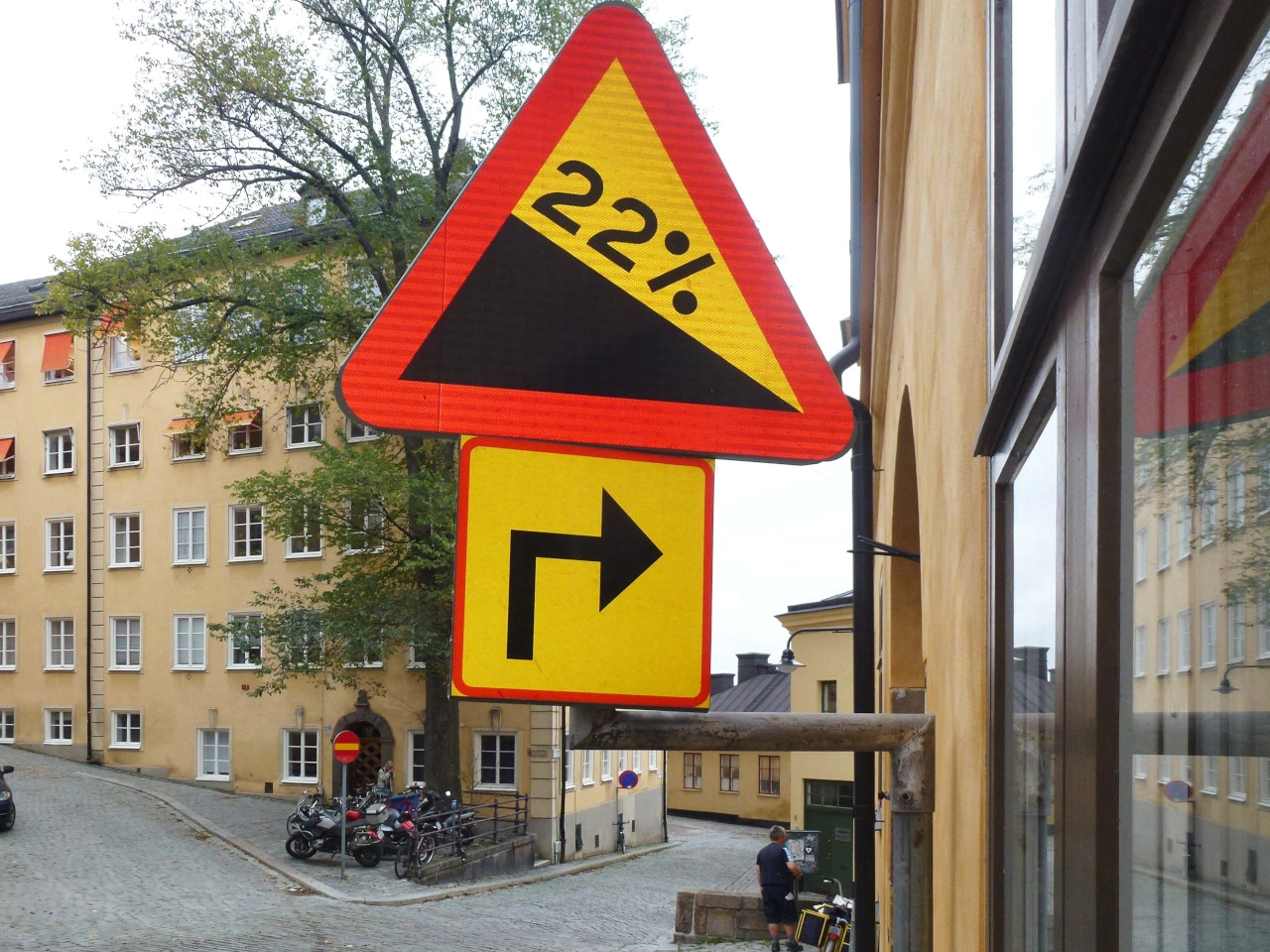
A steep slope may be indicated by a warning sign showing an ascending or descending road. The sign may also display the gradient as a percentage.

What does a gradient of 10% mean?

A gradient of 10% means that the road rises or falls approximately 10 metres for every 100 metres travelled horizontally. It does not mean that the road is inclined at 10 degrees.

What is the difference between an ascent and a descent?

An ascent rises in the direction of travel, while a descent falls in the direction of travel. The same section of road is therefore an ascent in one direction and a descent in the other.

Does a slope warning sign impose a speed limit?

Not normally. It warns of a hazard rather than setting a numerical limit. Drivers must still respect the applicable speed limit and reduce their speed further when necessary.

How should you approach a steep descent?

Reduce speed before the descent, select a suitable gear and maintain a safe following distance. Avoid allowing the vehicle to gain excessive speed.

Which gear should you use when descending?

Use a gear that provides sufficient engine braking and helps keep the vehicle at a controlled speed. The appropriate gear depends on the vehicle, gradient and road conditions.

Should you coast downhill in neutral?

No. Coasting reduces engine braking and may make it harder to control the vehicle’s speed. Keep the transmission engaged while descending.

Why should you avoid continuous heavy braking?

Continuous braking on a long descent can cause the brakes to become excessively hot and lose effectiveness. Select a suitable gear, control speed early and use the brakes progressively when needed.

What is brake fade?

Brake fade is a reduction in braking performance caused by excessive heat. It can occur when the brakes are used continuously during a long or steep descent.

How should you drive uphill?

Select a suitable gear before the engine begins to struggle and maintain a steady speed where possible. Be prepared for heavy or low-powered vehicles travelling slowly ahead.

May a vehicle lose speed on a steep ascent?

Yes. Heavy vehicles, vehicles towing trailers and low-powered vehicles may slow considerably. Other drivers should maintain a safe distance and avoid impatient manoeuvres.

May you overtake near the top of a slope?

Do not overtake when the crest prevents you from seeing far enough ahead. Overtaking near a hilltop may also be expressly prohibited by local law, signs or road markings.

Why is visibility limited near the crest of a slope?

The road surface itself may hide approaching traffic, stopped vehicles, pedestrians or other hazards beyond the crest.

Who has priority on a narrow slope?

Some countries give priority to uphill traffic, while others rely on signs or ordinary obstruction rules. Drivers must follow local law and cooperate when passing is difficult.

How should you meet another vehicle on a narrow slope?

Reduce speed and use a passing place where available. The driver who can reverse or move aside more safely should cooperate, subject to any applicable priority signs or local rules.

How do rain, snow or ice affect a slope?

They reduce traction and make acceleration, braking and steering more difficult. Increase the following distance, use smooth controls and reduce speed before entering the slope.

Why are cyclists vulnerable on slopes?

Cyclists may travel slowly and move less steadily when climbing, while they may reach high speeds when descending. Drivers should leave sufficient space and avoid overtaking without a clear view.

How should you park on a slope?

Use the parking brake, select the appropriate gear or parking position and follow local rules concerning wheel position. Make sure the vehicle cannot roll into traffic.

Can a slope affect towing?

Yes. A trailer increases the load on the engine and brakes and may affect stability. Drivers should use a suitable gear, maintain additional distance and avoid excessive speed.

1 Suecia 2 Autopista 3 Zona residencial 4 Zona urbana 5 Límite de velocidad 6 Carril bici 7 Vía compartida 8 Carretera de peaje 9 Muelle 10 Pendiente 11 Parada de autobús 12 Señal de STOP 13 Ceda el paso 14 Glorieta 15 Paso de peatones 16 Paso a nivel 17 Cruce de animales 18 Obras 19 Límite de altura 20 Barreras selectivas 21 Semáforos 22 Semáforos peatonales 23 Espejo de tráfico 24 Ruta ciclista 25 Estacionamiento 26 Prohibido estacionar 27 Prohibido parar 28 Marcha atrás 29 Matrícula 30 Estación de carga 31 Peligros 32 Autobús 33 Policía 34 Ambulancia 35 Norma europea de emisiones 36 Bache 37 Camino 38 Partículas 39 Contaminación del aire 40 Hora punta 41 Código de circulación 42 Carretera 2+1 43 Carretera 2-1 44 Canaleta de la calle 45 Bicicleta de carga 46 Vehículo forestal 47 Vehículo de construcción 48 Camión articulado 49 Trolebús 50 Speed pedelec 51 Vehículo de reparto 52 Motor al ralentí 53 Grúa 54 Tracción a las cuatro ruedas 55 Bicicleta 56 Equipamiento de motocicleta 57 Vía férrea 58 Caravana 59 Remolque 60 Enganche de remolque 61 Camión de bomberos 62 Sirena 63 Convoy 64 Luces de vehículos de emergencia 65 Maquinaria agrícola 66 Bicicleta eléctrica 67 Vehículo eléctrico 68 Pedelec 69 Cuadriciclo 70 Microcoche 71 Vehículo todoterreno 72 Furgoneta 73 Vehículo recreativo 74 Scooter 75 Trikke 76 Vehículo de movilidad personal 77 Monopatín 78 Segway 79 Patinete 80 Patines 81 Cartero 82 Autoestopista 83 Niño pequeño 84 Niño 85 Discapacidad 86 Tren para automóviles 87 km/h 88 mph 89 Velocímetro 90 Altura libre del vehículo 91 Camino de tierra 92 Conducción 93 Sistema start-stop 94 Cambio manual 95 Cambio automático 96 Acelerador 97 Cuentarrevoluciones 98 Volante 99 Dirección asistida 100 Exploración visual ...