


Prohibido estacionarSuecia
 Normas de tráfico
 Suecia
26. Prohibido estacionar
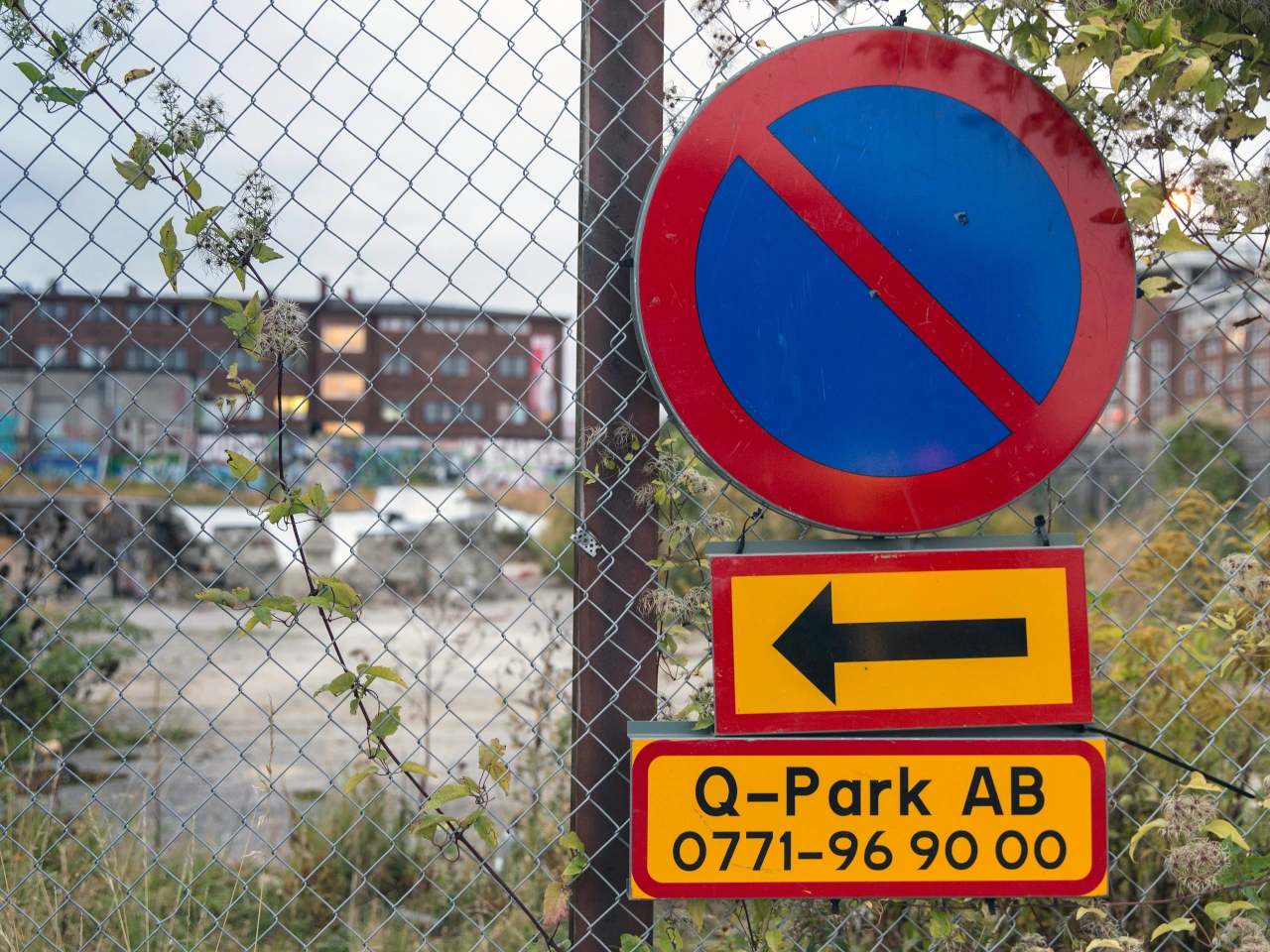
Prohibido estacionar indica que los vehículos no pueden quedar estacionados en el lugar o tramo de carretera cubierto por la restricción. Según la legislación local, todavía puede permitirse detenerse brevemente para recoger o dejar pasajeros o para cargar o descargar mercancías, siempre que la parada en sí no esté prohibida.
La prohibición de estacionar puede aplicarse de forma continua o solo durante determinadas horas, días, categorías de vehículos o tramos de carretera. Su alcance exacto y las excepciones vienen determinados por la señal, los paneles complementarios, las marcas viales y las normas locales.
What does a no-parking sign mean?
A no-parking sign prohibits leaving a vehicle parked in the area or along the section of road to which the restriction applies. The exact legal definition of parking and the extent of the prohibition vary between countries.
Is no parking the same as no stopping?
No. A no-parking restriction commonly still permits certain brief stops, such as picking up or dropping off passengers or loading or unloading goods. A no-stopping restriction is stricter and generally prohibits voluntary stopping as well as parking.
Can you wait in your vehicle where parking is prohibited?
Remaining inside the vehicle does not necessarily mean that it is not parked. If the vehicle remains stationary beyond what local law permits as a brief stop, it may legally be considered parked even when the driver stays inside.
Can you pick up or drop off passengers in a no-parking area?
Often yes, if stopping is permitted and the vehicle remains there only as long as reasonably necessary for passengers to get in or out. Local rules may impose stricter restrictions at particular locations.
Can you load or unload goods where parking is prohibited?
In many countries, genuine loading or unloading is treated as stopping rather than parking and may therefore be permitted. The vehicle should remain there only for the time reasonably necessary for the activity.
How far does a no-parking restriction apply?
This depends on the country's signing rules. The restriction may continue to the next intersection, an end sign, a stated distance or the end of a designated zone. Supplementary arrows or distance panels may indicate its exact extent.
Does a no-parking sign apply on both sides of the road?
Usually a roadside no-parking sign applies only to the side of the road on which it is placed, unless it forms part of a zonal restriction or local signs indicate otherwise.
Can a no-parking restriction apply only at certain times?
Yes. A supplementary panel may restrict the prohibition to particular hours, days or periods. Outside those periods, parking may be permitted if no other rule prohibits it.
Can a no-parking restriction apply only to certain vehicles?
Yes. Additional signs or symbols may make a parking restriction applicable to particular vehicle categories, such as heavy vehicles, motorcycles or other specified vehicles.
Can you park immediately after a no-parking sign ends?
Only if parking is otherwise legal. The end of a specific no-parking restriction does not override general parking prohibitions near crossings, intersections, driveways, traffic signs or other protected locations.


