


Semáforos peatonalesSuecia
 Normas de tráfico
 Suecia
22. Semáforos peatonales
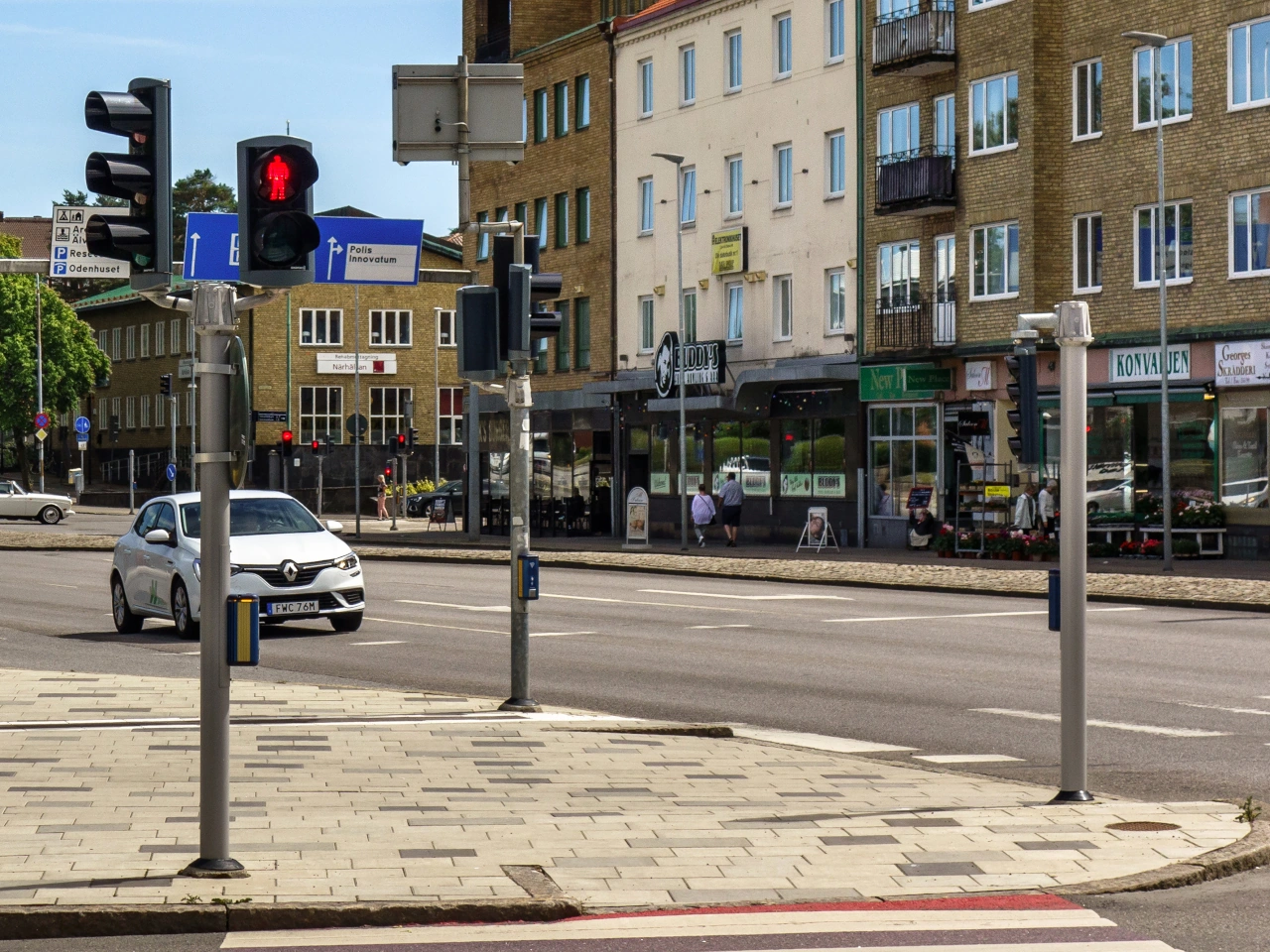
Los semáforos peatonales regulan cuándo los peatones pueden comenzar a cruzar una carretera. Normalmente muestran una figura roja de pie para prohibir iniciar el cruce y una figura verde caminando para permitirlo.
Una señal intermitente o una cuenta atrás puede advertir de que el periodo permitido está terminando. Los peatones deben cruzar sin demoras innecesarias, mientras que los conductores que giran deben permanecer atentos y permitir que quienes entraron legalmente terminen de cruzar con seguridad.
What are pedestrian lights?
Pedestrian lights are traffic signals that indicate when pedestrians may begin crossing a road.
How can you recognise pedestrian lights?
They commonly display a red standing person and a green walking person. Their design may vary between countries.
What does the red pedestrian light mean?
It means that pedestrians must not begin crossing.
What does the green pedestrian light mean?
It means that pedestrians may begin crossing, provided they still observe the road and cross without unnecessary delay.
Does green guarantee that no vehicle will cross your path?
No. Turning vehicles, emergency vehicles or traffic following another authorised signal may still cross the pedestrian route. Pedestrians should remain attentive.
What does a flashing green pedestrian light mean?
It normally warns that the permitted crossing period is about to end. Pedestrians who have not started should consider waiting for the next green signal.
What does a flashing red pedestrian light mean?
Its meaning varies between countries. It commonly means that pedestrians must not begin crossing, while those already on the road should finish without delay.
What does a countdown display mean?
A countdown may show approximately how much time remains before the signal changes. It does not remove the duty to cross cautiously.
May you begin crossing when the countdown is nearly finished?
Begin only when there is enough time to cross safely and without stopping unnecessarily on the road. Waiting for the next green phase may be safer.
What if the signal changes to red while you are crossing?
Continue crossing at a normal pace towards the nearest safe side. Do not turn back suddenly, stop unnecessarily or run into another traffic stream.
Must drivers allow pedestrians to finish crossing?
Yes. Drivers should allow pedestrians who entered lawfully to complete the crossing safely, even when vehicle traffic receives permission to proceed.
May turning drivers cross during the pedestrian green phase?
Some signal systems permit turning vehicles and pedestrians at the same time. Turning drivers must give way where required and must not endanger pedestrians.
What is a conflict-free pedestrian phase?
It is a signal phase during which conflicting vehicle movements are stopped so pedestrians can cross without permitted traffic turning across their route.
What is an all-pedestrian phase?
It is a phase in which pedestrians may cross several or all approaches while vehicle traffic is stopped. Diagonal crossing is permitted only when the signals and markings allow it.
What do arrows around a pedestrian symbol mean?
They may indicate that the same pedestrian signal applies simultaneously to several crossing directions. The exact meaning depends on local law.
What should pedestrians do before stepping onto the road?
Check that approaching and turning vehicles are stopping and that the route is clear. A green signal does not make a collision impossible.
Must pedestrians cross without delay?
Yes. They should proceed at a normal pace and should not linger, stop unnecessarily or obstruct traffic on the crossing.
What if there are no pedestrian lights?
Pedestrians may have to follow the traffic lights controlling vehicles, an authorised officer or the ordinary pedestrian-crossing rules.
What is a pedestrian push button?
A push button normally registers a request for a pedestrian crossing phase. Pressing it does not itself permit crossing; pedestrians must wait for the appropriate signal.
Does repeatedly pressing the button make the signal change faster?
Normally not. Once the request has been registered, additional presses usually have no effect.
What are audible pedestrian signals?
Audible signals use sounds to help pedestrians with visual impairments identify when crossing is permitted or when the signal is changing.
What are tactile pedestrian signals?
Tactile signals may use a vibrating button, rotating cone or raised markings to provide crossing information to pedestrians with visual impairments.
Do pedestrian lights apply to cyclists?
Not normally. A cyclist riding a bicycle must follow the applicable cycle or vehicle signal unless a combined pedestrian-and-cycle signal applies.
What if a cyclist walks beside the bicycle?
A person walking beside a bicycle is normally treated as a pedestrian and follows the pedestrian signal.
What are combined pedestrian-and-cycle lights?
They display pedestrian and bicycle symbols and apply to the road users indicated by those symbols.
May pedestrians cross when an authorised officer signals them to wait?
No. Instructions from an authorised traffic controller normally take precedence over pedestrian lights.
What should you do when the pedestrian lights are not working?
Cross only according to the functioning vehicle signals, priority rules and instructions from authorised personnel. Proceed cautiously and take approaching traffic into account.


