


Additional signsBelgium
 Traffic rules
 Belgium
 Priority signs
 Warning signs
 Prohibitory signs
 Mandatory signs
 Information signs
 Additional signs
Additional signs
An additional sign is a traffic sign placed directly below another sign to provide extra information or clarify how the main sign should be understood. It can specify conditions such as distance, time periods, road users affected, directions, or special circumstances. Additional signs do not create new rules by themselves but modify, limit, or explain the meaning of the sign above them so drivers can apply the rule correctly in that specific situation.

































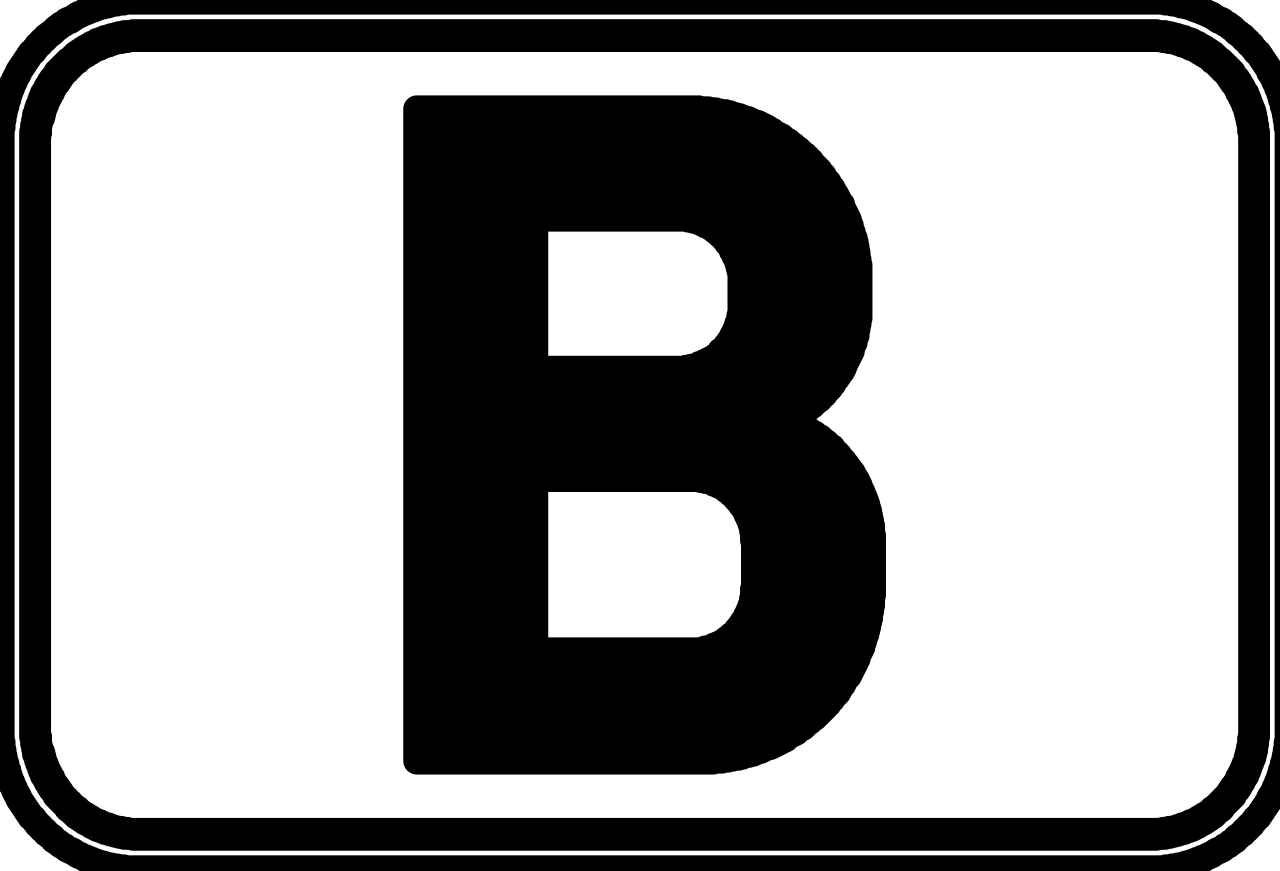




1. For people with disabilities
This supplementary sign indicates that the main traffic sign applies specifically to people with disabilities. Any permit or eligibility requirements depend on the applicable sign and local rules.
Panonceau utilisé avec les signaux de la série E9 pour indiquer que l'emplacement de stationnement est réservé aux véhicules utilisés par des personnes handicapées.
Onderbord gebruikt samen met de E9-reeks dat aanduidt dat de parkeerplaats voorbehouden is voor voertuigen die gebruikt worden door personen met een beperking.
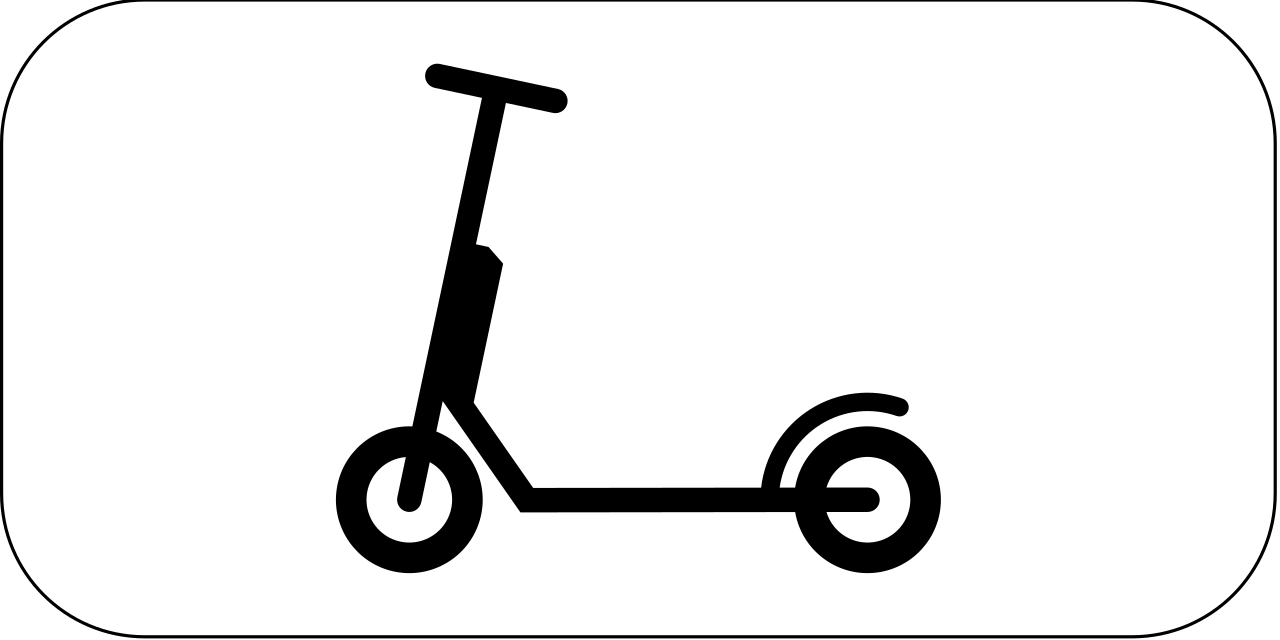
2. For personal transporters
This supplementary sign indicates that the main traffic sign applies specifically to personal transporters. The vehicle types included in this category depend on the applicable local definitions.
Signal routier M21 • Panonceau utilisé avec le signal E9a. Le panonceau indique les emplacements où les engins de déplacement peuvent être placés.
Verkeersbord M21 • Onderbord gebruikt samen met E9a. Het onderbord duidt de plaatsen aan waar voortbewegingstoestellen mogen geplaatst worden.
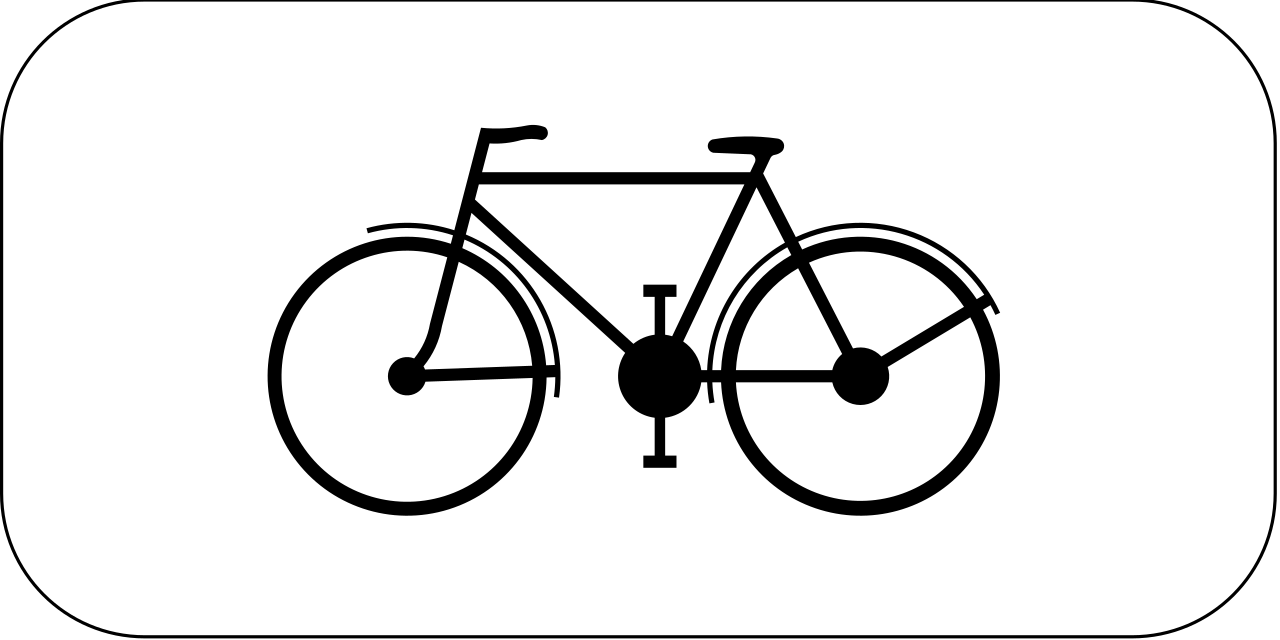
3. For cyclists
This supplementary sign indicates that the main traffic sign applies specifically to cyclists.
Signal routier M1 • Panonceau utilisé avec les signaux B1 et B5 pour indiquer que ces signaux ne concernent que les cyclistes.
Verkeersbord M1 • Onderbord gebruikt samen met B1 en B5 om aan te duiden dat die verkeersborden alleen betrekking hebben op fietsers.
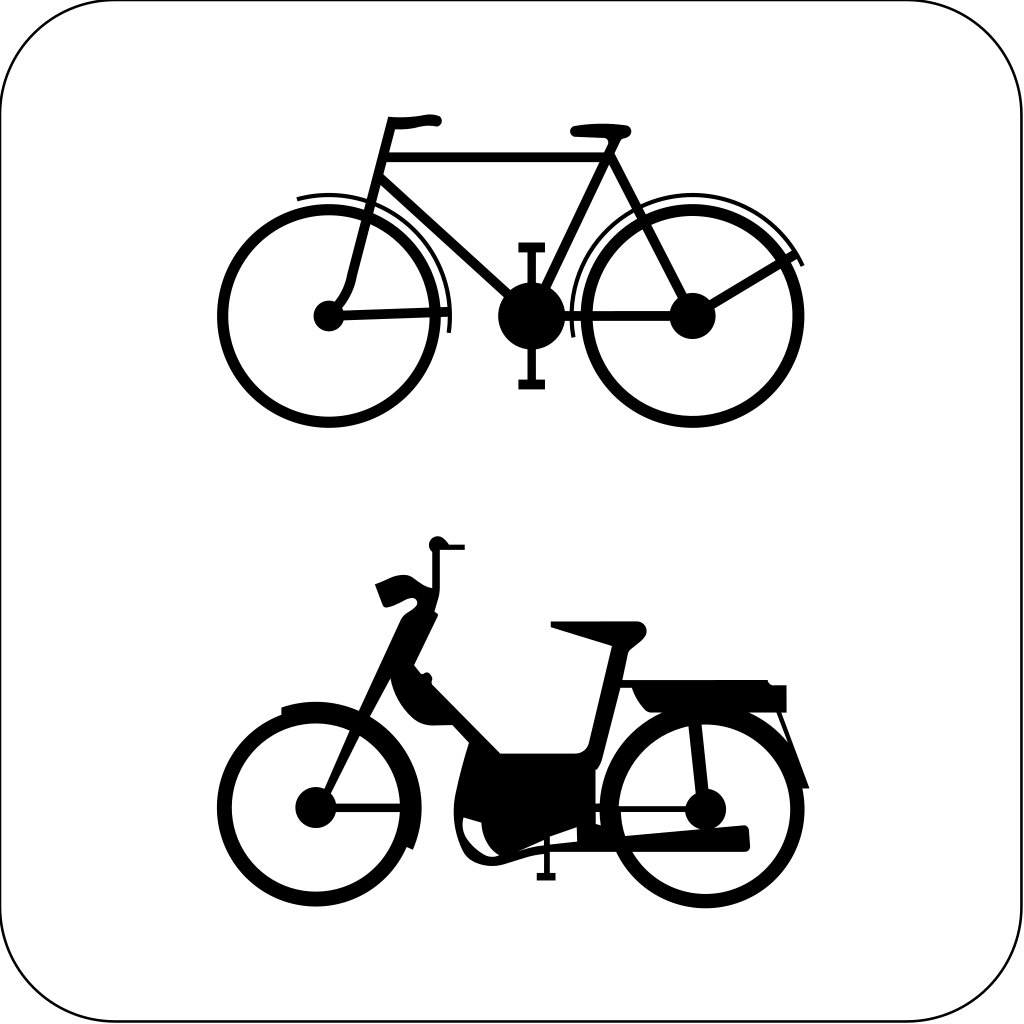
4. For cyclists and mopeds
This supplementary sign indicates that the main traffic sign applies specifically to cyclists and mopeds.
Signal routier M8 • Panonceau utilisé avec les signaux B1 et B5 pour indiquer que ces signaux ne concernent que les cyclistes et les conducteurs de cyclomoteurs à deux roues.
Verkeersbord M8 • Onderbord gebruikt samen met B1 en B5 om aan te duiden dat die verkeersborden alleen betrekking hebben op fietsers en bestuurders van tweewielige bromfietsen.
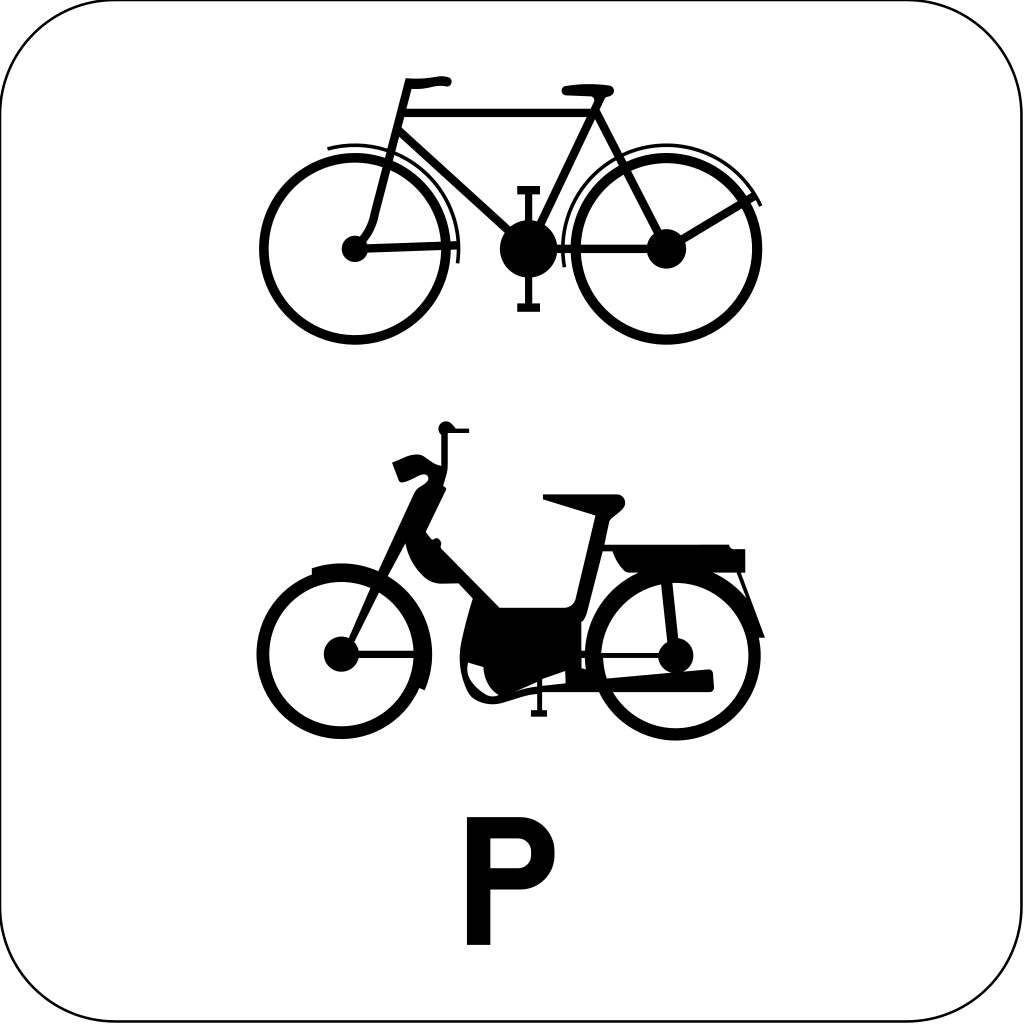
5. For cyclists and class P mopeds (speed pedelecs)
This supplementary sign indicates that the main traffic sign applies specifically to cyclists and class P mopeds (speed pedelecs).
Signal routier M20 • Panonceau utilisé avec le signal E9a. Le panonceau indique que le stationnement est réservé aux vélos et aux speed pedelecs.
Verkeersbord M20 • Onderbord gebruikt samen met E9a. Het onderbord duidt aan dat het parkeren voorbehouden is voor fietsen en speed pedelecs.
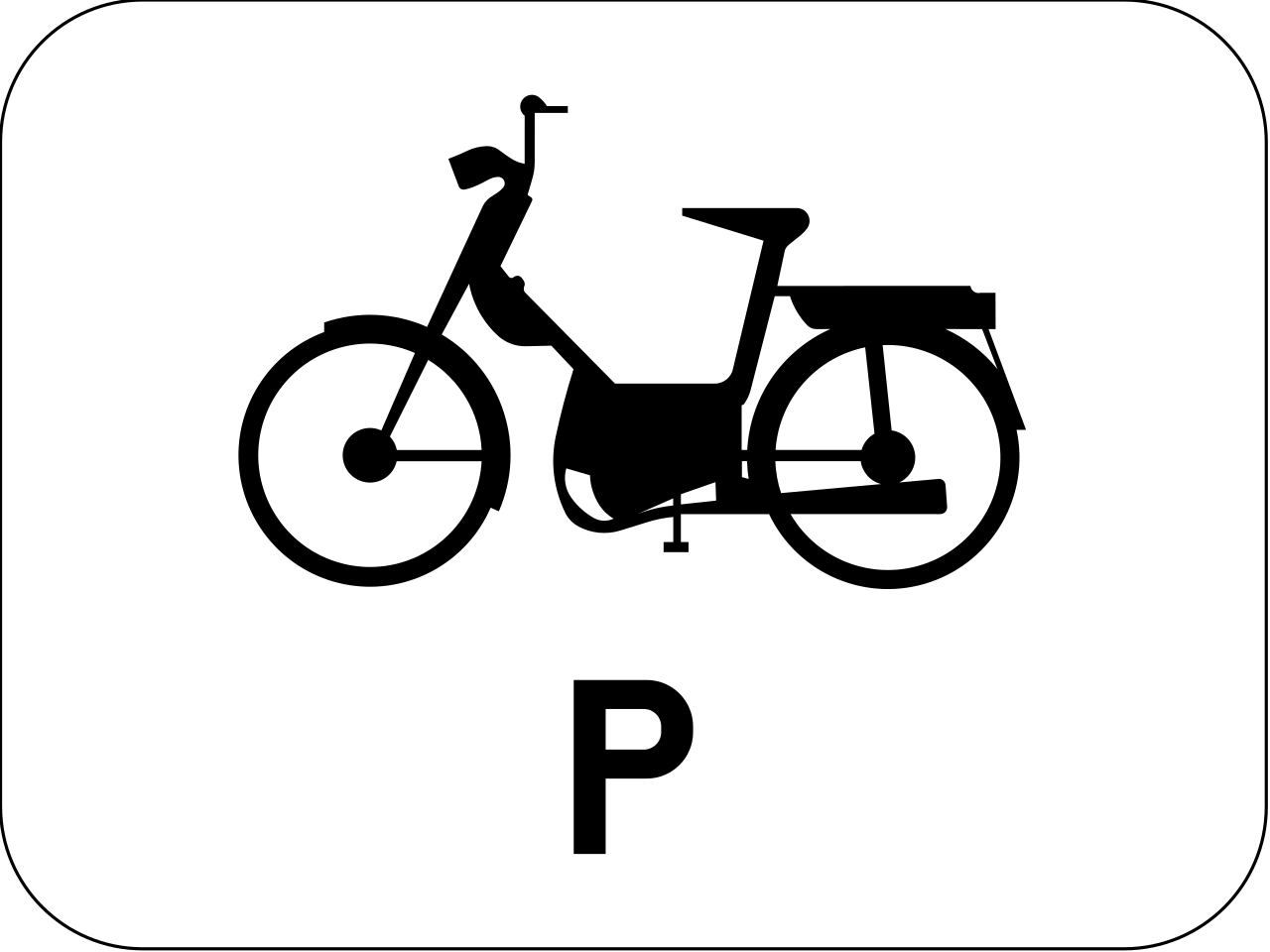
6. For class P mopeds (speed pedelecs)
This supplementary sign indicates that the main traffic sign applies specifically to class P mopeds (speed pedelecs).
Signal routier M19 • Panonceau utilisé avec le signal E9a. Le panonceau indique que le stationnement est réservé aux speed pedelecs.
Verkeersbord M19 • Onderbord gebruikt samen met E9a. Het onderbord duidt aan dat het parkeren voorbehouden is voor speed pedelecs.
7. For electric vehicles
This supplementary sign indicates that the main traffic sign applies specifically to electric vehicles. Any charging, parking or access conditions depend on the main sign and applicable local rules.
Panonceau utilisé avec les signaux de la série E9 pour indiquer que l'emplacement de stationnement est réservé aux véhicules électriques.
Onderbord gebruikt samen met de E9-reeks dat aanduidt dat de parkeerplaats voorbehouden is voor elektrische voertuigen.
8. For carpooling
This supplementary sign indicates that the main traffic sign applies specifically to vehicles used for carpooling. Any required number of occupants depends on the applicable local rules.
9. For taxis
This supplementary sign indicates that the main traffic sign applies specifically to taxis.
Panonceau utilisé avec les signaux de la série E9, avec mention de la catégorie de véhicules à laquelle le stationnement est réservé. D'autres mentions possibles sont notamment « 5 t », « riverains », « carte de stationnement », « voitures partagées », etc.
Onderbord gebruikt samen met de E9-reeks met de vermelding van de categorie van voertuigen voor dewelke het parkeren voorbehouden is. Andere mogelijke opschriften zijn o.a. • 5 t, bewoners, parkeerkaart, autodelen, ...
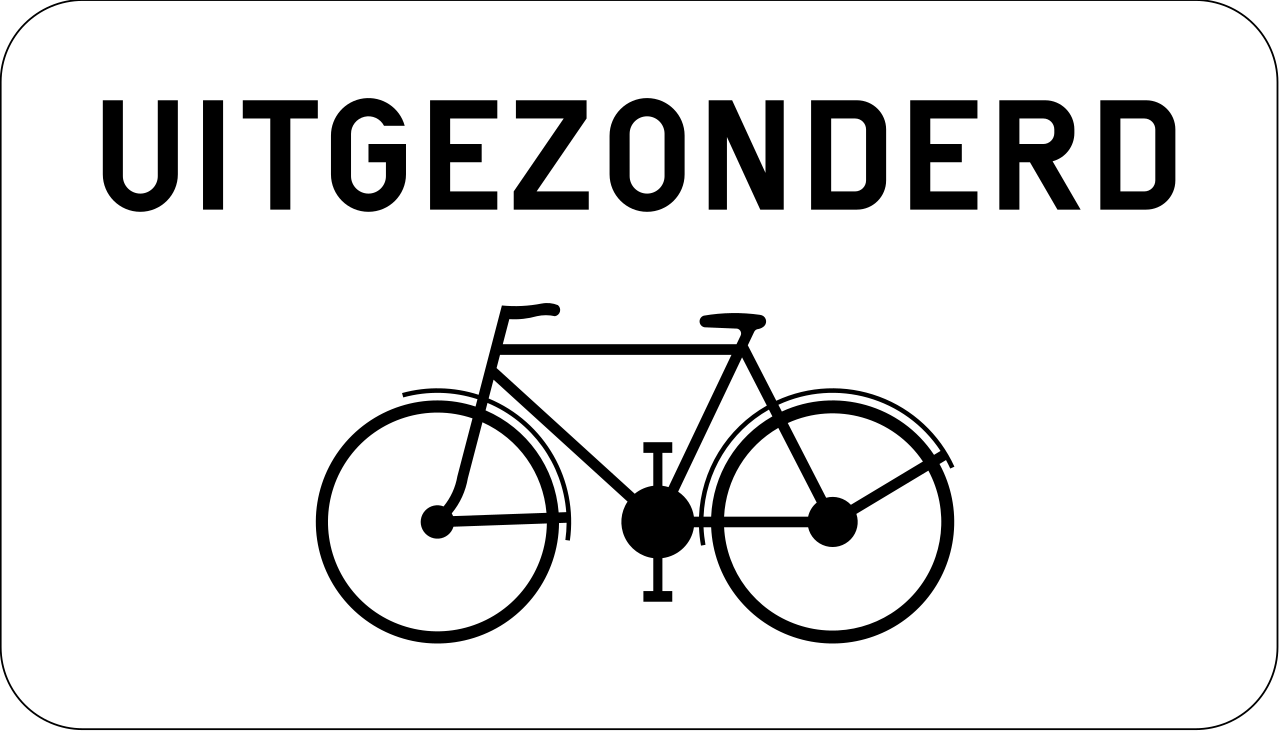
10. Cyclists allowed
This supplementary sign indicates that cyclists are allowed where the main traffic sign would otherwise restrict their access or use.
Signal routier M2 • Panonceau utilisé avec les signaux C1, C3 et C31 pour indiquer que l'interdiction ne s'applique pas aux cyclistes.
Verkeersbord M2 • Onderbord gebruikt samen met C1, C3 en C31 om aan te duiden dat het verbod niet geldt voor fietsers.
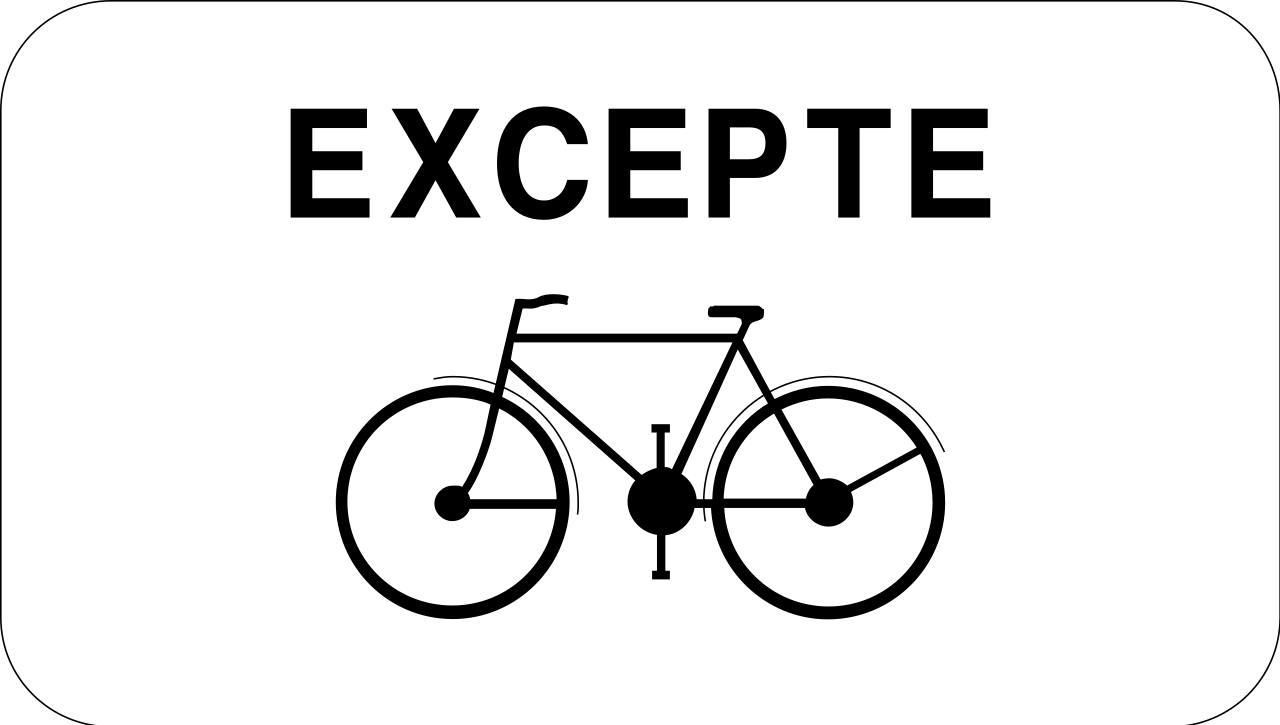
11. Cyclists allowed
This supplementary sign indicates that cyclists are allowed where the main traffic sign would otherwise restrict their access or use.
Signal routier M2 • Panonceau utilisé avec les signaux C1, C3 et C31 pour indiquer que l'interdiction ne s'applique pas aux cyclistes.
Verkeersbord M2 • Onderbord gebruikt samen met C1, C3 en C31 om aan te duiden dat het verbod niet geldt voor fietsers.
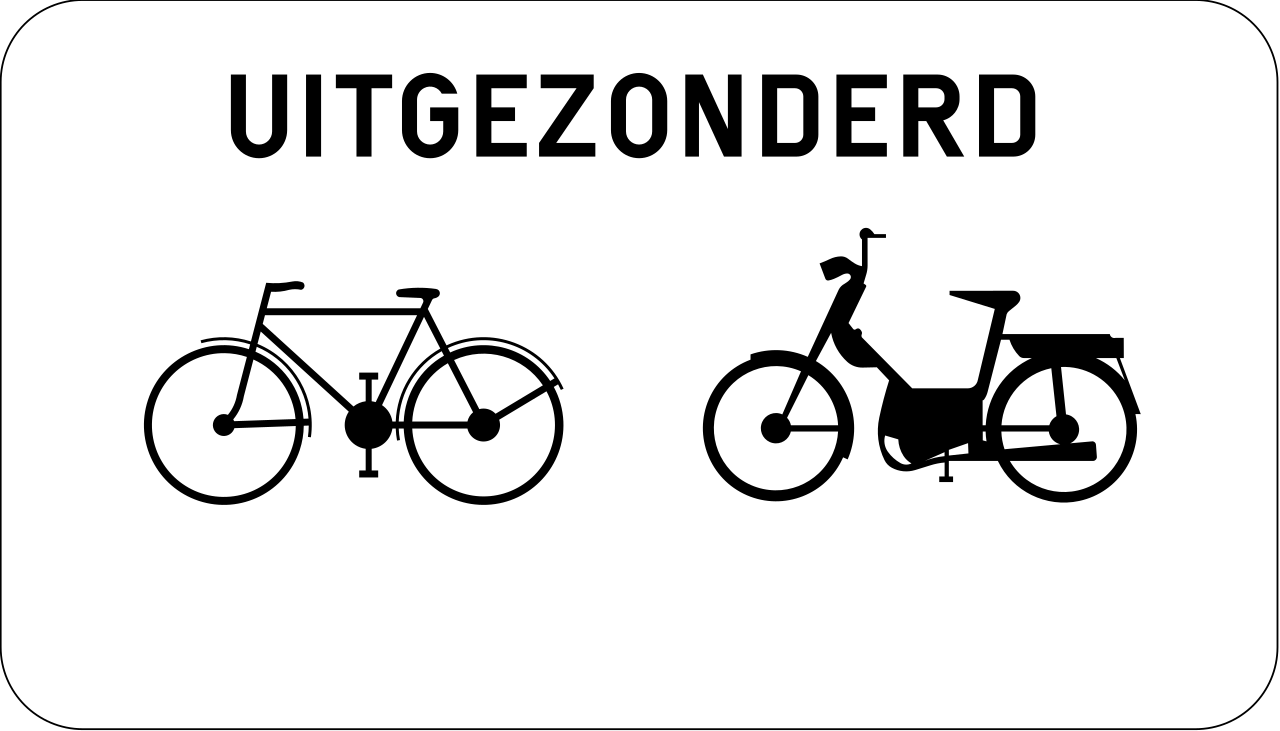
12. Cyclists and mopeds allowed
This supplementary sign indicates that cyclists and mopeds are allowed where the main traffic sign would otherwise restrict their access or movement.
Signal routier M3bis • Panonceau utilisé avec les signaux C3 et C31 pour indiquer que l'interdiction ne s'applique pas aux cyclistes, aux conducteurs de cyclomoteurs de classes A et B, ni aux speed pedelecs.
Verkeersbord M3bis • Onderbord gebruikt samen met C3 en C31 om aan te duiden dat het verbod niet geldt voor fietsers en bestuurders van bromfietsen klasse A en B, en speedpedelecs.
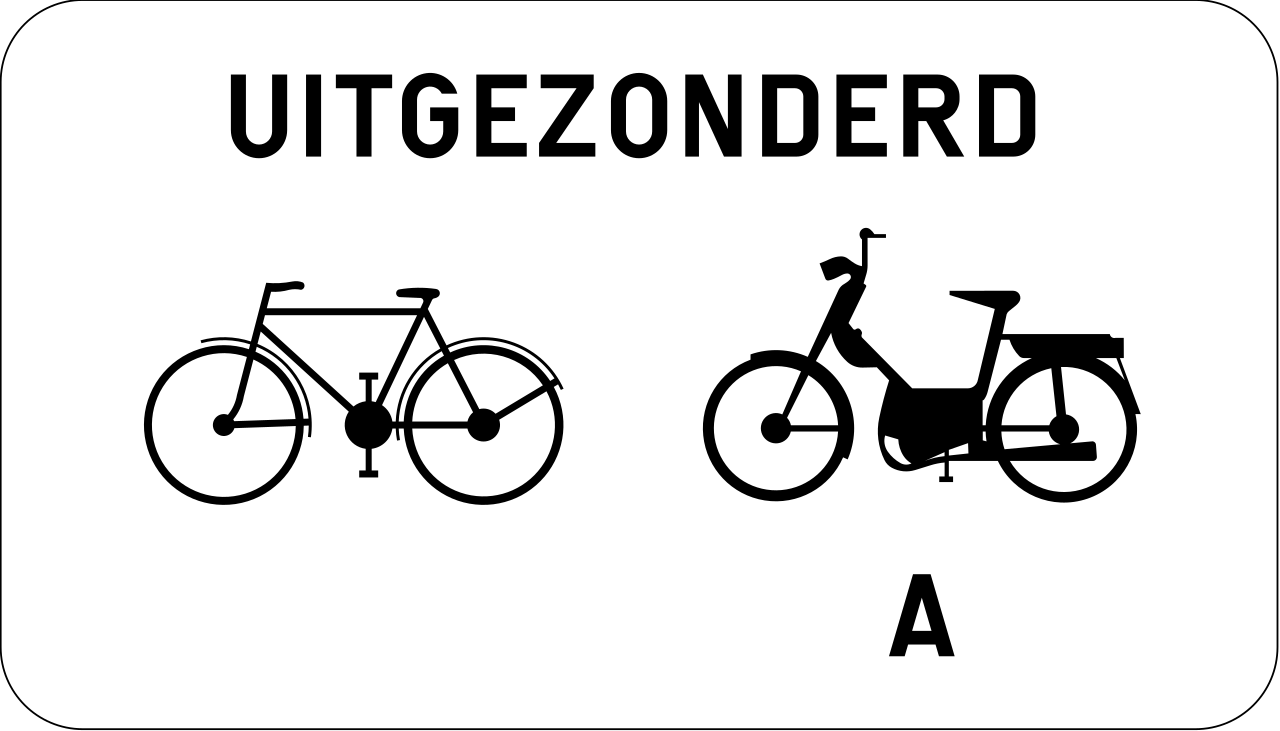
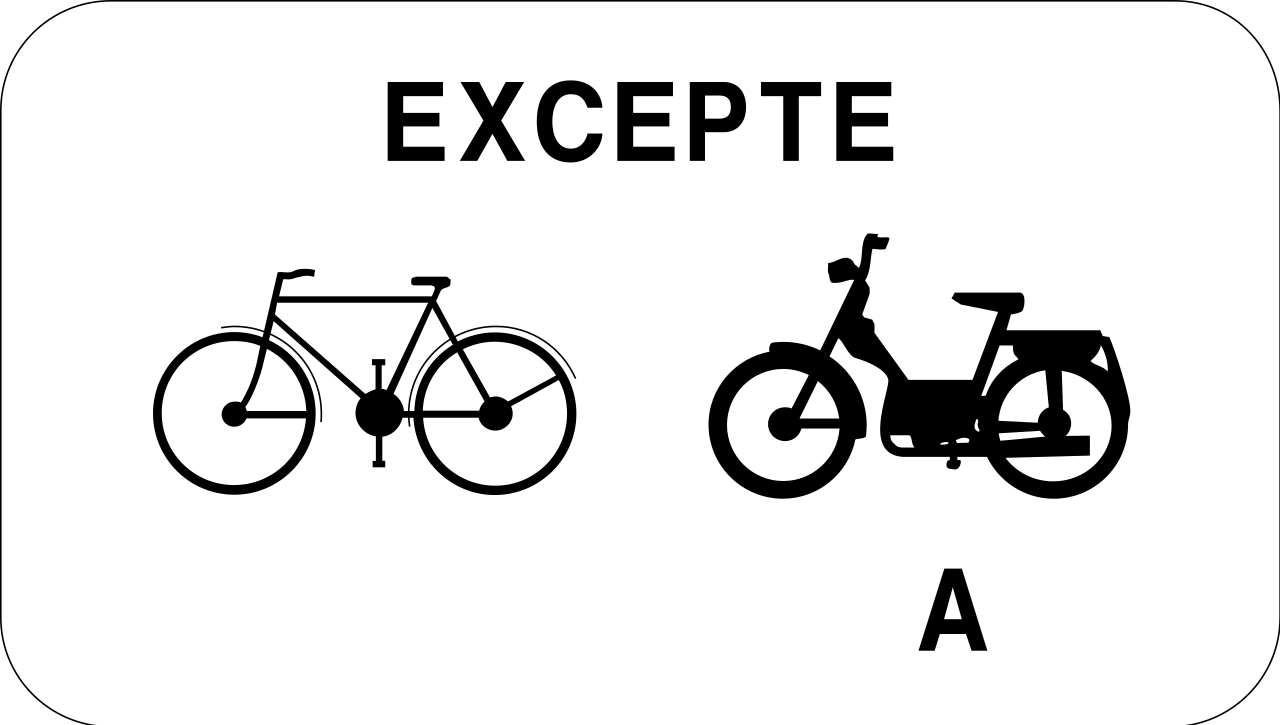
13. Cyclists and class A mopeds allowed
This supplementary sign indicates that cyclists and class A mopeds are allowed where the main traffic sign would otherwise restrict their access or movement.
Signal routier M3 • Panonceau utilisé avec les signaux C1, C3 et C31 pour indiquer que l'interdiction ne s'applique pas aux cyclistes ni aux conducteurs de cyclomoteurs de classe A.
Verkeersbord M3 • Onderbord gebruikt samen met C1, C3 en C31 om aan te duiden dat het verbod niet geldt voor fietsers en bestuurders van bromfietsen klasse A.
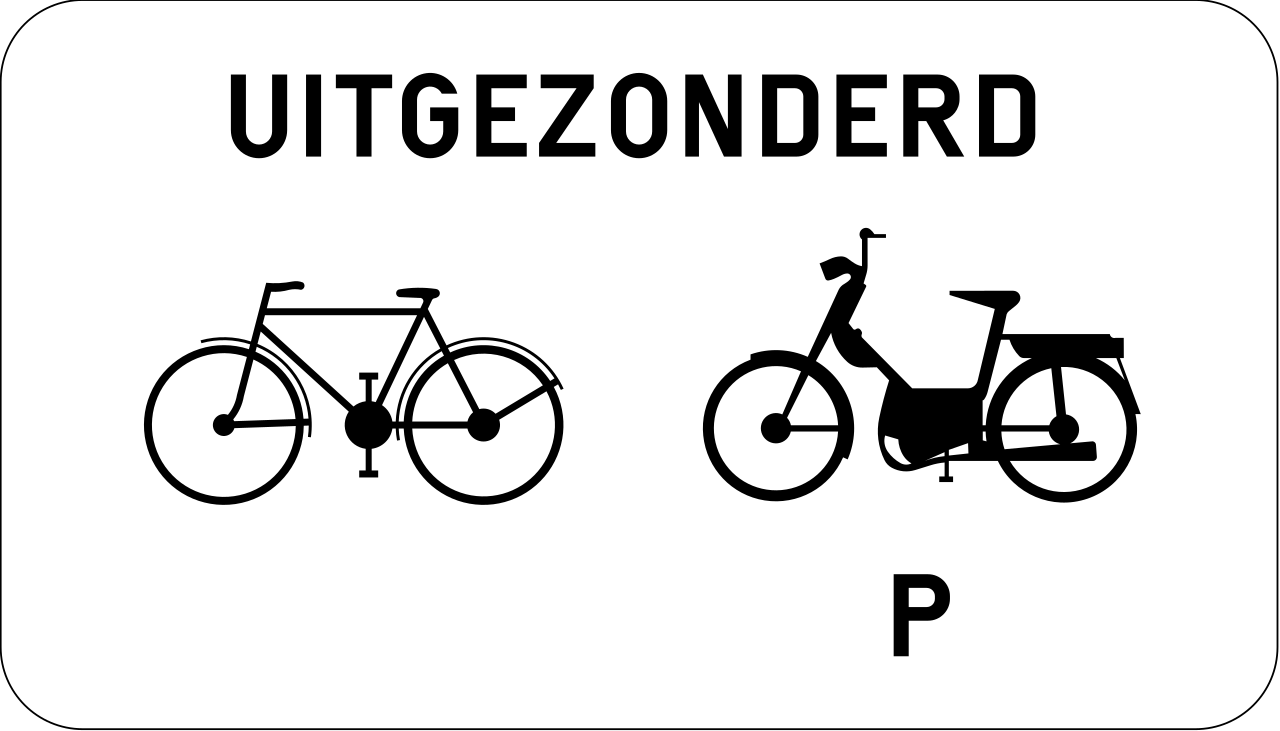
14. Cyclists and class P mopeds allowed
This supplementary sign indicates that cyclists and class P mopeds (speed pedelecs) are allowed where the main traffic sign would otherwise restrict their access or movement.
Signal routier M11 • Panonceau utilisé avec les signaux C1, C3 et C31 pour indiquer que l'interdiction ne s'applique pas aux cyclistes ni aux conducteurs de speed pedelecs.
Verkeersbord M11 • Onderbord gebruikt samen met C1, C3 en C31 om aan te duiden dat het verbod niet geldt voor fietsers en bestuurders van speedpedelecs.
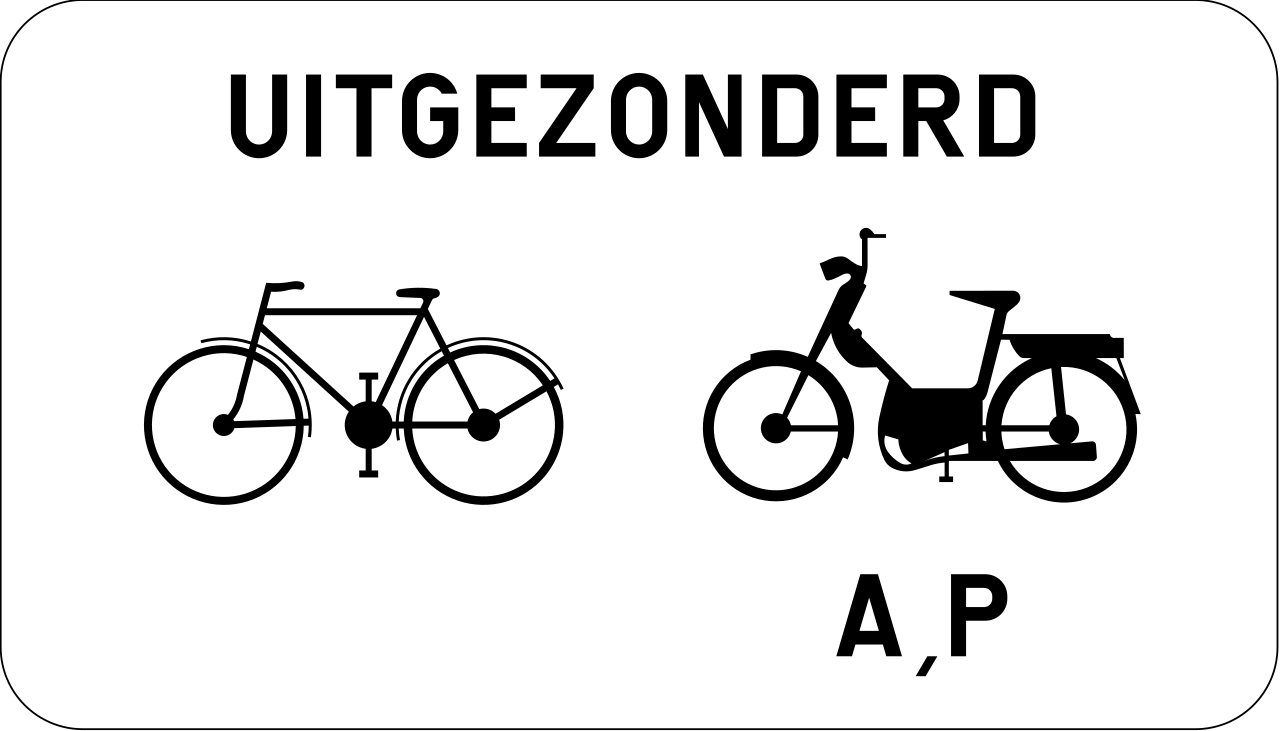
15. Cyclists and class A and P mopeds allowed
This supplementary sign indicates that cyclists and class A and P mopeds are allowed where the main traffic sign would otherwise restrict their access or movement.
Signal routier M12 • Panonceau utilisé avec les signaux C1, C3 et C31 pour indiquer que l'interdiction ne s'applique pas aux cyclistes, aux conducteurs de cyclomoteurs de classe A ni aux conducteurs de speed pedelecs.
Verkeersbord M12 • Onderbord gebruikt samen met C1, C3 en C31 om aan te duiden dat het verbod niet geldt voor fietsers en bestuurders van bromfietsen klasse A en speedpedelecs.
16. Cyclists and class A mopeds allowed
This supplementary sign indicates that cyclists and class A mopeds are allowed where the main traffic sign would otherwise restrict their access or movement.
Signal routier M3 • Panonceau utilisé avec les signaux C1, C3 et C31 pour indiquer que l'interdiction ne s'applique pas aux cyclistes ni aux conducteurs de cyclomoteurs de classe A.
Verkeersbord M3 • Onderbord gebruikt samen met C1, C3 en C31 om aan te duiden dat het verbod niet geldt voor fietsers en bestuurders van bromfietsen klasse A.
17. Carpooling allowed
This supplementary sign indicates that vehicles used for carpooling are allowed where the main traffic sign would otherwise restrict access or use. Any required number of occupants depends on the applicable local rules.
18. Buses allowed
This supplementary sign indicates that buses are allowed where the main traffic sign would otherwise restrict their access or use. The bus categories covered depend on the applicable local definitions.
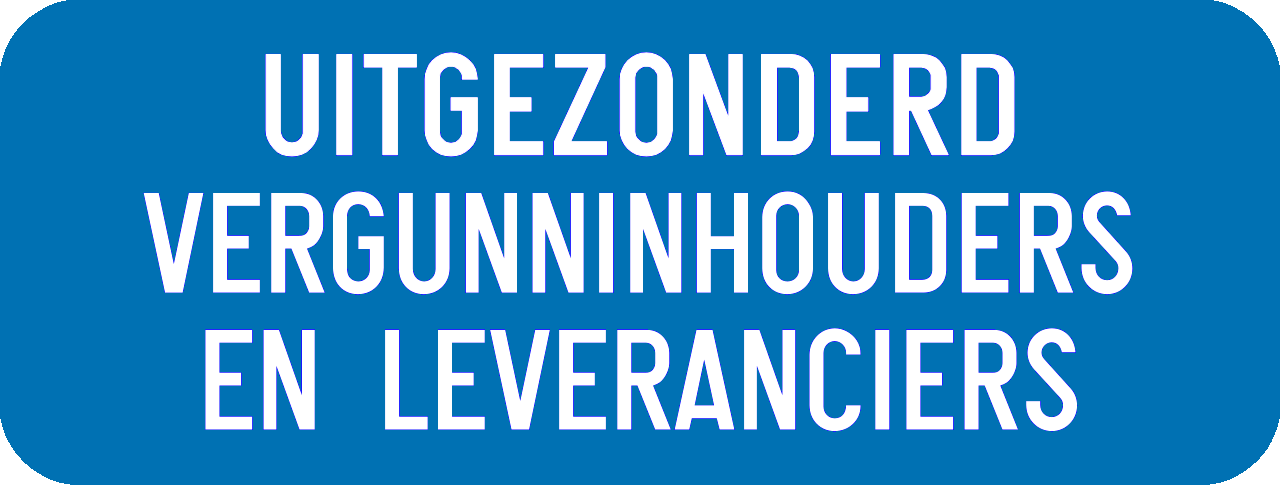
19. Permit holders and delivery vehicles allowed
This supplementary sign indicates that vehicles with the required permit and delivery vehicles are allowed where the main traffic sign would otherwise restrict access or use.
20. Local traffic allowed
This supplementary sign indicates that local traffic is allowed where the main traffic sign would otherwise restrict access. Which journeys or road users qualify as local traffic depends on the applicable local rules.
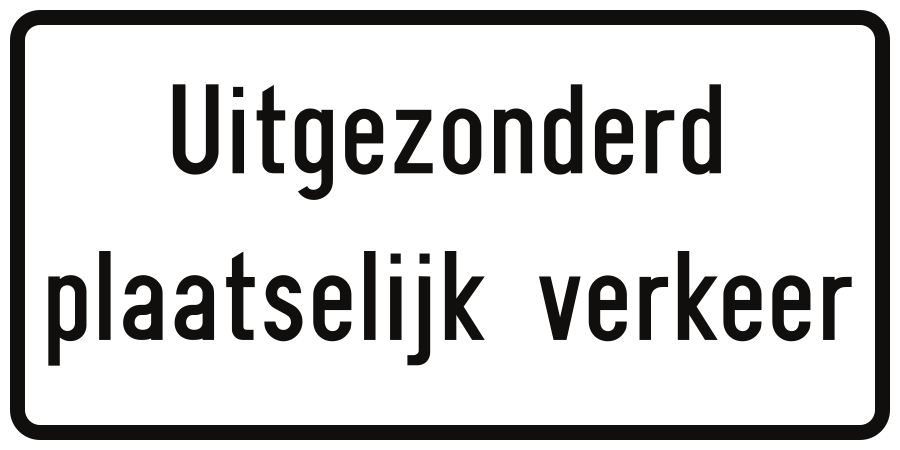
Verkeersbord M41a • Uitgezonderd plaatselijk verkeer.
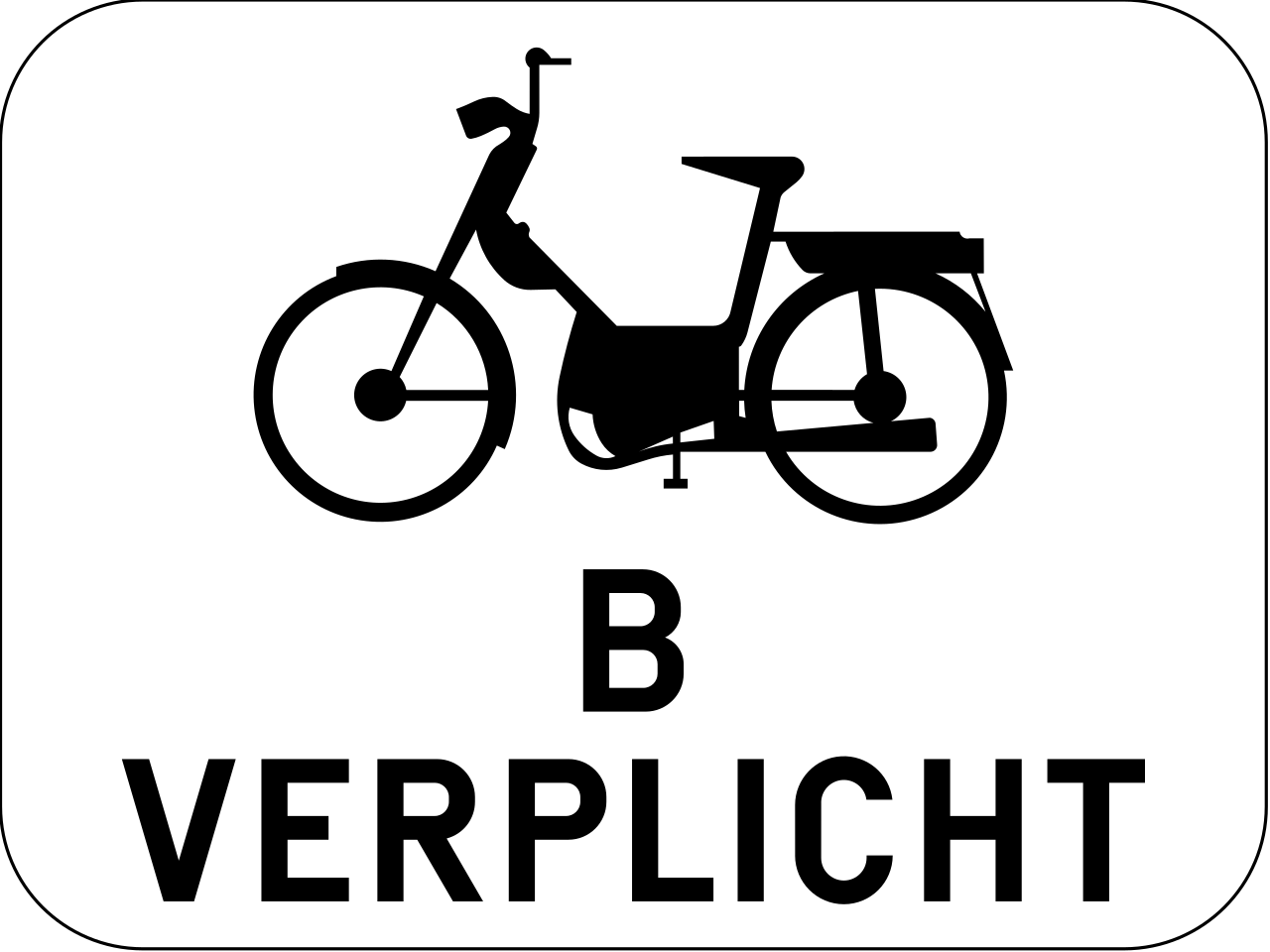
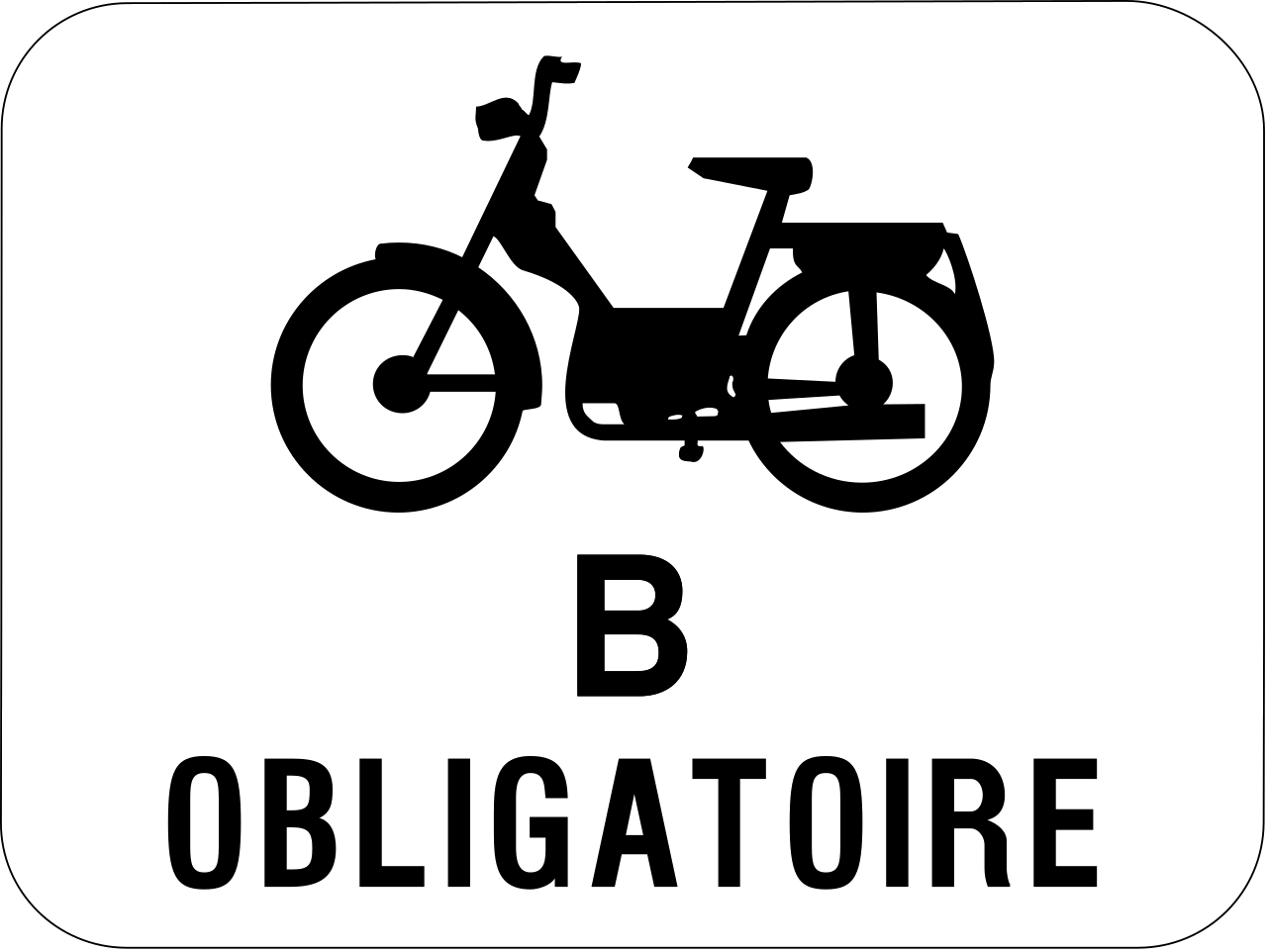
21. Mandatory for class B mopeds
This supplementary sign indicates that the mandatory rule shown by the main traffic sign also applies to class B mopeds. Class B moped riders must follow the indicated requirement.
Signal routier M6 • Panonceau utilisé avec le signal D7 lorsque la piste cyclable doit également être empruntée par les conducteurs de cyclomoteurs de classe B.
Verkeersbord M6 • Onderbord gebruikt samen met D7 als het fietspad gevolgd moet worden door bestuurders van bromfietsen klasse B.
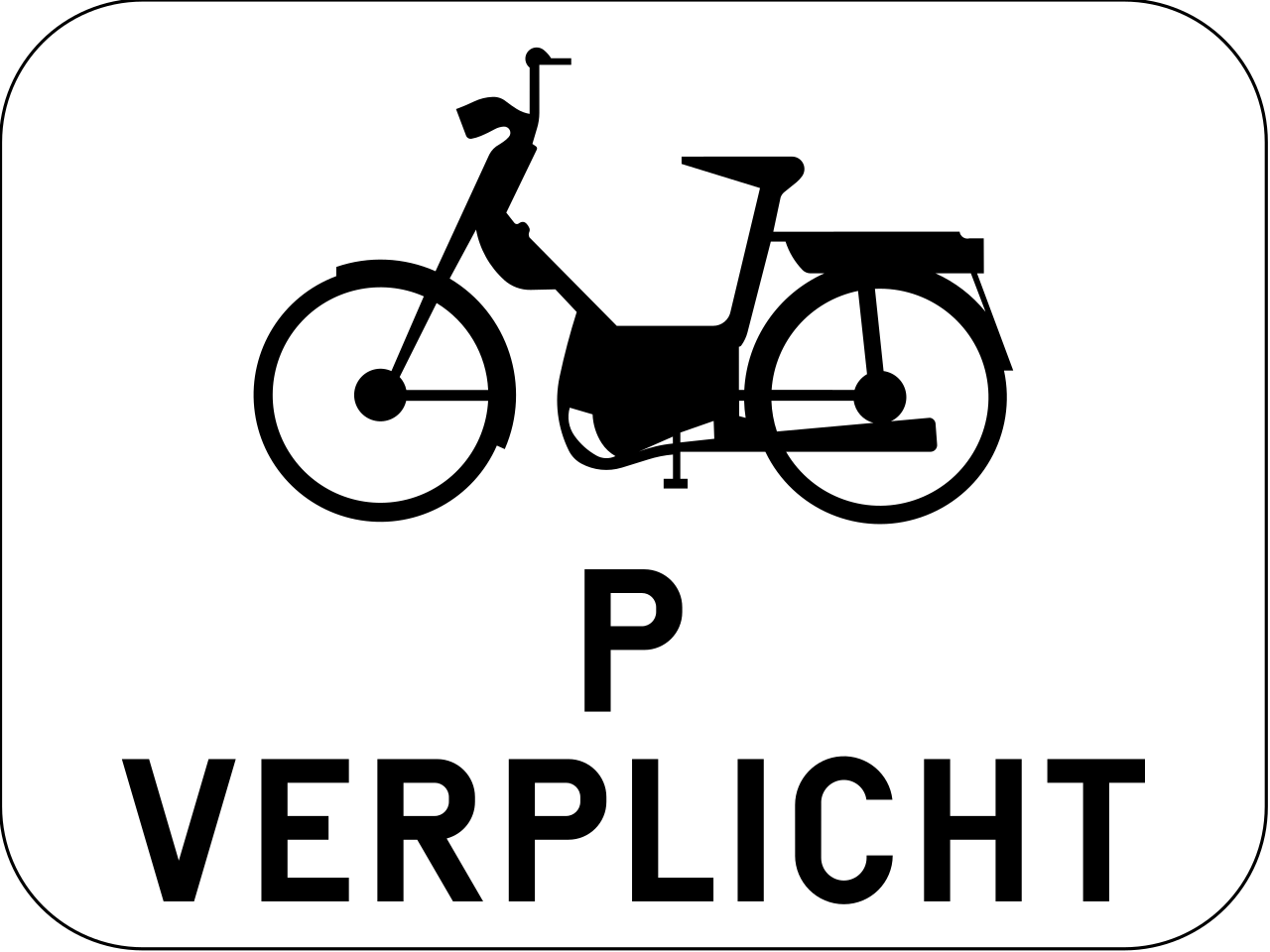
22. Mandatory for class P mopeds
This supplementary sign indicates that the mandatory rule shown by the main traffic sign also applies to class P mopeds (speed pedelecs). Their riders must follow the indicated requirement.
Signal routier M13 • Panonceau utilisé avec le signal D7 lorsque la piste cyclable doit être empruntée par les conducteurs de speed pedelecs.
Verkeersbord M13 • Onderbord gebruikt samen met D7 als het fietspad gevolgd moet worden door bestuurders van speedpedelecs.
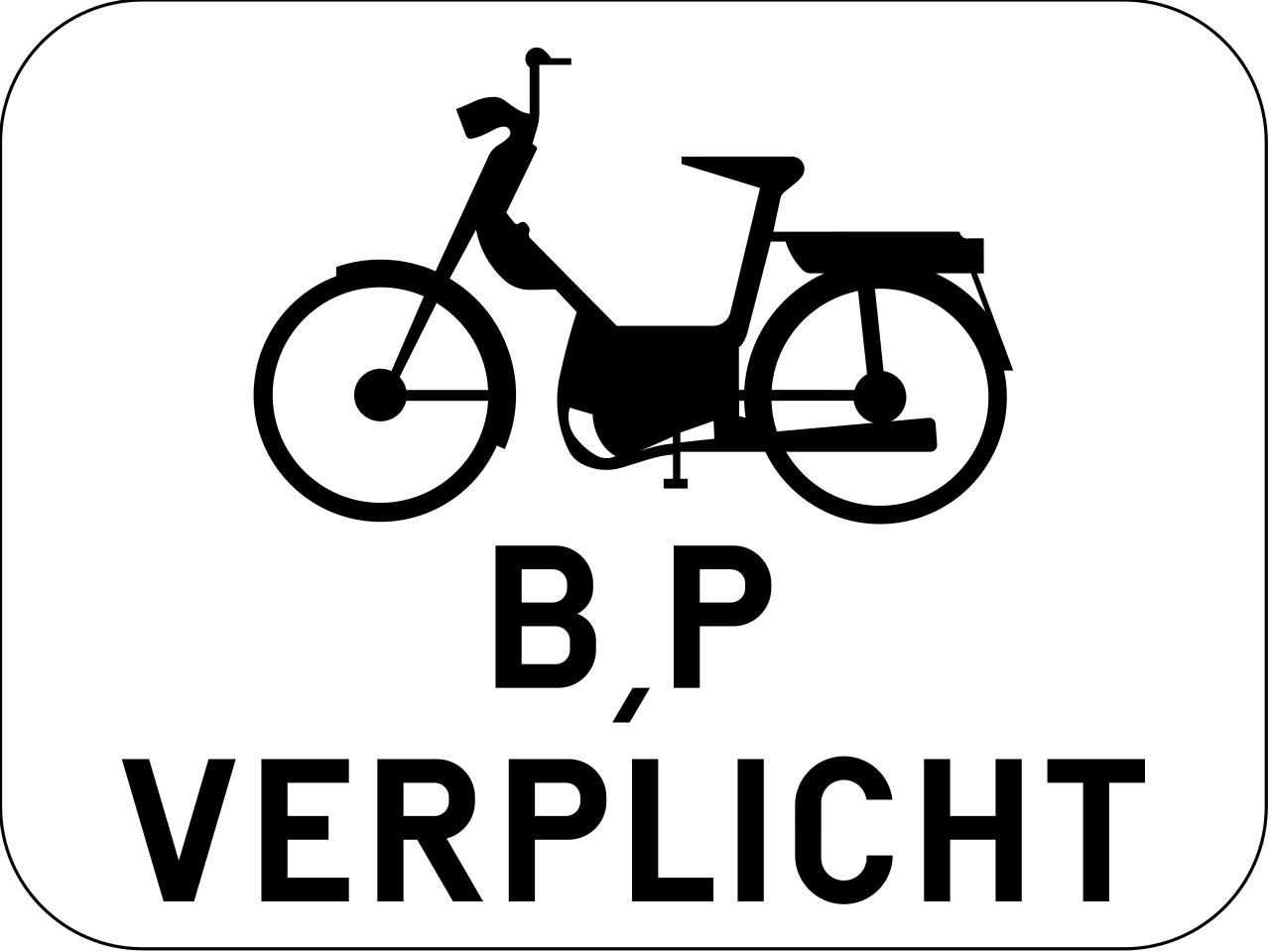
23. Mandatory for class B and P mopeds
This supplementary sign indicates that the mandatory rule shown by the main traffic sign also applies to class B and class P mopeds. Class P mopeds include speed pedelecs where that classification applies.
Signal routier M14 • Panonceau utilisé avec le signal D7 lorsque la piste cyclable doit être empruntée par les conducteurs de cyclomoteurs de classe B et de speed pedelecs.
Verkeersbord M14 • Onderbord gebruikt samen met D7 als het fietspad gevolgd moet worden door bestuurders van bromfietsen klasse B en speedpedelecs.
24. Mandatory for class B mopeds
This supplementary sign indicates that the mandatory rule shown by the main traffic sign also applies to class B mopeds. Class B moped riders must follow the indicated requirement.
Signal routier M6 • Panonceau utilisé avec le signal D7 lorsque la piste cyclable doit également être empruntée par les conducteurs de cyclomoteurs de classe B.
Verkeersbord M6 • Onderbord gebruikt samen met D7 als het fietspad gevolgd moet worden door bestuurders van bromfietsen klasse B.
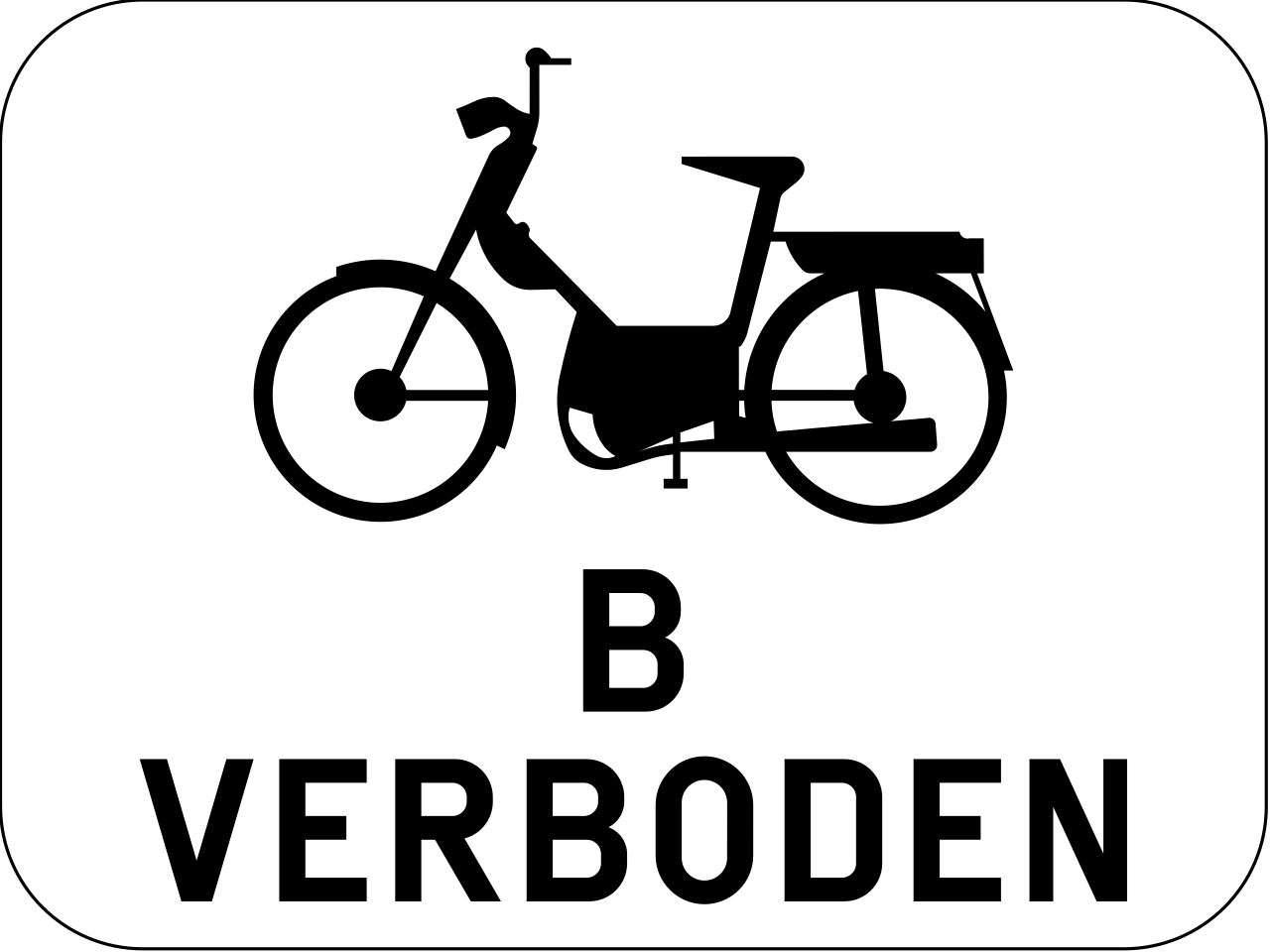
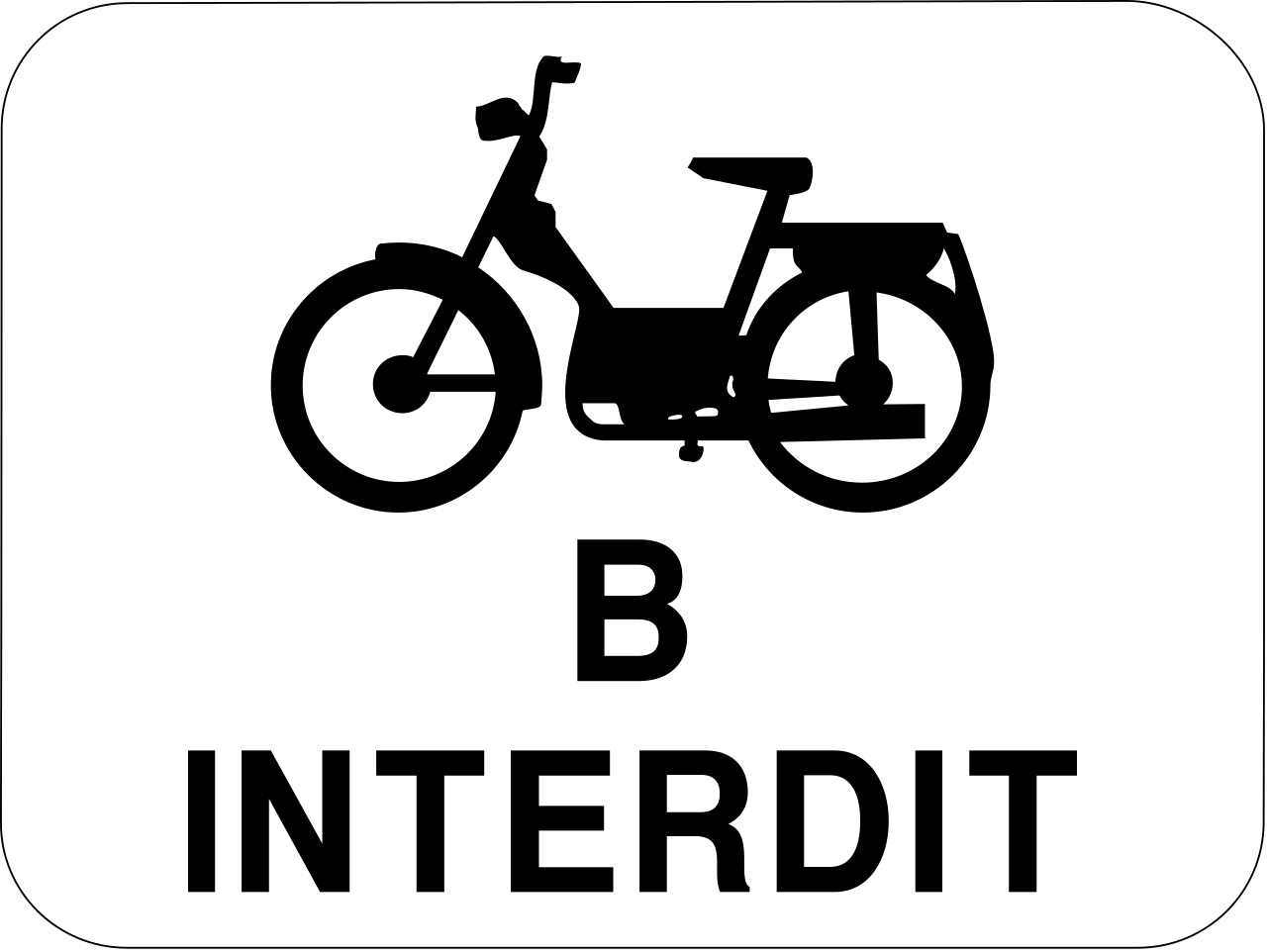
25. Prohibited for class B mopeds
This supplementary sign indicates that the prohibition shown by the main traffic sign applies specifically to class B mopeds.
Signal routier M7 • Panonceau utilisé avec le signal D7 lorsque la piste cyclable ne peut pas être empruntée par les conducteurs de cyclomoteurs de classe B.
Verkeersbord M7 • Onderbord gebruikt samen met D7 als het fietspad niet mag gevolgd worden door bestuurders van bromfietsen klasse B.
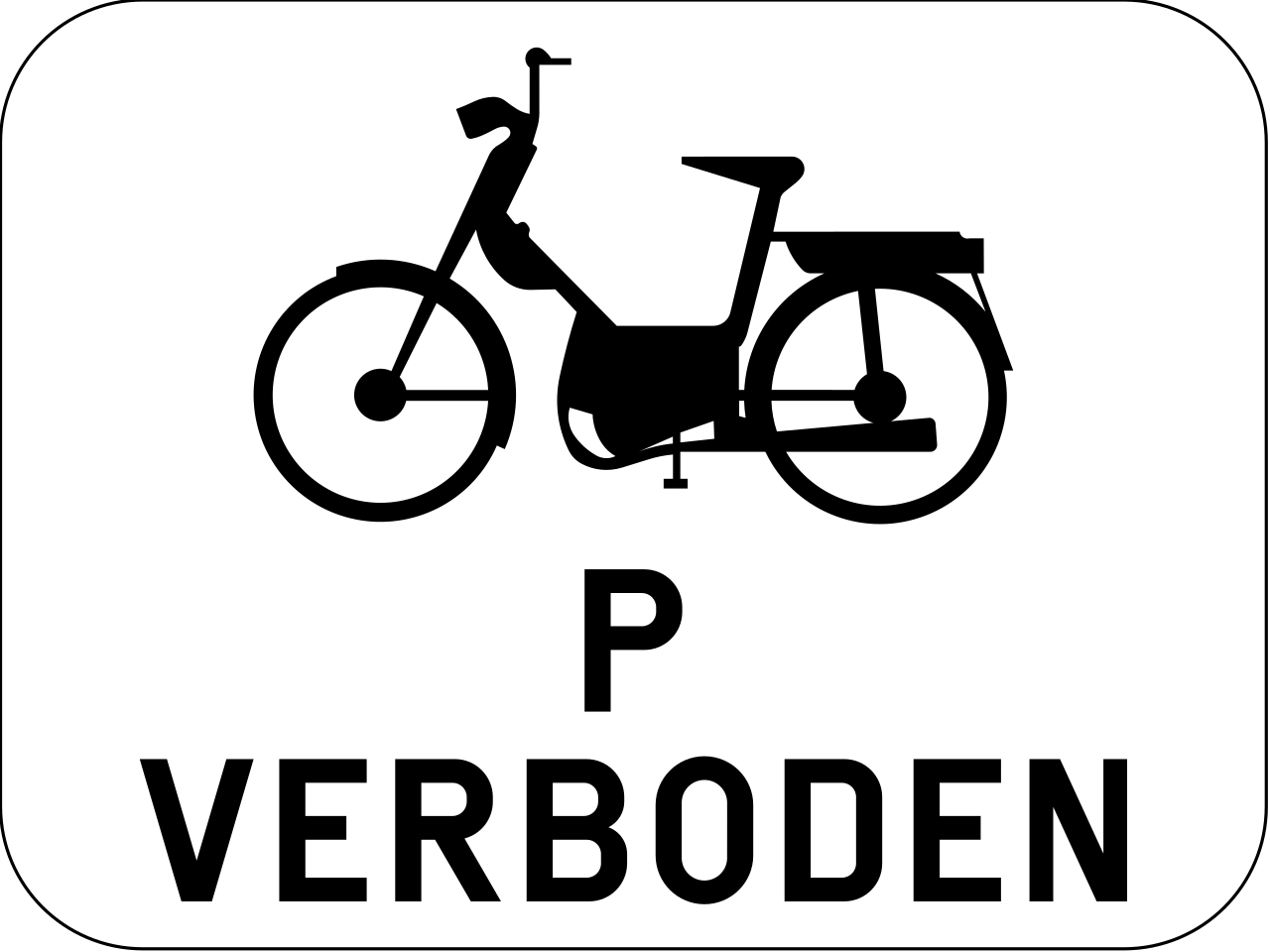
26. Prohibited for class P mopeds
This supplementary sign indicates that the prohibition shown by the main traffic sign applies specifically to class P mopeds (speed pedelecs).
Signal routier M15 • Panonceau utilisé avec le signal D7 lorsque la piste cyclable ne peut pas être empruntée par les conducteurs de speed pedelecs.
Verkeersbord M15 • Onderbord gebruikt samen met D7 als het fietspad niet mag gevolgd worden door bestuurders van speedpedelecs.
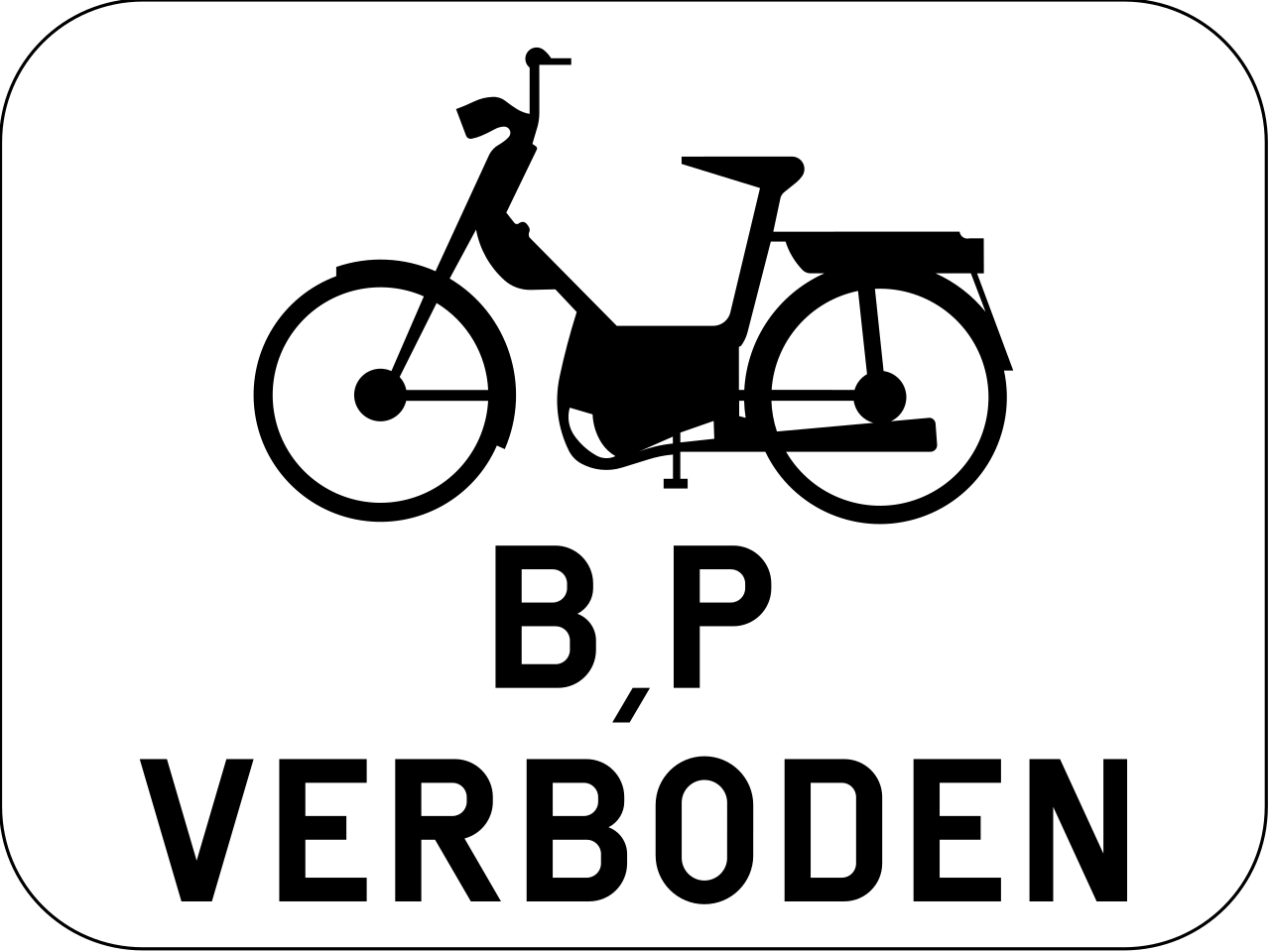
27. Prohibited for class B and P mopeds
This supplementary sign indicates that the prohibition shown by the main traffic sign applies specifically to class B and P mopeds. Class P mopeds include speed pedelecs where that classification applies.
Signal routier M16 • Panonceau utilisé avec le signal D7 lorsque la piste cyclable ne peut pas être empruntée par les conducteurs de cyclomoteurs de classe B ni par les conducteurs de speed pedelecs.
Verkeersbord M16 • Onderbord gebruikt samen met D7 als het fietspad niet mag gevolgd worden door bestuurders van bromfietsen klasse B en speedpedelecs.
28. Prohibited for class B mopeds
This supplementary sign indicates that the prohibition shown by the main traffic sign applies specifically to class B mopeds.
Signal routier M7 • Panonceau utilisé avec le signal D7 lorsque la piste cyclable ne peut pas être empruntée par les conducteurs de cyclomoteurs de classe B.
Verkeersbord M7 • Onderbord gebruikt samen met D7 als het fietspad niet mag gevolgd worden door bestuurders van bromfietsen klasse B.
29. Cyclists from both directions
This supplementary sign indicates that cyclists may approach from both directions on the road or cycle path concerned by the main sign.
Signal routier M9 • Panonceau utilisé avec les signaux B1, B5 et B17 pour indiquer que les cyclistes circulent dans les deux sens sur la voie publique transversale dans laquelle on va s'engager.
Verkeersbord M9 • Onderbord gebruikt samen met B1, B5 en B17 om te duiden dat fietsers in de twee rijrichtingen rijden op de dwarslopende openbare weg die men gaat oprijden.
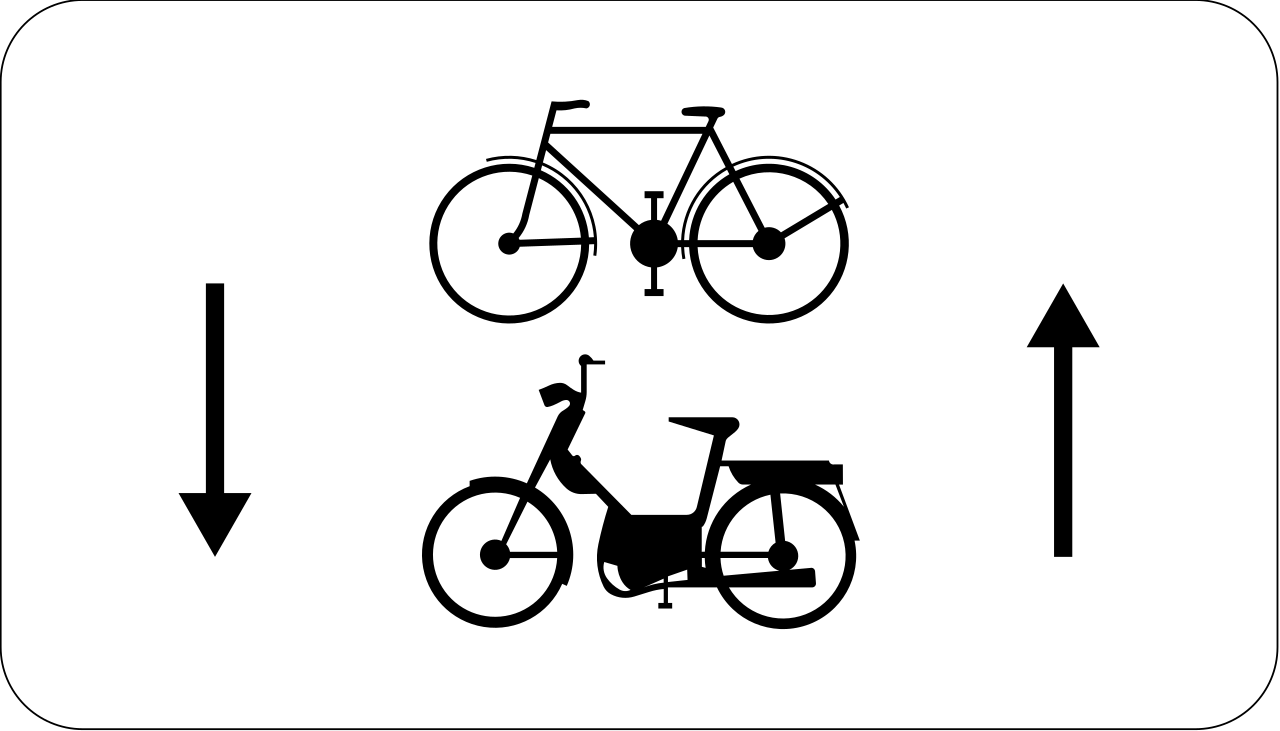
30. Cyclists and mopeds from both directions
This supplementary sign indicates that cyclists and mopeds may approach from both directions on the road or path concerned by the main sign.
Signal routier M10 • Panonceau utilisé avec les signaux B1, B5 et B17 pour indiquer que les cyclistes et les conducteurs de cyclomoteurs à deux roues circulent dans les deux sens sur la voie publique transversale dans laquelle on va s'engager.
Verkeersbord M10 • Onderbord gebruikt samen met B1, B5 en B17 om te duiden dat fietsers en bestuurders van tweewielige bromfietsen in de twee rijrichtingen rijden op de dwarslopende openbare weg die men gaat oprijden.
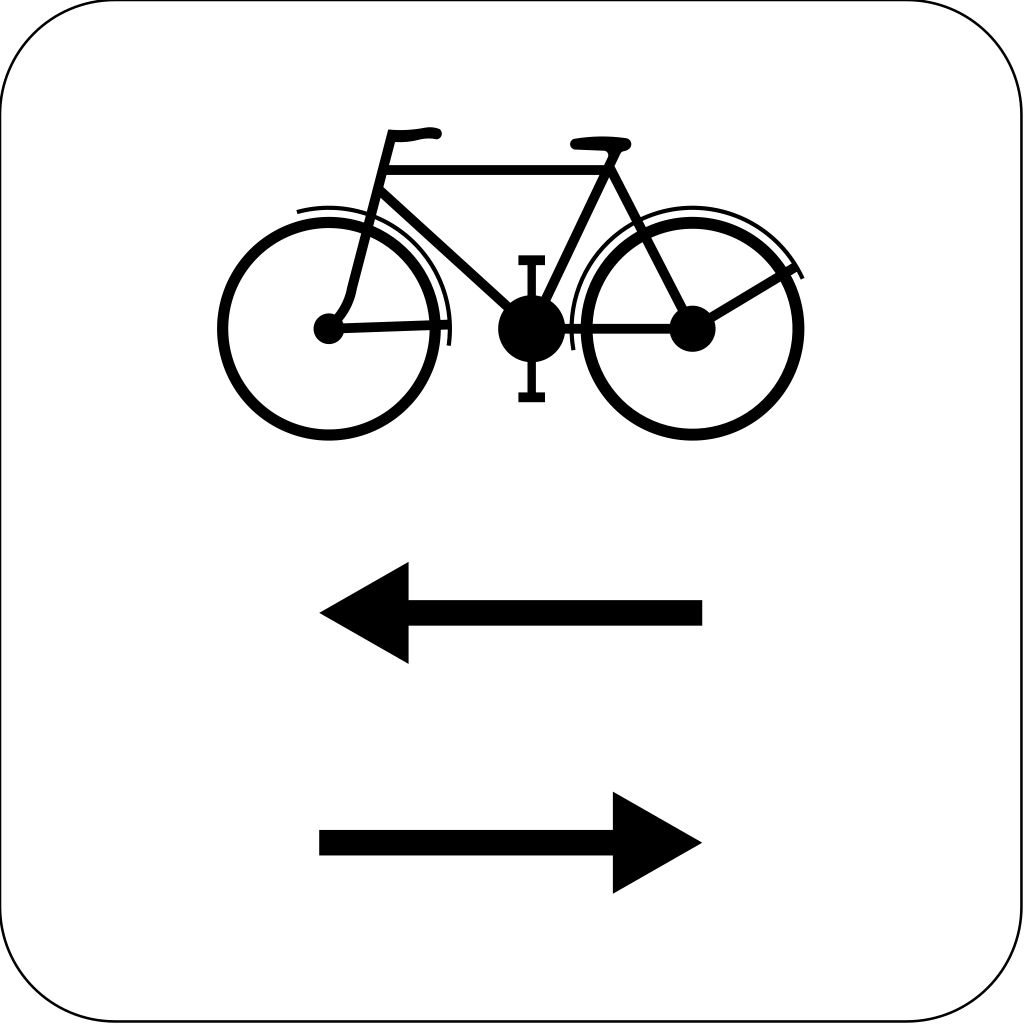
31. Cyclists in both directions
This supplementary sign indicates that cyclists travel in both directions on the road, lane or cycle path concerned by the main sign.
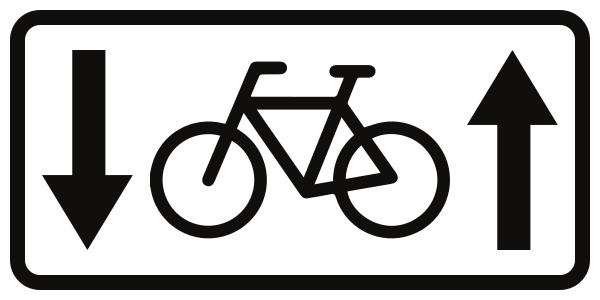
Verkeersbord M53 • Fietsers in twee richtingen.
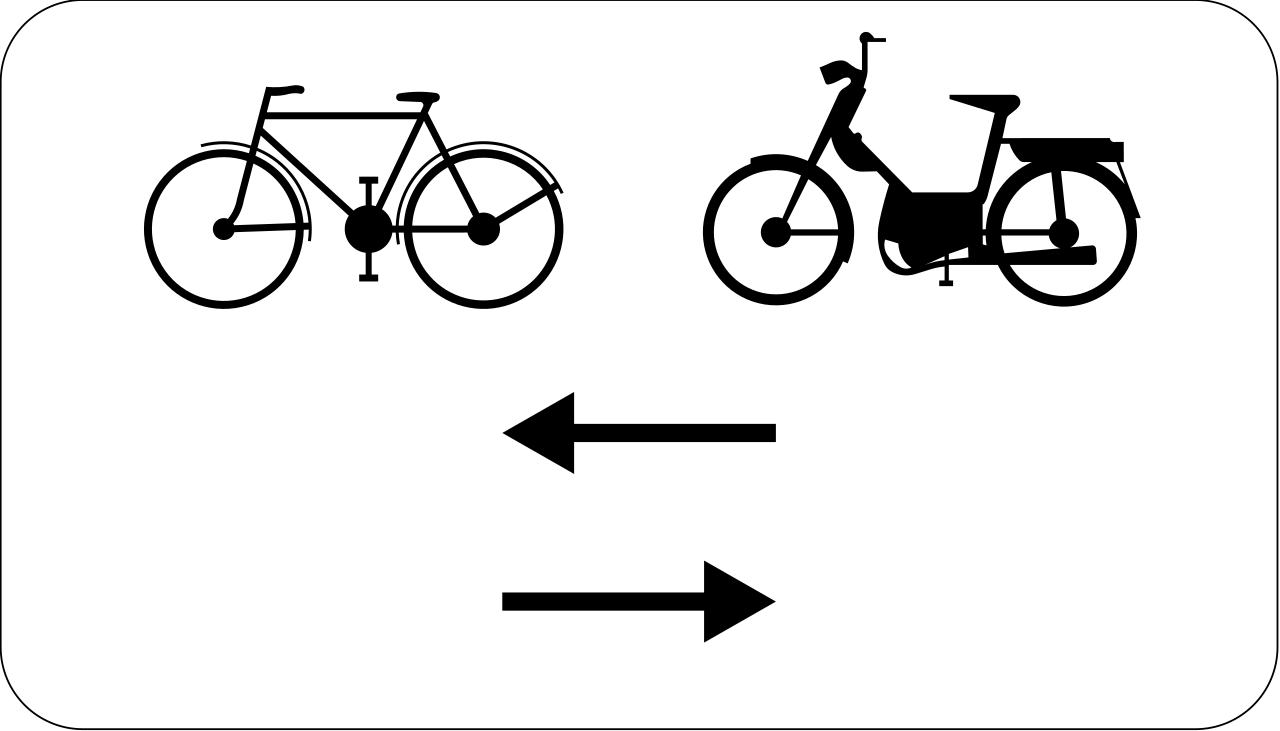
32. Cyclists and mopeds in both directions
This supplementary sign indicates that cyclists and mopeds travel in both directions on the road, lane or path concerned by the main sign.
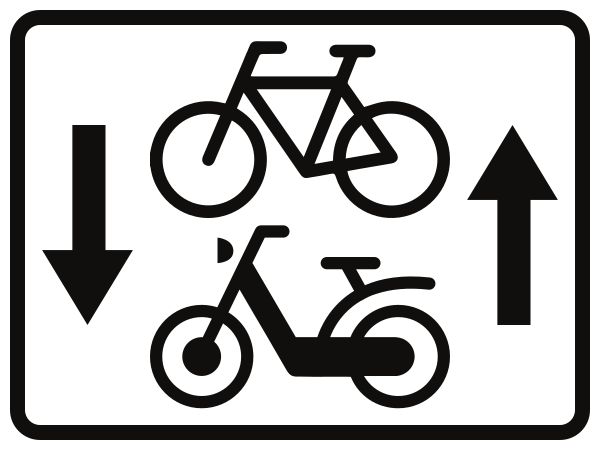
Verkeersbord M53 • Fietsers en bestuurders van tweewielige bromfietsen in twee richtingen.
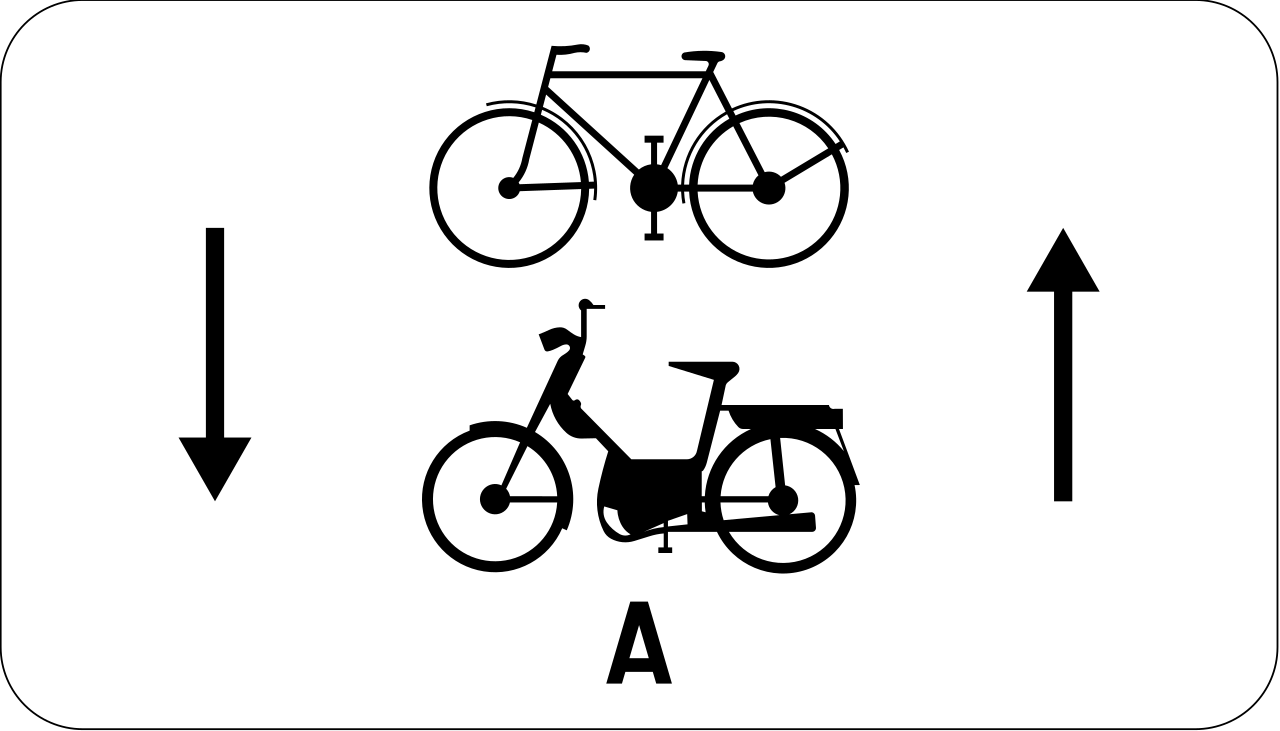
33. Cyclists and class A mopeds in both directions
This supplementary sign indicates that cyclists and class A mopeds travel in both directions on the road, lane or path concerned by the main sign.
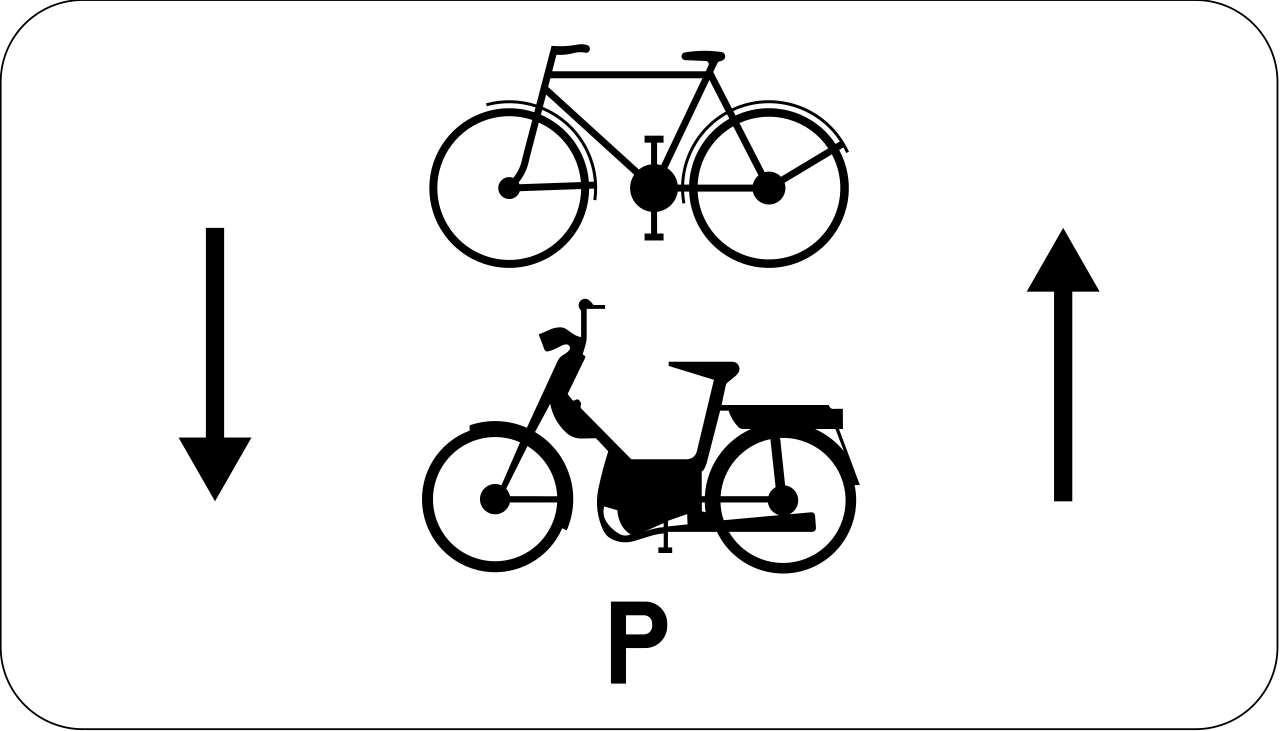
34. Cyclists and class P mopeds in both directions
This supplementary sign indicates that cyclists and class P mopeds (speed pedelecs) travel in both directions on the road, lane or path concerned by the main sign.
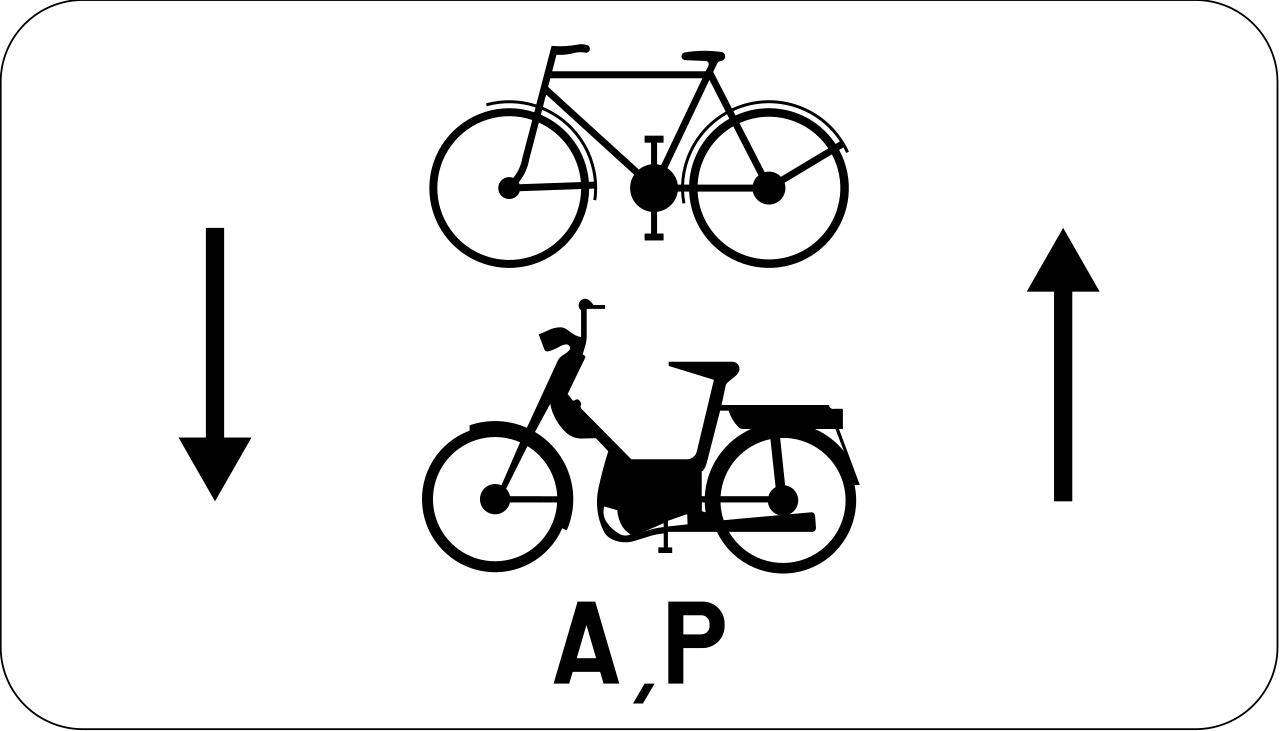
35. Cyclists and class A and P mopeds in both directions
This supplementary sign indicates that cyclists and class A and P mopeds travel in both directions on the road, lane or path concerned by the main sign.
36. Start of regulation for metres
This supplementary sign indicates that the regulation shown by the main traffic sign starts here and applies for the indicated distance.
Réglementation sur une courte distance (≤ 30 m).
Reglementering over een korte afstand (≤ 30m).
37. Start of regulation
This supplementary sign indicates the start of the regulation shown by the main traffic sign. The regulation begins at this point.
Début de la réglementation.
Begin van de reglementering.
38. Continuation of regulation
This supplementary sign indicates the continuation or reminder of the regulation shown by the main traffic sign.
Réglementation sur une longue distance (rappel).
Reglementering over een lange afstand (herhaling).
39. End of regulation
This supplementary sign indicates the end of the regulation shown by the main traffic sign. The regulation ends at this point.
Fin de la réglementation.
Einde van de reglementering.
40. metres ahead
This supplementary sign indicates the distance from the main traffic sign to the point where the indicated danger, regulation or information begins. The distance is shown in metres.
Panonceau utilisé pour indiquer une distance supérieure ou inférieure à la distance standard de 150 m jusqu'au danger.
Onderbord gebruikt om een afstand groter of kleiner dan de standaard 150m tot het gevaar aan te duiden.
41. Stop metres ahead
This supplementary sign announces a STOP sign at the indicated distance ahead. The displayed value shows the distance to the upcoming STOP sign.
Panonceau utilisé avec le signal B1 pour annoncer le signal B5.
Onderbord gebruikt samen met B1 om bord B5 aan te kondigen.
42. For kilometres
This supplementary sign indicates the length of the section to which the main traffic sign applies. The length is shown in kilometres.
Panonceau utilisé pour indiquer la longueur d'une section dangereuse de la voie publique.
Onderbord gebruikt om de lengte van een gevaarlijk gedeelte van de openbare weg aan te duiden.
43. Indicated mass
This supplementary sign shows an indicated vehicle mass. Read it together with the main traffic sign to determine how the mass value affects the applicable rule or restriction.
Panonceau utilisé avec le signal C23 pour limiter l'interdiction aux conducteurs de véhicules dont la masse en charge est supérieure à celle indiquée.
Onderbord gebruikt samen met C23 om het verbod te beperken tot de bestuurders van voertuigen waarvan de massa in beladen toestand hoger is dan het aangeduide.
44. Indicated mass
This supplementary sign shows an indicated vehicle mass. Read it together with the main traffic sign to determine how the mass value affects the applicable rule or restriction.
Panonceau utilisé avec le signal C23 pour limiter l'interdiction aux conducteurs de véhicules dont la masse en charge est supérieure à celle indiquée.
Onderbord gebruikt samen met C23 om het verbod te beperken tot de bestuurders van voertuigen waarvan de massa in beladen toestand hoger is dan het aangeduide.
45. Indicated mass
This supplementary sign shows an indicated vehicle mass. Read it together with the main traffic sign to determine how the mass value affects the applicable rule or restriction.
Panonceau utilisé avec le signal C23 pour limiter l'interdiction aux conducteurs de véhicules dont la masse en charge est supérieure à celle indiquée.
Onderbord gebruikt samen met C23 om het verbod te beperken tot de bestuurders van voertuigen waarvan de massa in beladen toestand hoger is dan het aangeduide.
46. Junction shape
This supplementary sign shows the shape or layout of the upcoming junction.
Panonceau utilisé pour indiquer la courbe de la route.
Onderbord om de curve van de weg aan te geven.
47. Park and ride
This supplementary sign indicates a park and ride facility, where drivers can park and continue their journey by public transport.
48. Parking disc required
This supplementary sign indicates that a parking disc must be used when parking where the sign applies.
Panonceau utilisé avec les signaux E5, E7 et ceux de la série E9 pour indiquer que la durée du stationnement est limitée et qu'un disque de stationnement doit être utilisé.
Onderbord gebruikt samen met E5, E7 en de E9-reeks dat aanduidt dat de parkeertijd beperkt is en dat een parkeerschijf moet gebruikt worden.
49. During the time shown
This supplementary sign indicates that the main traffic sign applies during the time shown.
Panonceau utilisé avec les signaux E1, E3 et ceux de la série E9 pour indiquer une période.
Onderbord gebruikt samen met E1, E3 en de E9-reeks dat een periode aanduidt.
50. For the number of minutes shown
This supplementary sign indicates that the main traffic sign applies for the number of minutes shown.
Panonceau utilisé avec les signaux de la série E9 pour indiquer que la durée du stationnement est limitée.
Onderbord gebruikt samen met de E9-reeks dat aanduidt dat de parkeertijd beperkt is.