


ParkingBelgium
 Traffic rules
 Belgium
50. Parking
Parking means leaving a vehicle stationary at a place for a period of time rather than stopping only briefly because of traffic conditions or another immediate necessity. Many countries distinguish parking from a short stop made to pick up or drop off passengers or to load or unload goods, although the exact legal definition varies.
Parking may be permitted, restricted, reserved, time-limited or prohibited by traffic signs, road markings, parking zones and local regulations. Drivers must park without creating a danger or unnecessary obstruction and must comply with any conditions concerning payment, permits, vehicle categories or maximum parking duration.
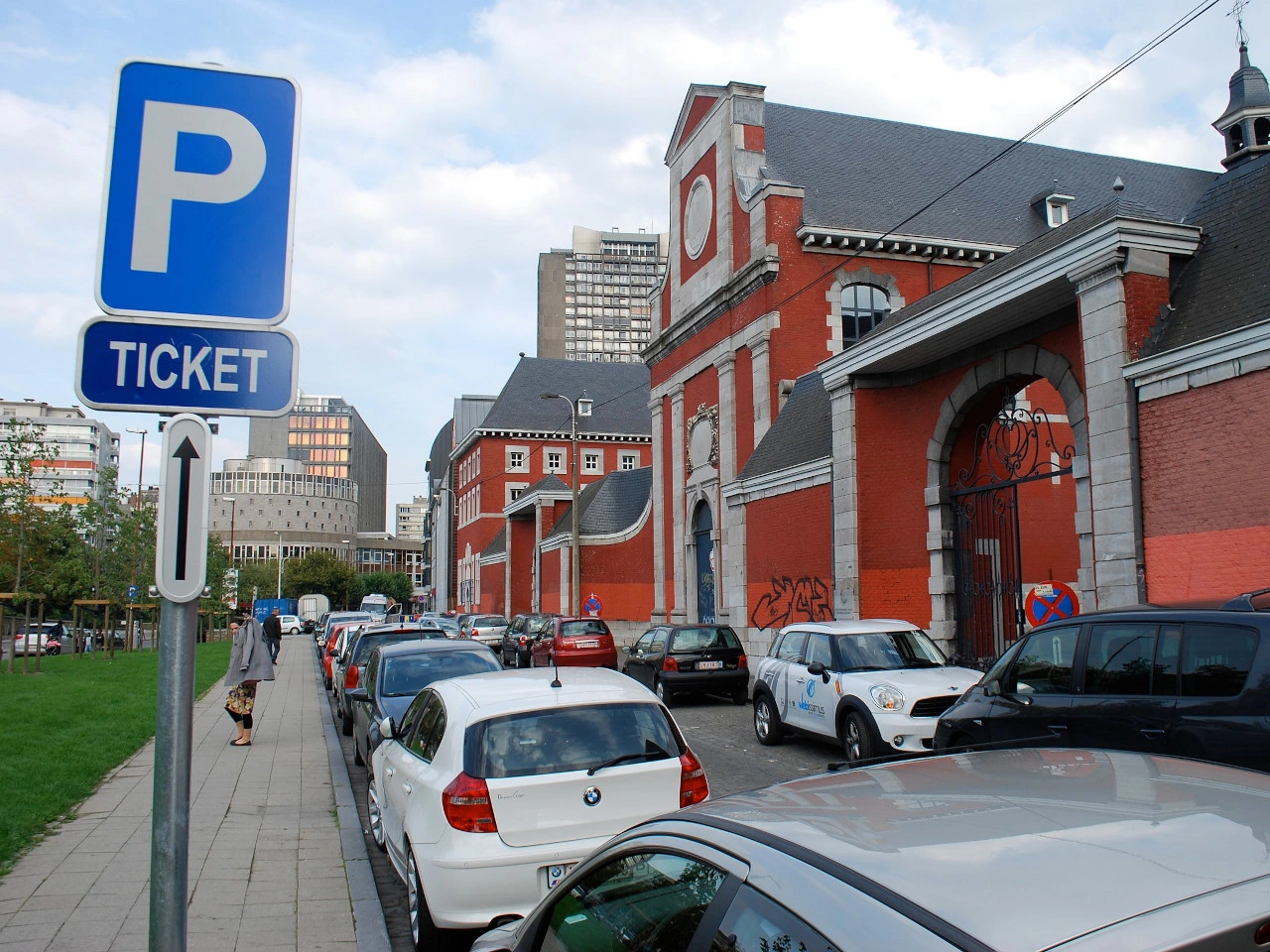
Wikimedia.org • Jean Housen • CC BY-SA
When is a vehicle considered parked in Belgium?
A vehicle is considered parked when it remains stationary for longer than necessary for passengers to get in or out or for goods to be loaded or unloaded. Refuelling a vehicle or charging the battery of an electric or hybrid vehicle is also considered parking.
What is the difference between stopping and parking in Belgium?
A vehicle is considered stopped when it remains stationary only for the time necessary for passengers to get in or out or for goods to be loaded or unloaded. If it remains there longer, it is considered parked. Being forced to stop by traffic conditions is treated separately from voluntary stopping or parking.
On which side of the road should you park in Belgium?
A parked vehicle must normally be positioned on the right-hand side relative to its direction of travel. On a one-way carriageway, it may be positioned on either side. A vehicle parked wholly or partly on the carriageway must normally be placed as far as possible from the centre, parallel with the edge and in a single line.
May you park on the pavement in Belgium?
As a general rule, ordinary motor vehicles may not park on a pavement. Parking on raised verges within built-up areas is also prohibited unless local regulations permit it. Where a usable verge must be used by pedestrians, a passable strip of at least 1.5 metres must normally remain available.
How close may you park to a pedestrian or cyclist crossing in Belgium?
You may not stop or park on a pedestrian or cyclist crossing or on the carriageway within 5 metres before the crossing. This rule helps preserve visibility between approaching traffic and people using the crossing.
How close may you park to an intersection in Belgium?
Stopping and parking are generally prohibited within 5 metres of the extension of the nearest edge of the transverse carriageway at an intersection, unless local regulations provide otherwise.
May you park near a bus or tram stop in Belgium?
Parking is prohibited within 15 metres on either side of a sign indicating a bus, trolleybus or tram stop. This is a parking prohibition, so the rules concerning a brief legal stop must be distinguished from leaving the vehicle parked.
How much road space must remain when parking in Belgium?
You may not park where doing so would leave less than 3 metres of free passage on the carriageway. Parking is also prohibited where your vehicle would prevent another parked vehicle from being entered or moved or would obstruct access to parking places located outside the carriageway.
How does a Belgian blue parking zone work?
Where the parking-disc rules apply, the driver must place an approved parking disc visibly in the vehicle and set the arrow to the mark immediately following the arrival time. Unless the signs specify different conditions, the system applies from 09:00 to 18:00 on working days and allows a maximum parking period of two hours.
How does paid parking work in Belgium?
At parking metres or ticket machines, drivers must comply with the conditions displayed at the location. Other authorised payment methods may also be provided. Where paid parking applies, the local signs and payment system determine the applicable period, price and maximum parking duration.
May you park in a space reserved for people with disabilities in Belgium?
Only vehicles used by persons entitled to the recognised parking card for people with disabilities may use spaces specifically reserved for them. The card or recognised equivalent must be displayed as required when the vehicle is parked there.
May you park in front of a driveway in Belgium?
Parking in front of an entrance or driveway to a property is prohibited. An exception applies to a vehicle whose registration number is legibly displayed on that entrance, allowing the vehicle associated with the property to park there.


